We didn’t have a tour here. We were waiting for the people that went into Salzburg for the day to return so just wandered the streets. Here are some pictures.
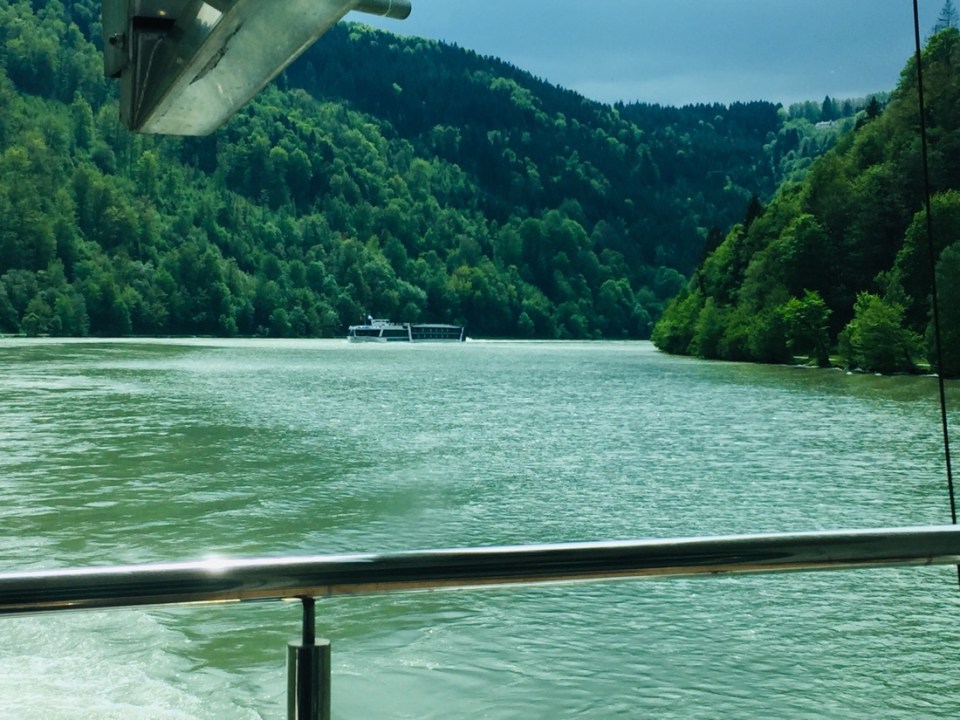
The Amabella following us closely in this beautiful windy section of the Danube. The lock now are wide enough to hold our two boat together.
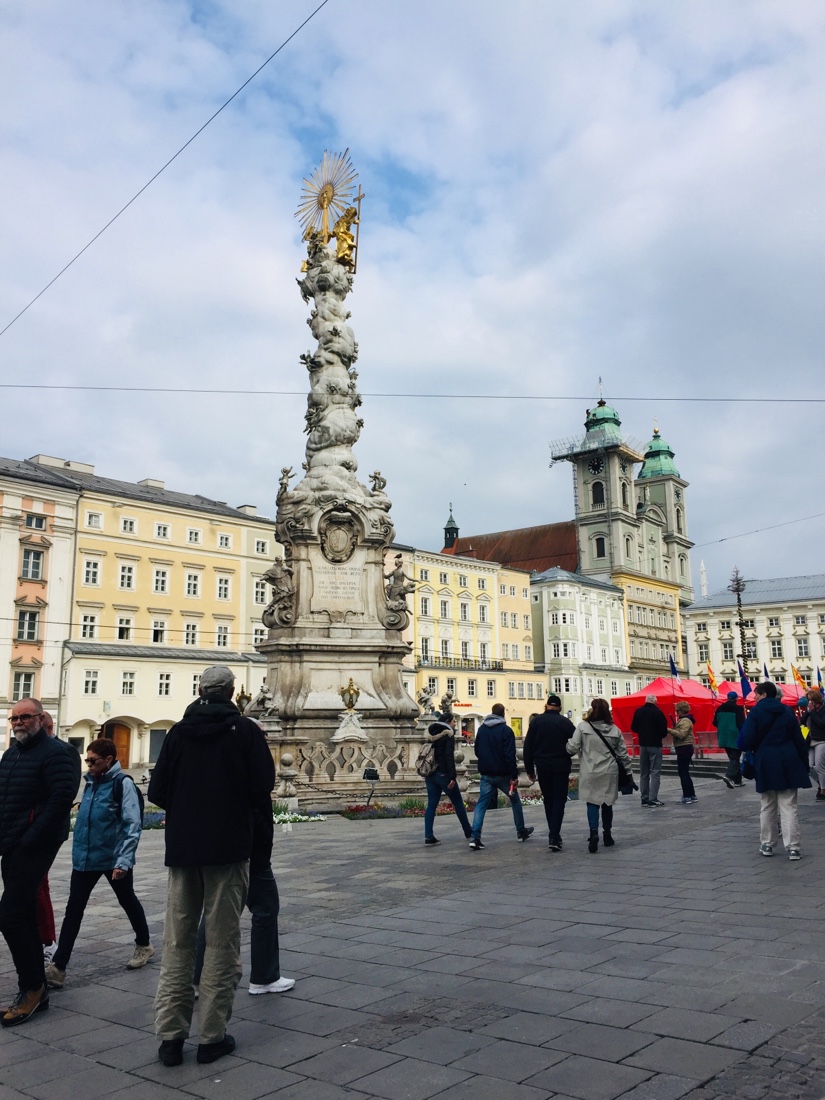
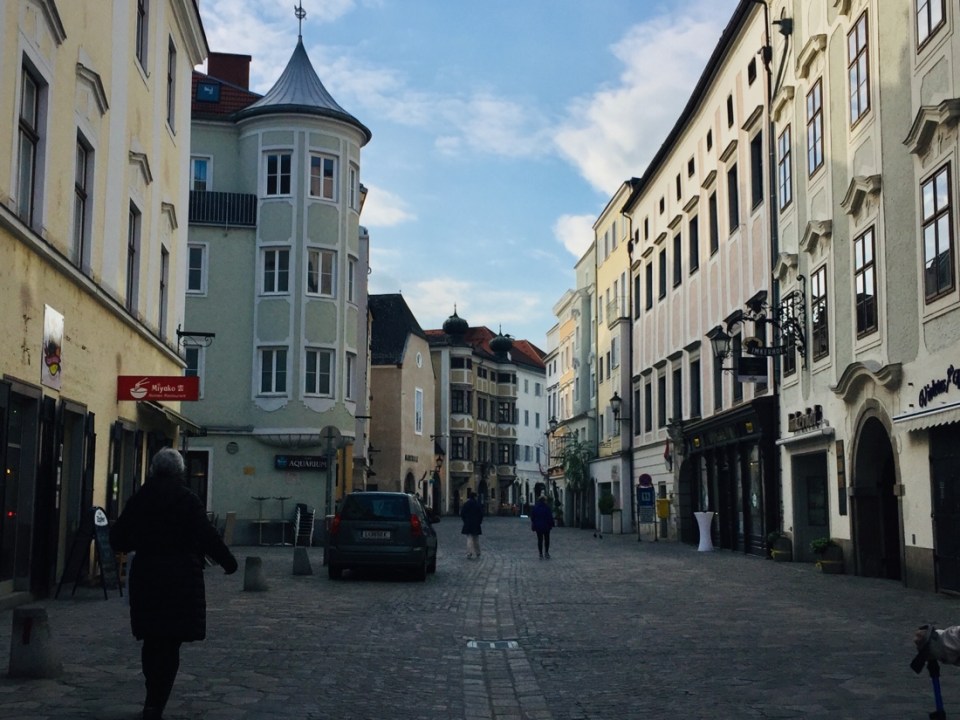
Linz city centre plaza
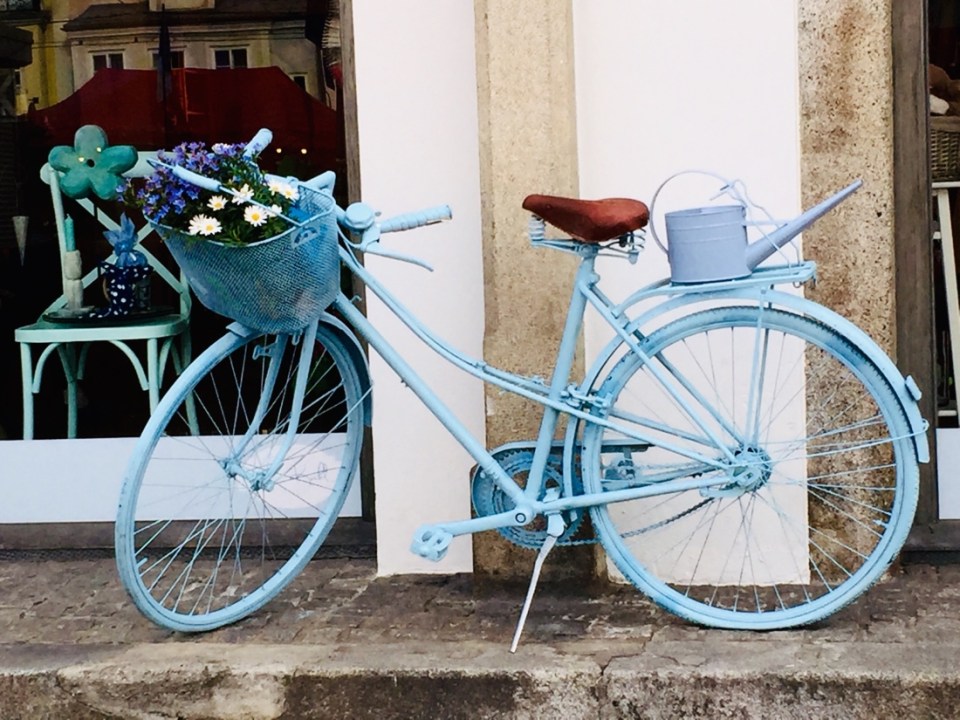
Love this bike in front of a store in Linz
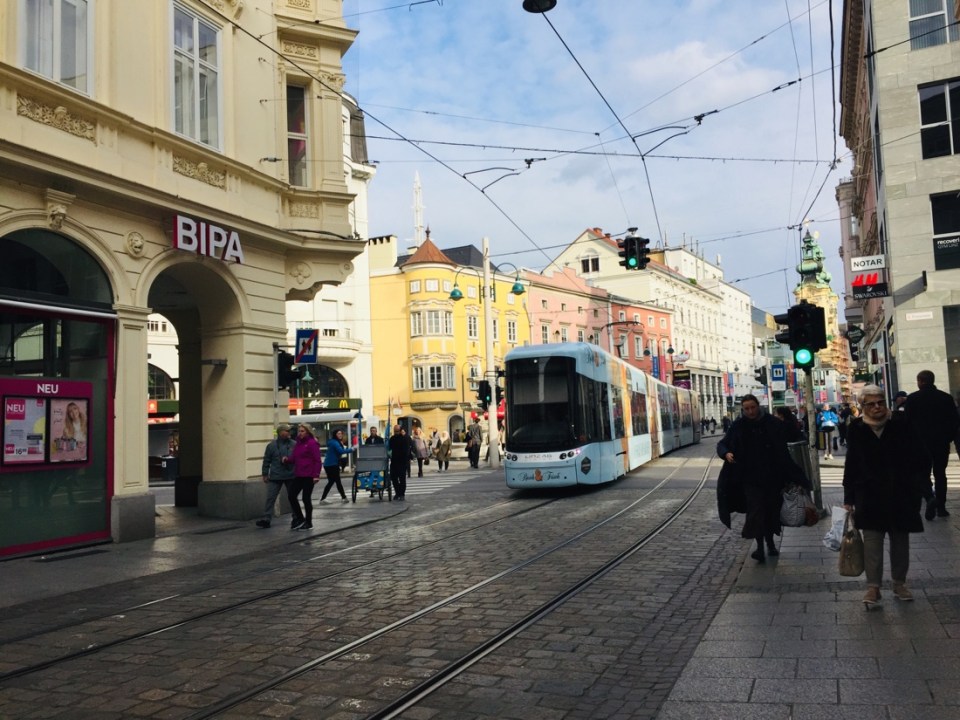
Electric street cars …..Linz
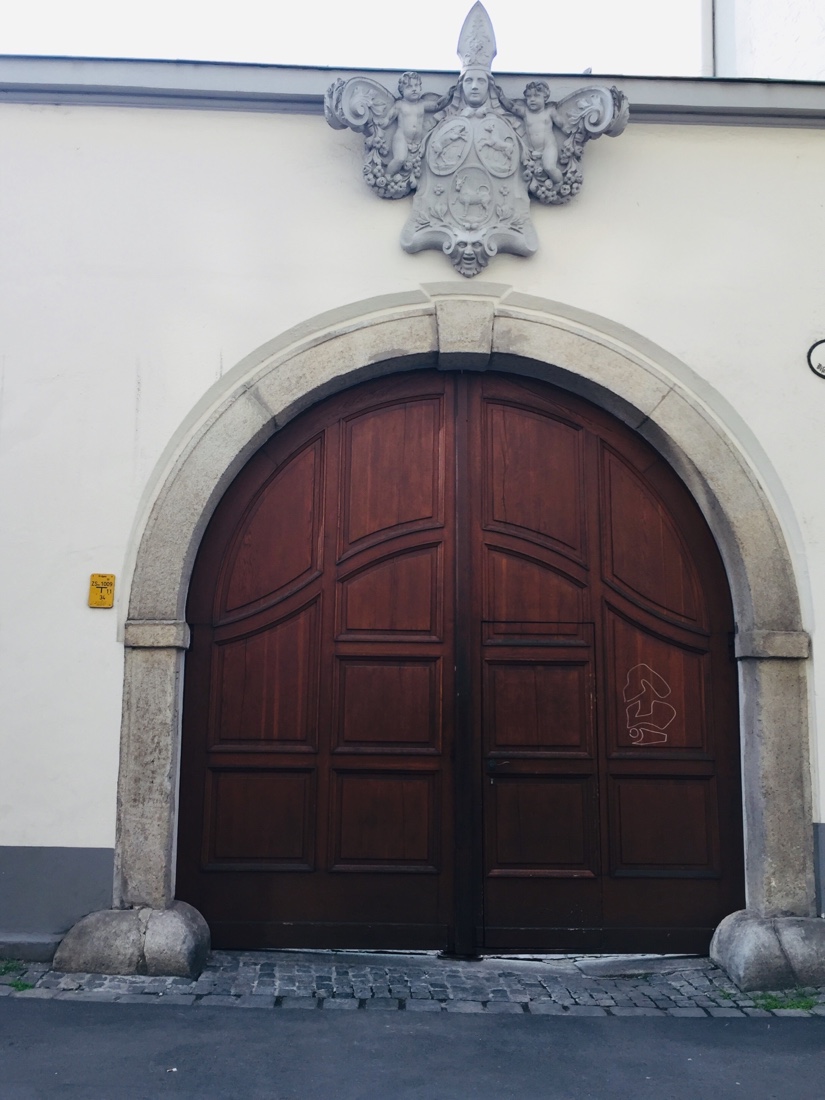
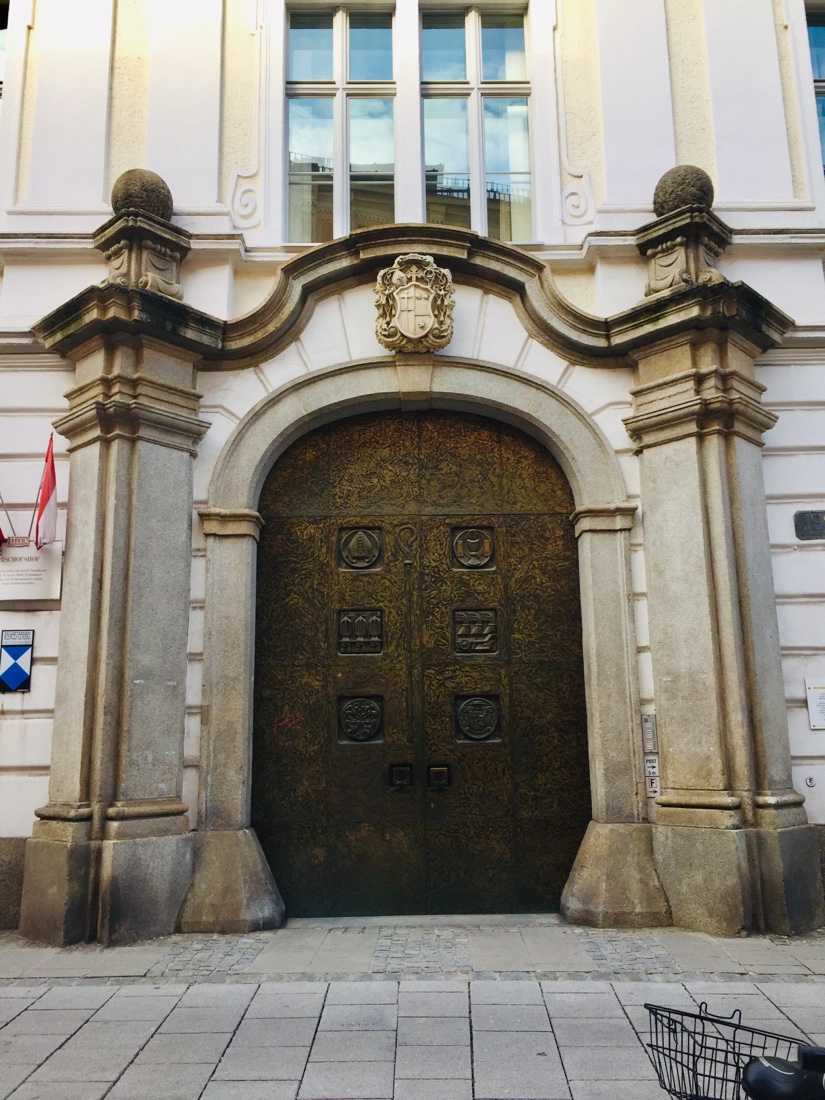
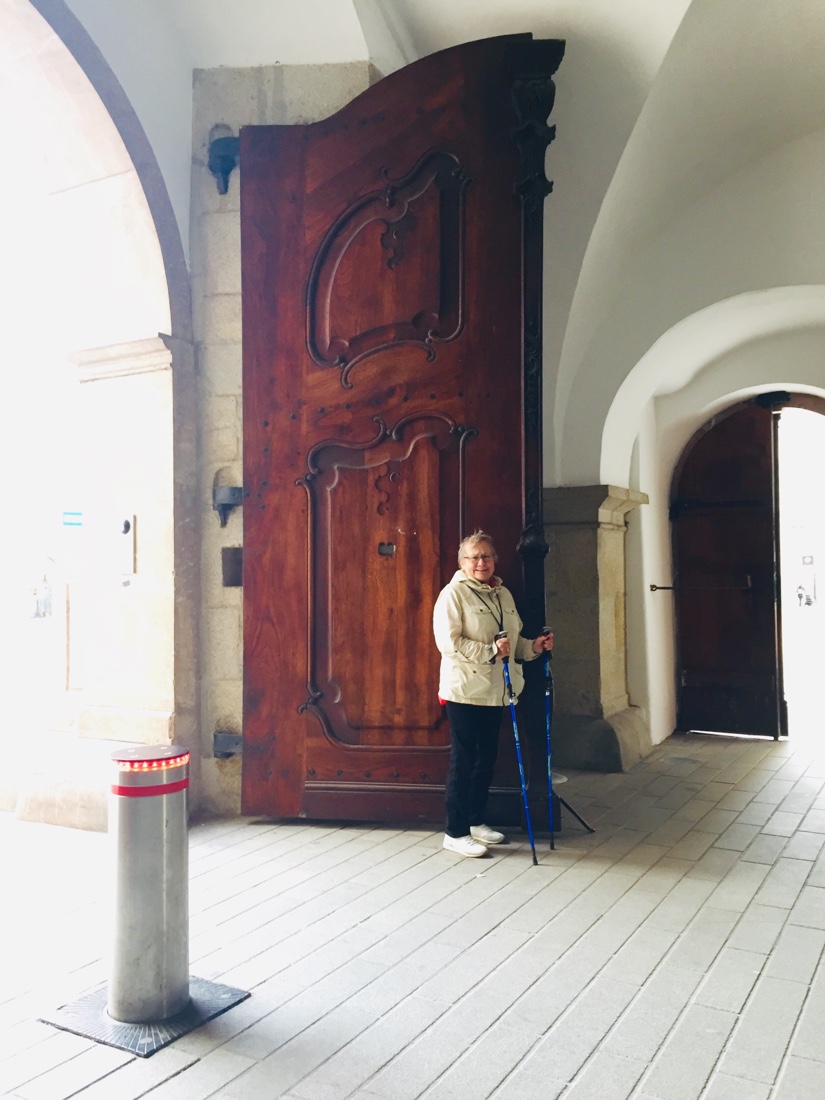
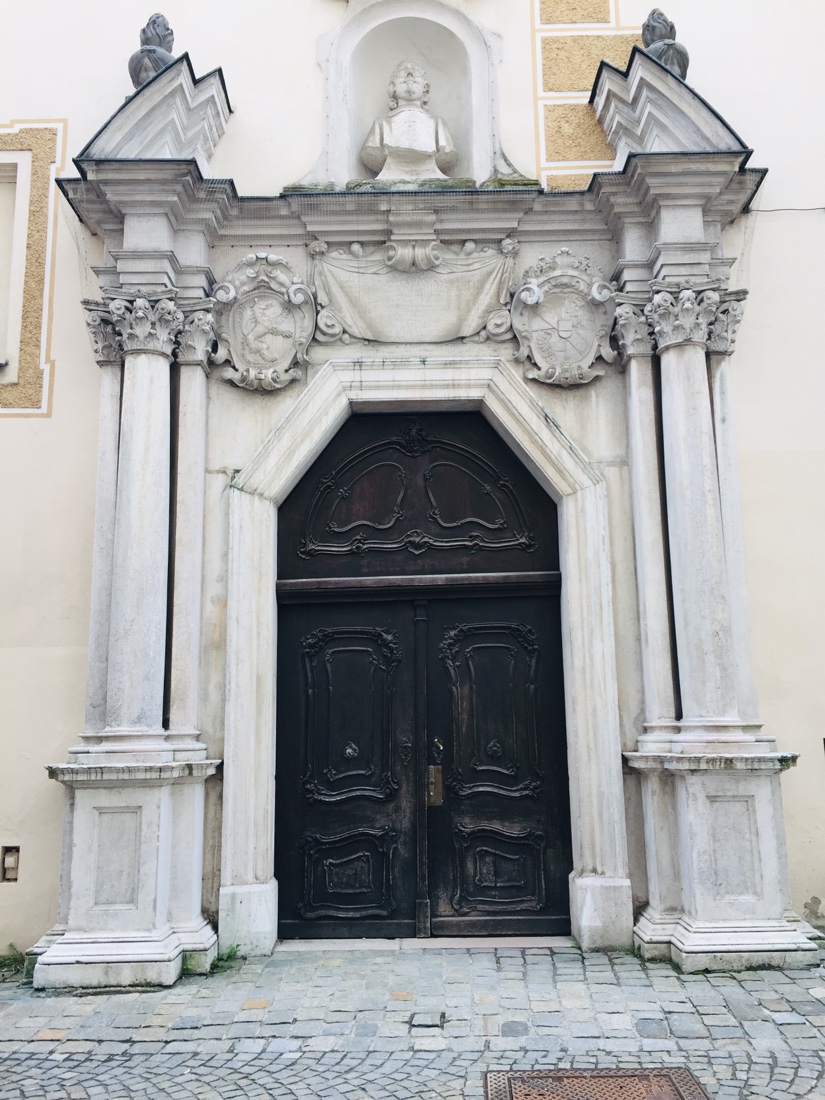
Beautiful door!!!
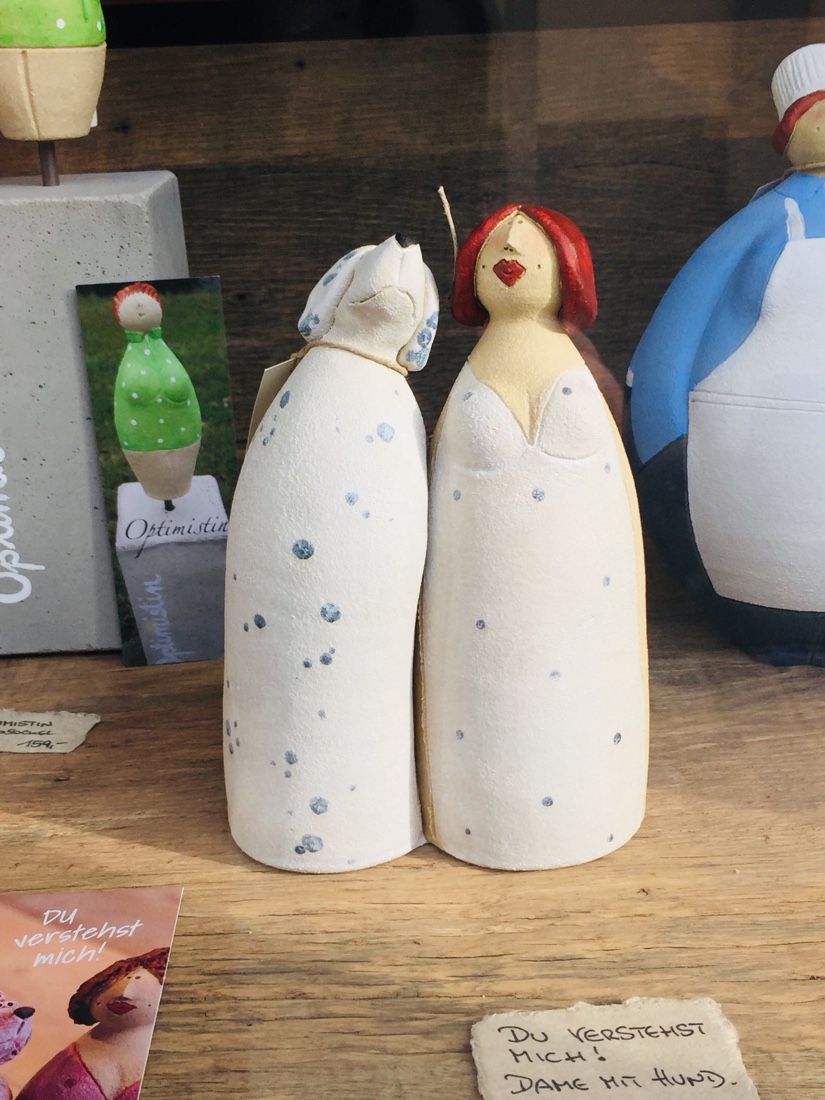
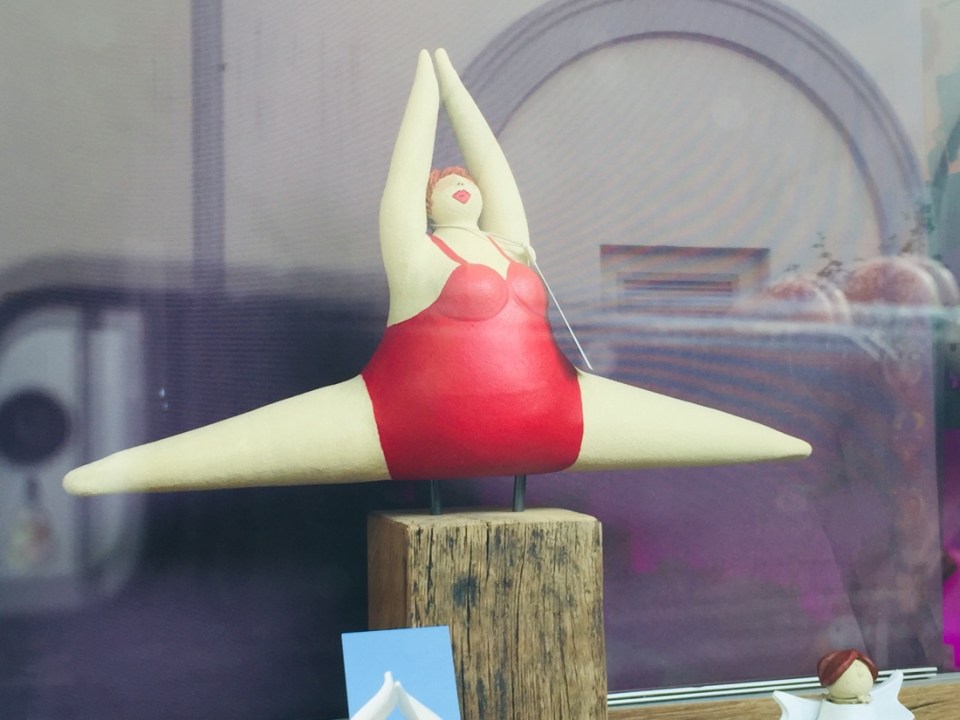
This one and the following showing products for sale…love them!
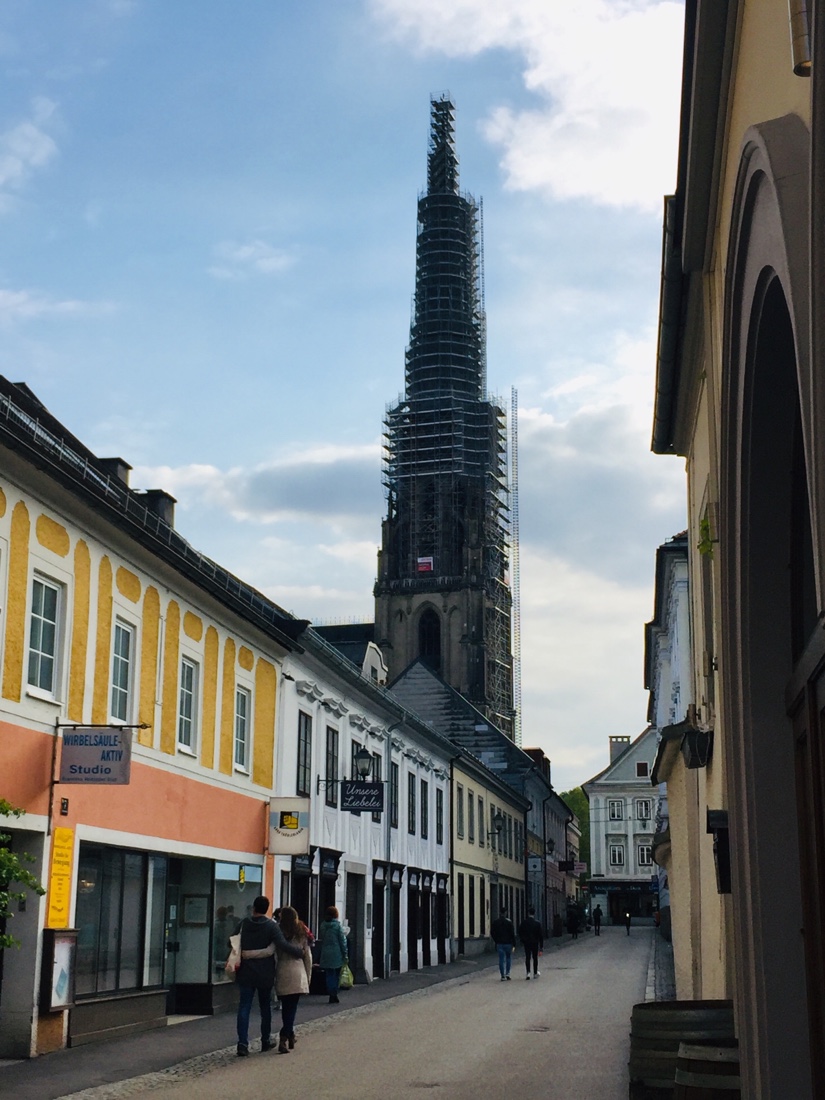
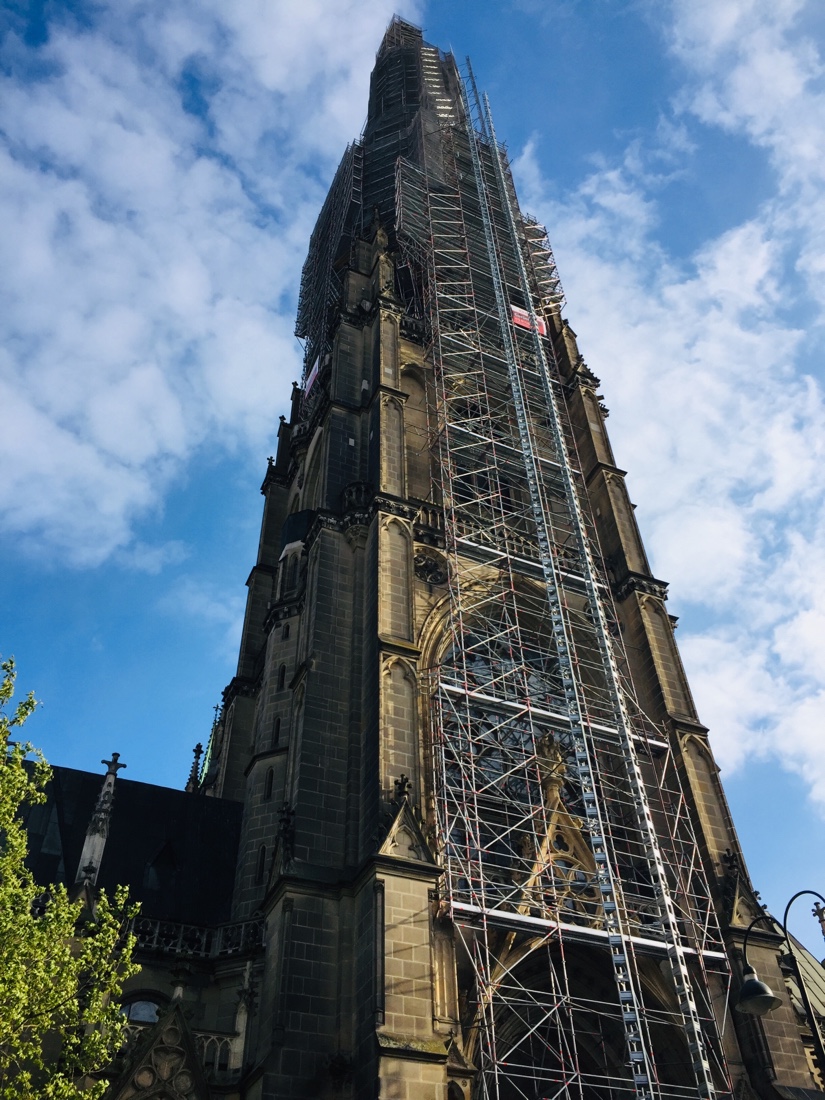
The “new” cathedral……holds 20,000
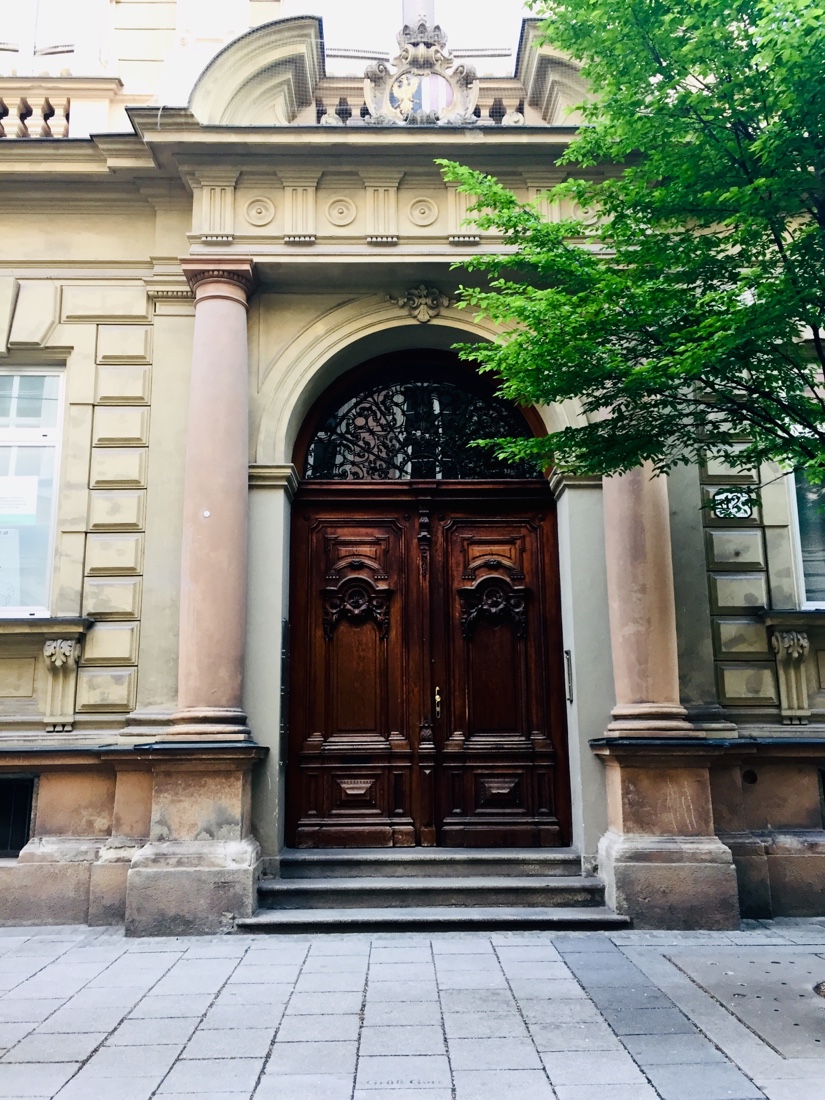
More doors
This one is gorgeous!
The New Cathedral started in 1862 finished 1924, holds 20,000 worshippers. Like all cathedrals and many buildings all along this river corridor, they are continuously under reconstruction.
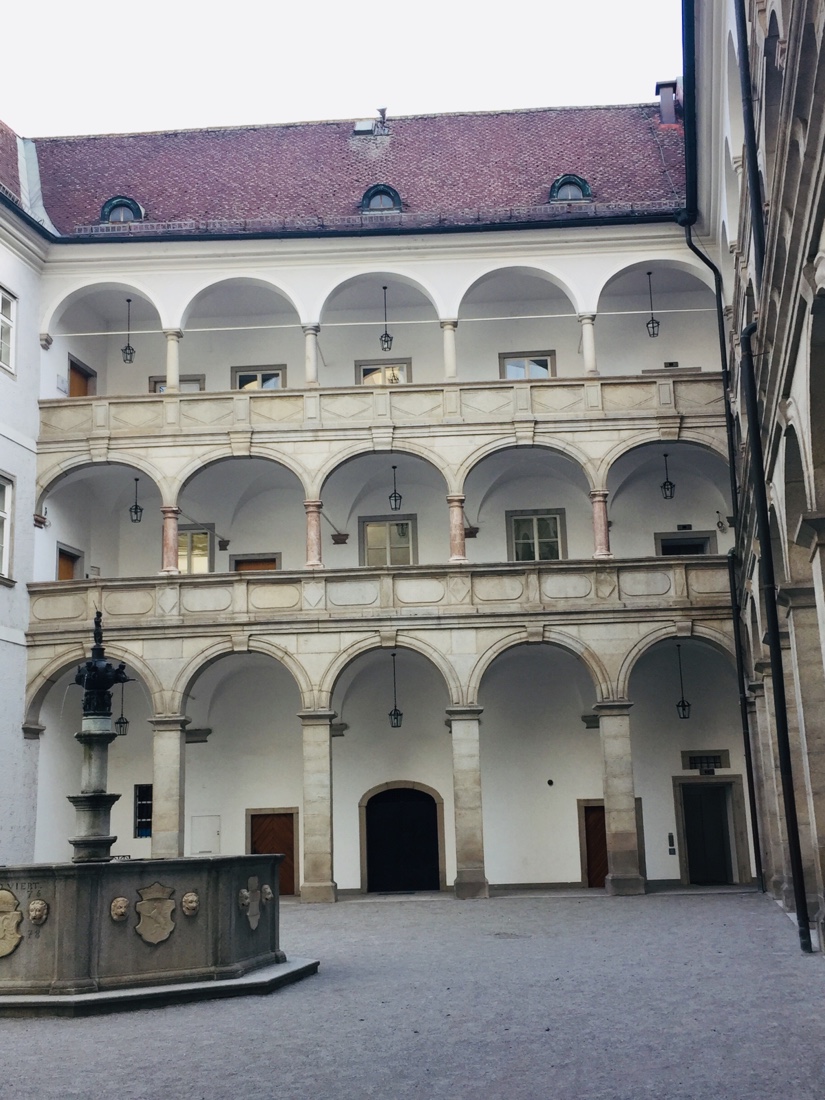
Inside a building
Just look at the size of that door …….compared to Jeanette
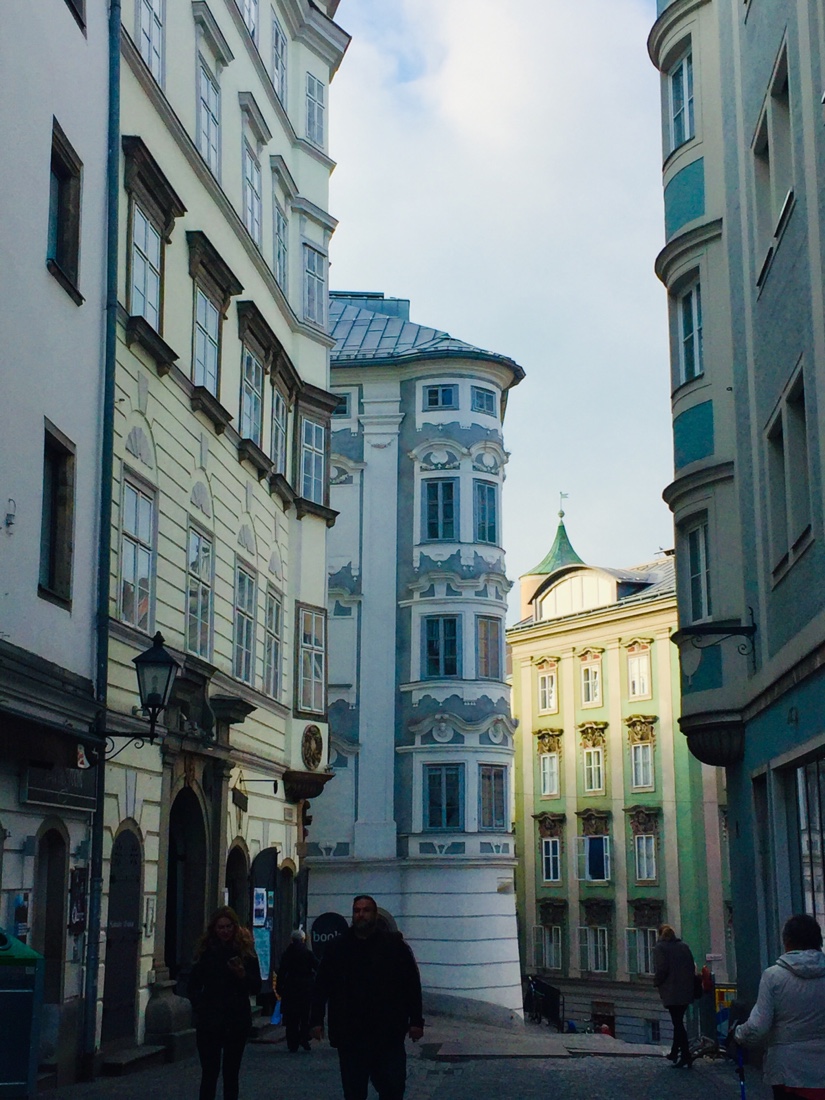
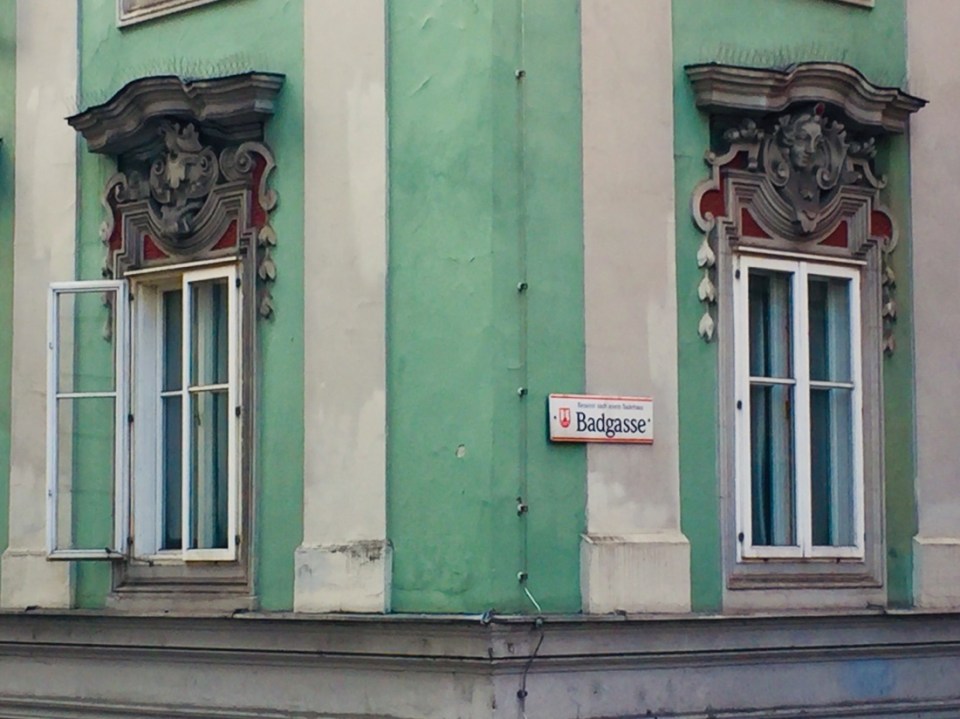
How’d you’d like to live on a street with that name???
50,000 population +30,000 students plus 2,000,000 tourists a year. Out of the 50,000 people that live here, 5000 are employed with BMW.
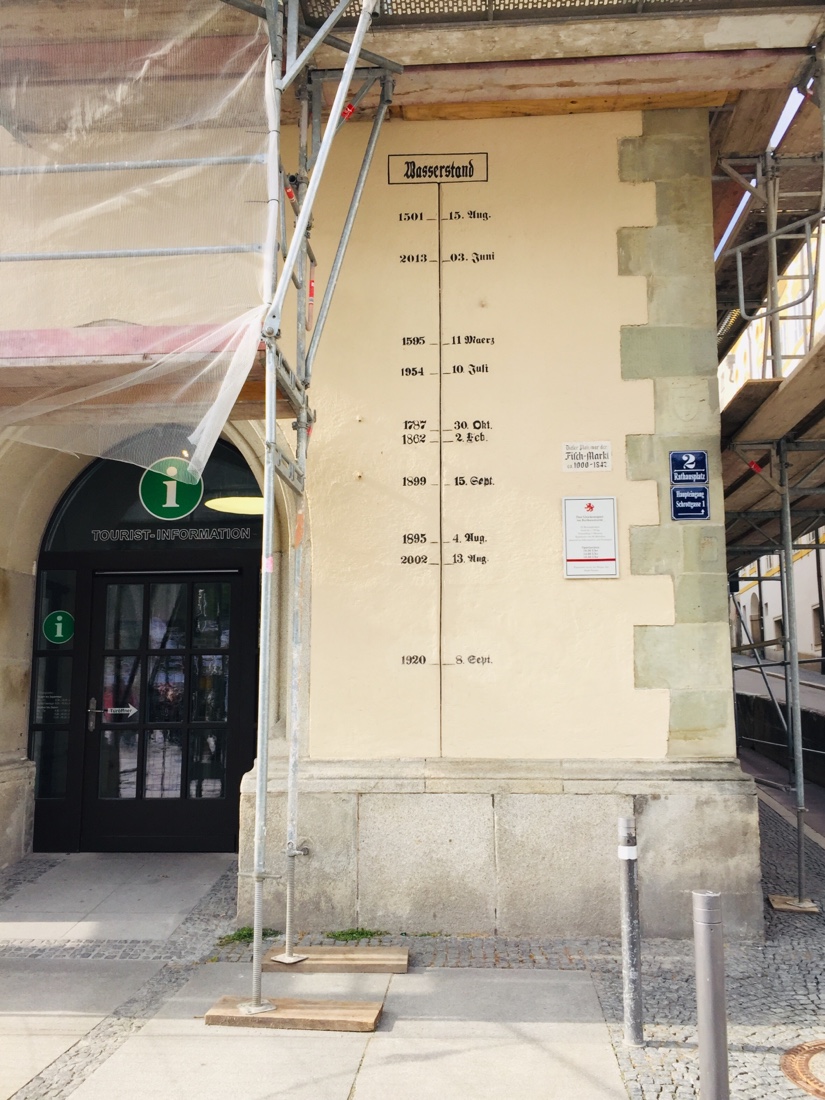
The water level of the Danube today is 4.84m. As read on posted sign later, we see the heights of floods over time….. huge! The highest in 500 years was 12.85m. in 2013. The highest was actually in 1501.
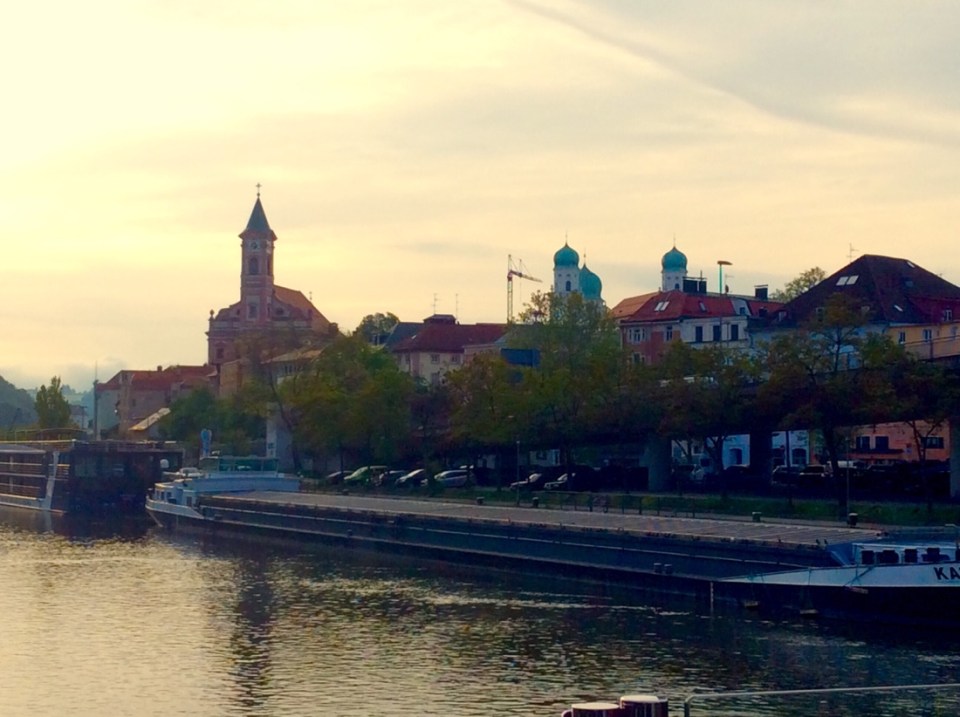
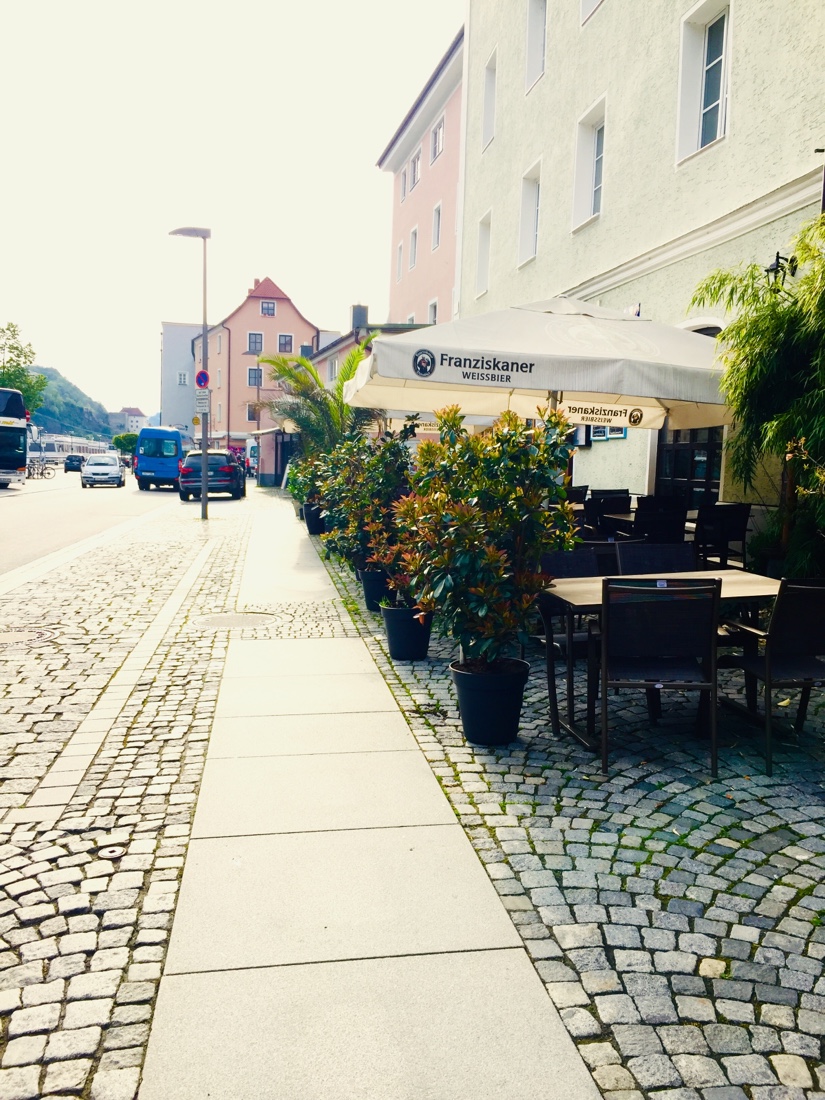
Passau old city
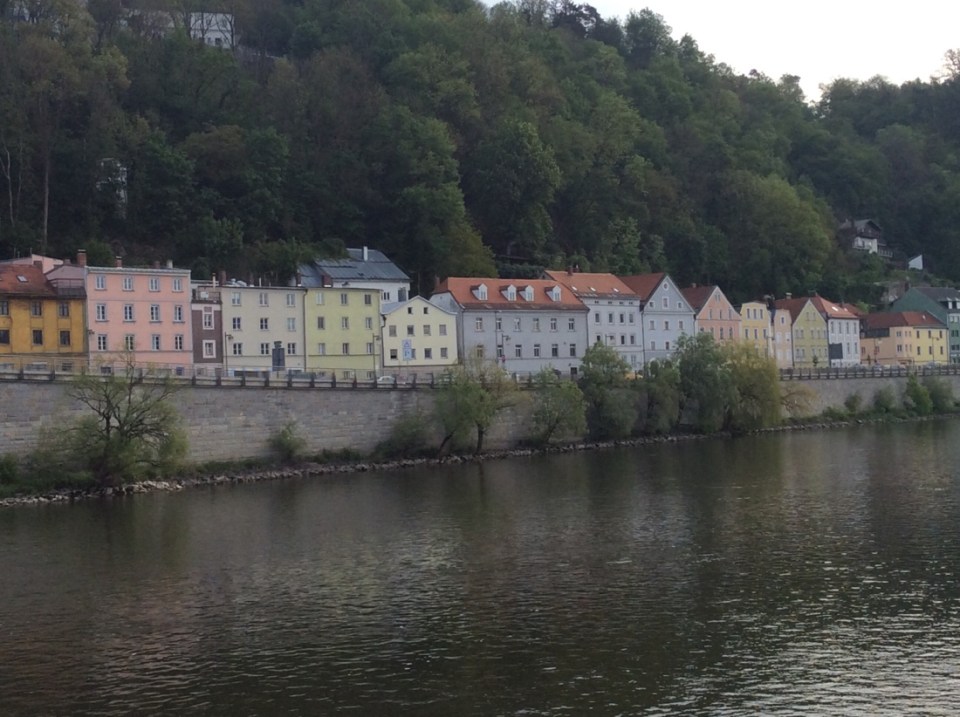
The left bank of the Danube
Start of our walking tour of Passau
High flood marks over the centuries
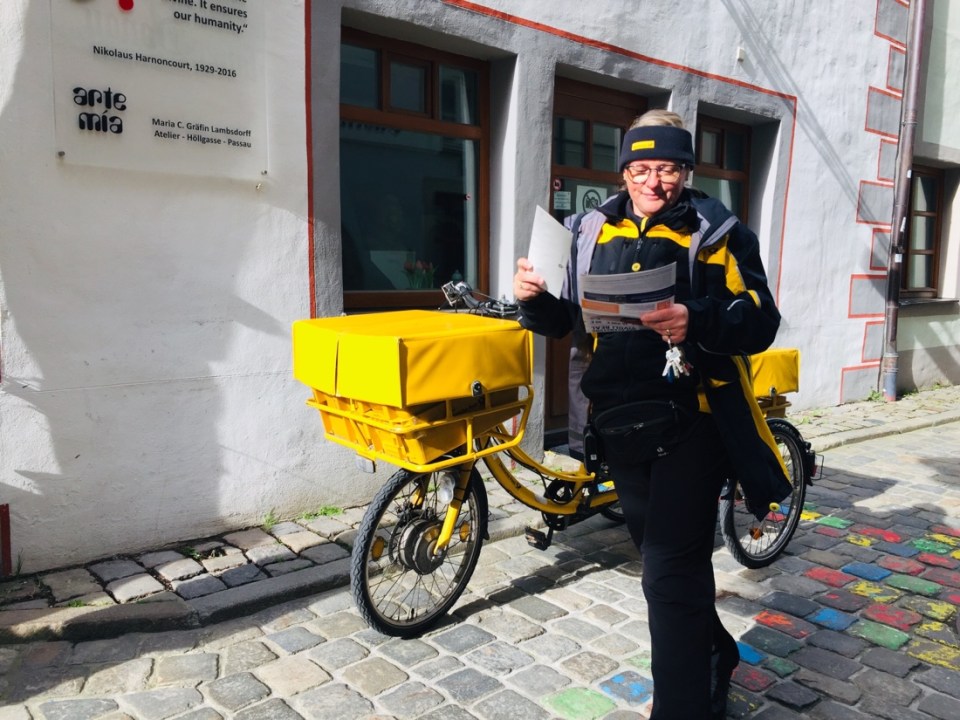
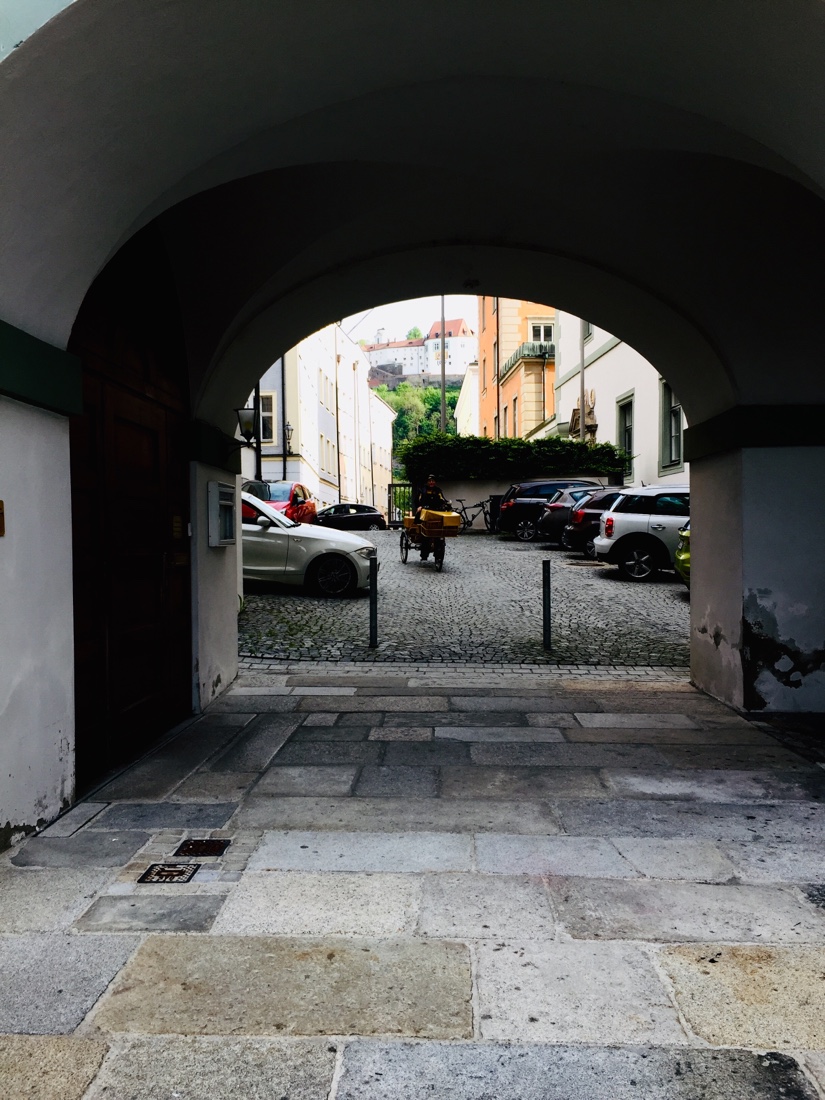
The postal lady delivering on her bicycle
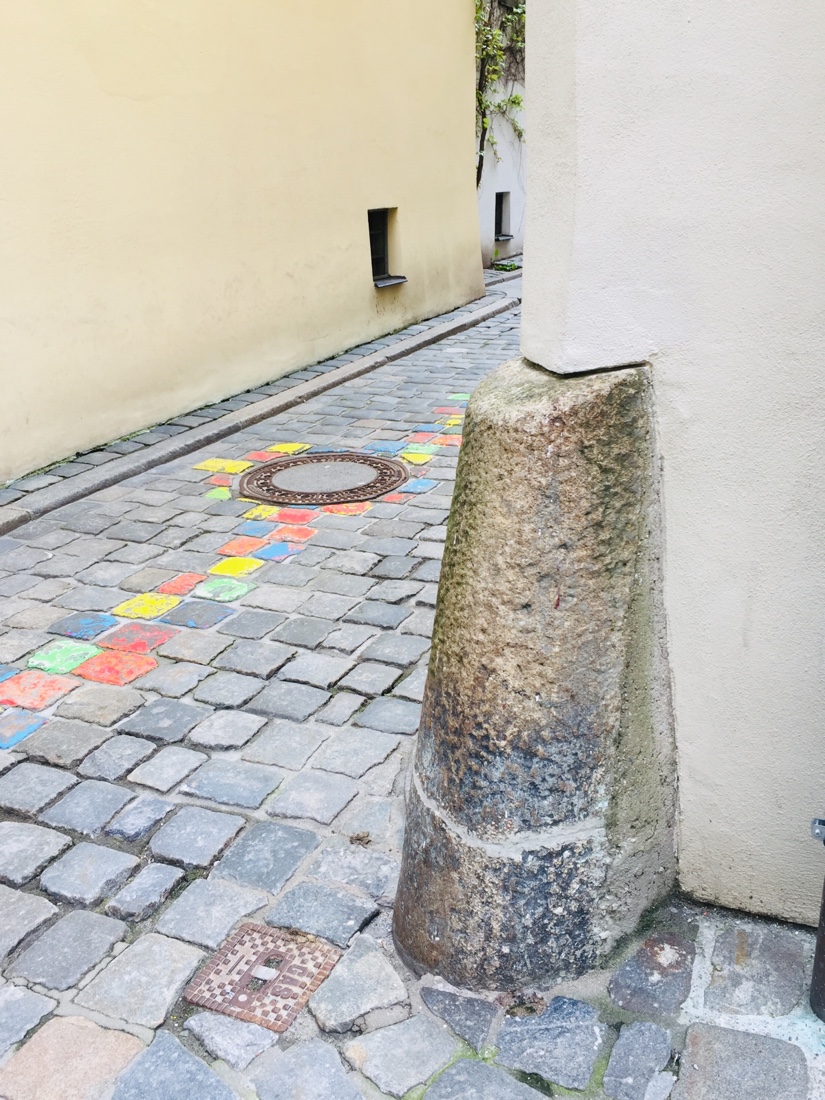
These were put in place so as to not damage the corners of the buildings from skids, wagon, you name it
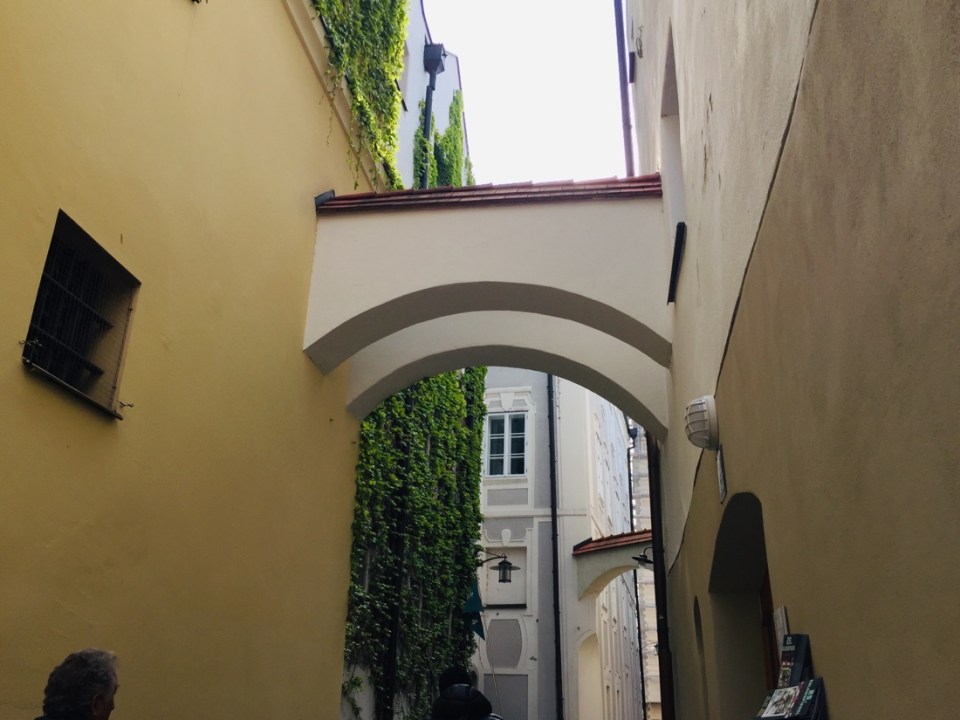
As buildings started to collapse into each other they would place these arches so to prevent any further mpvement.
Passau was first inhabited 2500 yrs ago
Romans were here until 500 AD, then came 200 years of the Dark Ages when there was no documentation telling of the time. Then Catholics came about 739AD….. ruled by Prince Bishops.
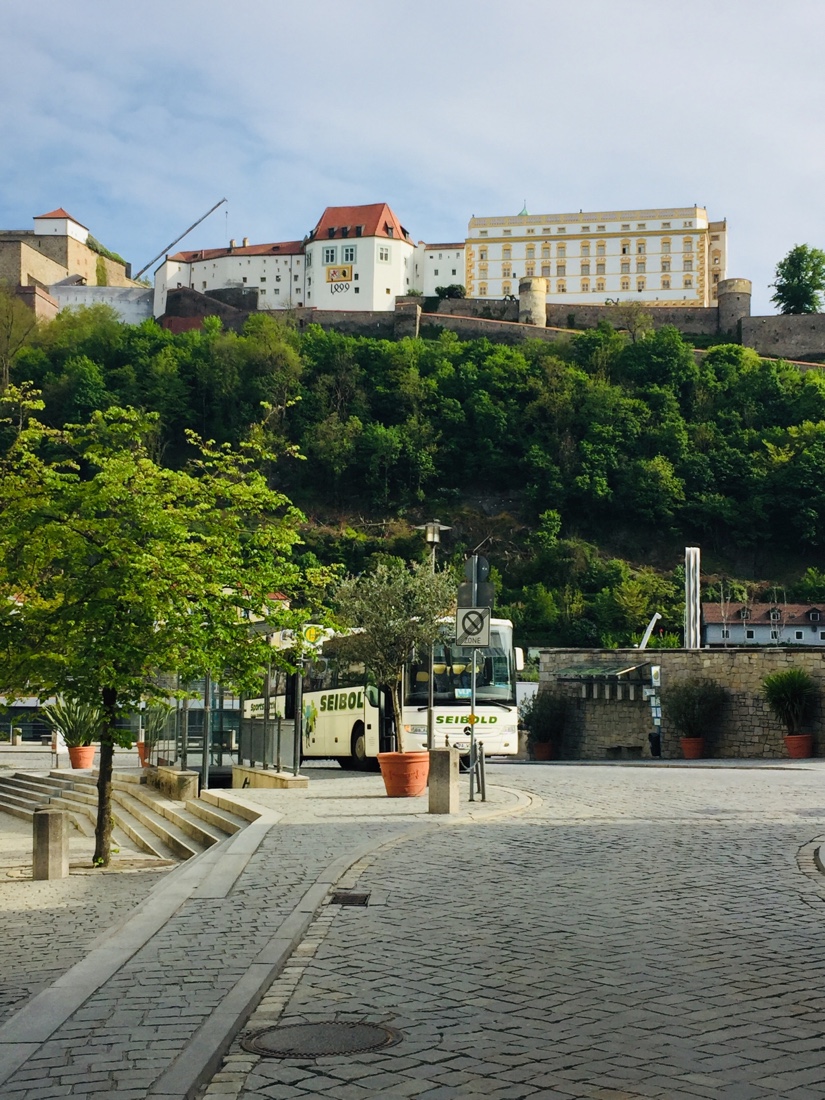
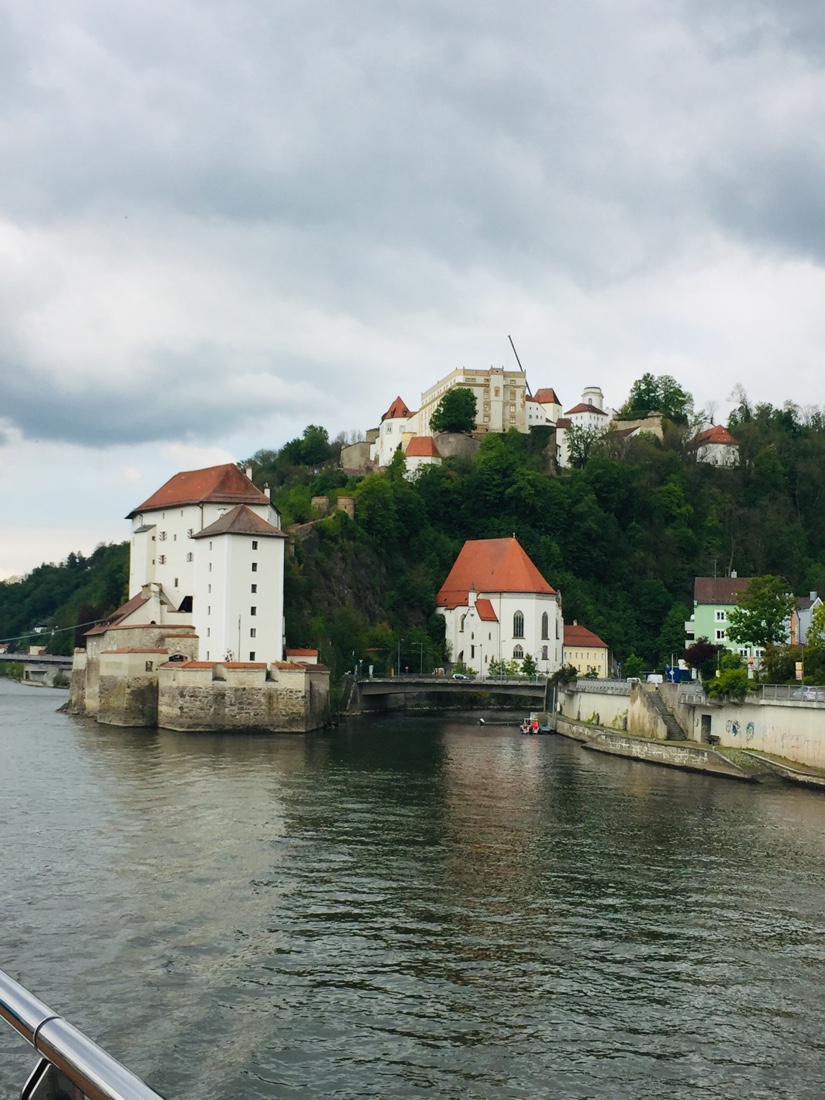
Vesta Oberhaus (a fortress/castle and residence of the prince bishop)on the hill between the Danube and the Ilz Rivers is the size of 10 soccer fields
For a period it was used as prison. One such prisoner was Charles de Gaul.
When the rivers are flooding the buildings down by the river have bulkheads that they put up to prevent the water from coming in. They are only so high…. maybe 2.5 feet. If the flooding is higher, they have to remove them to allow water into the houses or the force of the water would destroy the houses completely. They have to allow the water pressure to equalize.
Wild man river.. symbol is half naked man
After many riots the prince bishop permitted a place to be built where the citizens could socialize…. the dance hall.
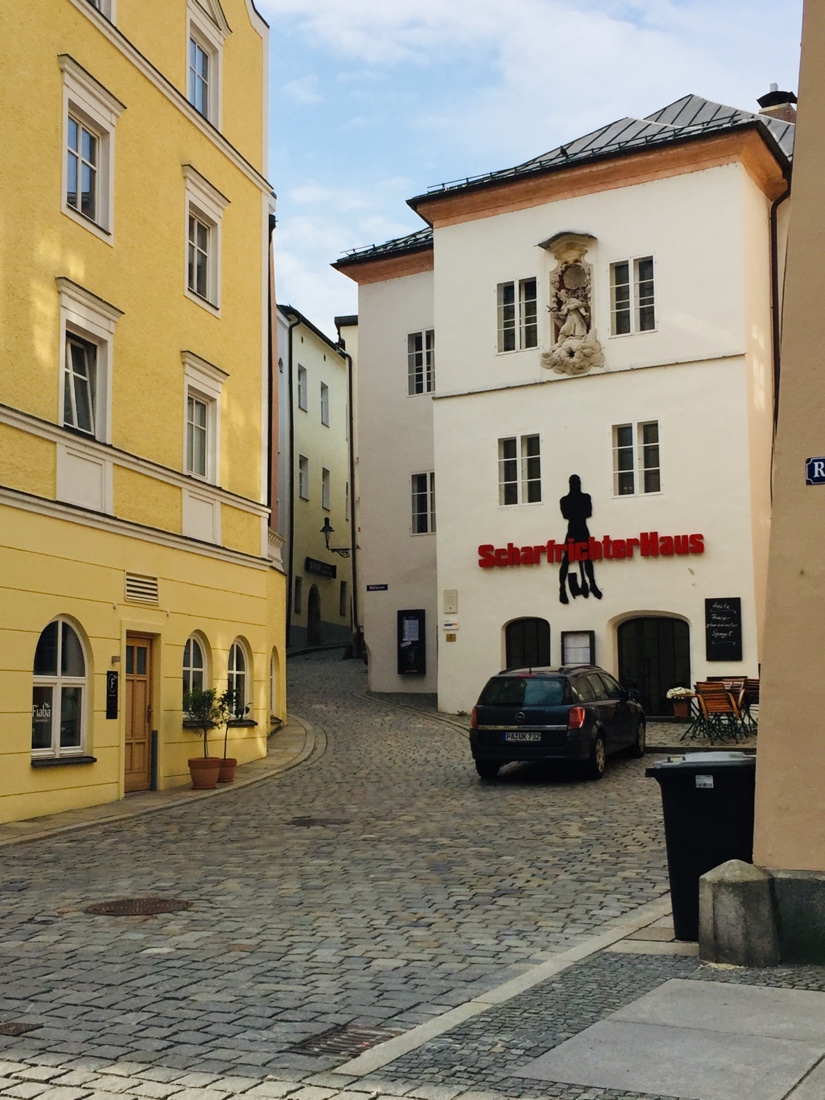
The ScharfrichterHaus is the executioners house.
The prince bishop had a birds eye view from his castle on the hill …….of the executioner & the dance hall.
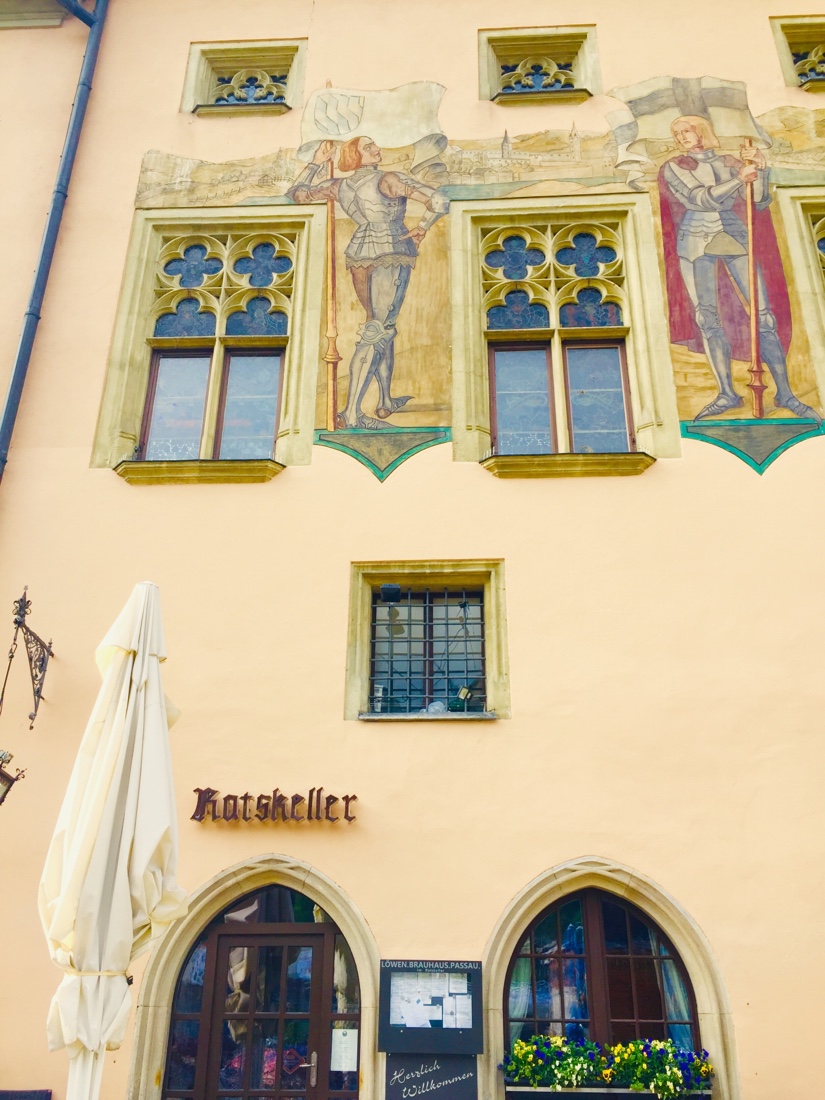
Ratskeller or city council’s drinking place
The executioner’s house
The bishops fortress, Veste Oberhaus begun
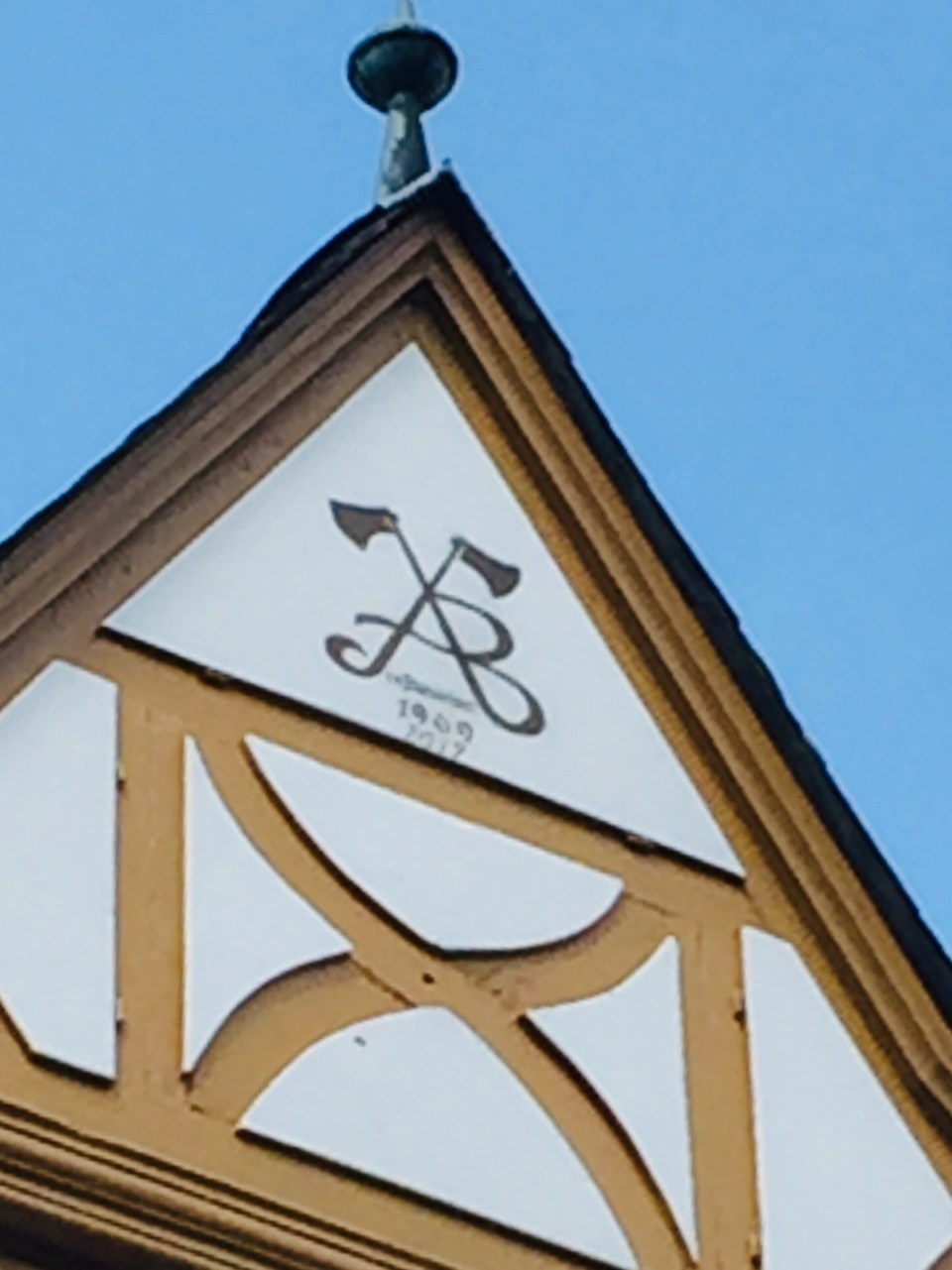
in 1220 but the date when this section was complex shows 1499 (1, then half infinity or an eight means 4 plus 9 & 9)….strange!
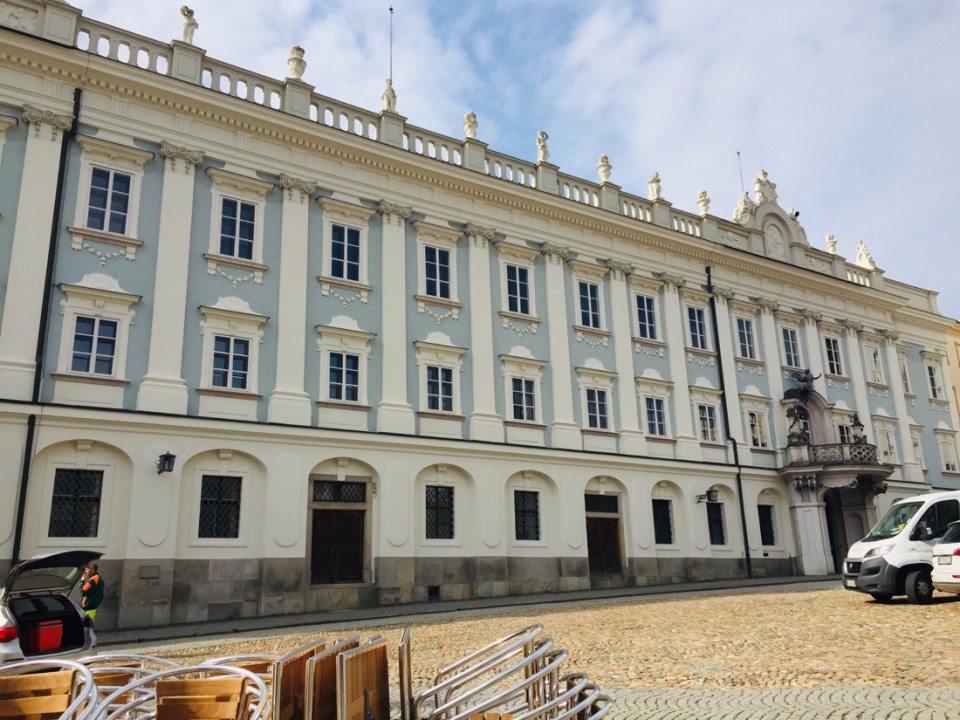
the bishops residence
That postal lady is following us.
There were 8 fires that destroyed the city. After the 1662 fire, the house were all rebuilt in the baroque style.
1803 Napoleon kicked out prince bishop and made it a free city of Bavaria.
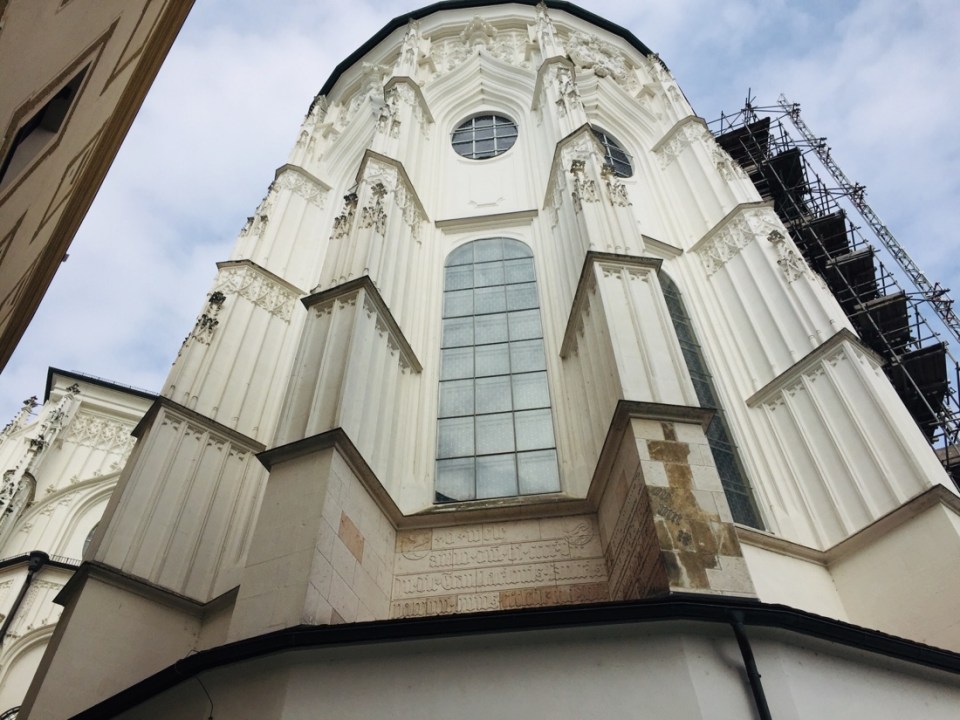
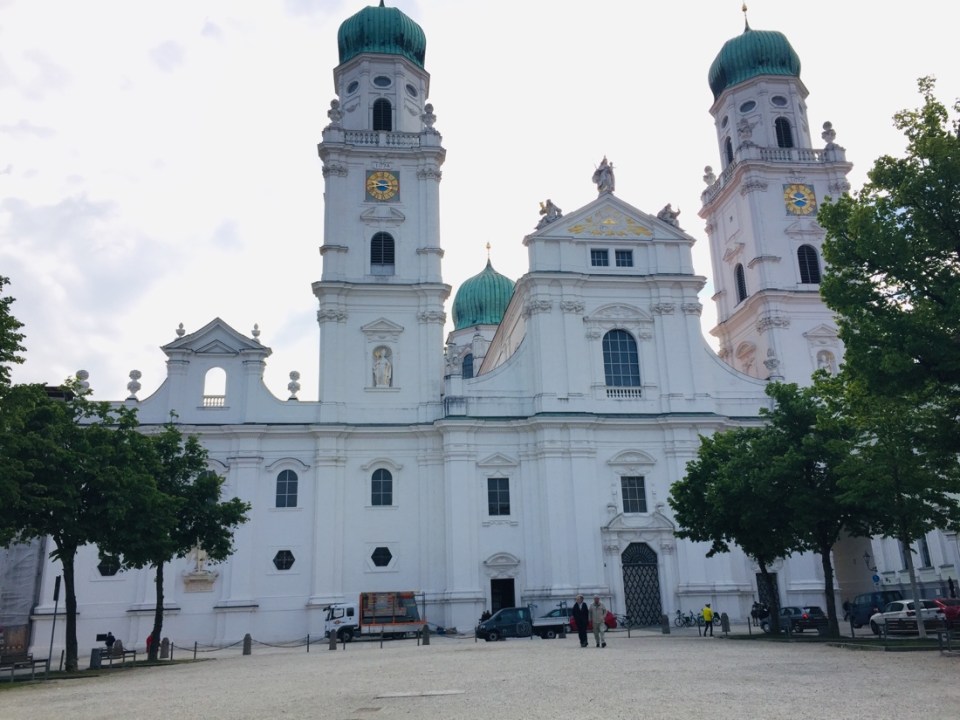
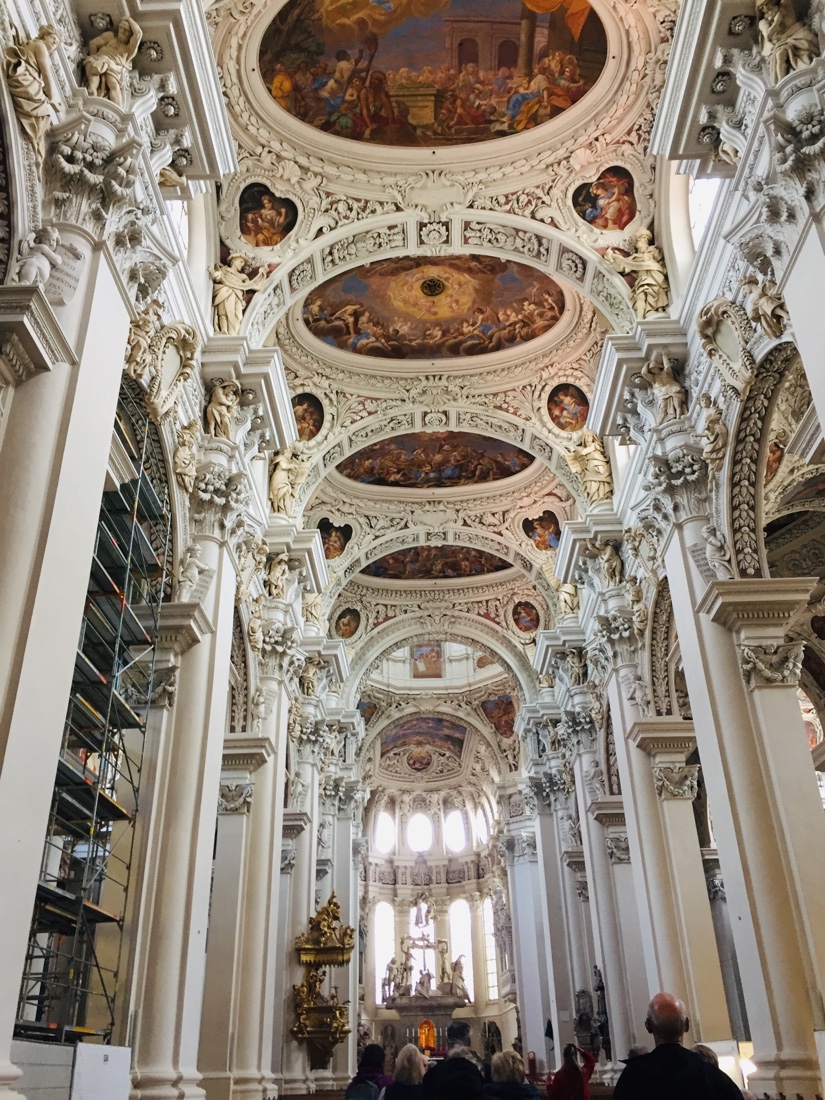
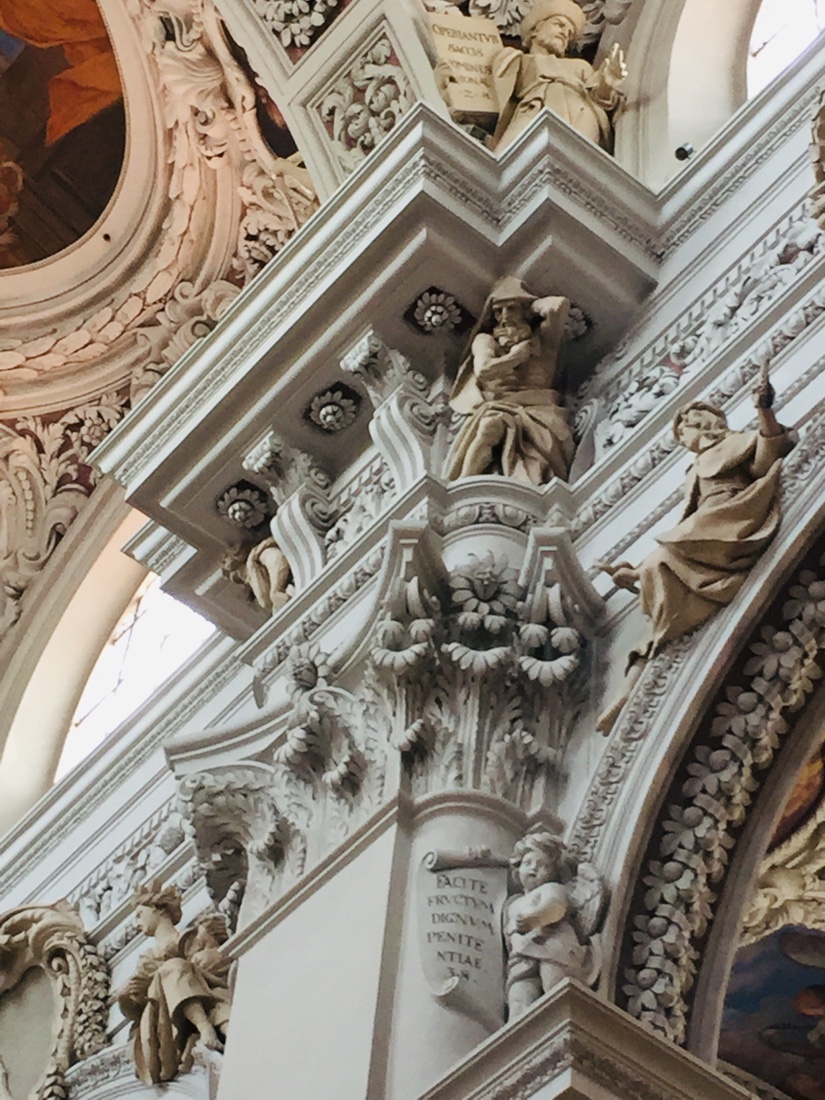
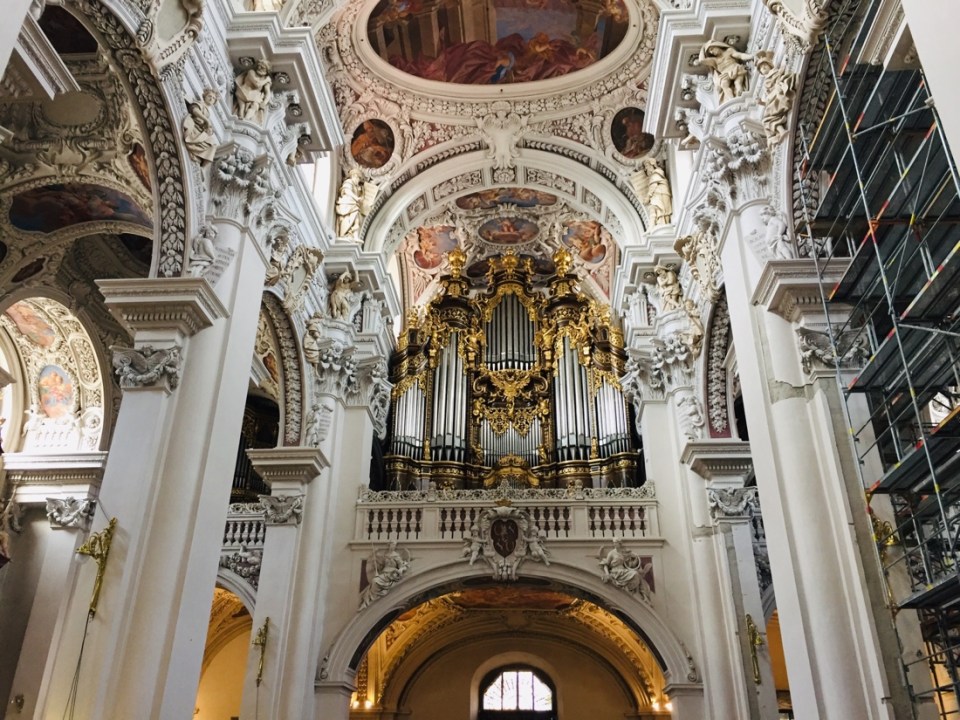
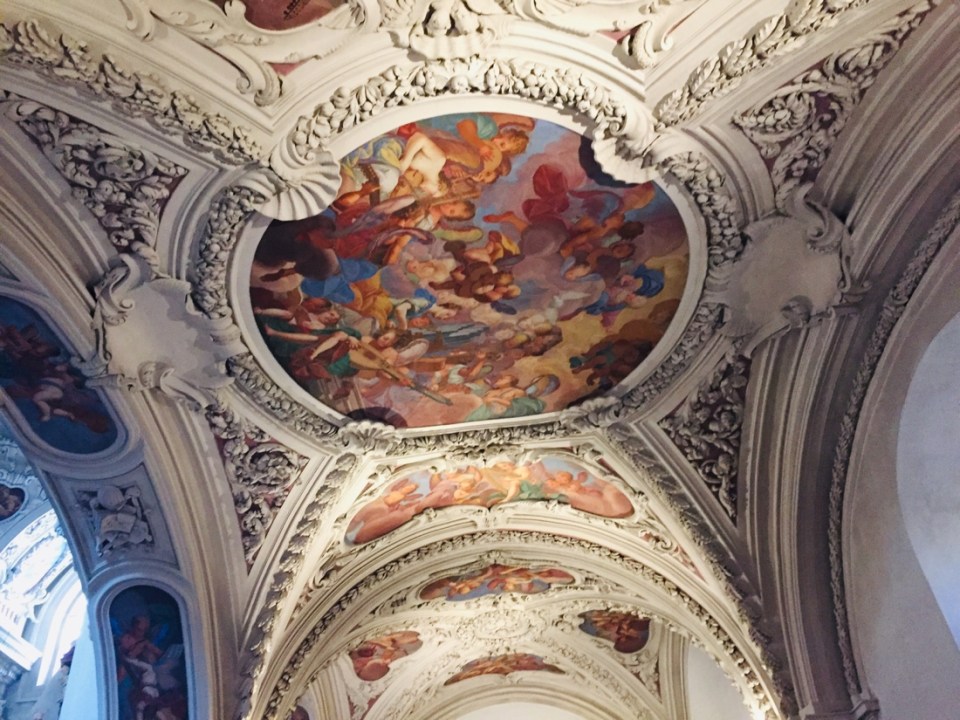
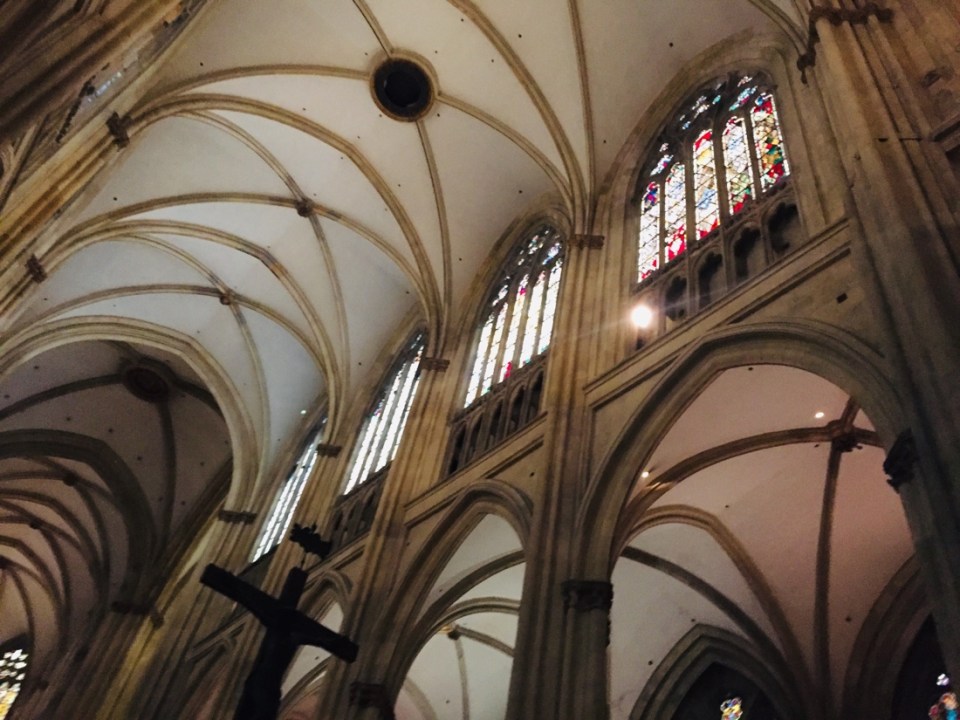
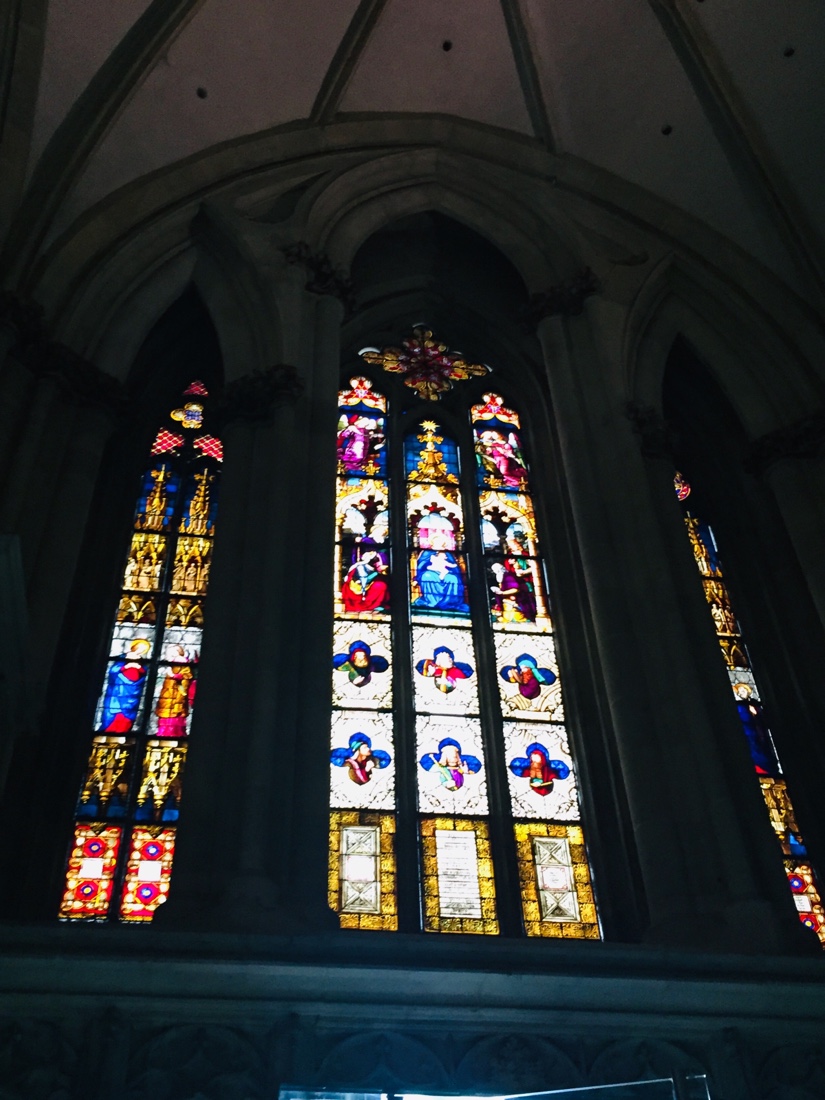
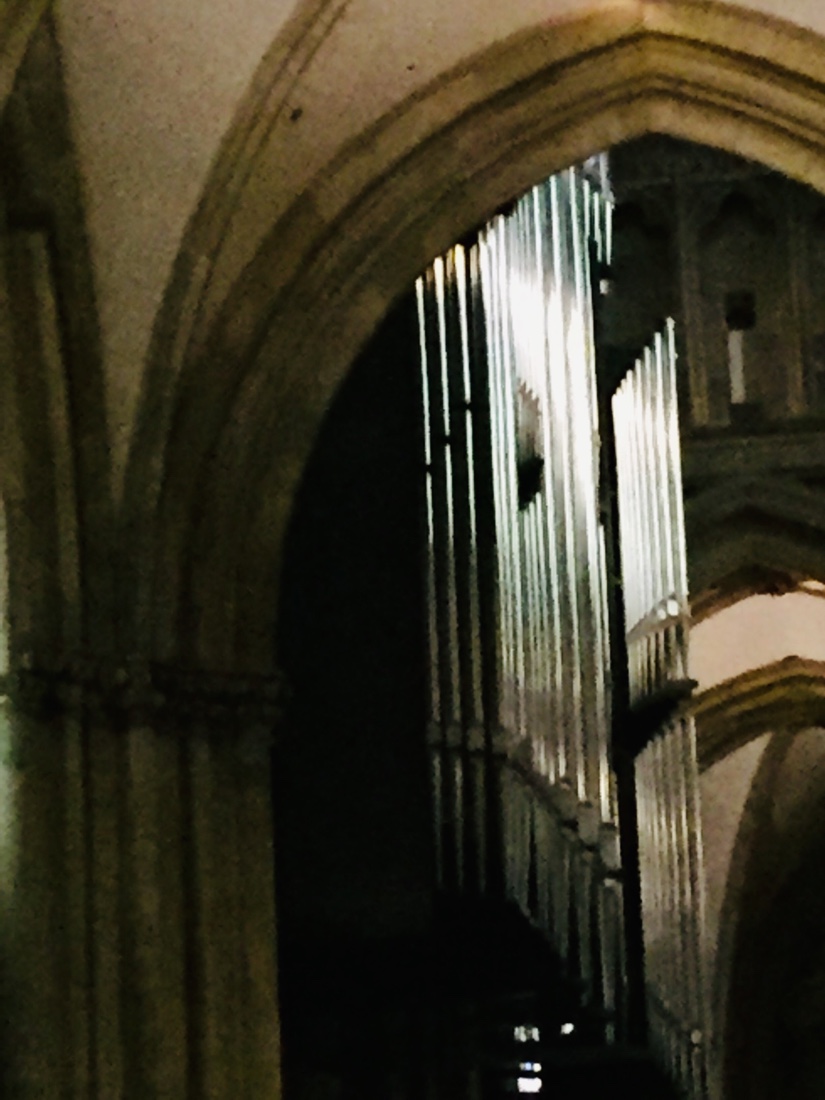
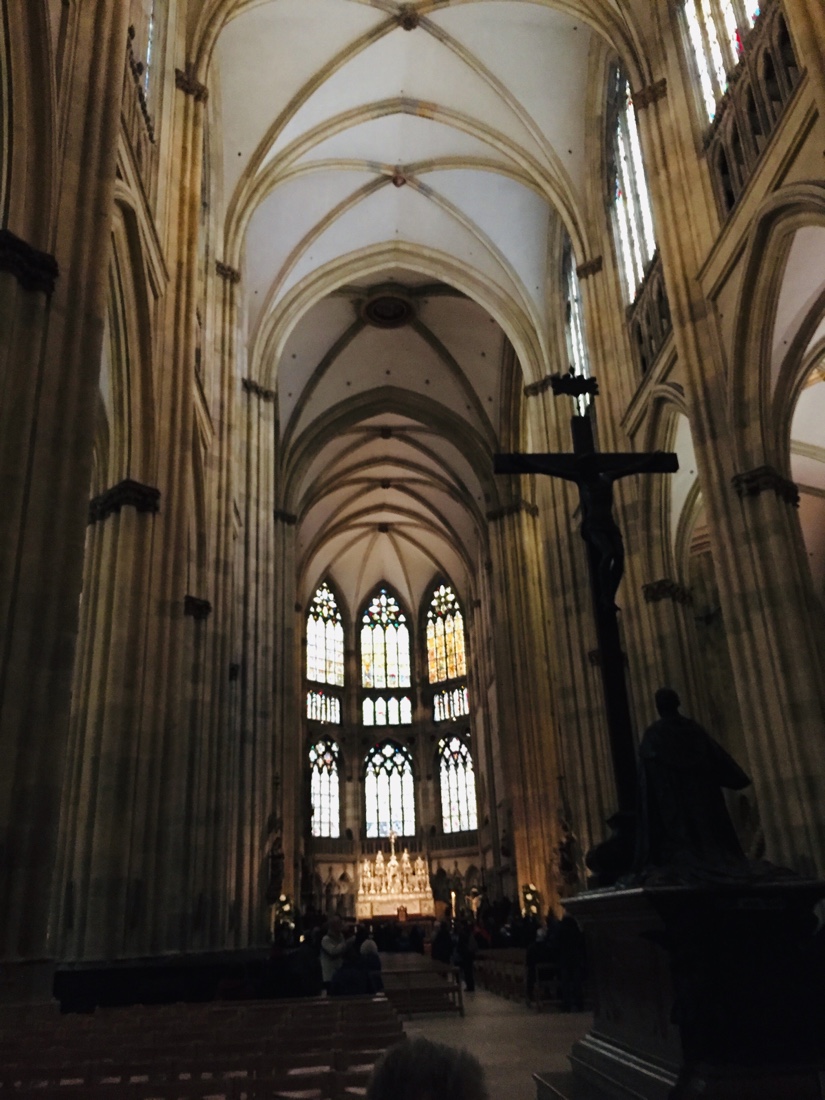
St. Stephens Cathedral was not totally destroyed in the fire of 1662 hence one side is built in the late gothic style. The other side is built in the baroque style. It really is not a beautiful cathedral from the outside but inside…..absolutely magnificent! It seems like each subsequent cathedral we see is better than the last. The organ in it, is considered the worlds largest pipe organ.
Residence
Example of the Gothic side of St. Stephens Cathedral
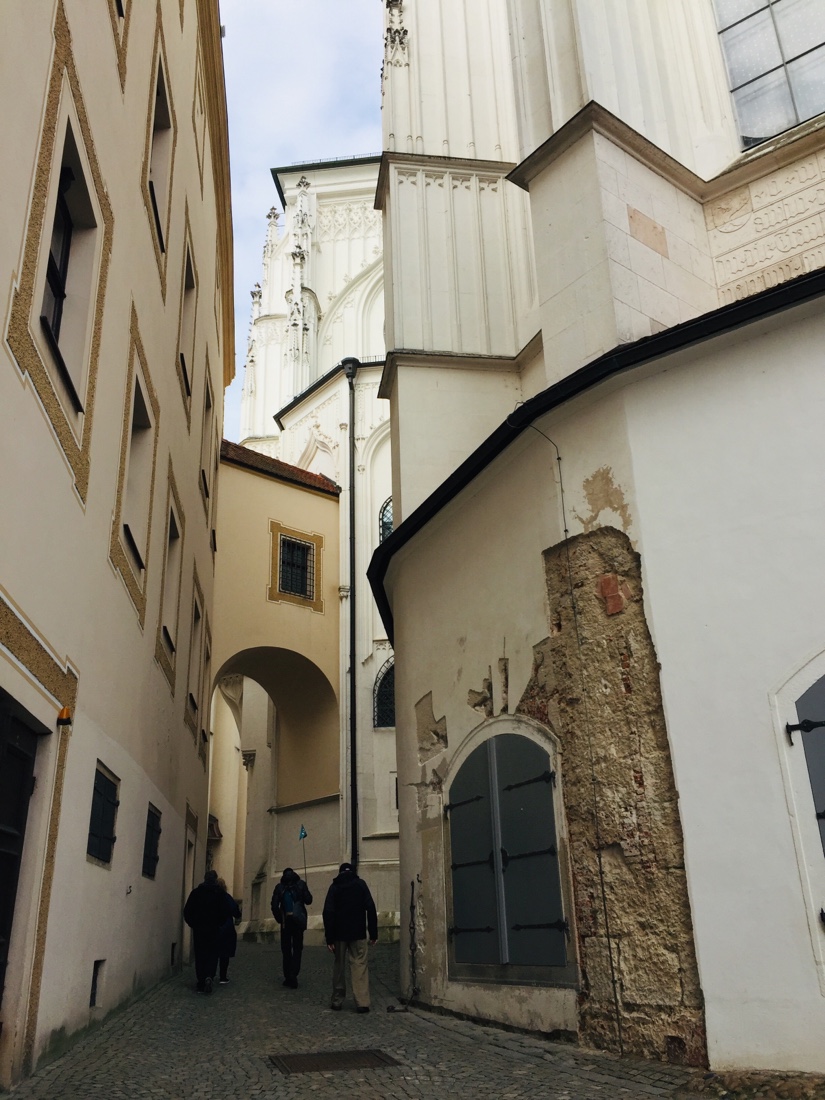
The narrow alley to the front of the cathedral
The very plain exterior in Baroque of St. Stephens
The magnificent interior
Beautiful!
The worlds largest pipe organ…in St. Stephens
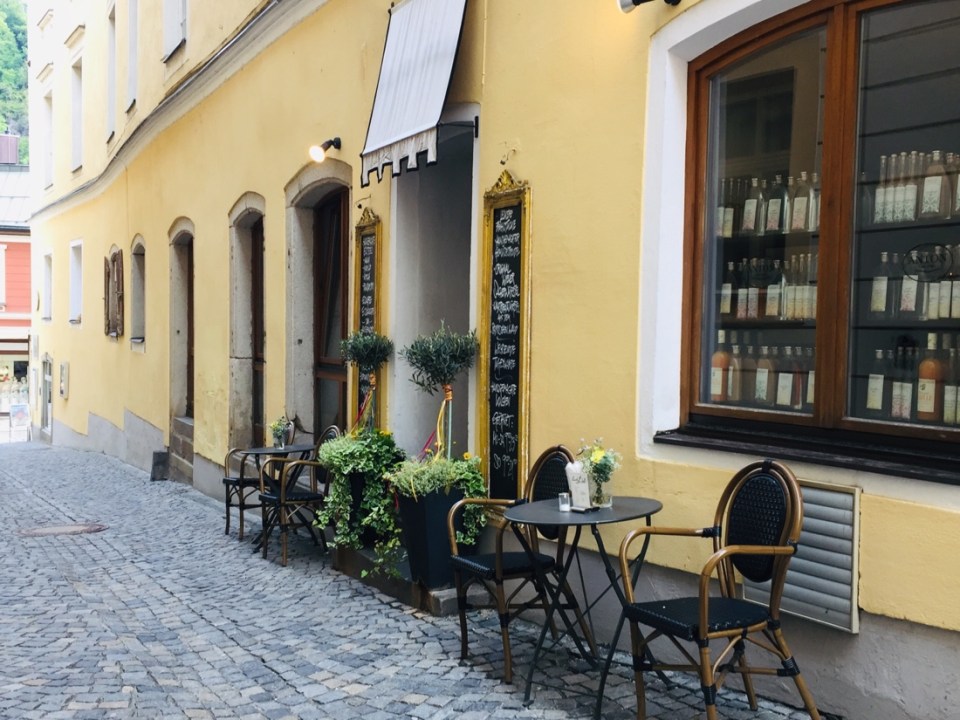
Cute little cafe on one of the streets
Ceiling of St. Stephens
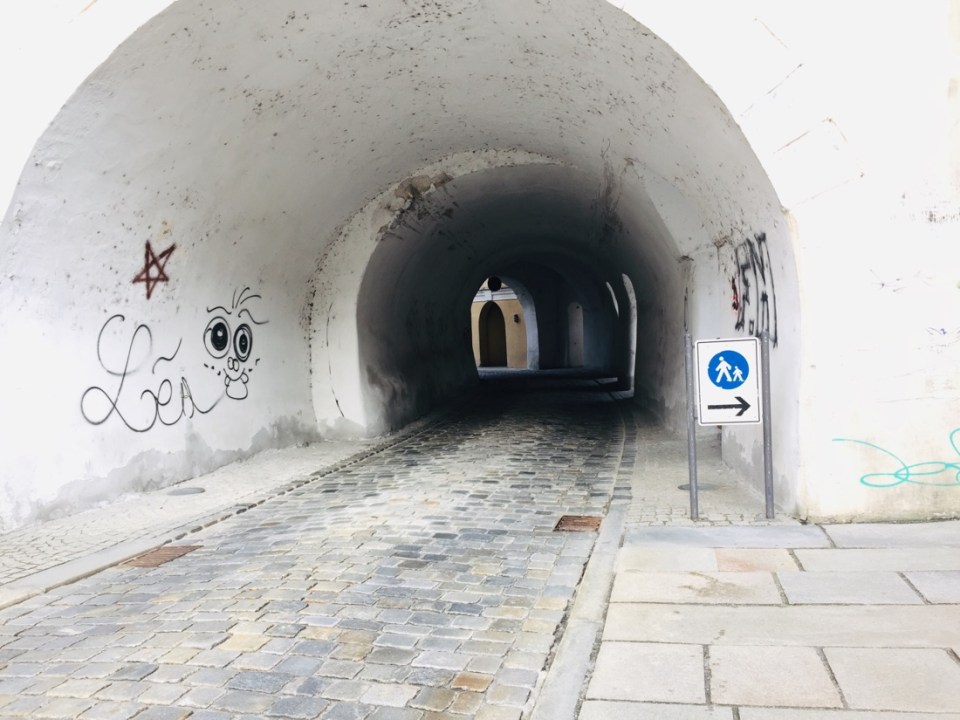
And Through this street/tunnel at probably 60 km/hr cars came barreling through
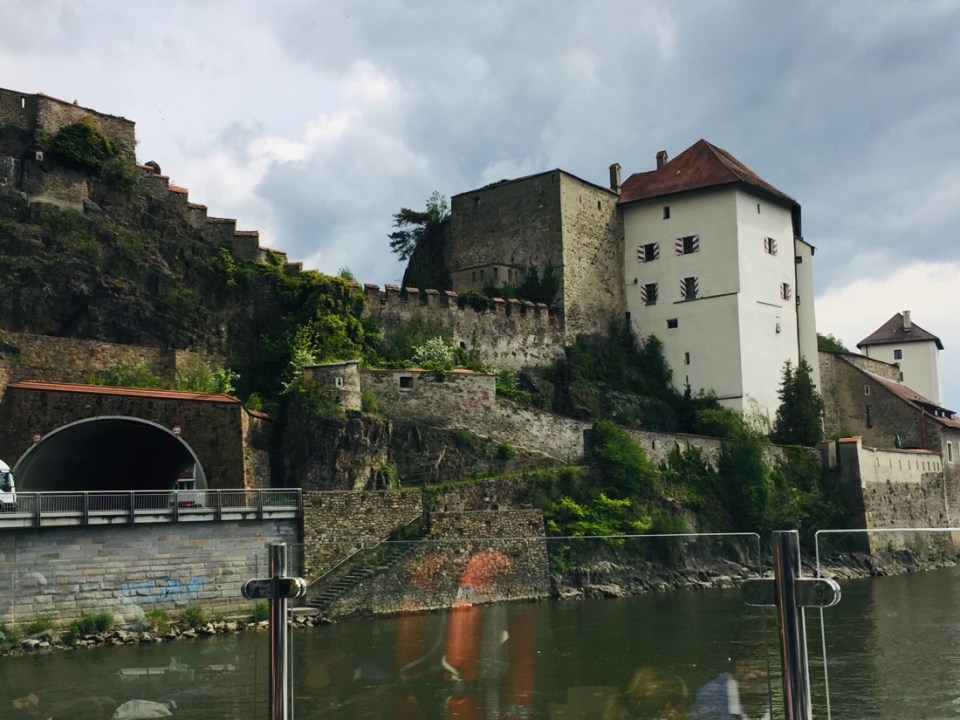
The riverside tower defensive building, the Veste Niederhaus……..from the 14 th century….Passau
The Ilz River joining up with the Danube, fortress above and 14th century defensive building below
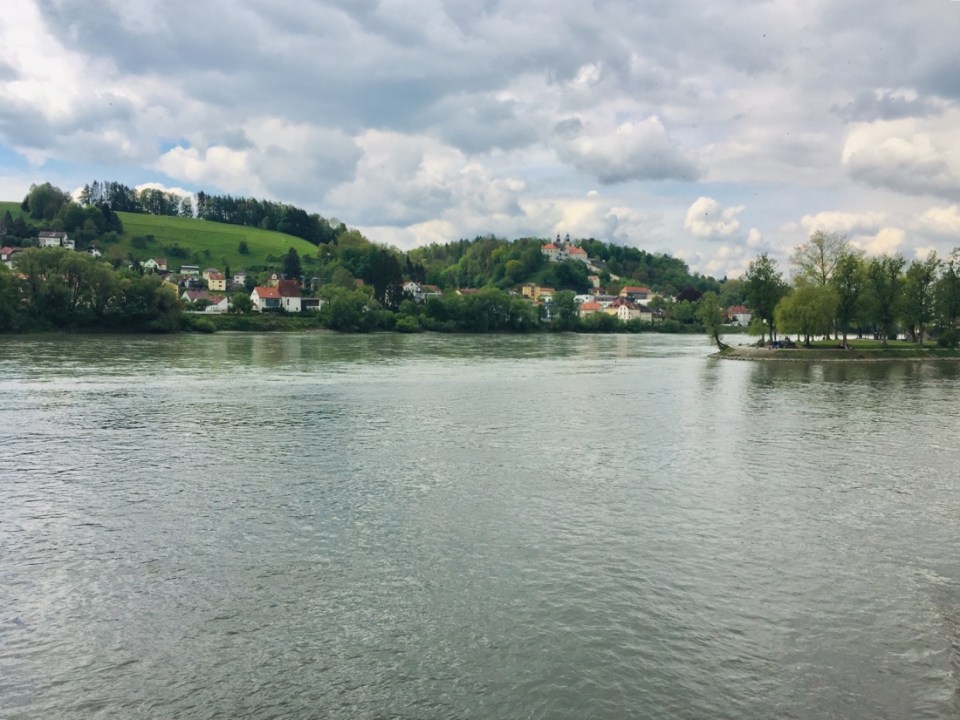
The blue Inn River joins the not so blue Danube at Passau
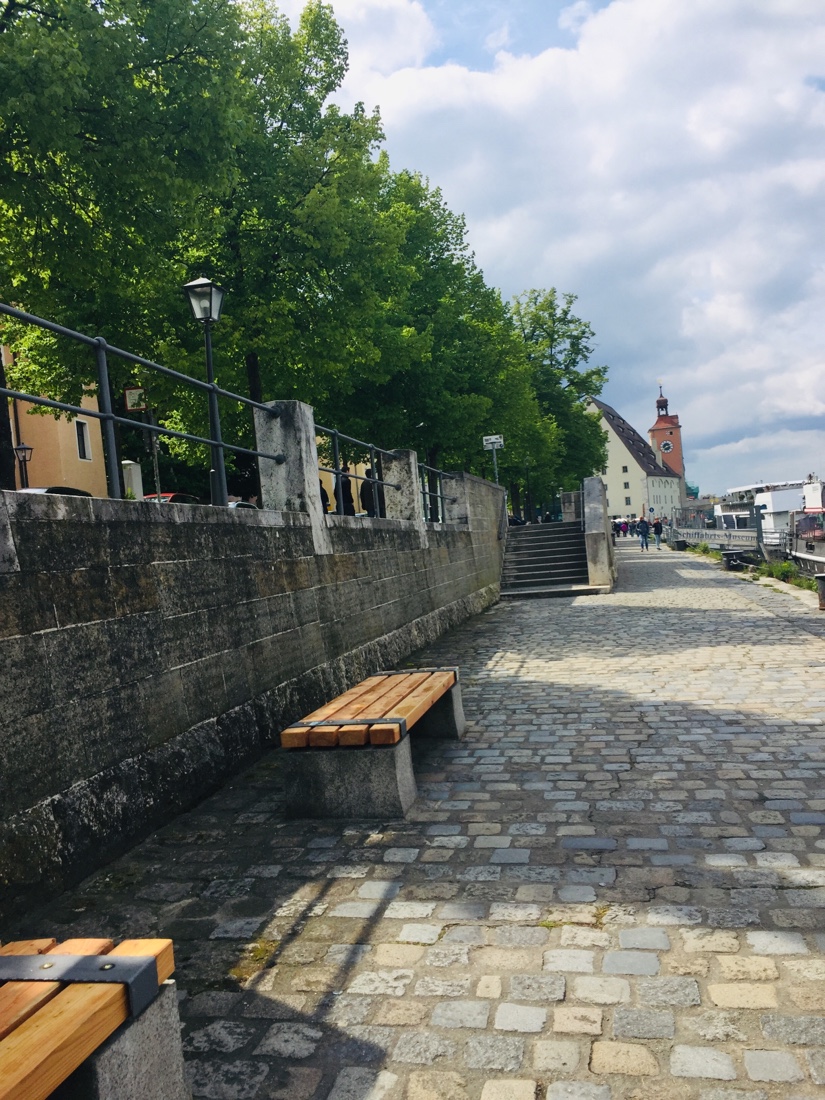
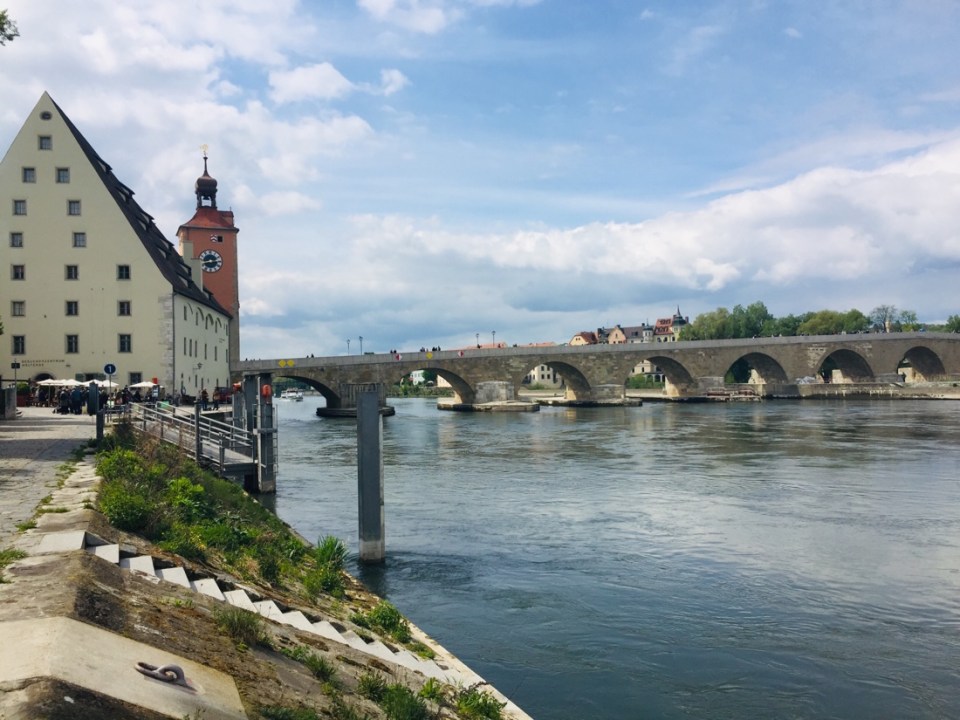
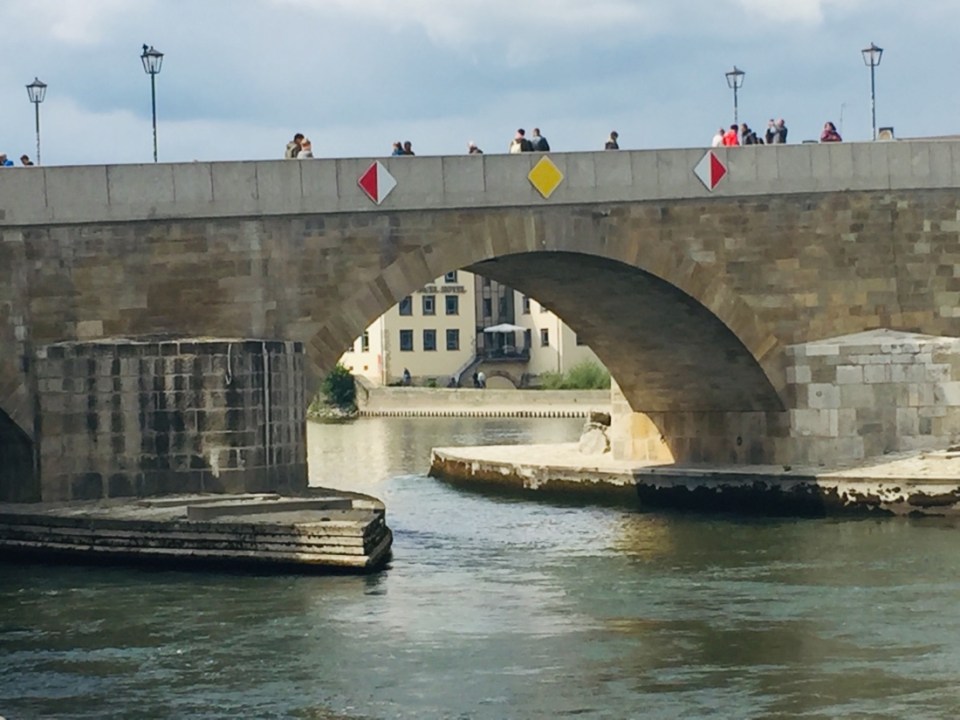
The “Old Stone Bridge” with 16 arches, is 900 years old… finished in 1135. . They just completed a restoration in 2018 that took 8 years at a cost of 2 Million €. The originally took only 11 years.
The walk from boat into the city
The “Old Stone Bridge” of Regensburg
The current between these pillars would suck you under
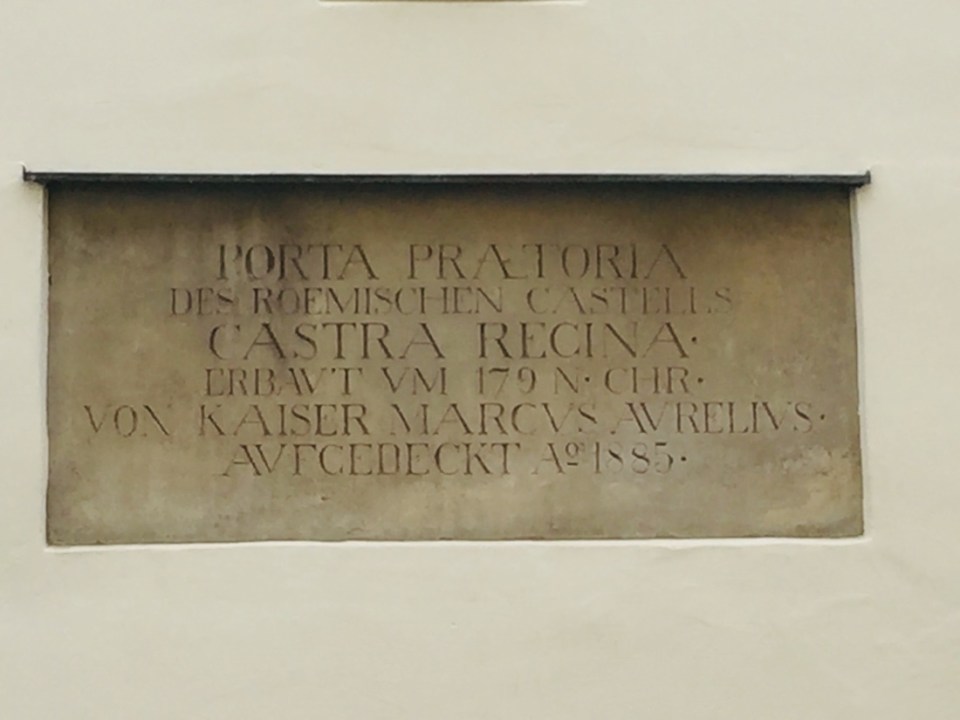
“Castra Regina” original name of the city from Romans in 179AD hense the name….Regensburg
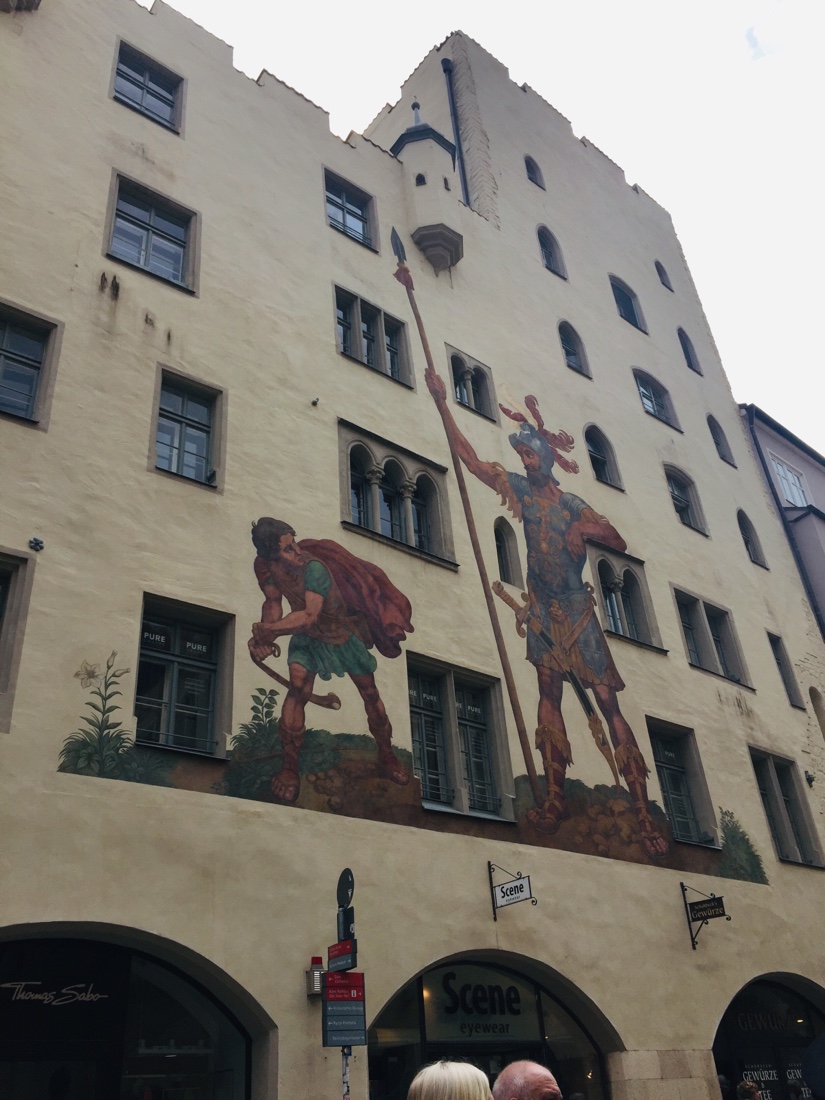
Wall painting on facade of David and Goliath… is on a medieval building….
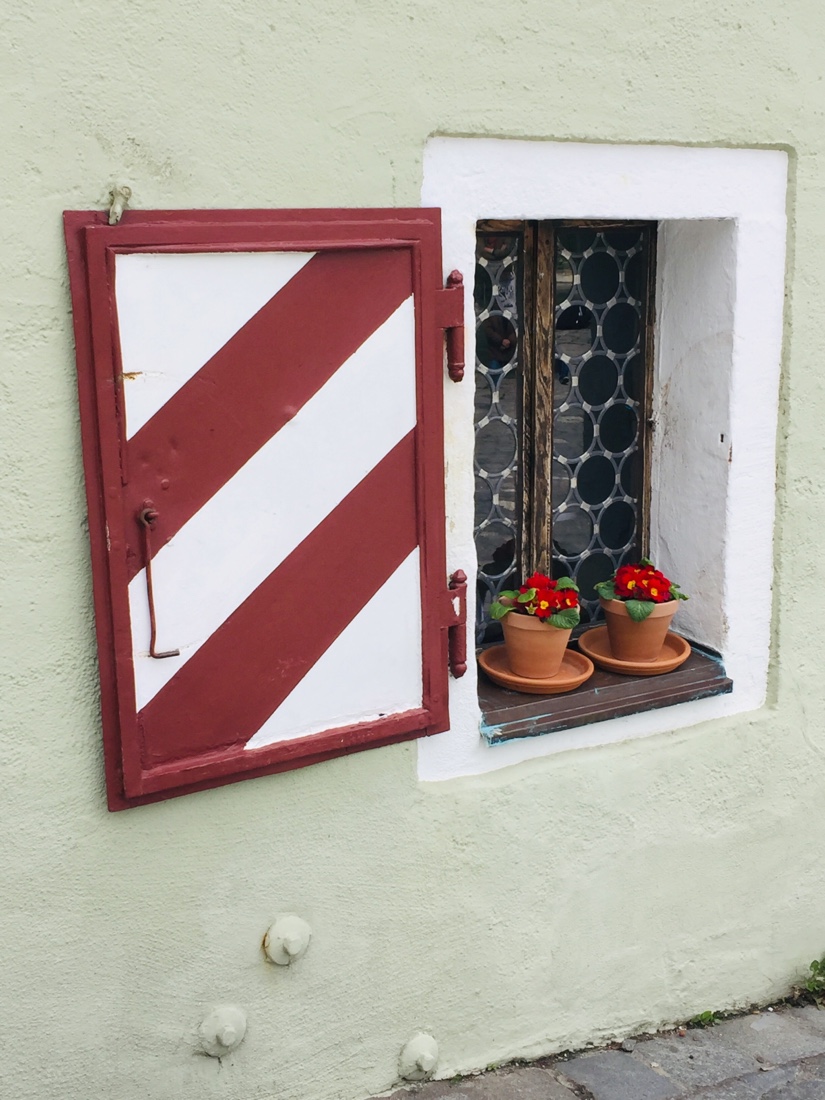
Window on the building of the best place in town to get sausage….the first “fast foot restaurant”
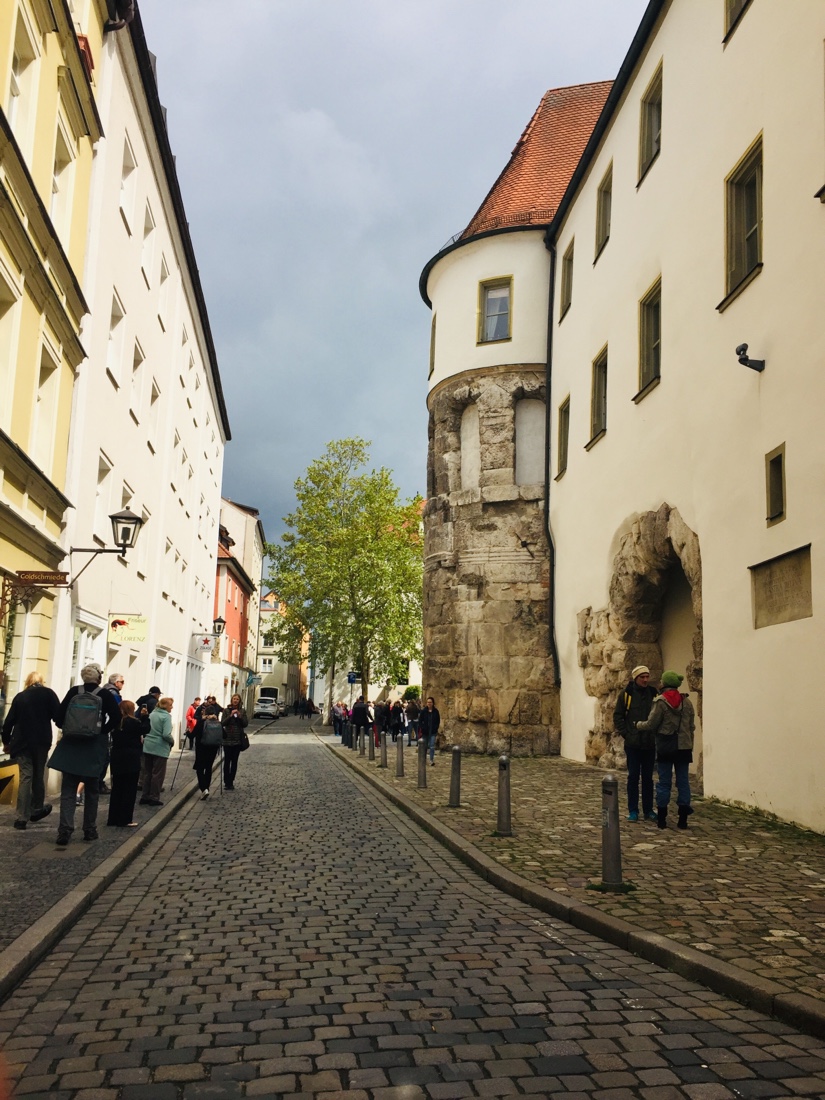
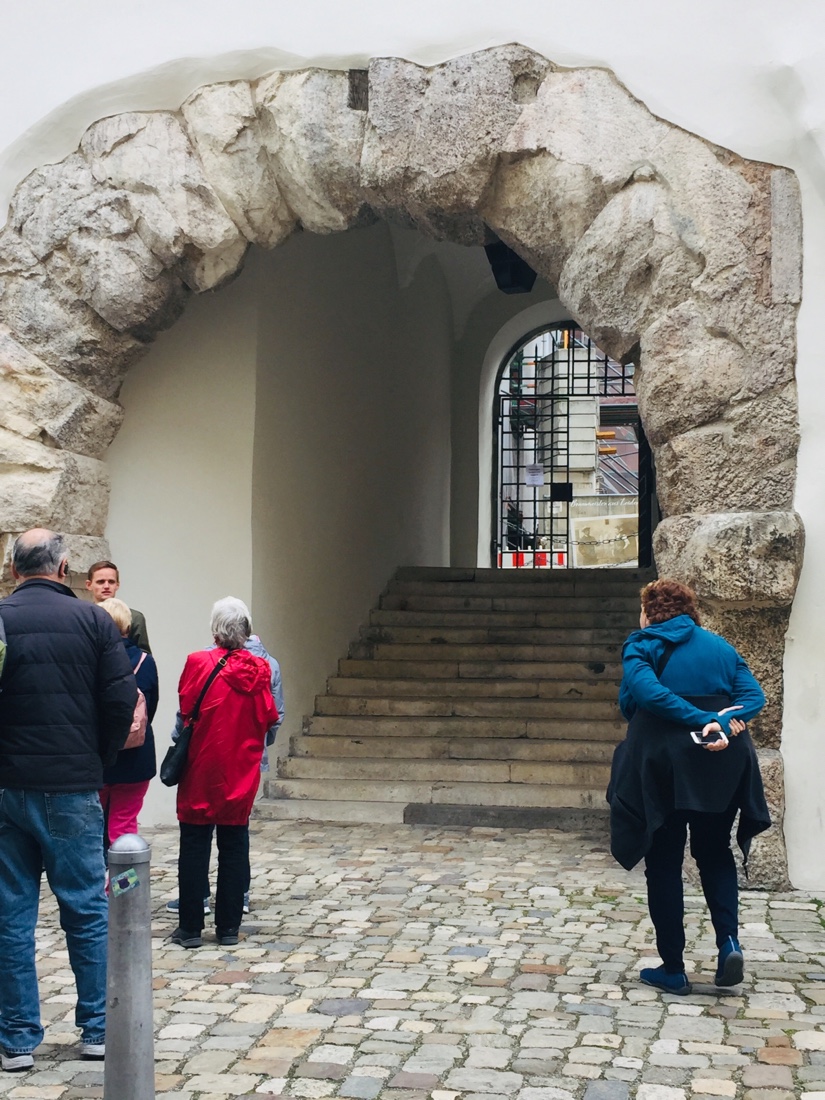
Parts of the old Castra Regina from Roman time still exist
David and Goliath is not for the biblical characters but named after the marching monks called “goliads…I think that was the name!
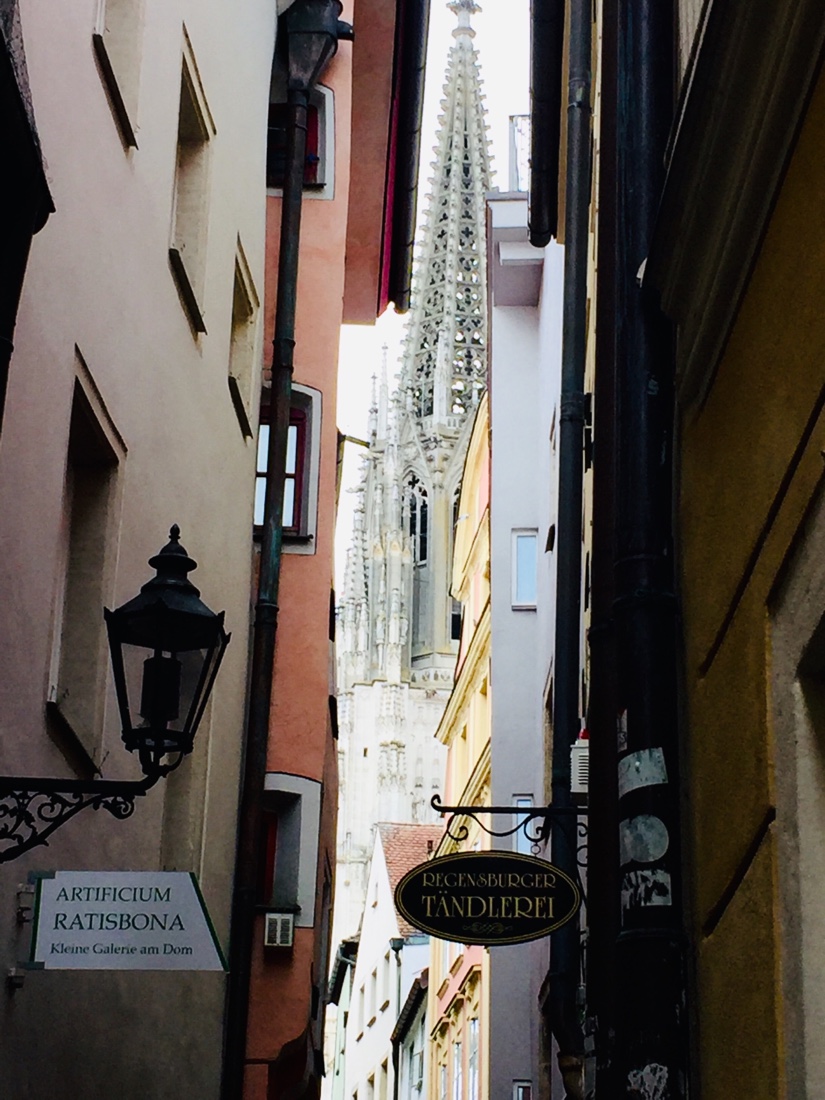
Looking down the narrow street you can barely see the cathedral poking through.
Pink building ….Tuscan residential tower. … upper floors above the next building are only used for storage.
“To advise” means ratskelker or council member
Medieval jurisdiction (a torture chamber) in the basement of the city hall.
Common measuring system came with Napoleon. Before that, each city had their own hence you will find the distance from one town would be different than the return trip.
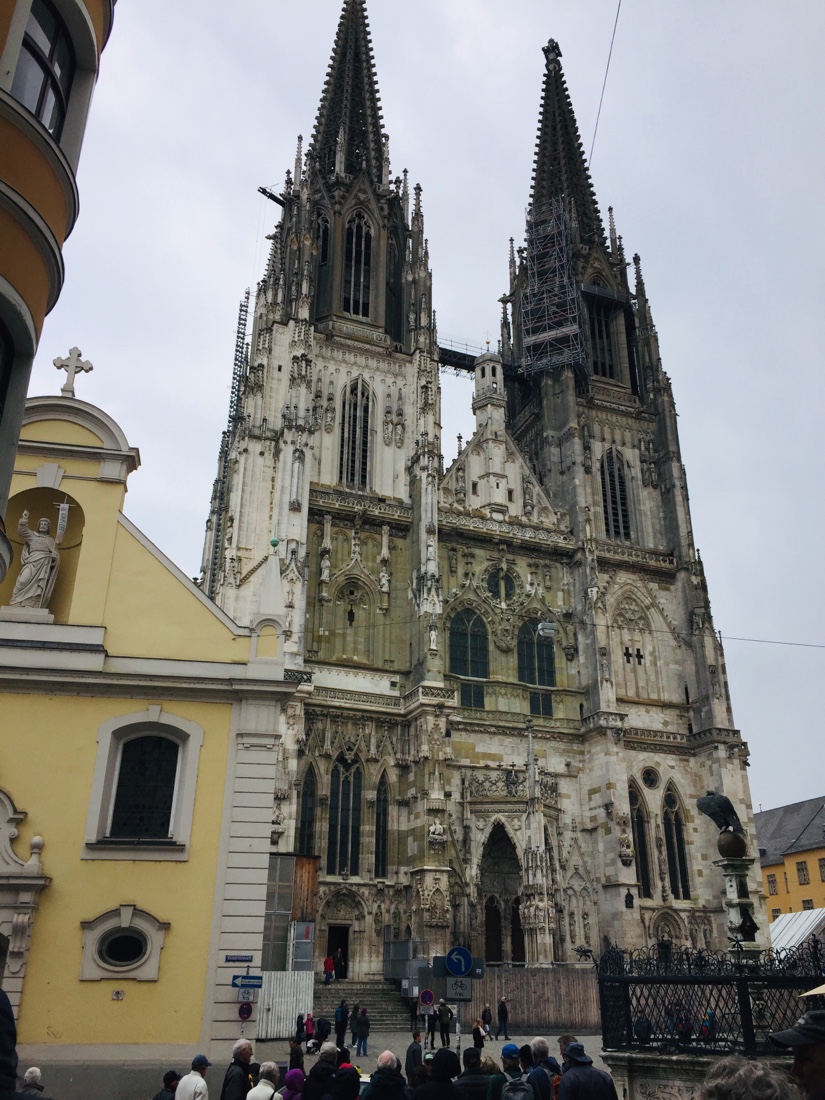
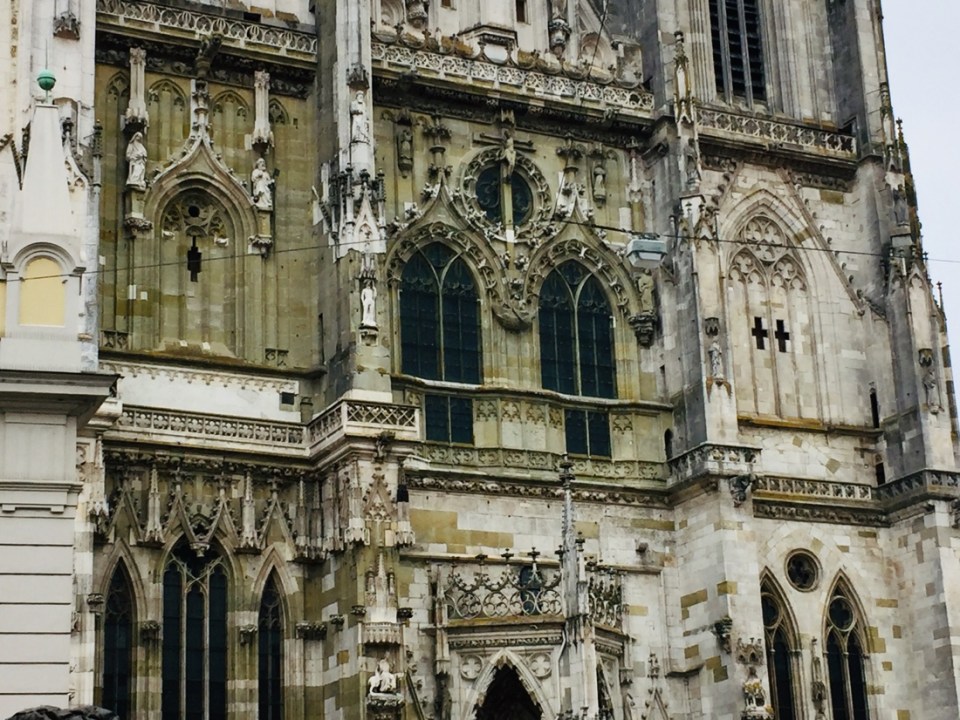
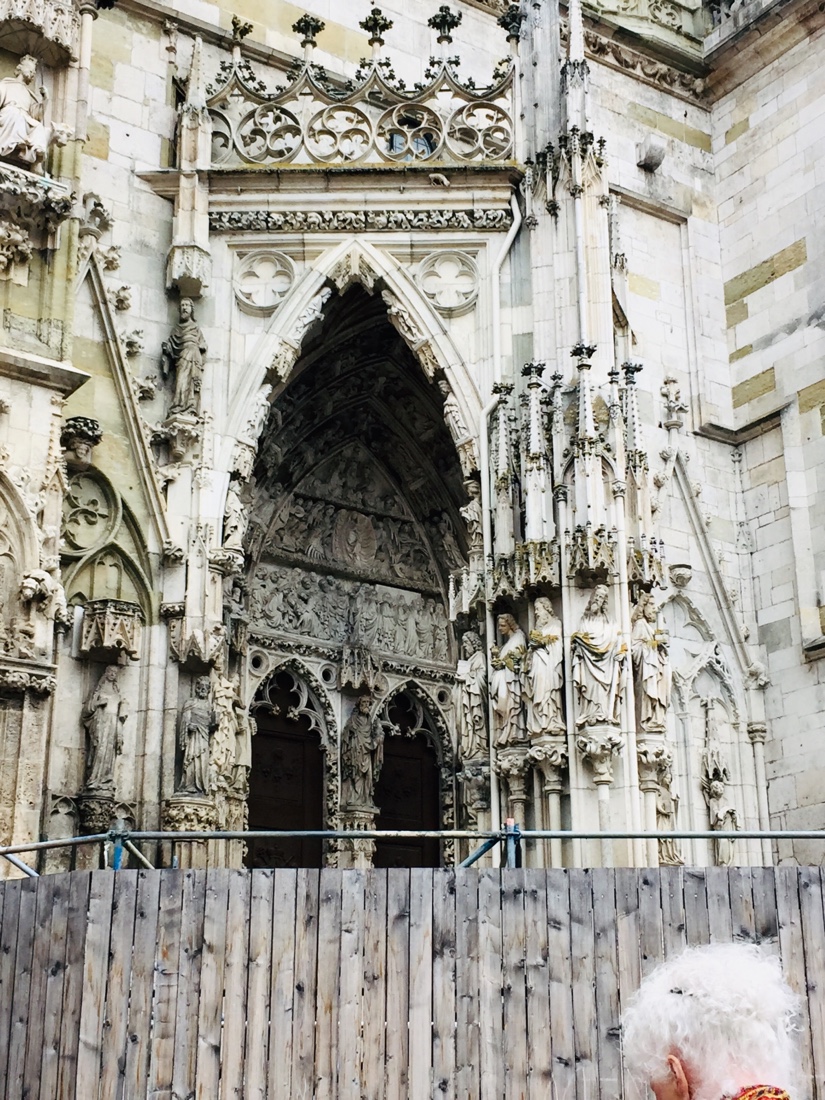
The cathedral is only one not owned by the church but the state. It is made with green and white sandstone
It takes a million€ per year to maintain. Pope Benedict the 2nd from here. He is the only one that has abdicated before death. The cathedral was started in 1273 but took 600 years to complete. The outside turns black from pollution. The tall spires are only 150 years.
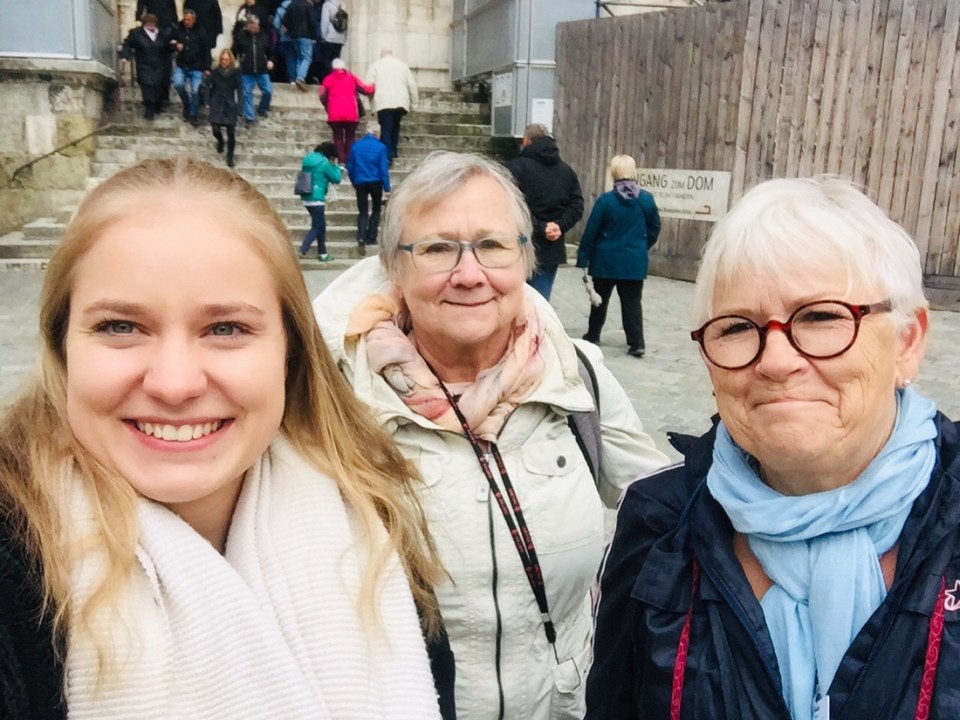
We were so happy to meet up with a lovely young girl Helena, that we met previously while on our safari tour of South Africa. She lives elsewhere in Germany but is studying at the university here in Regensburg.
The Cathedral of St. Peter at Regensburg
Helena, myself and Jeanette in from of the cathedral in Regensburg
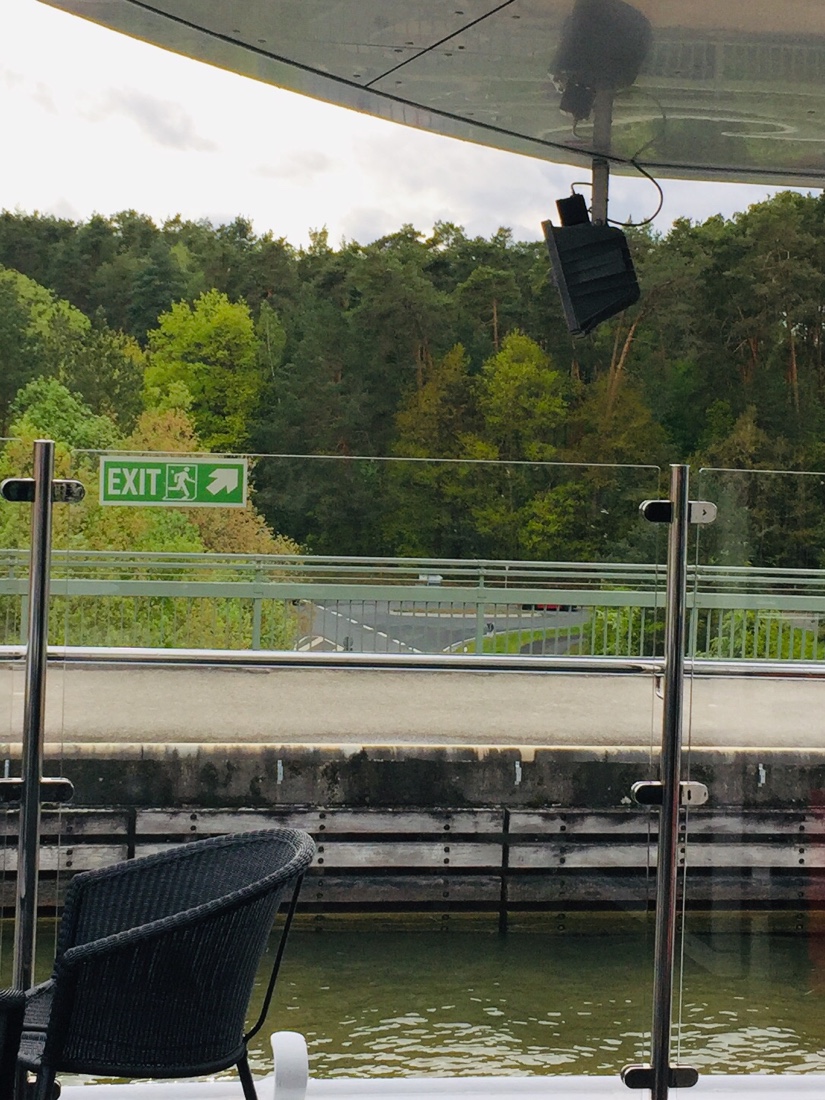
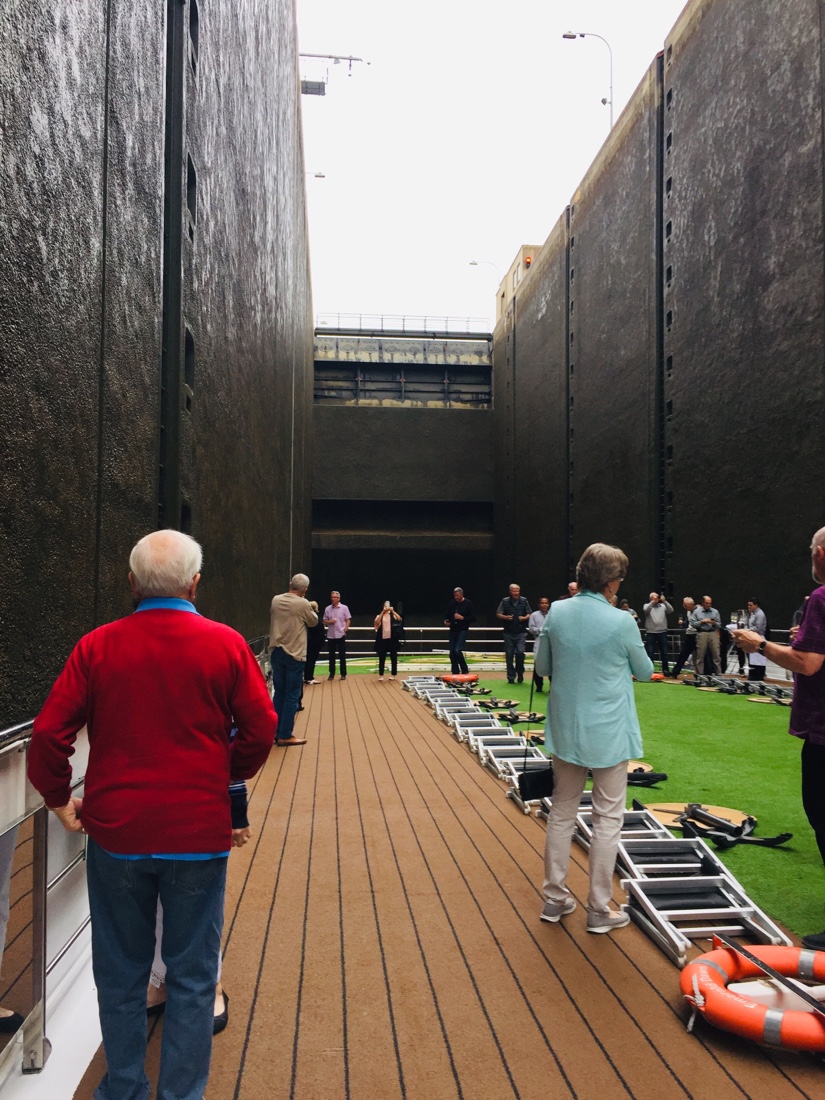
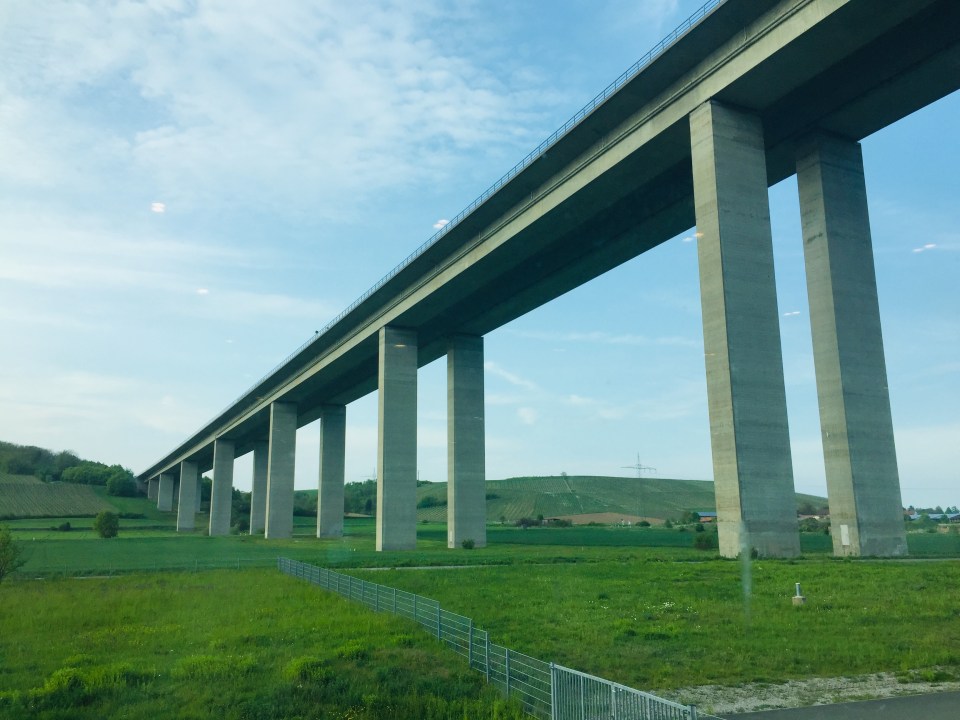
Shortly before arriving at this lock, the canal passed over a road in much the same way as a highway passes over top another. Only thing different I would think is the weight difference. Can you imagine the reinforcements necessary for the weight of the water, the ship and the 200 plus people on the boat never mind the weight of the lock itself? I’d say a major engineering feat!
From here it is at the high point on the whole system. From here we go down instead of bucking the current. This lock is huge….81 ft deep (1332 feet above sea level). I tried to included 2 videos. One of the boat rising in the lock and one of the wheelhouse being lowered…..but it won’t upload. Sorry!)
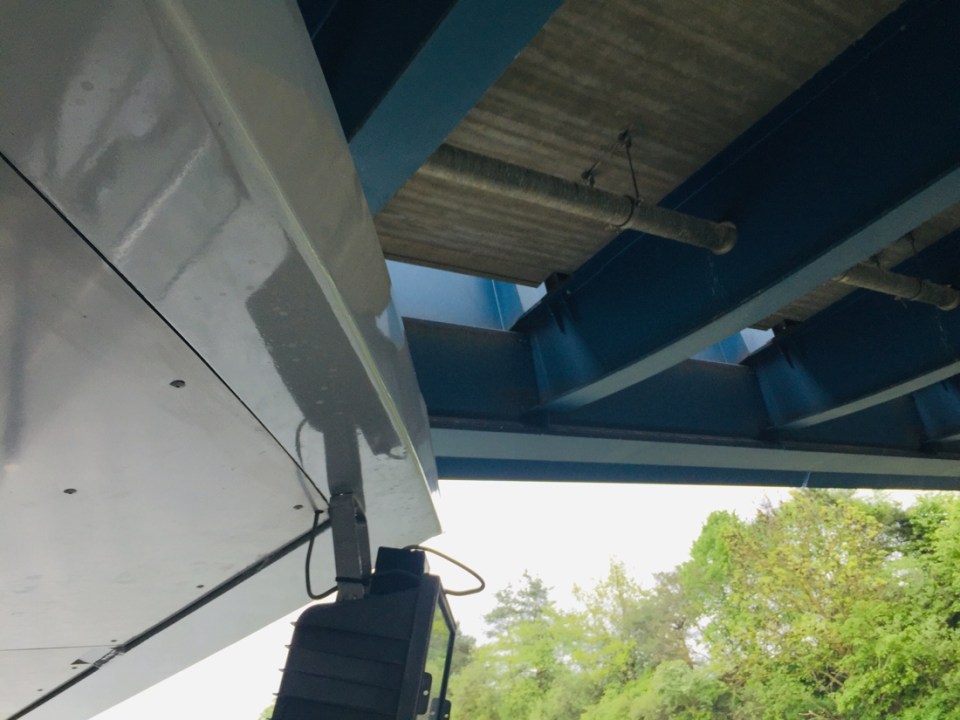
Passing under a bridge……close huh and there is a wheel house and sun deck up there although all railings and the house have been loweredThe side of the lock
This is where there are 3 reservoirs. I mistakenly said that each lock has this set up but it just this one where the water flow changes.
3000€ is the cost for this ship to pass through ”canal” part and only from one end to other. River part is no charge.
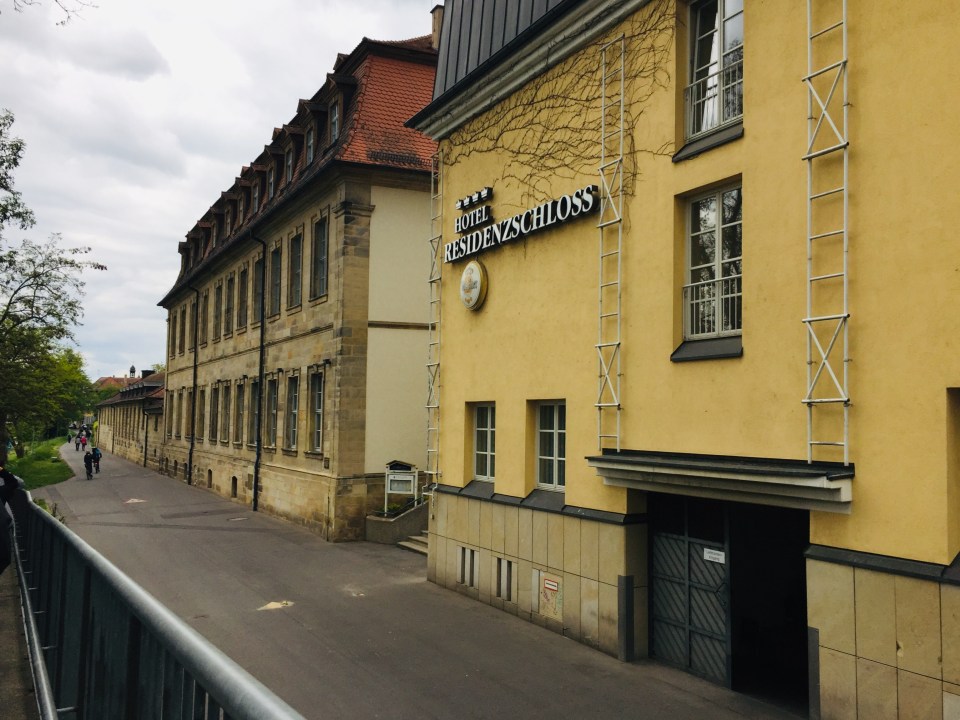
80,000 pop. + 14,000 students. In 1500 the monastery was built. Now is a hotel… but in between it was very good hospital noted for privacy and cleanliness… something that was unusual for the times.
City has been in existence since 902 but wasn’t recognized until 1007, by the dioceses.
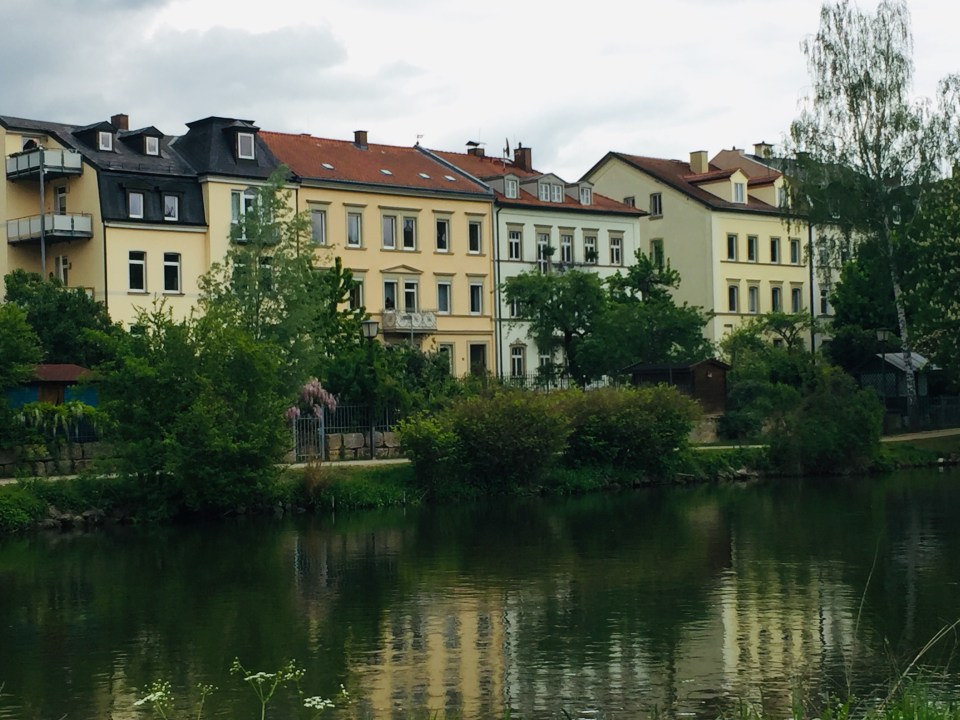
Little Venice …along river began in 16th century.
There are 1523 stations of the cross in the city .
A symbol left over after departure of 14,000 US troops that were stationed here.
Wobbly walking man” is name in German for brew pub. The cathedral on the hill was built in
“Wobbly walking man”…. a pub with the sign hanging that looks like the “Star of David” but is actually the sign of a pub
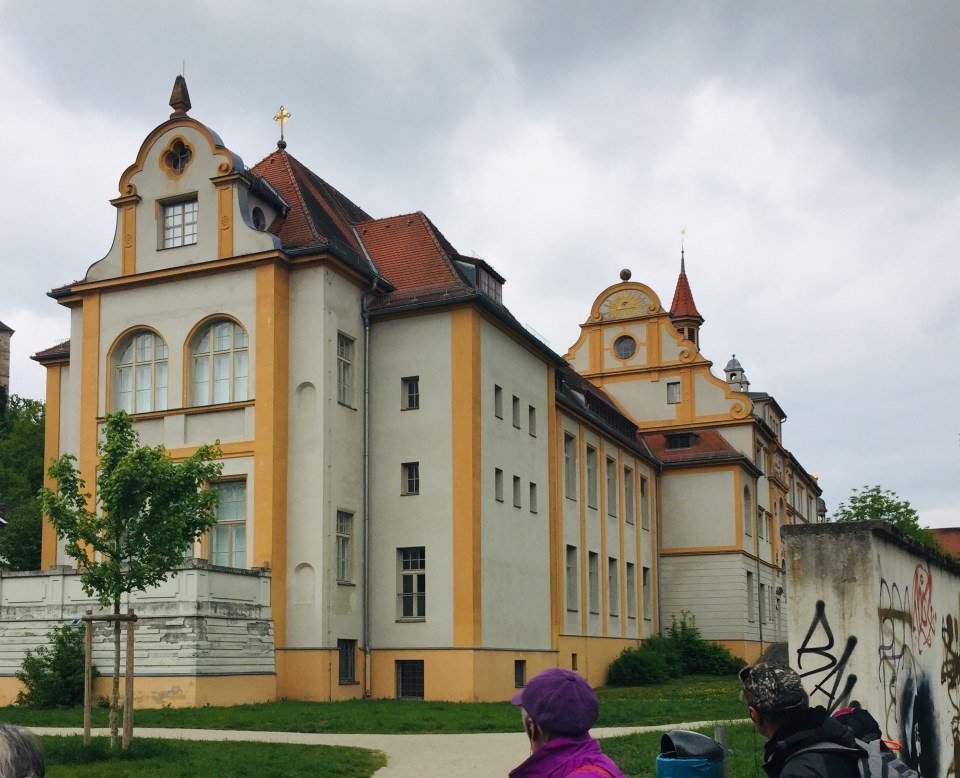
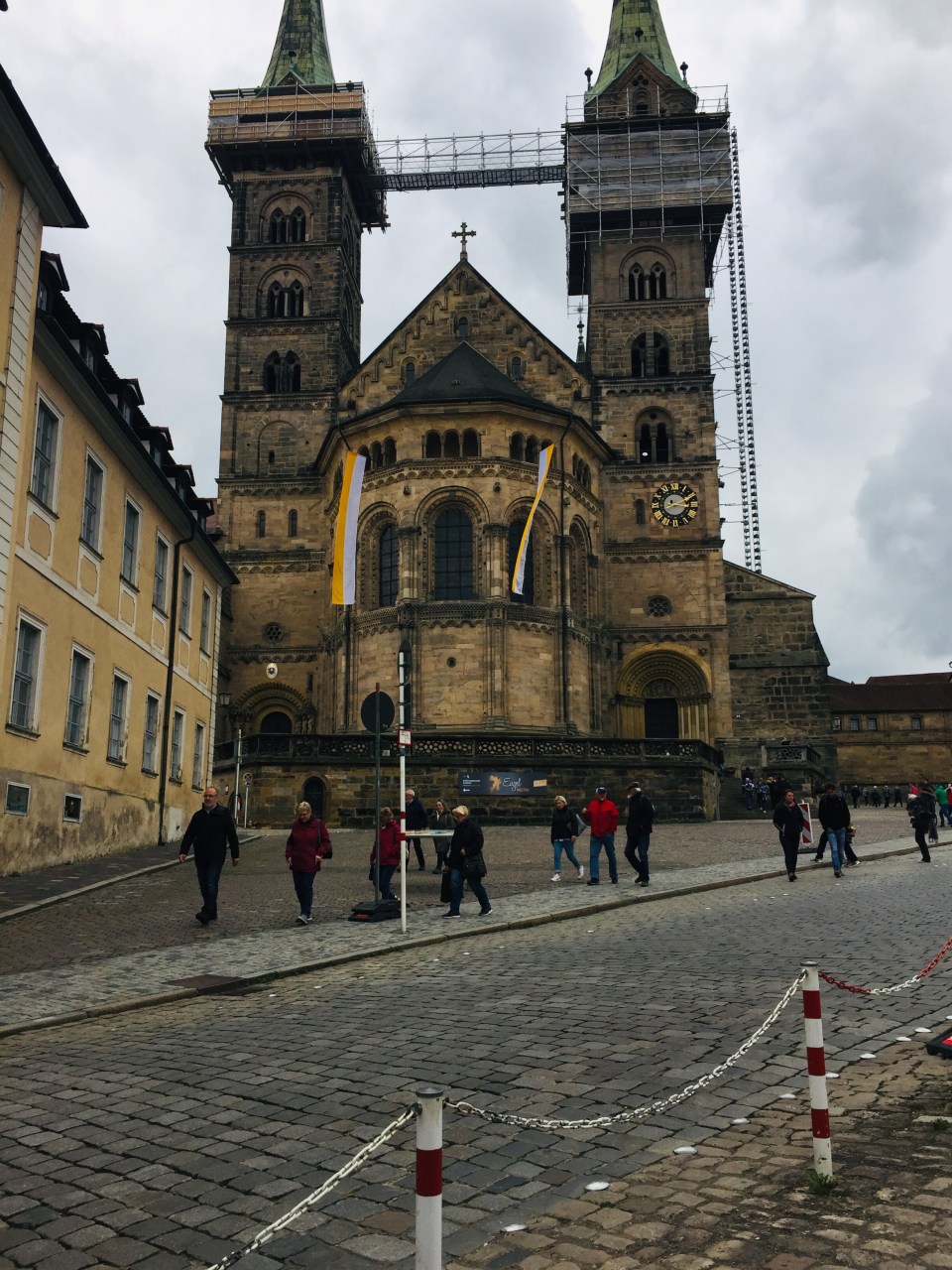
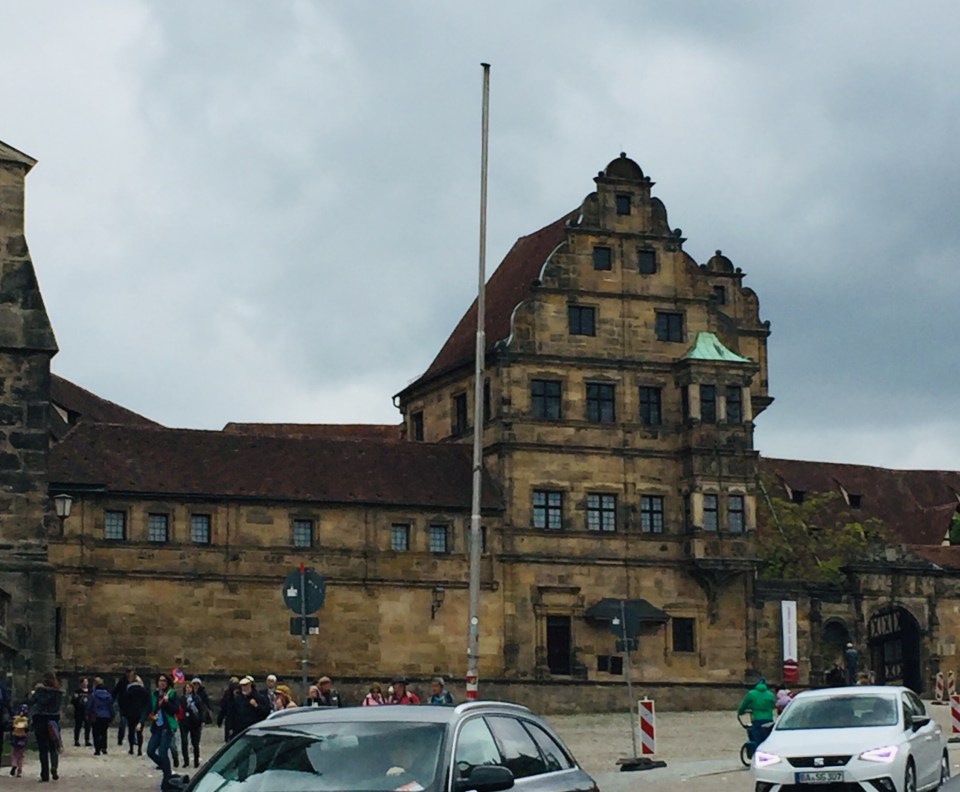
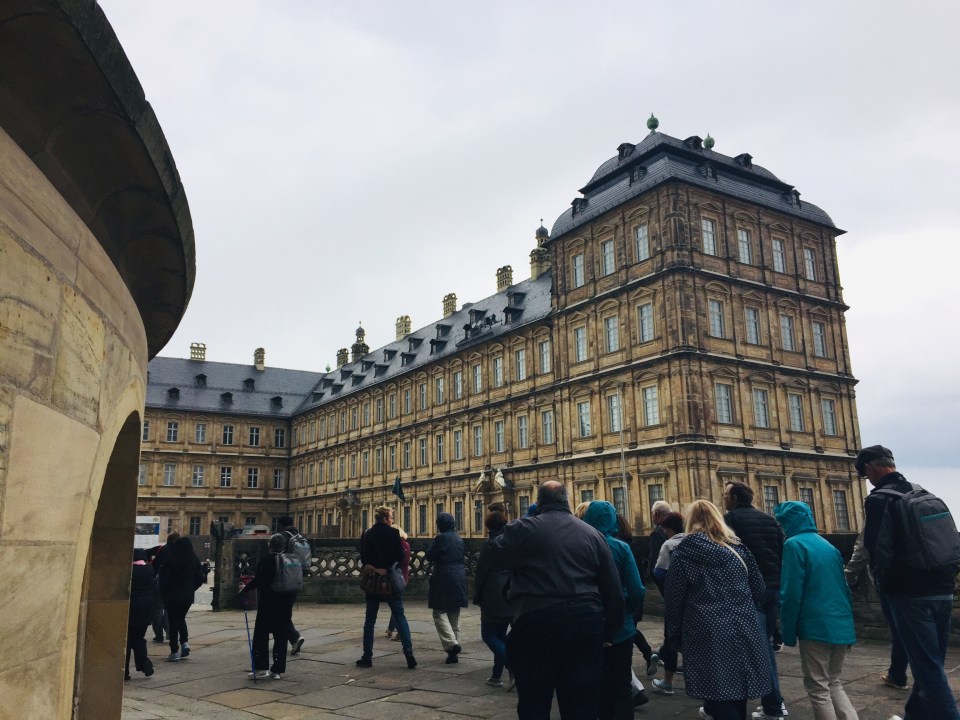
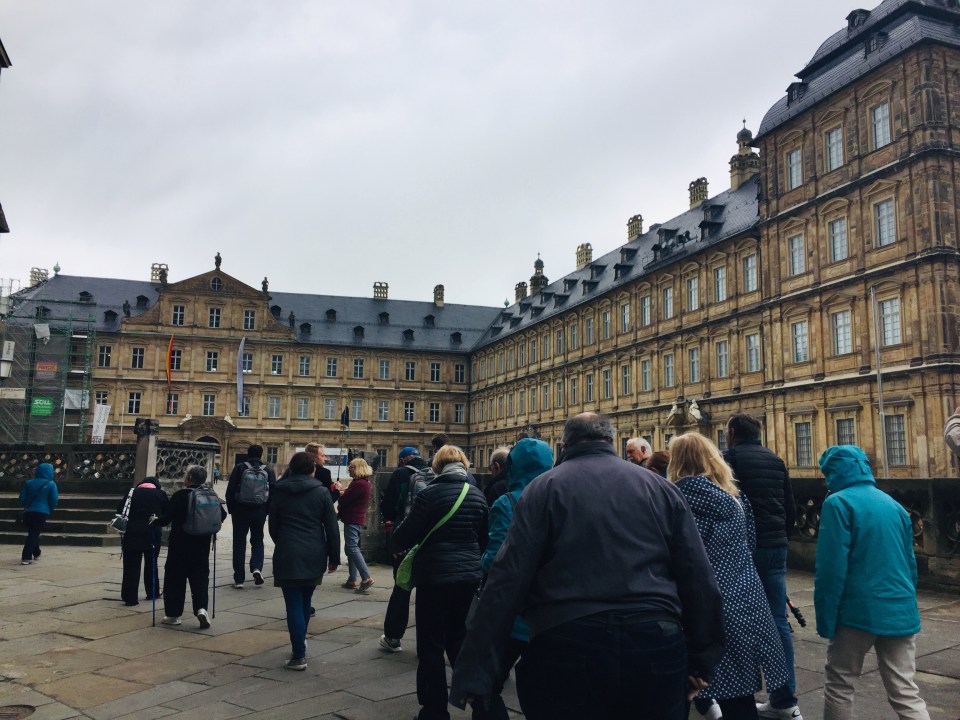
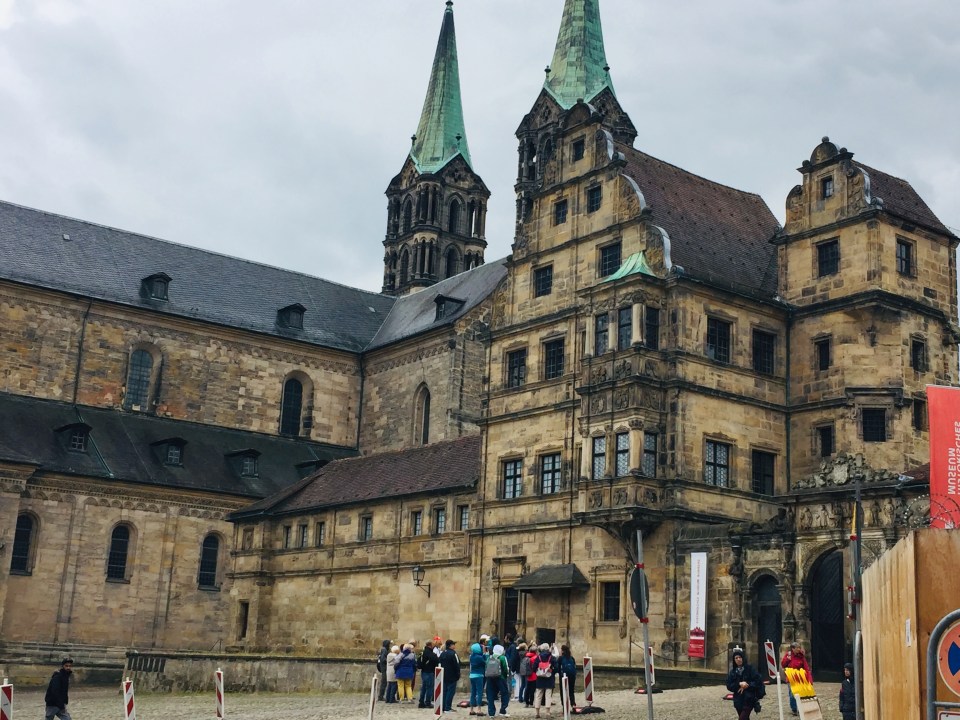
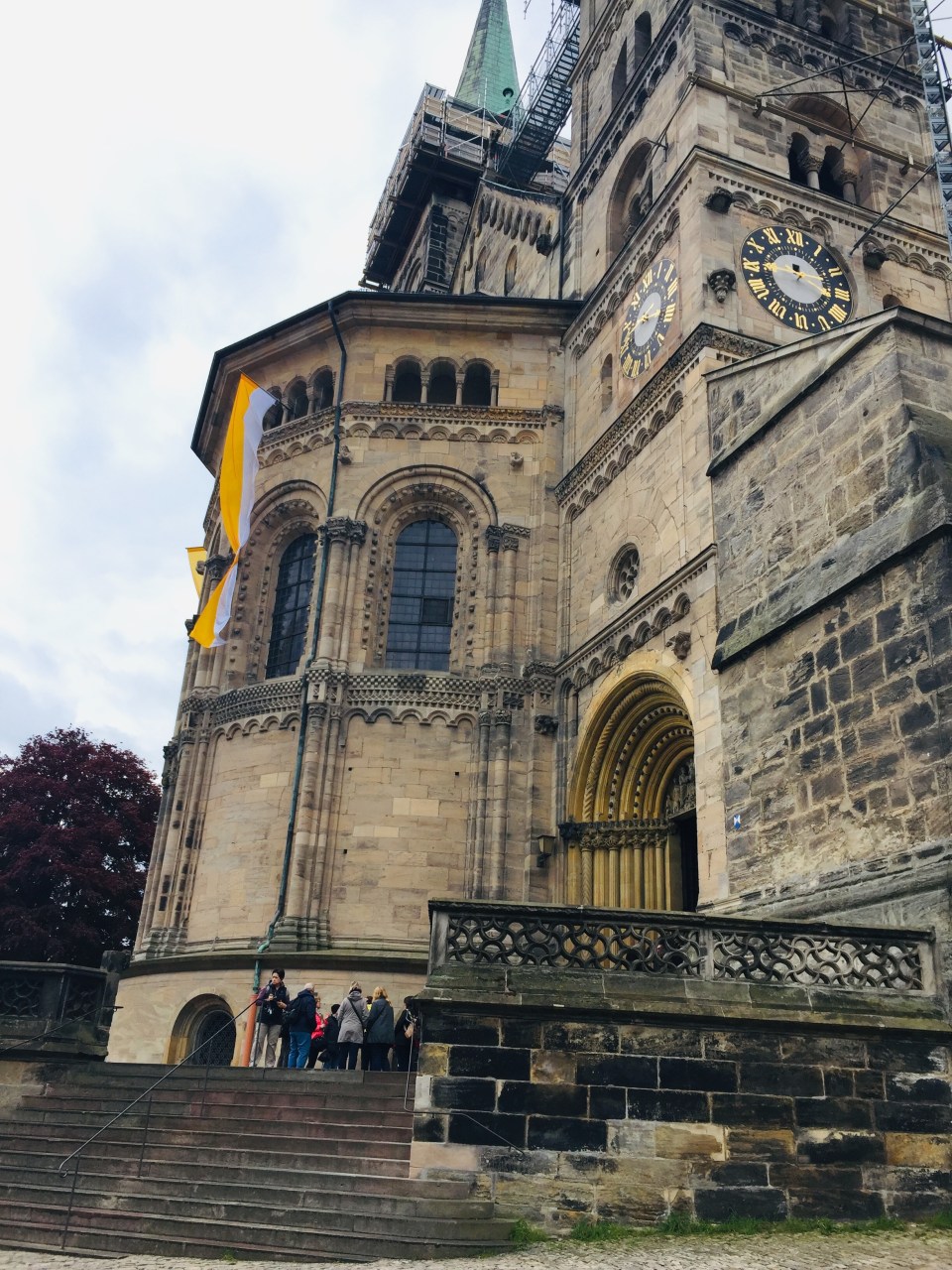
Romantic & gothic style ….. built in 1230. Beside it to the right is the Renaissance style of “court”and then again to the right, the humongous Baroque style with a rose garden overlooking was bishops residence. Wow!
Bamberg Cathedral… in Romantic and gothic style
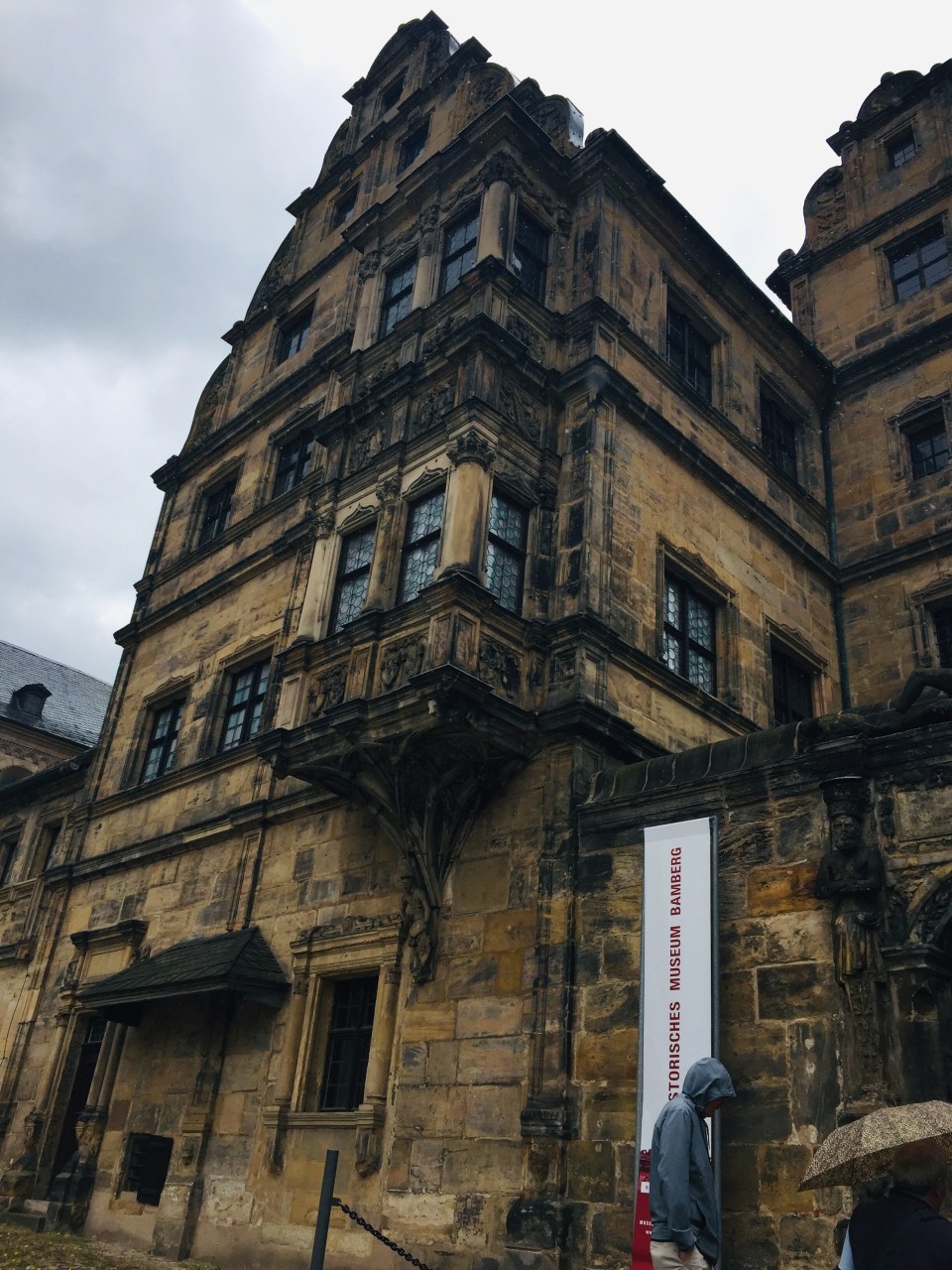
Court building in Renaissance style
One half of the prince bishops residence…. in Baroque style
The other half…. huge.. could not get it all in one photo
Court (not justice) building
More cathedral
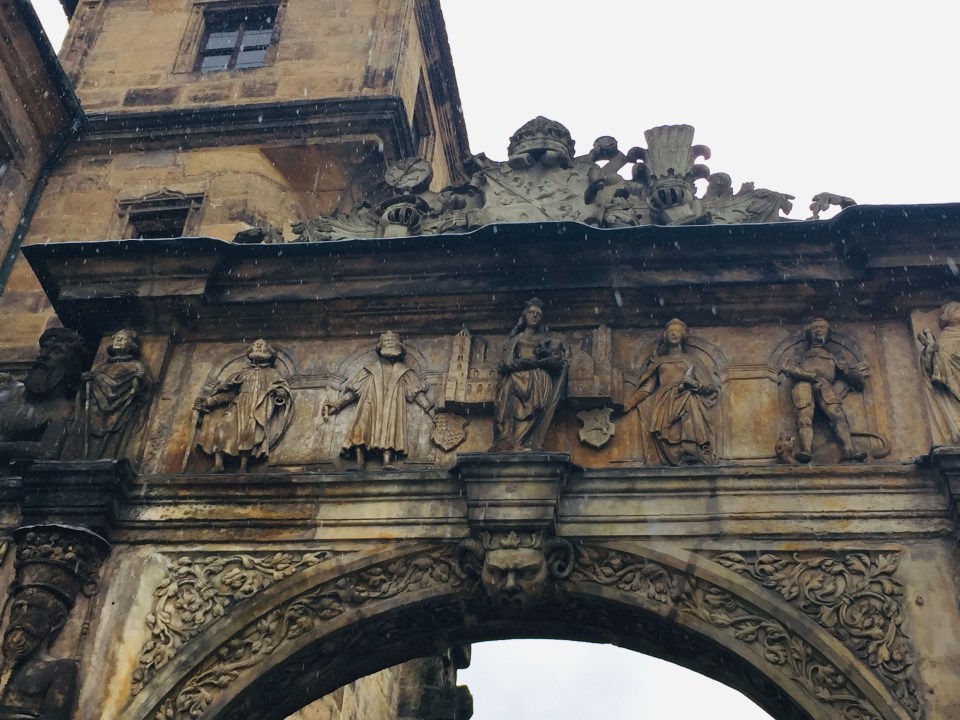
Gate at “Court”
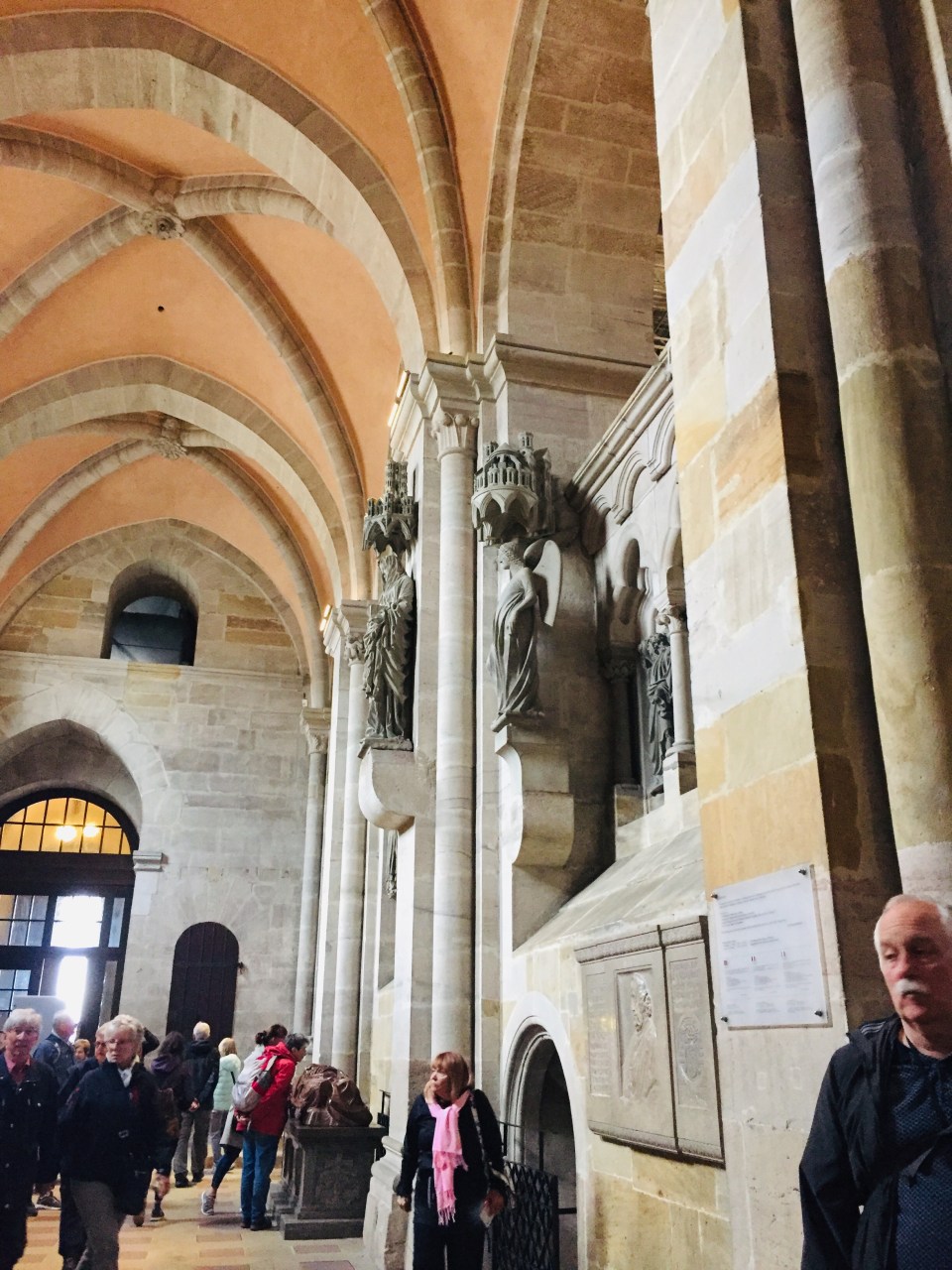
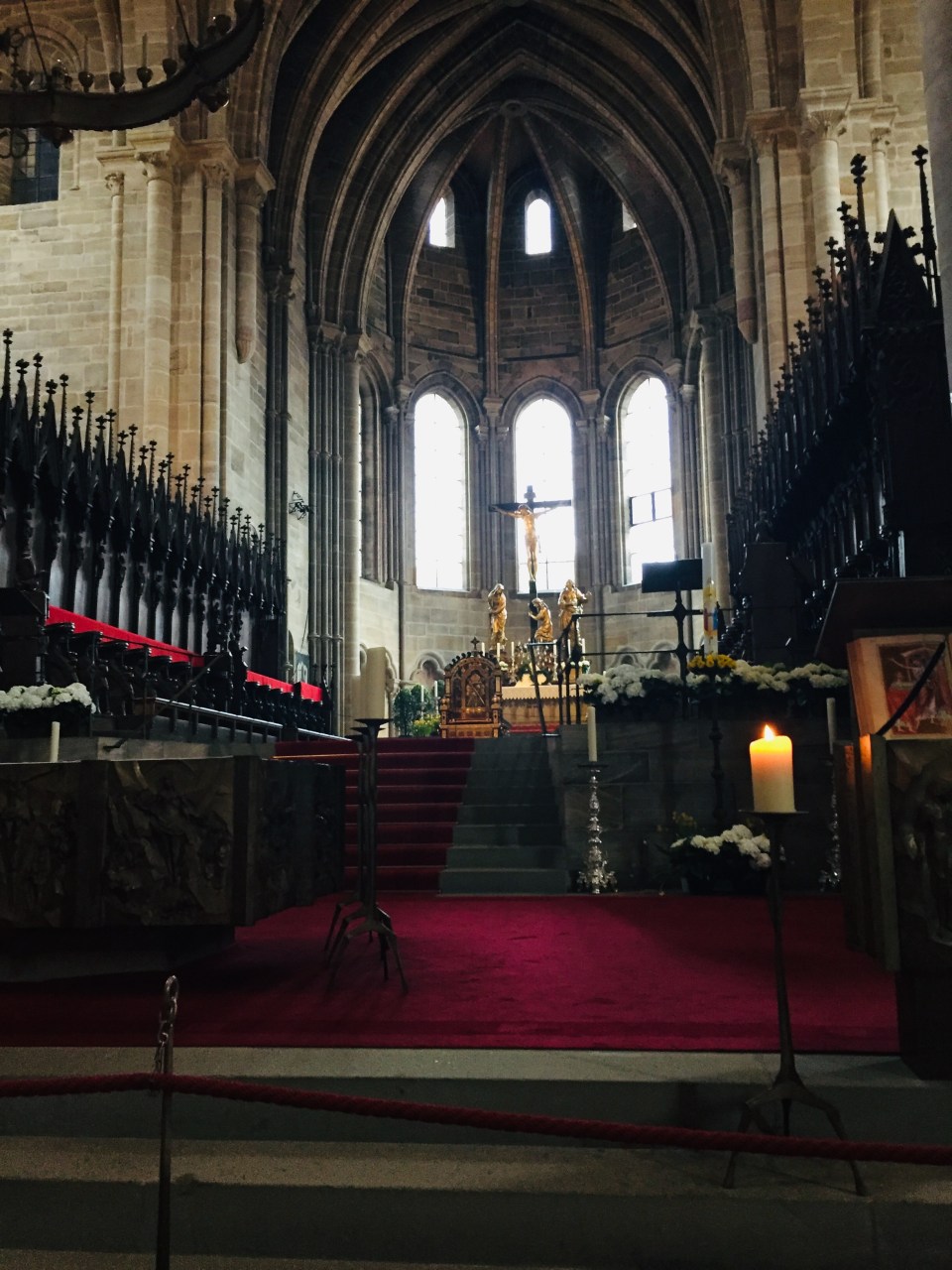
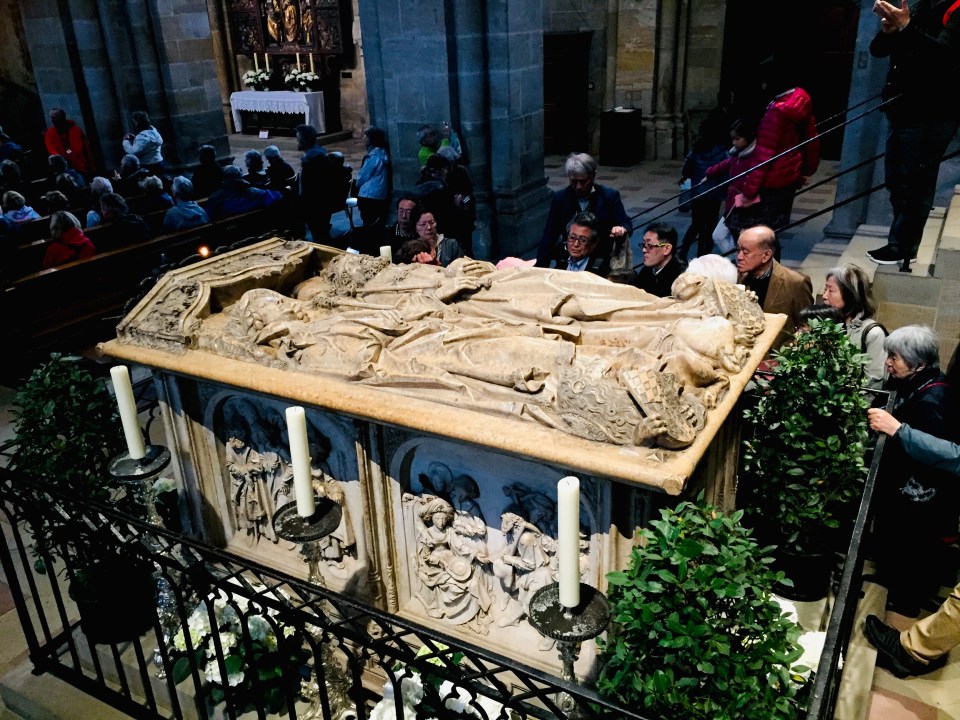
Inside the cathedral is the oldest tomb of a pope north of the alps ….Pope Clement 2nd. Another is of Pope Henry 2nd and wife.. she could read & write Latin and do financials so was with him in the tomb….. very unusual.
Clement’s tomb… oldest of all tombs north of alps
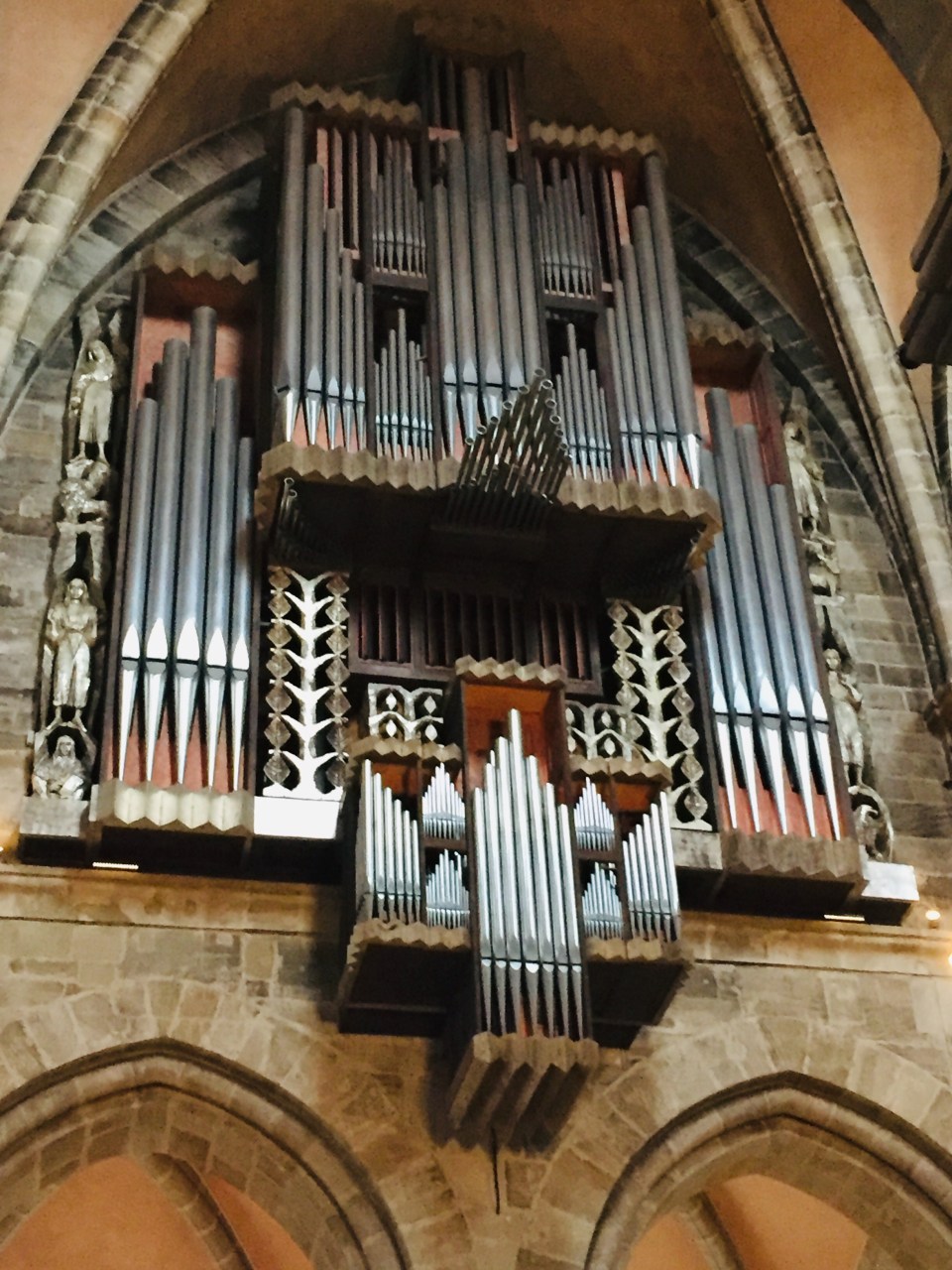
Organ in the Bamberg Cathedral
Holy Roman Emperor Henry 2 (died 1024) & wife Cunigunde’s tomb
There are 1400 historical buildings in the city.
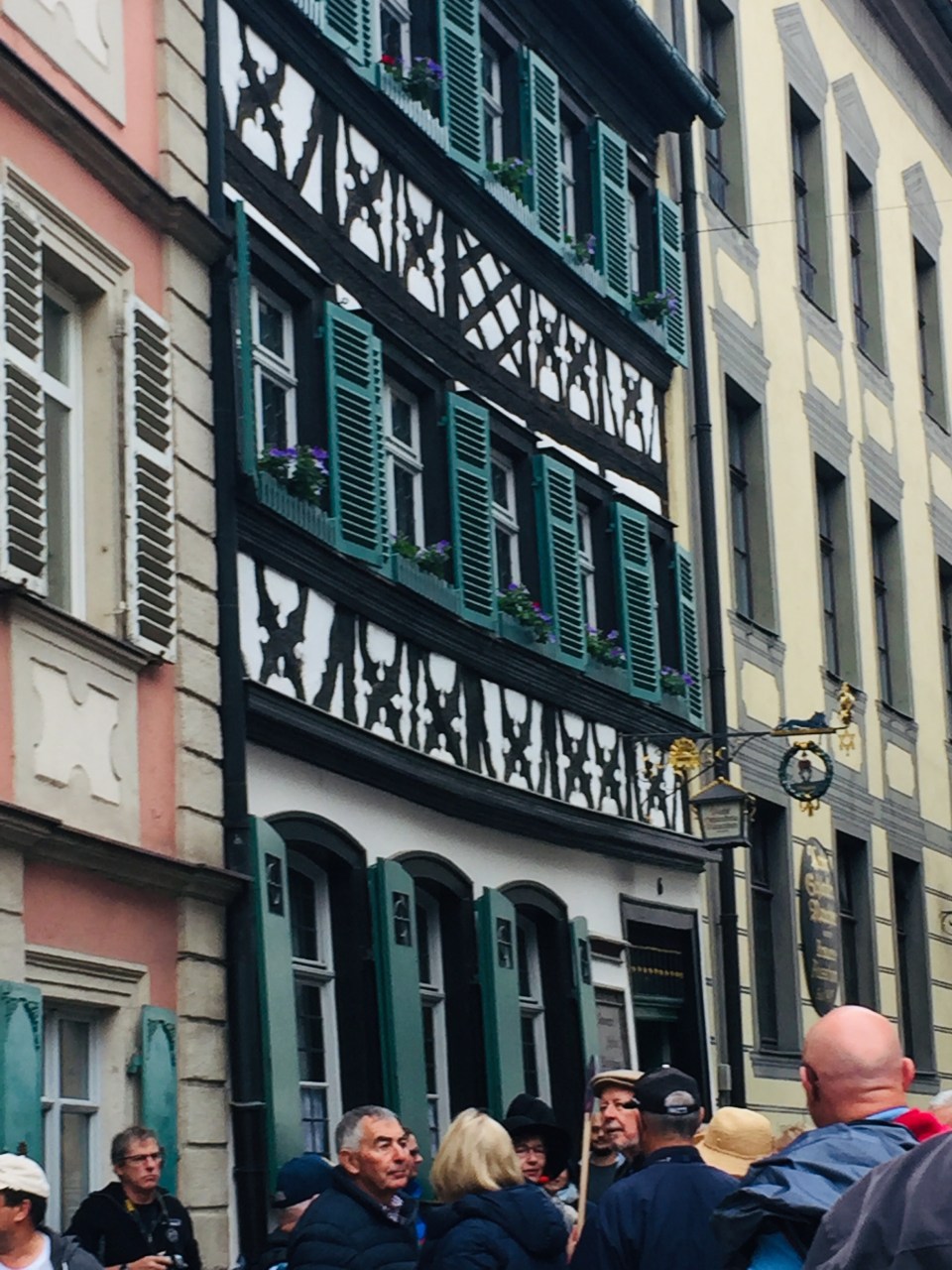
The oldest living house was built in 1183.
During the 17 century many of the buildings were plastered over covering the half timbered building to make the city “less poor” looking. Little did they know!
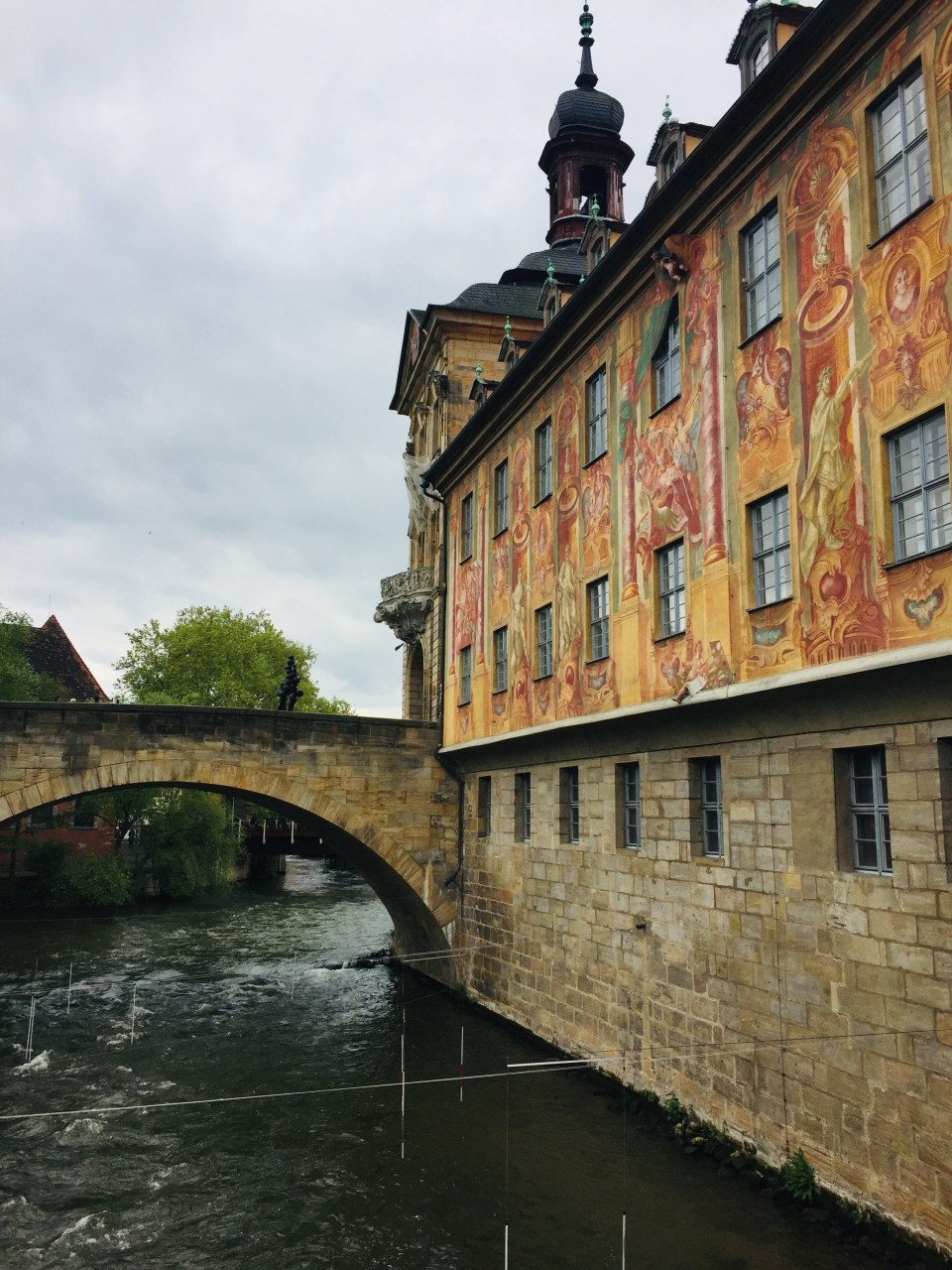
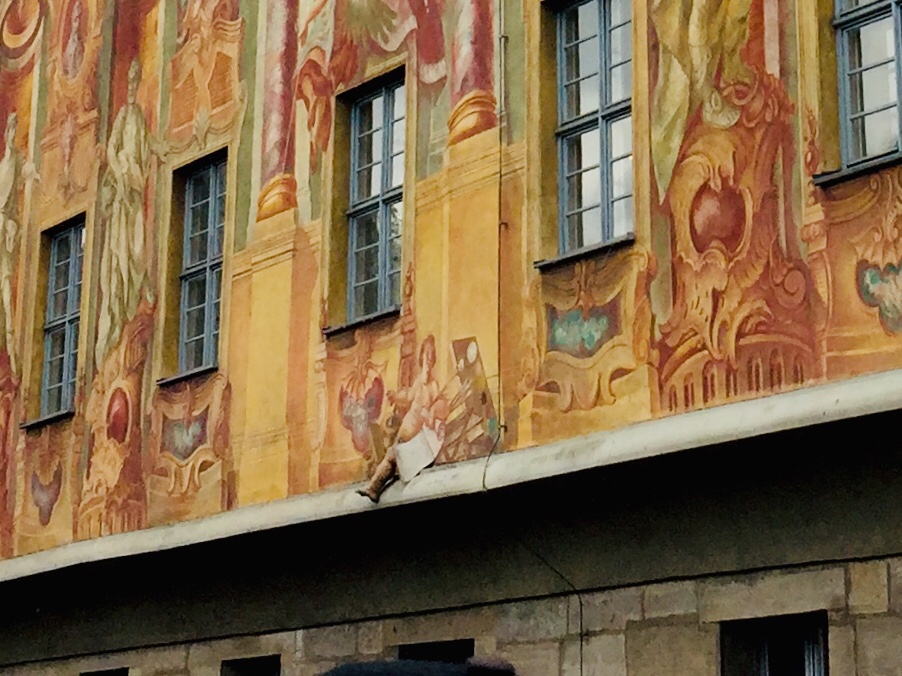
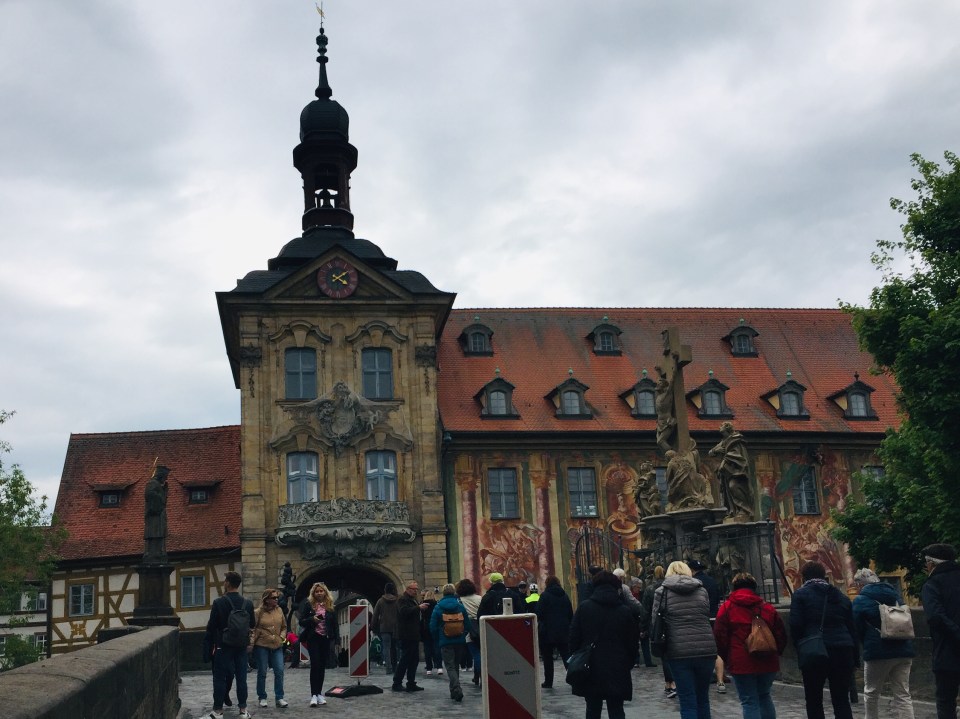
The facade frescos one the outside walls of city hall was done in 1574 and redone again in 1960s. Magnificent!!!
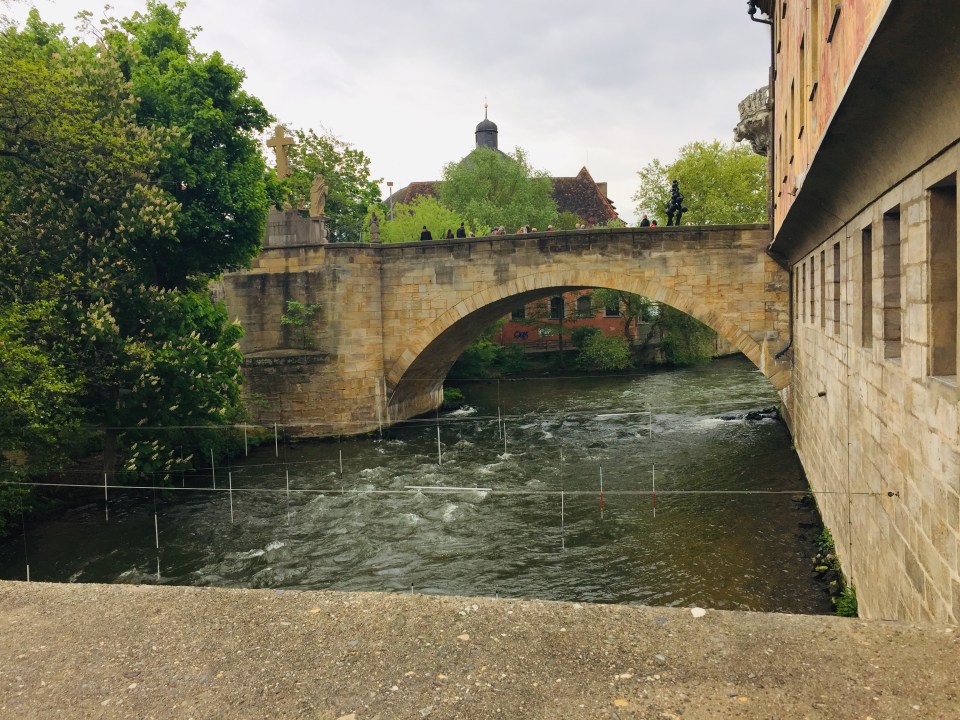
According to legend the bishop of Bamberg did not grant the citizens any land for the construction of a town hall. This prompted the townsfolk to ram stakes into the river Regnitz to create an artificial island, on which they built the town hall they so badly wanted. The boot of a cherub is hanging our of the fresco wall. Amusing!
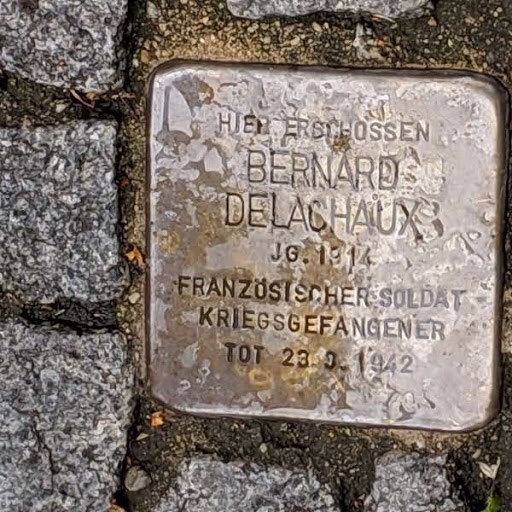
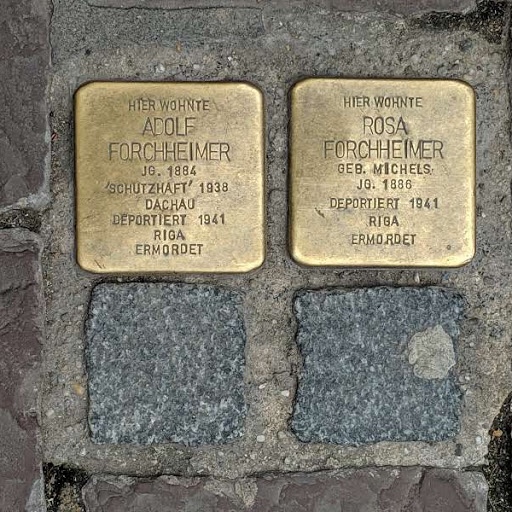
“Stumbling Stones” in the cobblestone sidewalks are in 90% of German cities …..almost everywhere except Munich, to identify and pay homage to the last Jew to live in that particular building before sent to a concentration camp….where they were exterminated… because you have to bow your head to look at it. Munich Jews do not want people walking on top of them so have none.
In order to pass through the locks , there is a charge for the ship as well as everyone on board including crew and passenger.
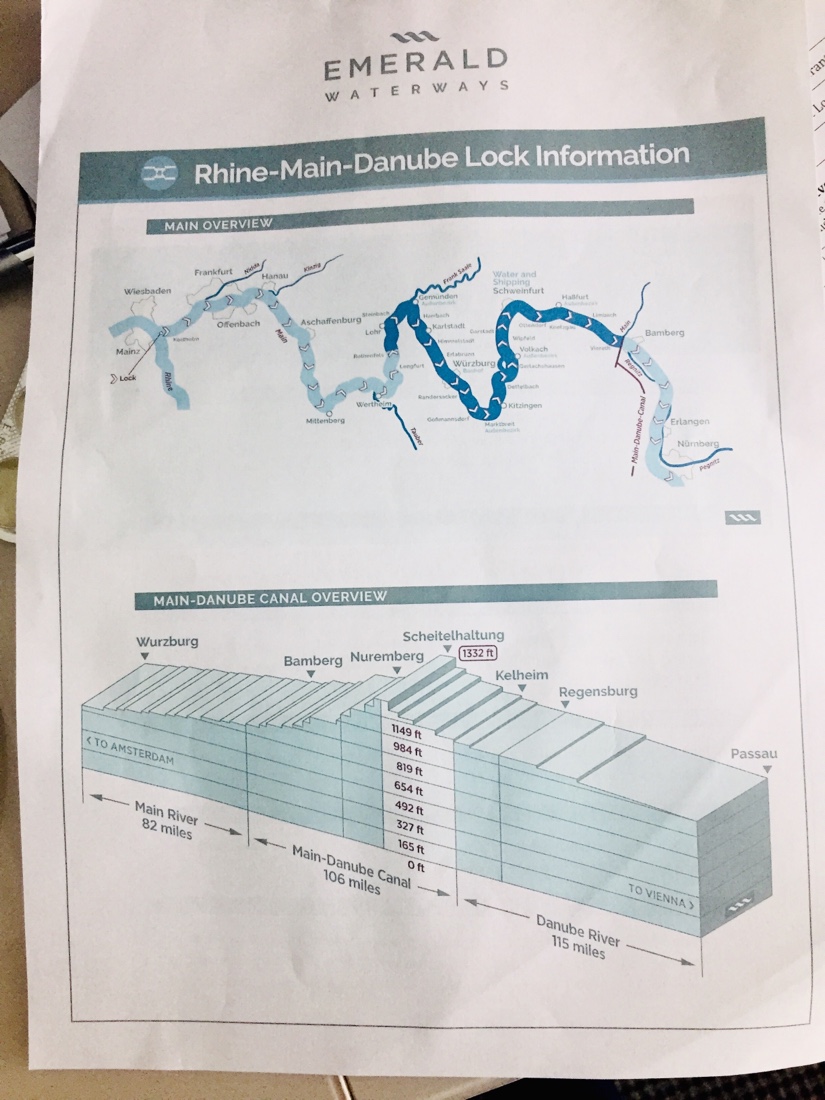
We started on Rhine, then Main and Danube. From Bamberg onward we enter Main-Danube Canal….. built from 1960-1992
Every 20 minutes we enter another so they are not opening the sun decks
Cost was 2.3 B for this canal to be built-16 locks on this section
Hoping to build storage reservoirs to save for times of low levels, like last year.
There are 68 locks in total from Amsterdam to Budapest.
The highest level is 1332 ft high at Scheitelalhatung or 406 metres above sea level. All are remotely controlled …in 4 locations only.
The canal is 171 kilometre long.. longest length, 190 meters …3 m. longer than this boat and about 6 inches wider.
123 bridges on this section…..1000+ overall.
They’ve only had 1 dam break …in 1979. Before that there weren’t any inspection but now they have regular inspections
Each lock has 3 reservoir….don’t use the river water……pour the water into the lock then suck it back out.
There is little as 20 cms clearance between ship and bridges. Captain can still control the height of if still too high by adding water to tanks.
One ship replaces 82 freight trucks or 42 cargo wagons
Use is 49% cargo freight, 43% cruise ship, balance private vessels.
It is so beautiful sailing up this river. It is clean everywhere (NO GARBAGE)…. and green (their season is a bit ahead of us in Victoria). In some places it seams that like you paddling a canoe on a Creek, it’s so narrow, we’re at water level and there is lots of birds especially swans, mallards and Egyptian Geese (some Canada Geese too). We are amazing at how really lovely it is…. seeing all the castles and quaint villages. (The locals seem to think the castles are boring). The locks may well become monotonous! And the number of bridge….. incredible!
Wurzburg, where the boat stopped has a population of 130,000 (but I went to Rothenburg).
Xray machine was invented here.
90 % destroyed in 17 minutes by 238 planes just before the end of war.
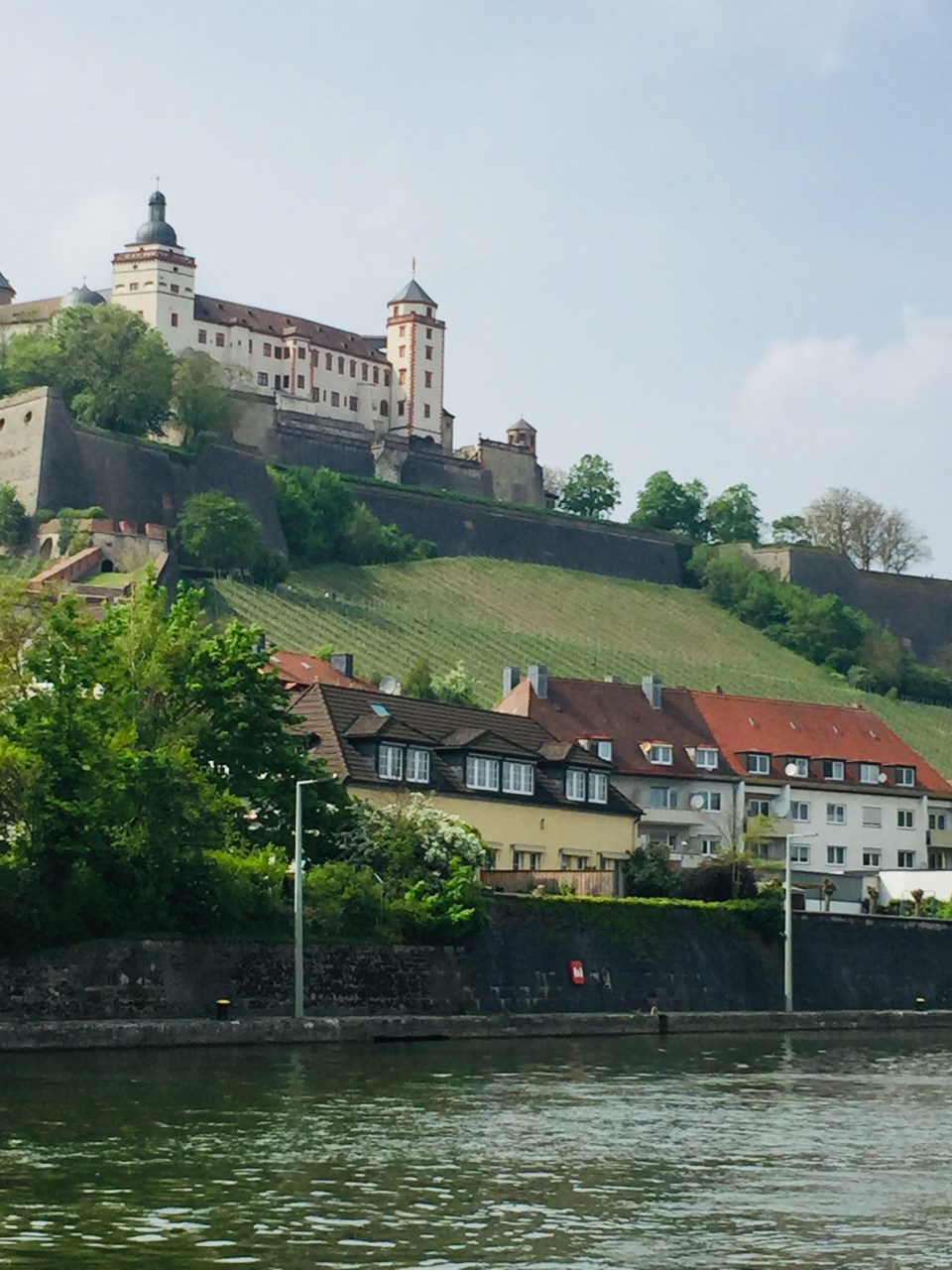
Marinburg Palace on hill in Wurzburg. The fortress in current shape was built in 15th century and finished 16th, however area has been fortified already in 1000 BC by celtics.
Marinburg Castle
In 1156 Barbarossa “red beard” married in this church
There are 45,000 churches of just Catholic and Protestant, in Germany
1/4 of population burnt for witchcraft by .
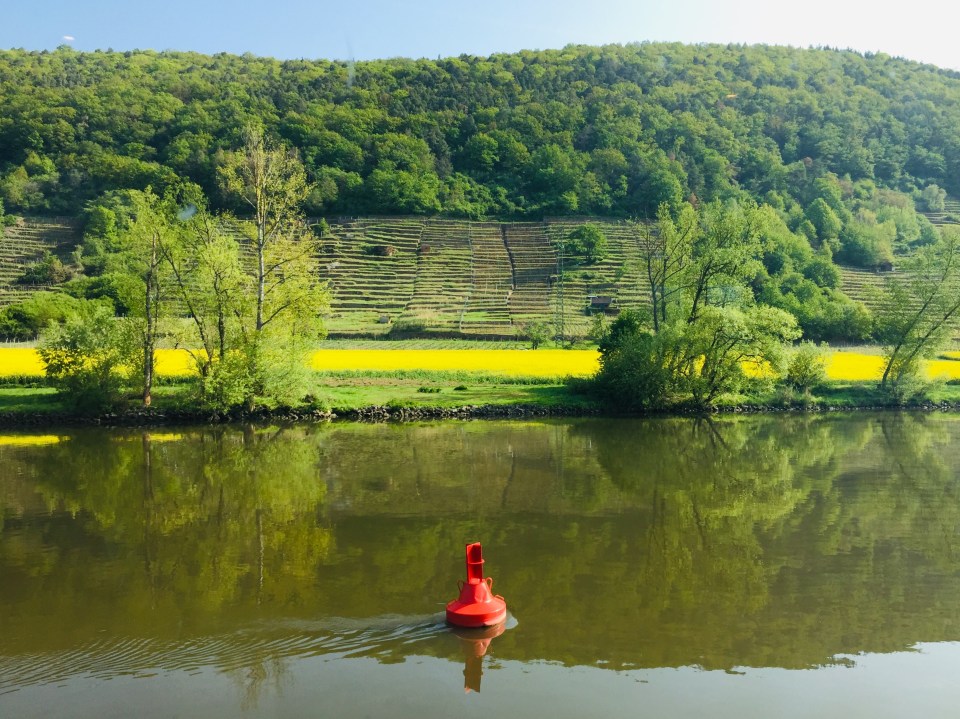
18 years ago it was discovered that people were using salad oil… (canola) for diesel. There is a lot of canola grown here.
Price is 1.42/ litre/ € reg gas ($2.15 CAD/ litre)
38 percent of energy in Germany is renewable. …solar farms, wind turbines even though they only get 65 days of sun/year. 2024 is the year they hope to be free of fossil and nuclear fuels.
It costs 4,000€/ yr hunting lesson… high seats
19% tax on everything except 7% on food
In Rothenburg only 3000 live inside city walls although it is a very large city. That is partly because the accommodations upstairs have to be accessed through the main floor of a business that is not necessarily run by the owner of the building.
They had a sort of “go fund me” after the war to help pay for repair walls. In the wall there are the names of people from around the world that contributed and how much of it….. as in 1 metre or 10 m.
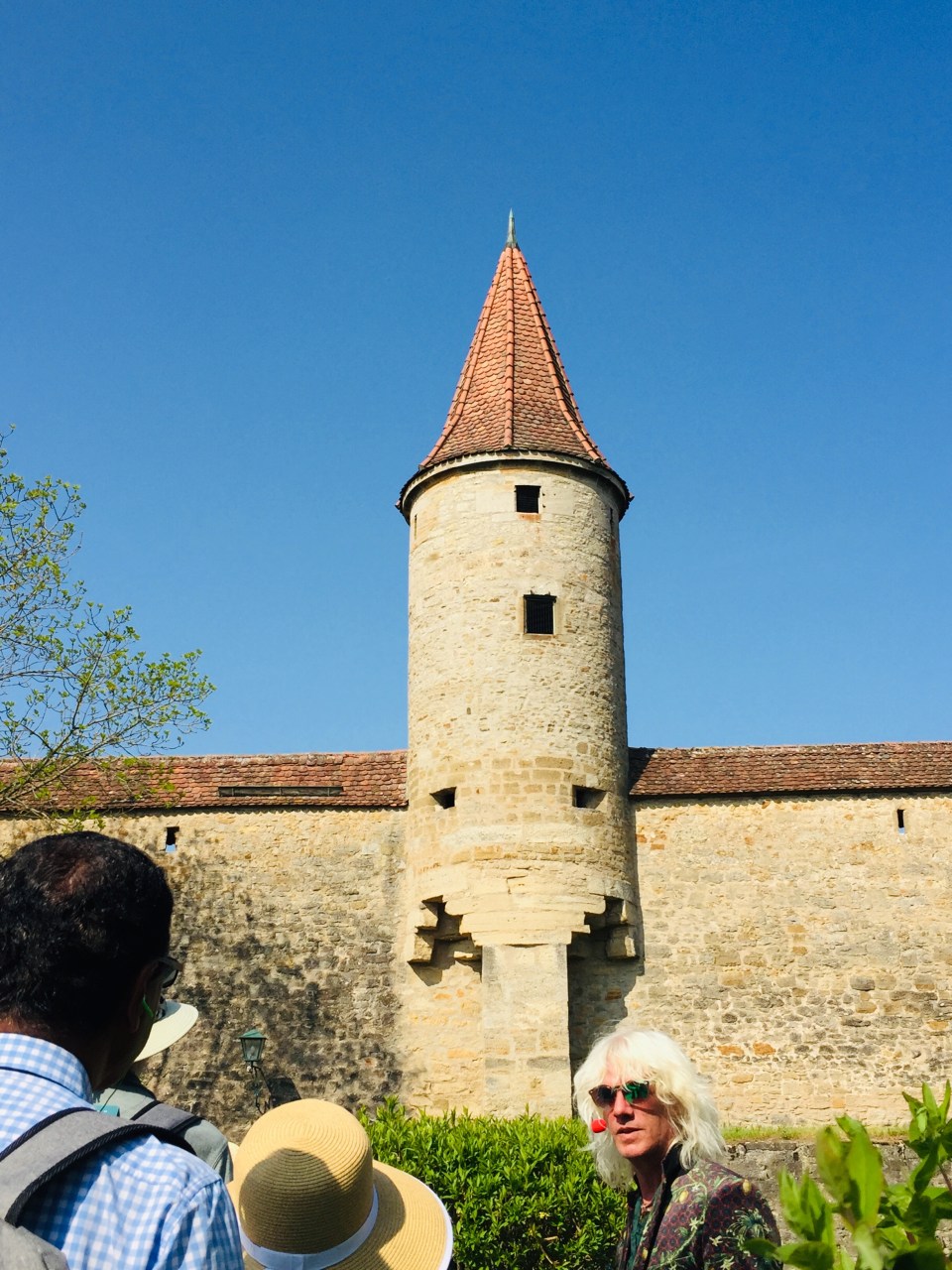
Slots on tower are toilets
Tower inside… 1200’s was hospital … ran by catholic monks
Heritage designation on all buildings here so if there are any update, it has to be restored to same.
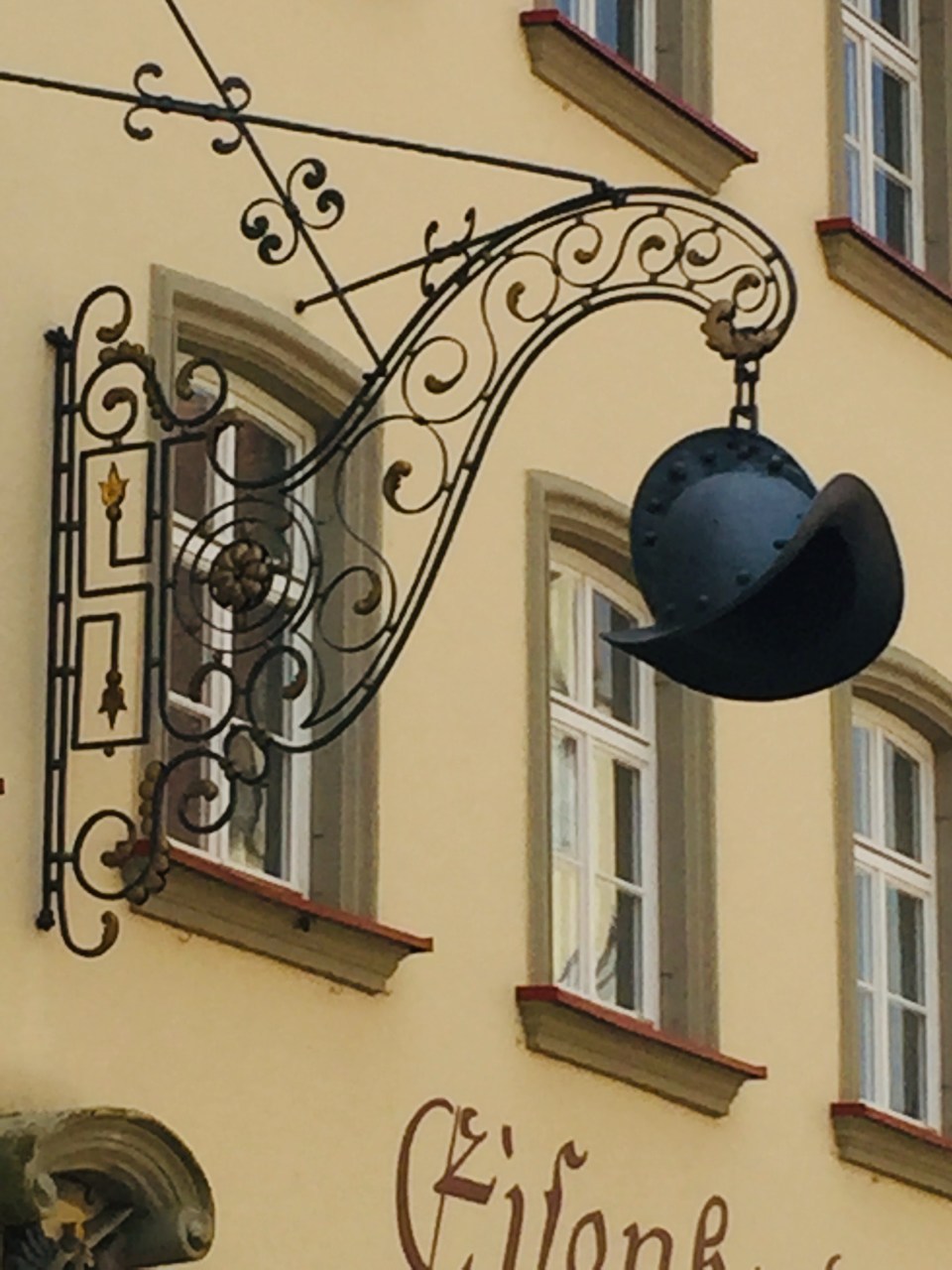
Only wrought iron sign holders allowed… no Las Vegas here.
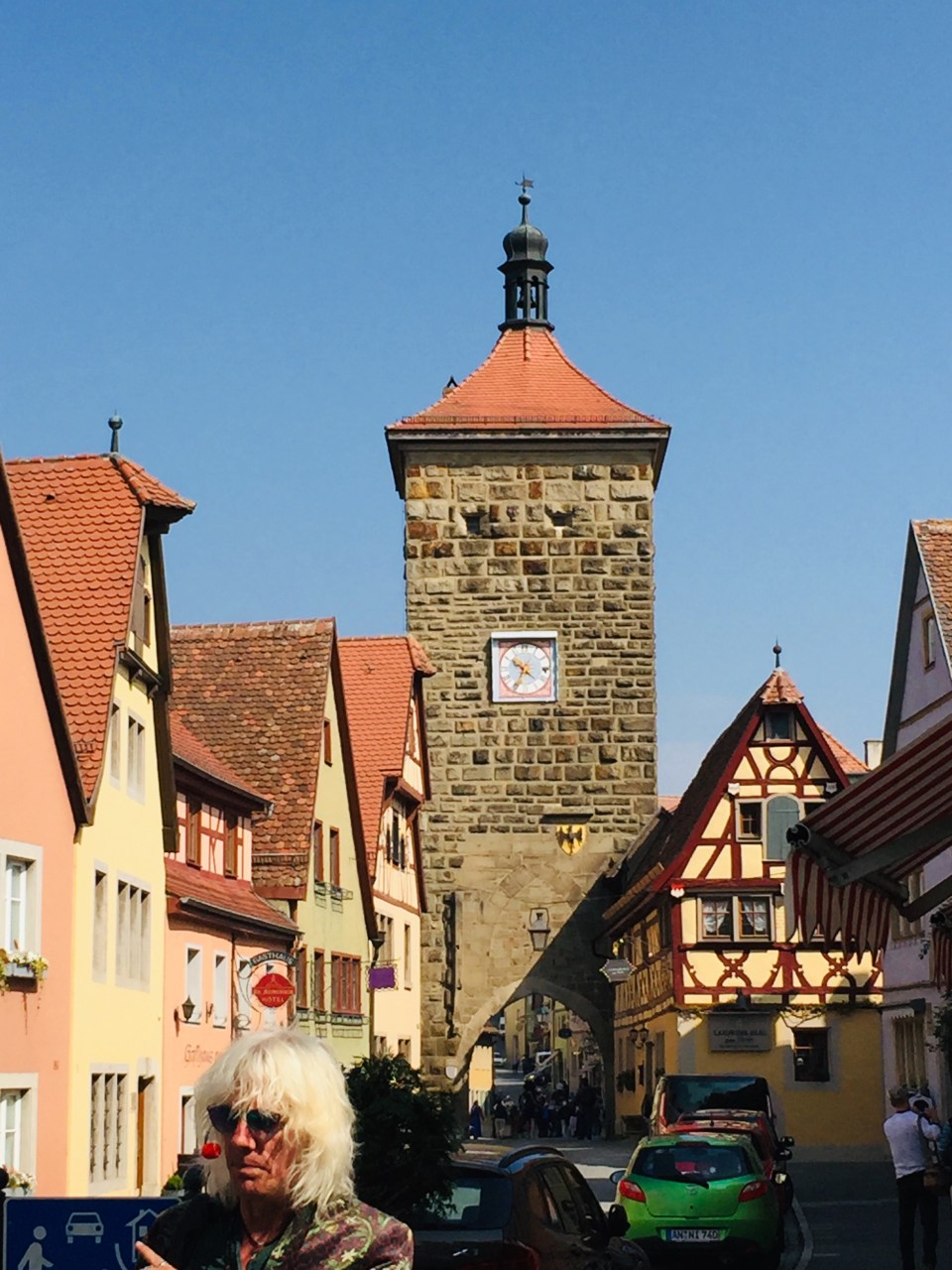
One of the towers of Rothenburg
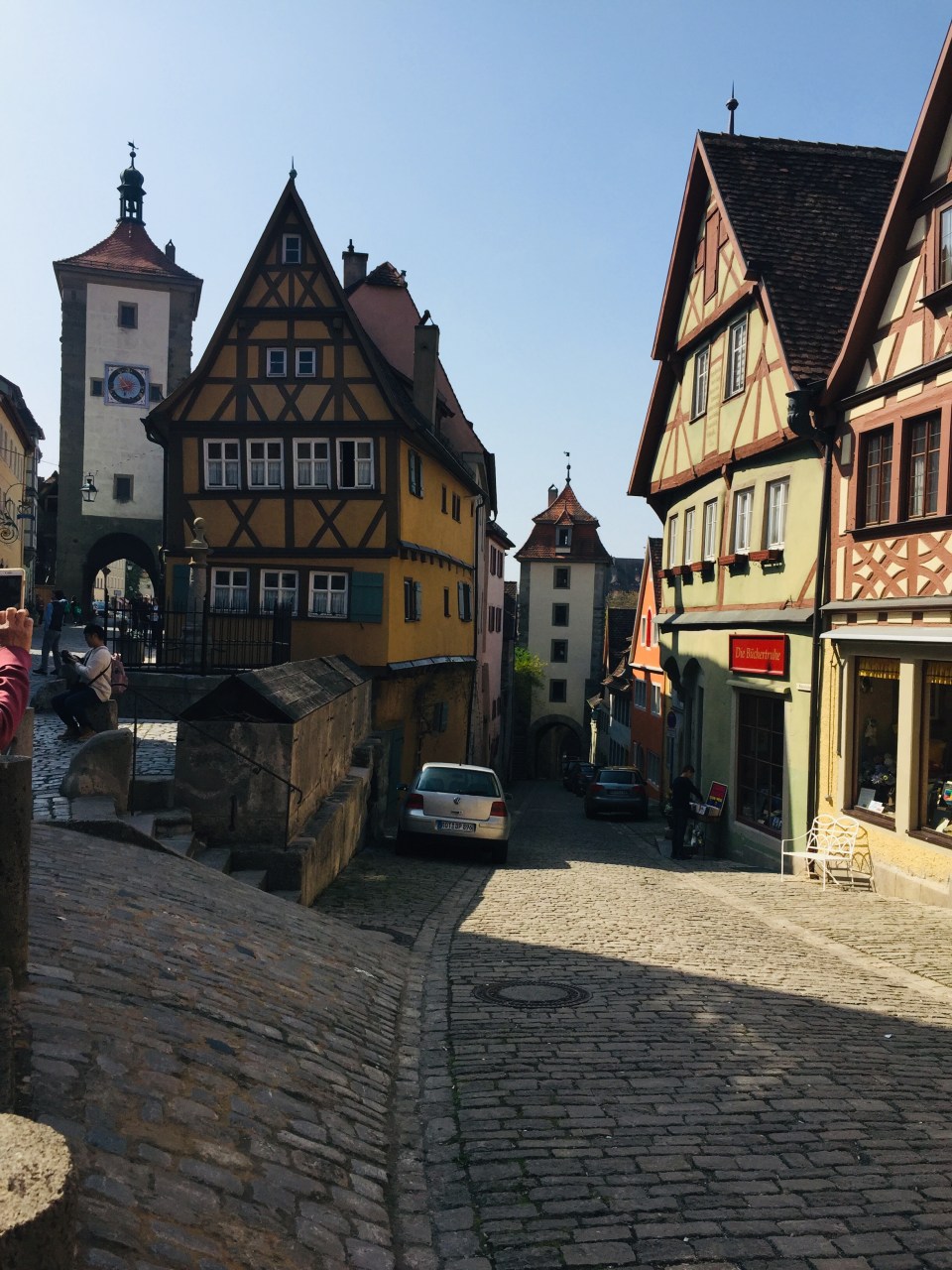
Crooked house
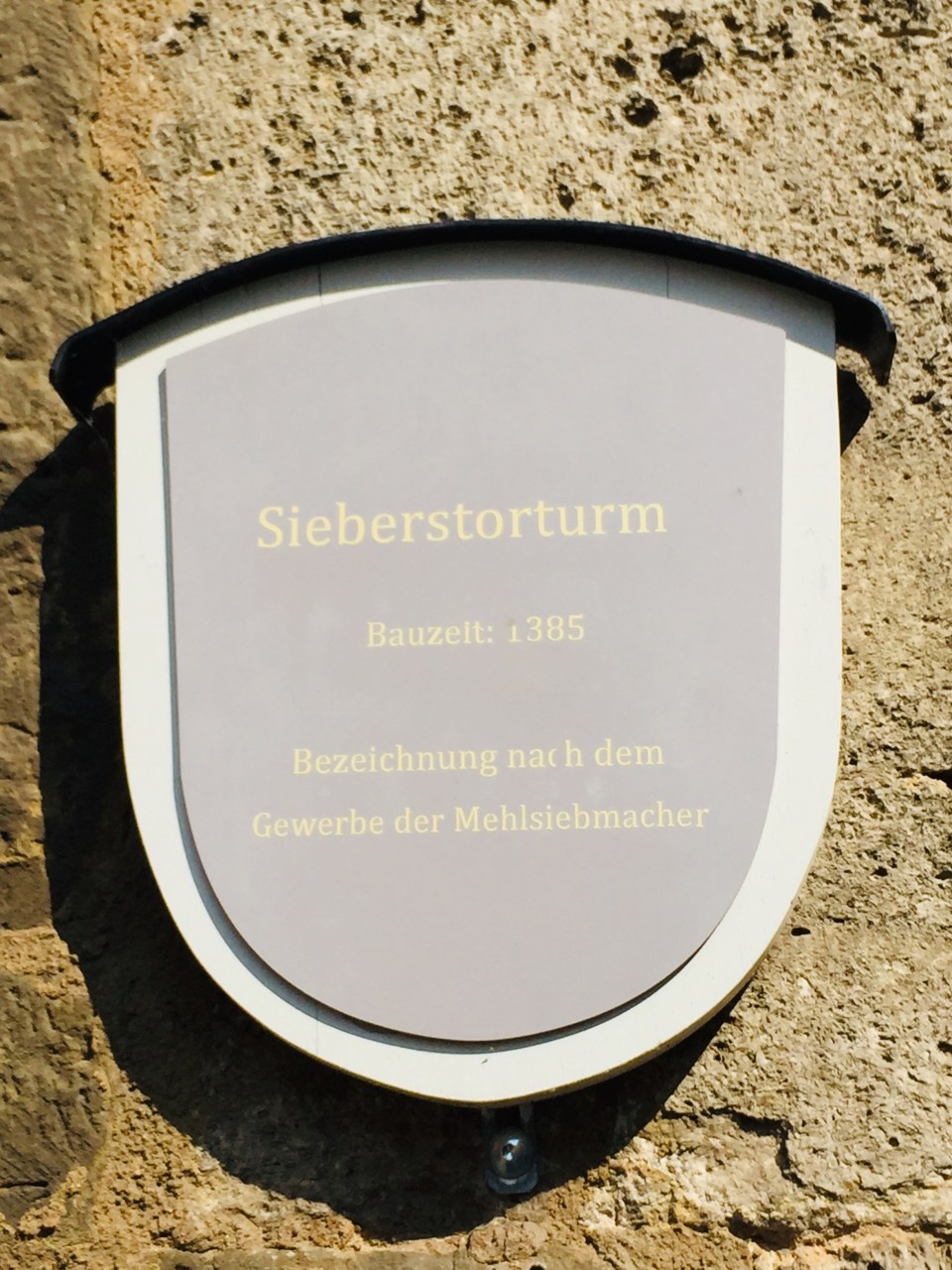
A sign on a well…..from 1385
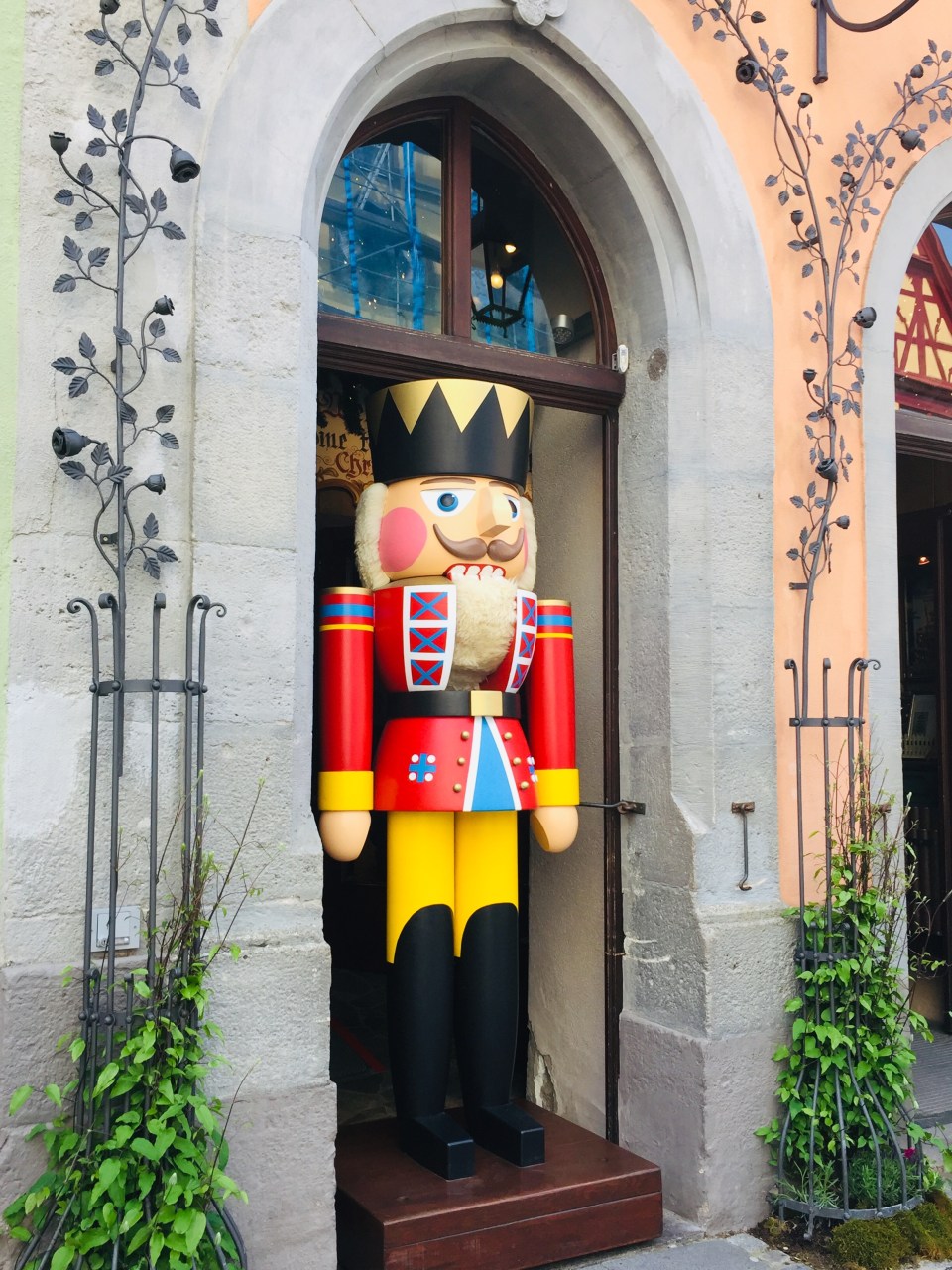
Do you think this may be a Christmas store???
Store sign…. example of wrought iron with helmet from Middle Ages
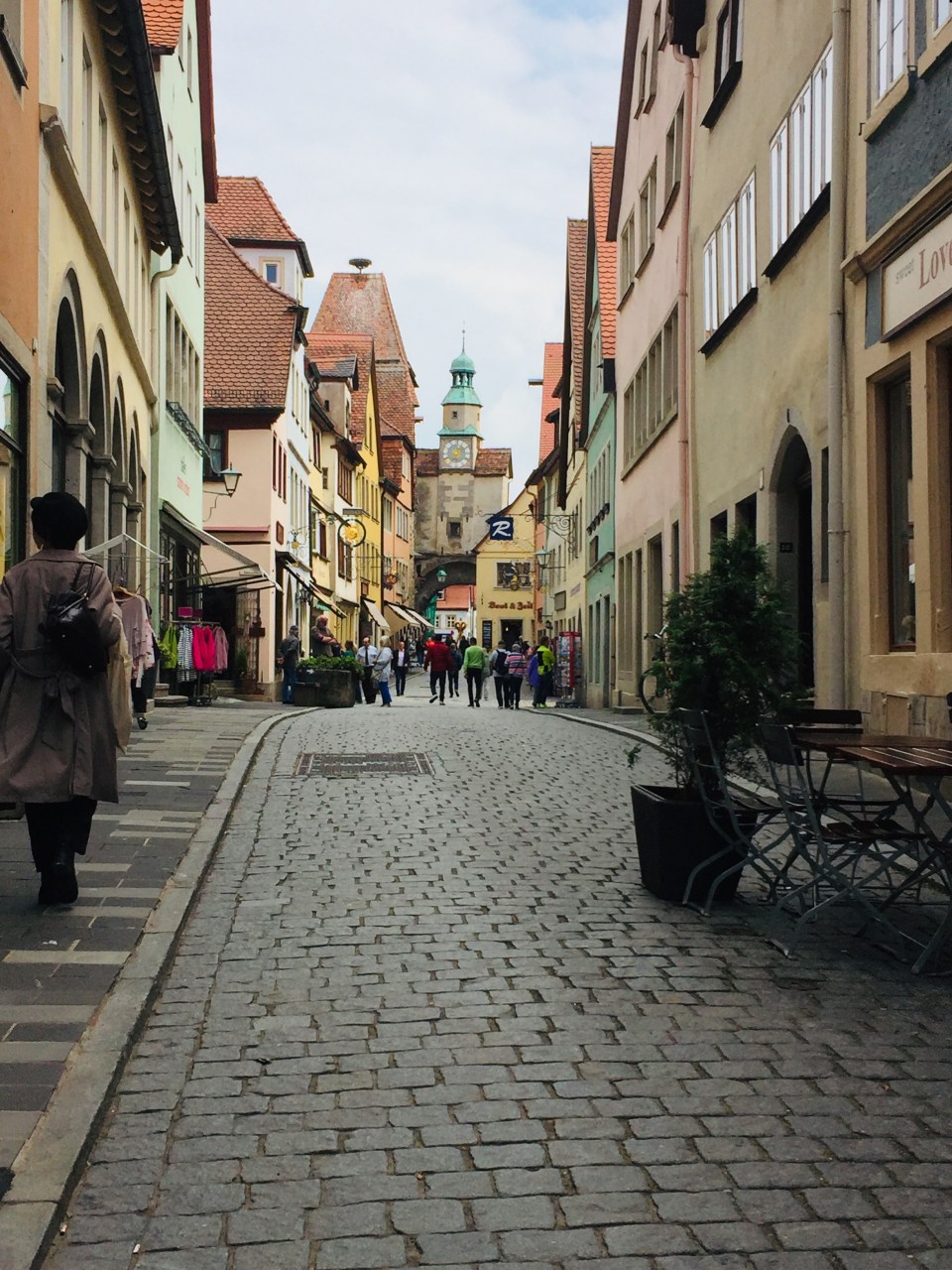
Rothenburg street
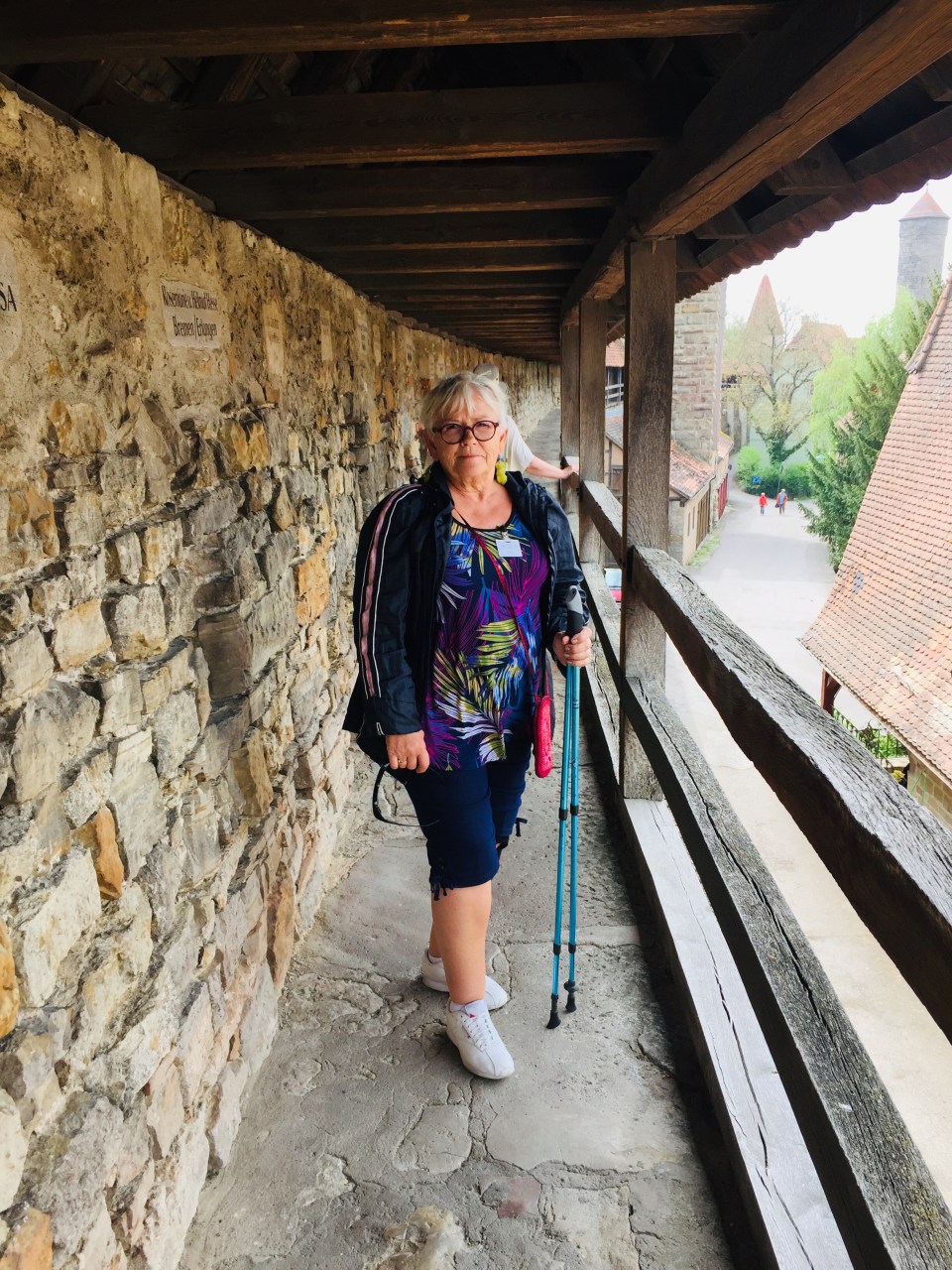
What is so unique about this city is the wall that surrounds it . It provides a wonderful view of the city as myself and 2 other ladies from Victoria found out.
On the Rothenburg wall
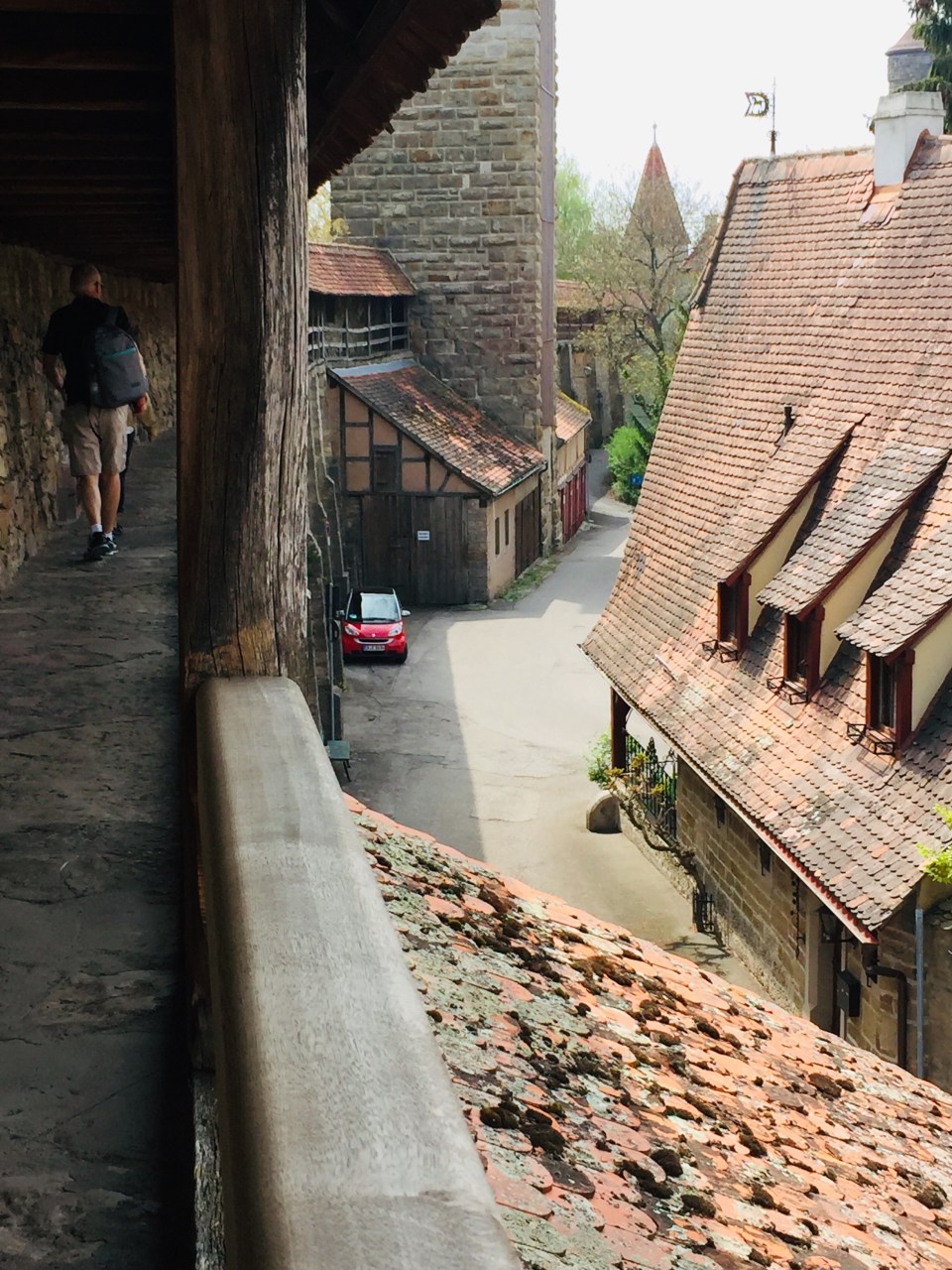
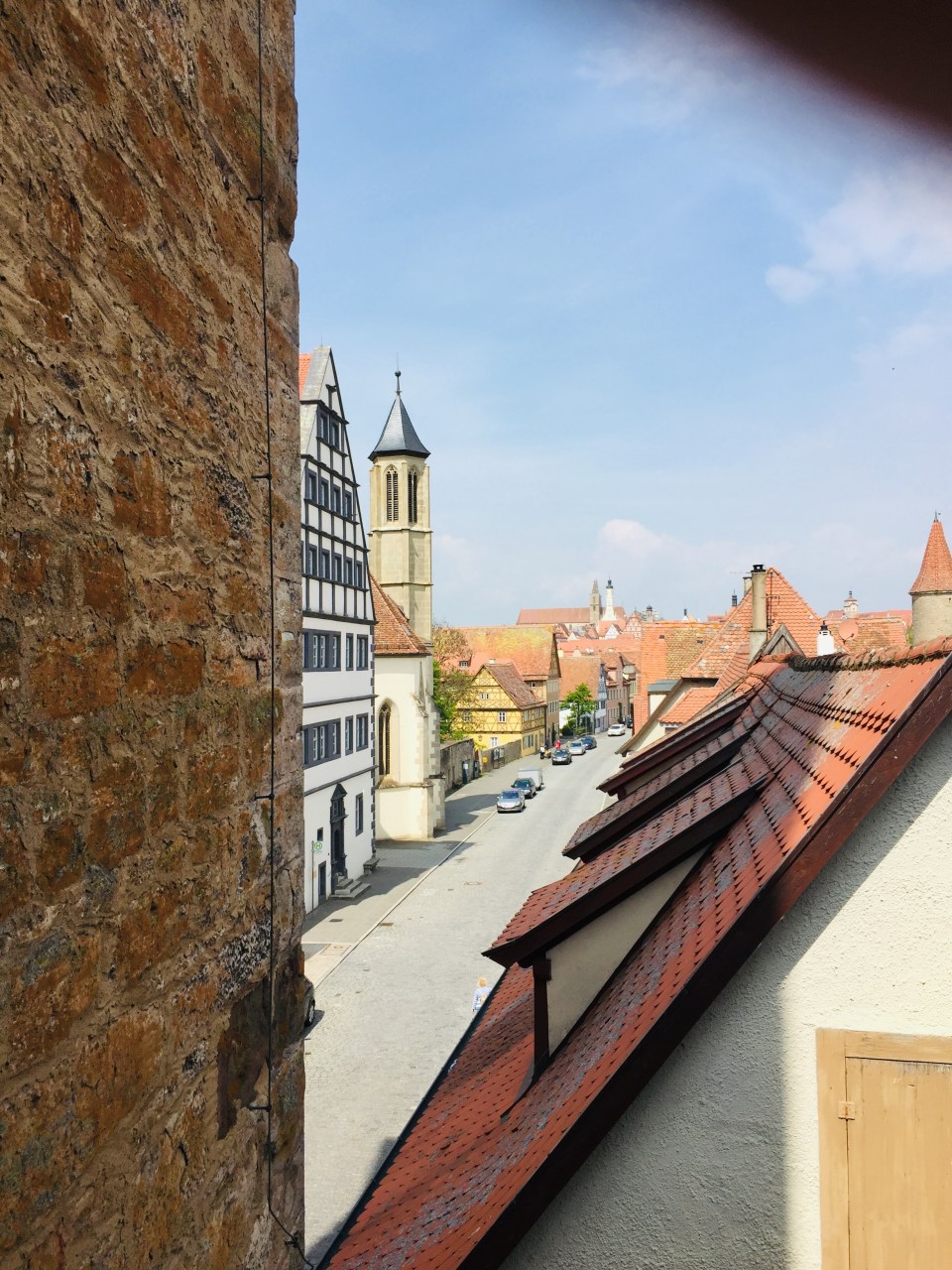
Looking down onto a back street.
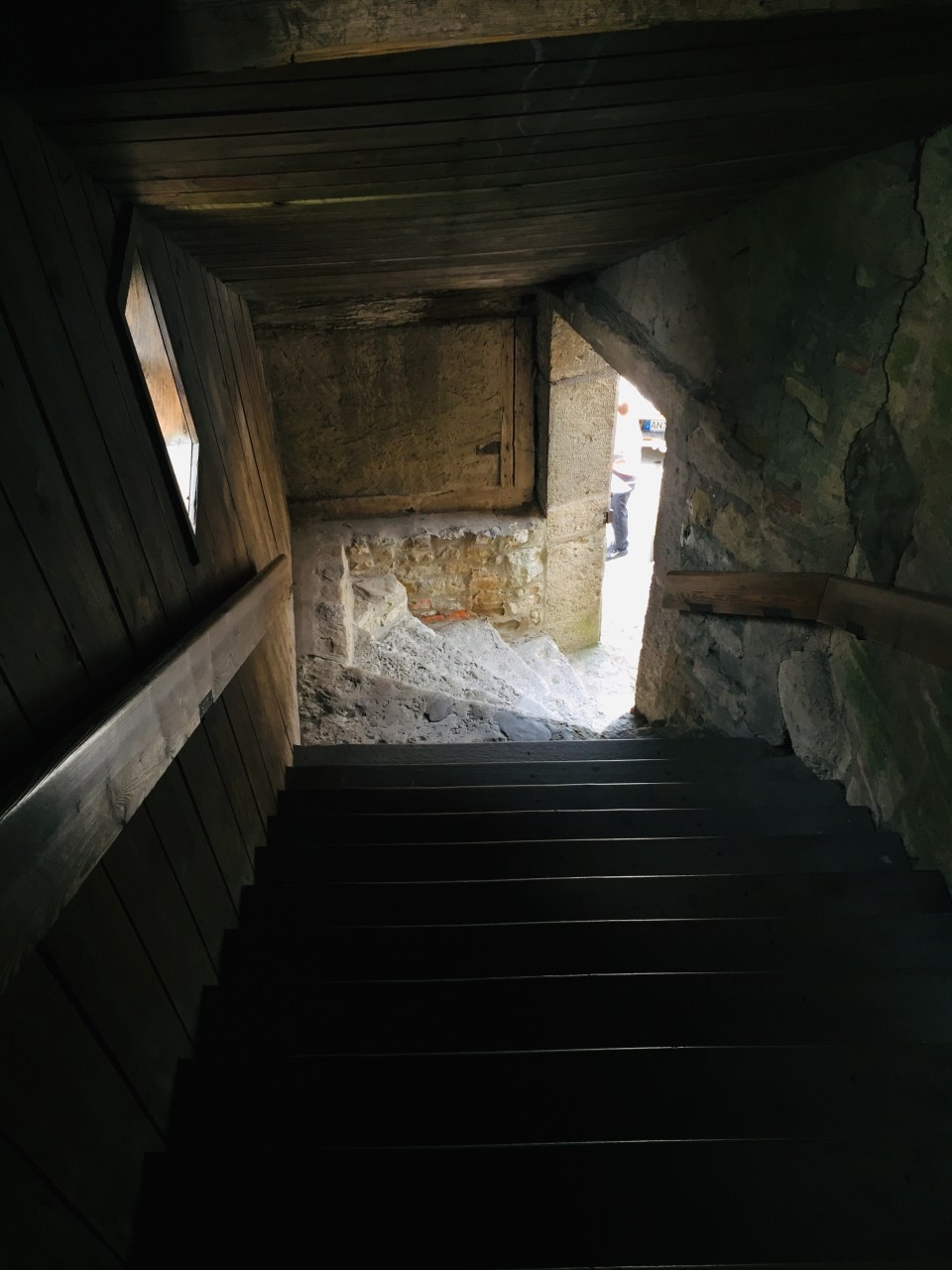
The stairs leading down from the wall
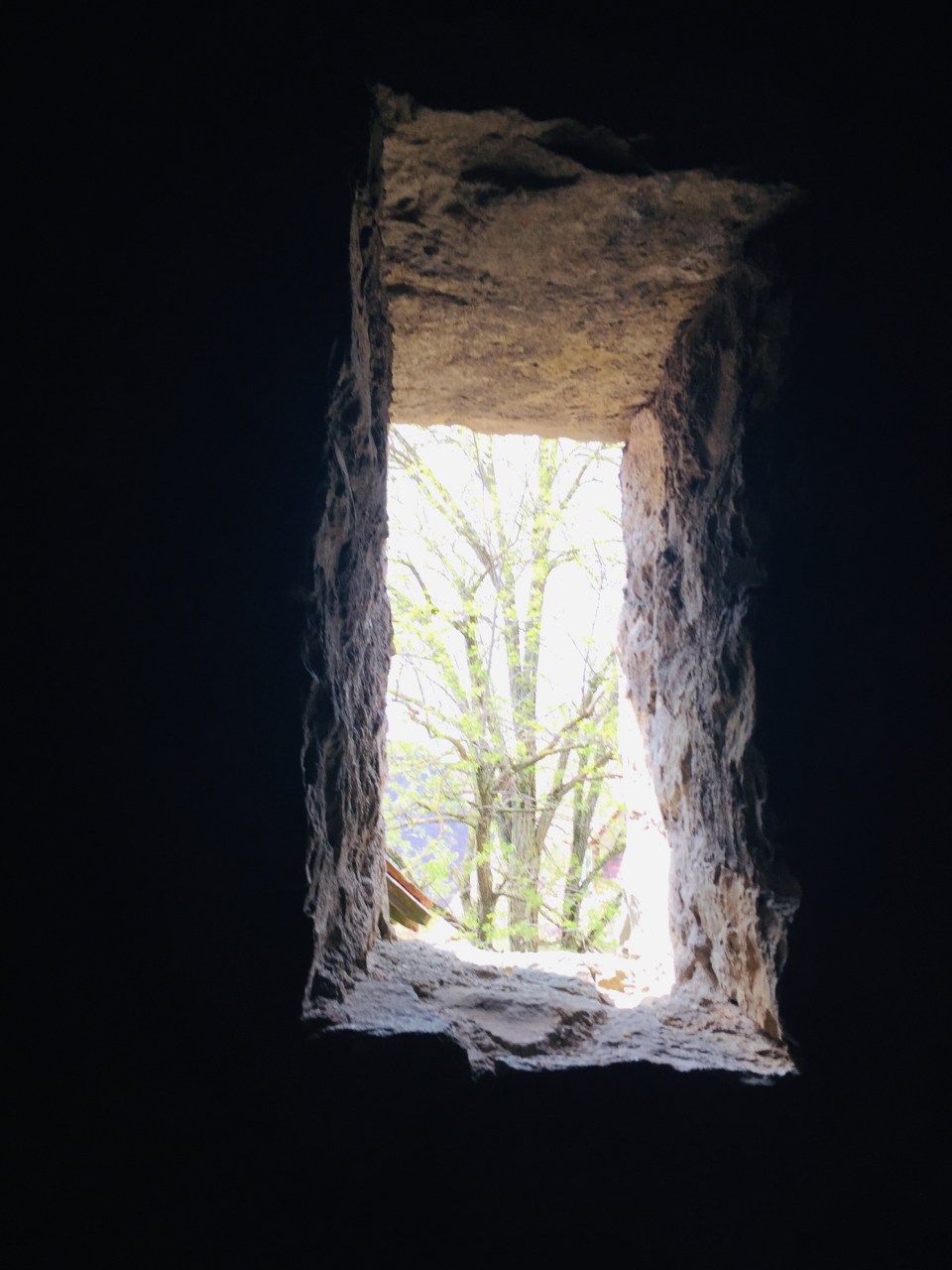
Peephole for keeping an eye out for the enemy and shooting from
As we travel south, we noticed that the rows of grapevines on the hillsides have changed direction. Now they are what we would expect….horizontal. Previously they were running up and down….. not so good for erosion, one would think.
Glassblower….takes 4.5 years to get degree, has degree for scientific glassblower…as in for labs.
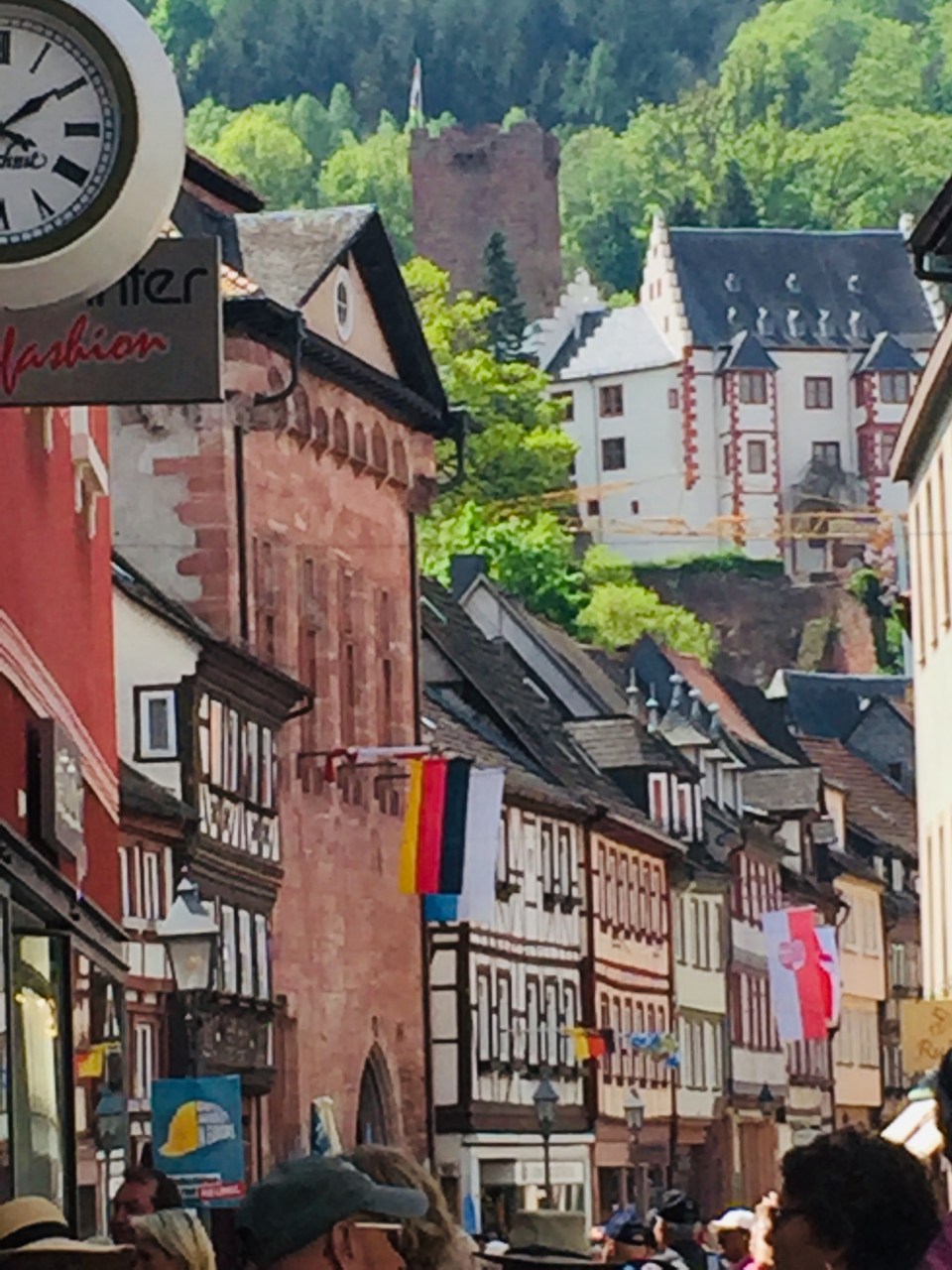
Miltenberg is called the Pearl. Only 10,000 population. No bombing during war so it is intact.
Engelplatz (angels plaza) at 4pm meeting … at the maypole. A big building called “Rathaus”….. the city hall. Pretty funny!!!
Bridge built in 1900 sponsored by twin sisters but destroyed by Hitler in ‘45 but rebuilt exactly the same.
More damage in the “30 years war” 1618-1648 when a lot was destroyed… fighting between Protestants and Catholics.
“Staircase” building belonged to bishop. It’s from 14th century.
“Rest easy and sleep like a bear” is a sign outside of a hotel.
Across from Rathaus was a Franciscan monastery built because the bishop thought the citizens were being just too noisy and rambunctious in the Engelplatz.
The Protestant church up the hill was built in 19th century but city did not change from Catholic. .
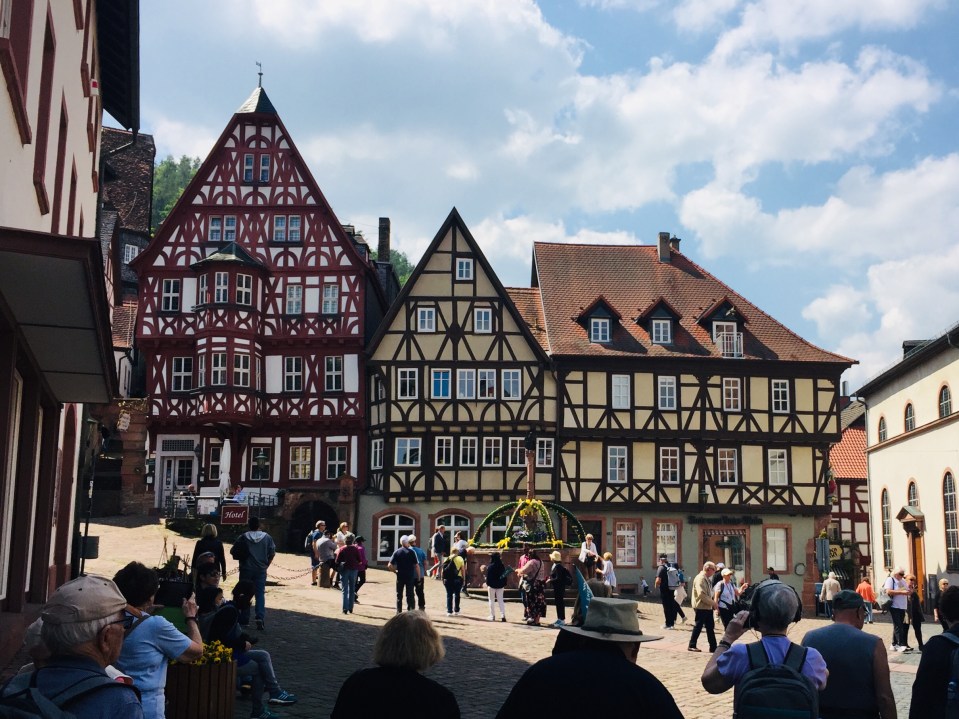
1581 timber building was built using beams and only wooden pegs..the mortar between the beams was a mix of dung, clay, straw and water. Amazing….. they have lasted for over 500 years.
In the 16 & 17th century Miltenberg had witch trials and executions.
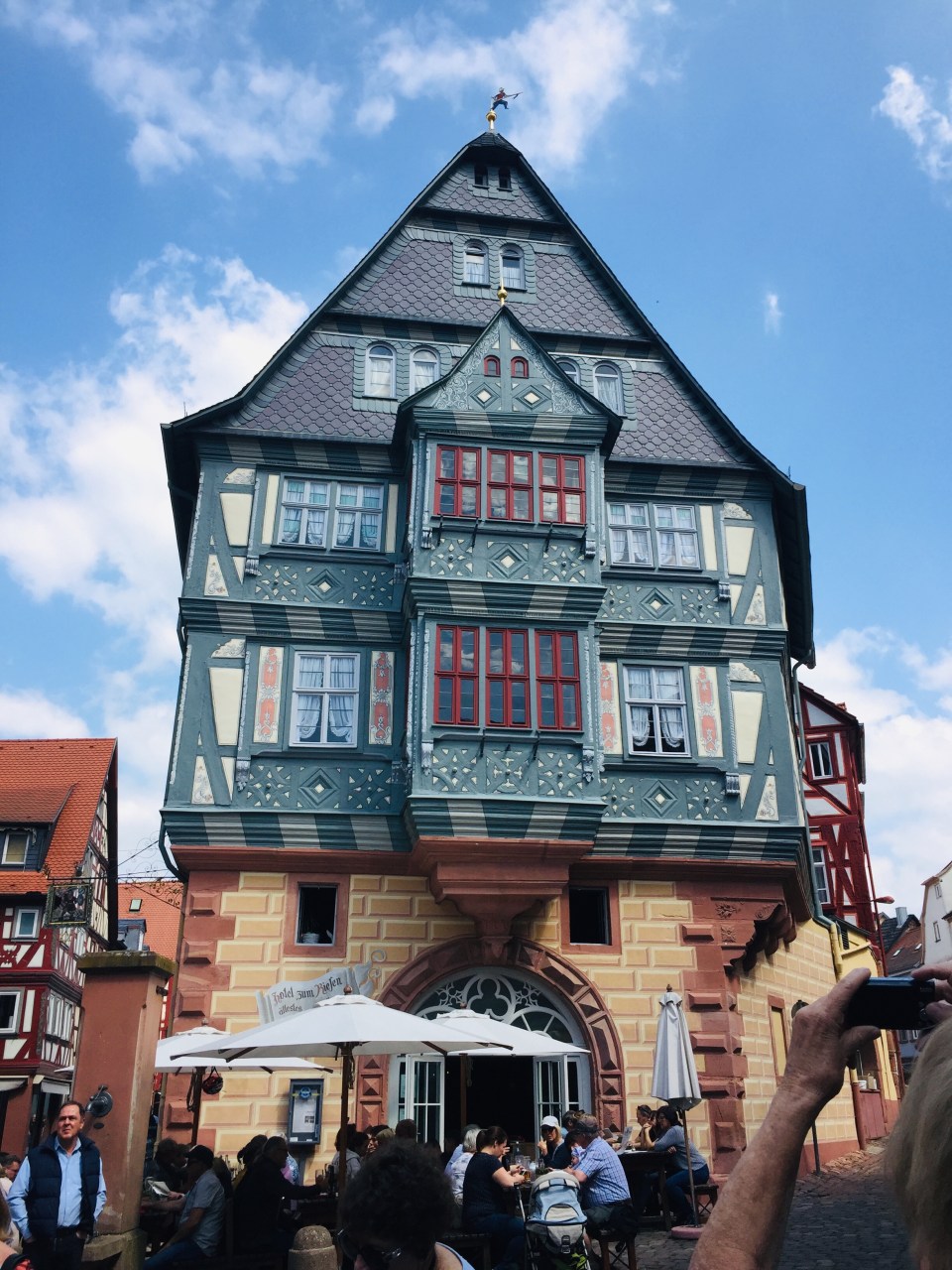
The oldest hotel in Germany called the Reisen or giant. … ugly faces on exterior facade to keep nasty people out. FYI …Elvis stayed here too.
“Staircase” building belonged to bishop. It’s from 14th century.
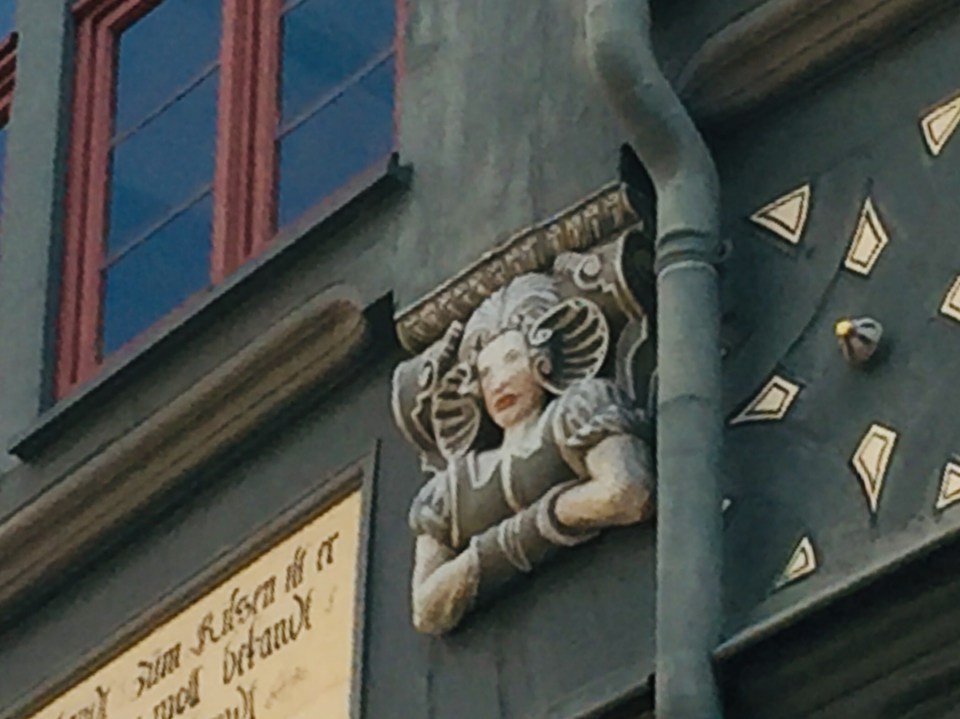
One of the ugly faces… this one of a female gossip… not big ears and big lips/mouth
The oldest hotel in Germany called the Reisen or giant. .
Guild sign of the butcher
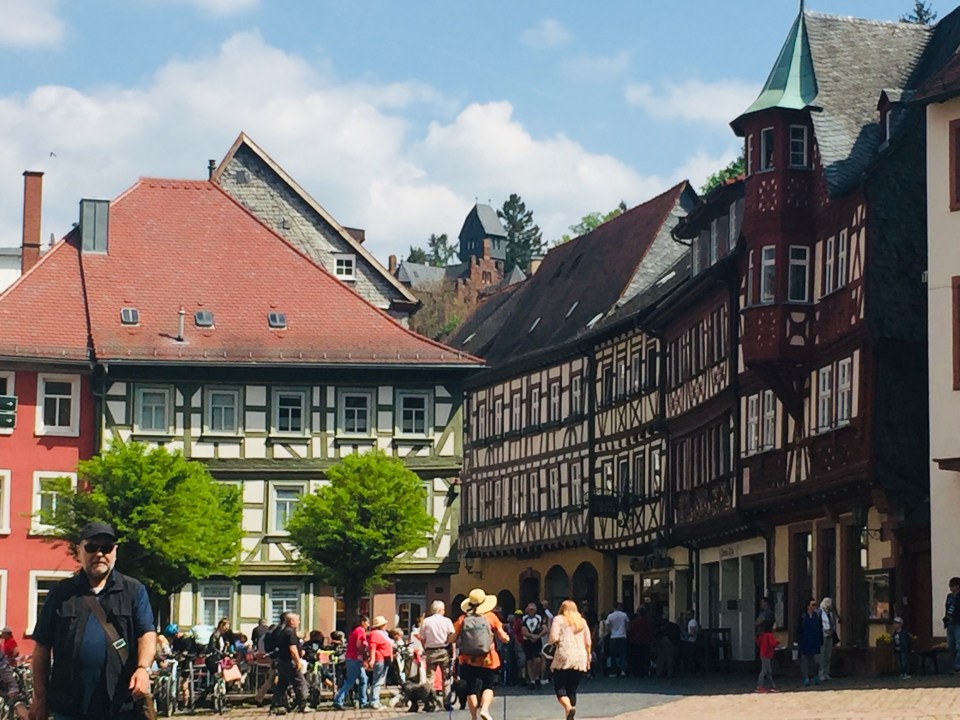
Miltenberg
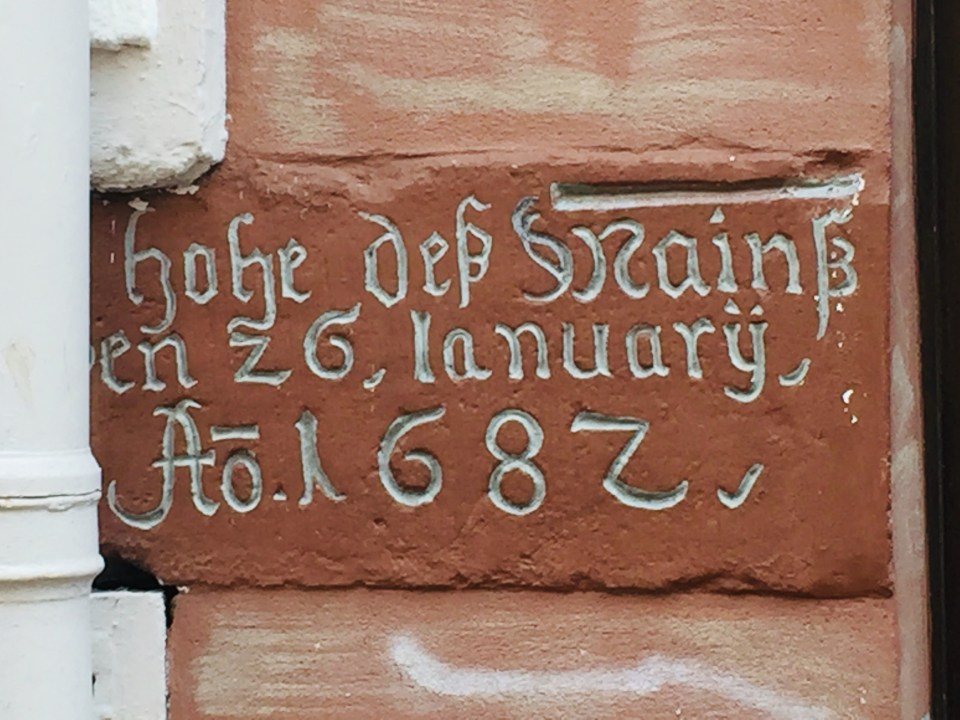
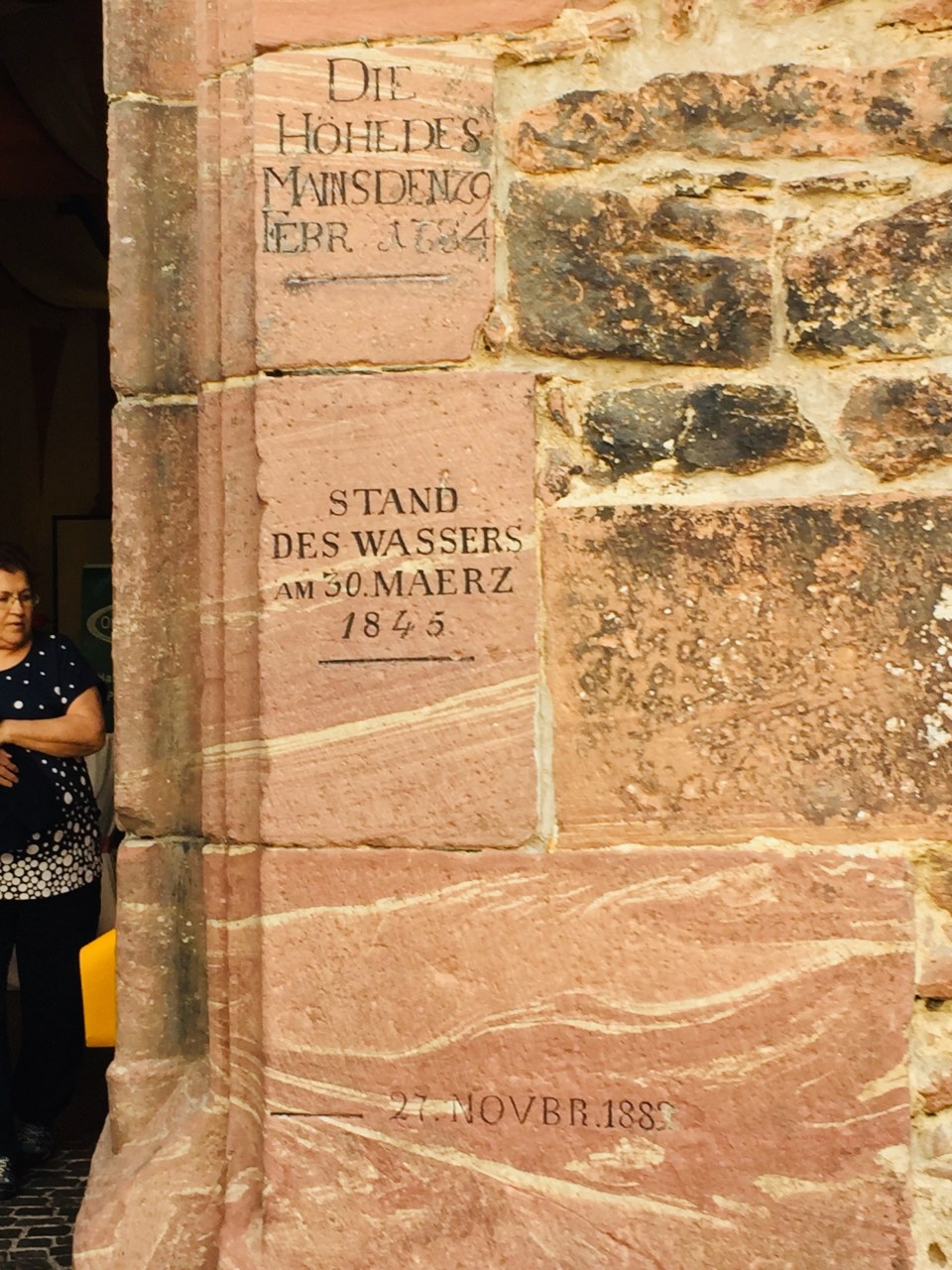
High river flood marks on the buildings
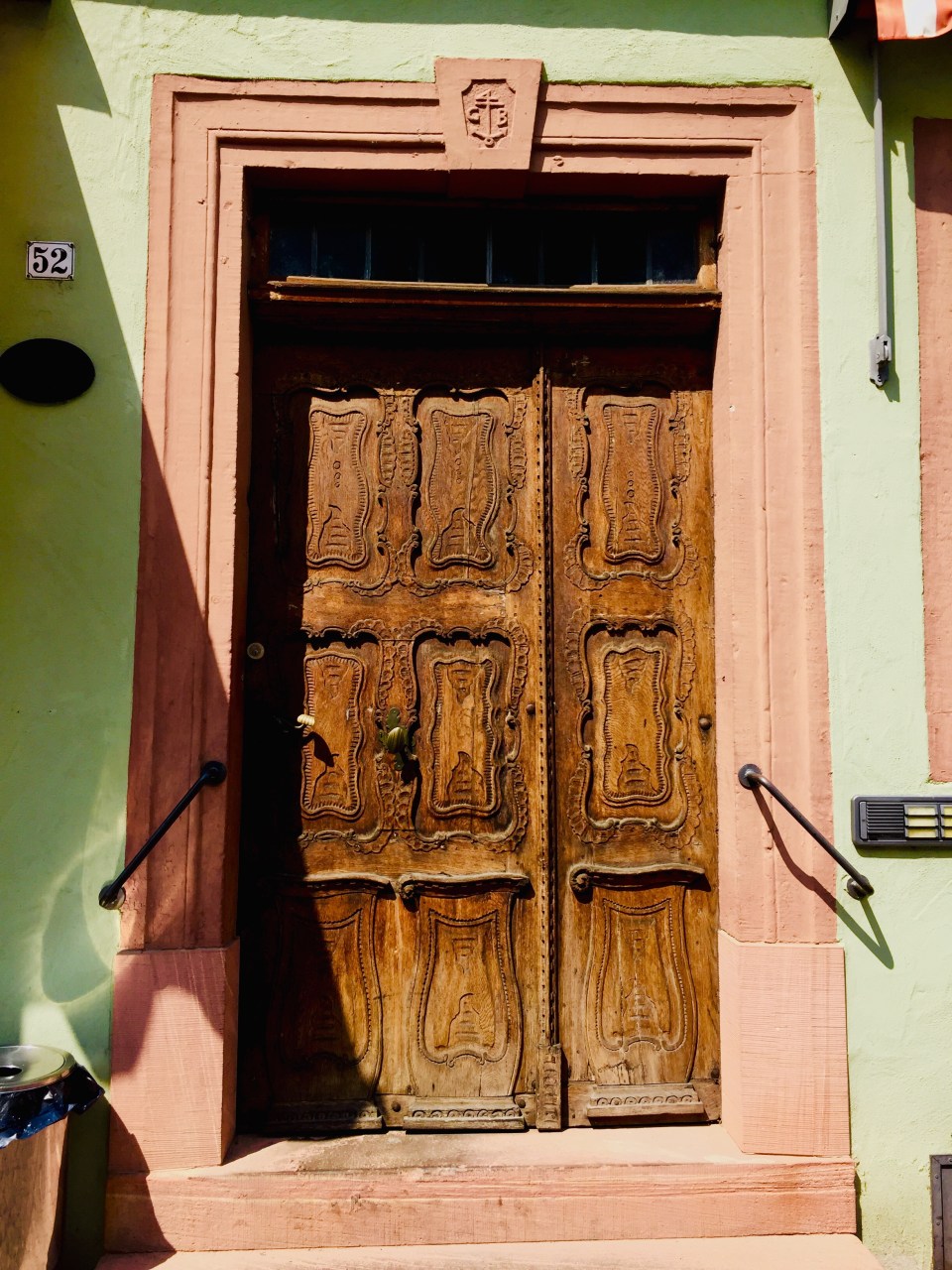
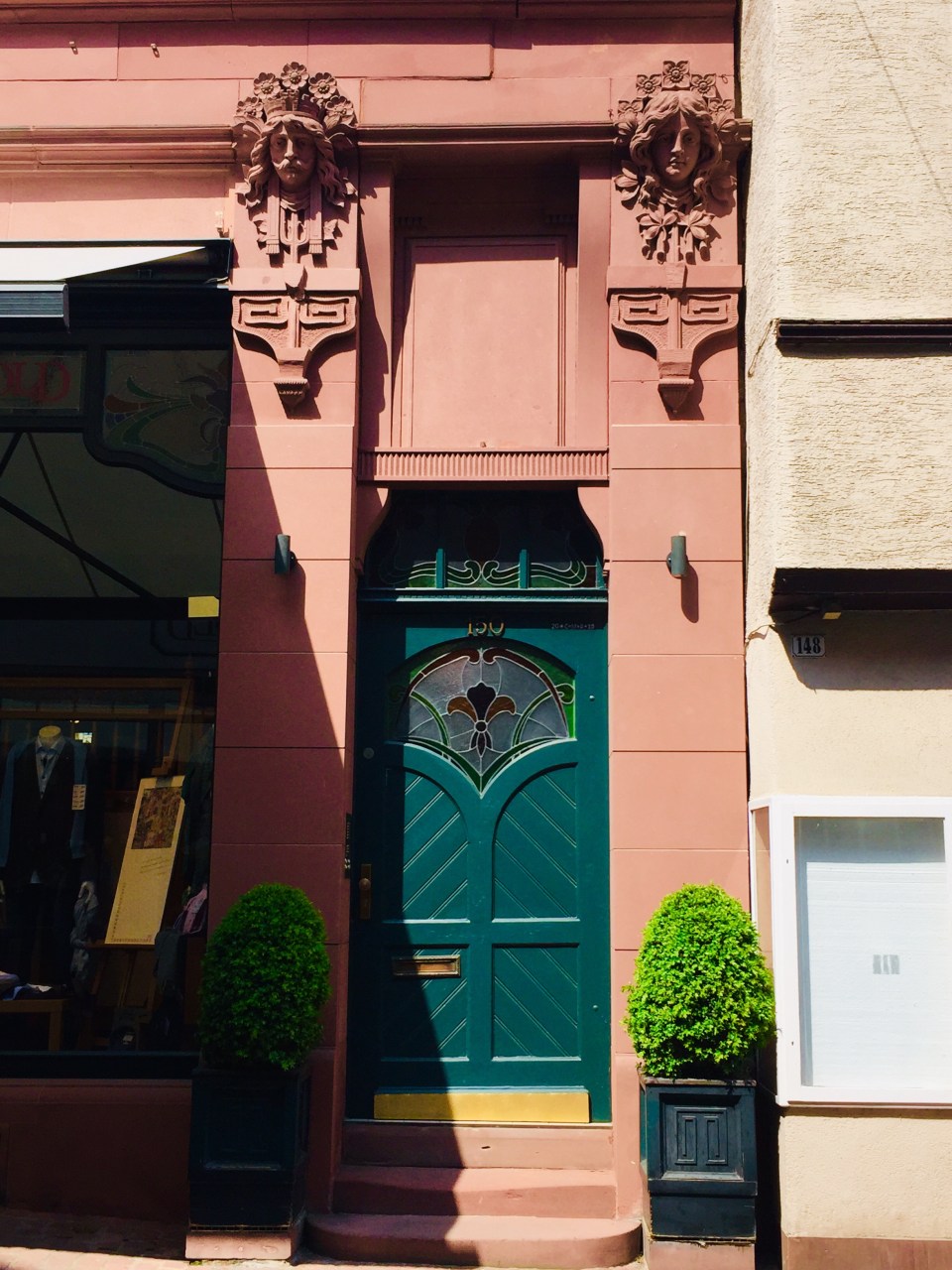
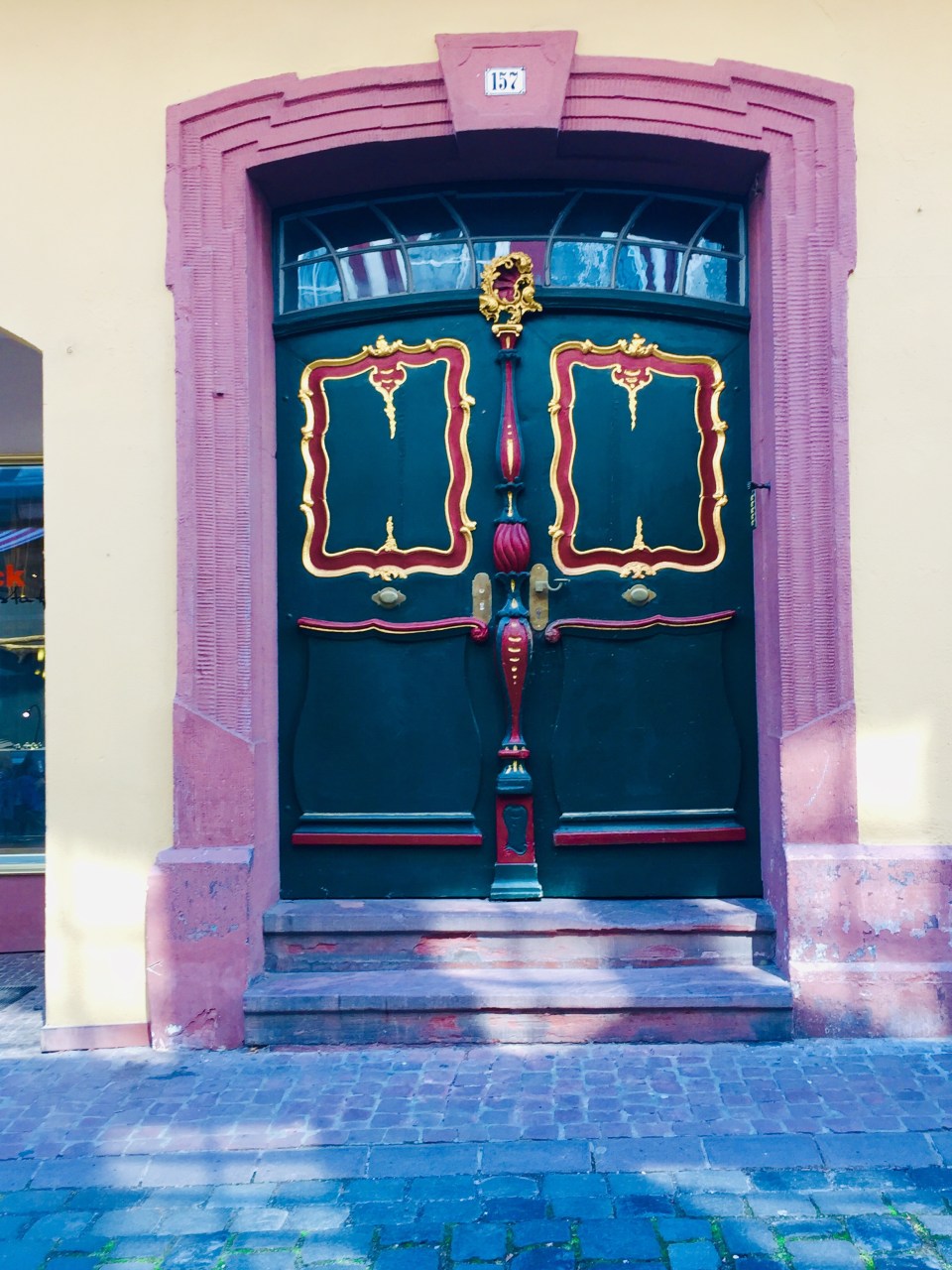
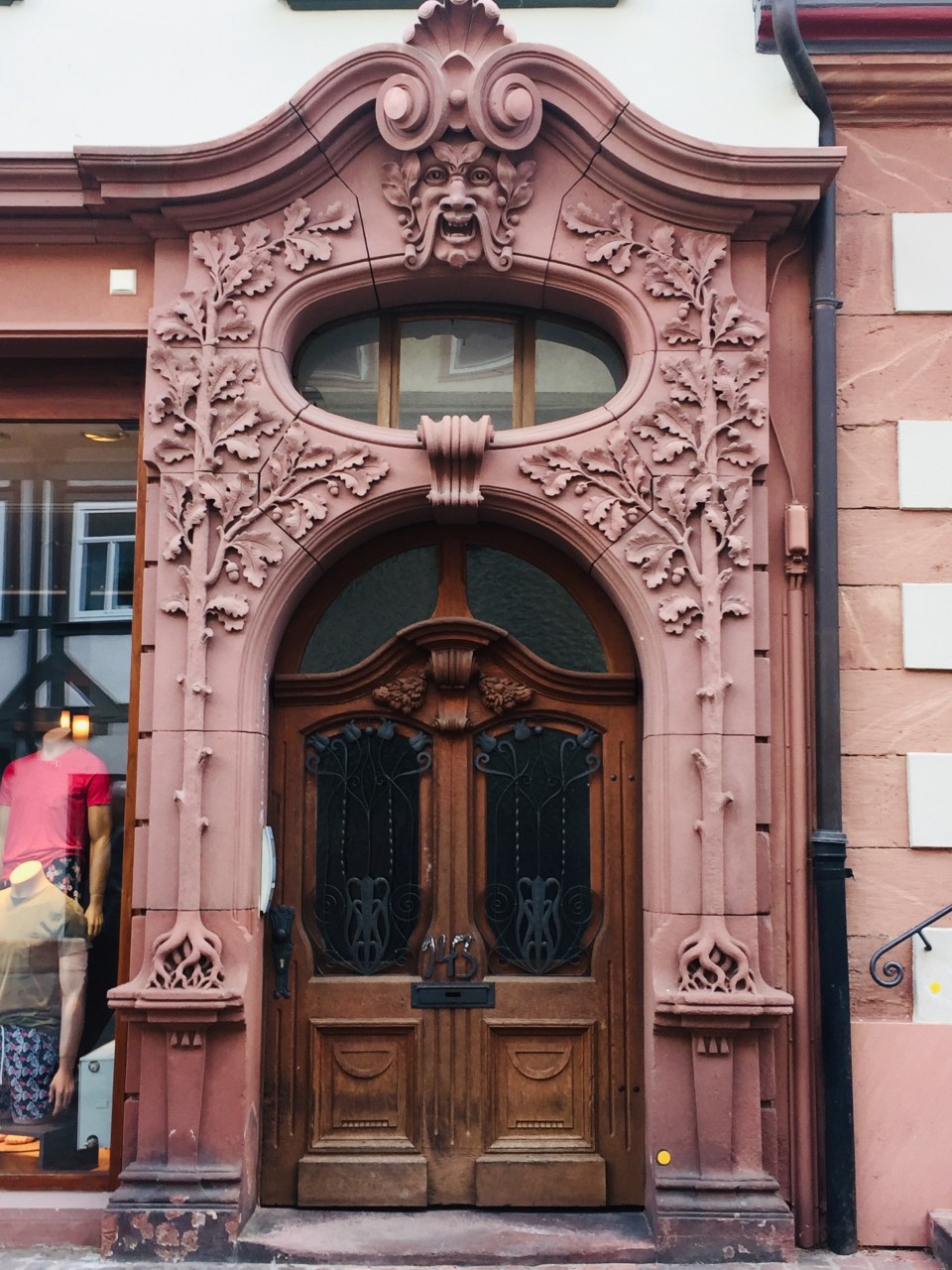
So many interesting doors…
Miltenberg market square
Another interesting door
On the carmel coloured building, above the door shows the “guild” …..of butcher.
Apothecary was here for 500 years but closed 2 years ago.
Oldest house in Miltenberg built in 1333. Everything about it is not straight including floors.
Joseph Martin Krause born in 1700 same as Mozart..musician statue in market square.
This day is the a holiday….the “1st of May”… “labour”day, so nothing except coffee shops and a couple of tourist places.
Wertheim
Castles in Europe were all built in 12th or 13th century.
We drove through a little town that has existed since 1611.
Bike trails along highway like the “Galloping Goose”. Lots of “caravans” or RV parks. Reminds us of the island.
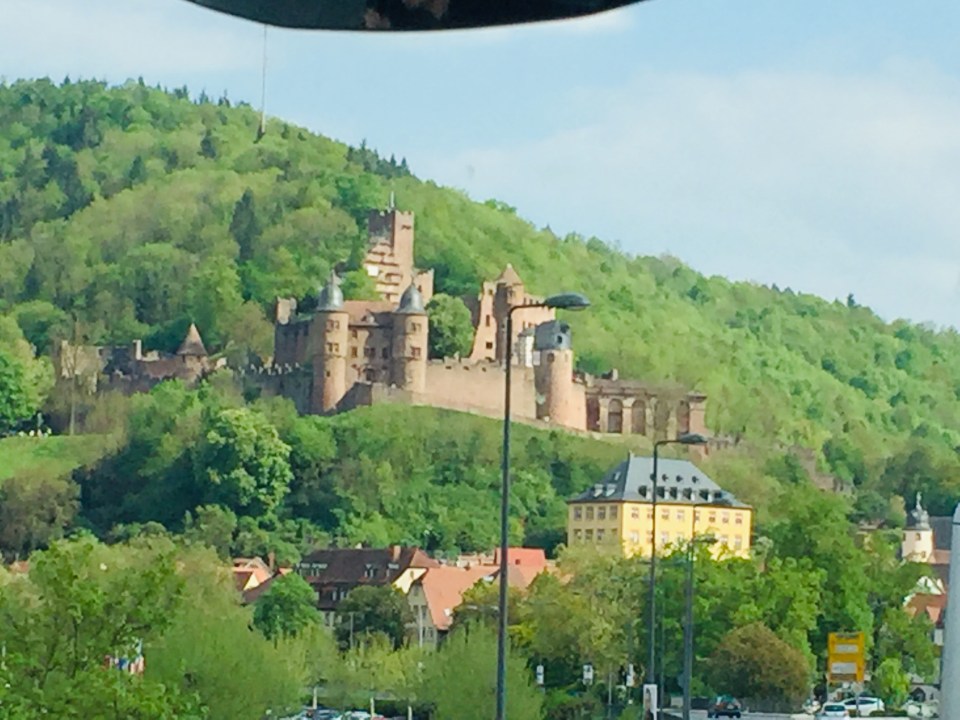
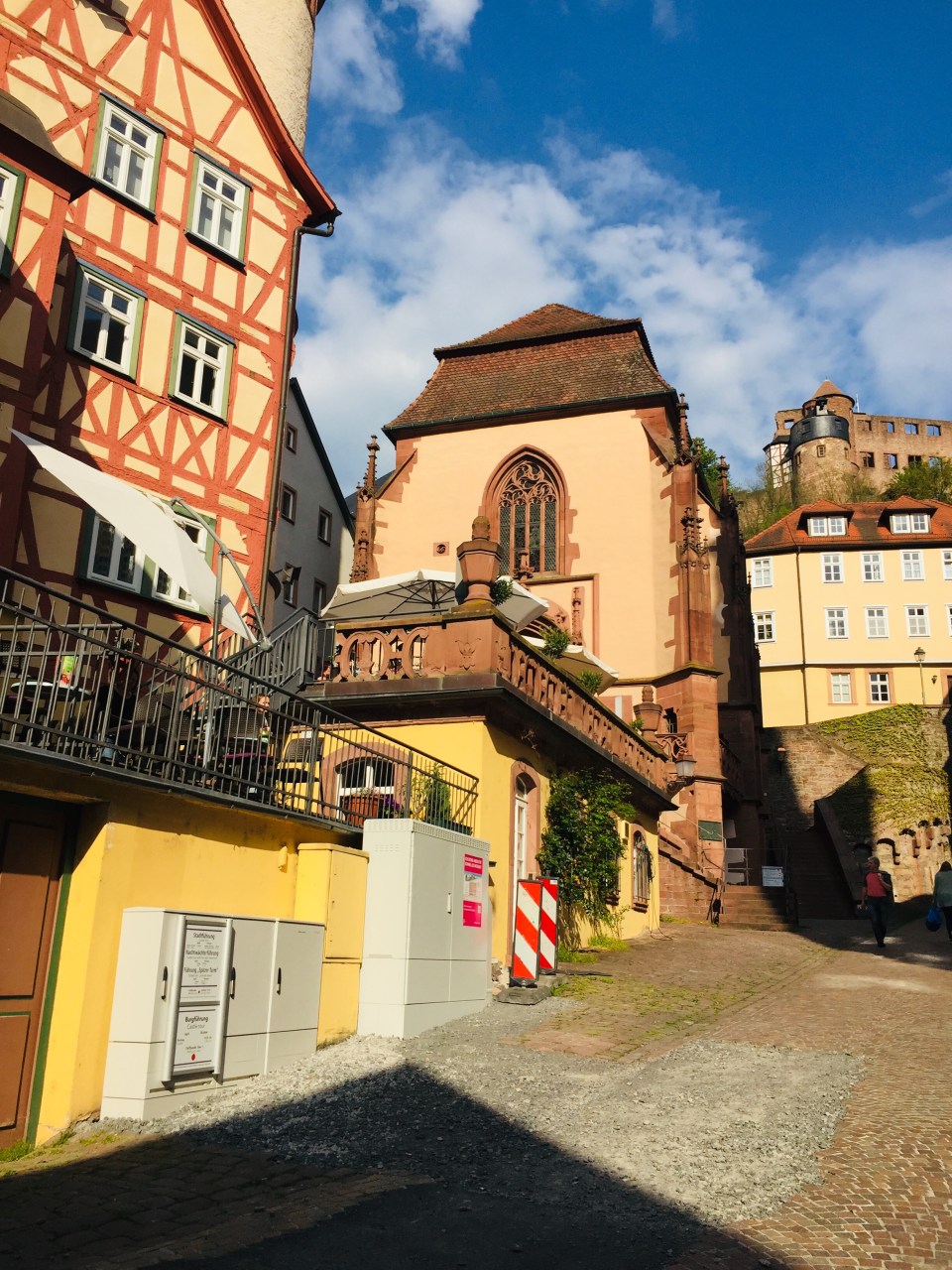
As we drove in we can see the magnificent, huge castle built in 1117.
Protestant town run by a Count not a bishop. To keep religious peace one had to become Protestant or leave. Problem came later when there the only heirs were sons-in-law. One was catholic and one was Protestant. They then had to share the same church. That didn’t work out well.
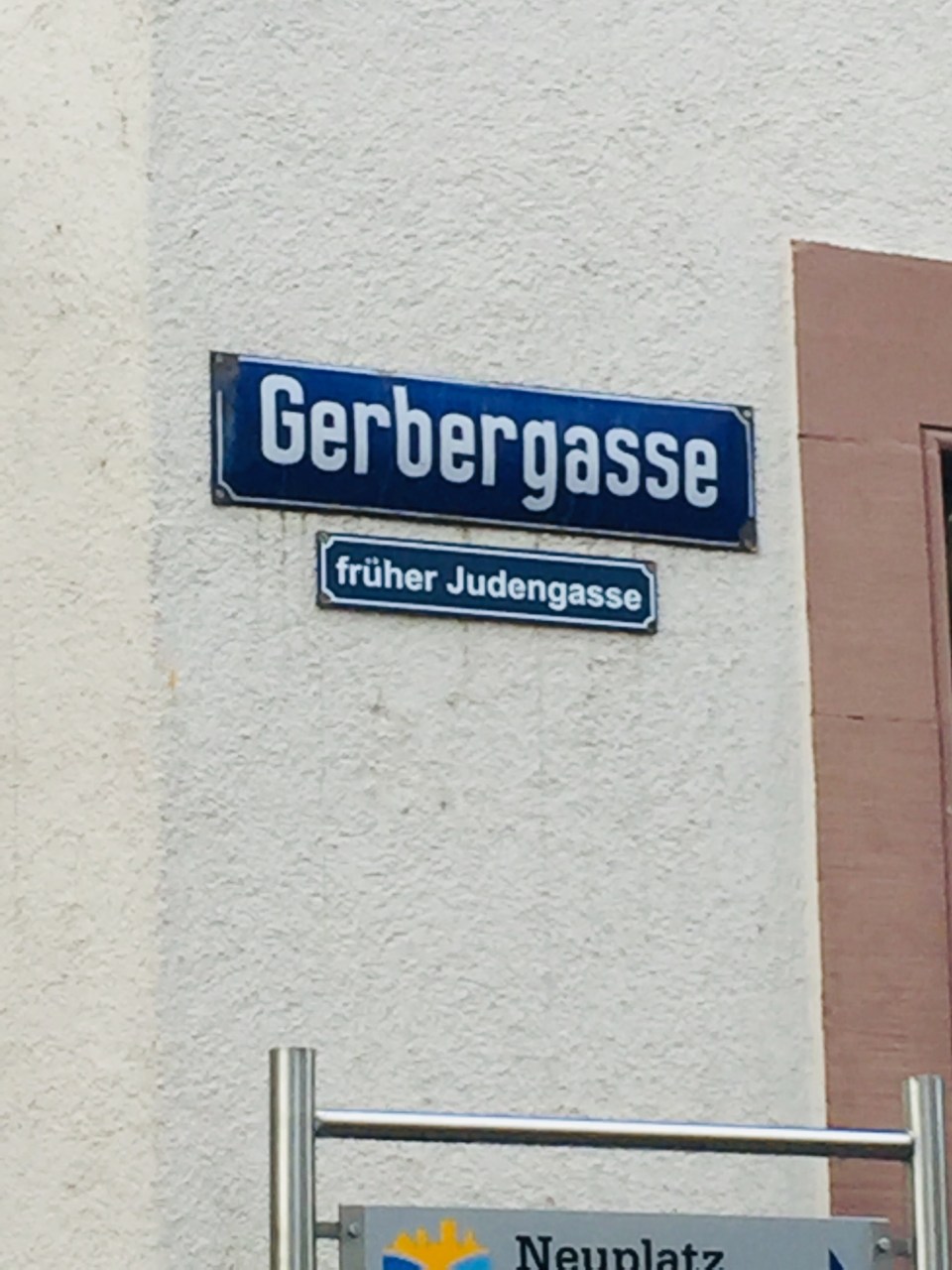
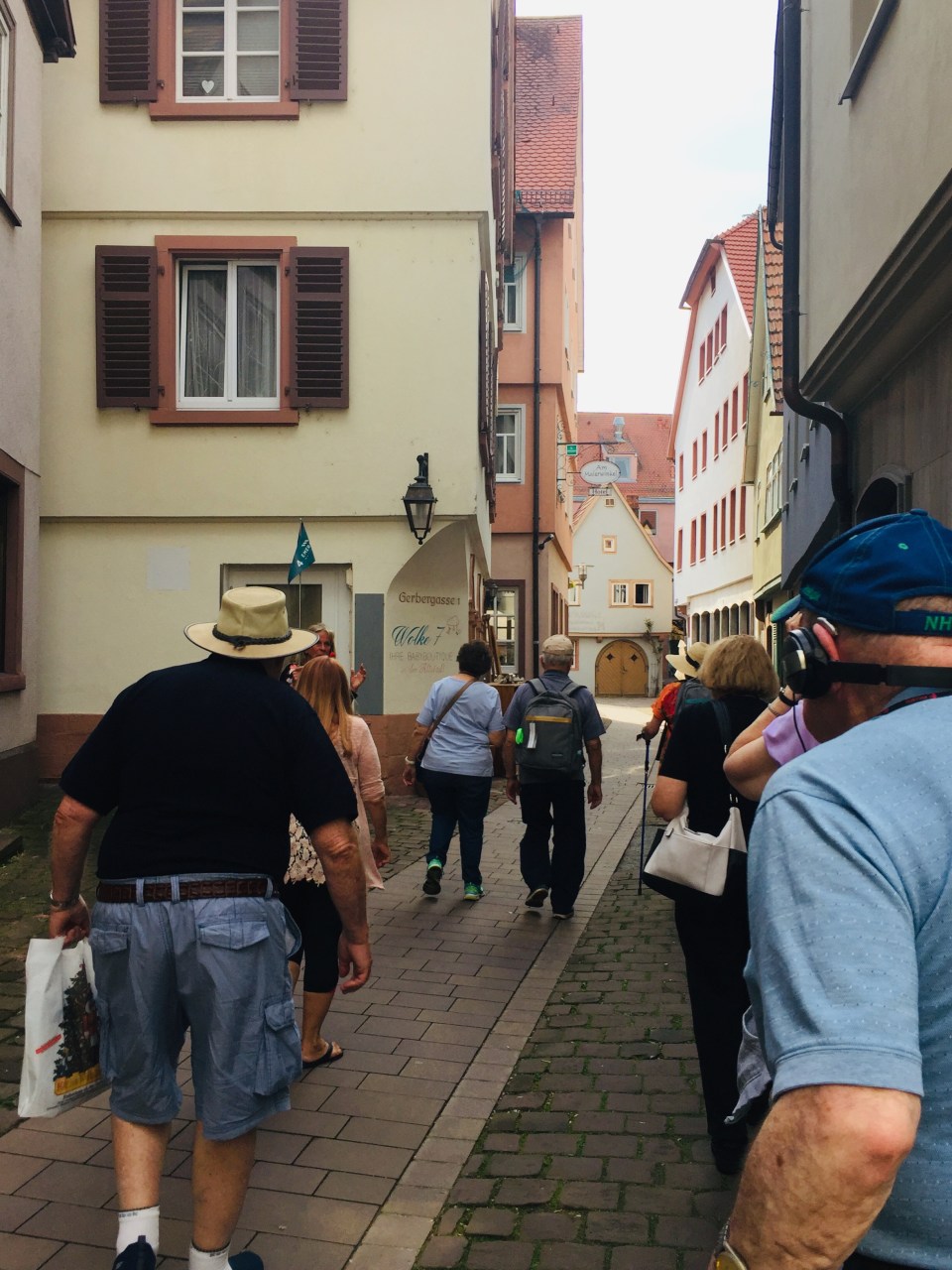
There used to be a large Jewish population at time of war. Germany changed the names of street (which later the signs were reposted with both names. They also took down the synogogue.
Apparently in Germany, all grade 8 students as part of their curriculum, must take the history of what happen during Hitler and Nazis…WW2. They must also go to a concentration camp to see what was done so that it is never repeated.
Castle built from 1117
Example of the street sign…. The newer name from Nazi time above, the one below… the original “Jewish” name
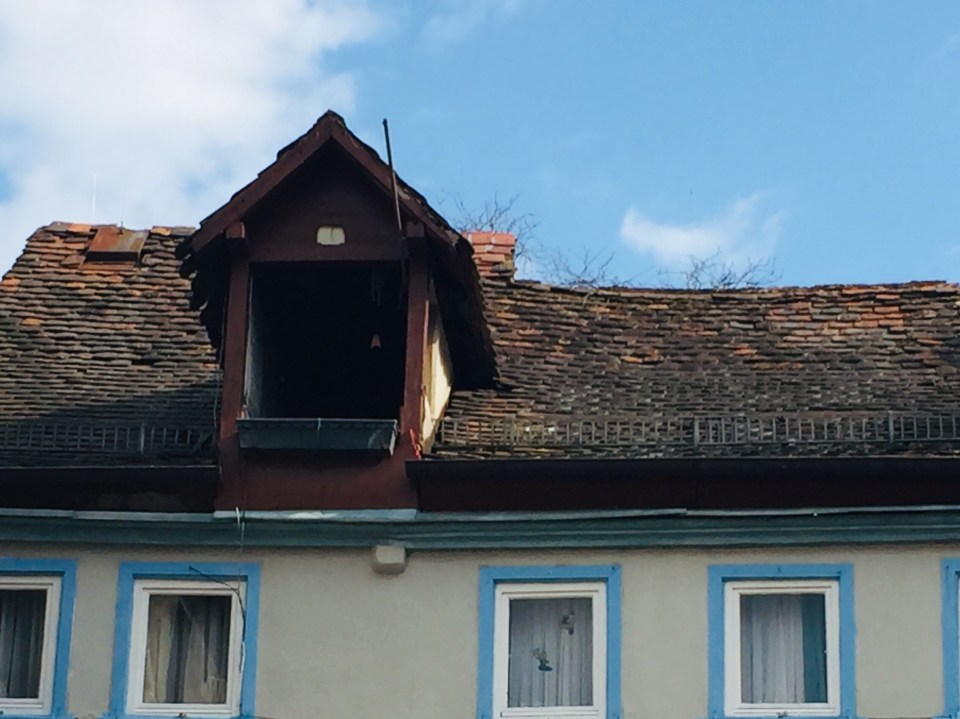
This roof is definitely in need of repairs
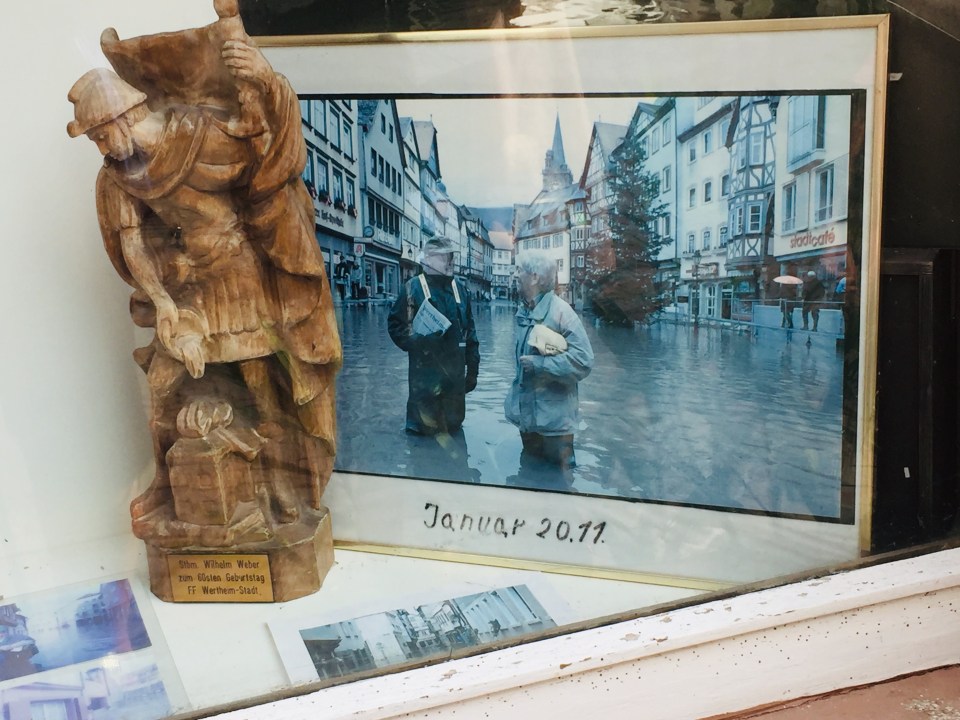
Photo of flooding in streets of Wertheim
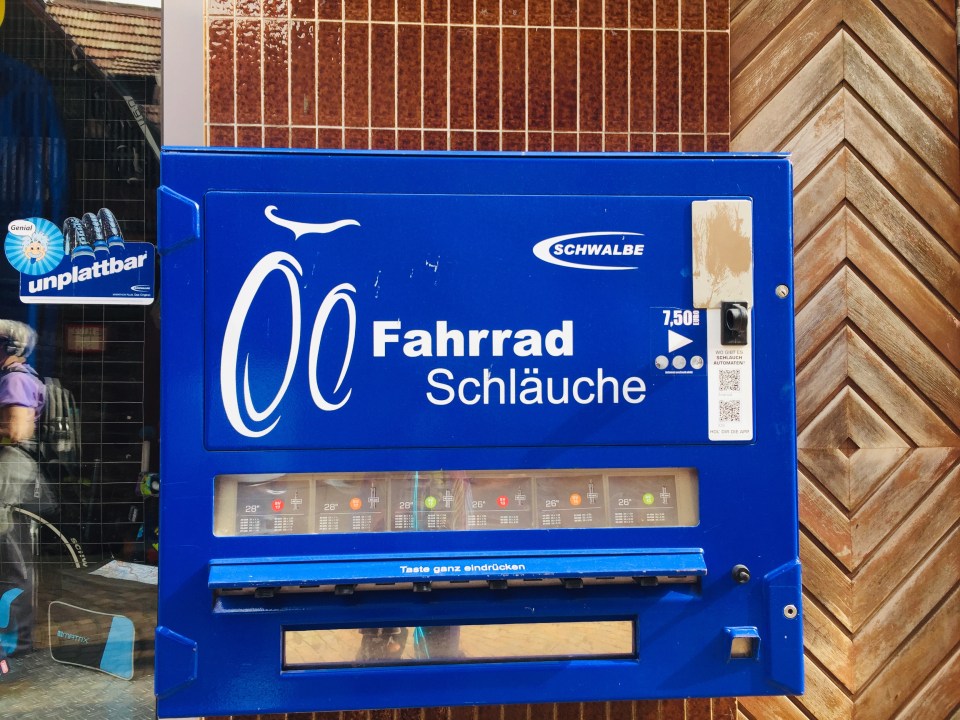
Machine on street selling tubes for bicycles
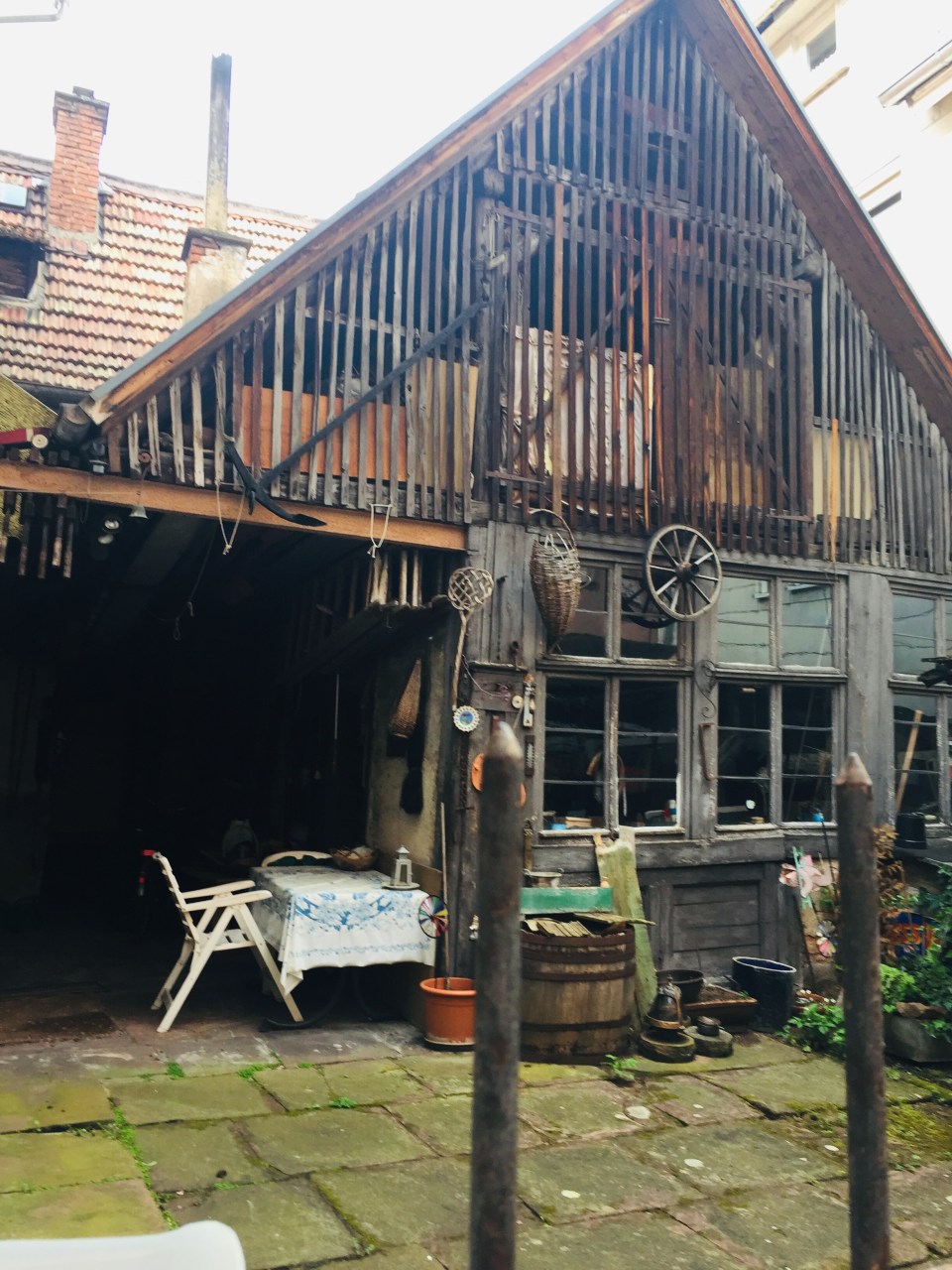
Museum of “Old” stuff
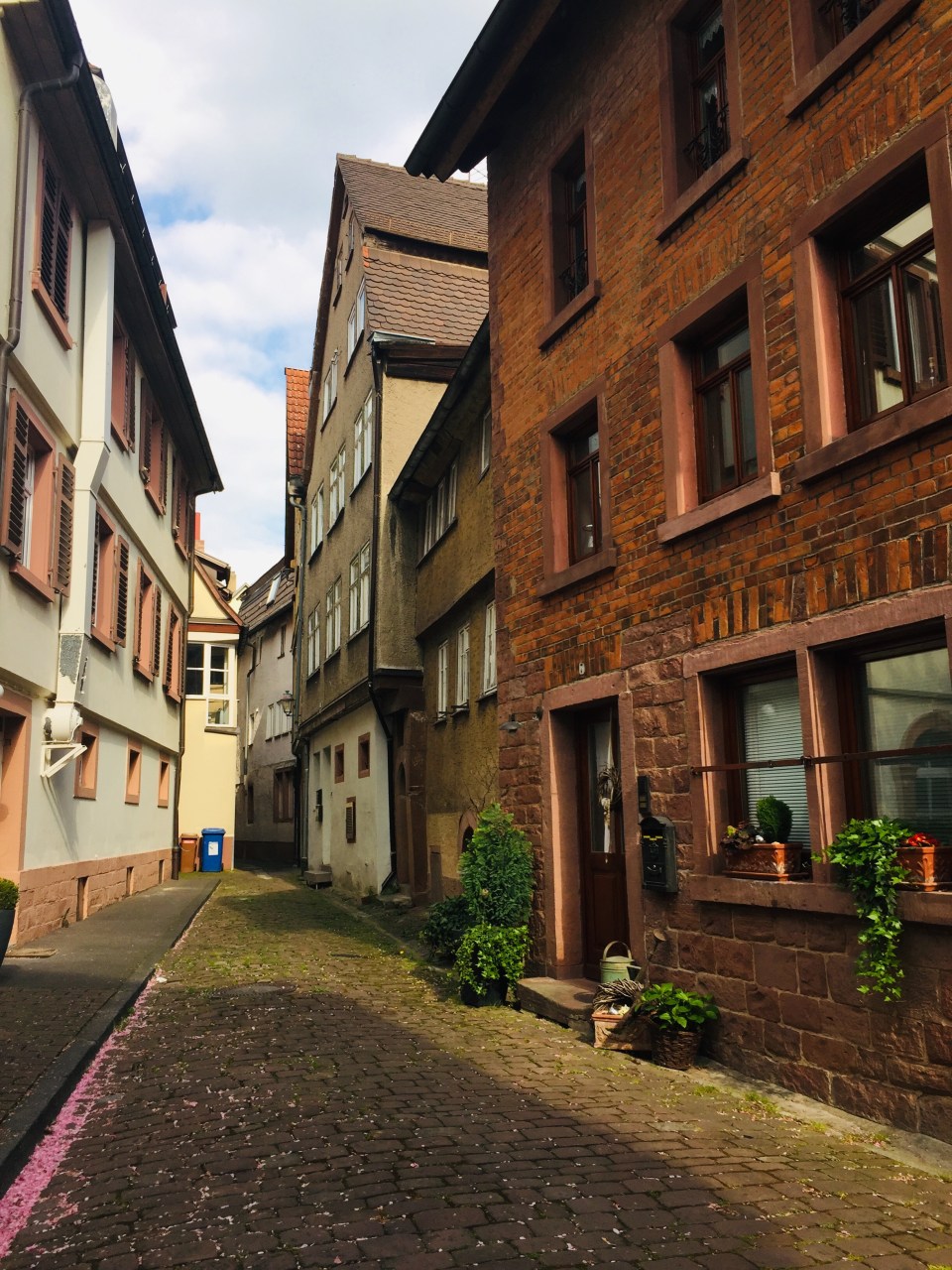
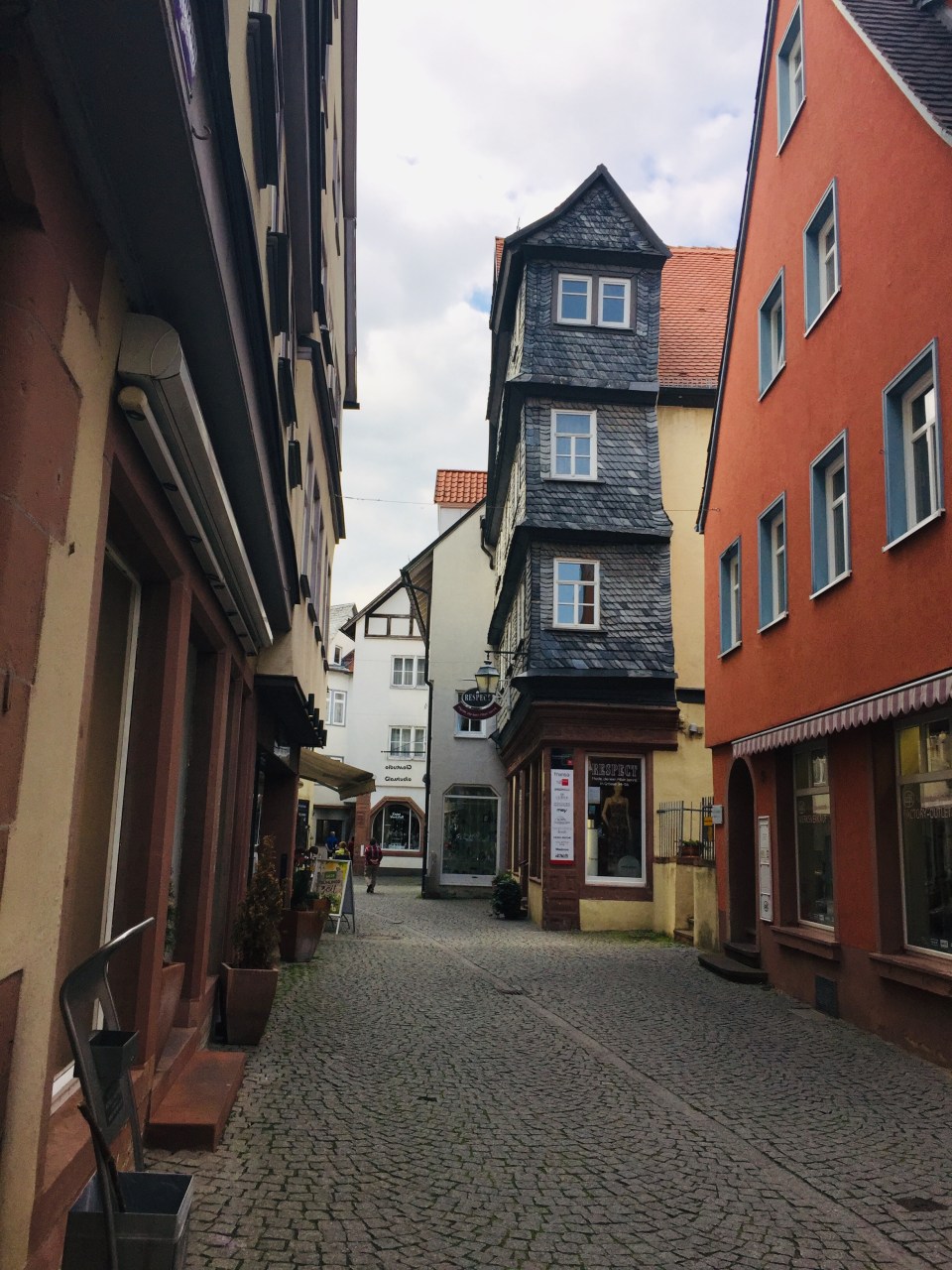
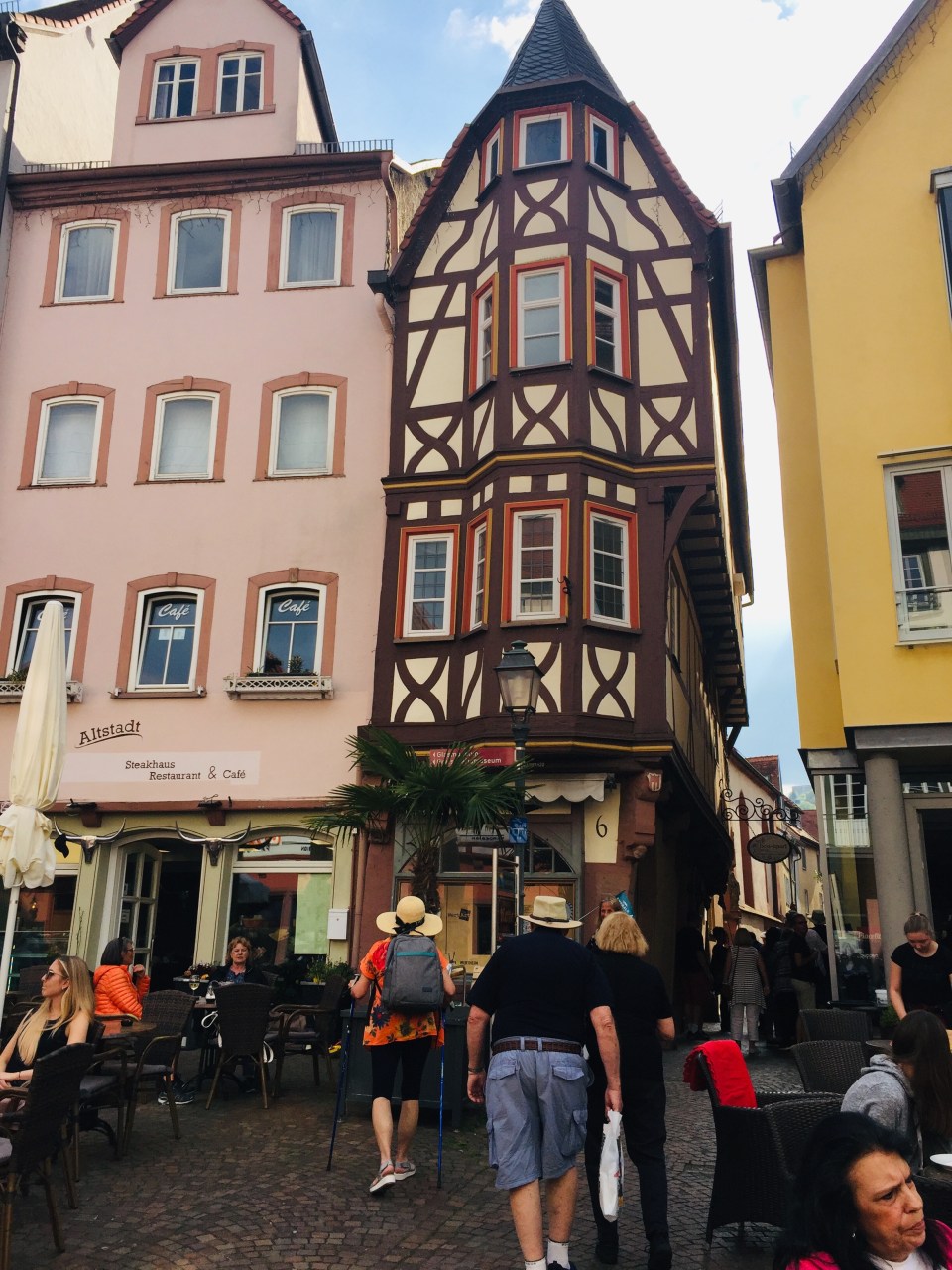
Wonderful narrow street of Wertheim. In this house…. the highest set of windows were placed there so the owner could see what was going on down the street…. nosy!!!
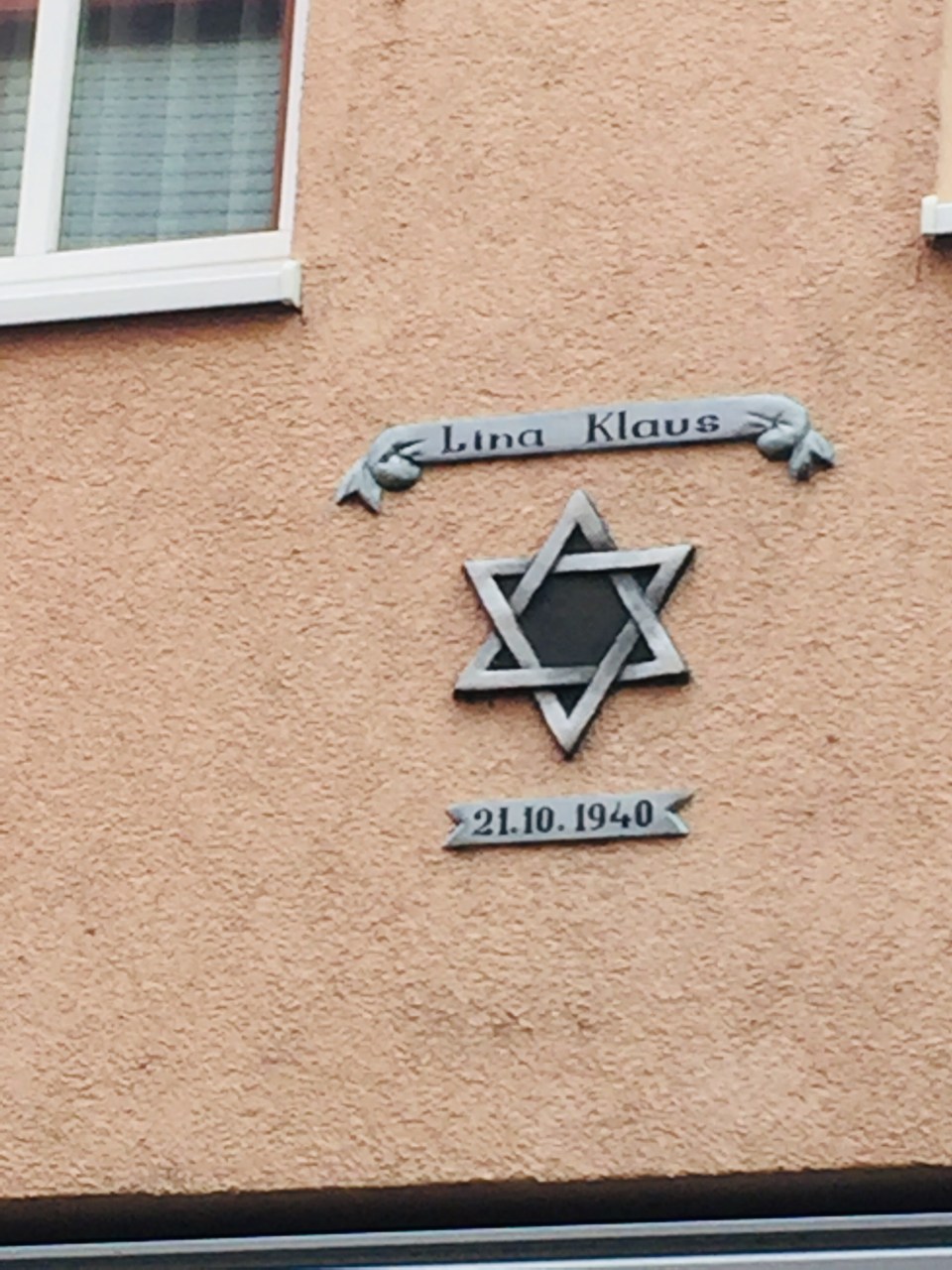
Home of Lina Klaus, a Jewish woman and the date when she was taken away to the concentration camp
House that the owner thought the people would be jealous of because it was so y’all and beautiful
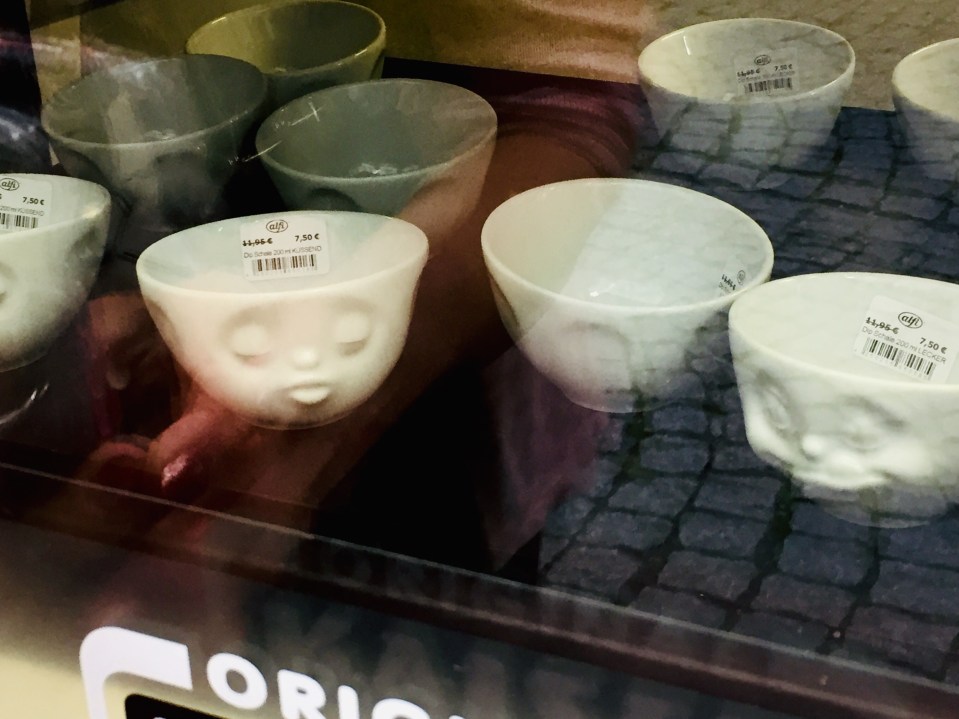
Seen in a shop, these cute children’s faces on these cups



 gailstraveladventures