Our tour today is the Isle of Lewis ….a heritage tour. The Outer Hebrides with a population of 19,000, is the largest British island.
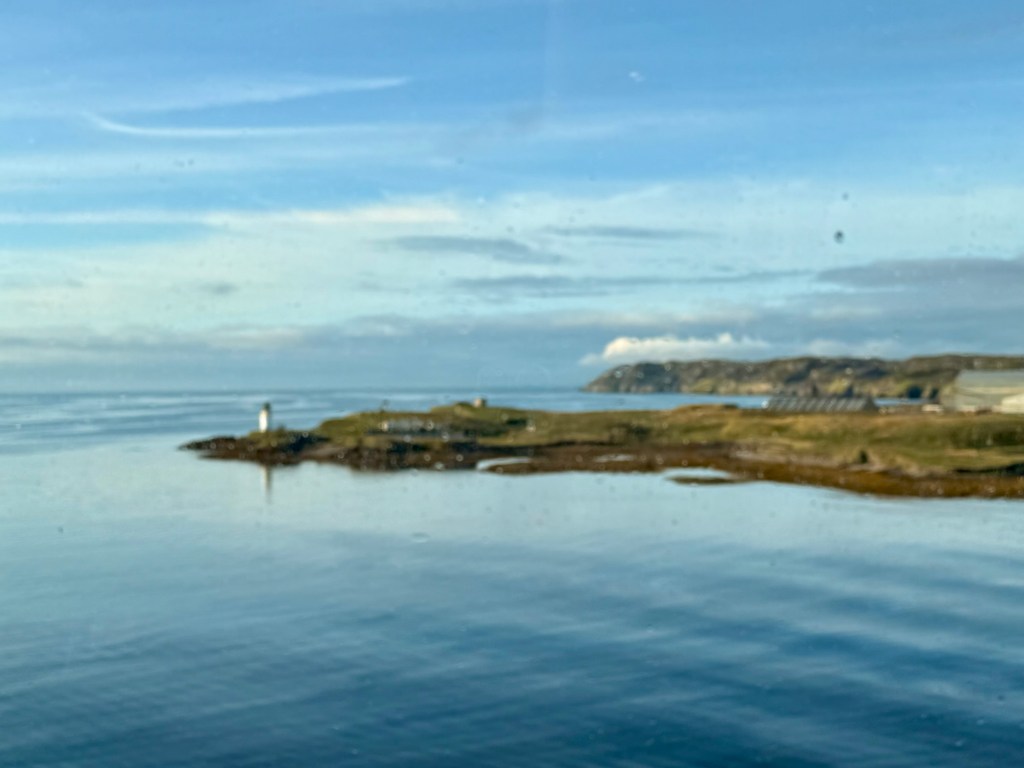
We are doing the west side circular tour… the best Iron Age tour
Lord Leverhulme (founder of Lever Bros. He had also made money in heroin trade.) in 1818, bought the island including Lews Castle, when he was 67 yrs. for 143,000£.
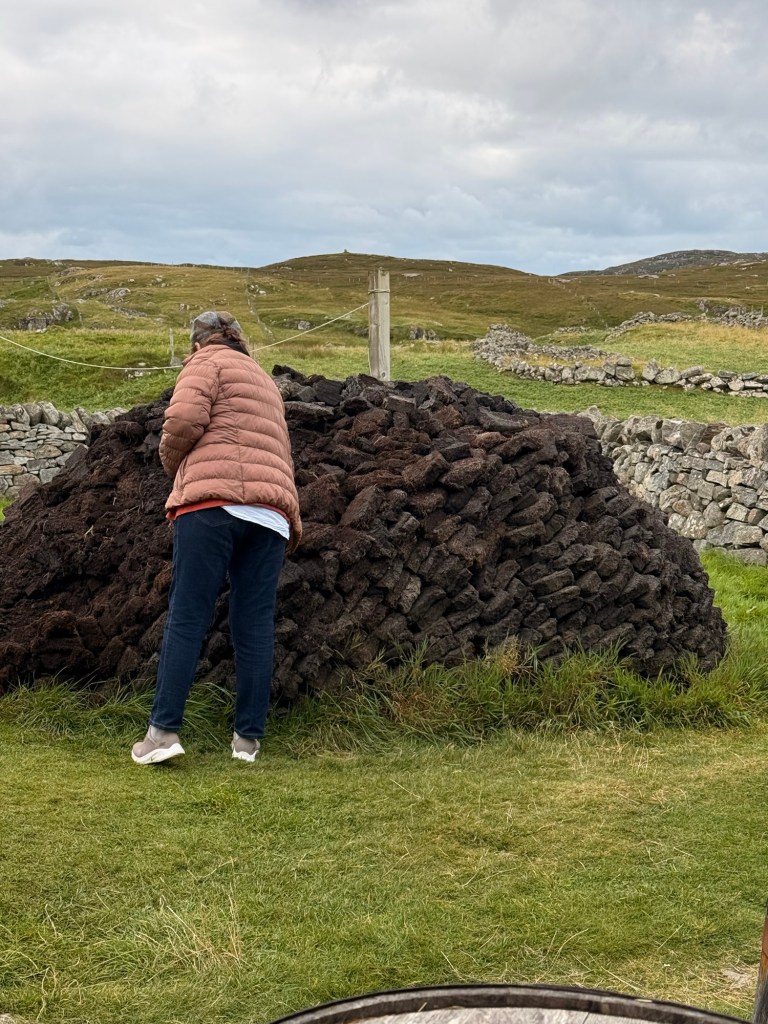
Peat fields is spagnum moss. A layer of grass is first taken off. The peat is under it. It is cut into 35-36 cm blocks…. up to 2 layers only so that it can regrow. They let it dry for some time. It takes 18,000 peat blocks per year to use in each home. Apparently you have to ask the clerk of grazing for permission to harvest the peat. In some cases you may have to pay to cut.
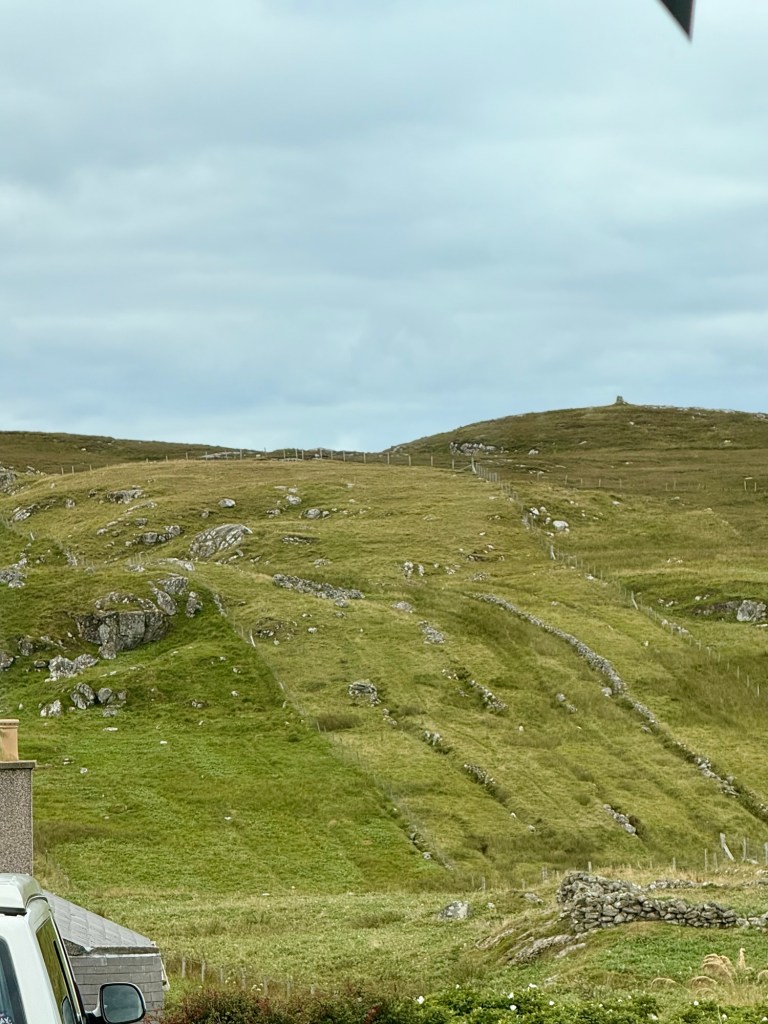
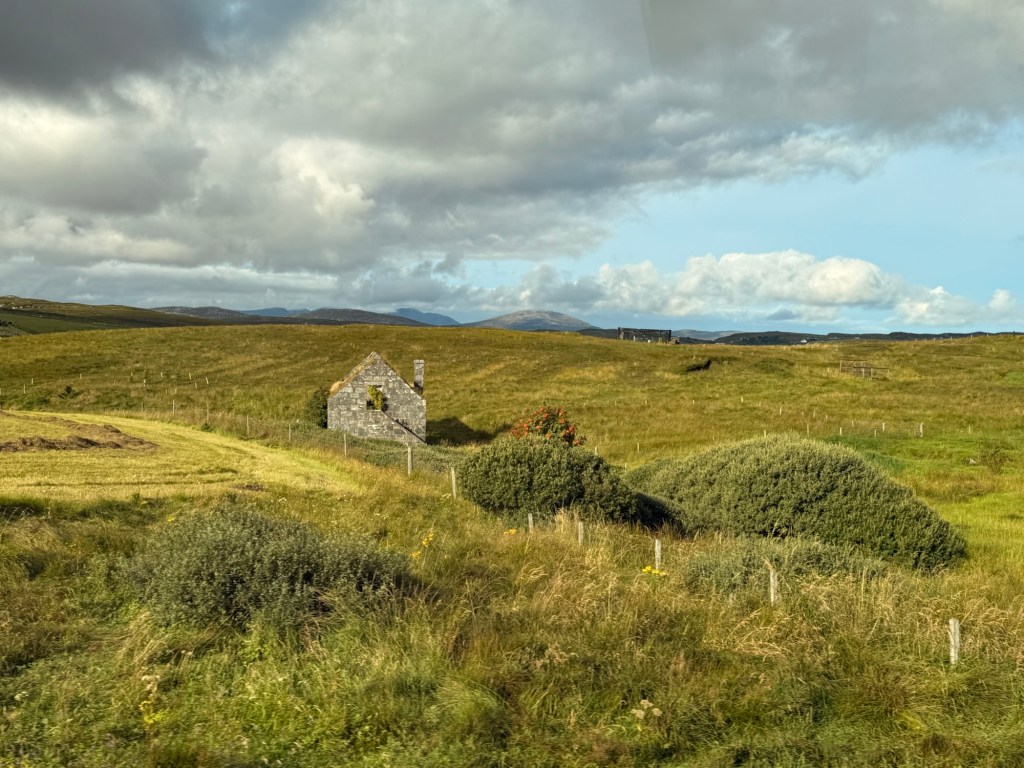
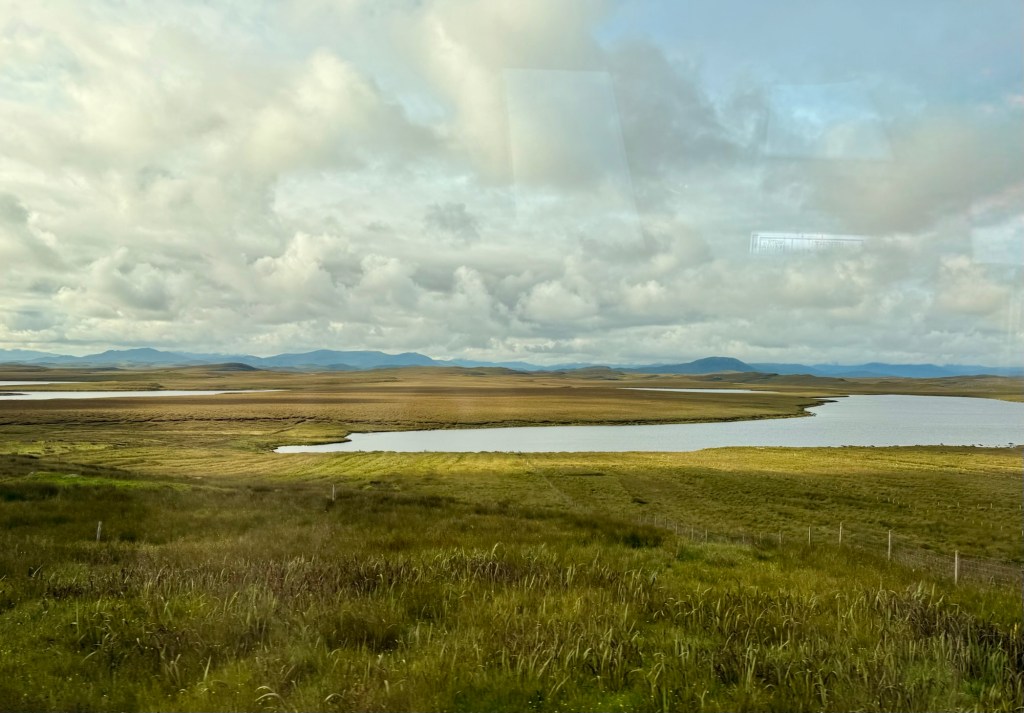
Harris is southern part…. Is rocky. 60,000 still speak the Gaelic (said “garlic”) language in the country. Parents have the choice to send their kids to go to Gaelic school.
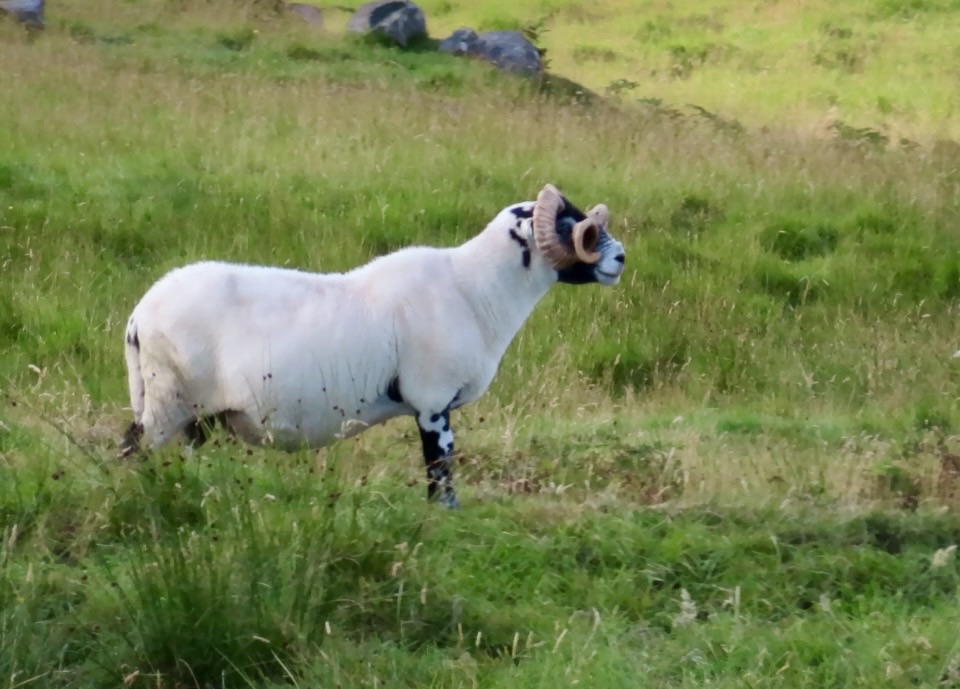
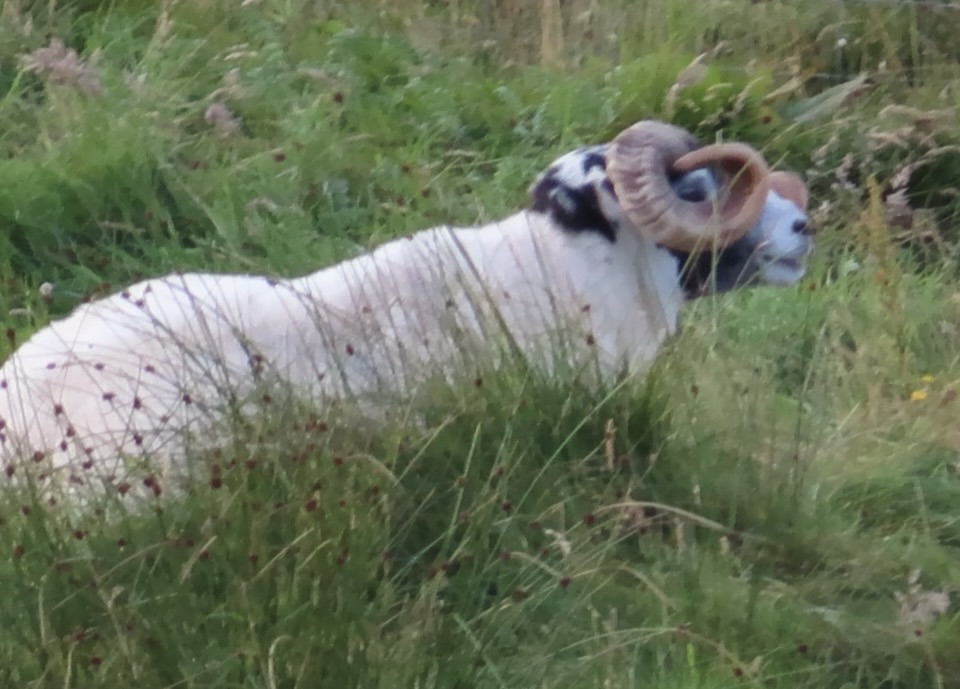
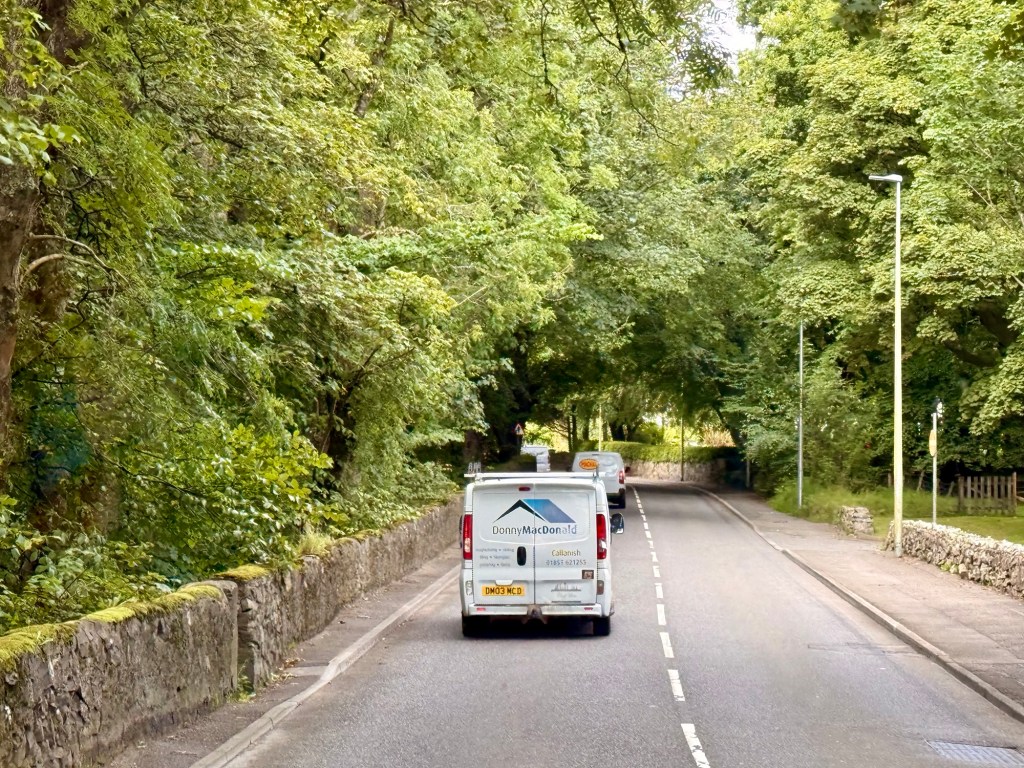
5000 +years ago …Neolithic period it was not as wet, they could grow barley and other grains . There were trees. Now the trees are seen along the side of the road, were planted 25-30 years ago. They are pine ….not native so got invaded by insects. The insecticide they got had instructions in Russian that no one could understand. They mixed them anyway, killing some the trees. Now they only plant native species.
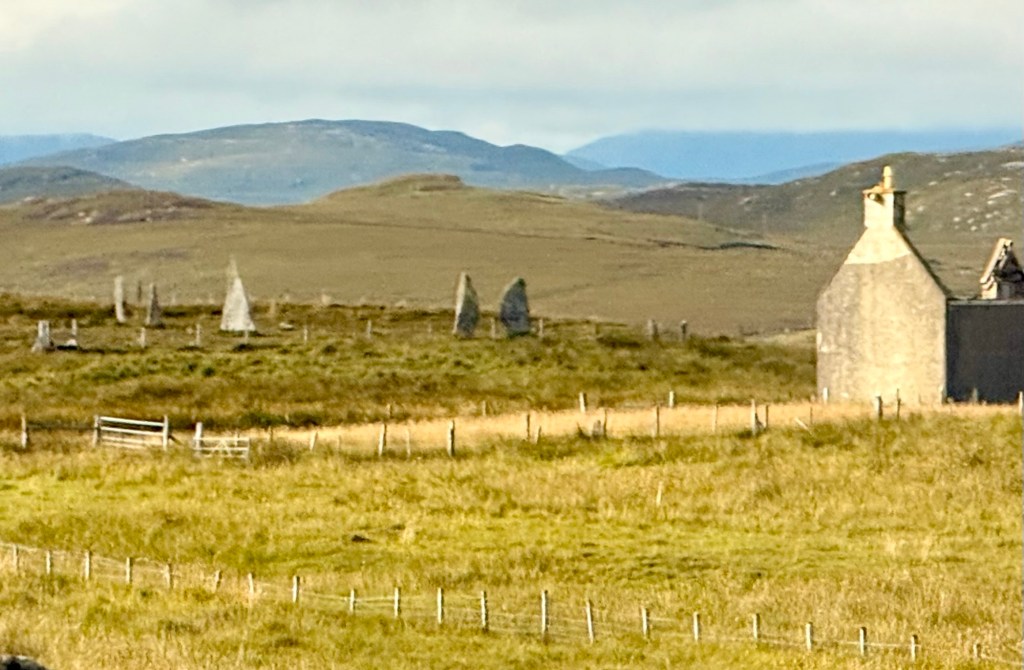
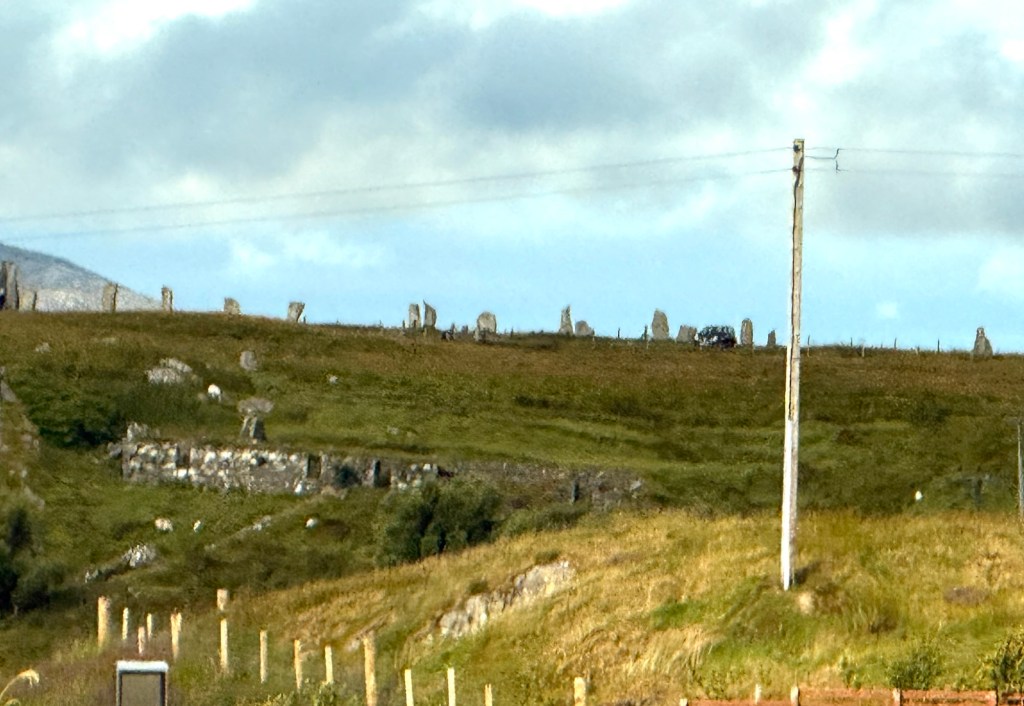
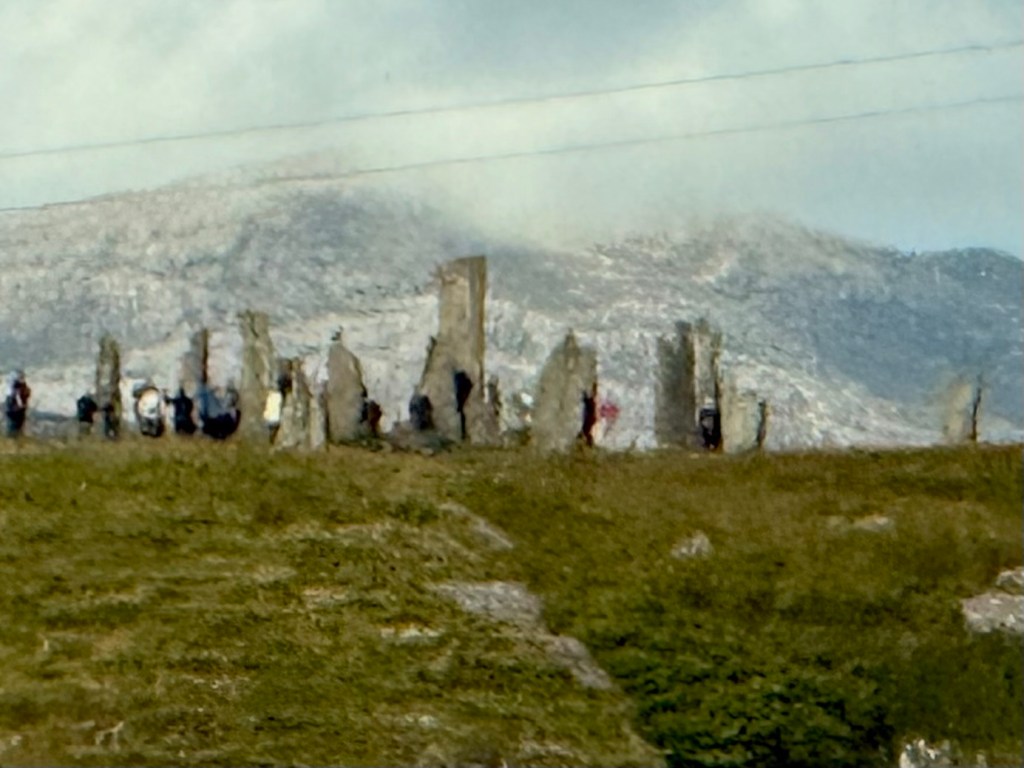
Callinish Standing Stones from 5000 years ago, 2000-3000 BC, predating Stonehenge. We did not go there but saw some others as we drove by.

Besides teachers and all hospital employees (doctors and nurses etc) that are employees of the government, the area employs people in fish farms (2nd after Norway), oil rig workers
90 cruise ship/year come so tourism. There is 6% unemployment.
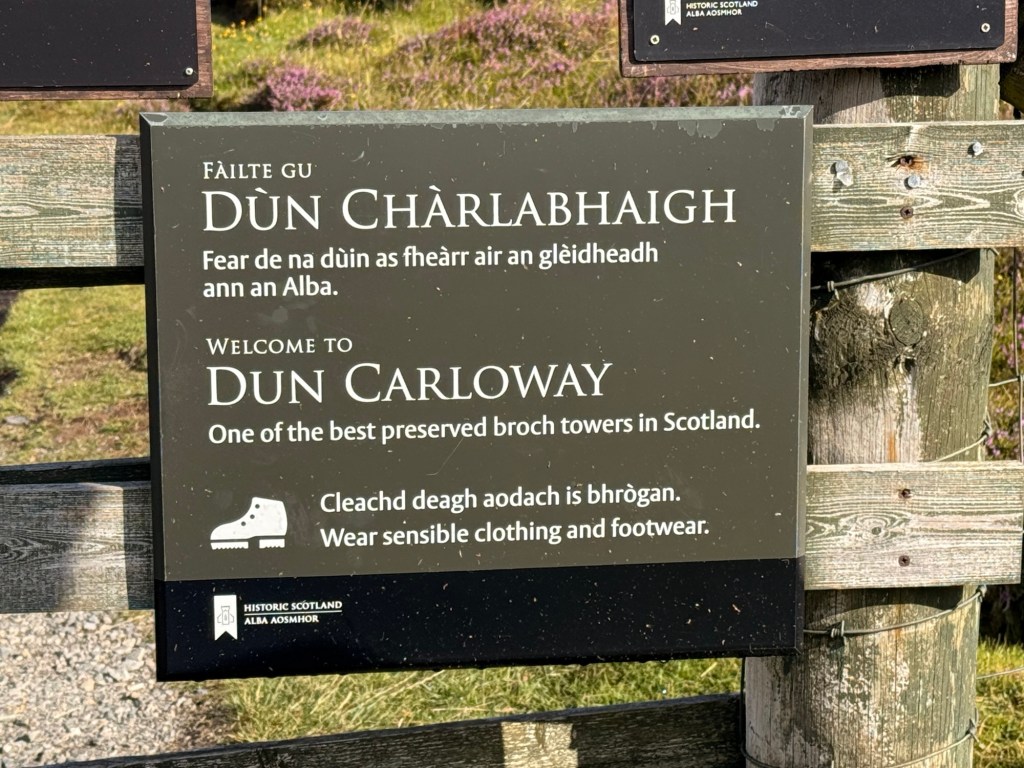
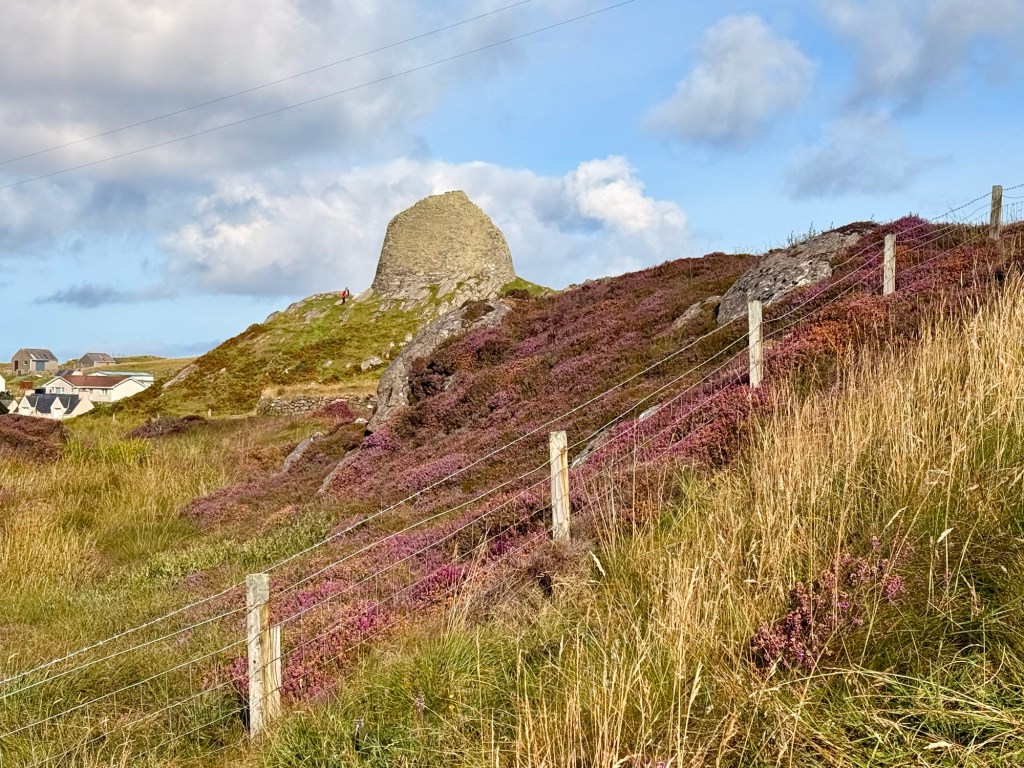
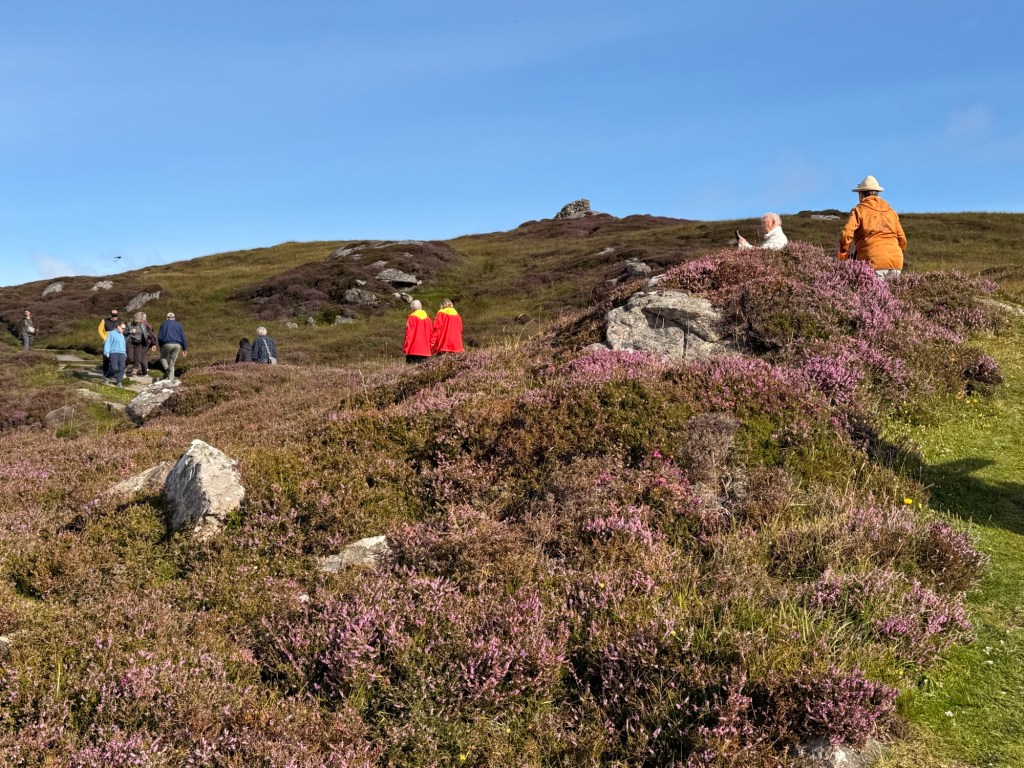
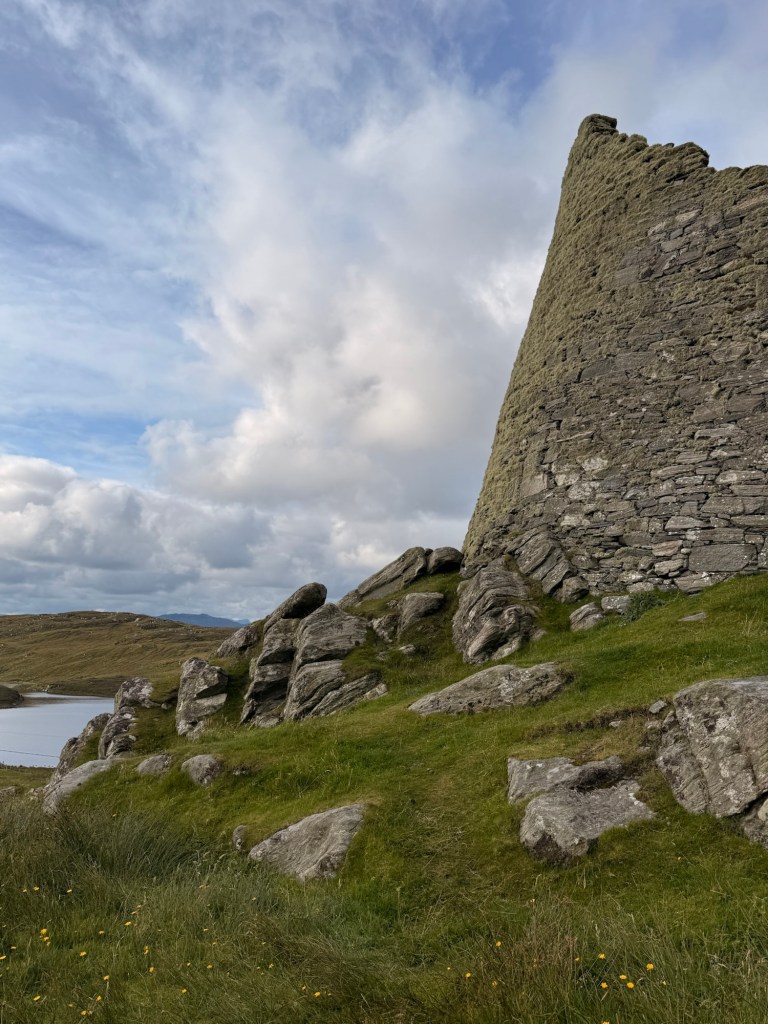
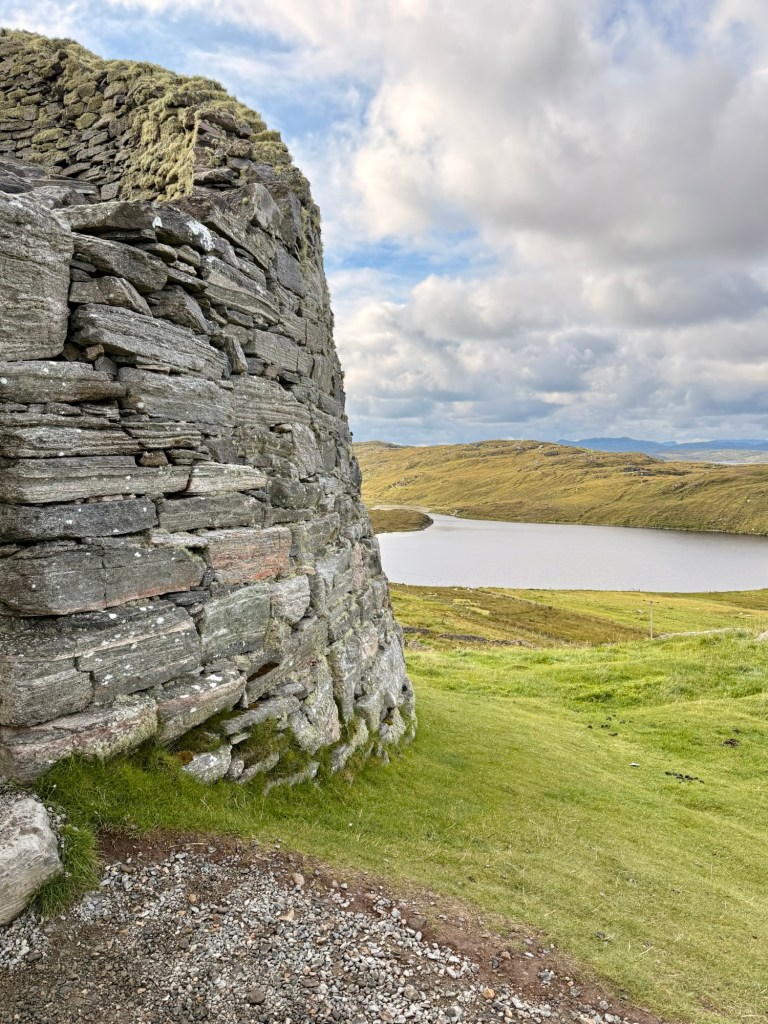
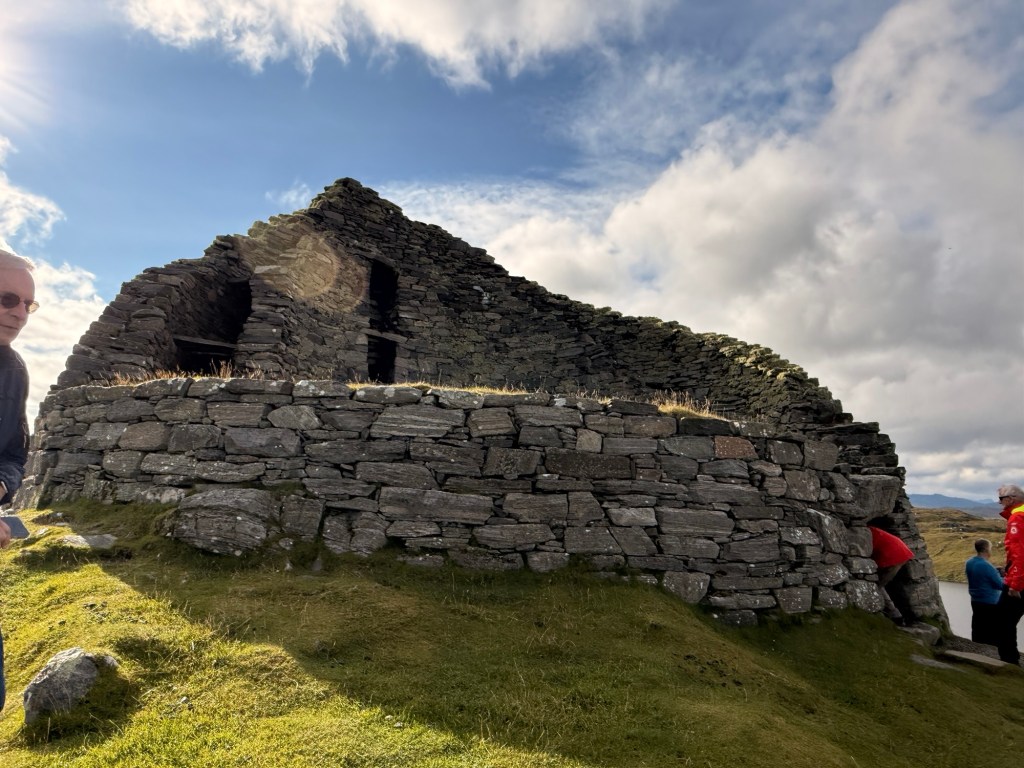
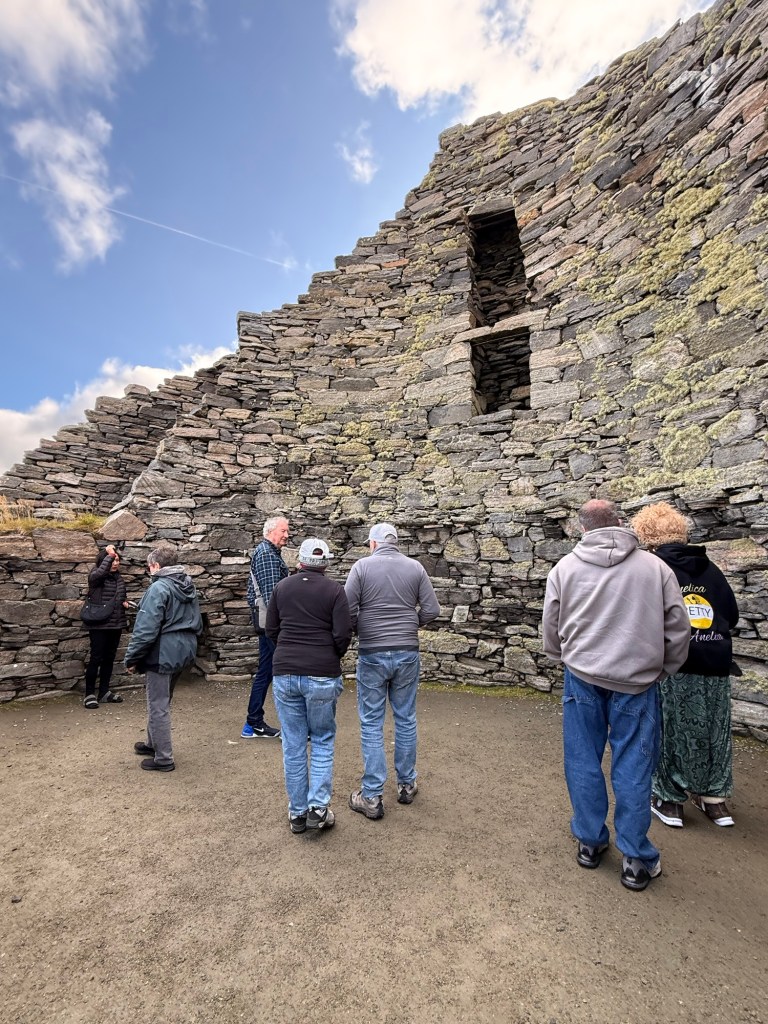
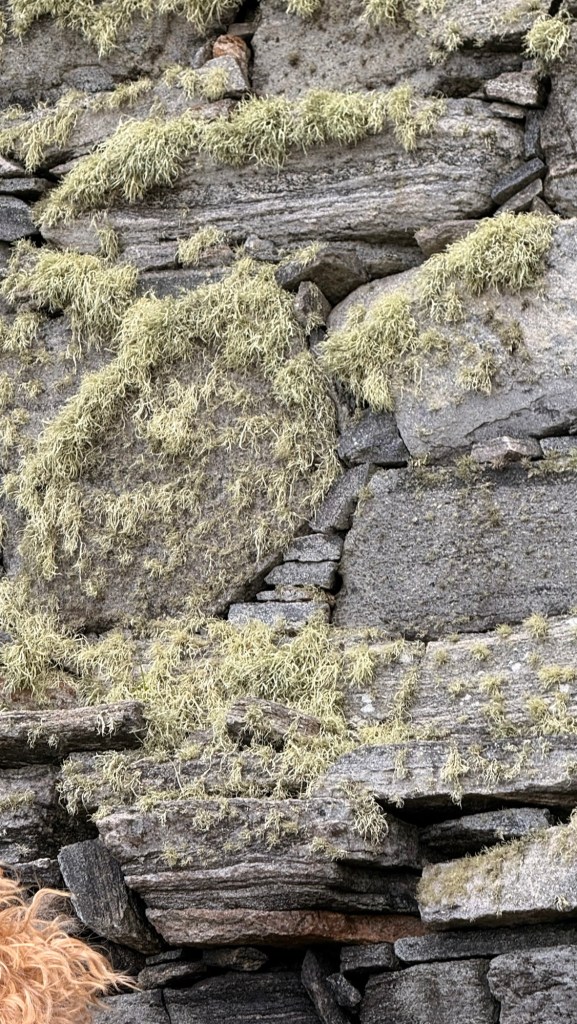
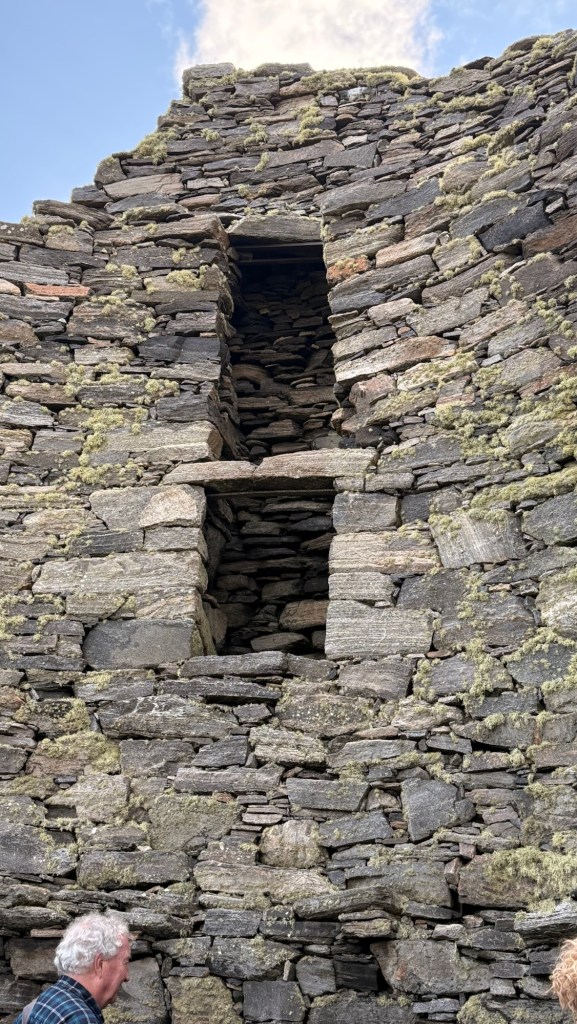
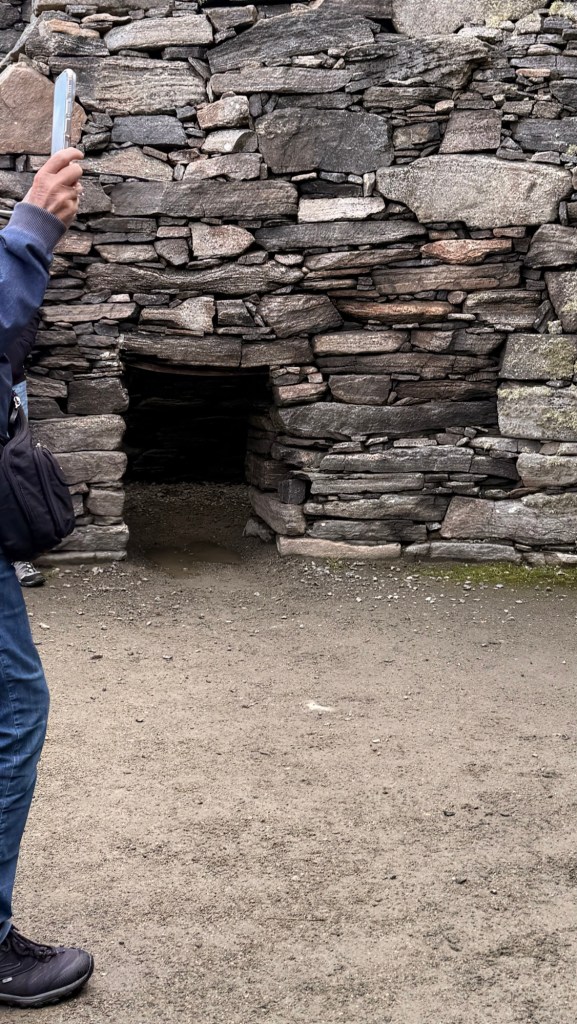
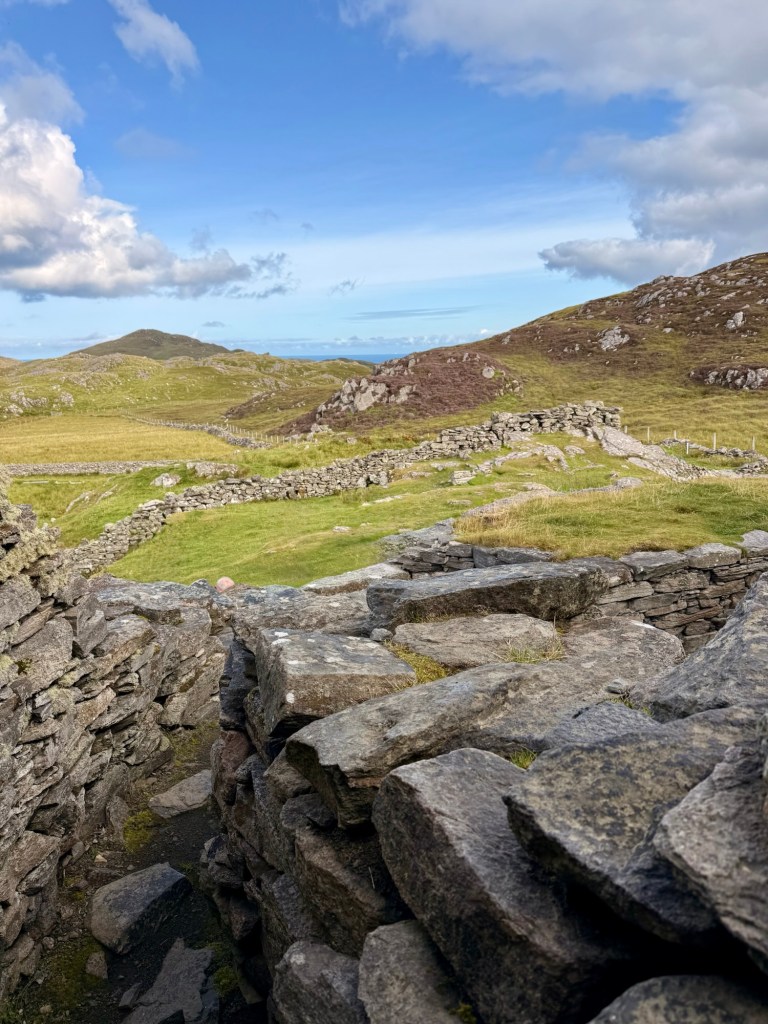
800-880 BC during the Iron Age, “Dun Charlabhaigh“ was built, probably by a wealthy family because there were wood beams used for inside support as well as the roof, when there were no trees left at the time. It is believed that it was a cattle economy at the time. The structure now stands at 9 metres high but was probably 13 originally with the roof.
1600…Morrison clan (stole cows) & hid in the broch in a fight with MacAuley family but they were all killed when they came out or were killed by the fire that was ignited .
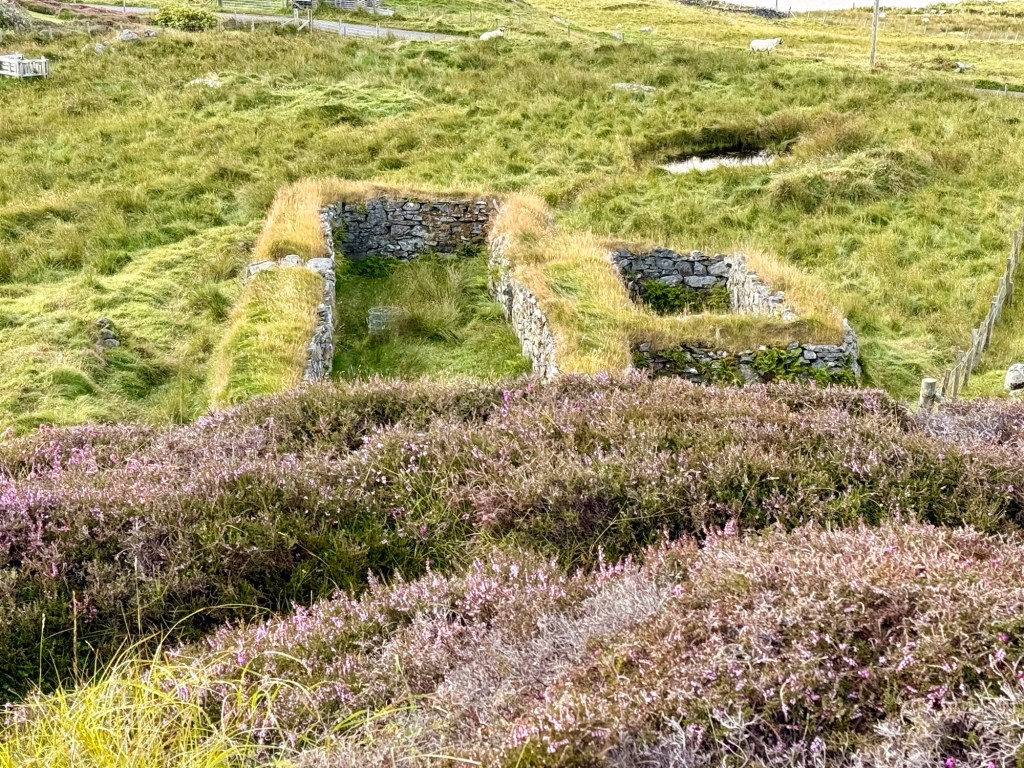
In the 800’s, Vikings came… brought Norse language and rectangular houses … black houses. Those houses were built on a slope… humans higher up, animals lower. They had thatched roofs. “Gearrannan” was the last of black-houses. Only old people were left in 1970s. They still milked cows up to 1960s in what is the museum now.
These were built in 1840-1850….. others were built before. Slope floor for drainage. Bronchitis was prevalent because of the smoke from peat, etc. Government made it that you had to add a centre wall to separate humans from animals . Wells were outside…. no running water inside. They used paraffin tilley oil lamps. Summer they lived in small buildings like summer camping out on the crofts, looked after animals & cut peat. Last resident of the black houses was in 1974.
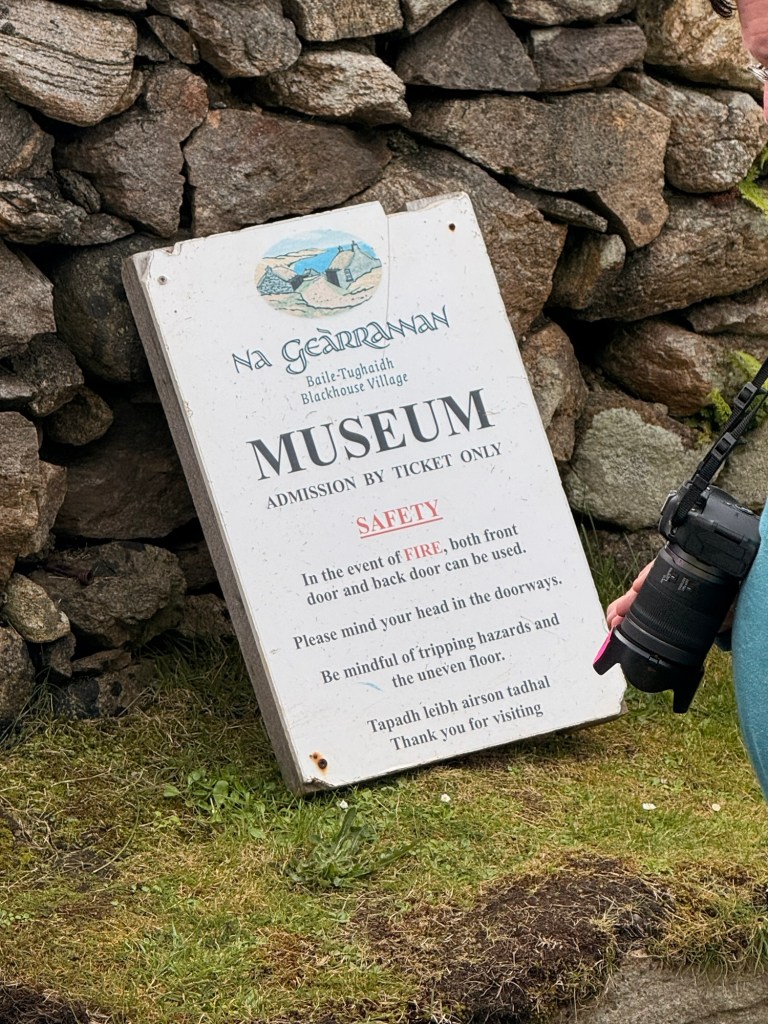
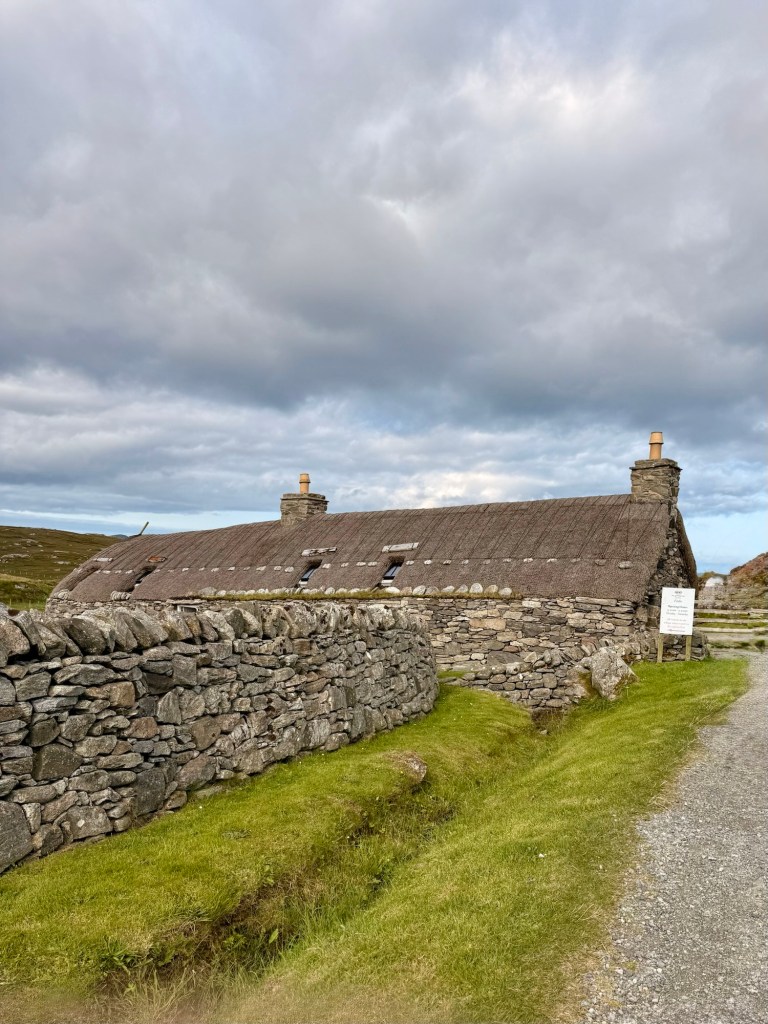
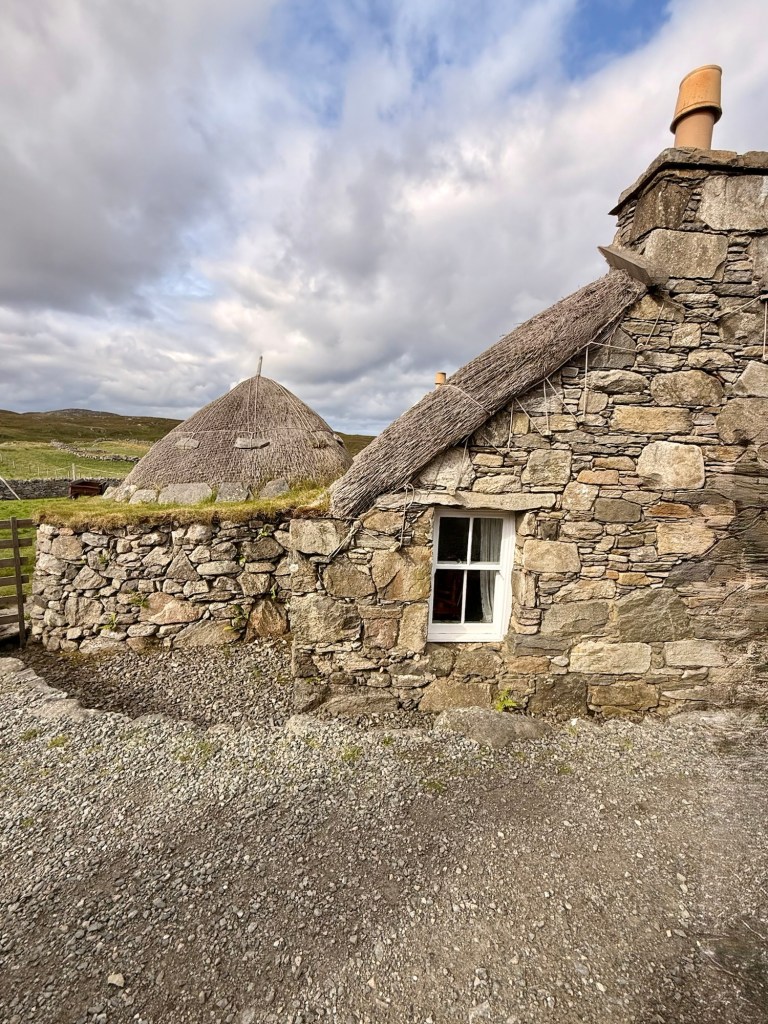
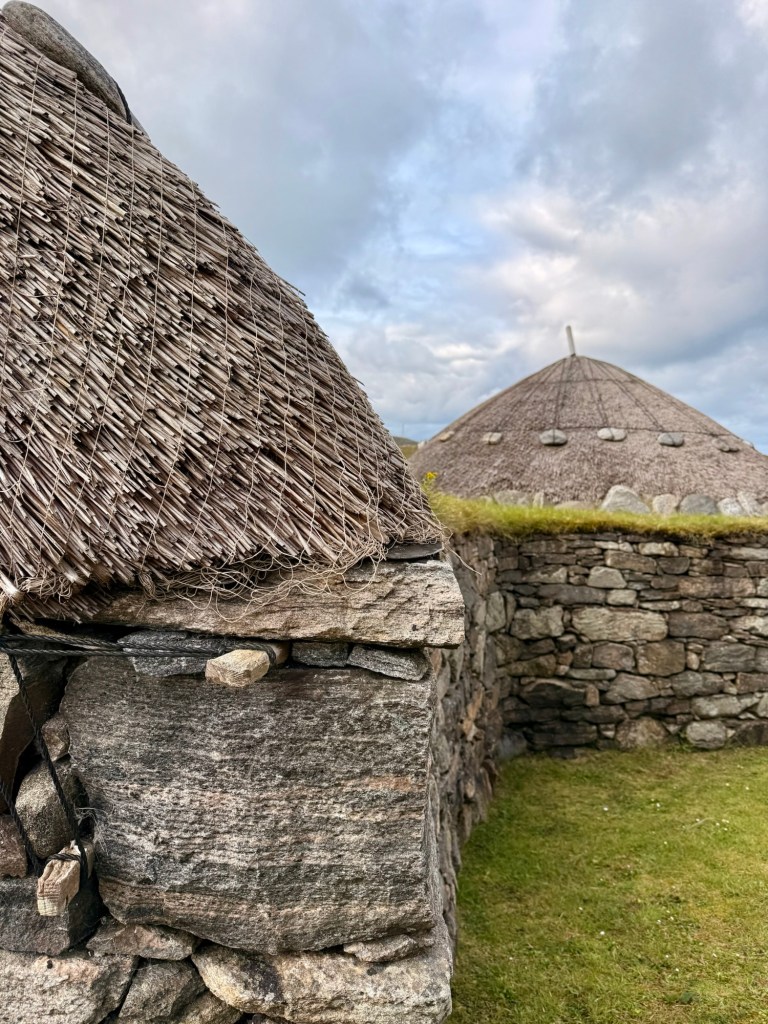

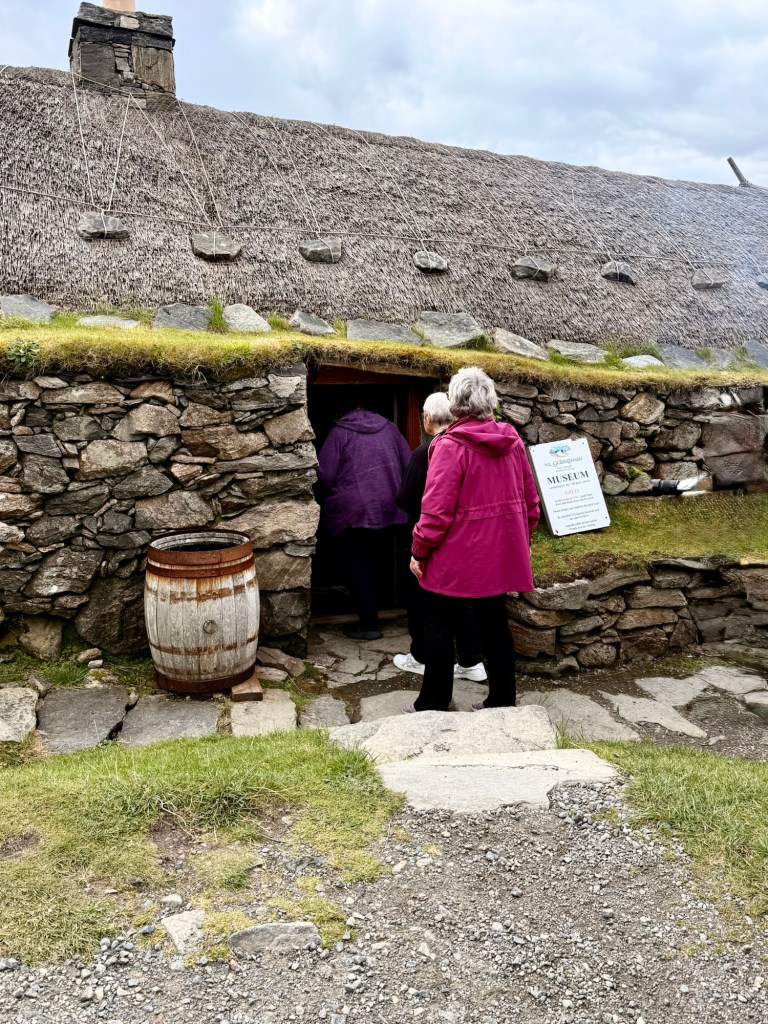

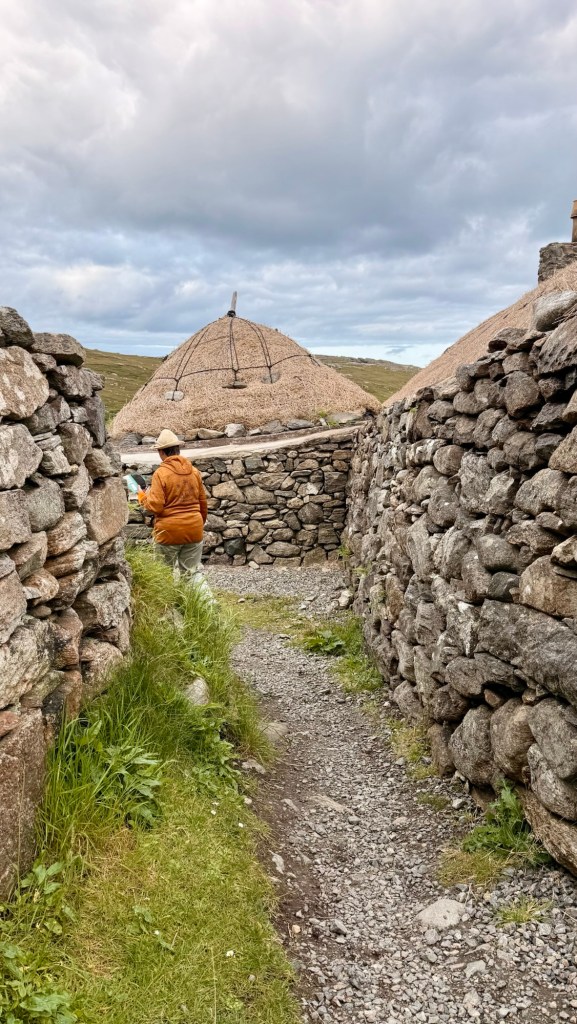
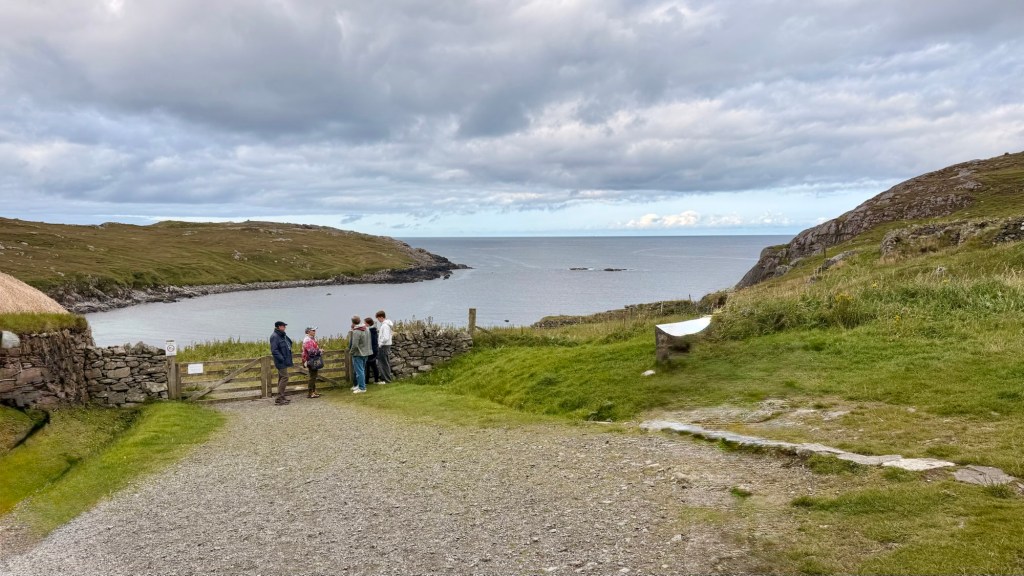
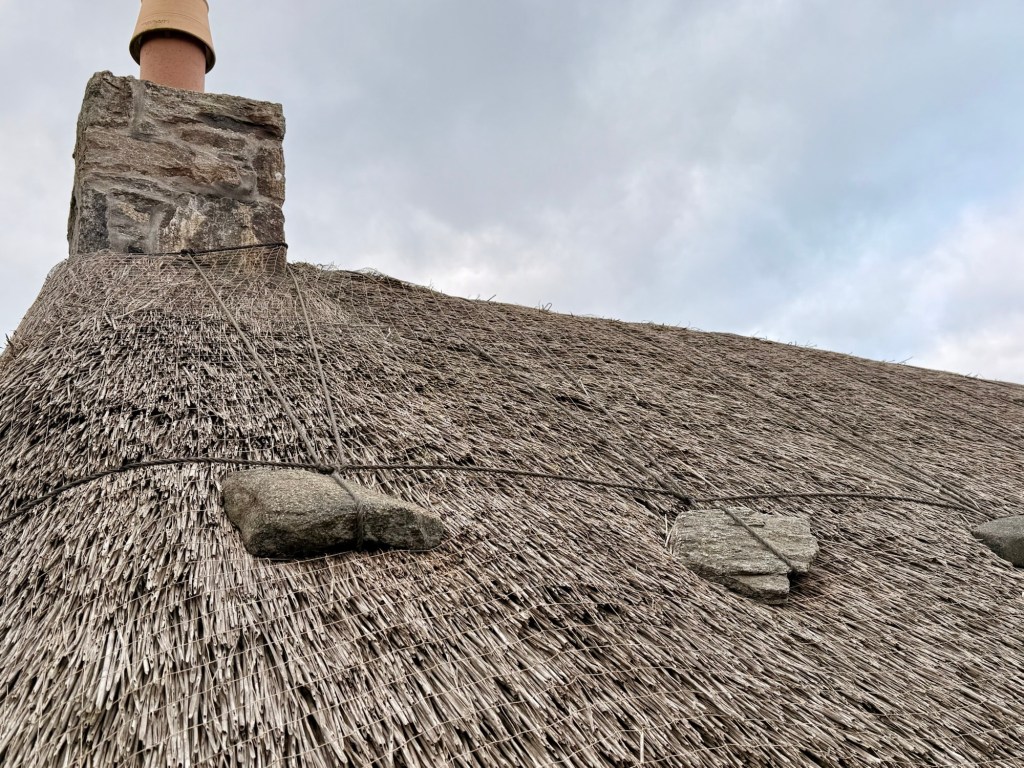
Crofters…. renters worked the strip of land. Crofting is still alive today. 20-30,000 pounds to buy them but our guide rents for 6£ per year…she has 6 sheep and vegetables on hers. …. Now you must be living within so many miles of their Croft to use it.
There are common grazing grounds for sheep but can only be a certain percentage of what is owned….
Must identify by tag but they also spot colour them with paint.
Harris tweed…1833 began serious business….must be 100% virgin wool.
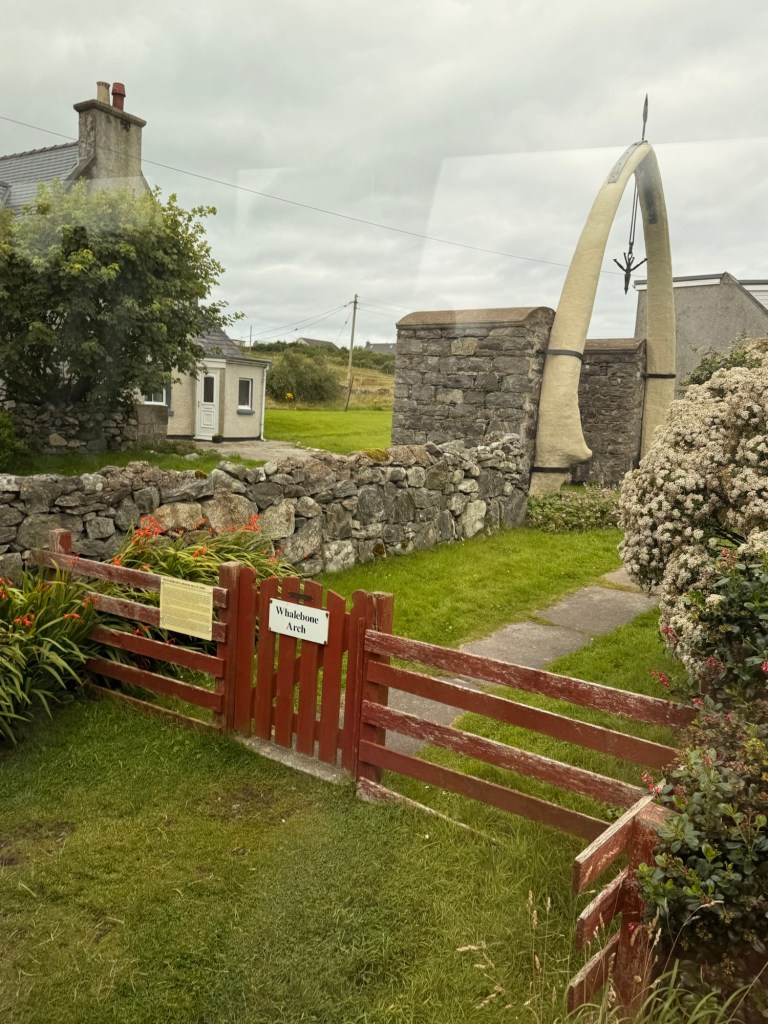
Whale bone at entrance of home… from 80 foot blue whale that washed ashore in 1920

Scotland would prefer to belong to EU.
First 7 years kids go to primary school then secondary school. There are only 2 secondary schools on the island so means more time travelling to school.
Social housing -200 new builds rented at a reasonable price.
Monbretia growing wild as well as heather blooming purple mostly right now.


My favourite pictures so far Thank you june
June Perry juneruthperry@outlook.comjuneruthperry@outlook.com
LikeLiked by 1 person