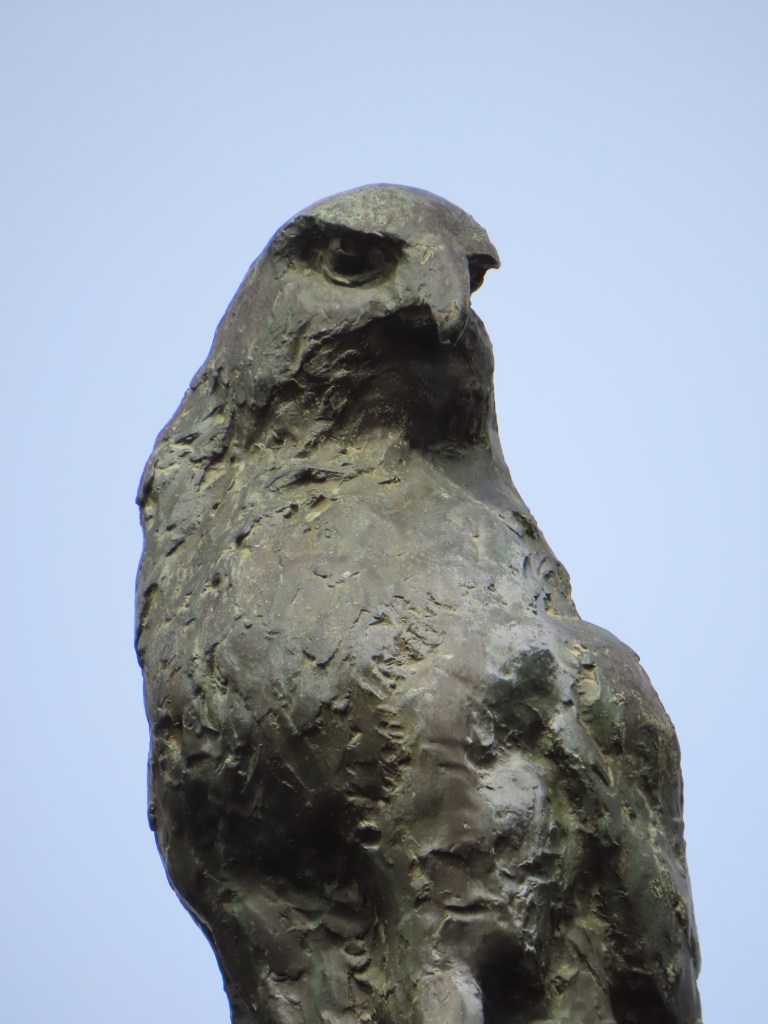
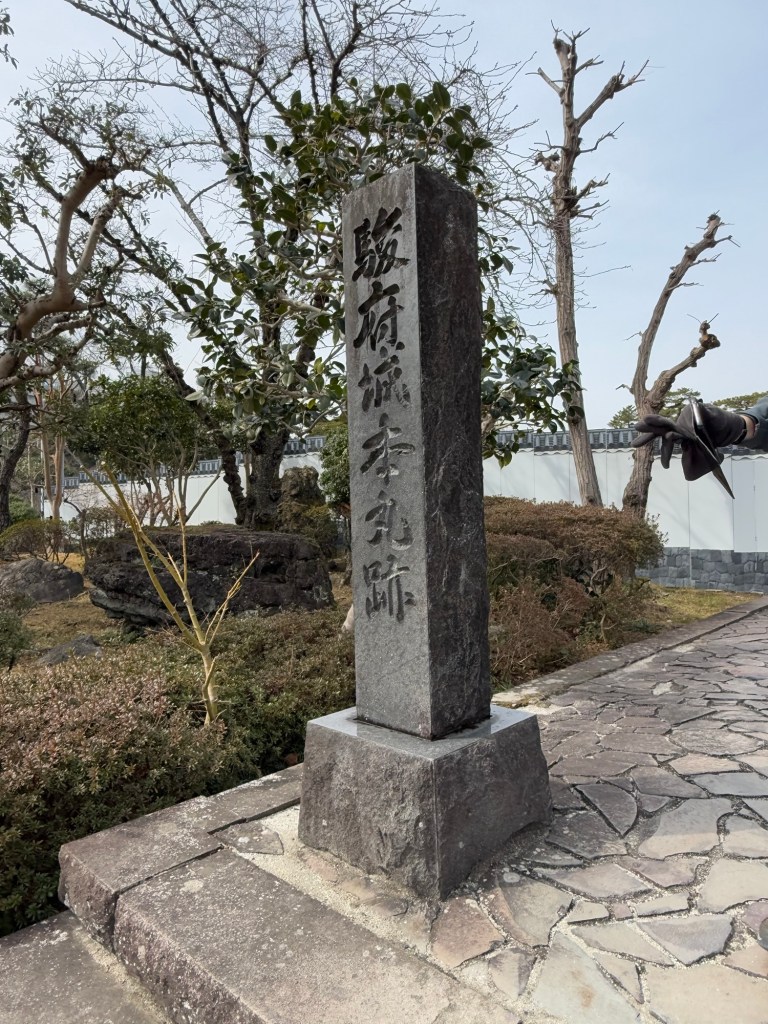
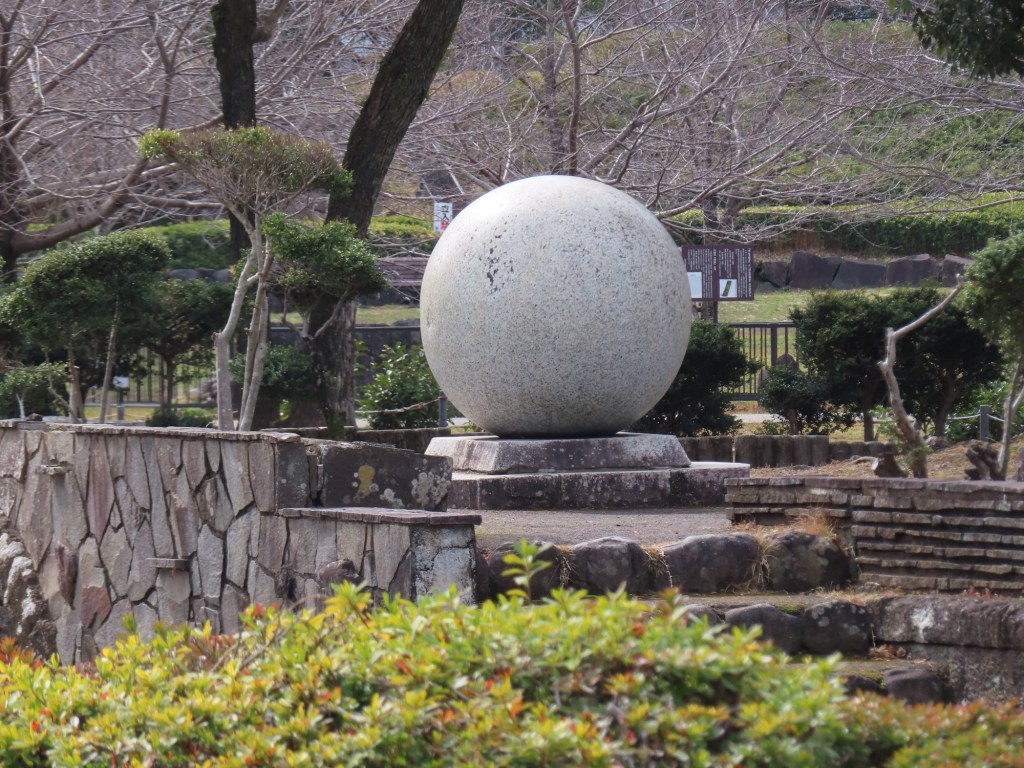
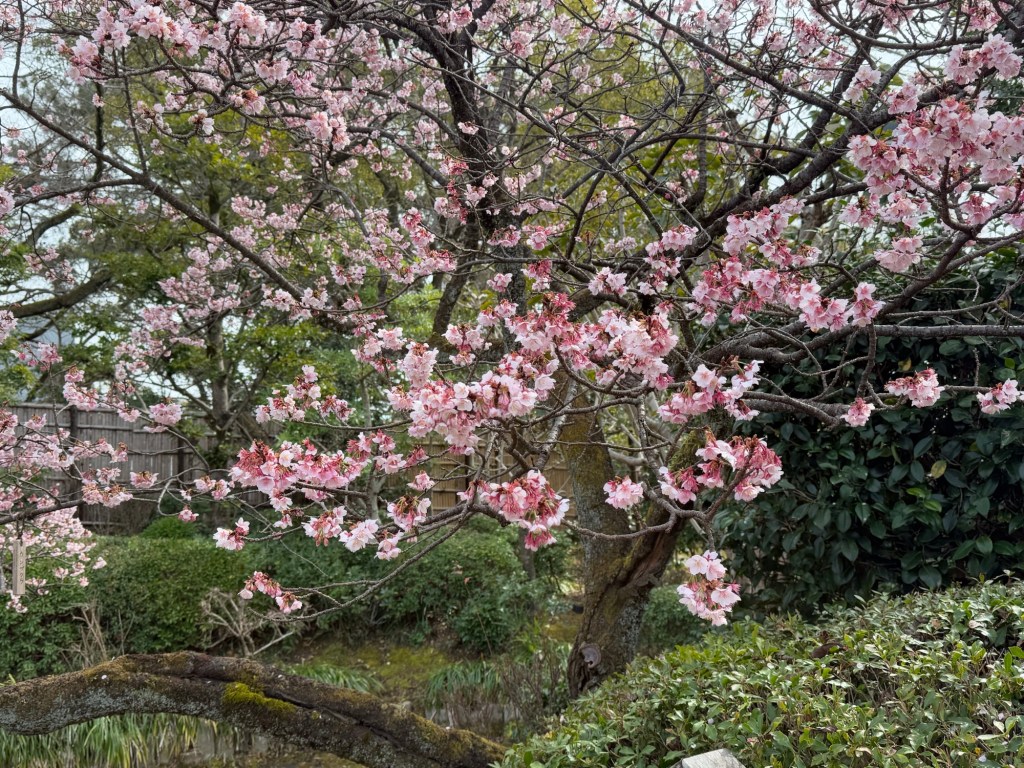
Day 31-Feb 26/25-Brunei

Yesterday I did not go ashore in Kota Kinabalu, Borneo as I was very sick.  

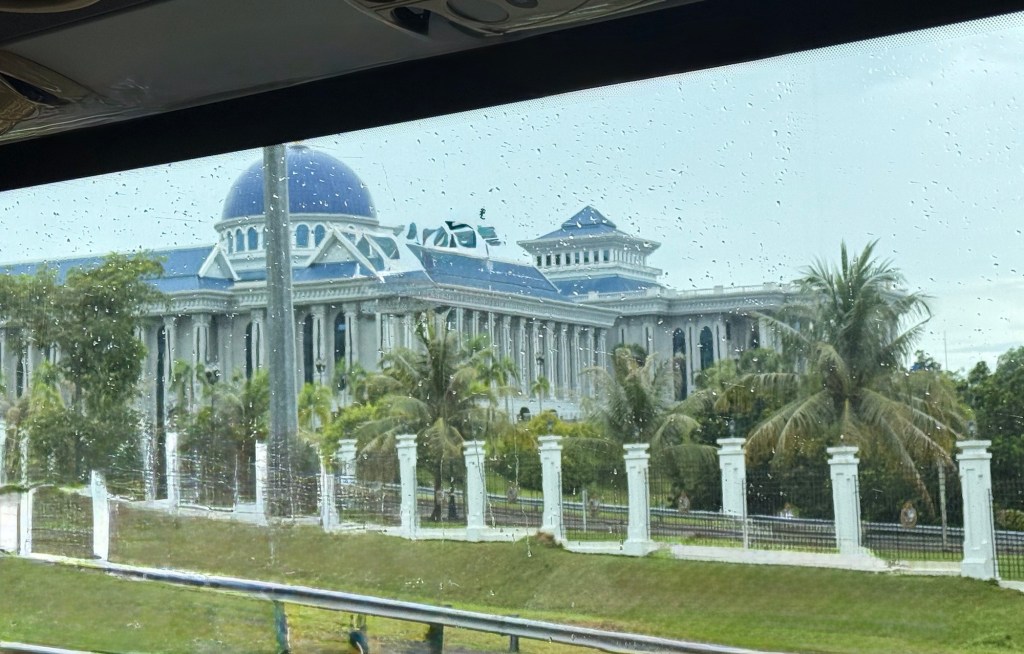
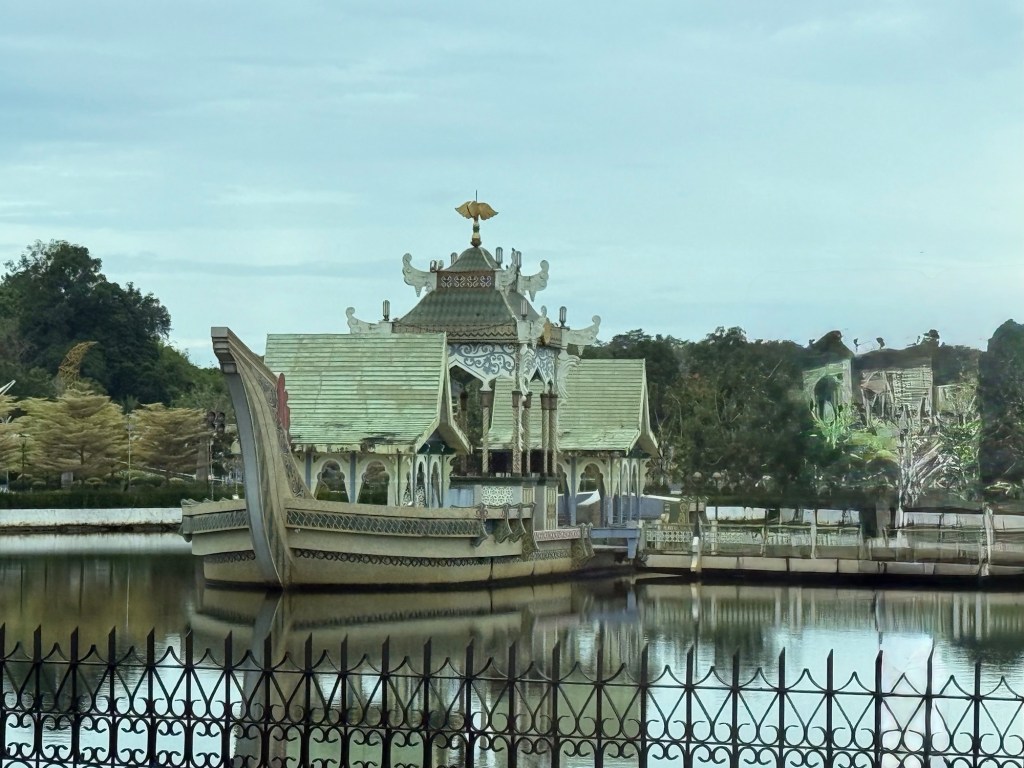
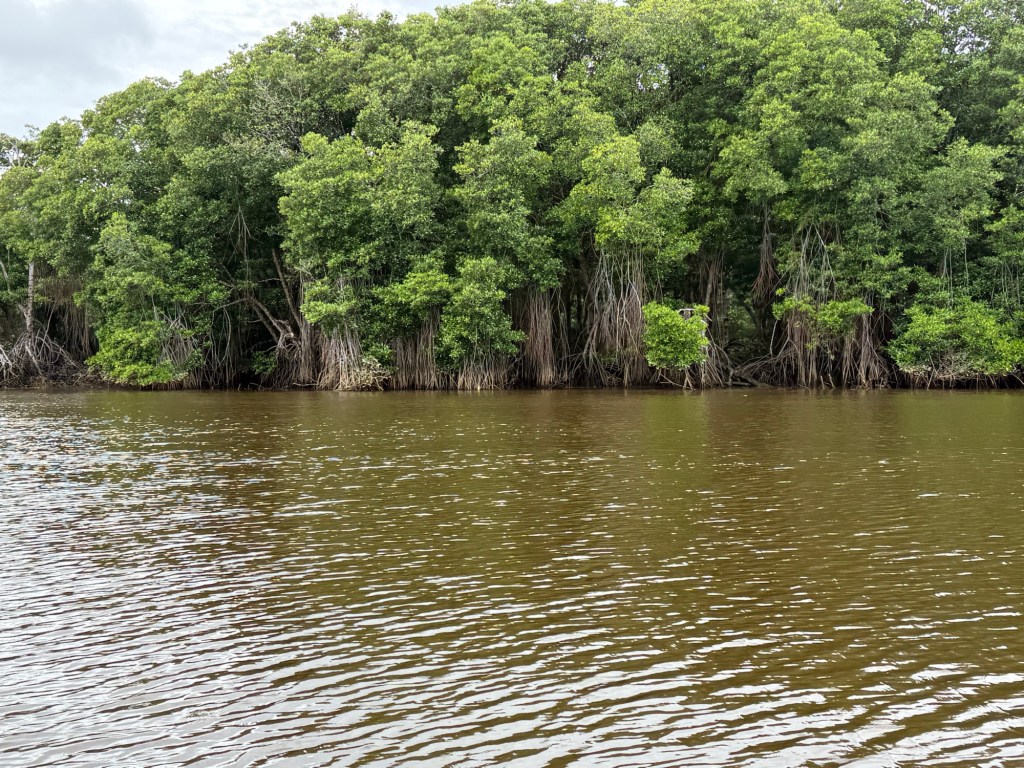
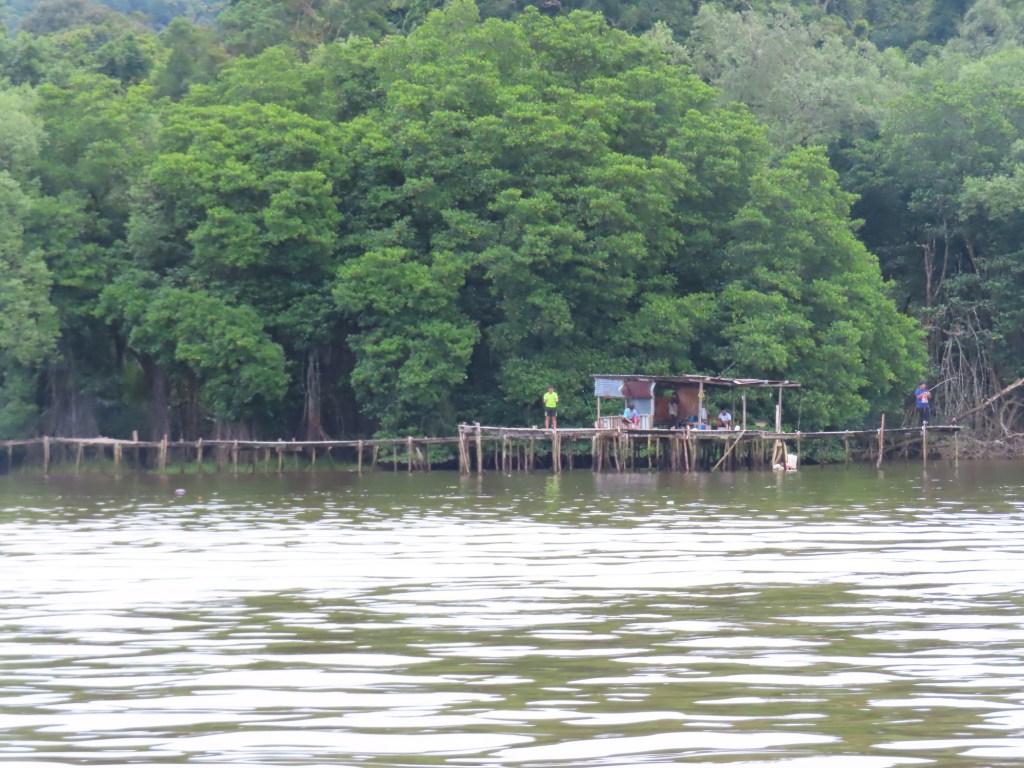
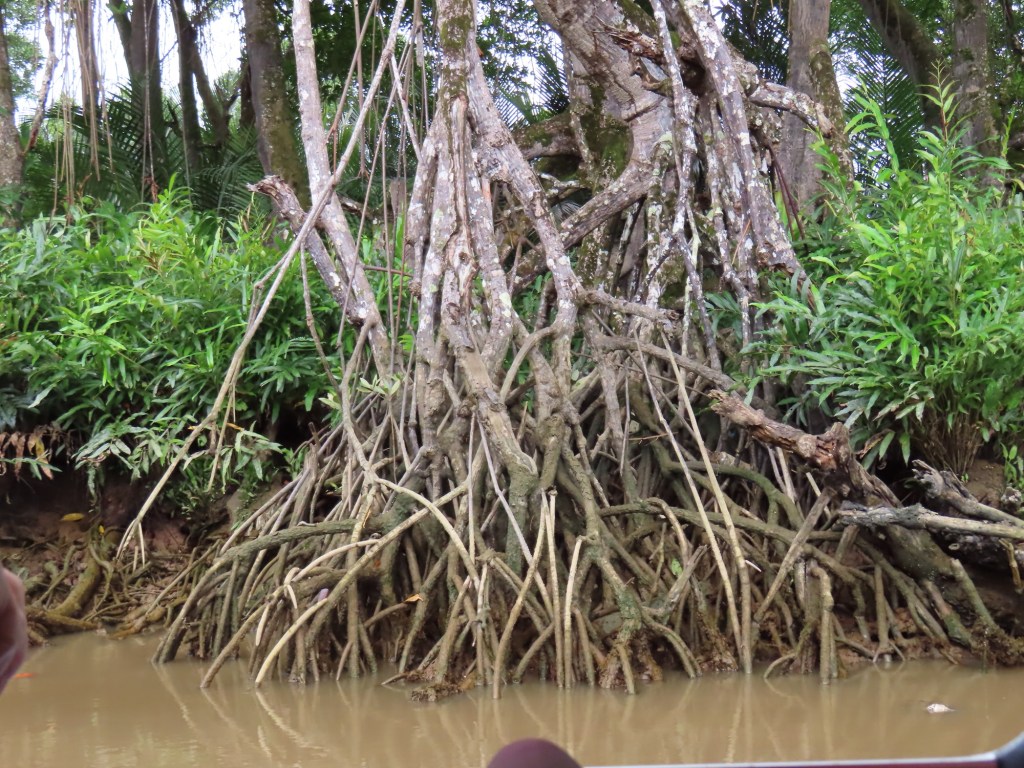
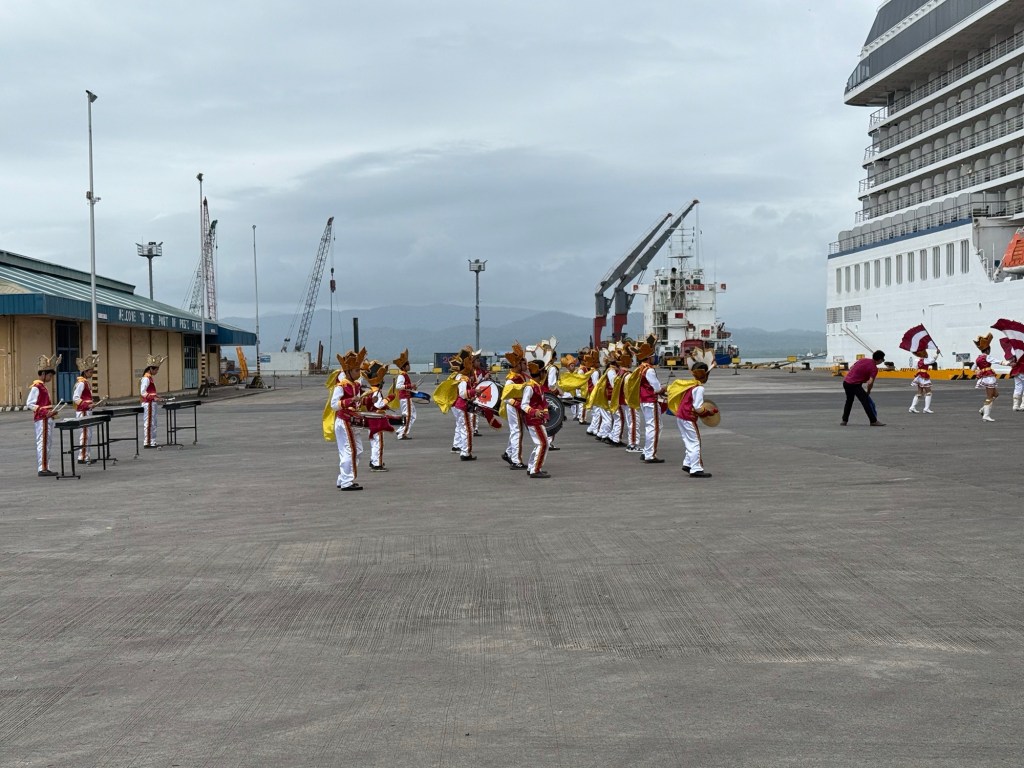
Today I plan on going on a Mangrove cruise and a visit to a water village in Brunei.  Brunei is between Sarawak and Sabah on the island of Borneo, the 3rd largest island in world.  The population is 450,000.  There are no high rises so our guide said but that’s not true. It is quite  well off. Most are in Brunei Muara area. It is a Muslim country so have to have shoulders and legs covered. 

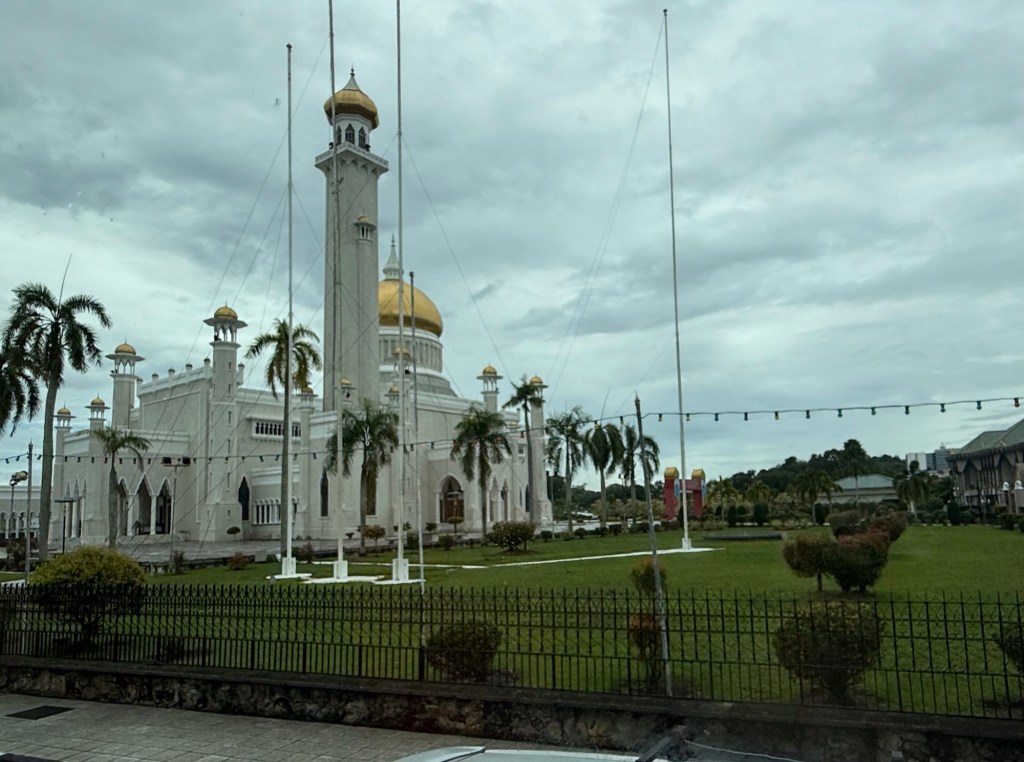
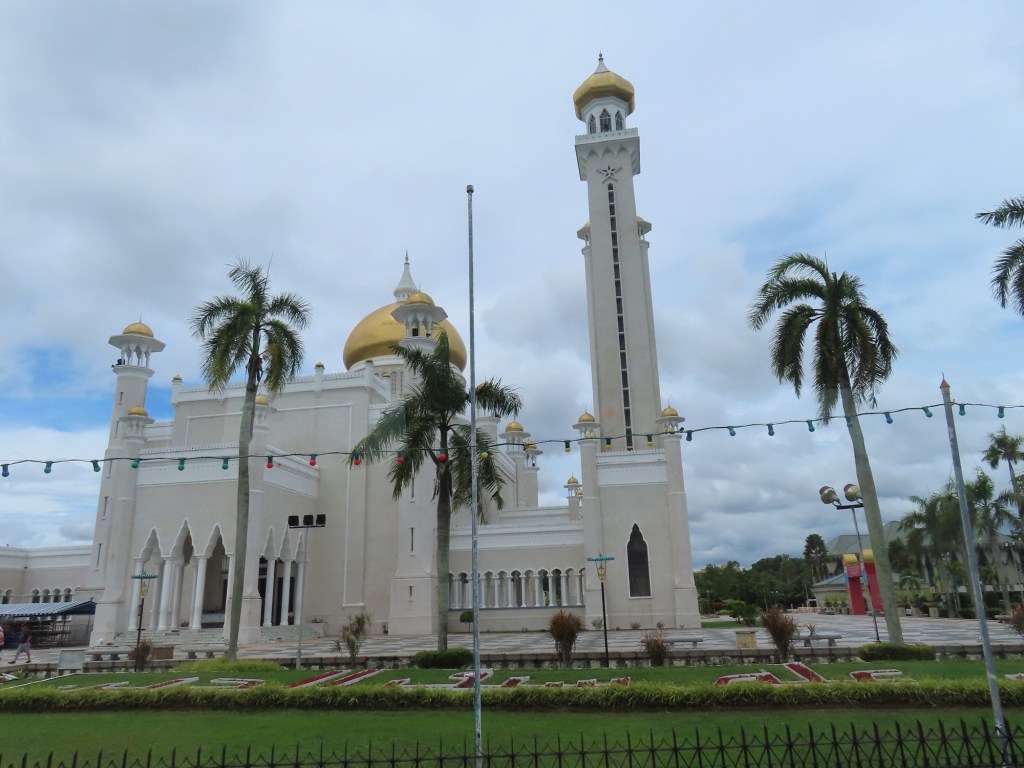
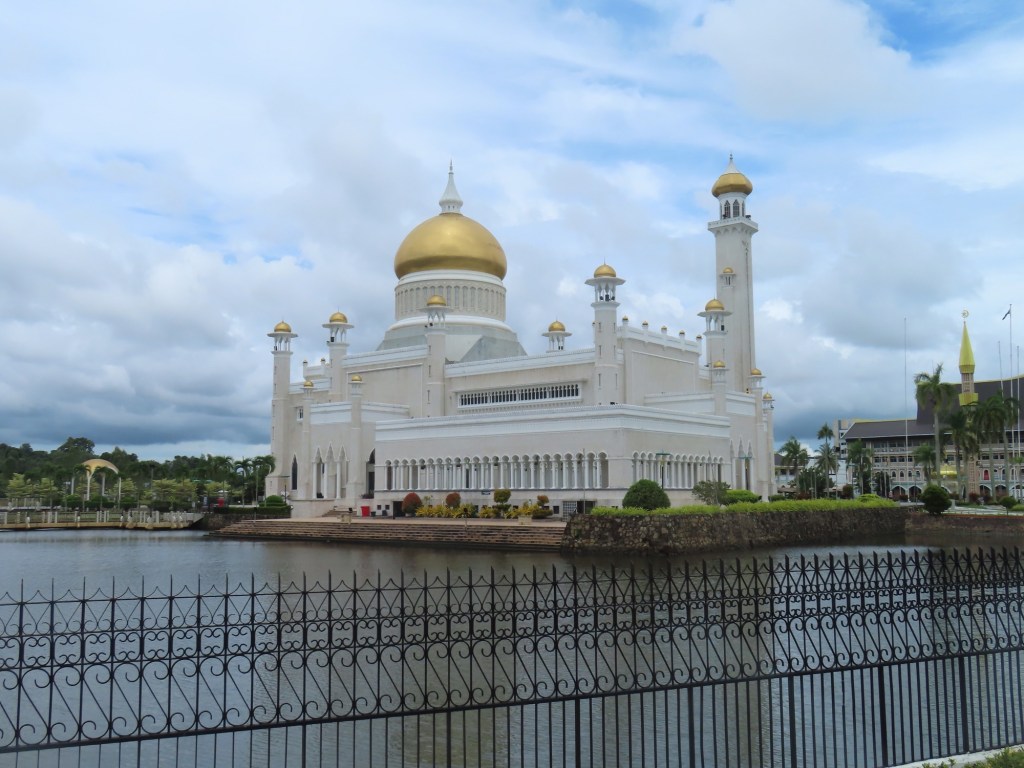
The mosque that was built in 50’s, has 28 domes and made of 24 karat gold. In 1984 Brunei got independence from Britain.

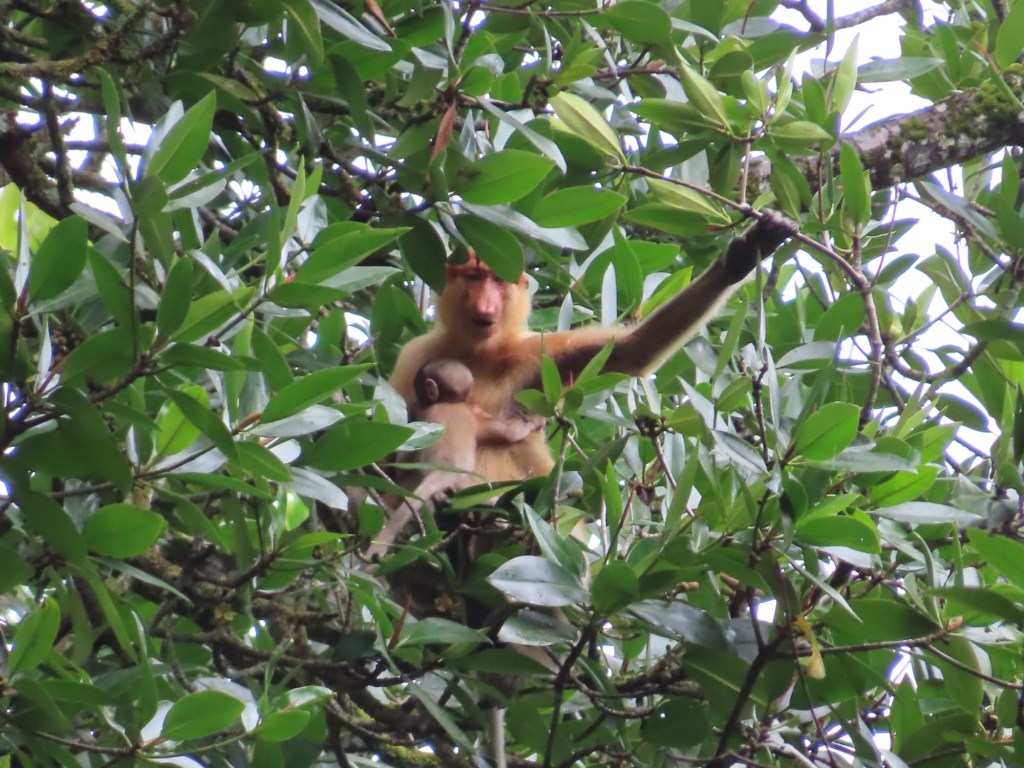
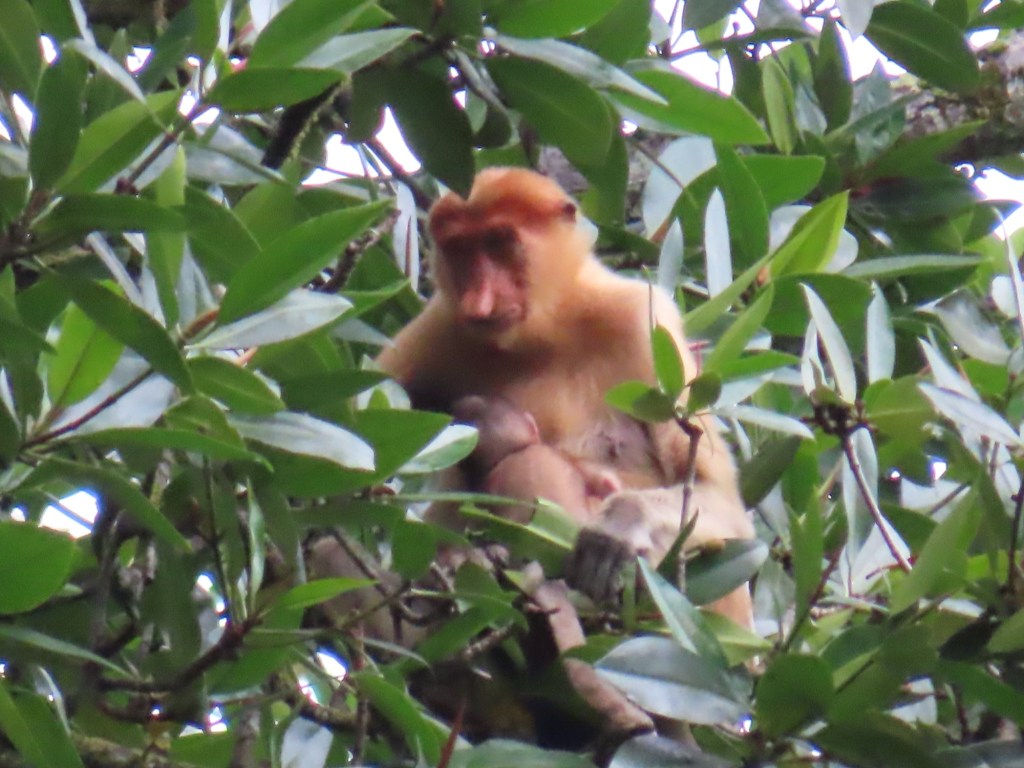
We came across a group (not sure if that is the correct word ) of proboscis monkeys…. All females with babies. Generally they travel in packs of 20. Different than other monkeys in that they can swim across a river. When doing that they will sacrifice one of the pack to saltwater crocs if crossing. The bigger the nose of the males, the more handsome it’s considered. They weigh up to 30 kgs. Female nose is pointy. Probably there are only 7000 proboscis monkeys here… the only place in the world they are found. …. Consequently they are endangered. They are shy and will run away unlike the macaque monkeys. 
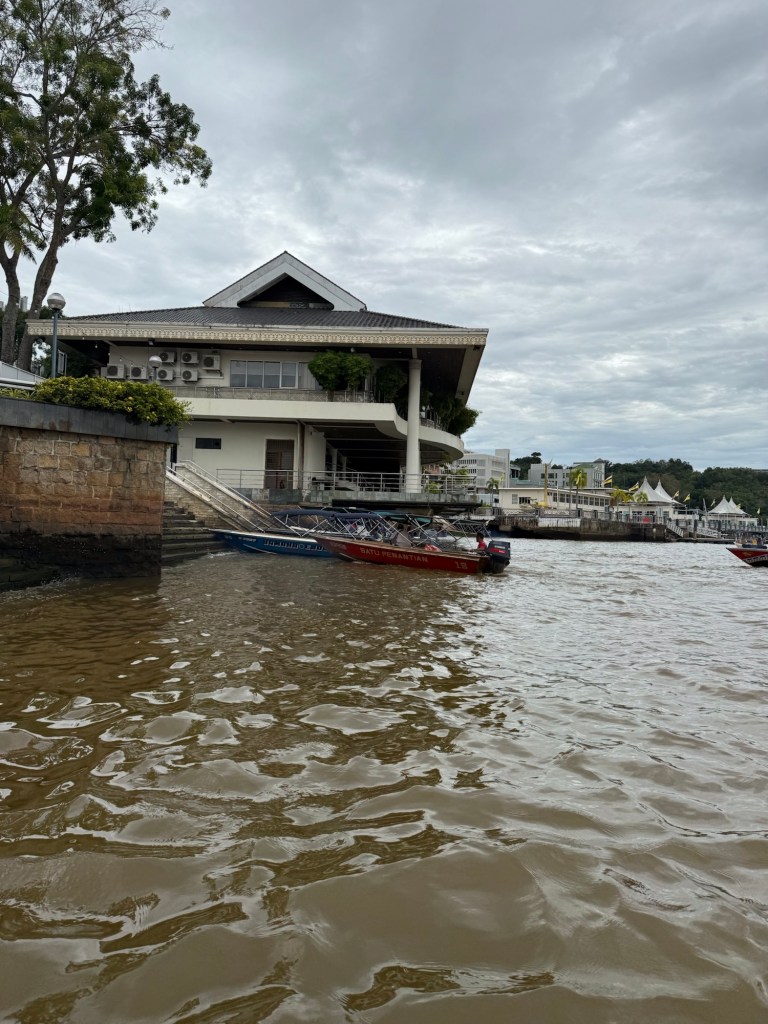
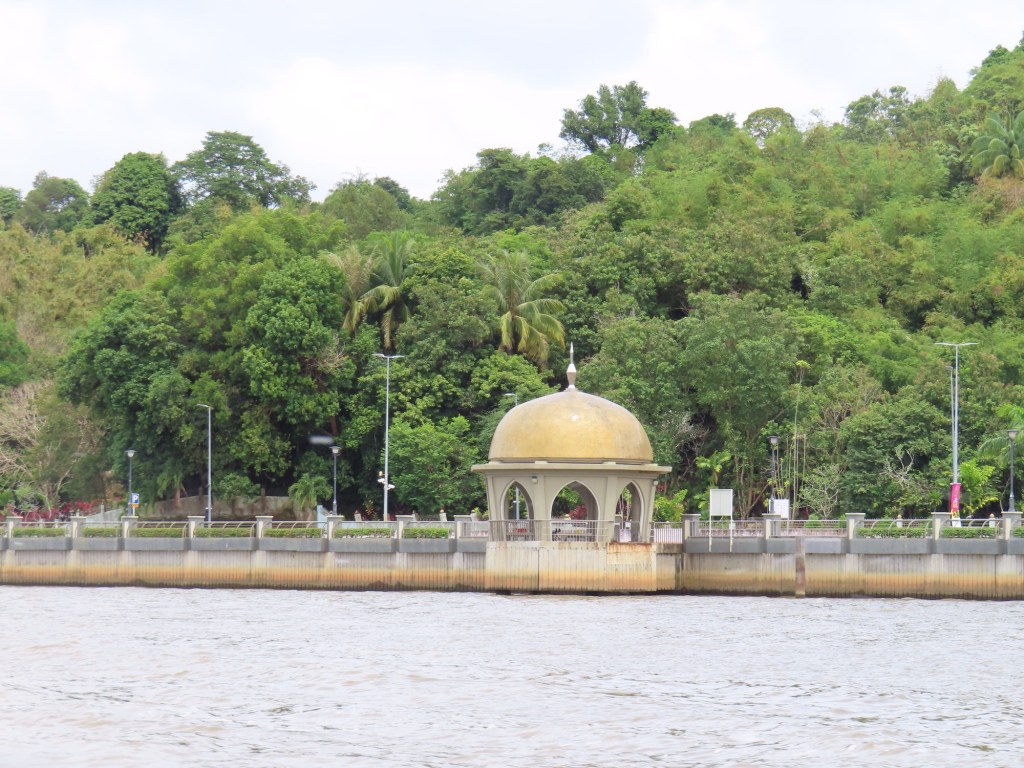
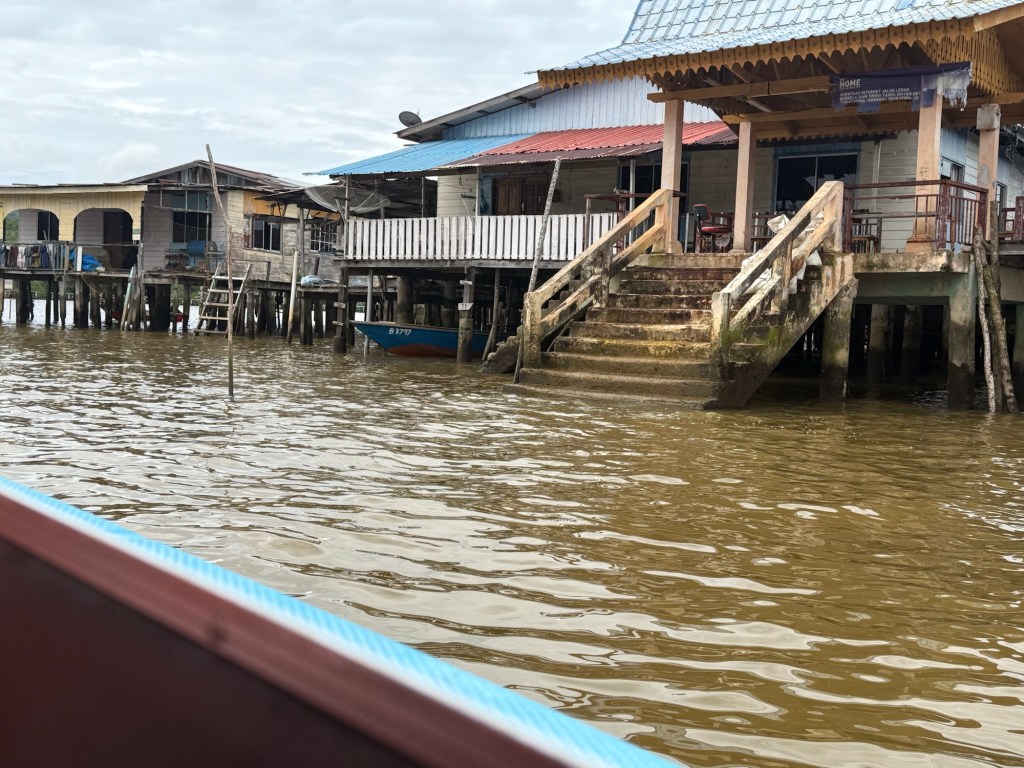
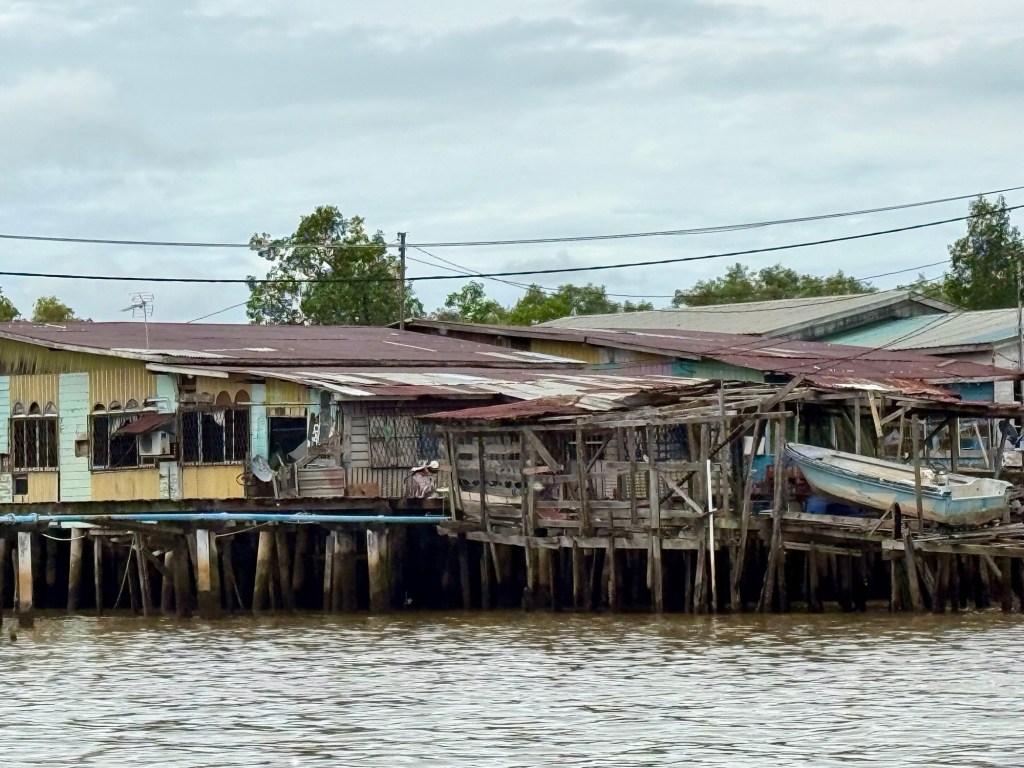
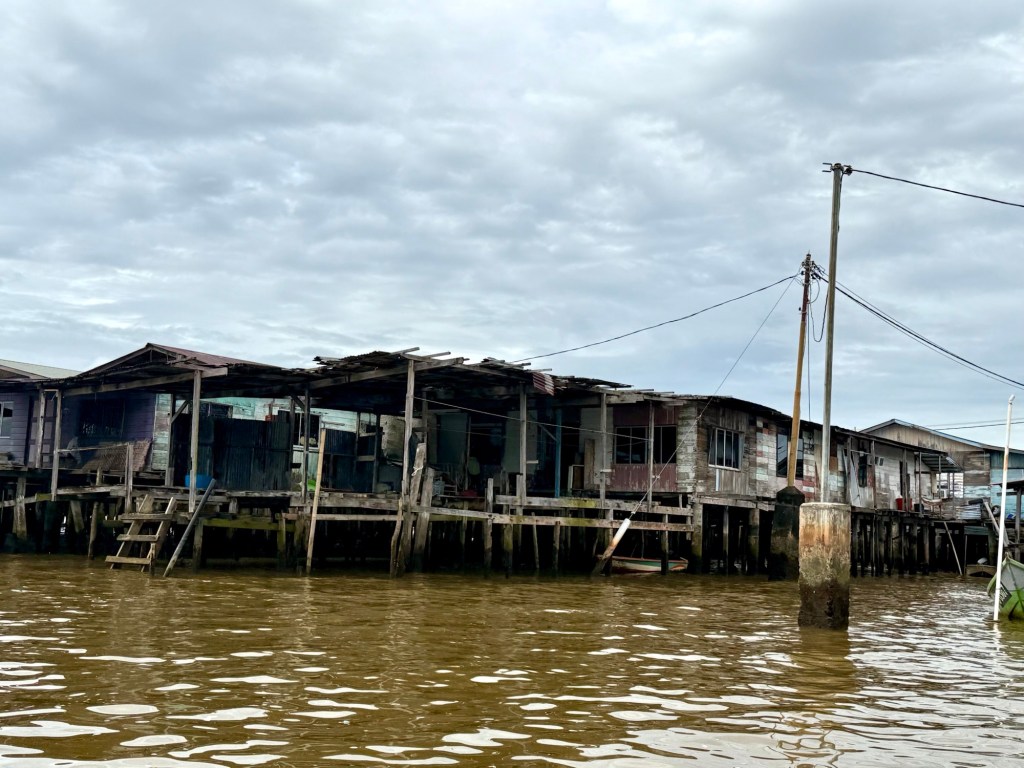
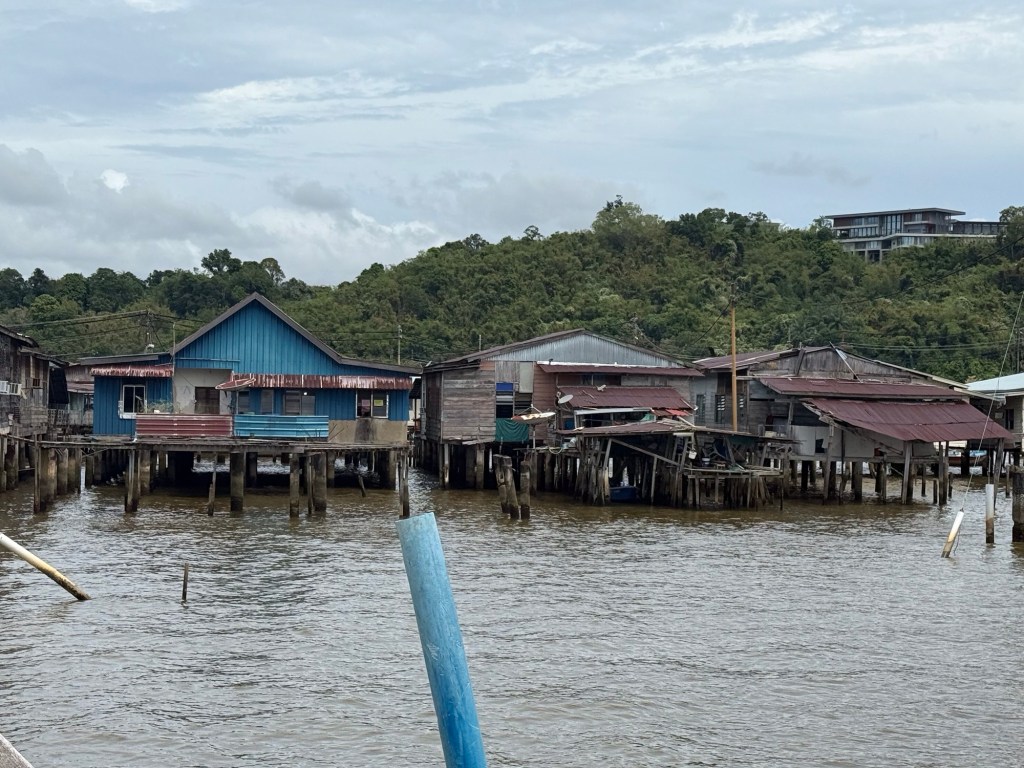
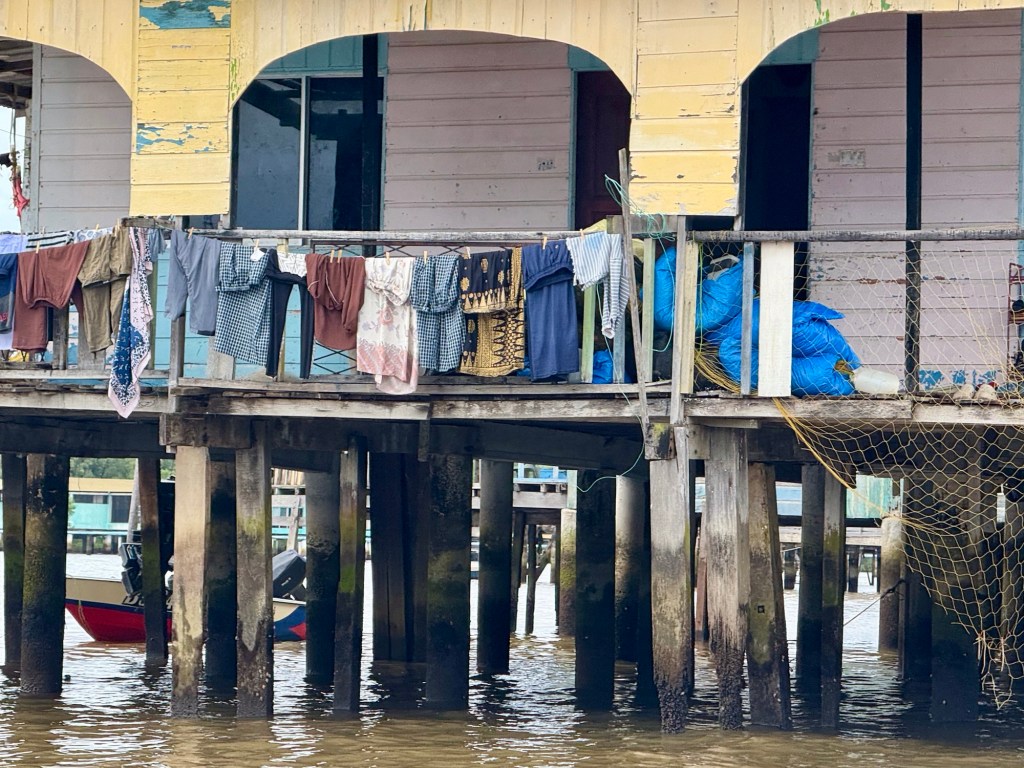
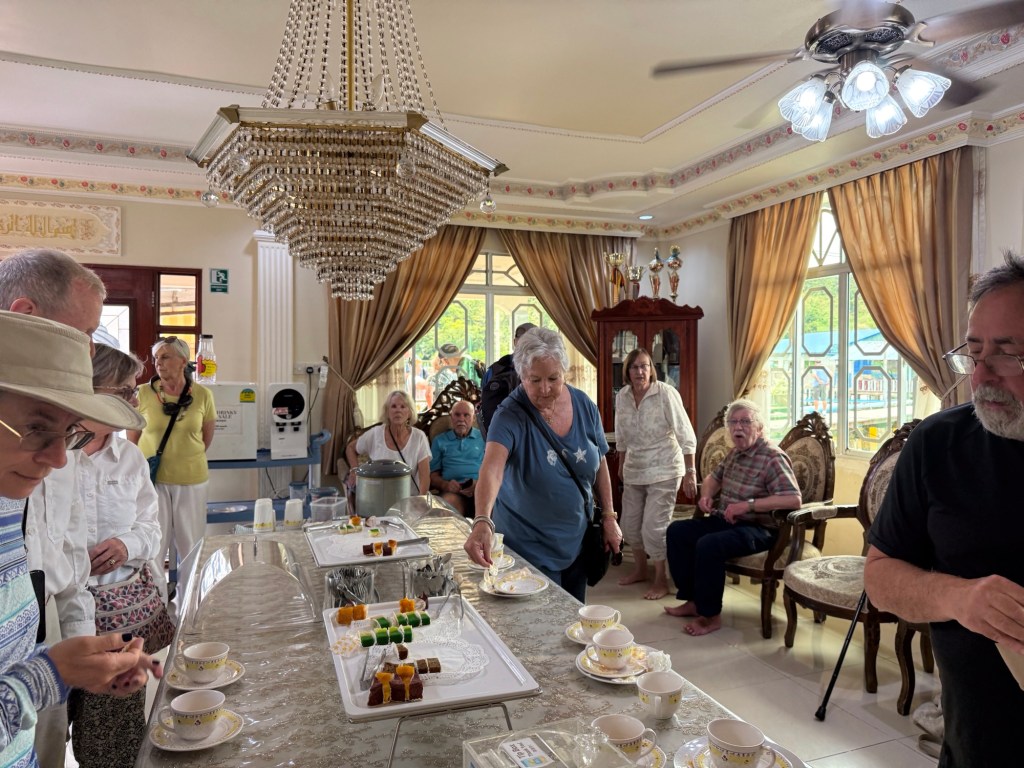
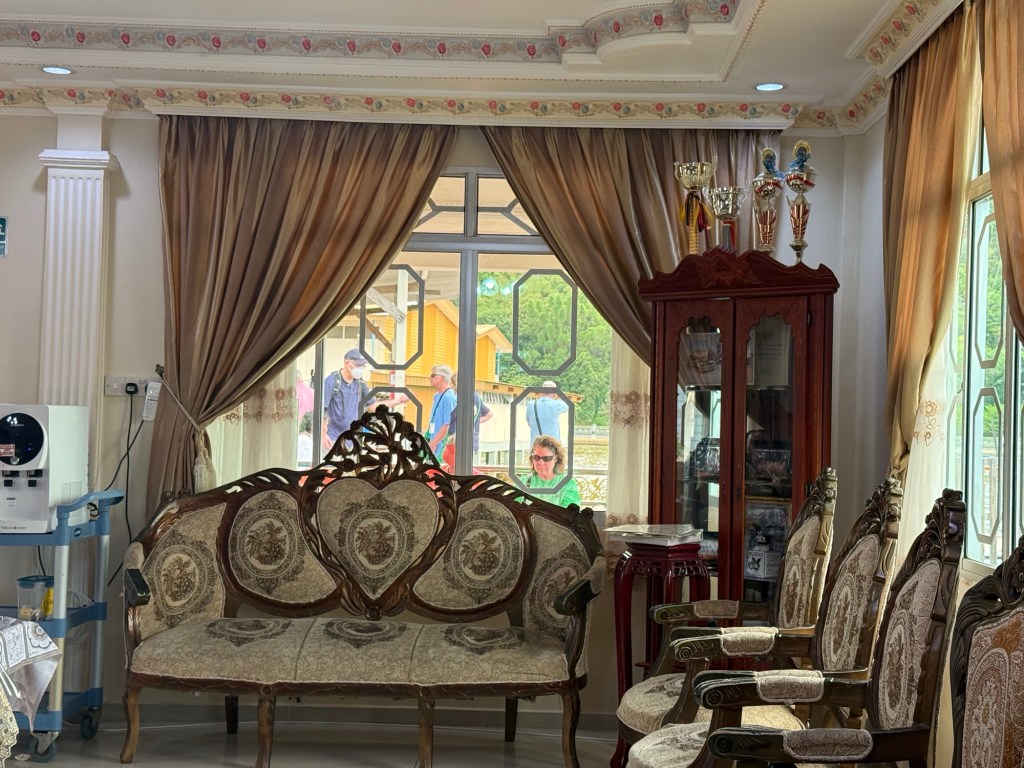
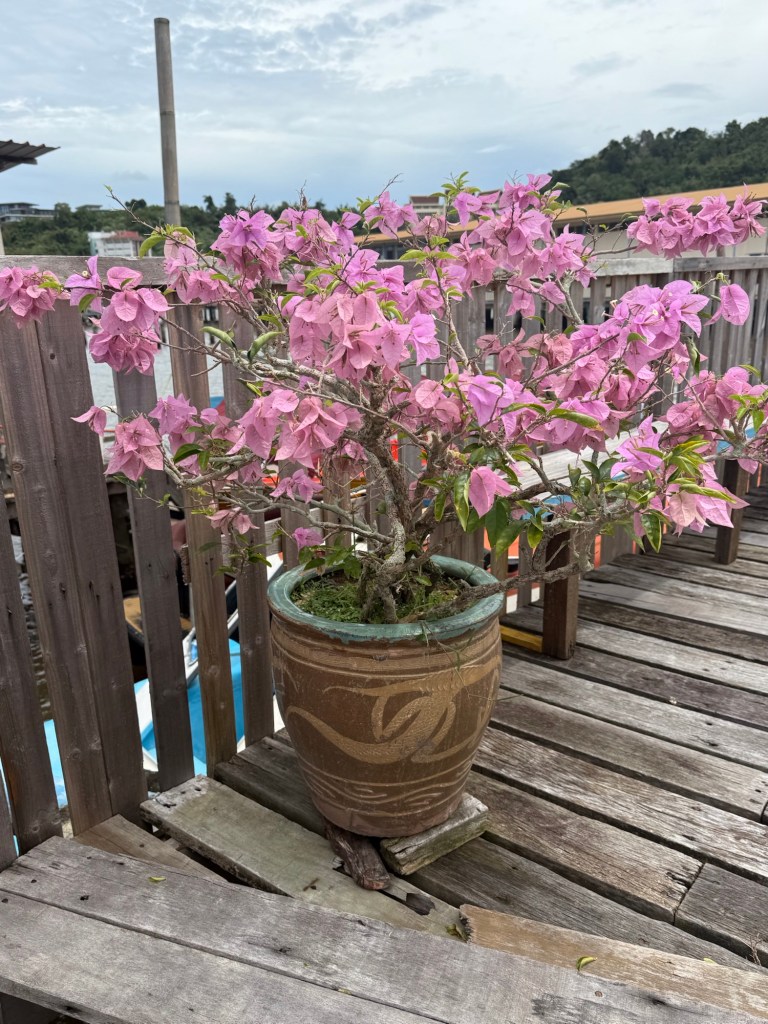
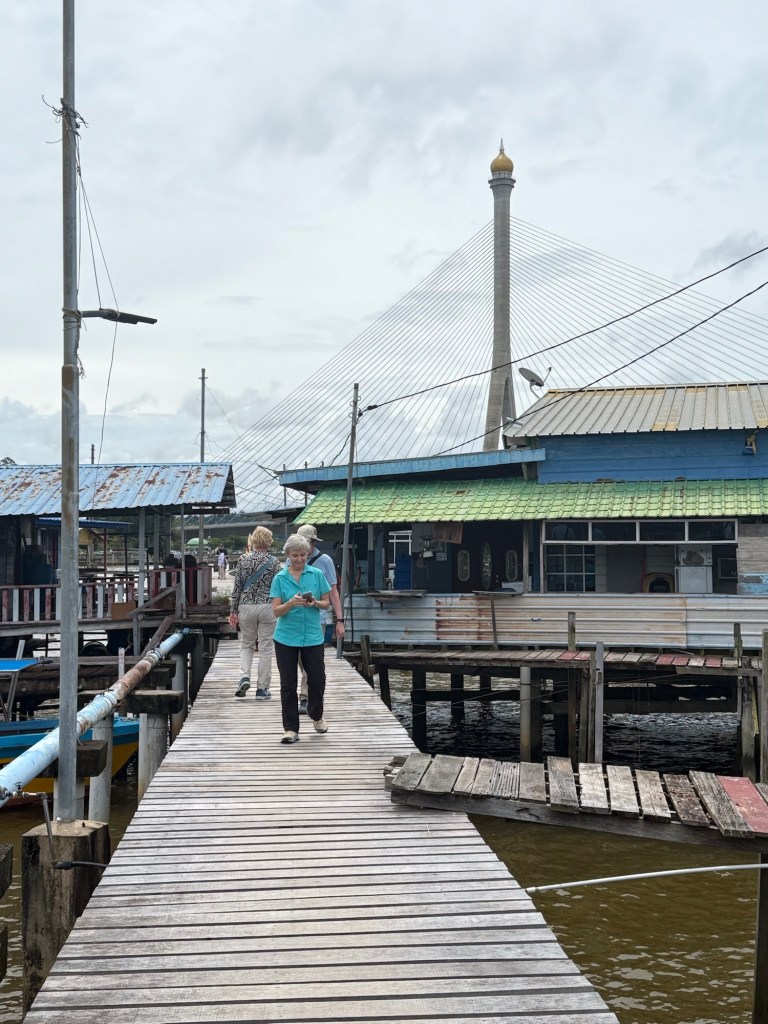
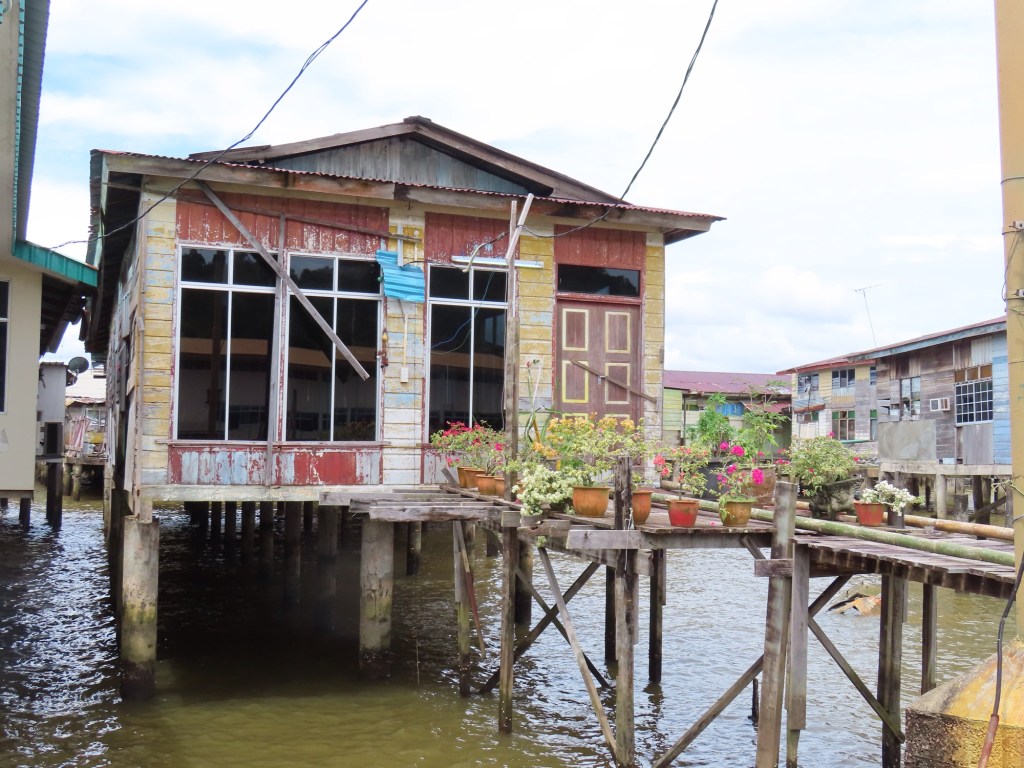
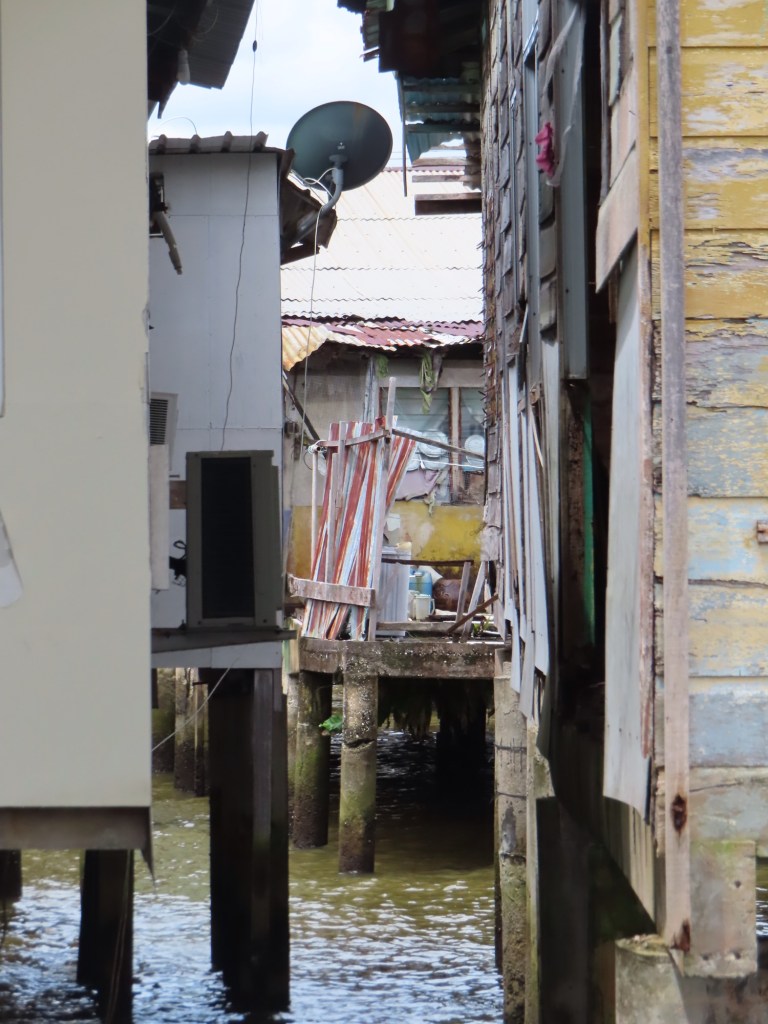
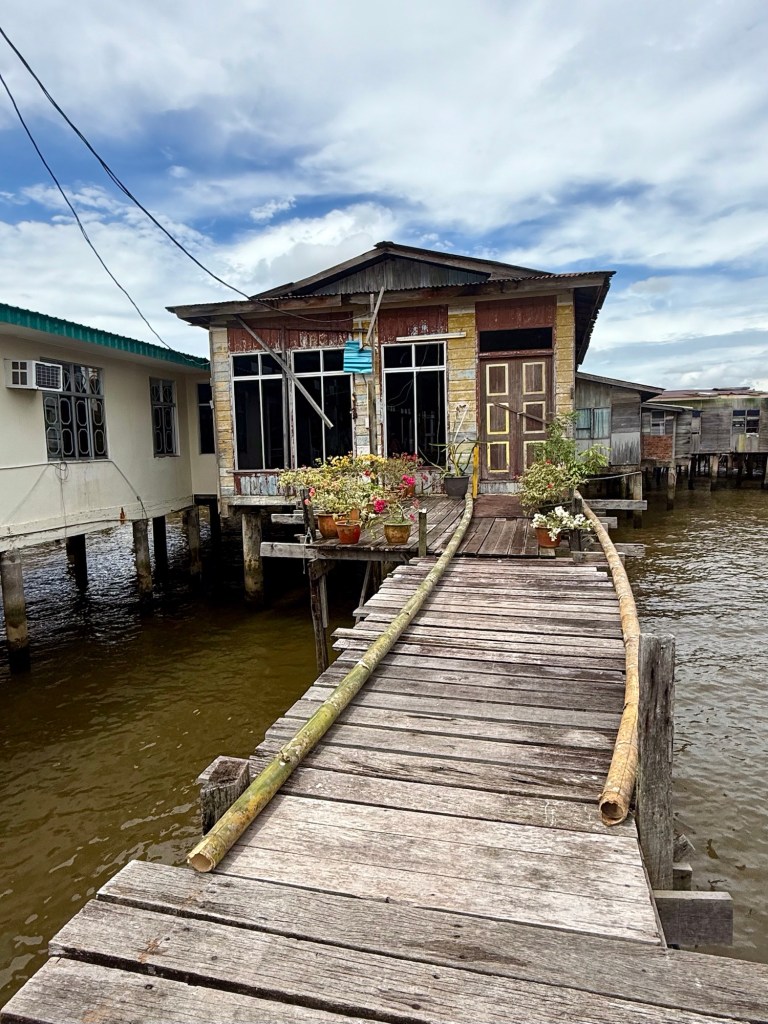
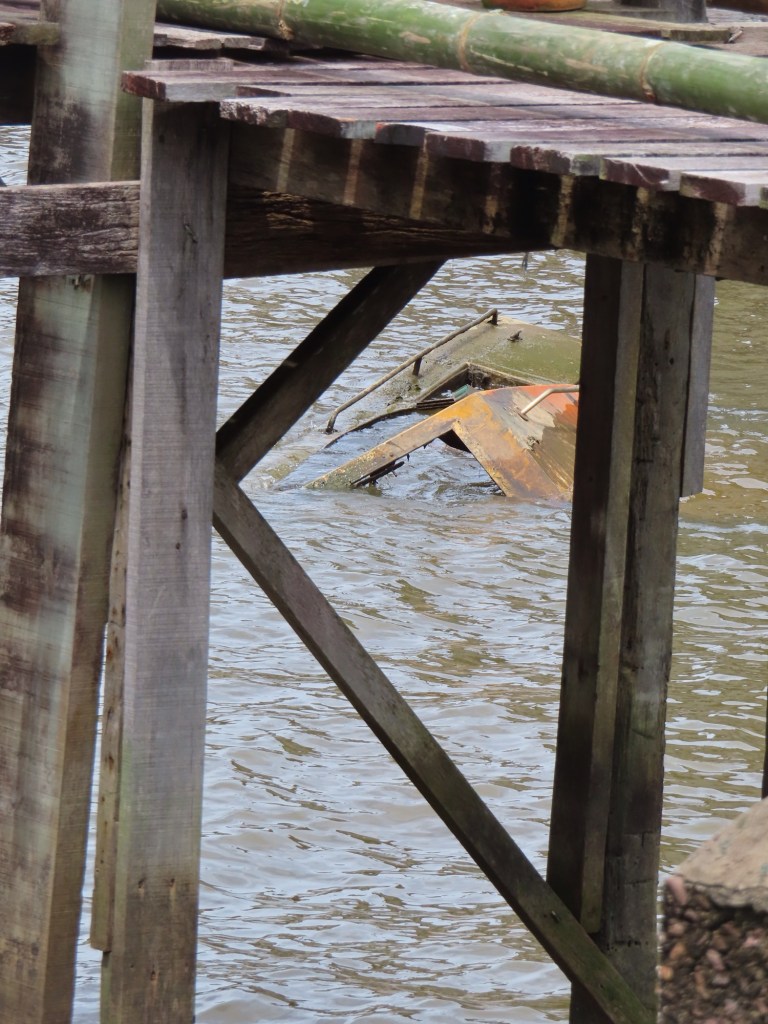
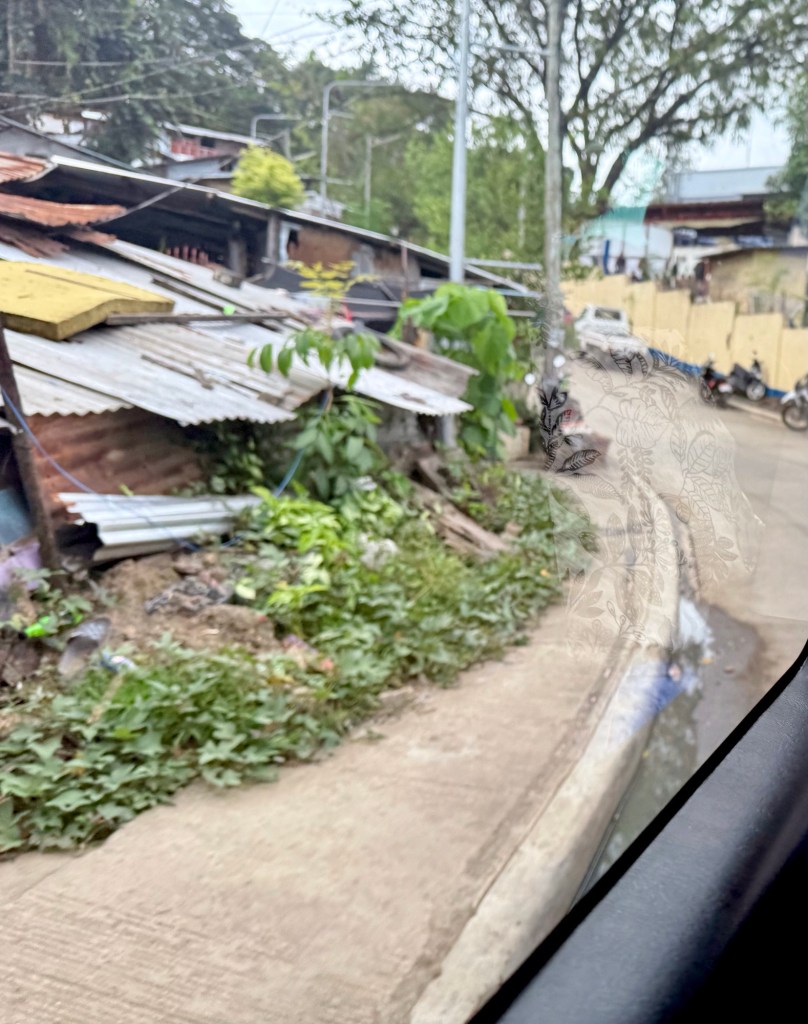
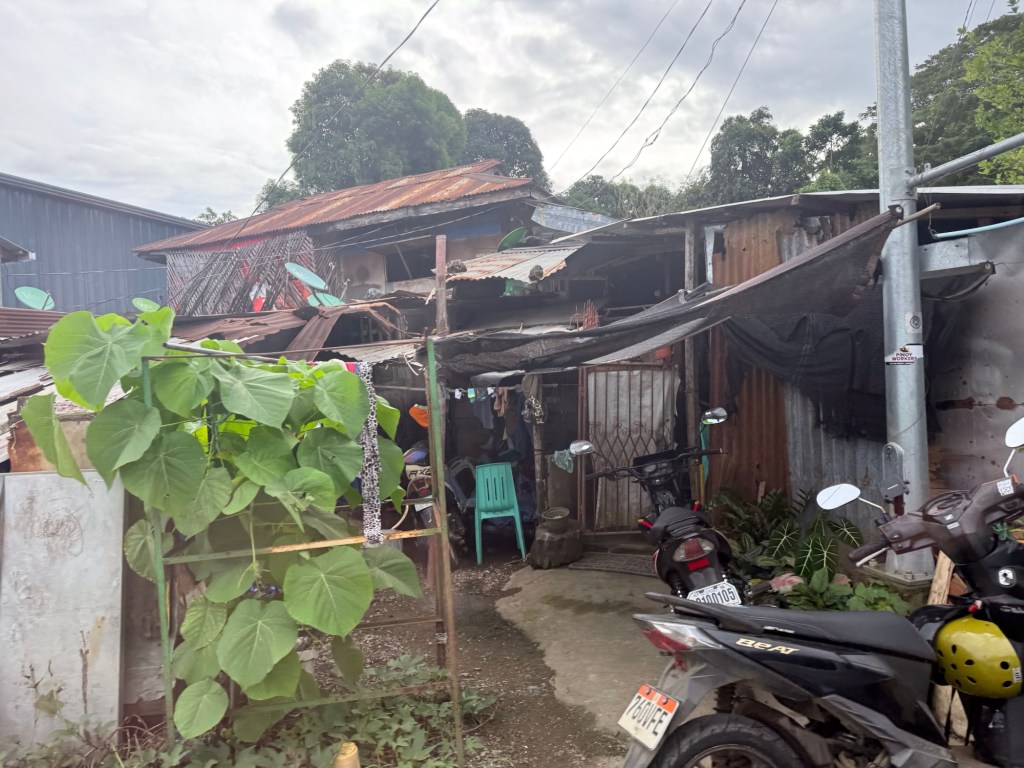
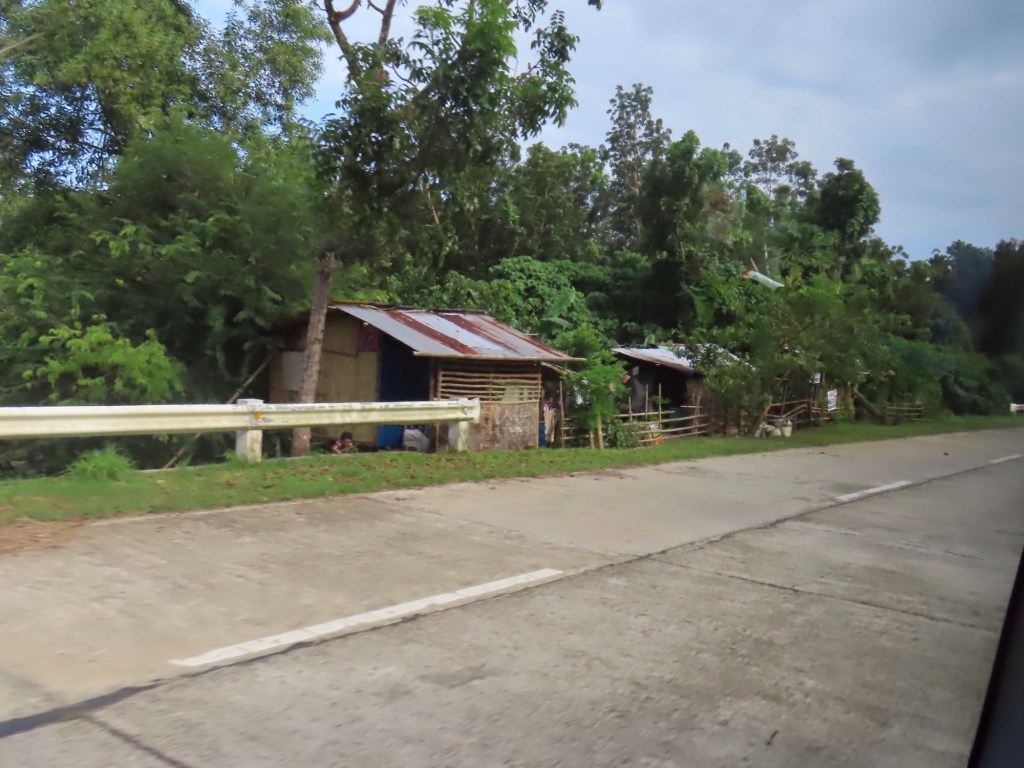
Water village… part of heritage is kept but they have all the amenities except a place to park car. It’s actually not aboriginal… not native. Disappointing. They are all in terrible shape atleast in the outside. Inside the one we went in (were served tea and sweets), it was typically Muslim in decor and in better shape than outside.  Less than 10,000 people live in the water village. It’s disgusting. Effluent is dumped directly into river. Catfish …. Full of nutrition …. Lol! 
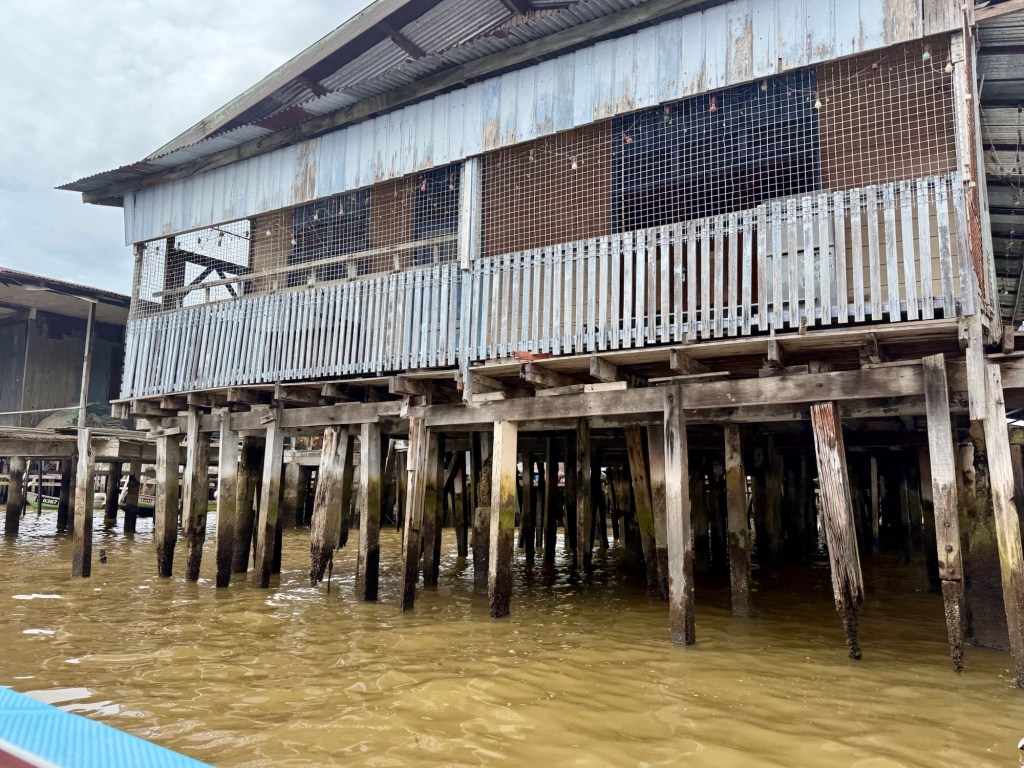
In 1994 the last mosque was built. It has 29 domes… means the 29th ruler had it  built.  It is compulsory to pray 5 times for men and there is no opening of stores til 2pm or tours on Friday. The non-Muslim go to Kololuka(border with Malaysia) to drink cuz it is illegal to drink here. 4 wives allowed for Muslim’s but the husband has to have approval from the preceding wives and they all have to have the same value of home….treated equally.

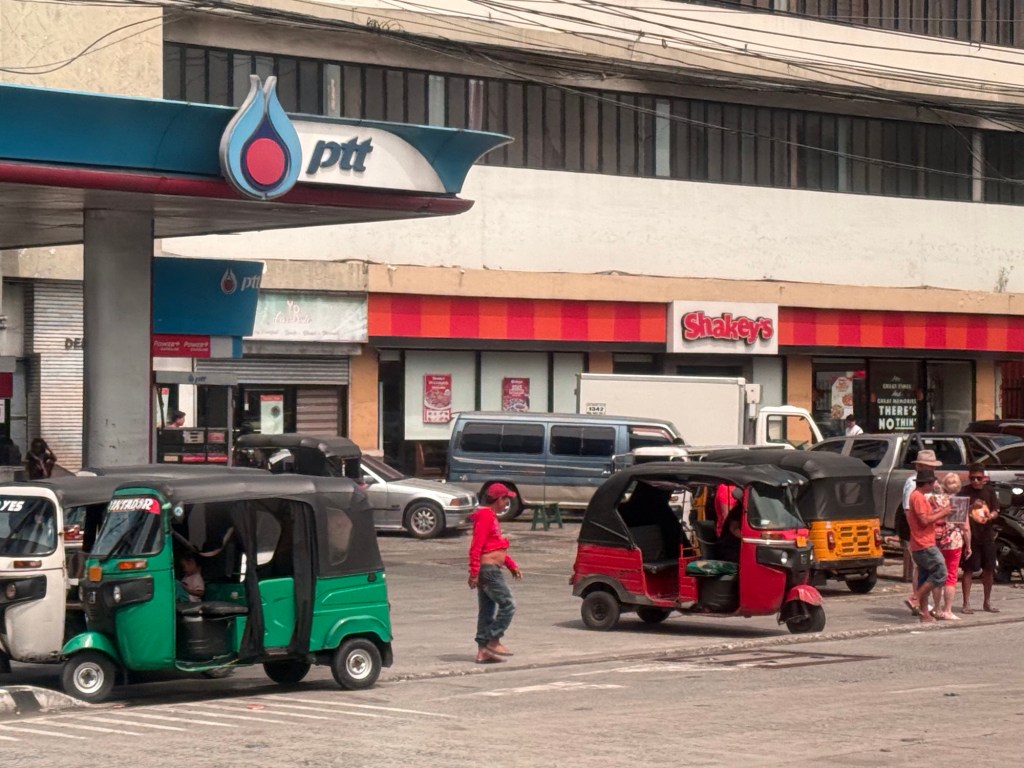
There are only Shell petroleum stations here. .53 /ltr….in Brunei dollars(.59 CAD) But .98/… diesel

No interest is charged when buying a house, to people that work for the govt……otherwise 4-5% interest. It costs only 1$ to see a doctor.
Day 29-Feb 24/25- Puerto Princesa, Philippines 

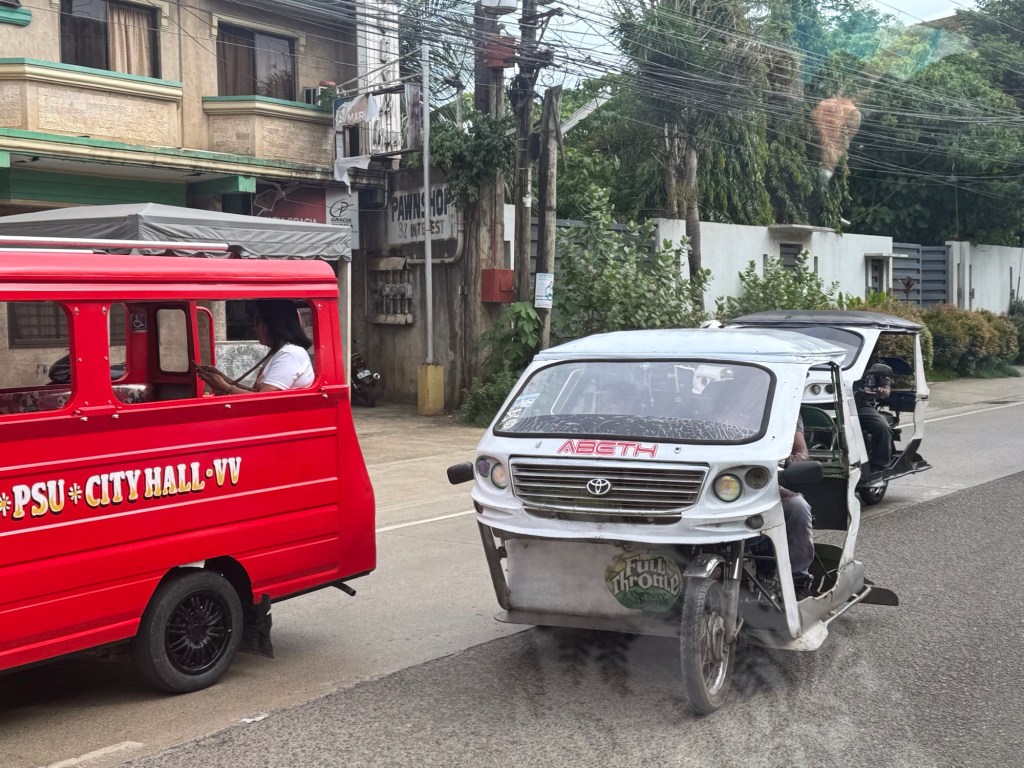
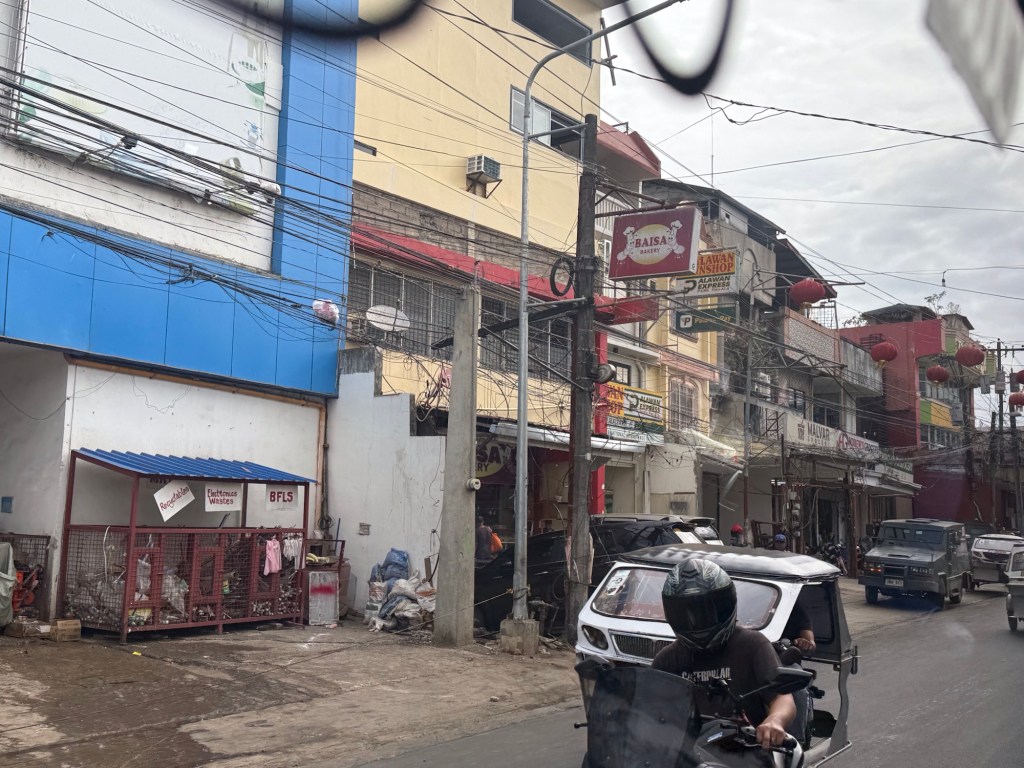
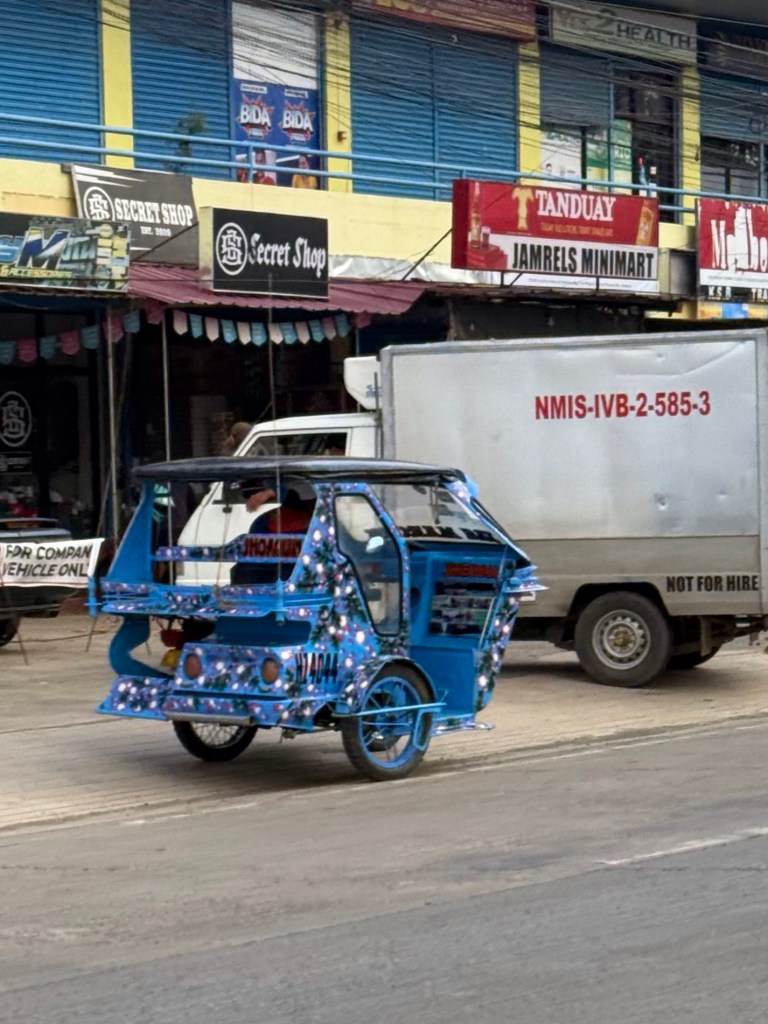
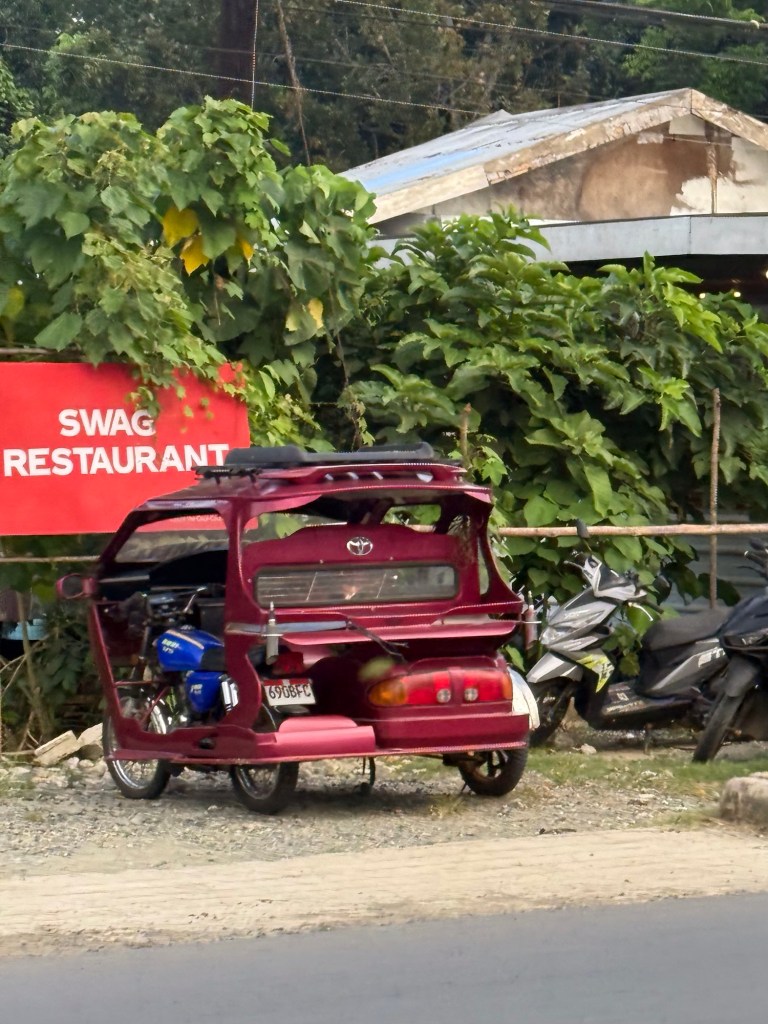
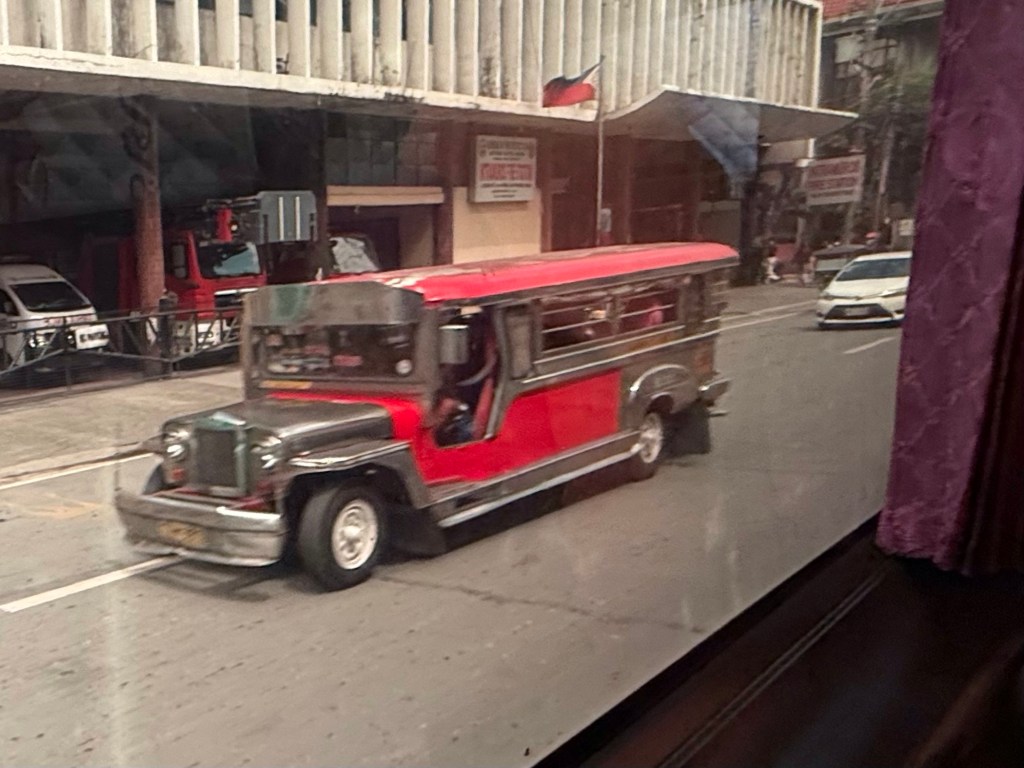
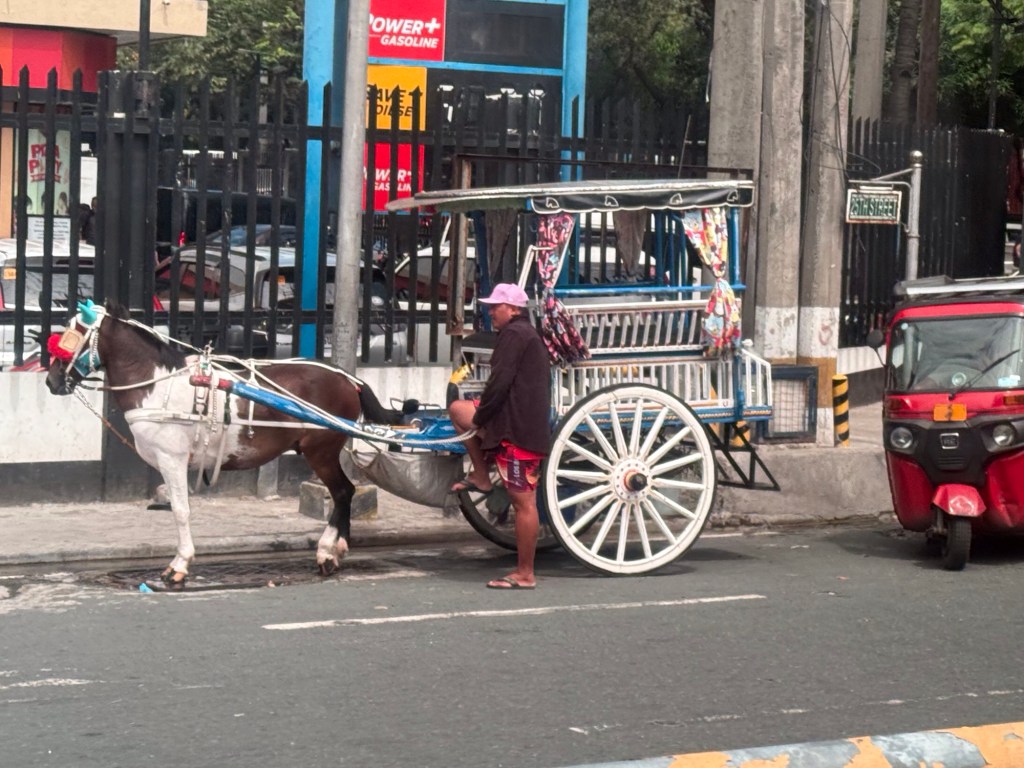
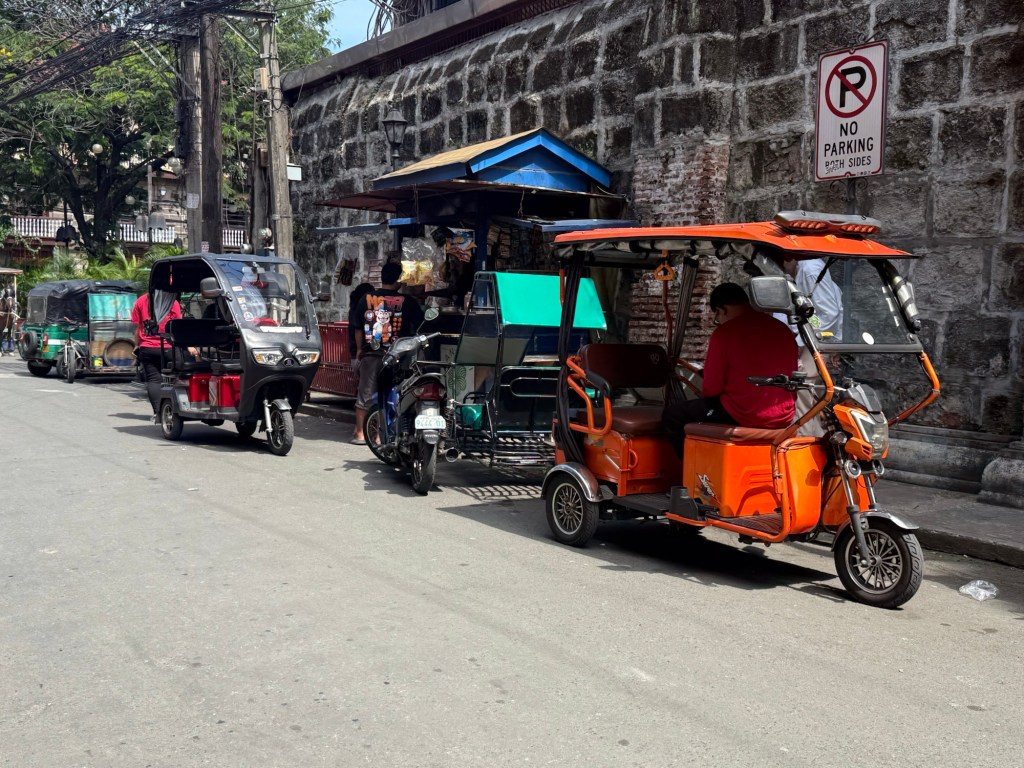
35,000 pop in this city, Puerto Princesa, is the only city on this, Palawan Island but the total of the island is about 1 million. Main export is cashew nuts. Tricycles are coloured blue or white depending on day so that is shared between drivers. Main course of income is tourism. Last ships is March and then not til November. 

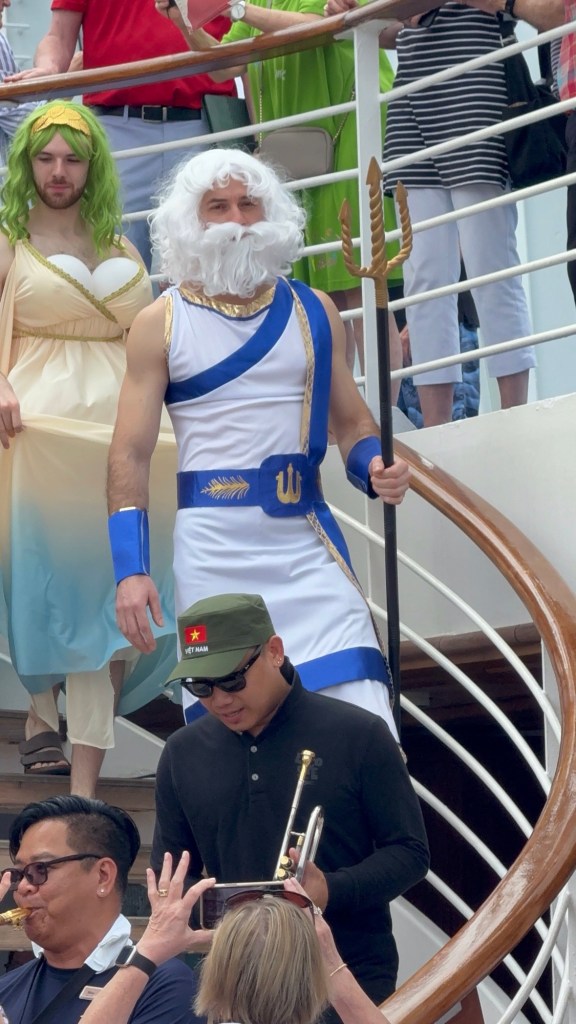
Mango cannot leave this area cuz they have disease. Gas is 1.68 CAD/ litre…. Wow… how can they afford that? Some boat people from Viet Nam came after war but left to other parts of the world. A half hour into the drive we get a flat tire. 

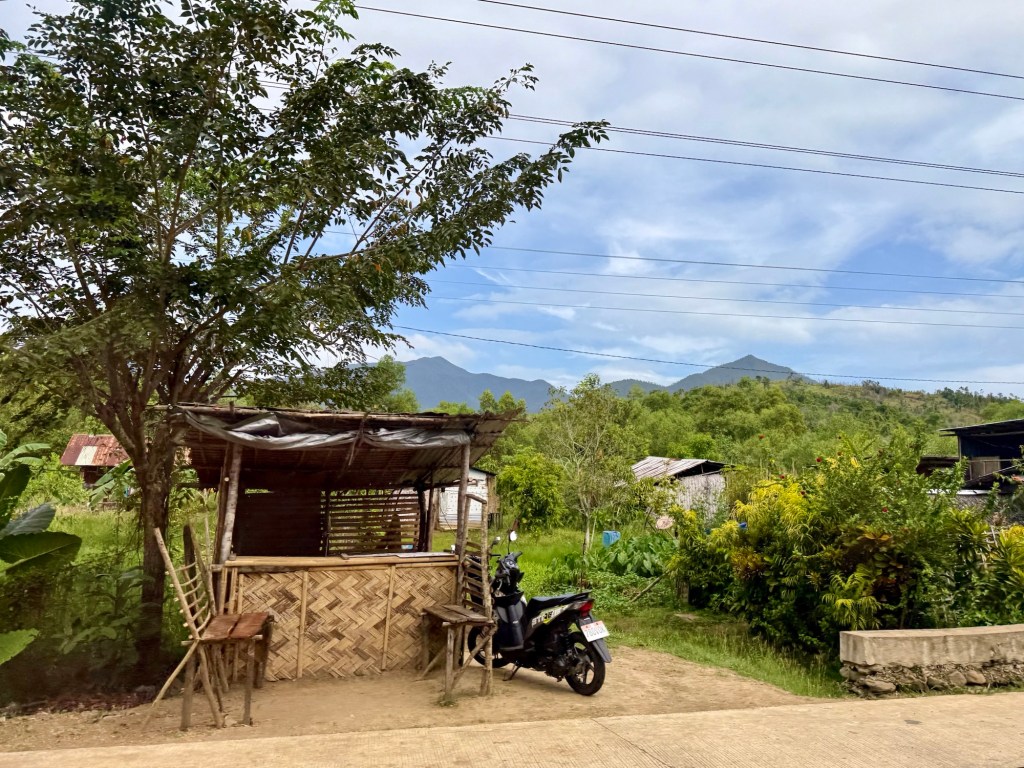
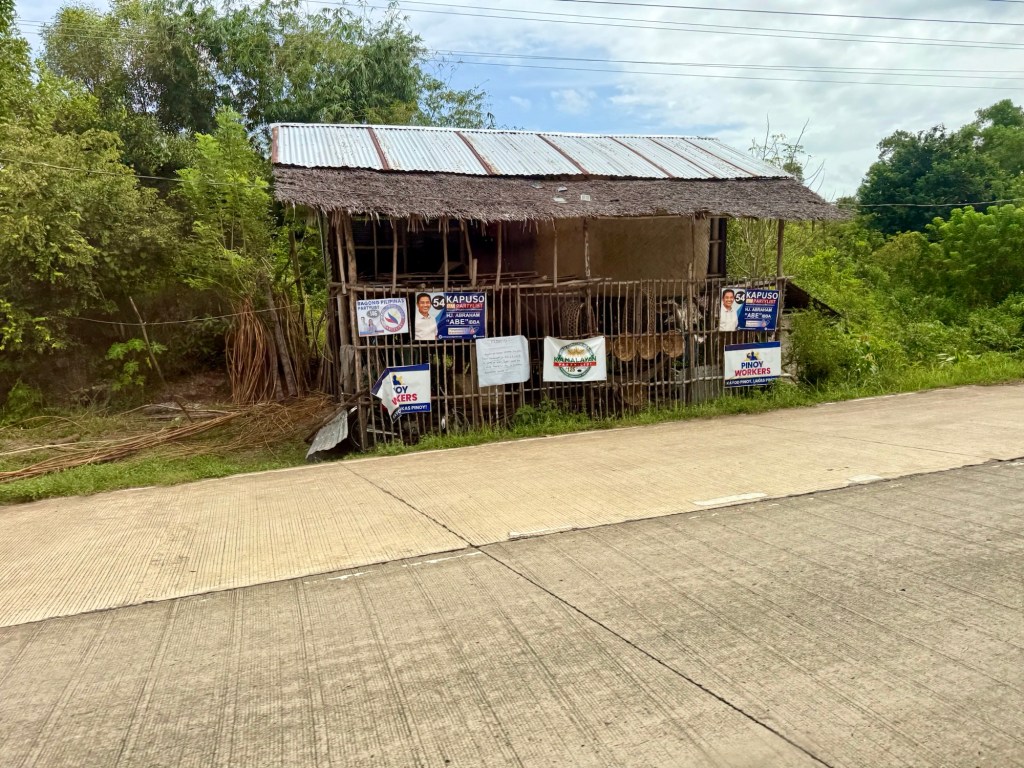
Some of the homes have walls made of woven bamboo mats and bamboo floor-bahay kubo.., native house used as resting place or lunch area. Usually the very wet season is June July, August, and September and the other is the dry dry season but because of El Nina, they are experience rain regularly now. I would imagine wouldn’t hold up very well in a typhoon. They have been experiencing typhoons in December and January because of climate change….not “normal”. Along the way, we see some rice fields, but they are for personal use only. 

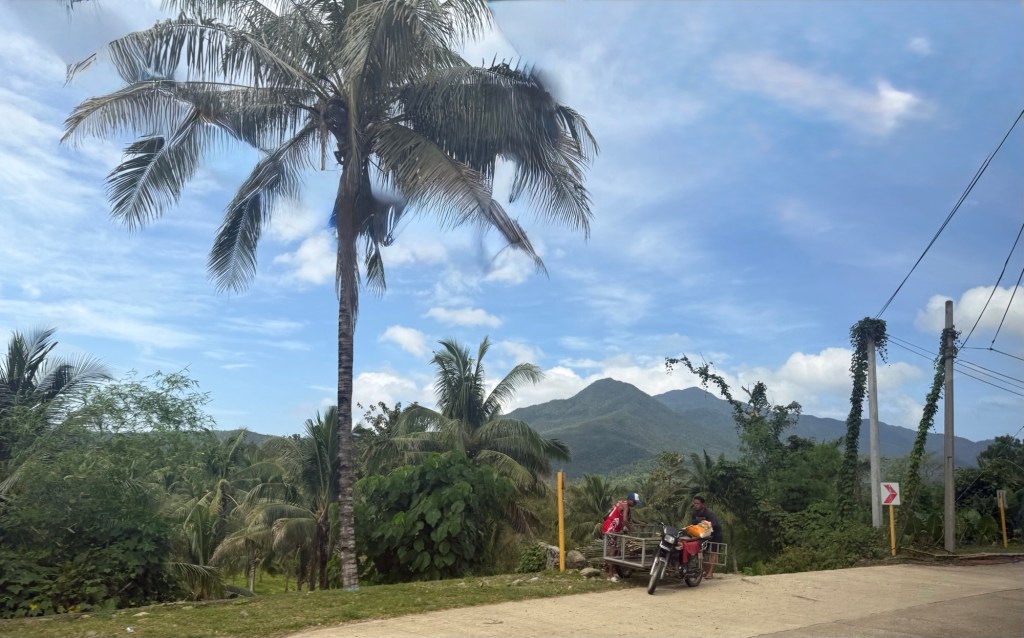
Pinoy is Philippine boy… pinine is girl.  Oops…..spelled it incorrectly before. We passed through a native village of topless women but they are not here right now. We are now in the protected area ….48,000 hectares….  Solar power is only source of electricity.

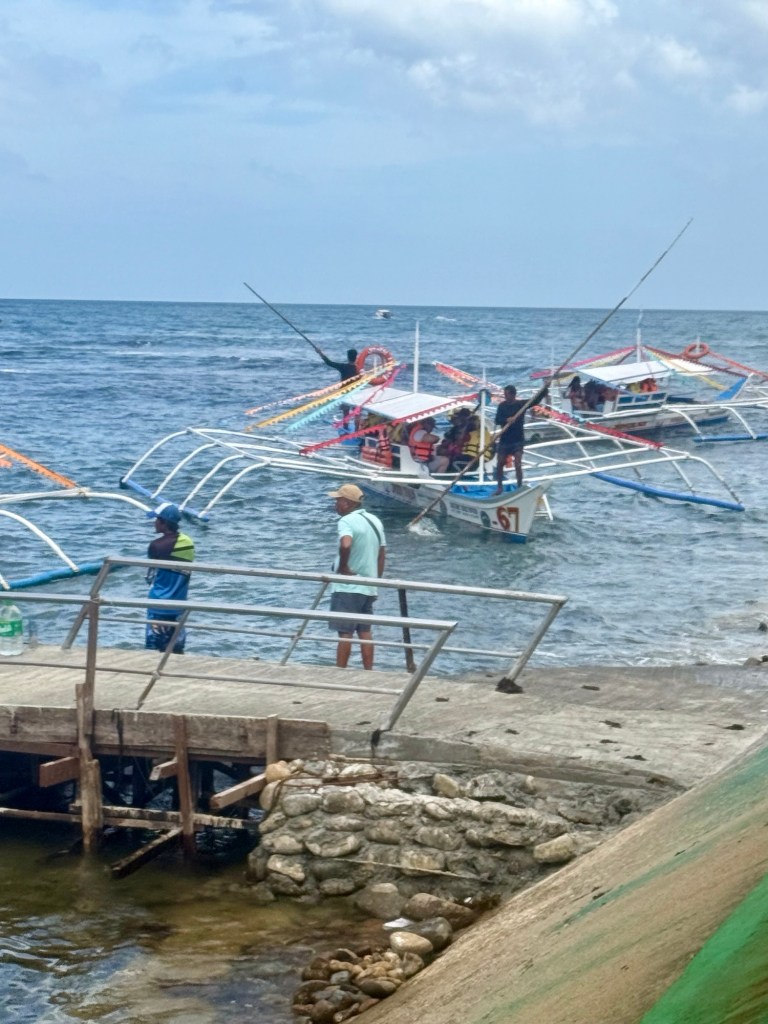
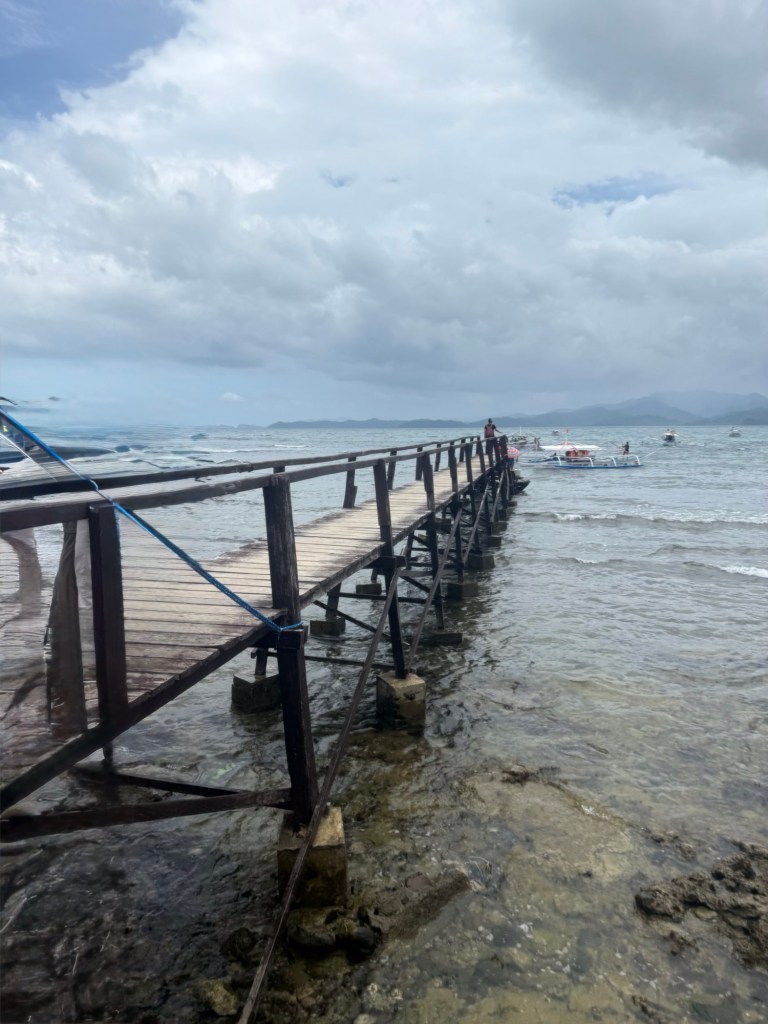
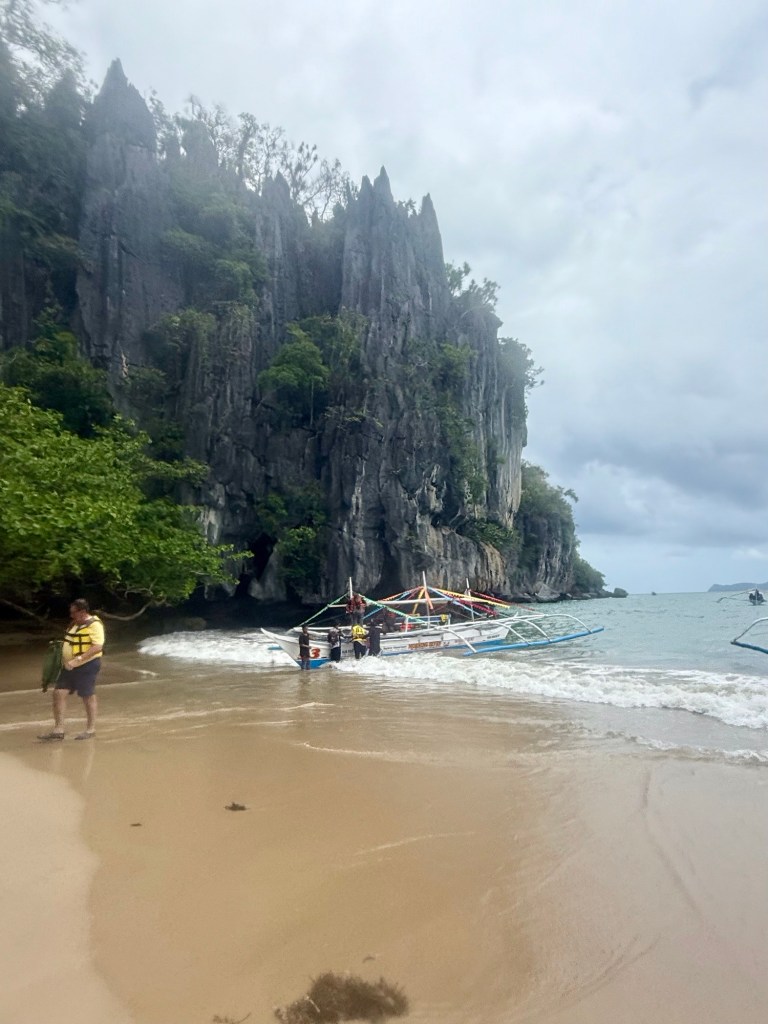
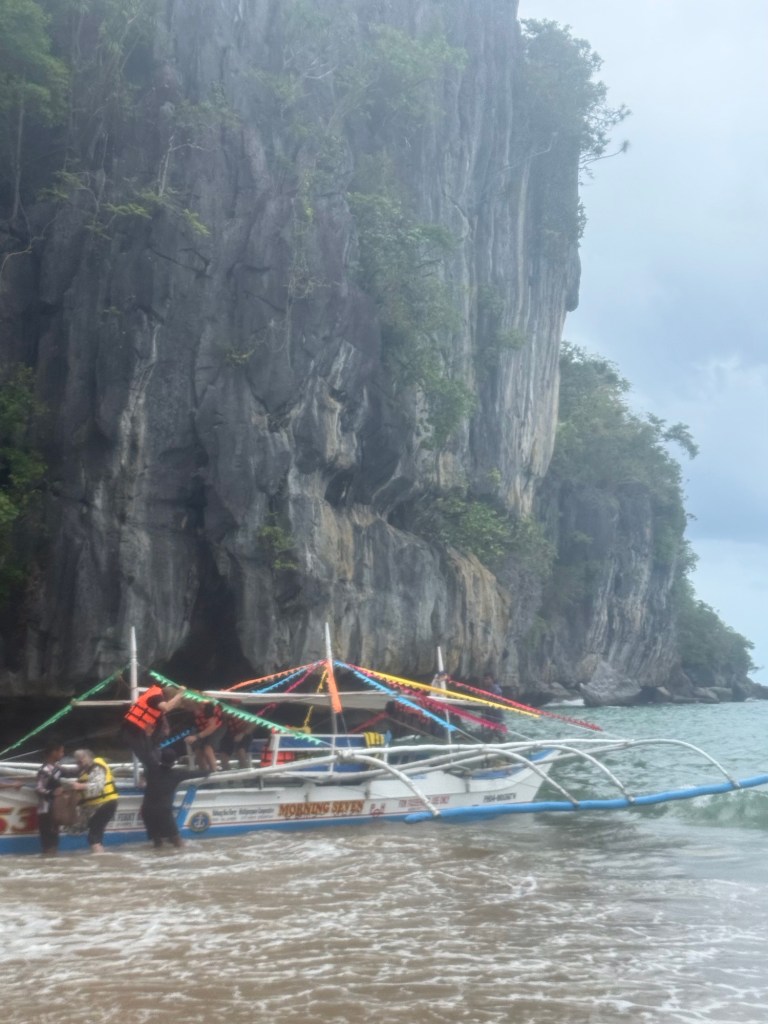
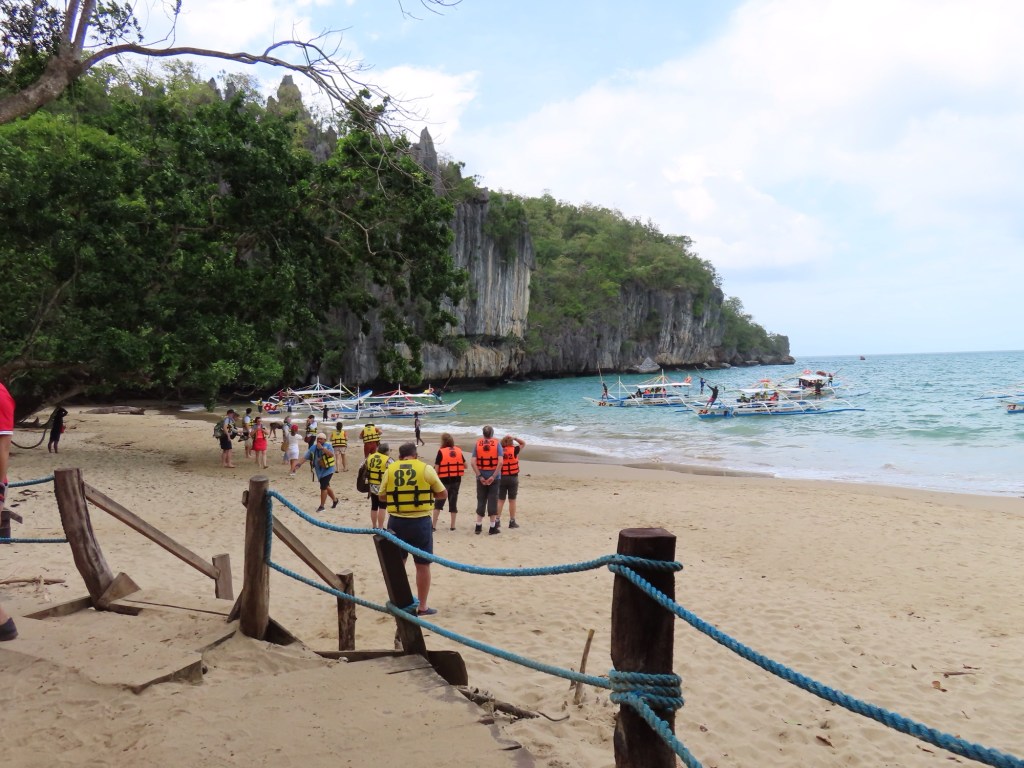
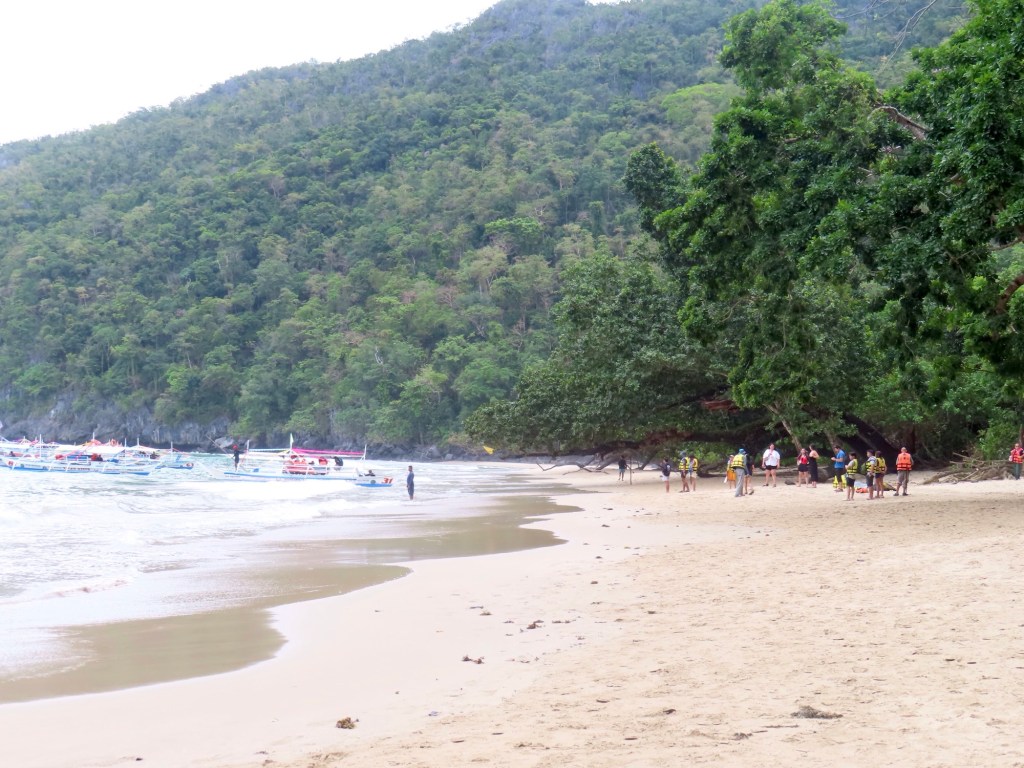
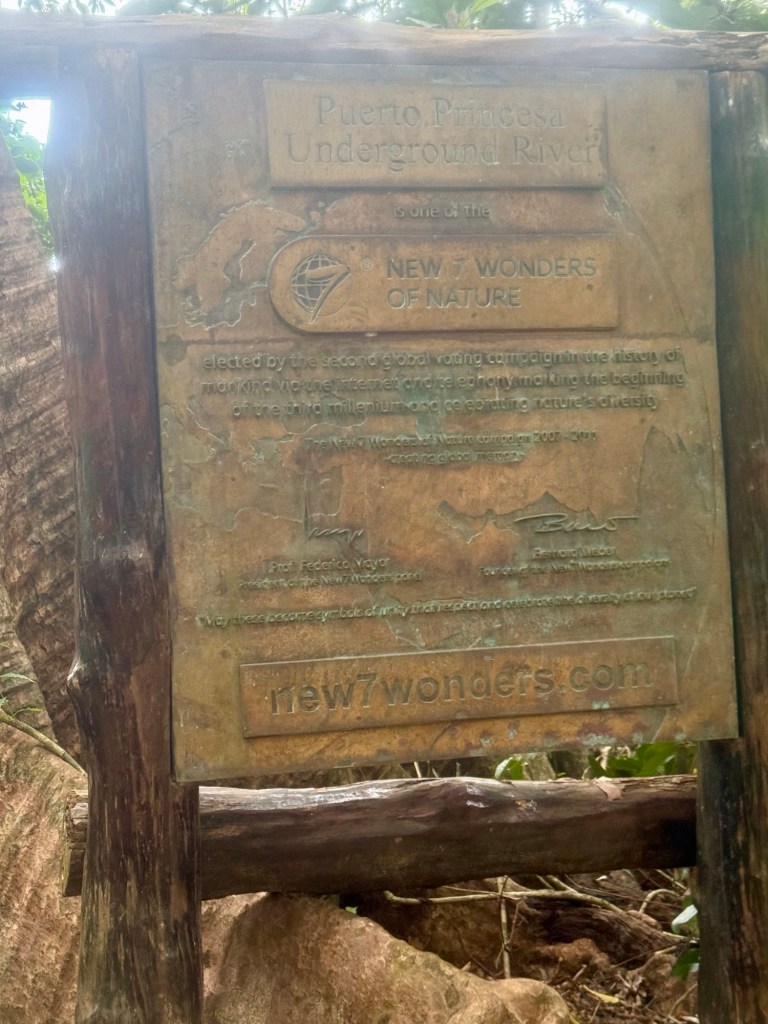
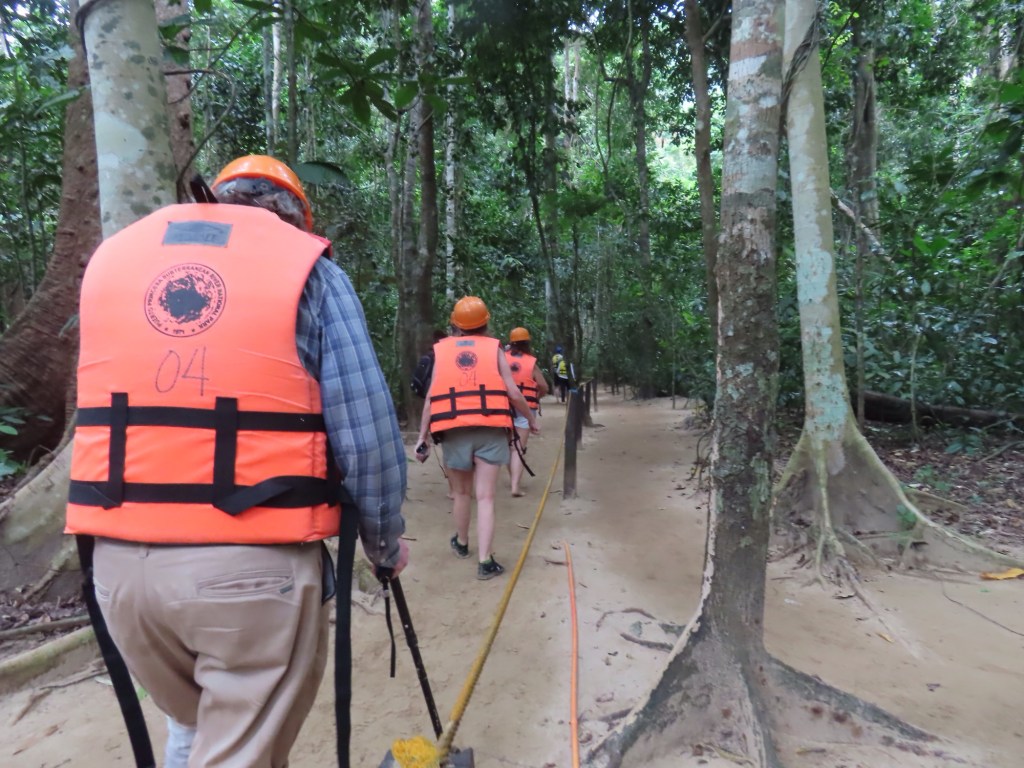
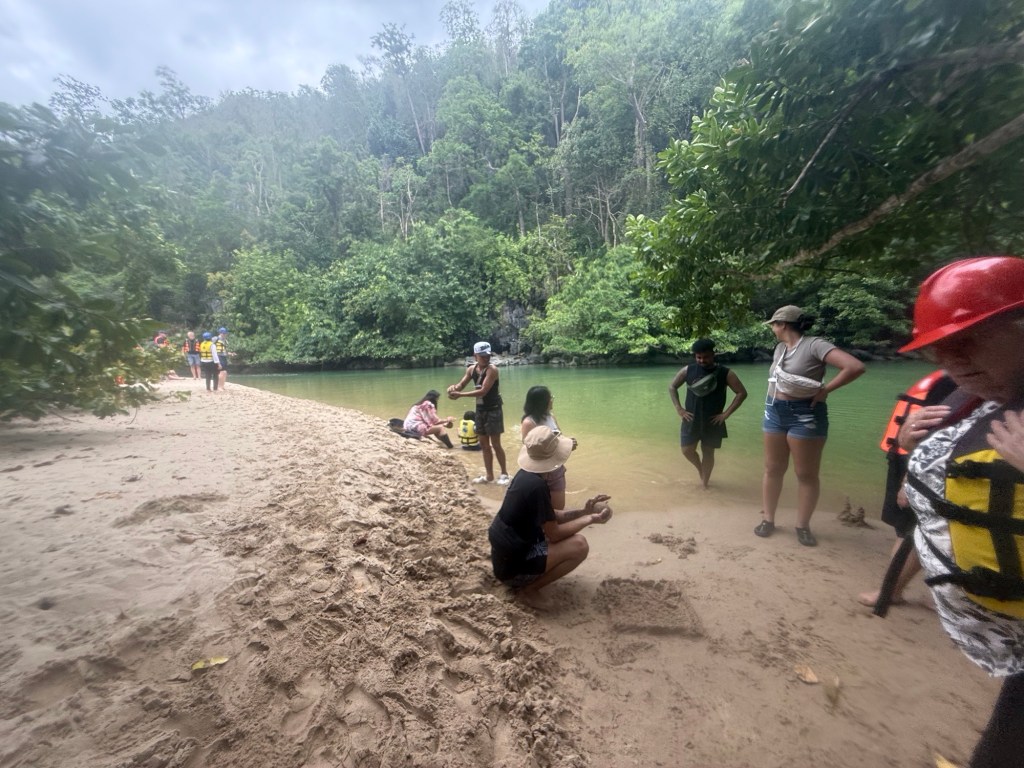
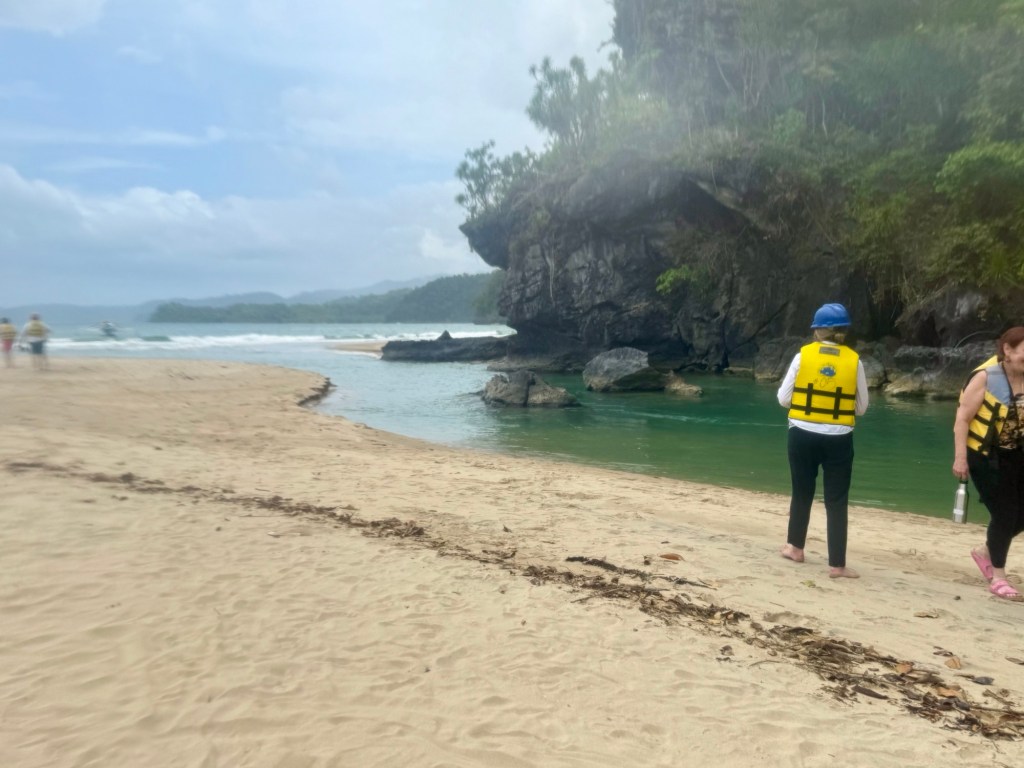
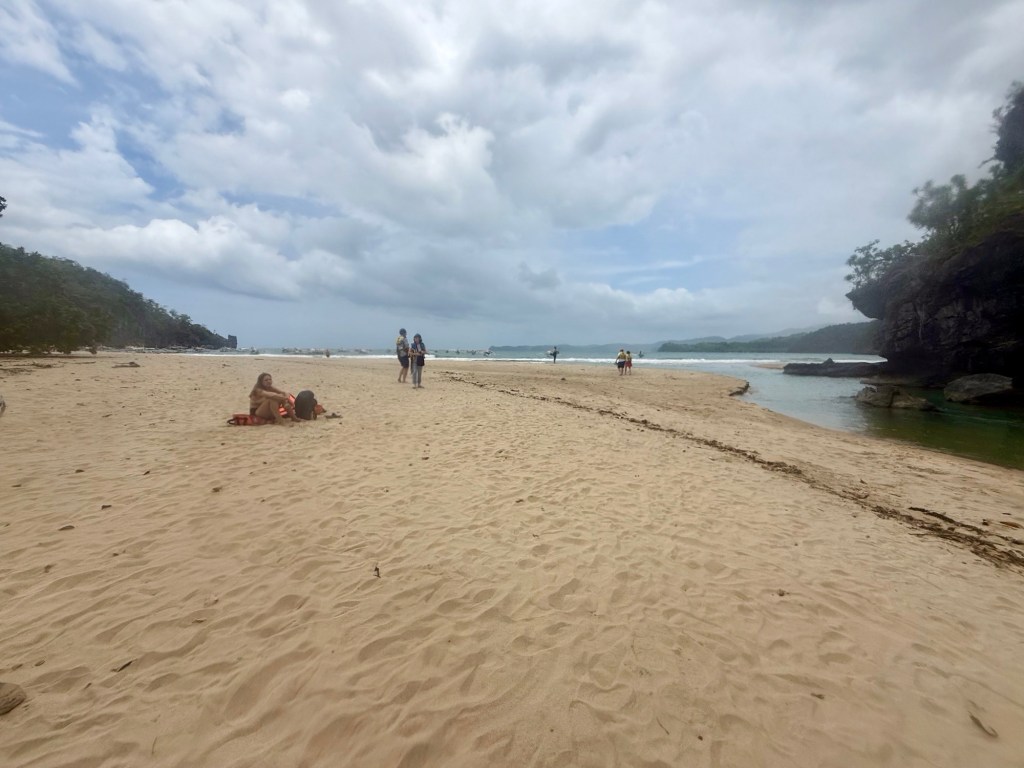
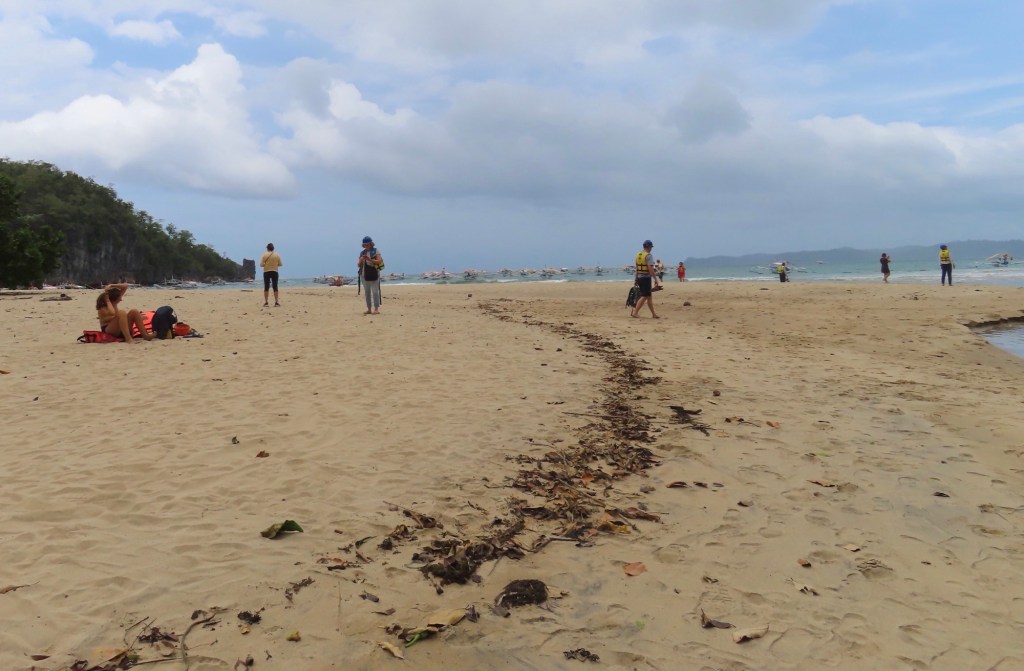
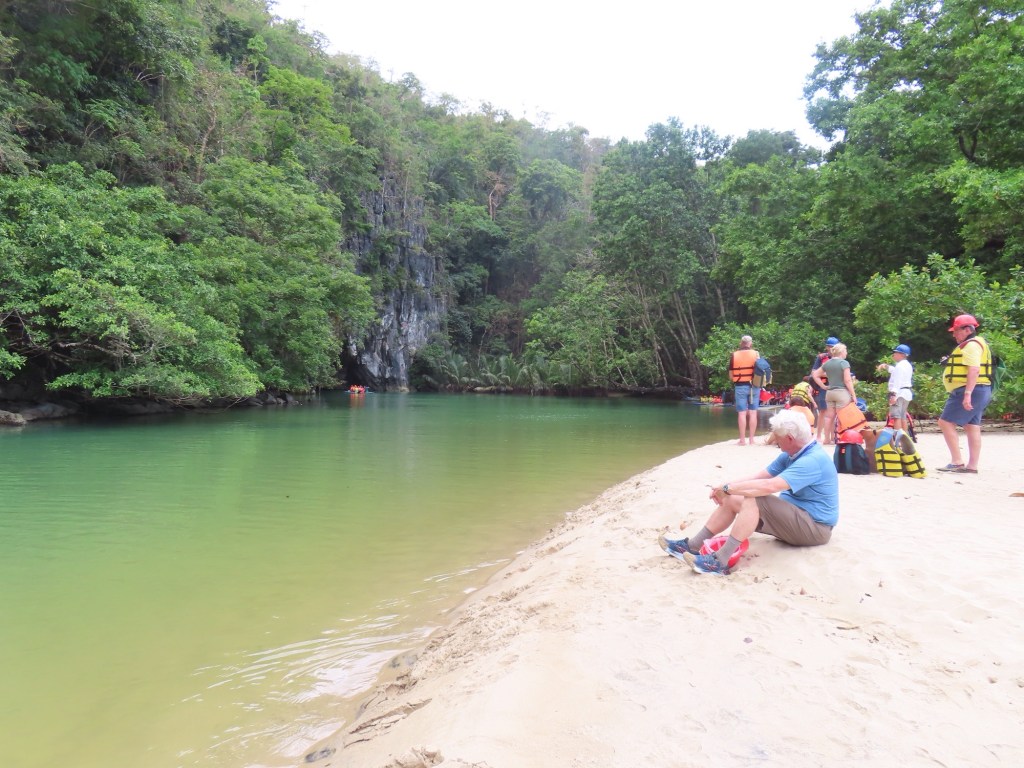
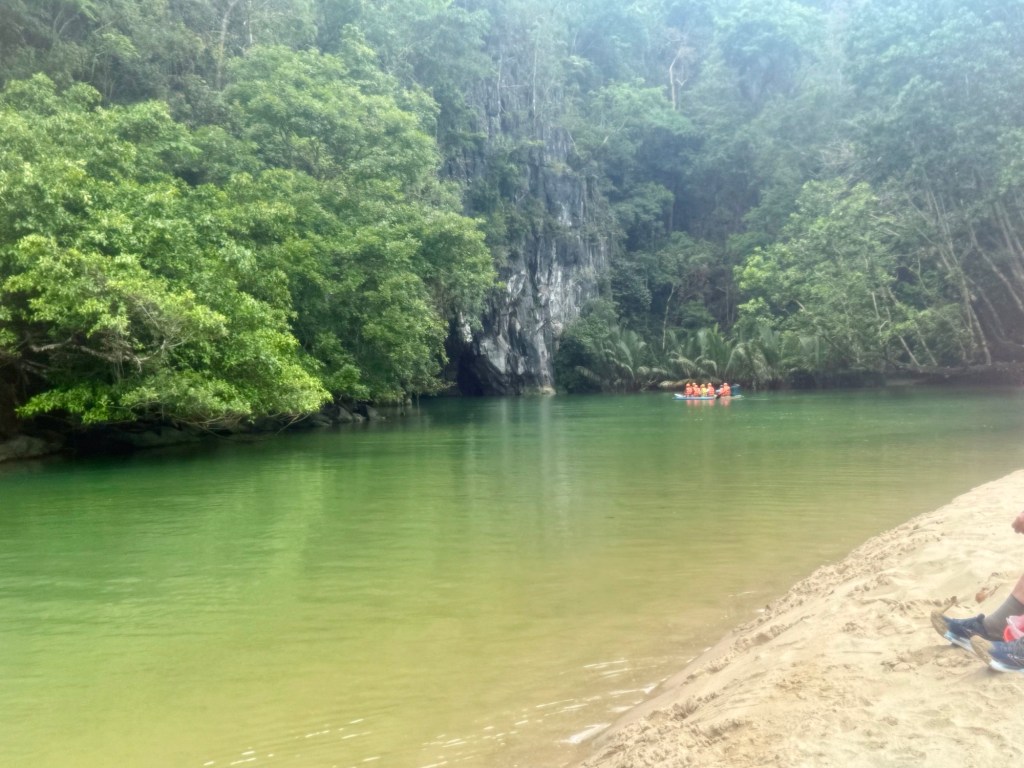
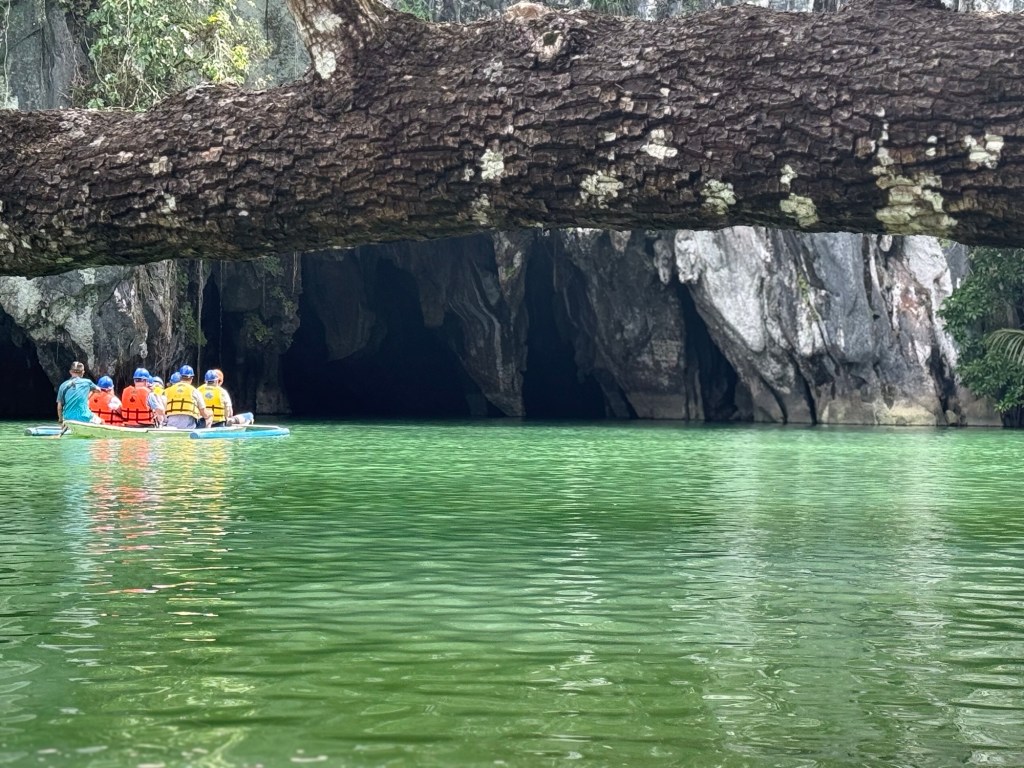
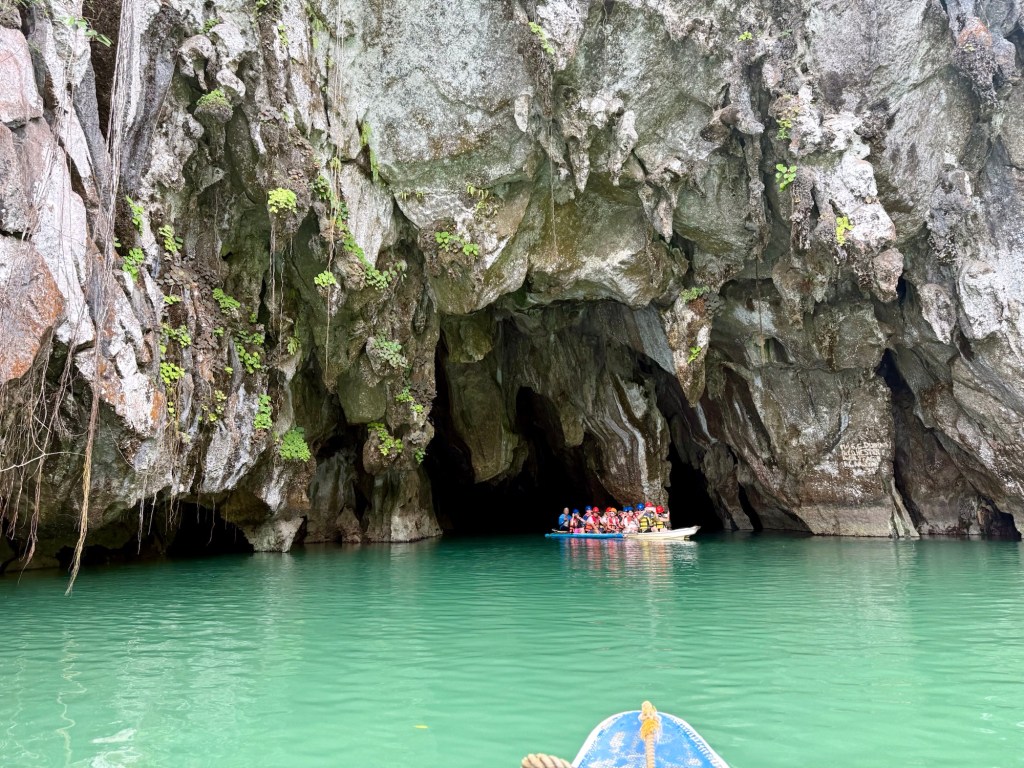
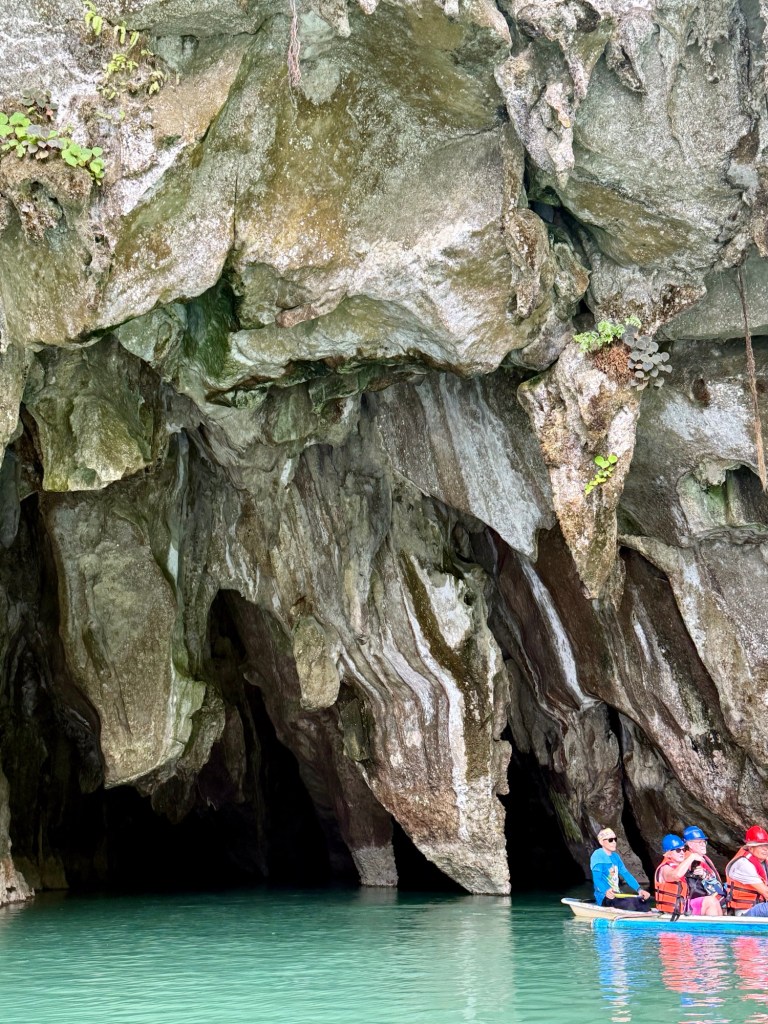
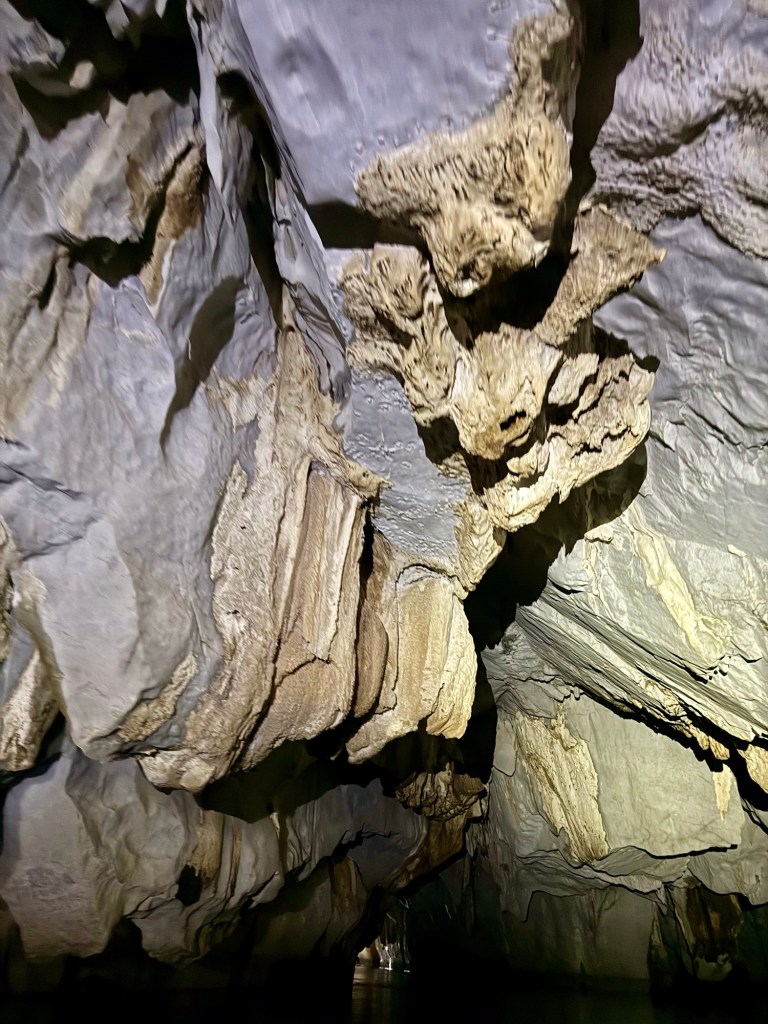
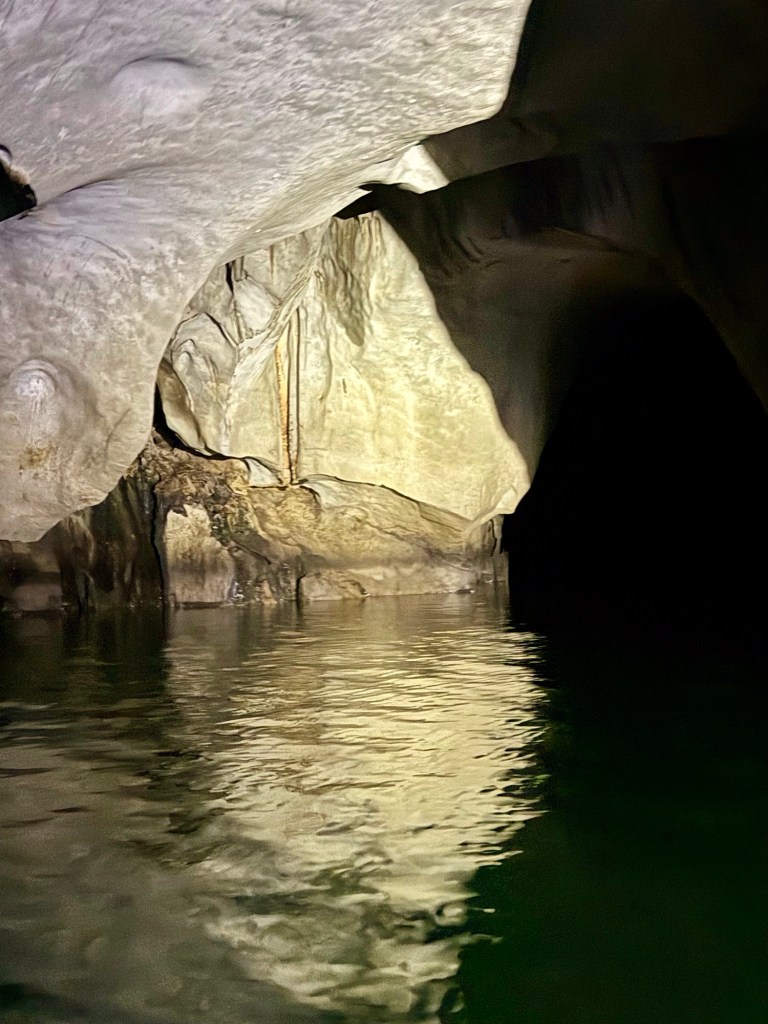
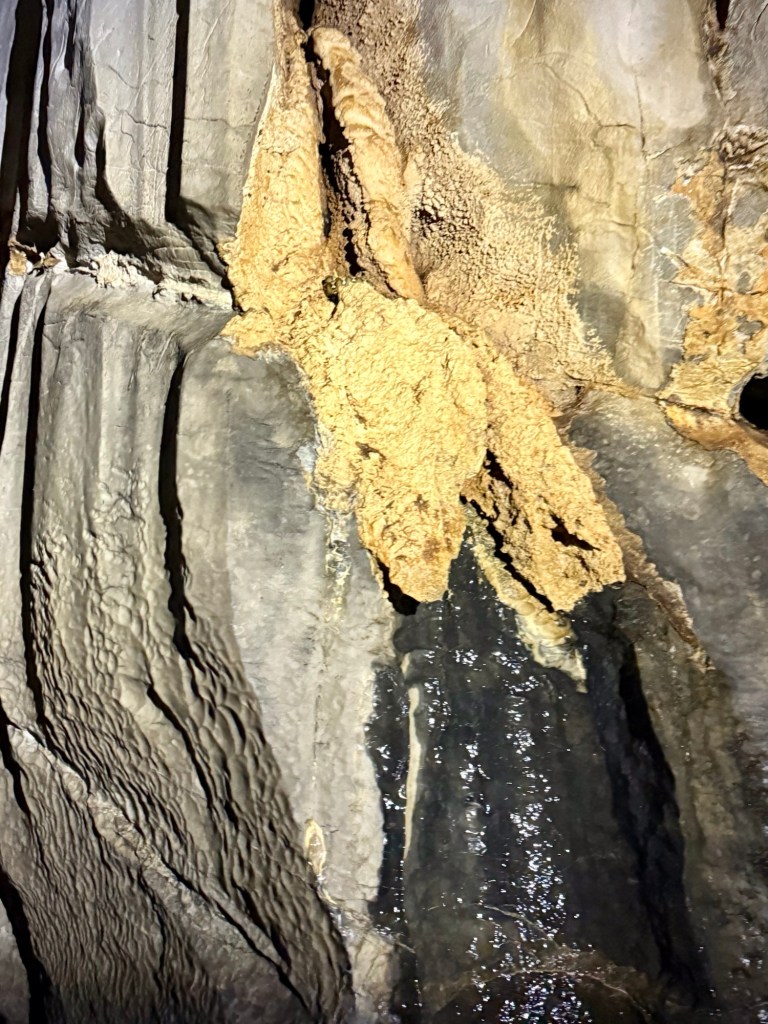
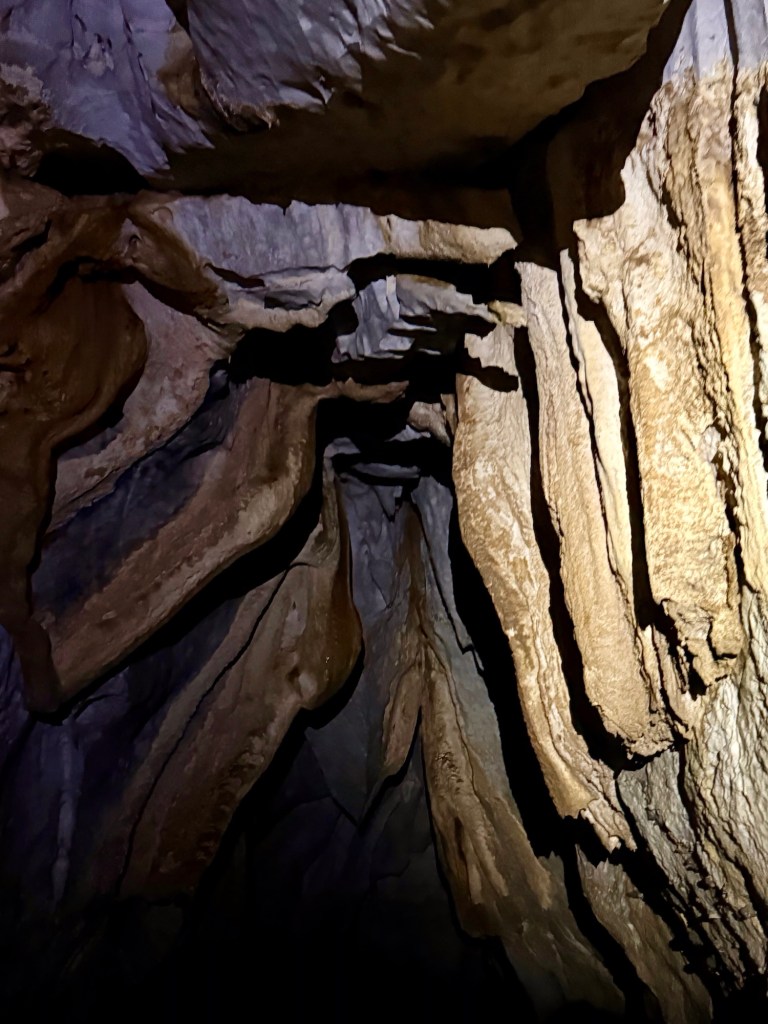
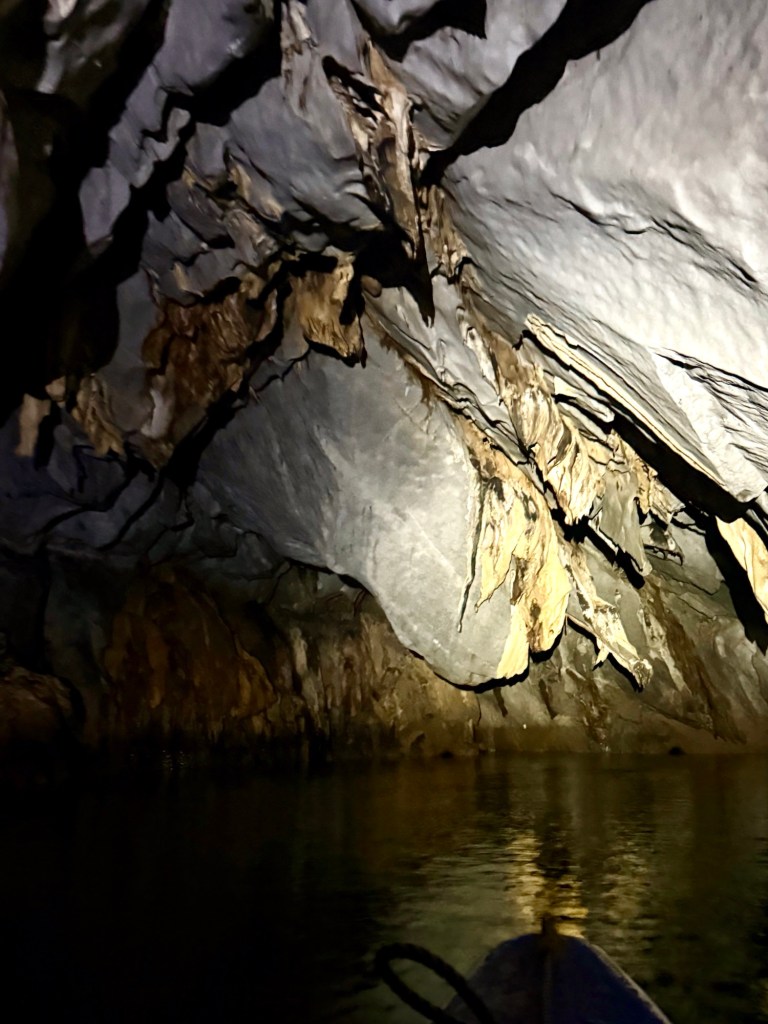
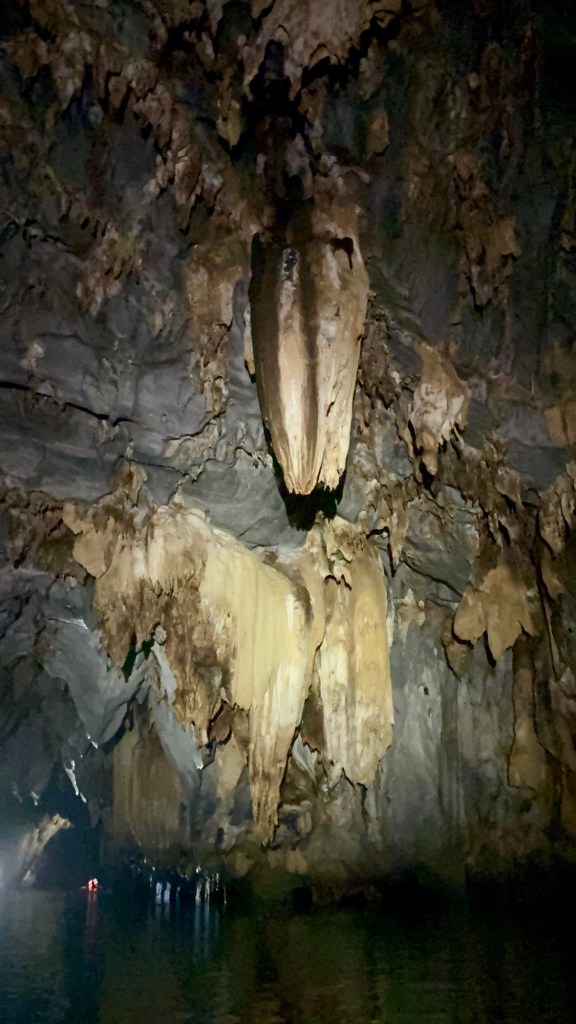
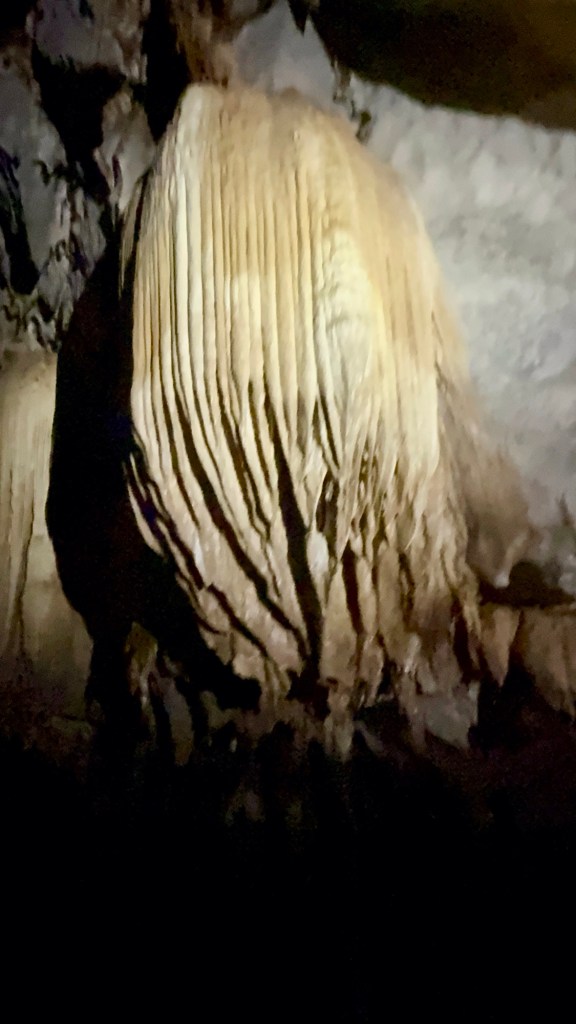
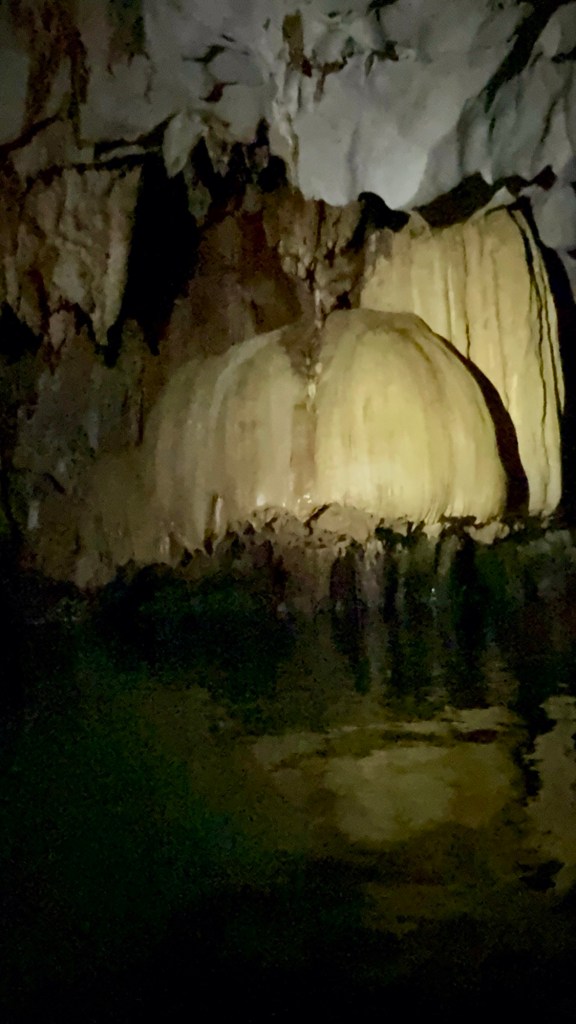
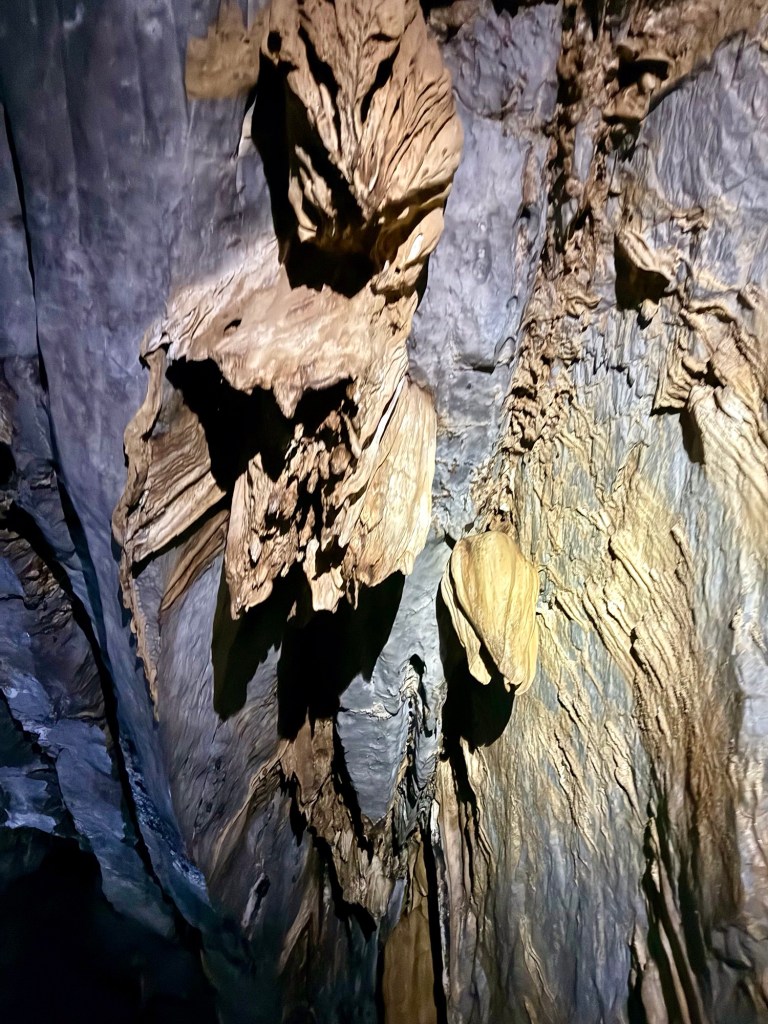
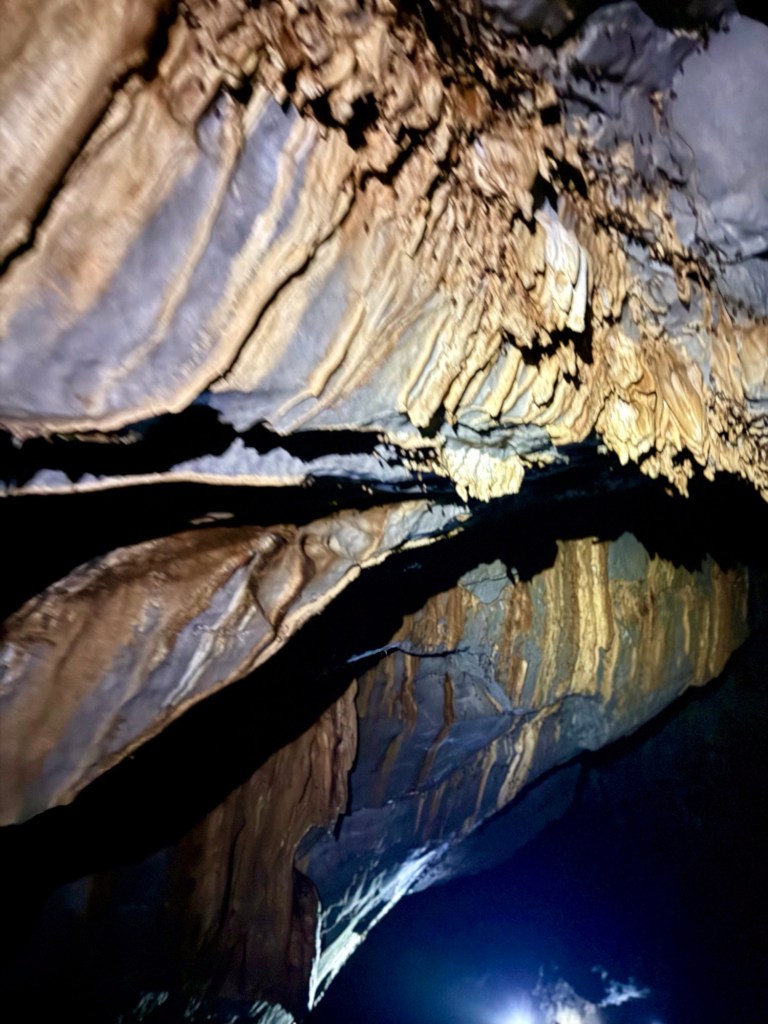
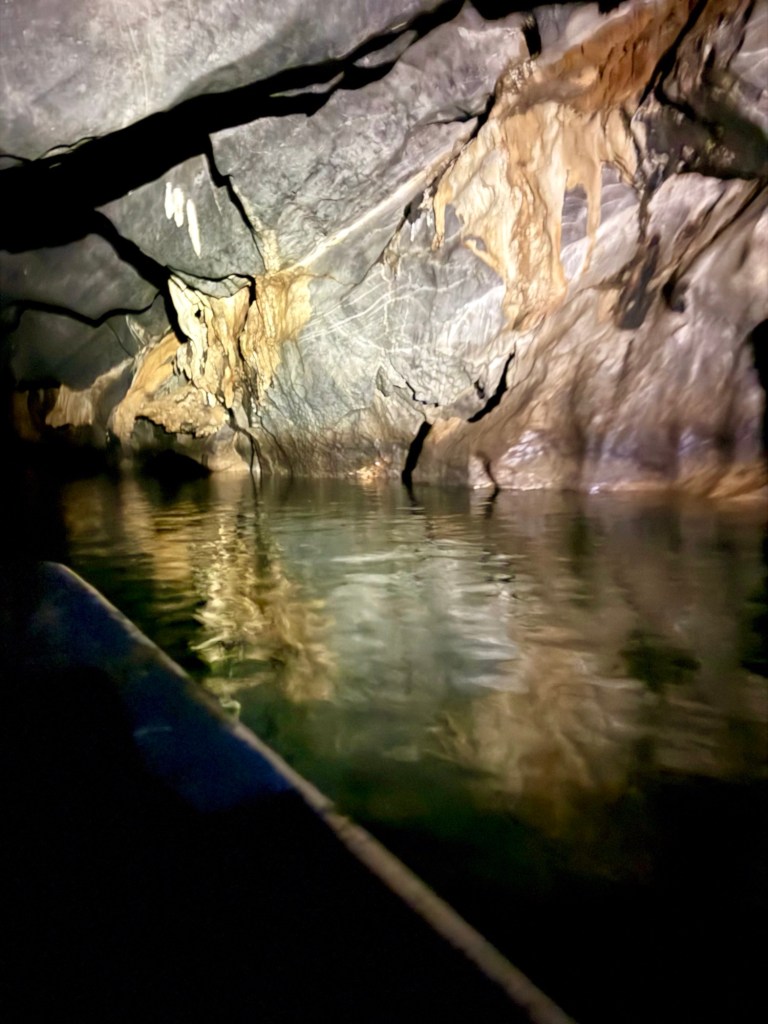
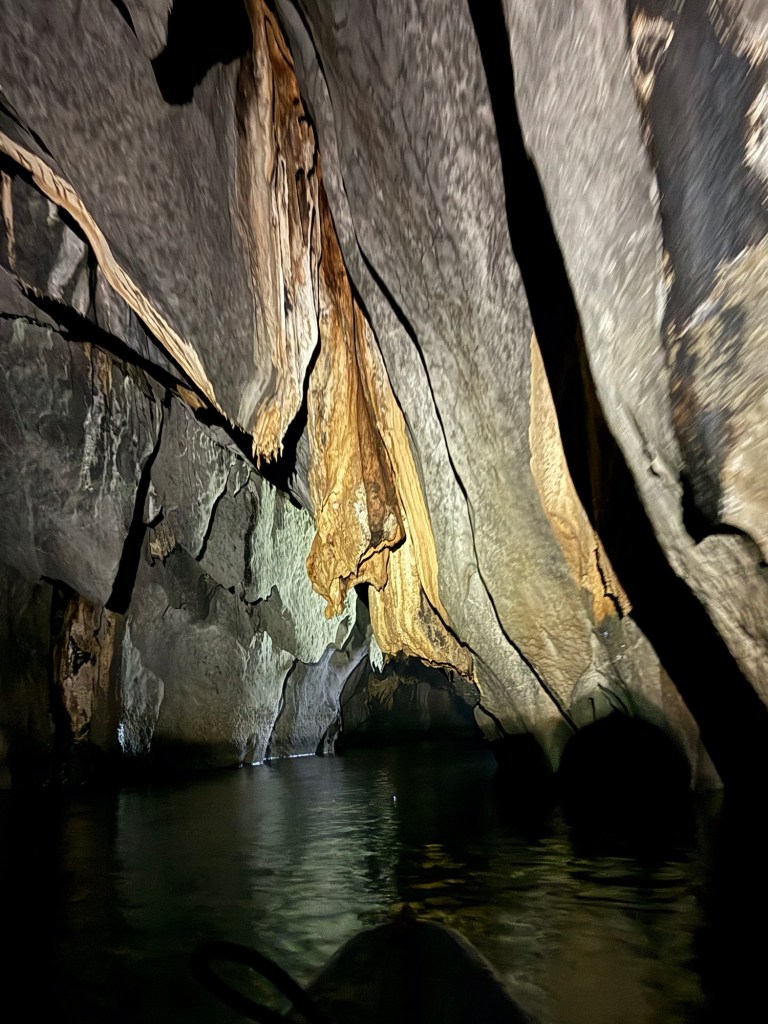
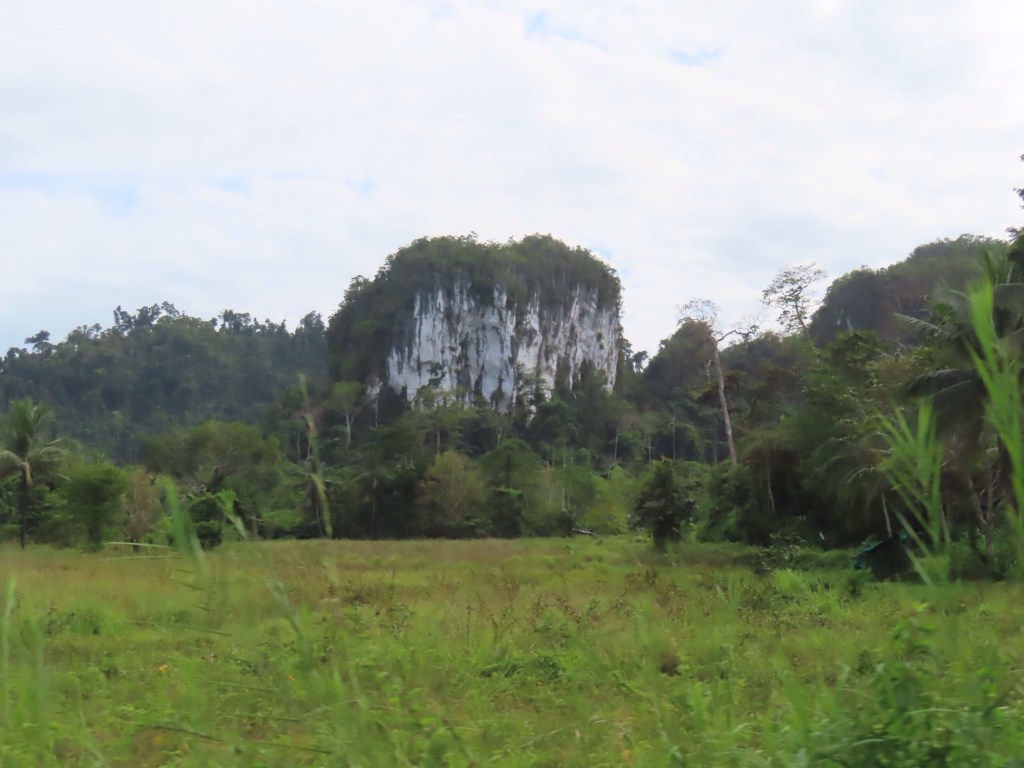
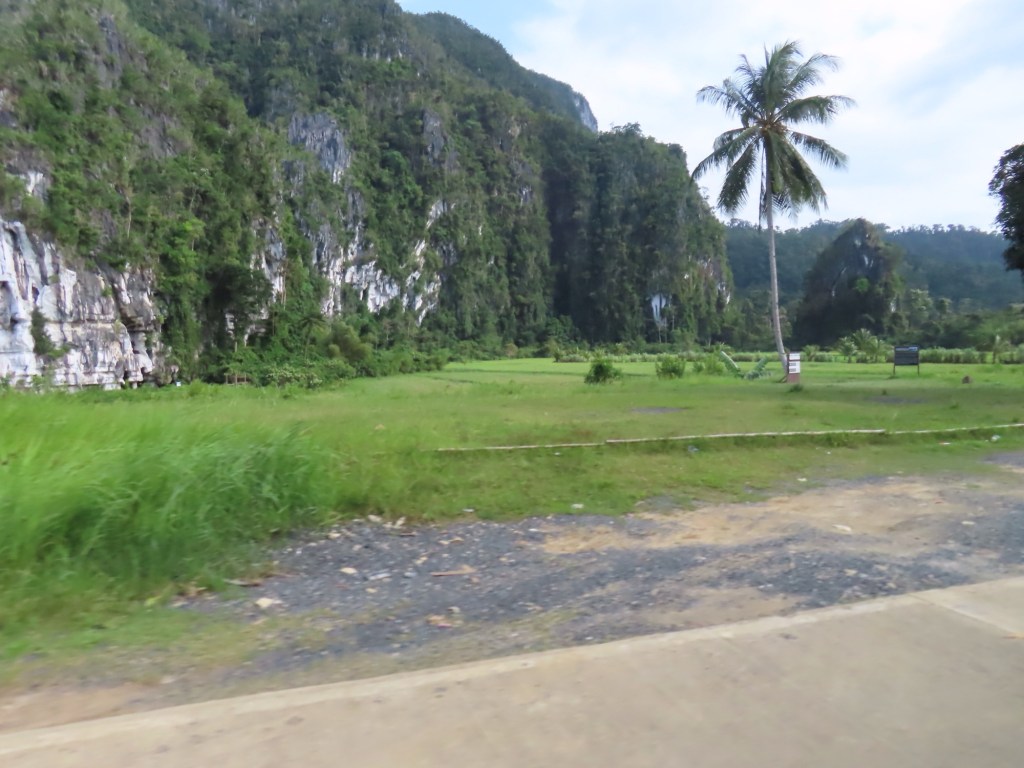
Destination is Saint Paul Underground River. It’s an hour and half drive to get to where we get a boat to get to the river. While waiting for our boat, the only food offered here is seafood. Lots of vendors trying to sell pearls that we all feel were fake. The part of the river that we going to explore, is 1.5 kms in length out of possible 8+ kilometres. The ride to the river is on a very noisy motorized boat. 

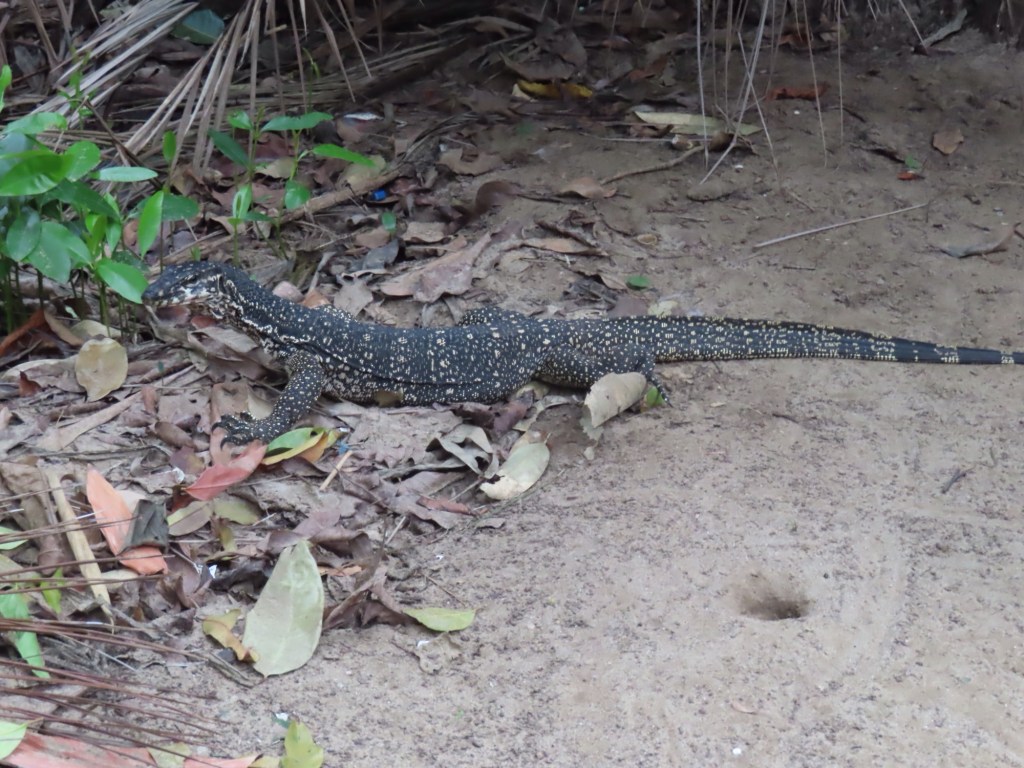
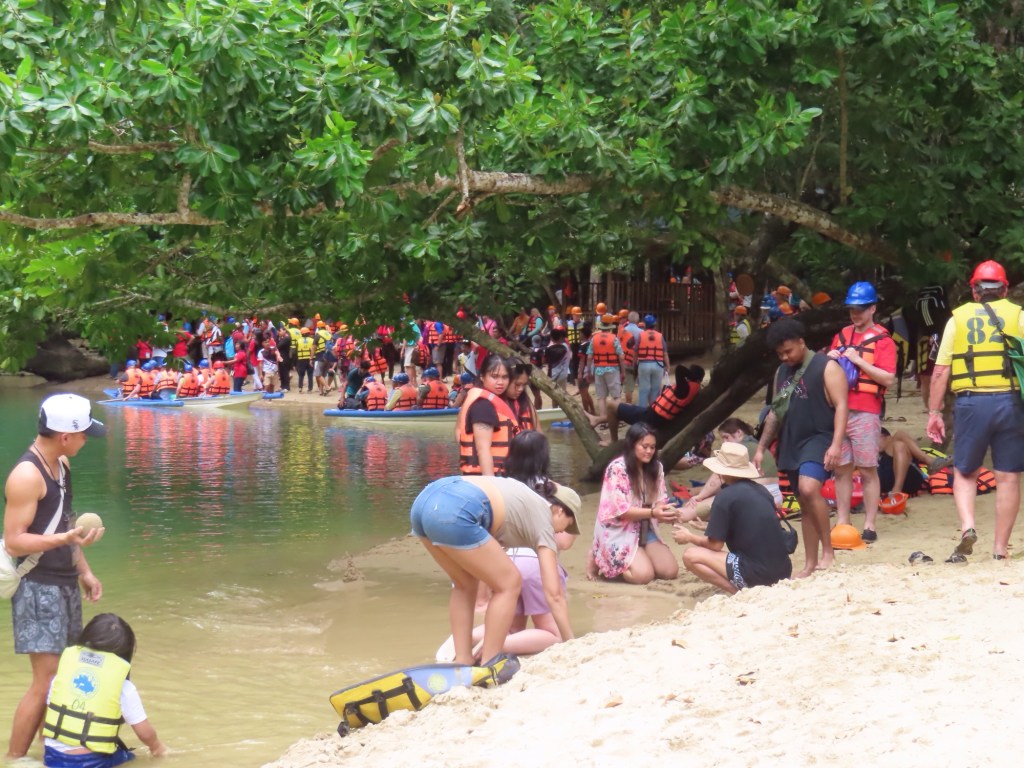
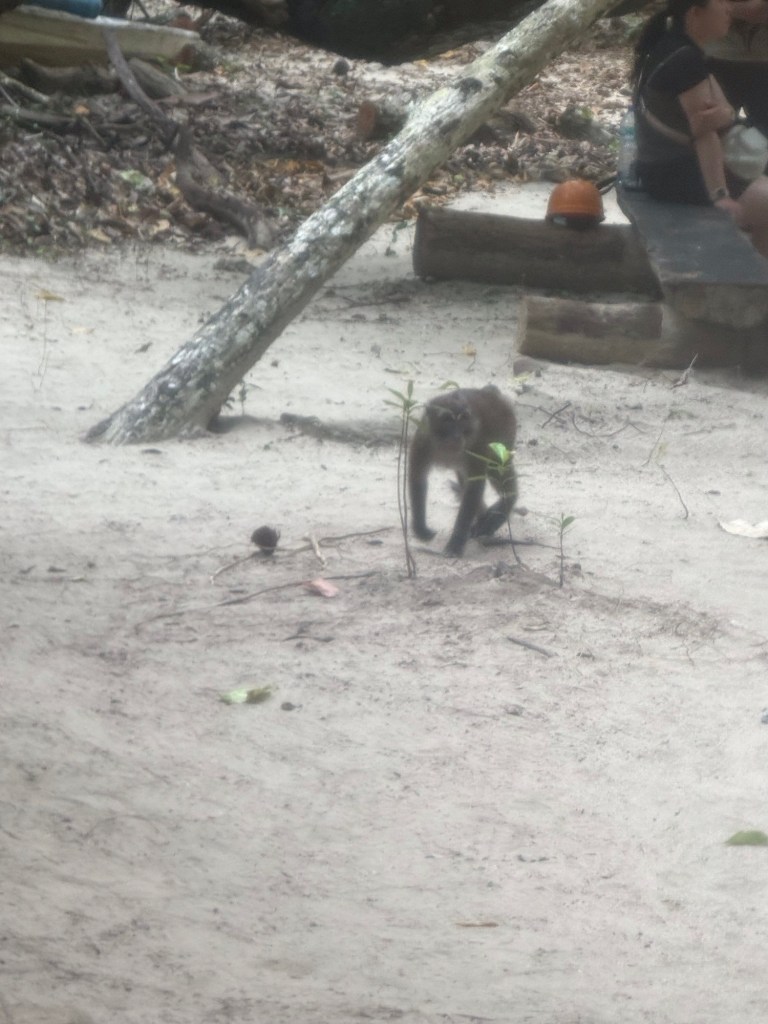
Once at the river, there is to be no smoking (not that we do that anyway) and there is no swimming in area. There are monkeys so no eating or having packages that they will grab from you. We all have to wear hard hats to protect us from the poop from the bats…. Oh and don’t open mouth when looking up…. Lol!

Day 28-Feb 23/25-Boracay Island, Philippines

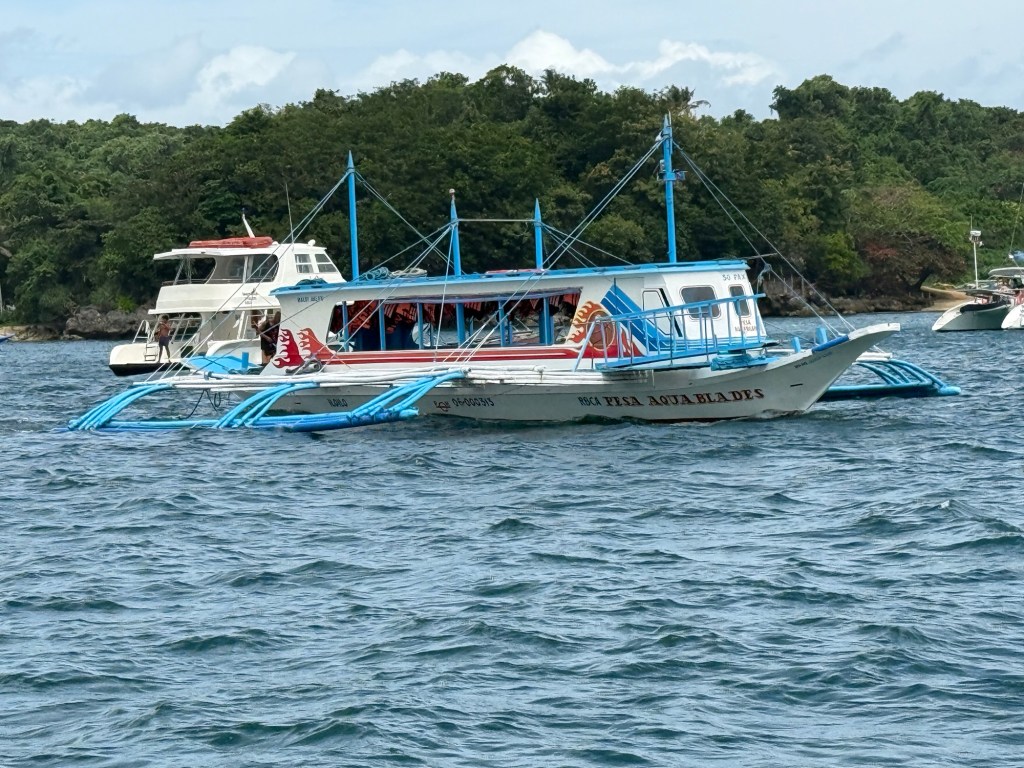
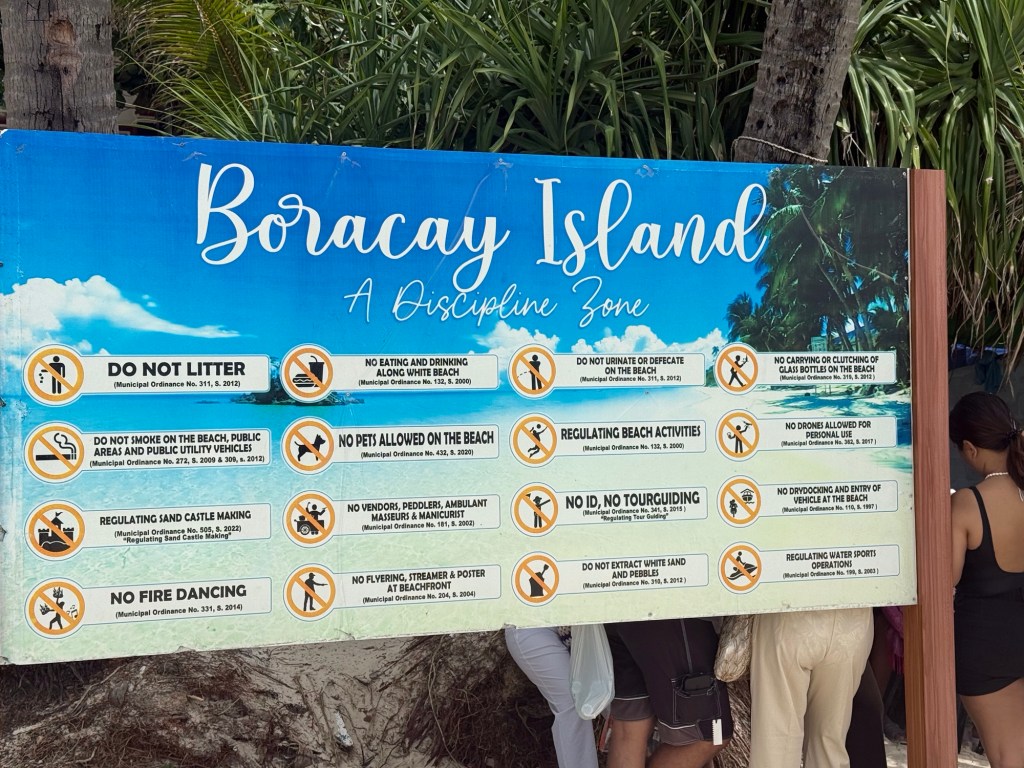
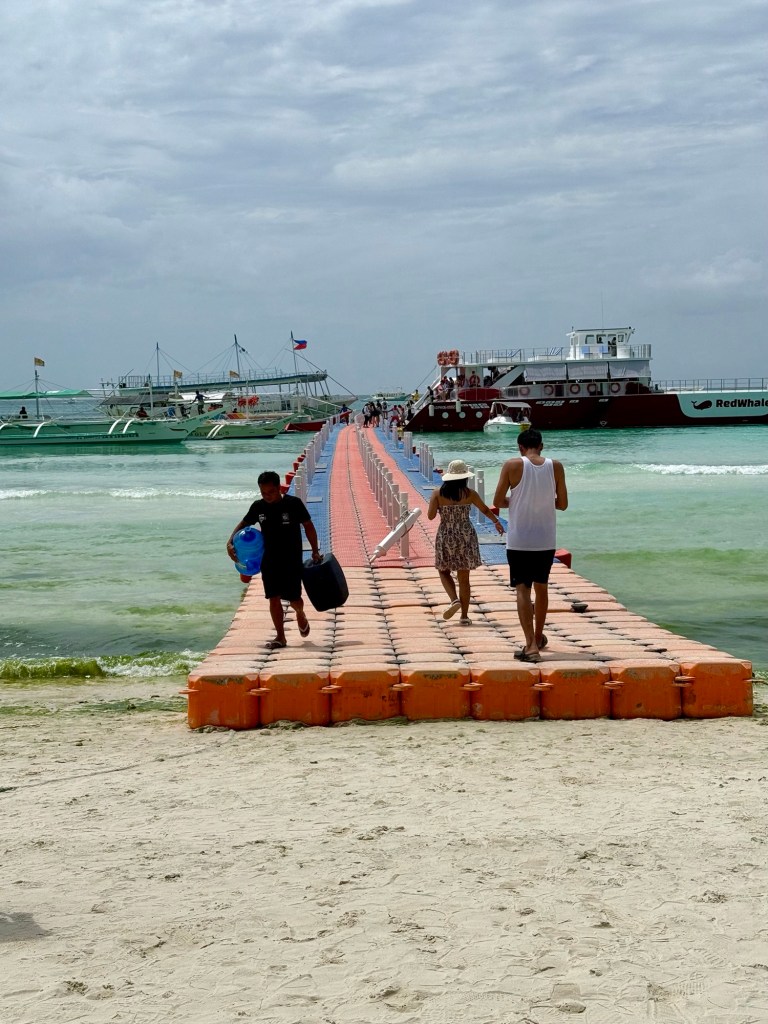
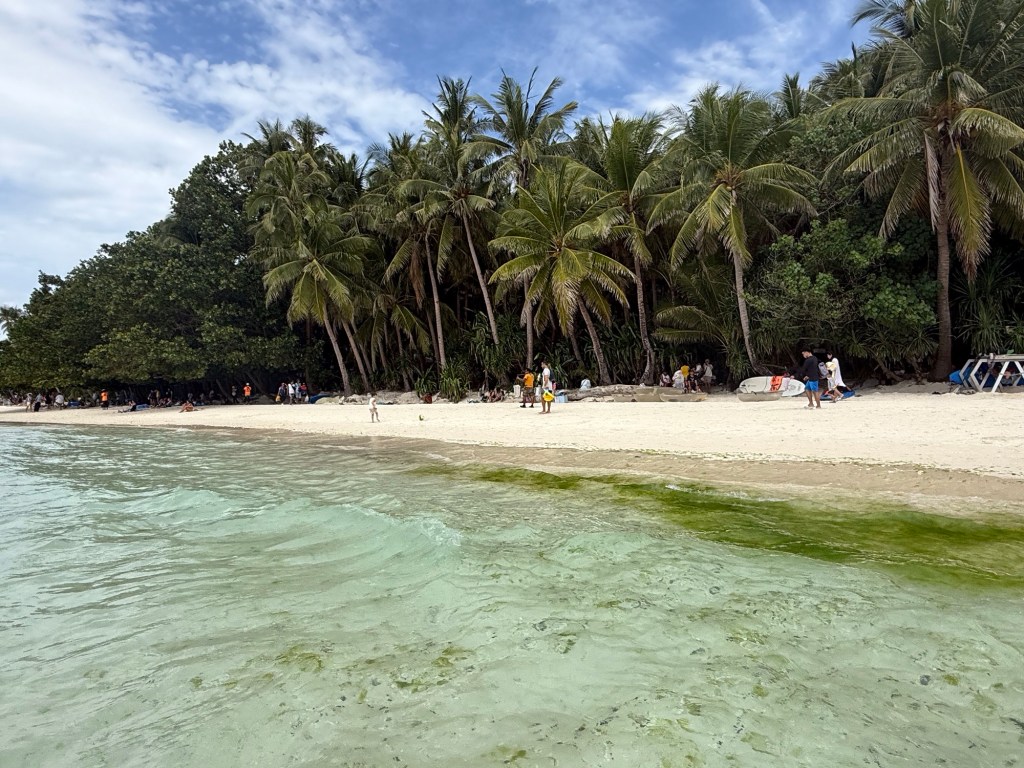
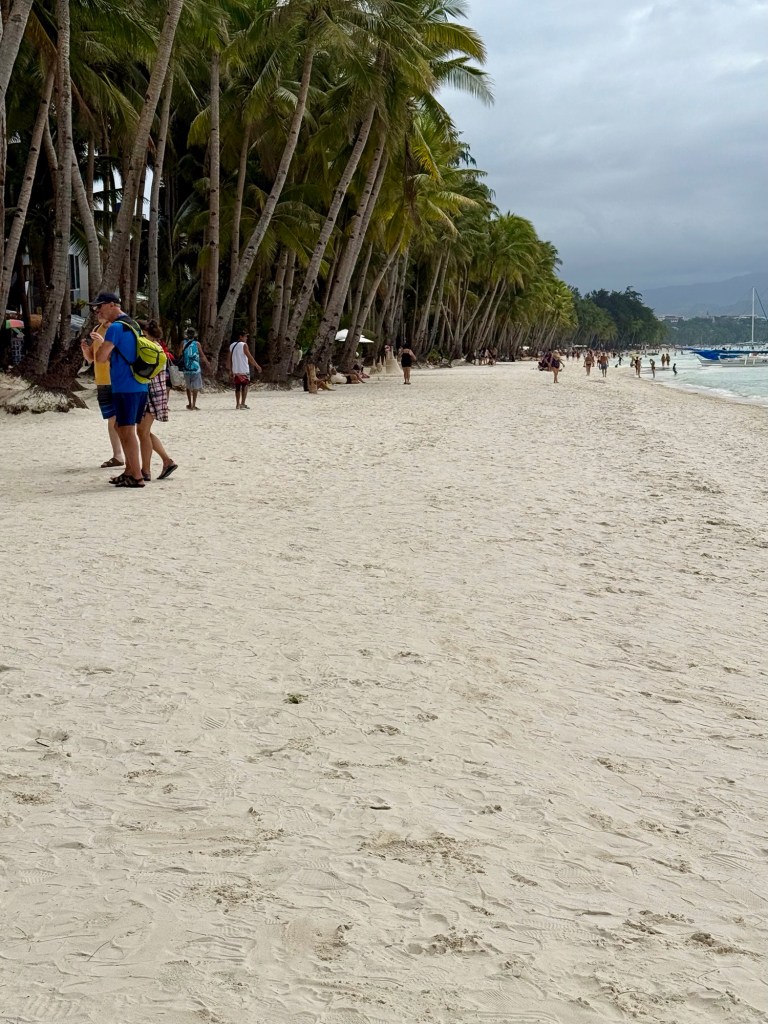
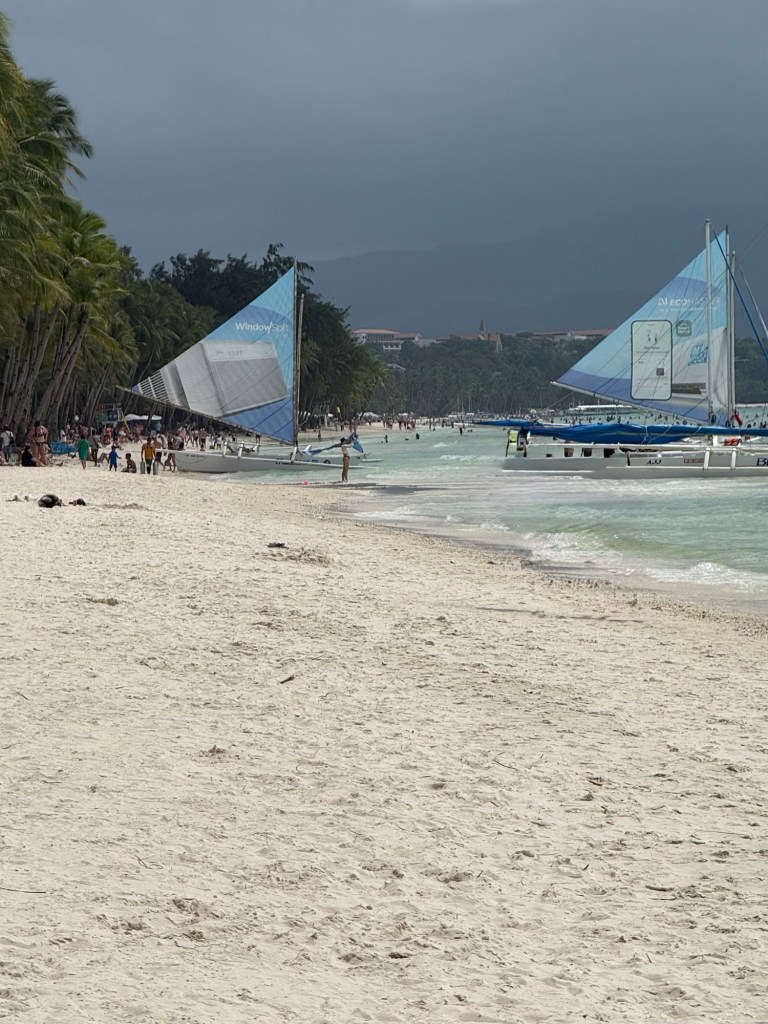
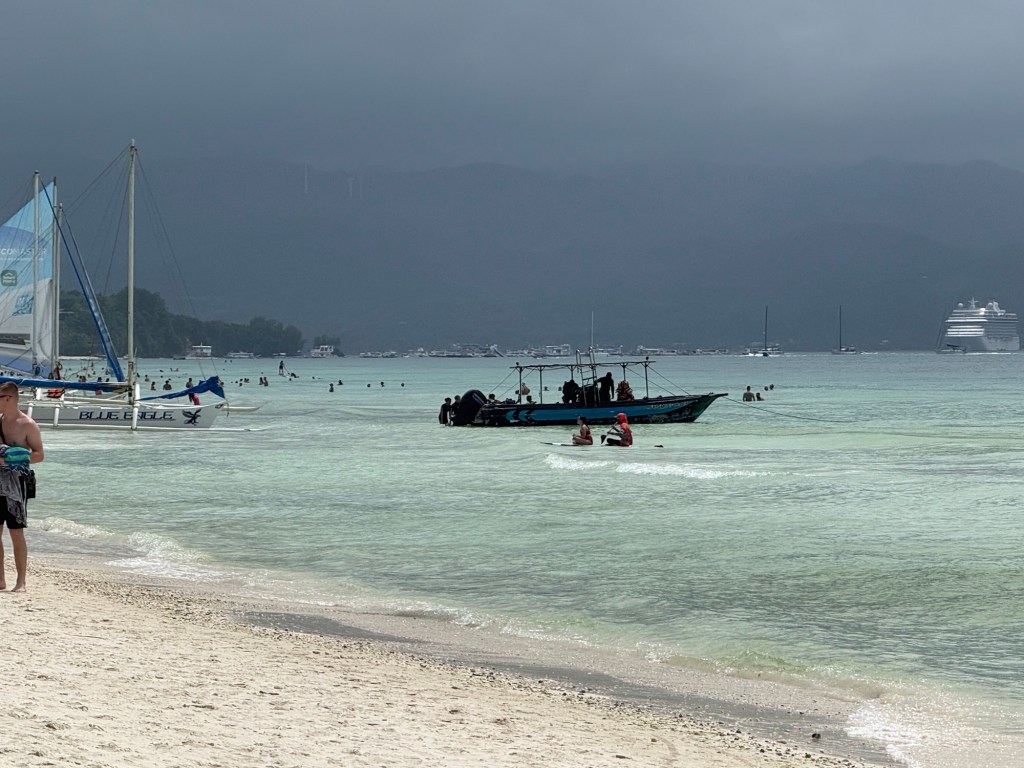
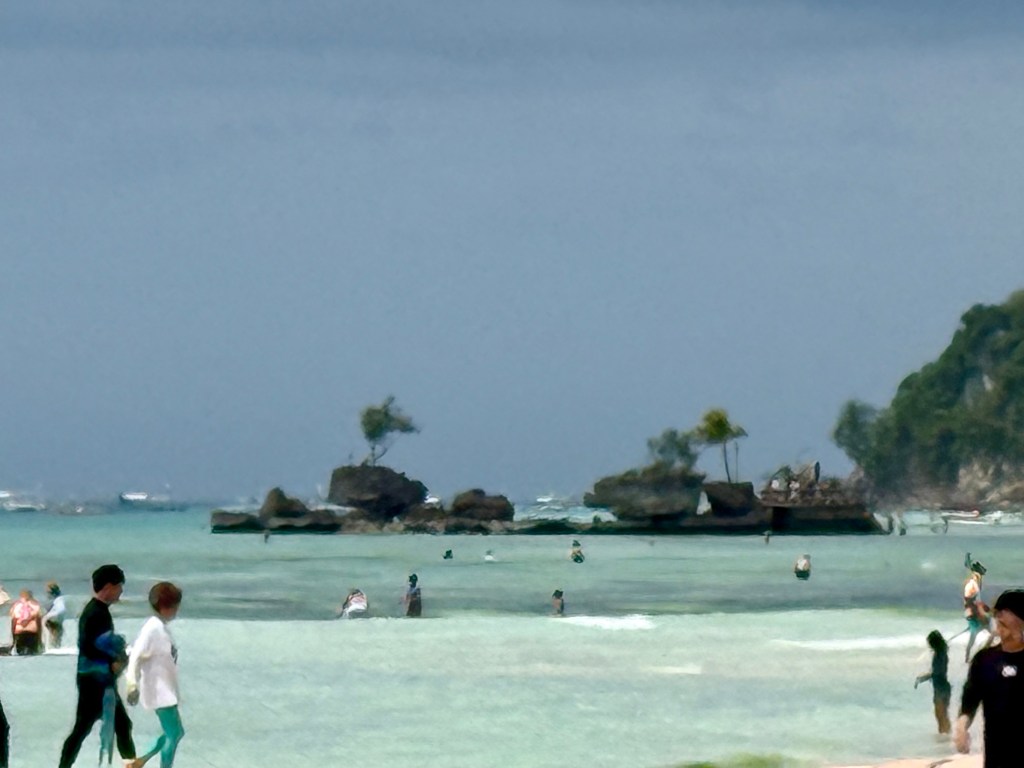
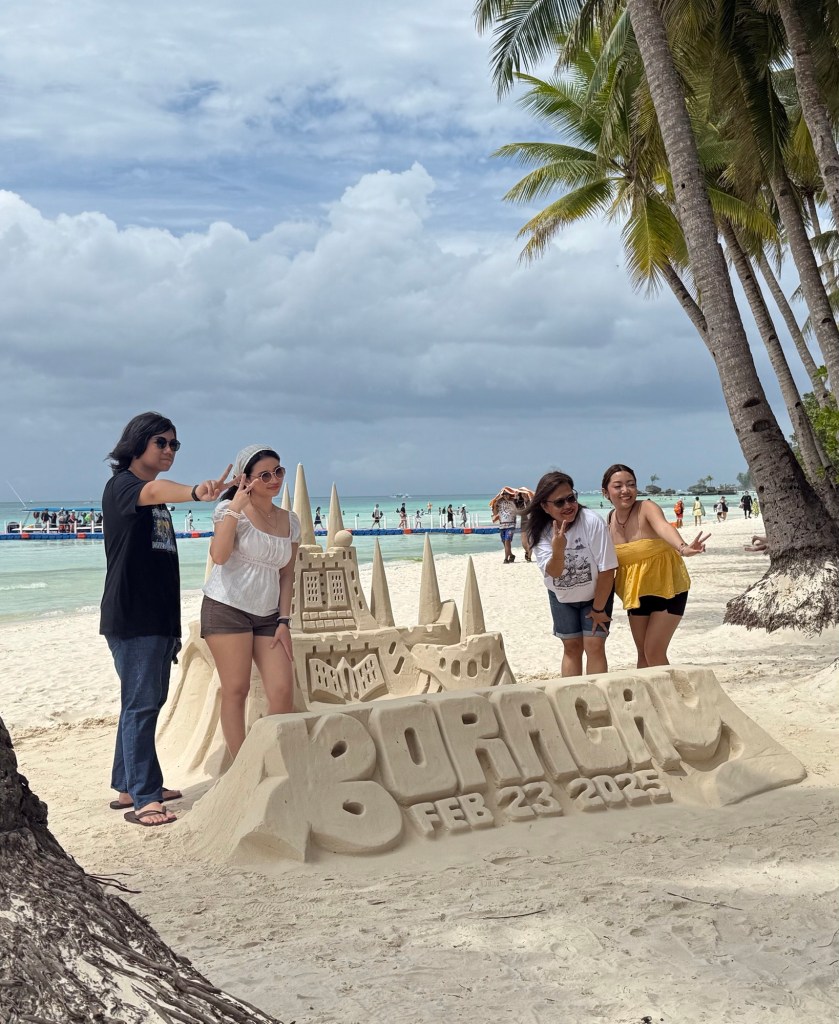
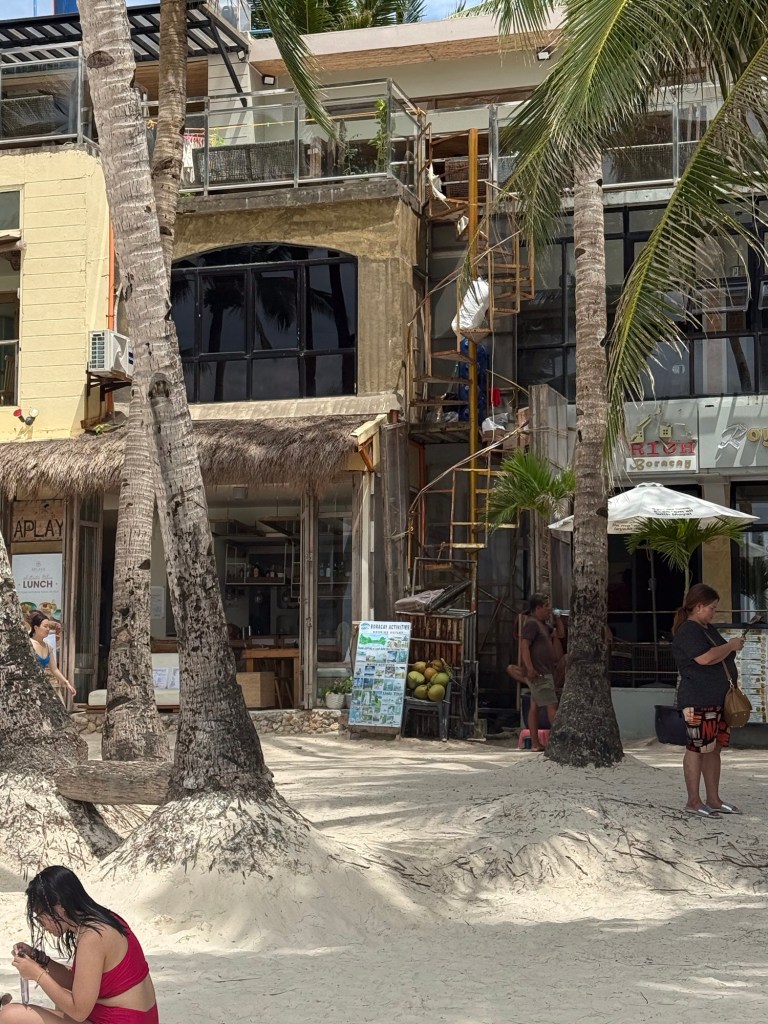
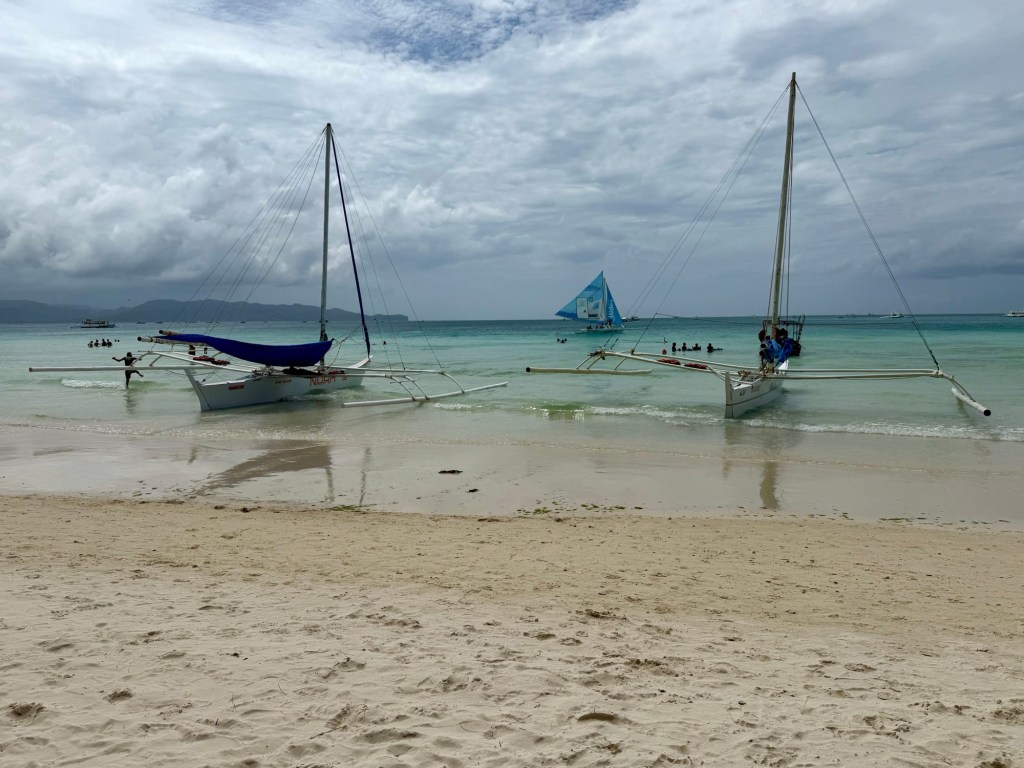
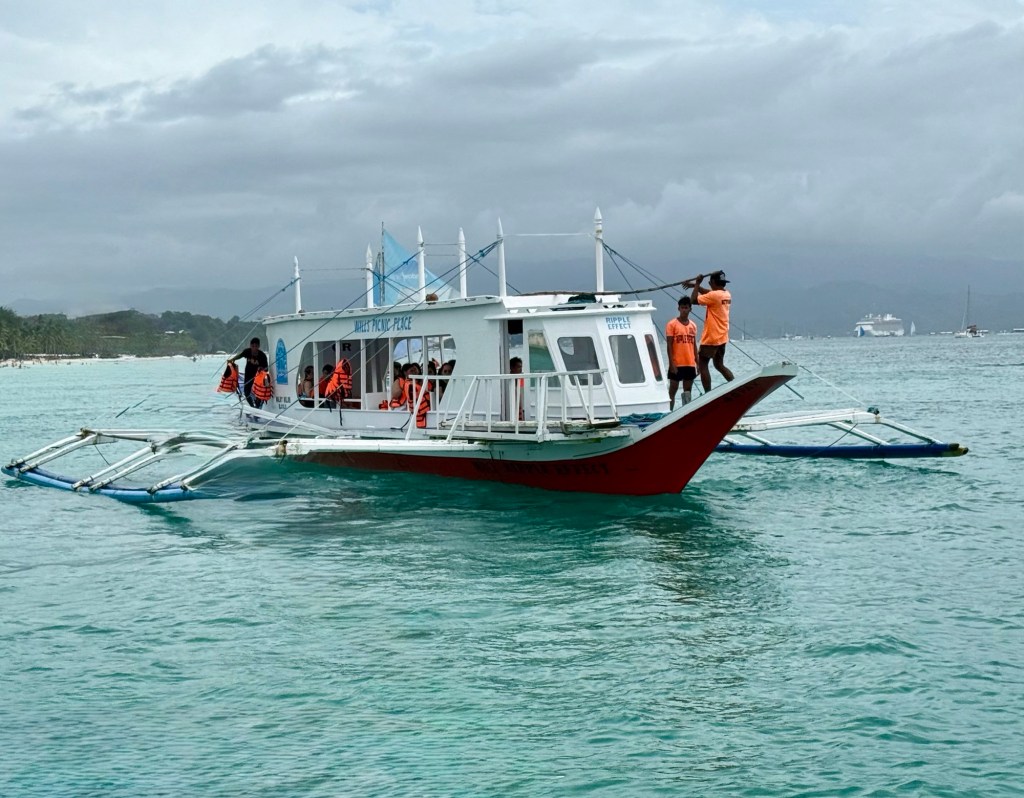
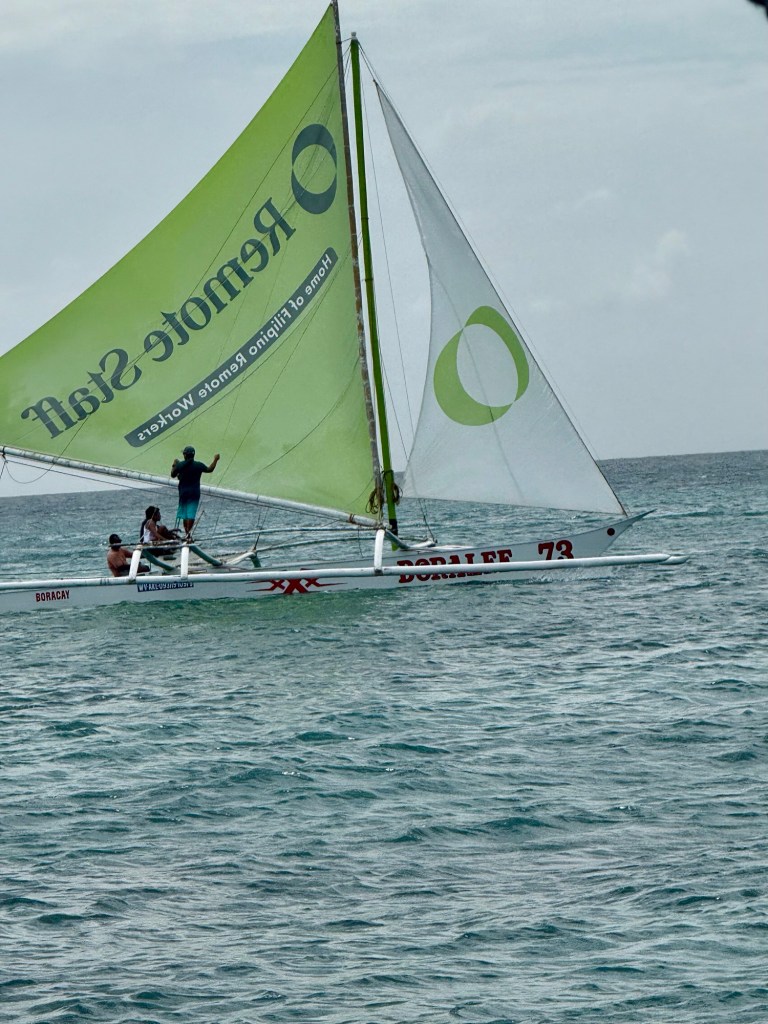
We went to the beach on Boracay. Wow…. !!!!! Pure white soft sand, beautiful turquoise waters. First and lastly we arrive to and from the island by tender. It was quite the thrill getting on and off. As a matter of fact, the ship cancelled all tender departures for a few hours in between cuz it was too just dangerous. 

I had expected to be able to snorkel but there was only very shallow sand ….. no coral and no fish. 

Day 26…Feb 21/25-a port talk of the Philippines

I am now back home so am able to post the pictures I could not during the cruise.

The Philippines is comprised of 7000 islands. It is very Catholic ….religious. 82.9%. Ethnicity… from China, Vietnam, Brunei & Thailand. Manila (15 million)is on Luzon. It is the size of Montana but with 120 million people. The per person income is only 2-4$ USD/day or 1400 USD PER year….pretty darned poor. Focused on education.. … everyone has access to education. English is spoken /taught from an early age. Most are trilingual. 92.2 % speak English.

Spanish influence (gold was what brought them here. There was more gold here than in South and Central America).

Three island groups….Luzon (Manila), the Visayas (Boracay), and Mindanao islands groups ….. Palawan Island(Puerto Princesa). There are 200 + active volcanoes with lots of other natural disasters

Did you know the Philippines flag can be hung with red on top and blue on bottom in times of peace and blue on top and red on bottom in times of war… hmmmm!

Day 27- Feb 22/25-Manila, Philippines 

Emma is our tour guide

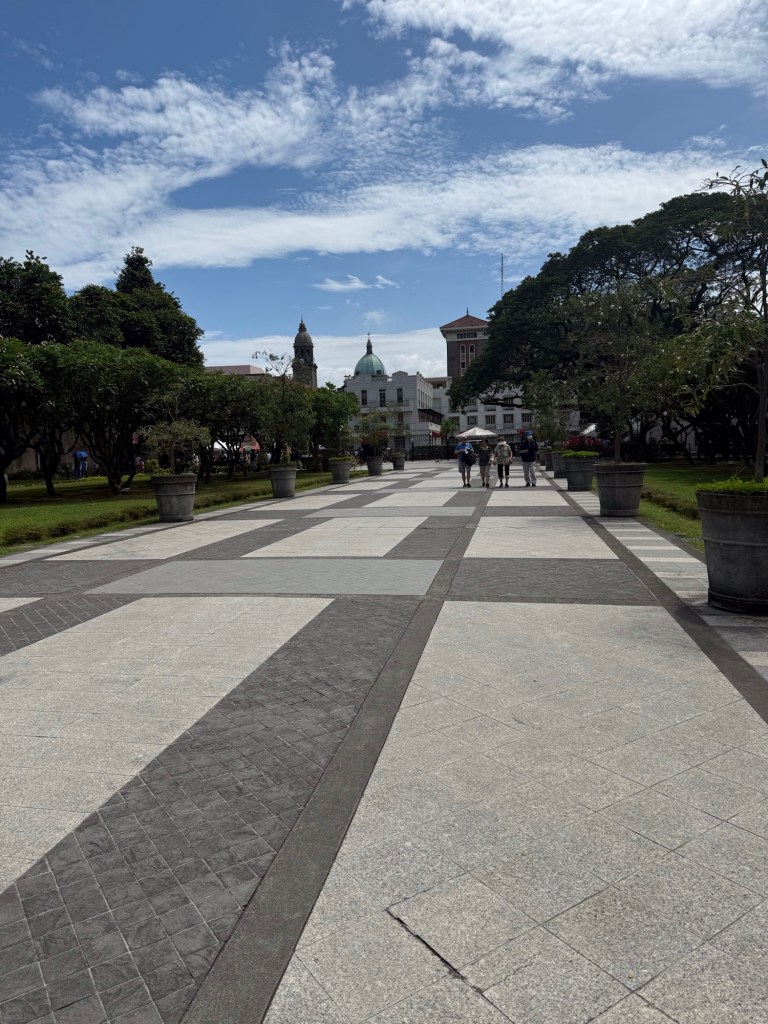
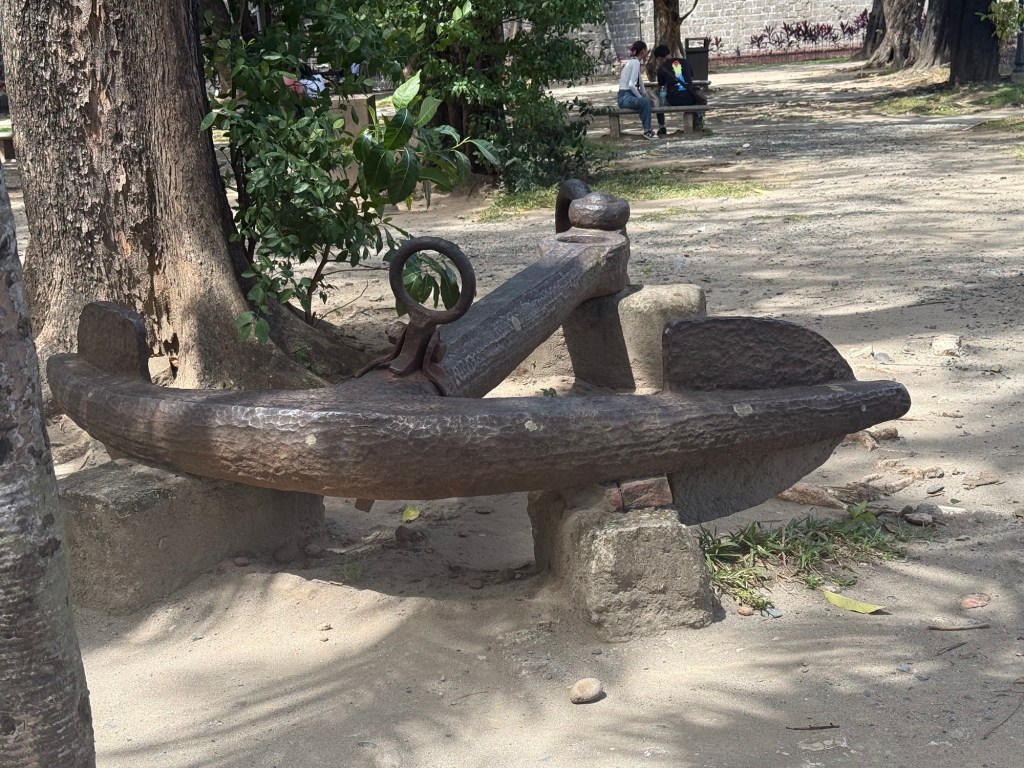
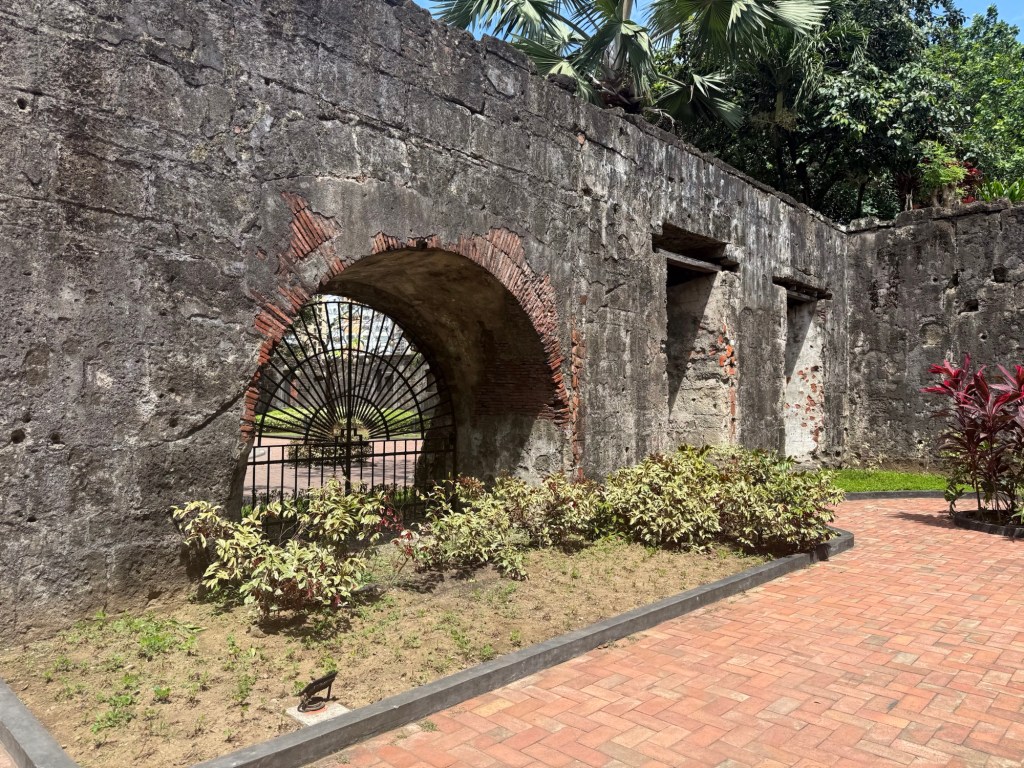
“Intramuros”…is the name of the old city. Intramuros  “Intra” means inside and “Muros” means walls….meaning inside the walls…. Is the old part…. Spanish occupation since 1561.

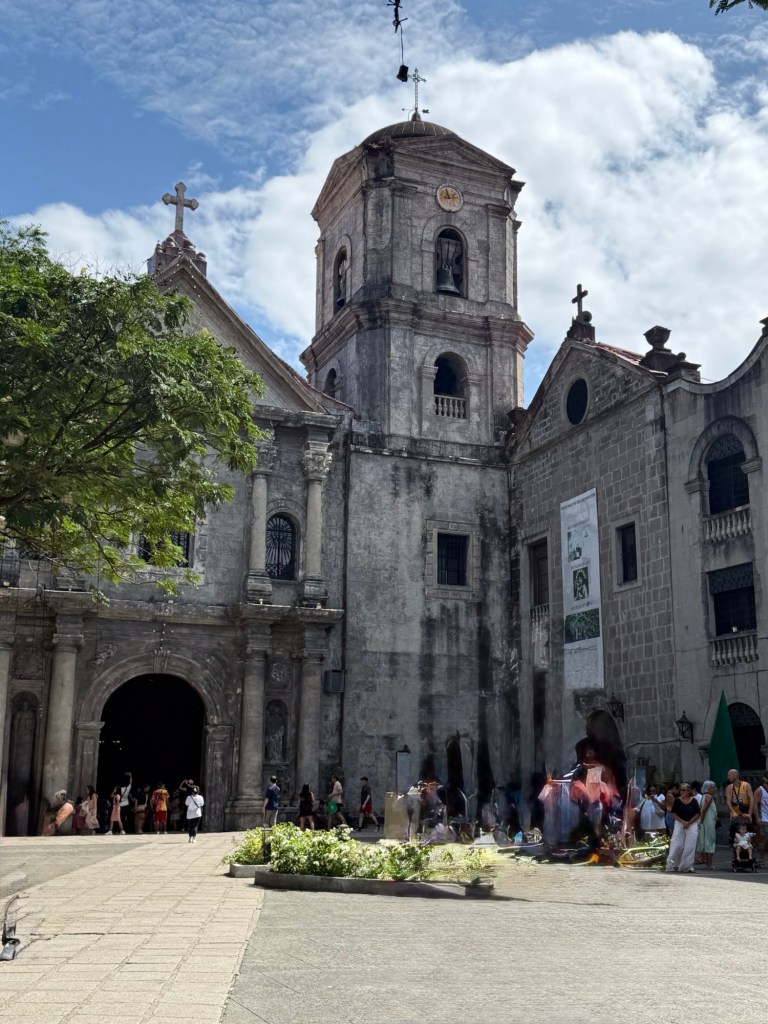
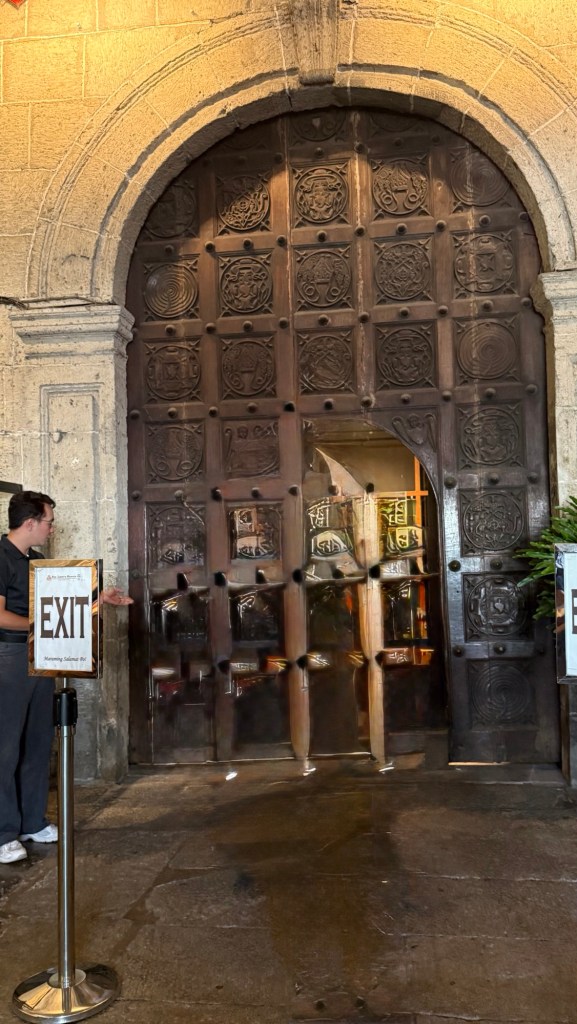
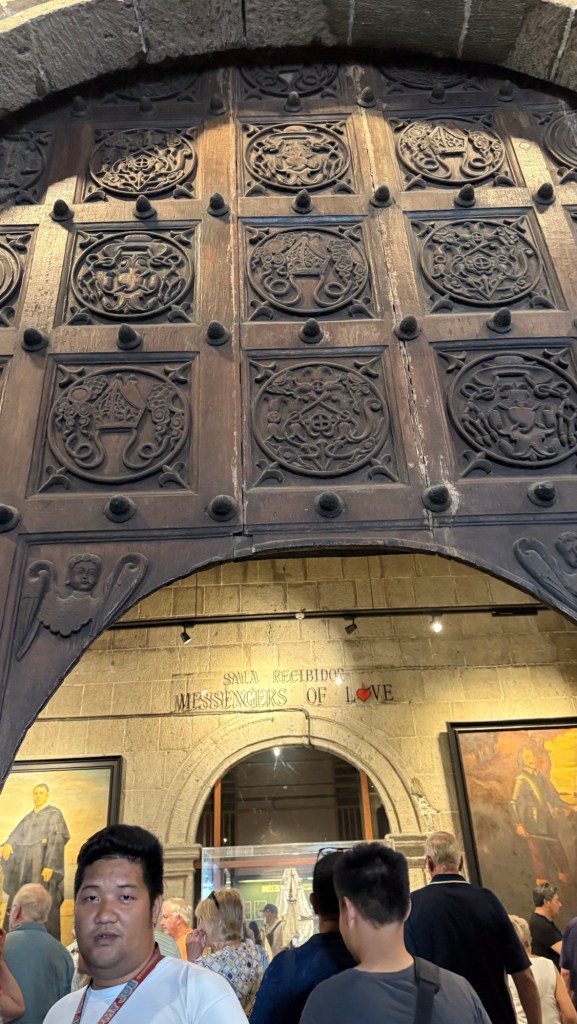
St Augustine church is the oldest church in Philippines 

Manila is made up of 16 cities and 1 village. It has the biggest and oldest Chinatown in world. The population is made up of Chinese, Malay, American, Indian and original natives called Nagritos. Pinoys (are Filipino boys, Filipinas are Filipino girls) and chinos (mixed race of Chinese/Filipino).

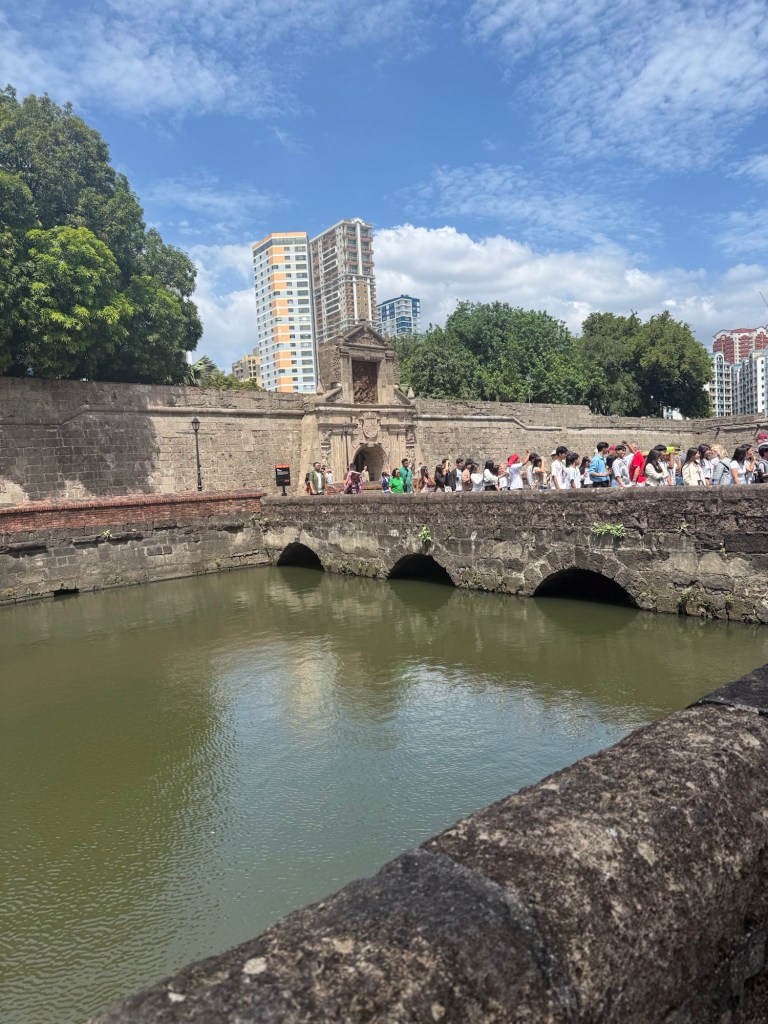
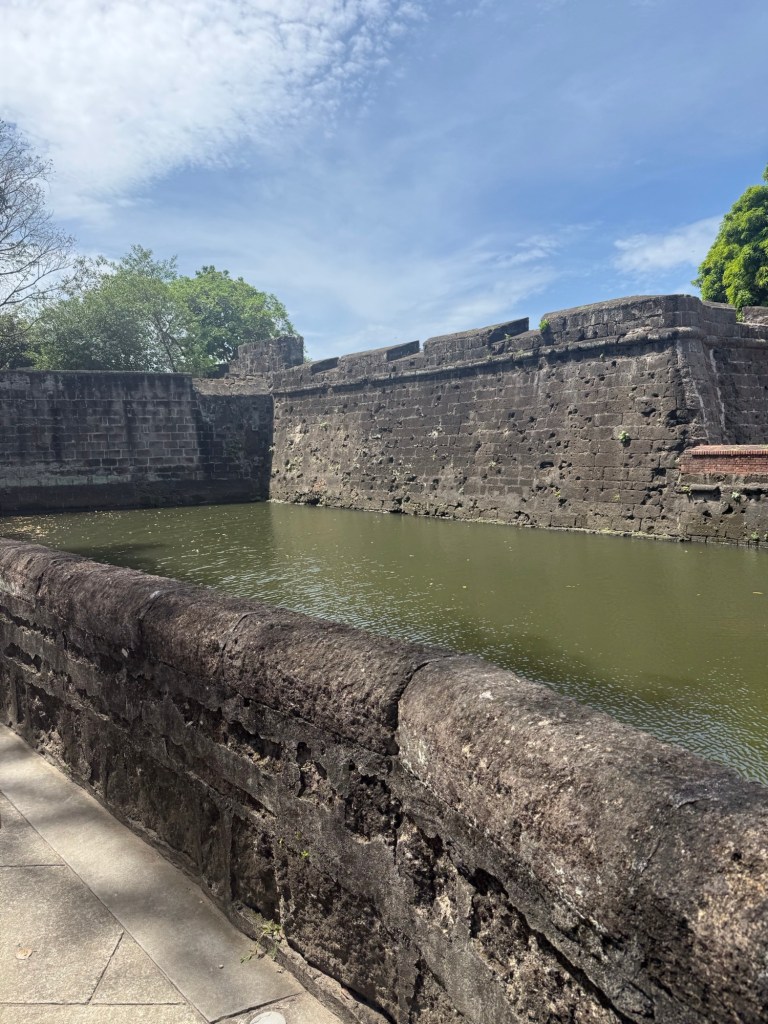
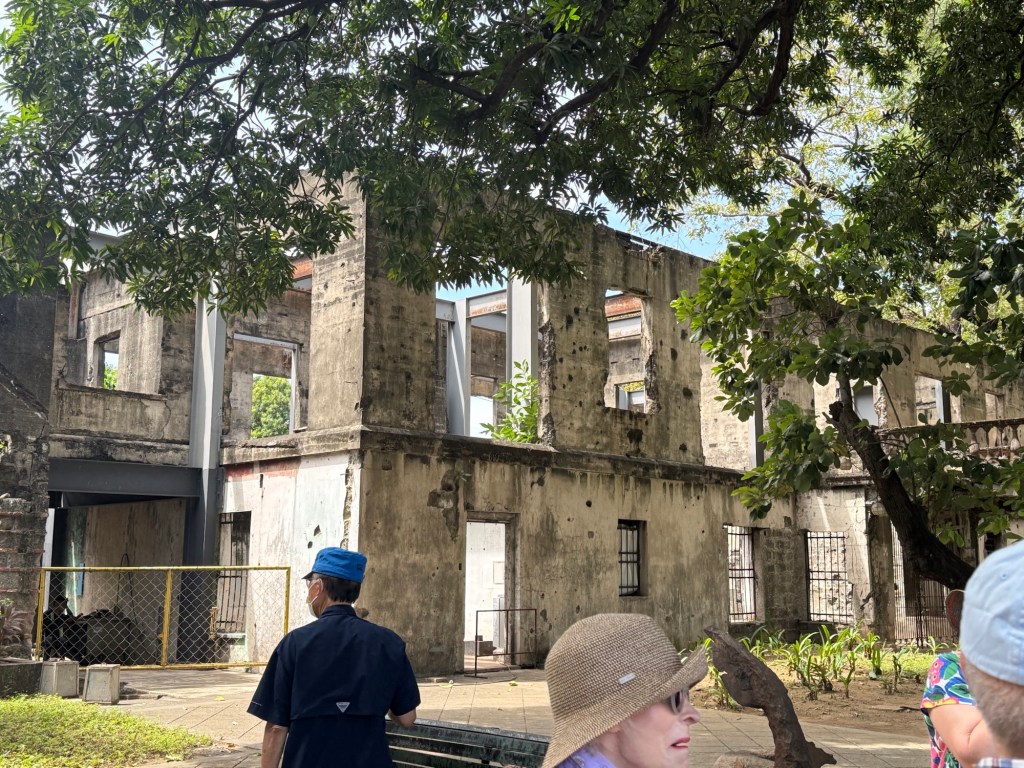
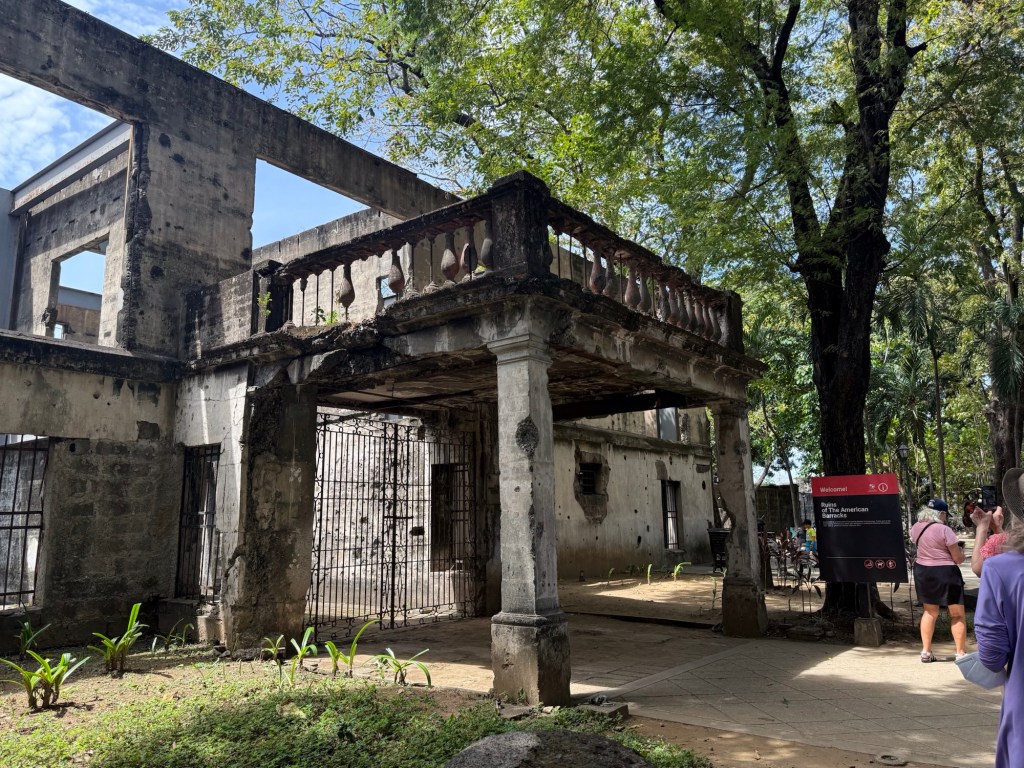
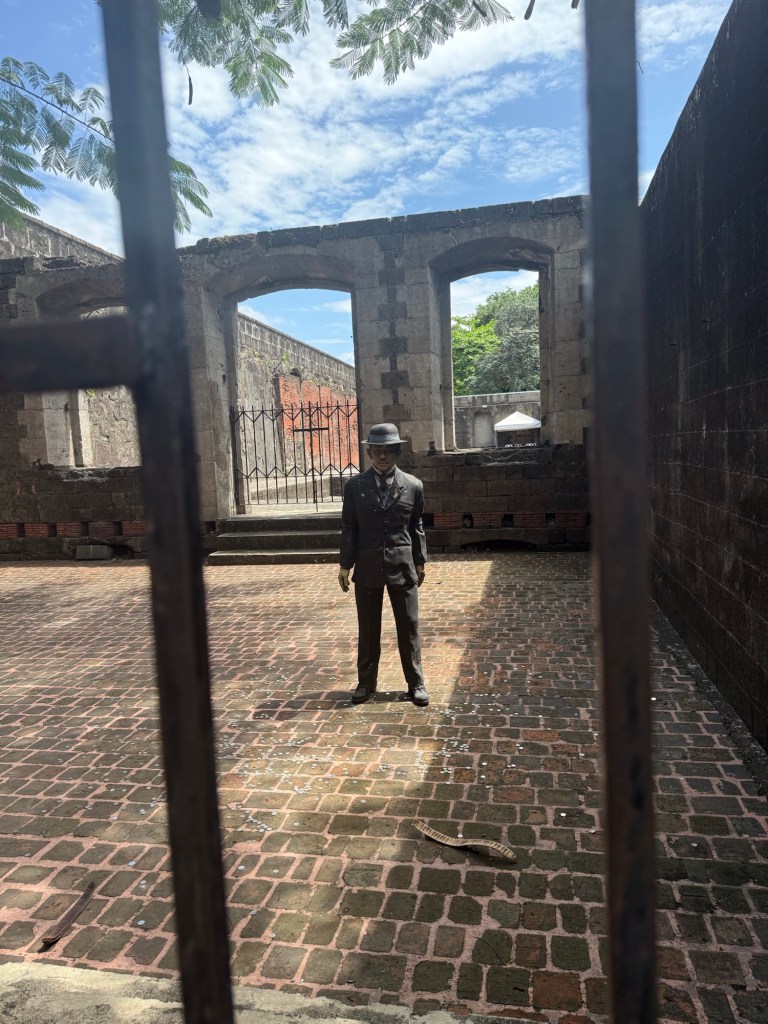
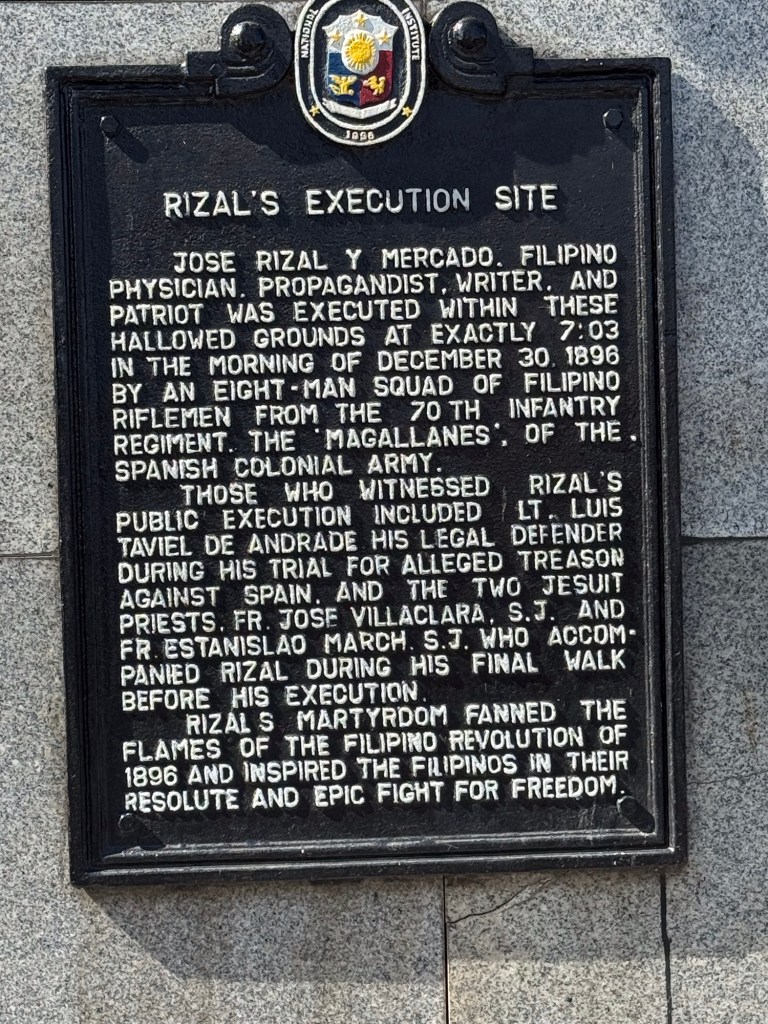
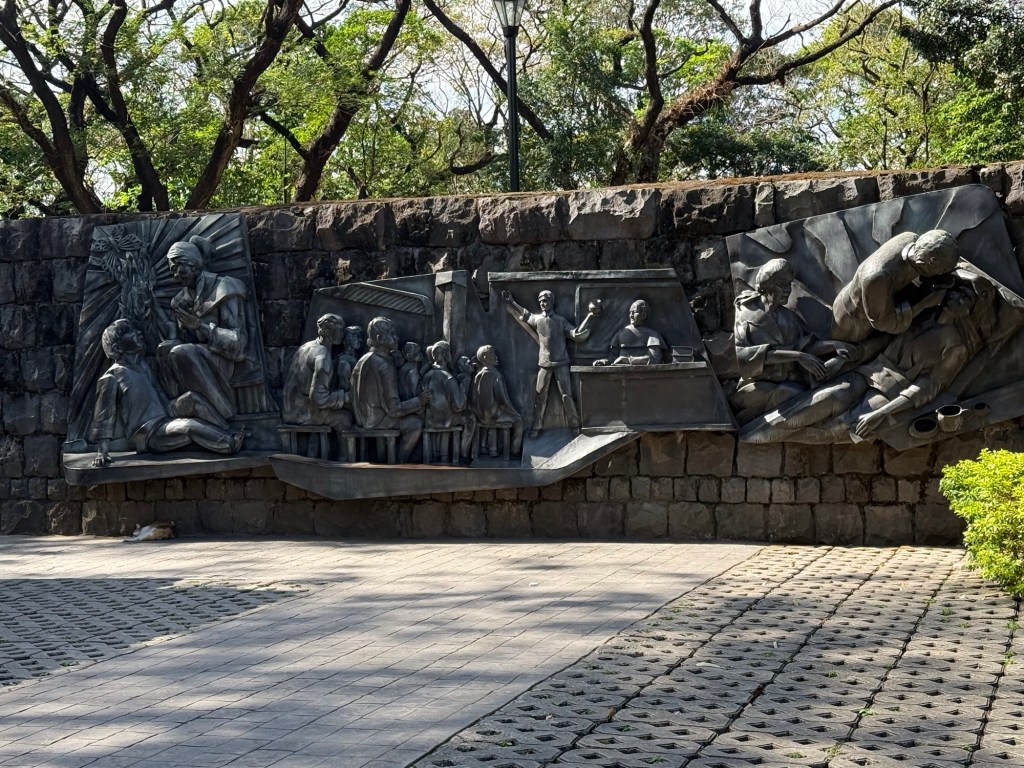
Fort Santiago was the first line of defence. British occupied the Philippines first, then Spanish (for 330 years), then Americans, then Japanese, then Americans again. The 2 seasons are dry/dry and then very wet. May is the season of typhoons…. They hit here 1st. Most buildings are made of volcanic rocks. The fort stood for 245 years then was was destroyed in 10 years of war. 
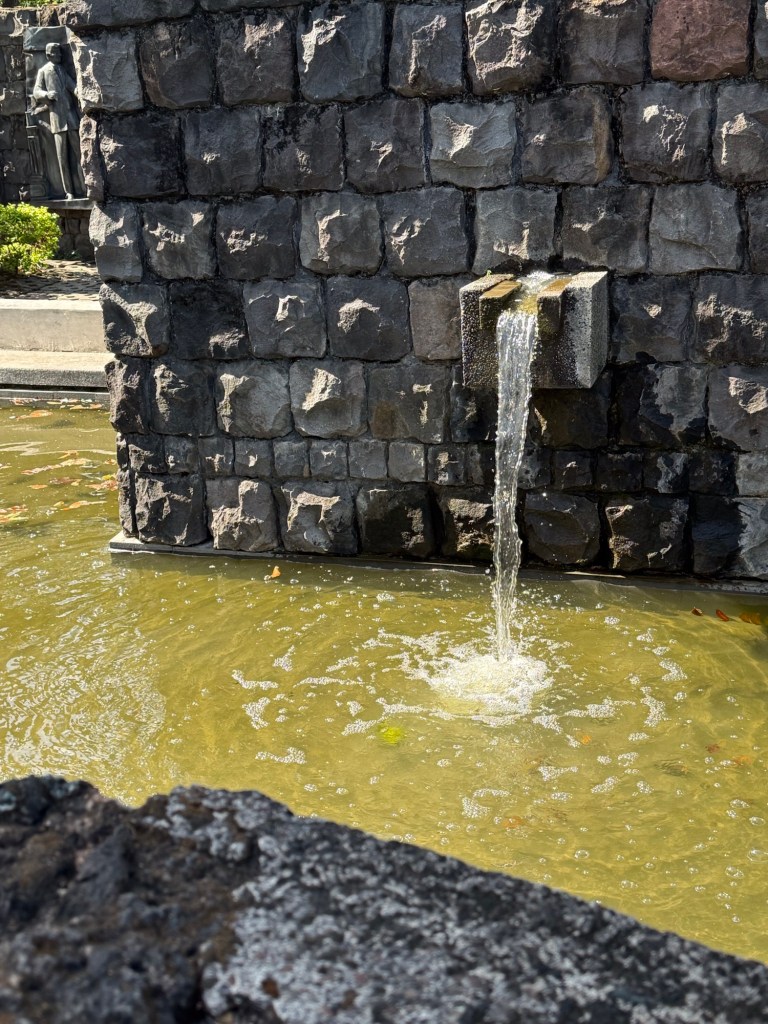
When the Americans came they eliminated all standing waters and made a golf course (Intramural golf course is reclaimed from the moats surrounding the fort) except for this one moat because they wanted to destroy malaria by getting rid of all standing stagnant water. 
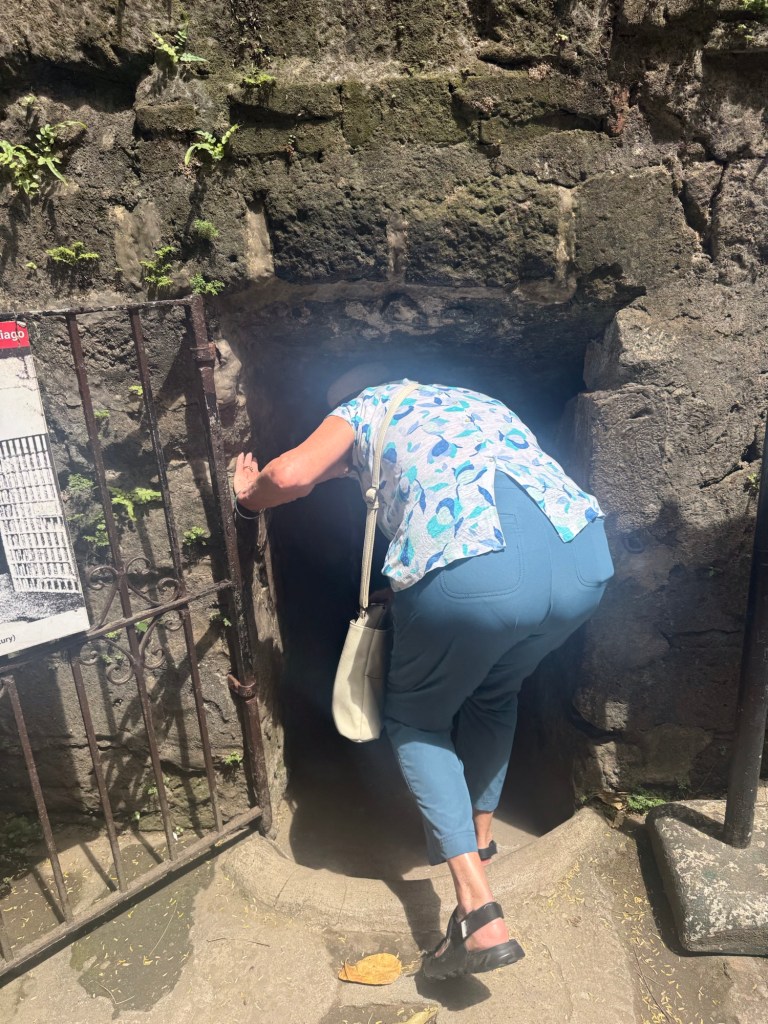
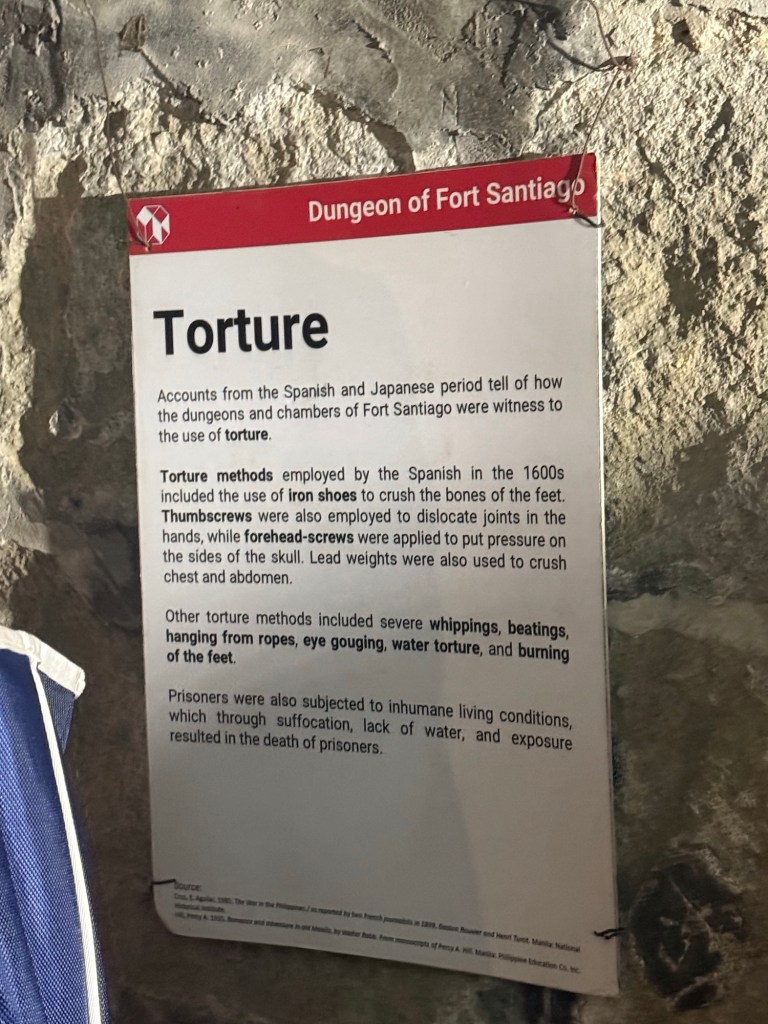
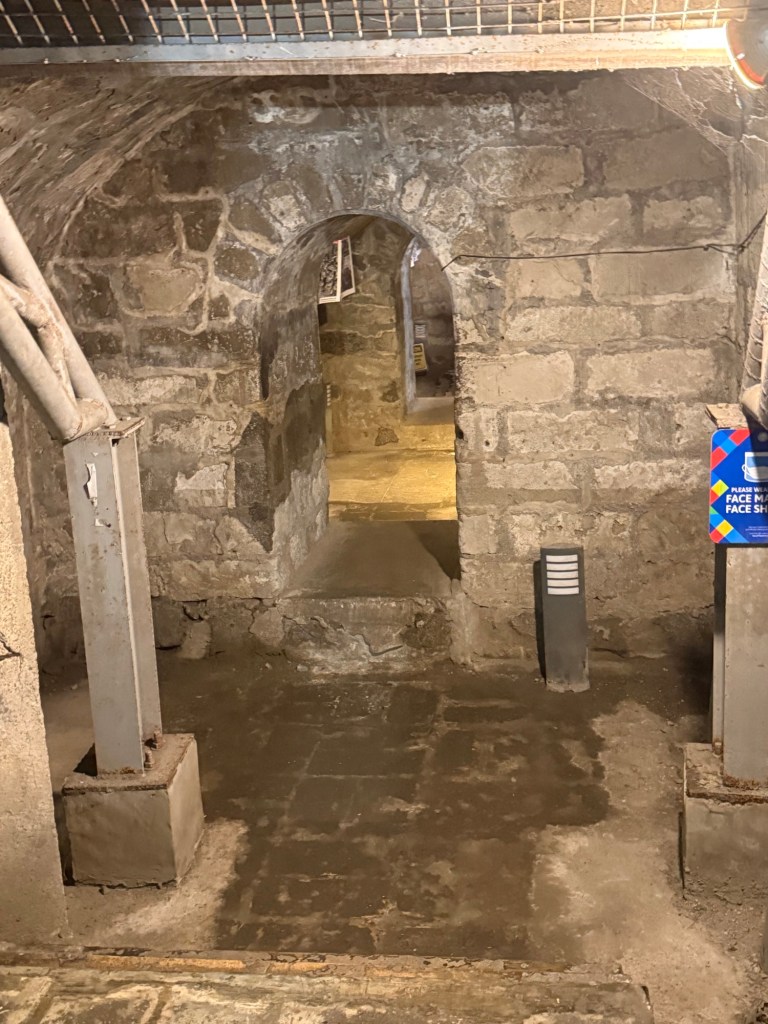
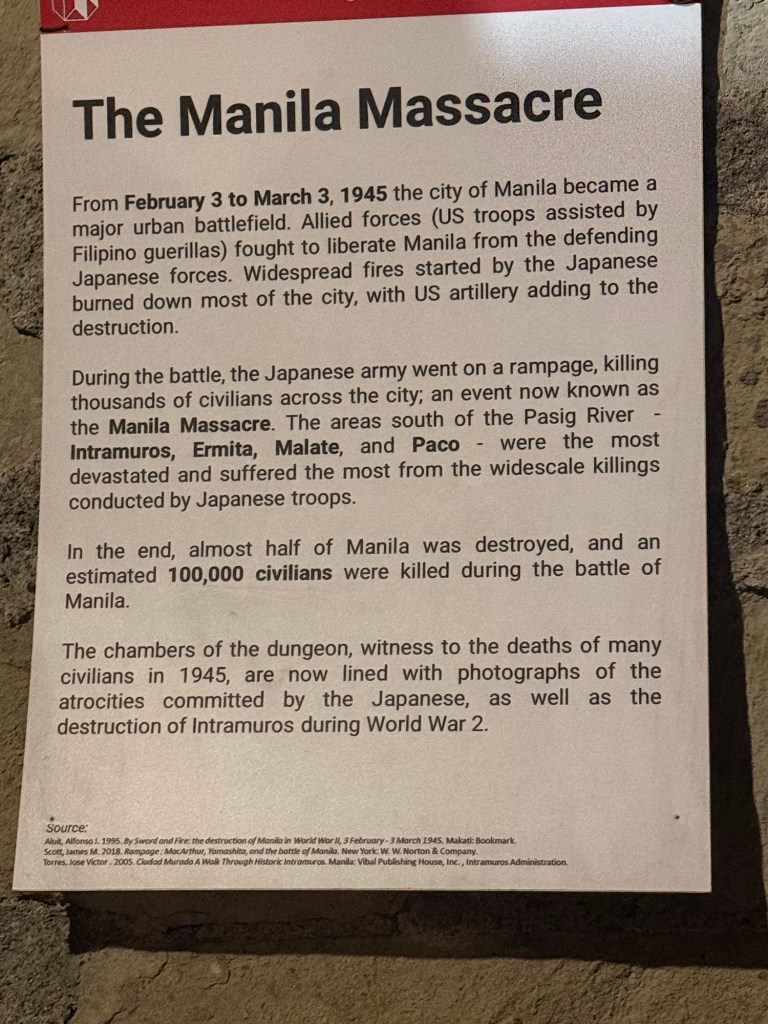
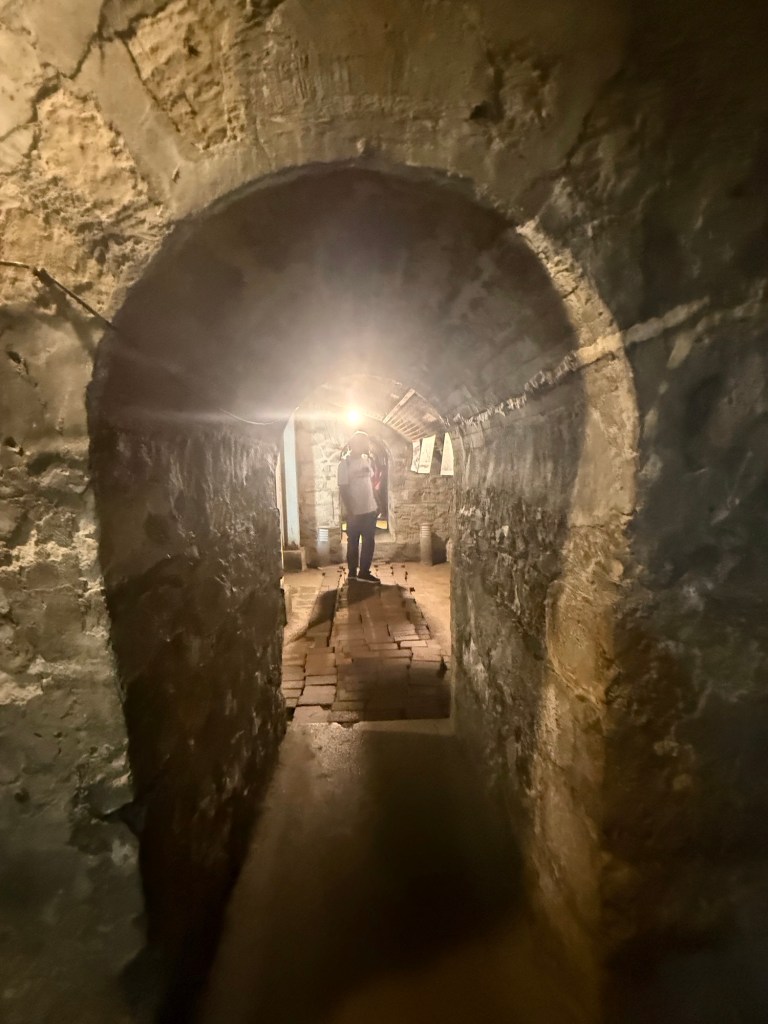
Outside the dungeons were found bodies…. They died from suffocation from lack of ventilation, food poisoning during the Japanese occupation. 

Imelda Marcos  1975- was all about rebuilding 

Plaza Roma…..1611….. oldest university

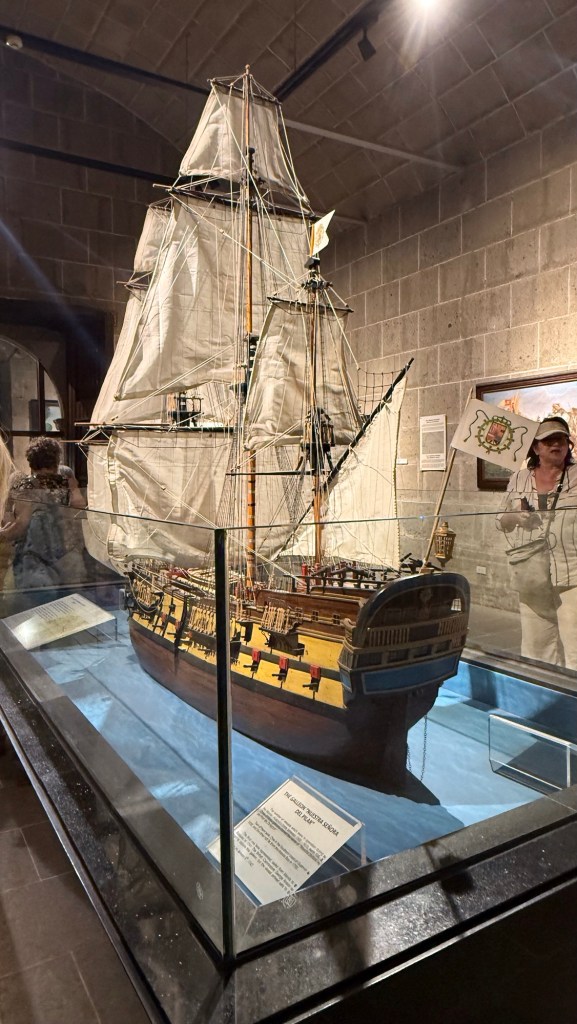
St Augustine church next …. 600 bomb deaths outside but those inside were protected by the Americans in 1945…. Now, when it was rebuilt it became a museum. Former convent is now the museum

It is built in Baroque style. The only survivors of the bombing of Manila were those inside the church. Bell tower was destroyed by earthquake, not the war. 
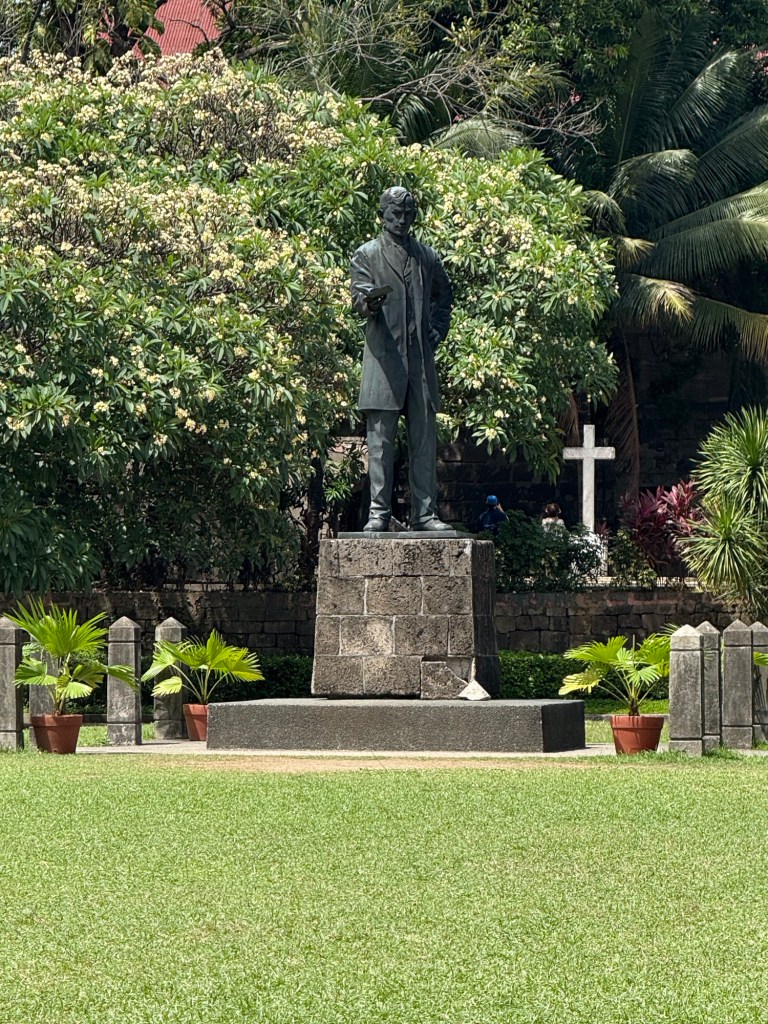
Largest park…Rizal aka Luneta park is 60 hectares in size. 
3 national museums ….. in archaeology, natural history and culture 

Day 25-Feb 20/25- Taipei, Taiwan

Yesterday we were at sea with nothing much to tell you other than the previous night was quite a lot of motion in the ocean…. Had quite a bit of interrupted sleep. 

Guide today is Ada… a much younger gal. Today, we are back in Taipei. It was formerly was called Formosa….( I knew that but had forgotten). It is only 250 kms from China. 

Evergreen, Eva Air, Asus, Tesla (1st 2 motors made here) are all big names in the international business world , golf balls, wet suits, optics in phone cameras…..big industry. They also export dolphin fish, orchids & eels to Japan, “sensei” orchid is like a girl dancing and pineapple & edemane. And a liquor that is 58%… to China (I bought some. It’s kinda like white lightning). Most exports go to US, Japan and China. 

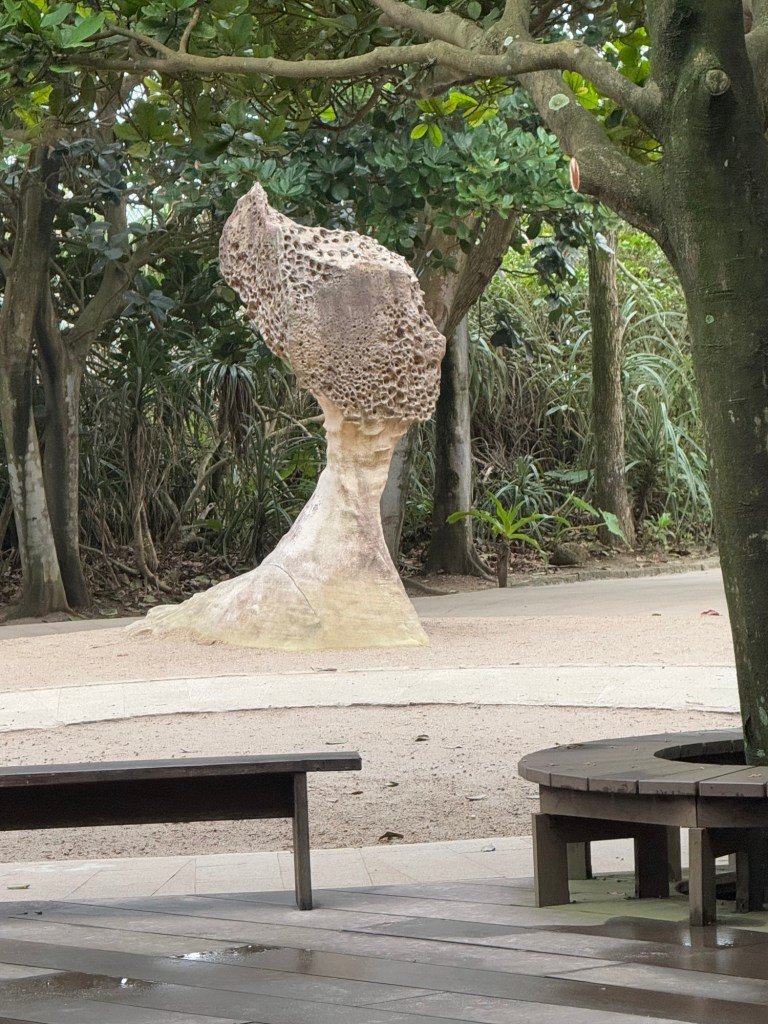
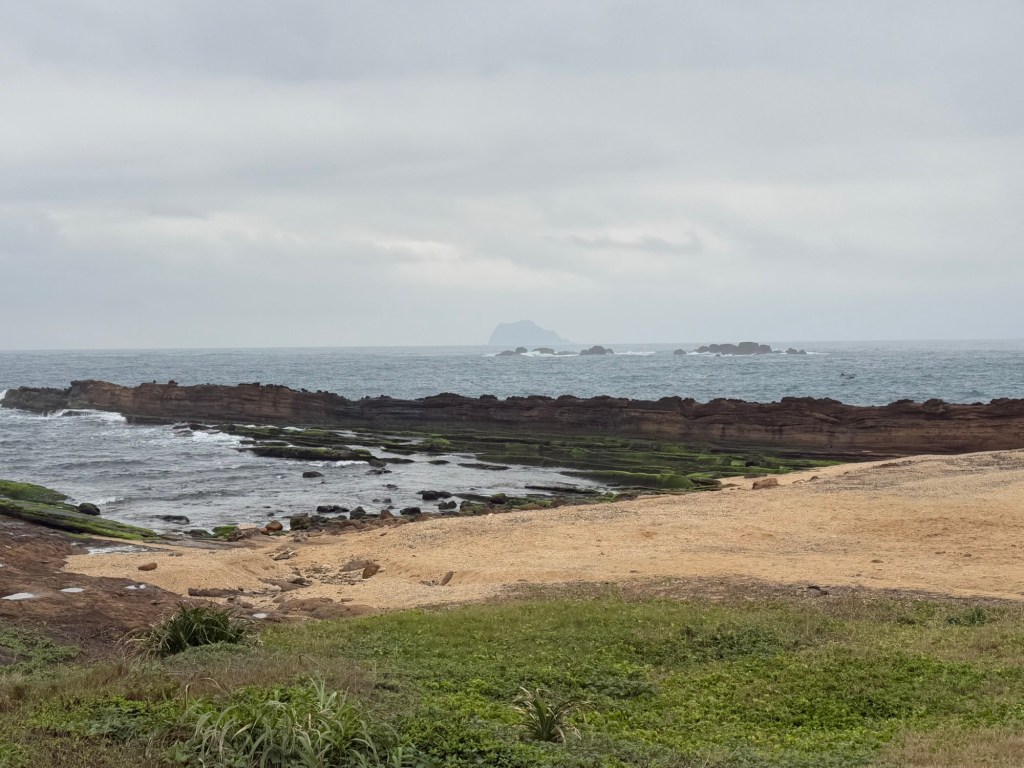
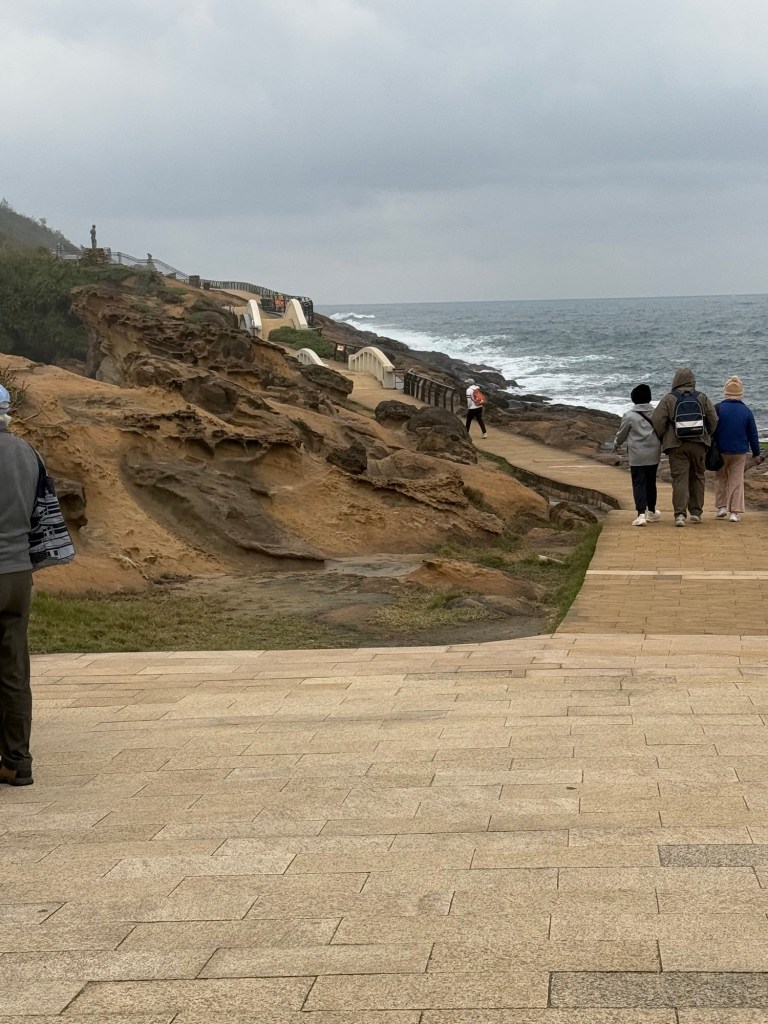
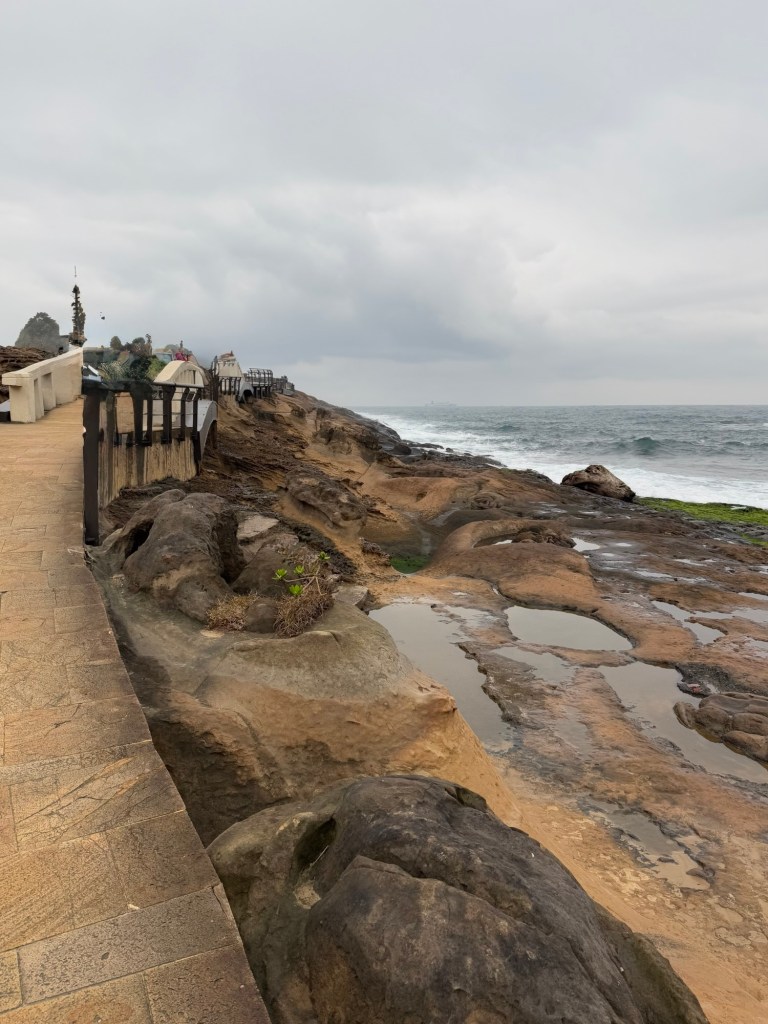
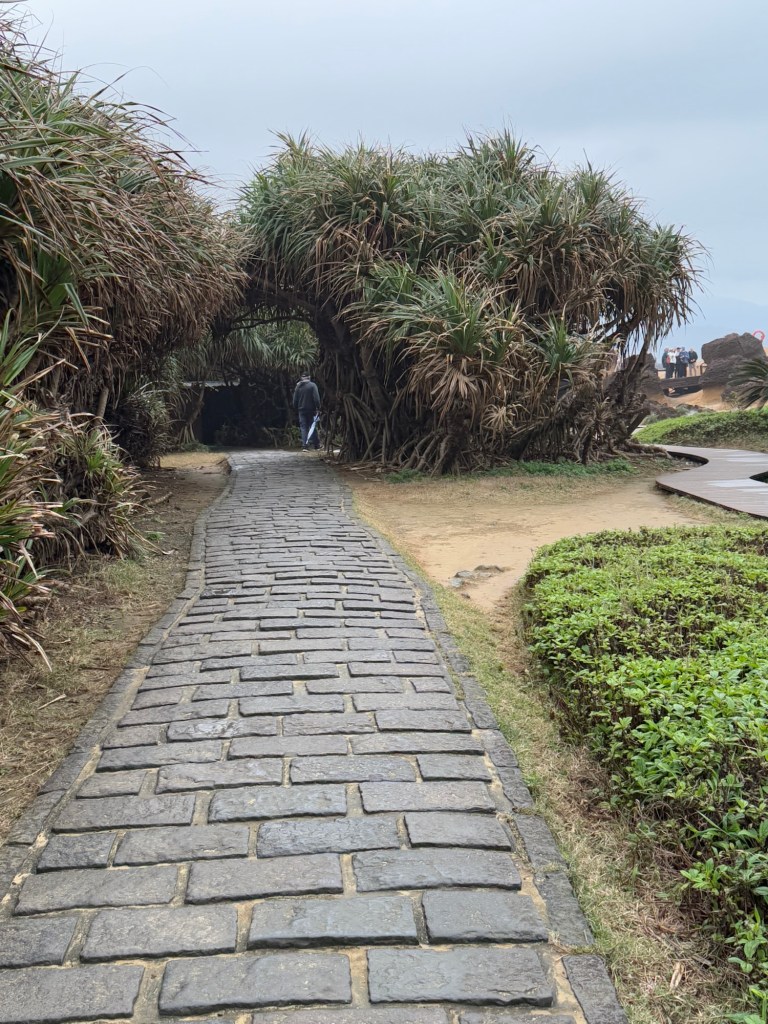
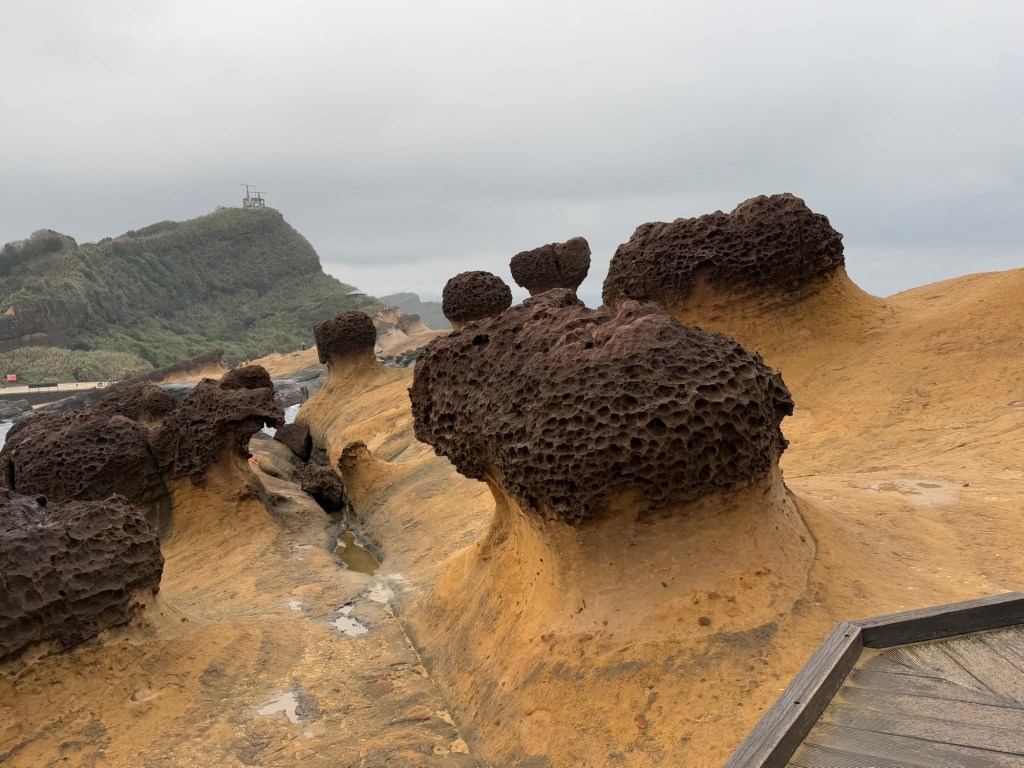
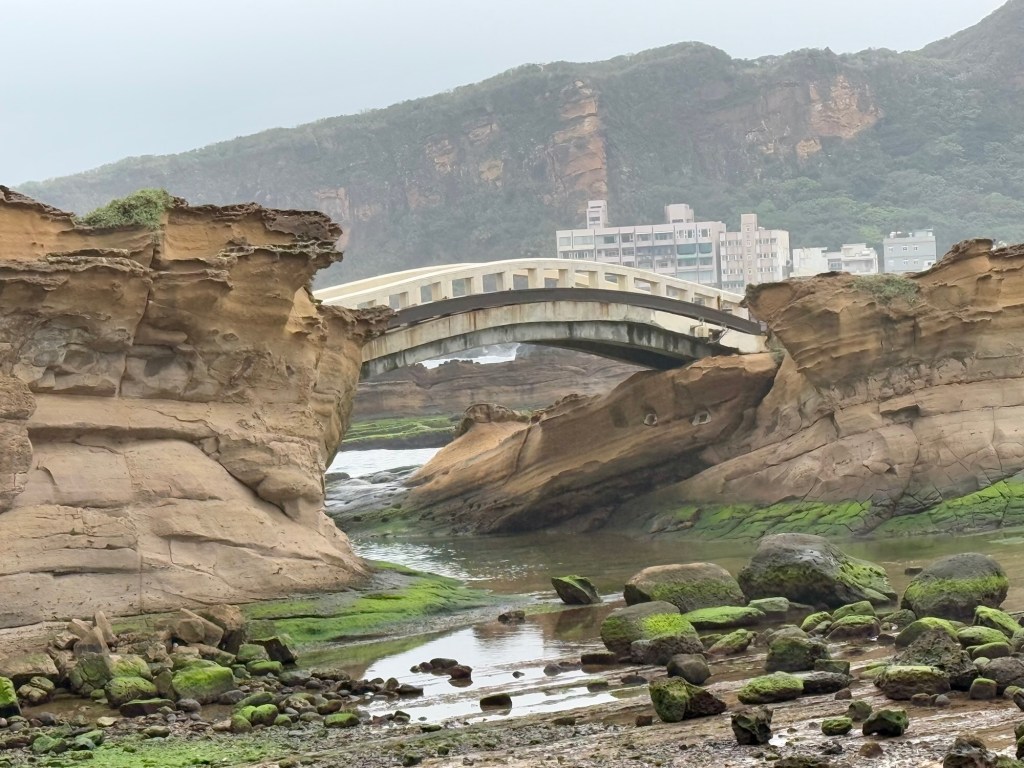
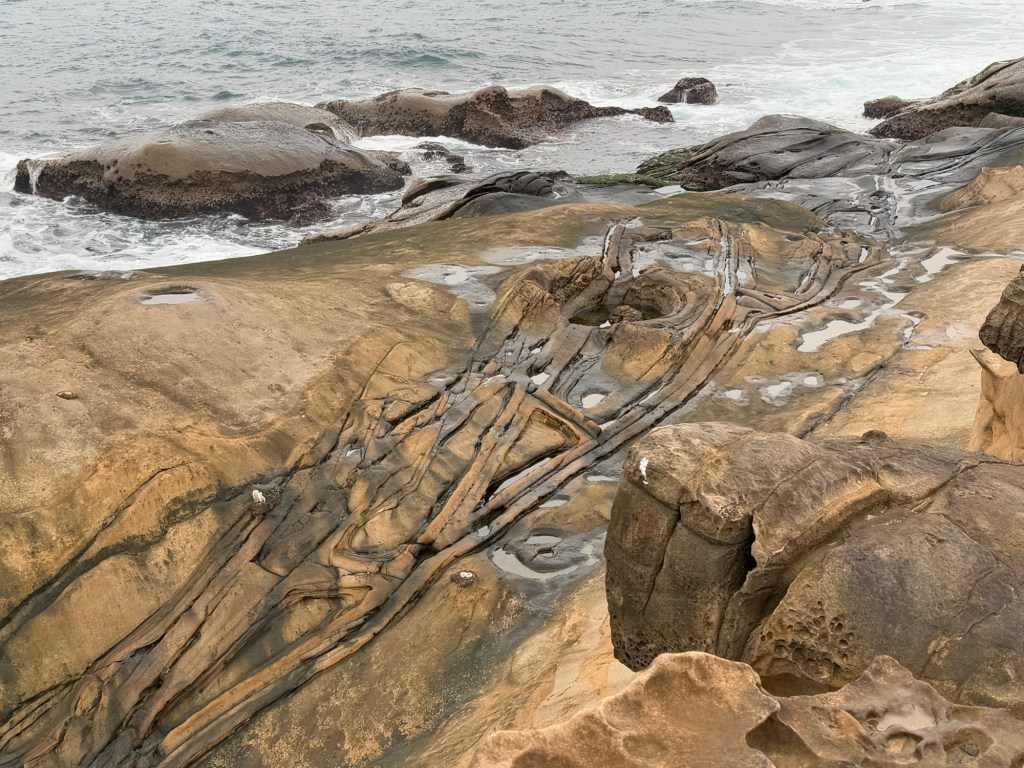
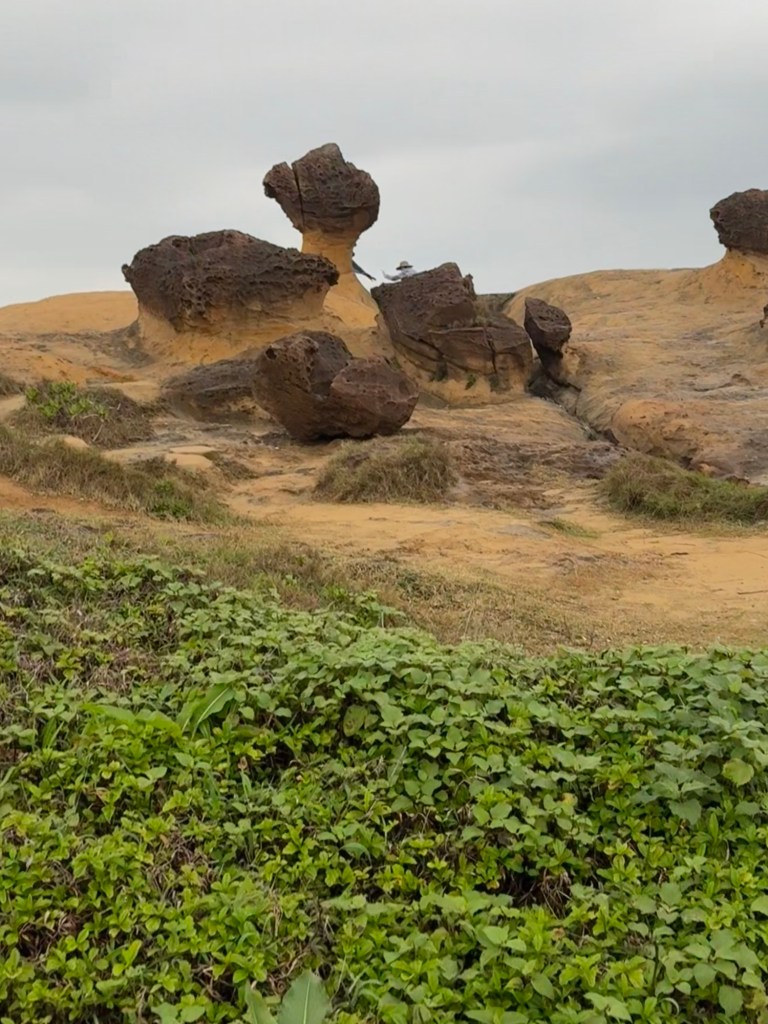
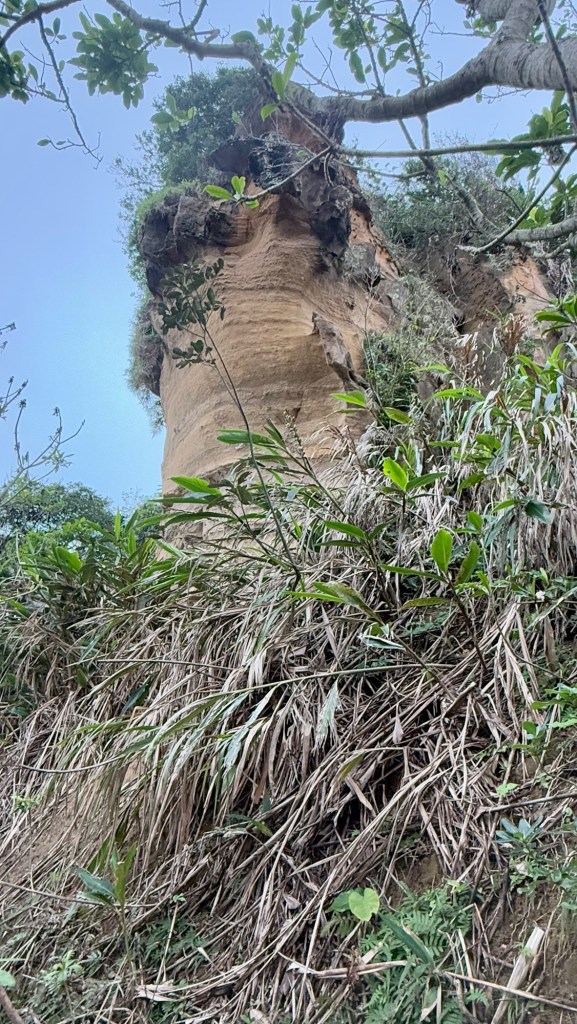
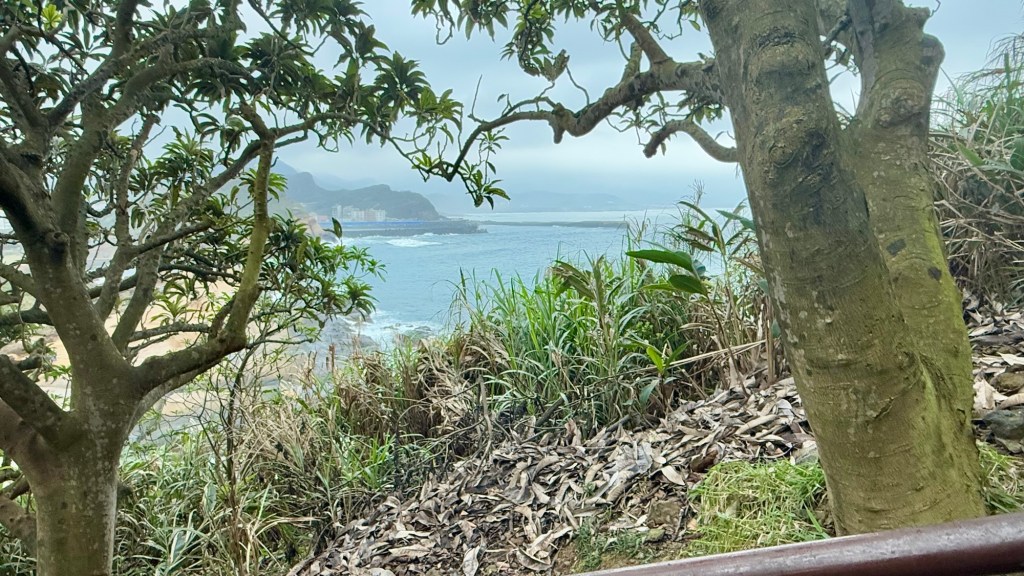
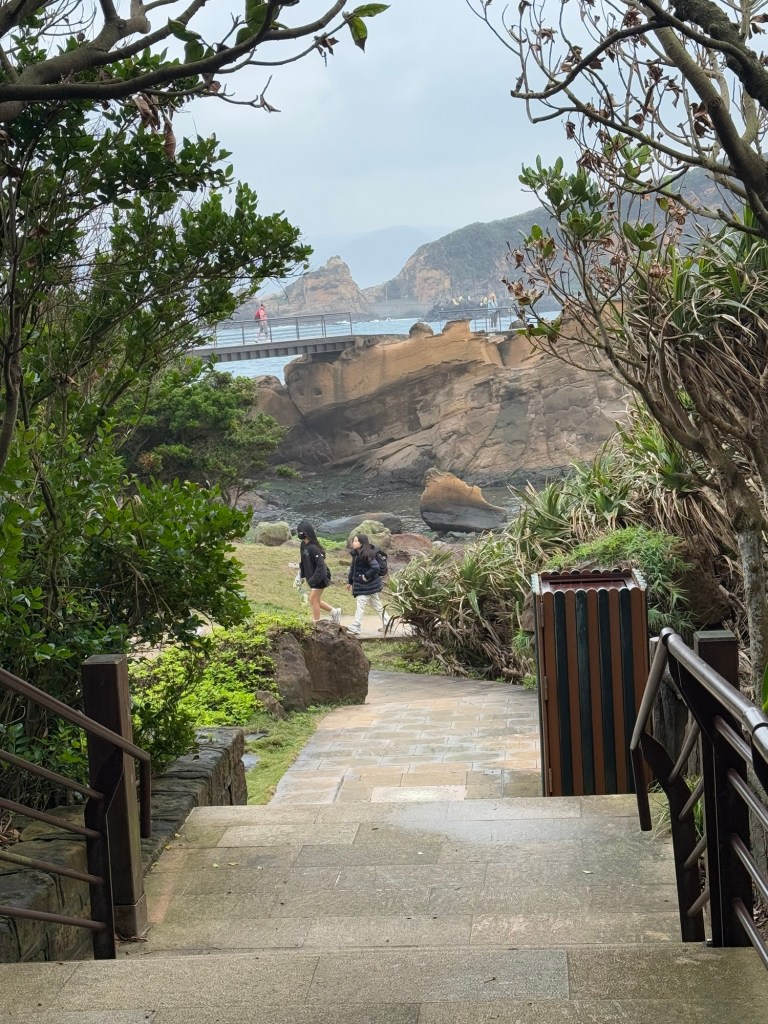
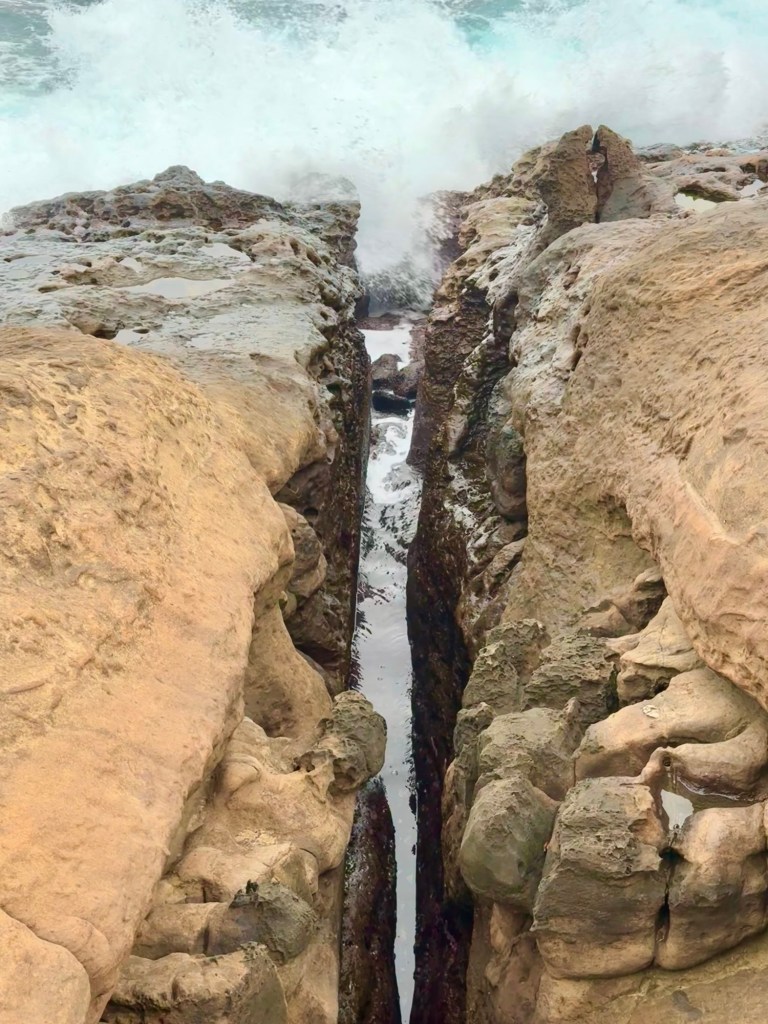
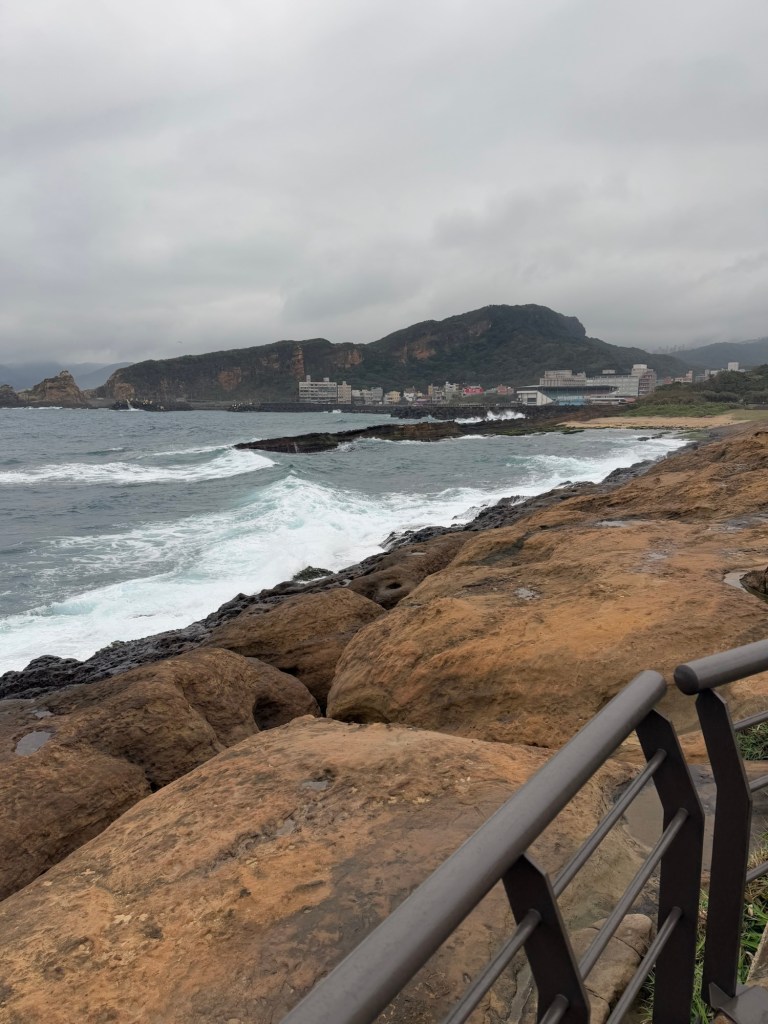
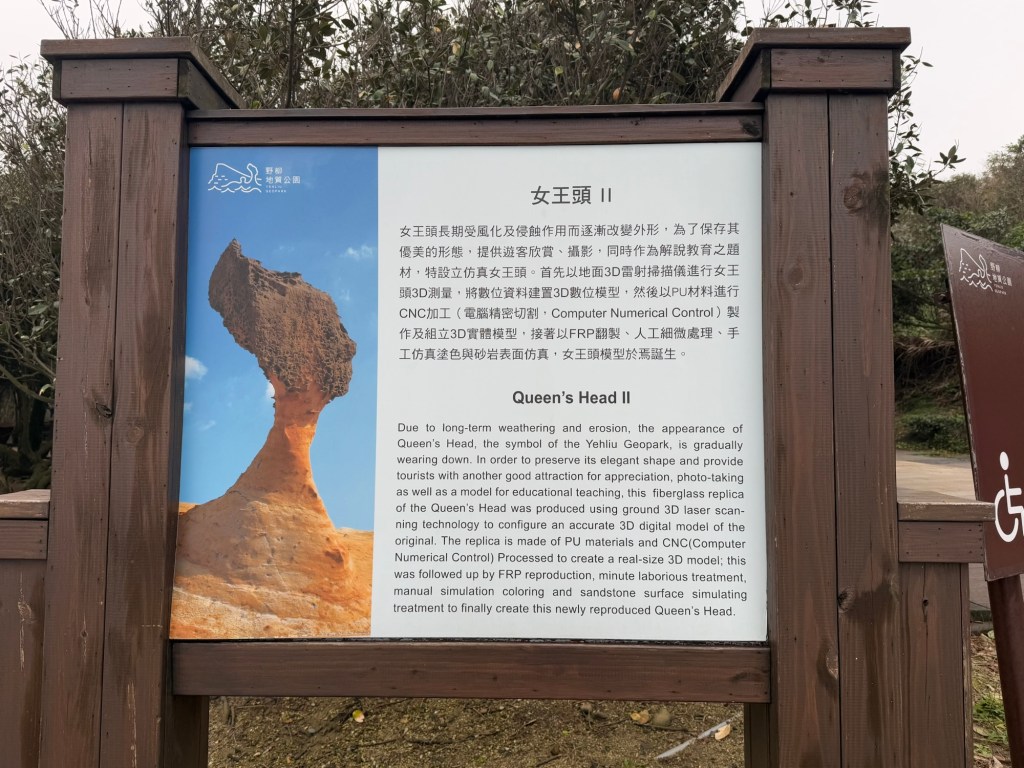
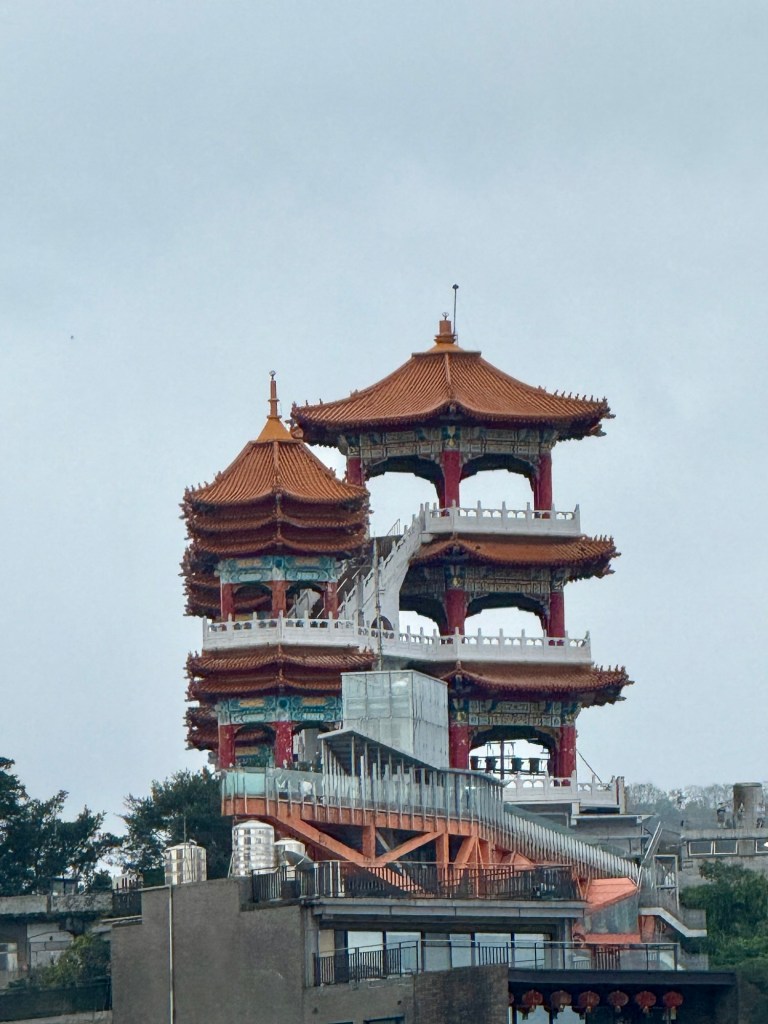
First stop is Yehliu Geo Park. The park is a peninsula that juts out into the sea for about a mile. There is lots of walking and steps to climb. The figures all have a hard top….. (looks like lava) with sandstone below. As a result of the wind, rain and ocean waves, etc., the figures have been carved into some very cool shapes…. The most significant is of “the queen” and the “fairy slipper”.

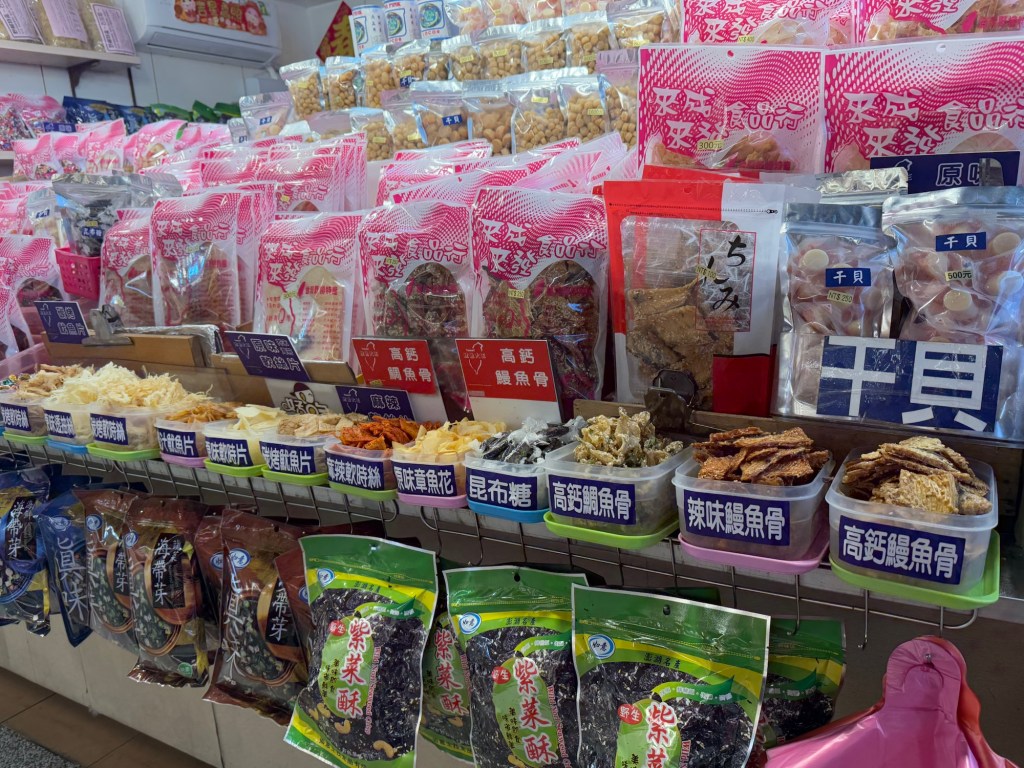
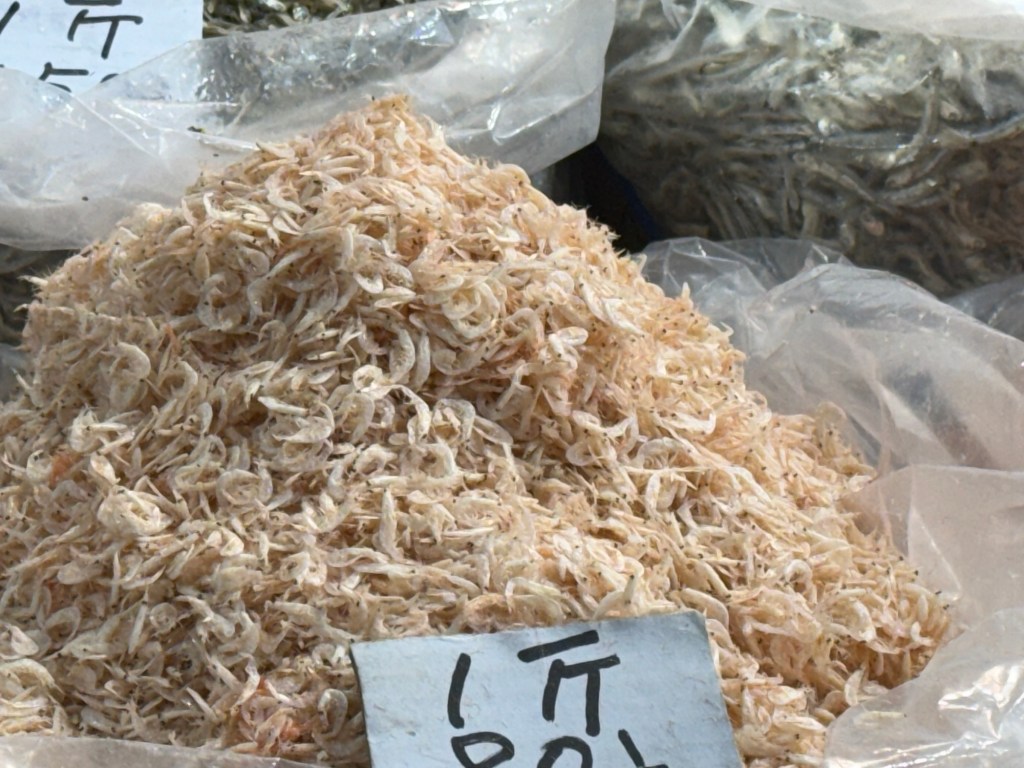
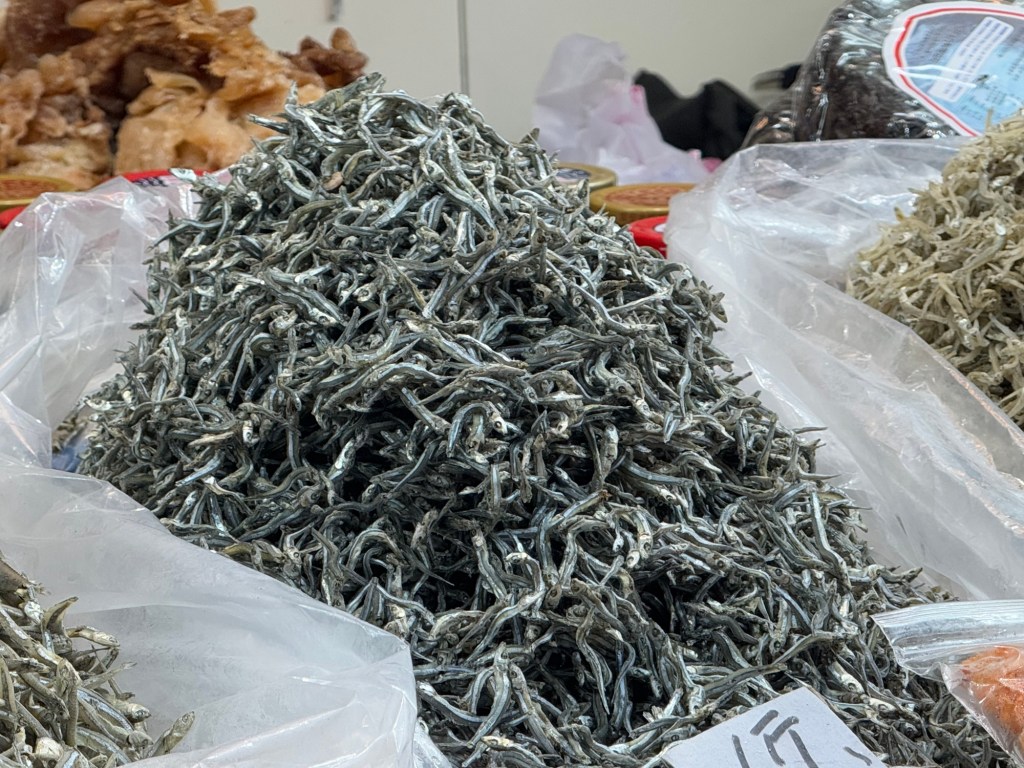
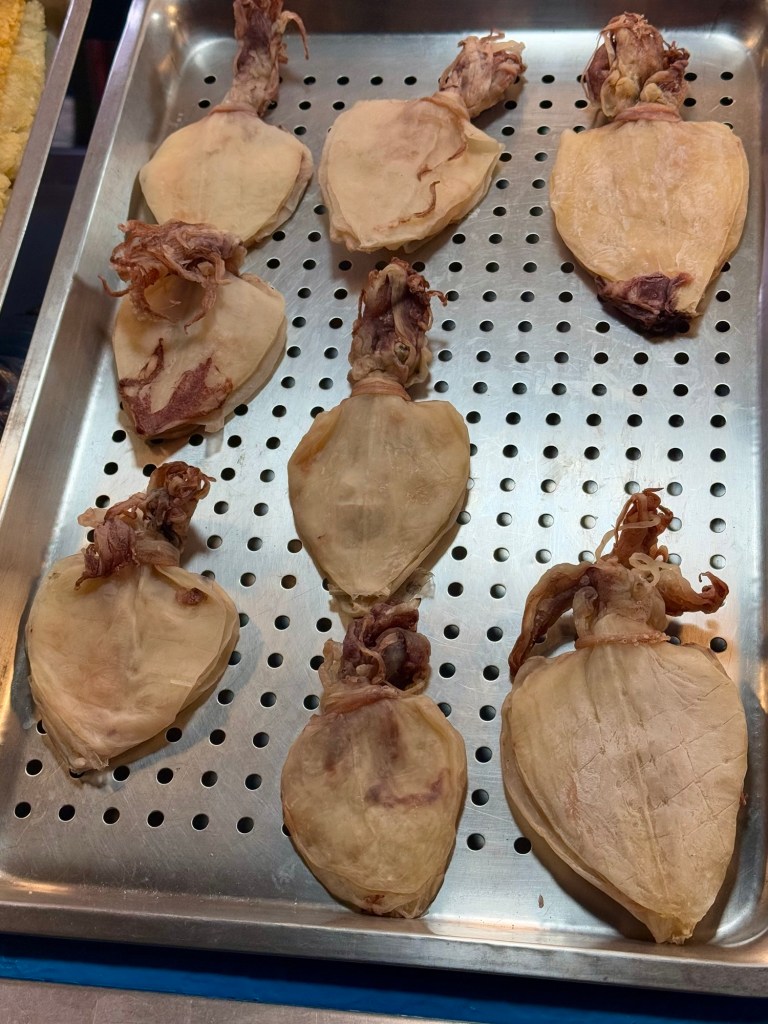
Upon exiting the park there was a market…. Predominantly with fish products.

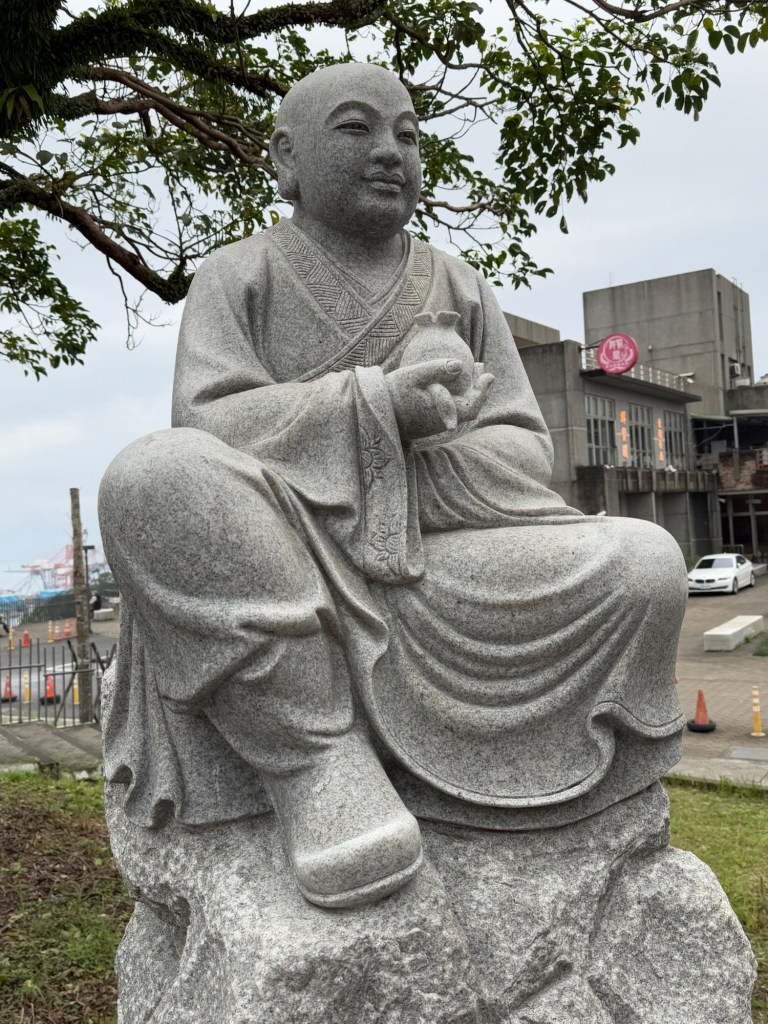
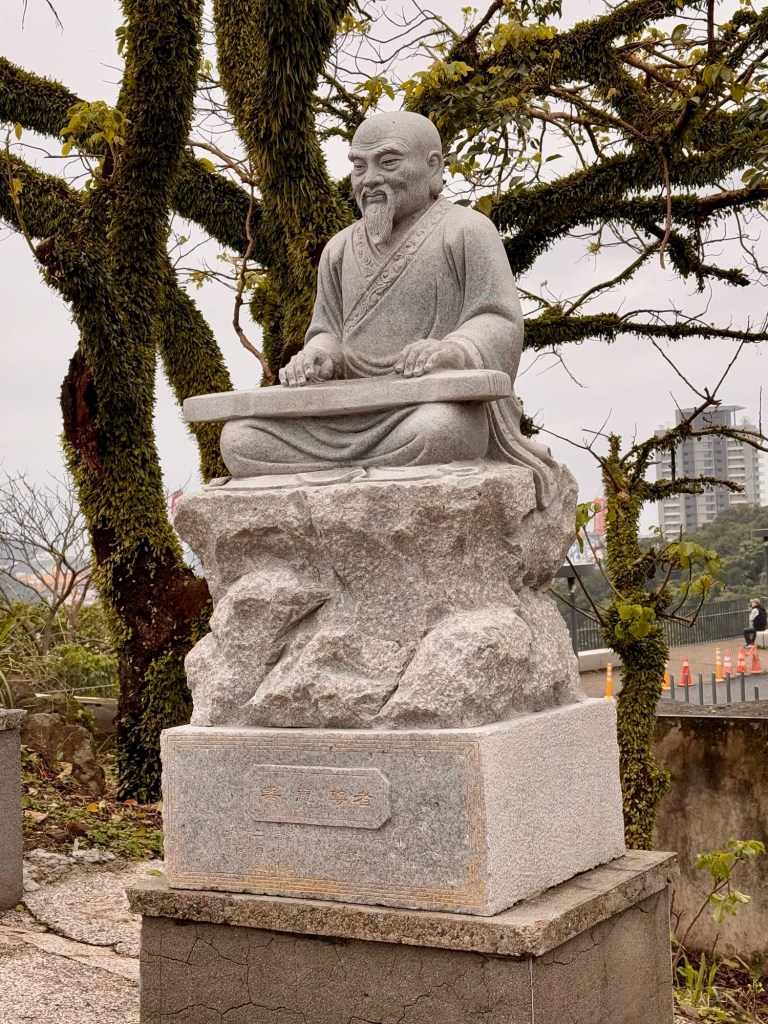
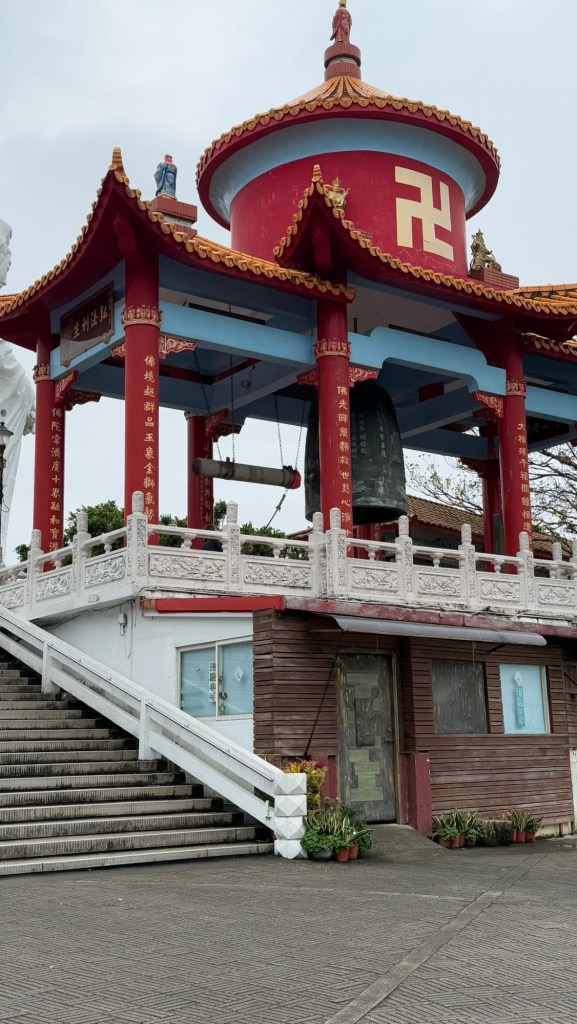
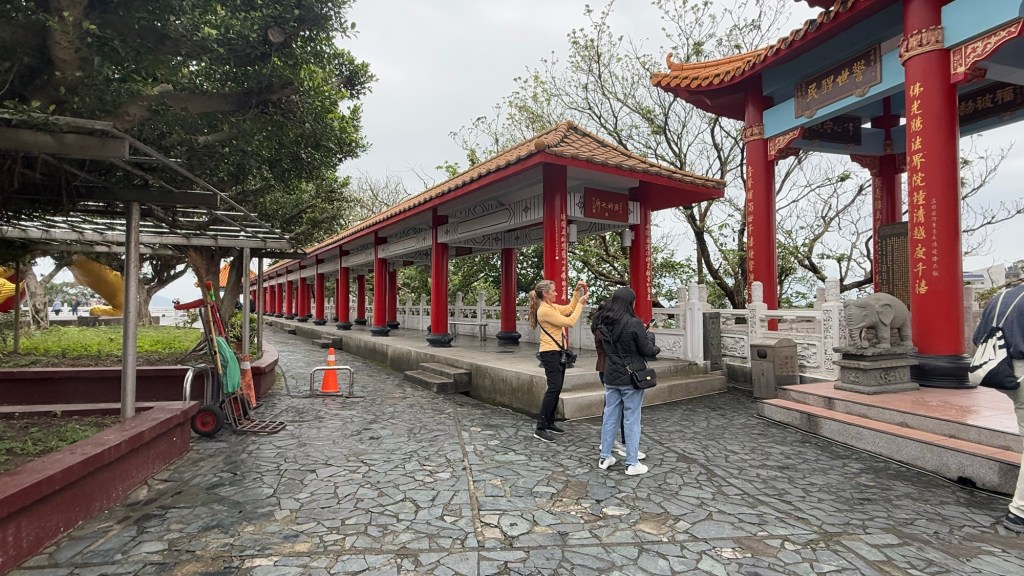
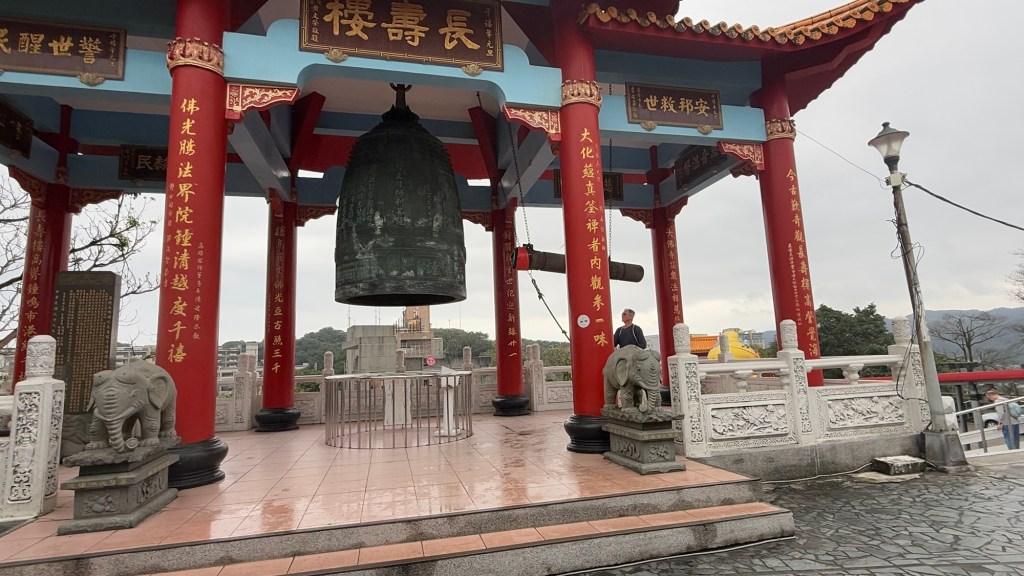
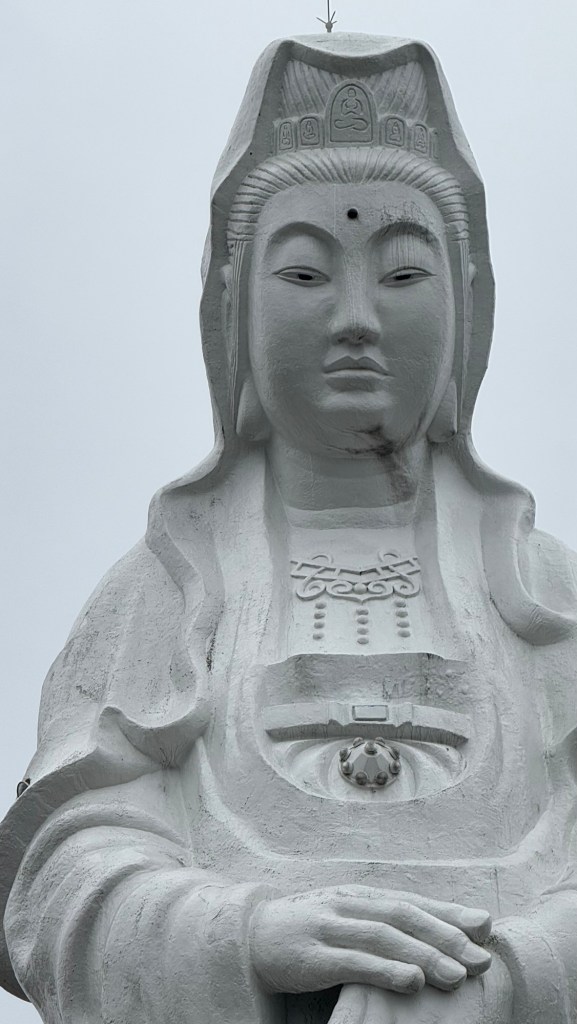
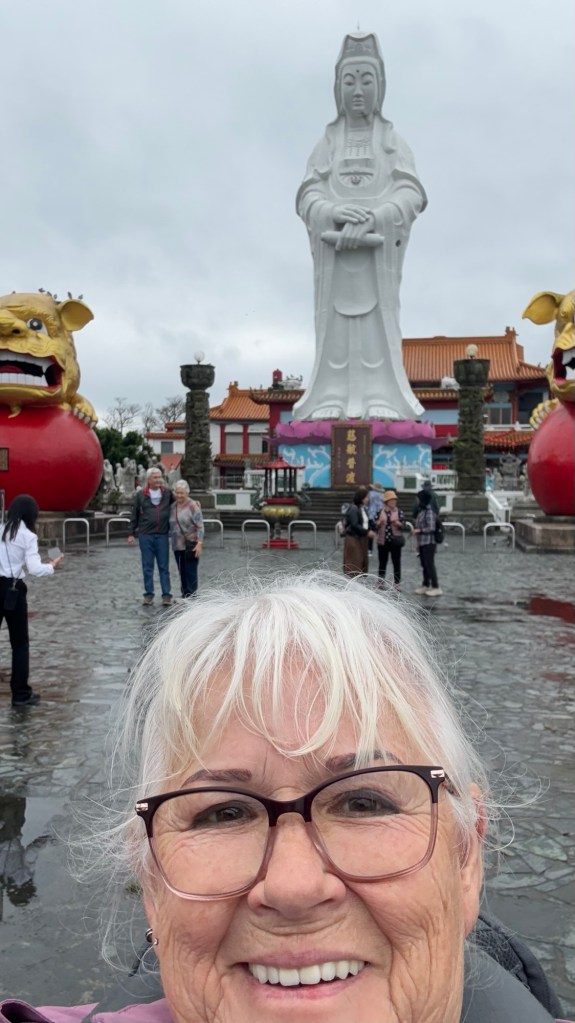
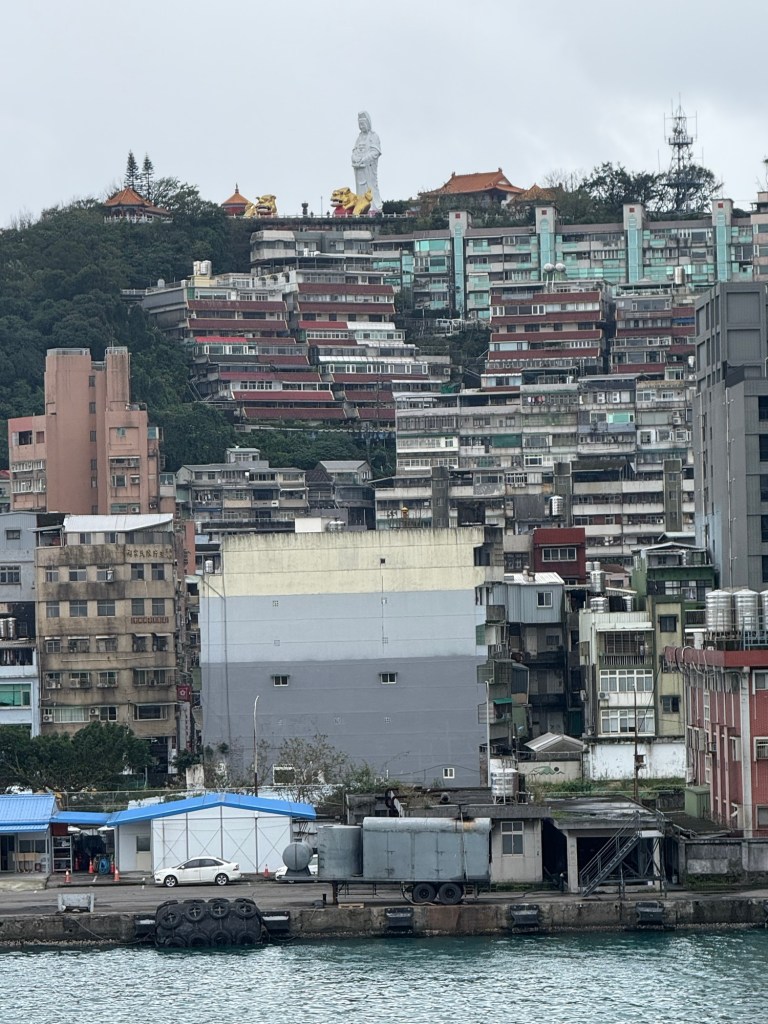
Back to Keelung and another park….. Chung Cheng park where the largest statue on Taiwan is located.

Special animals on the island are the Formosa black bear (has “V” on chest)…. It is endangered now as are leopard cat, owl & pangolin..  so many because they believe that parts will increased sexual performance. Bee-eater bird…. Beautiful… seen only in May. Hoopie bird.

Has been ruled by Spain, Holland, China and 41 years by Japan. 

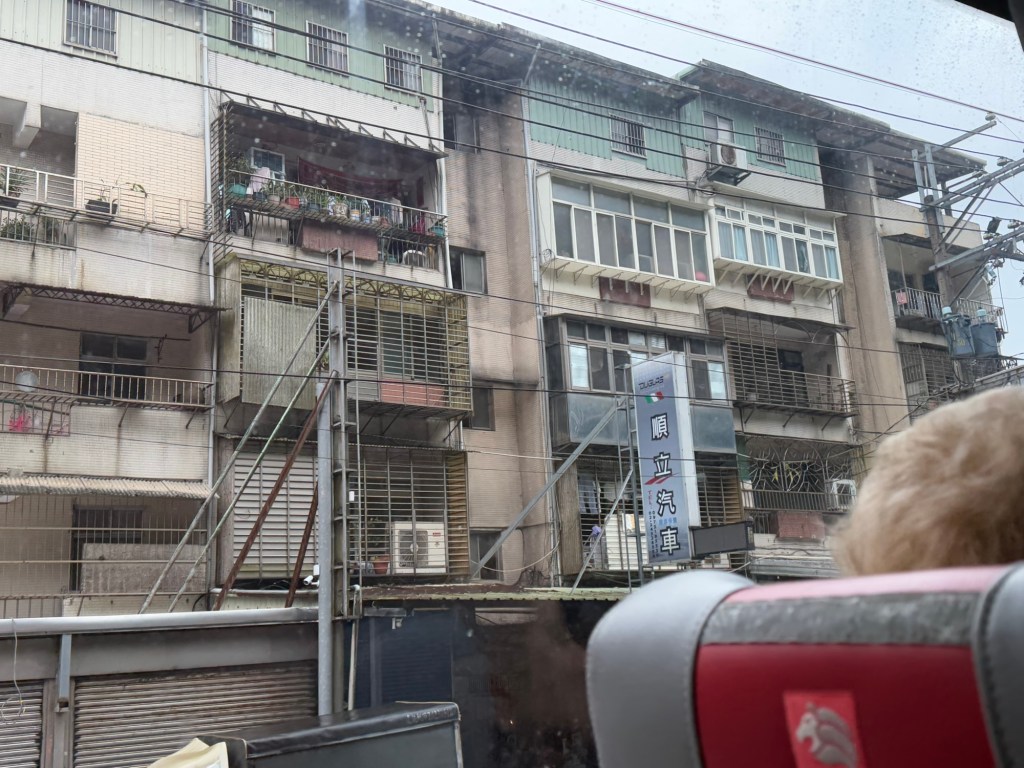
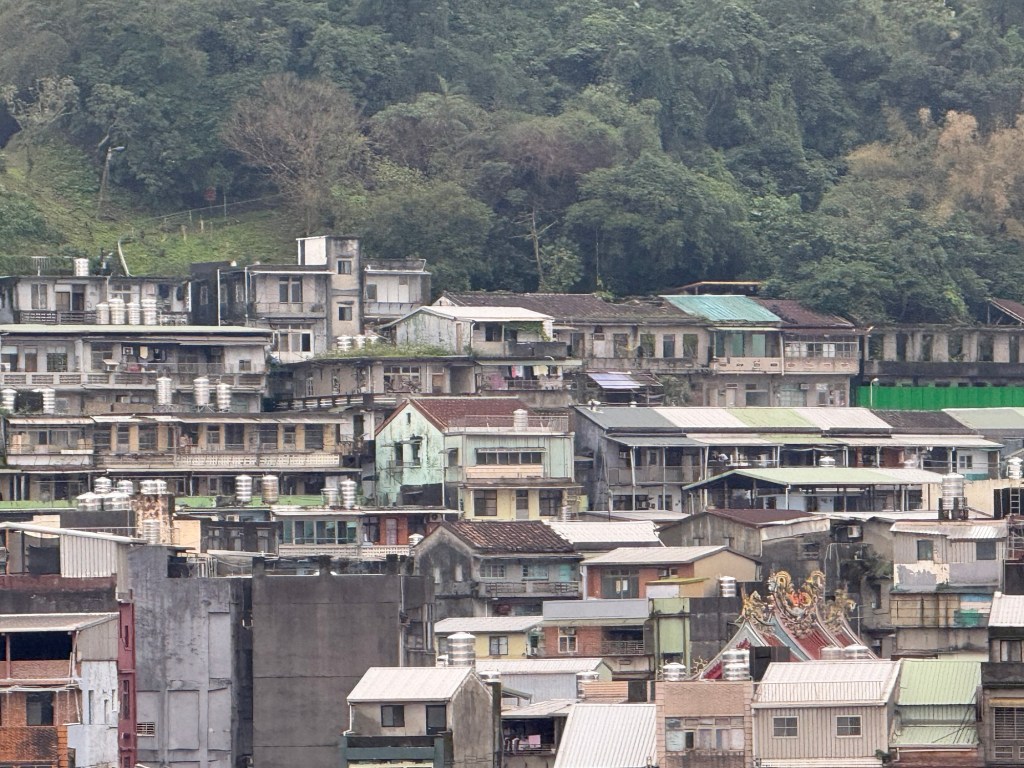
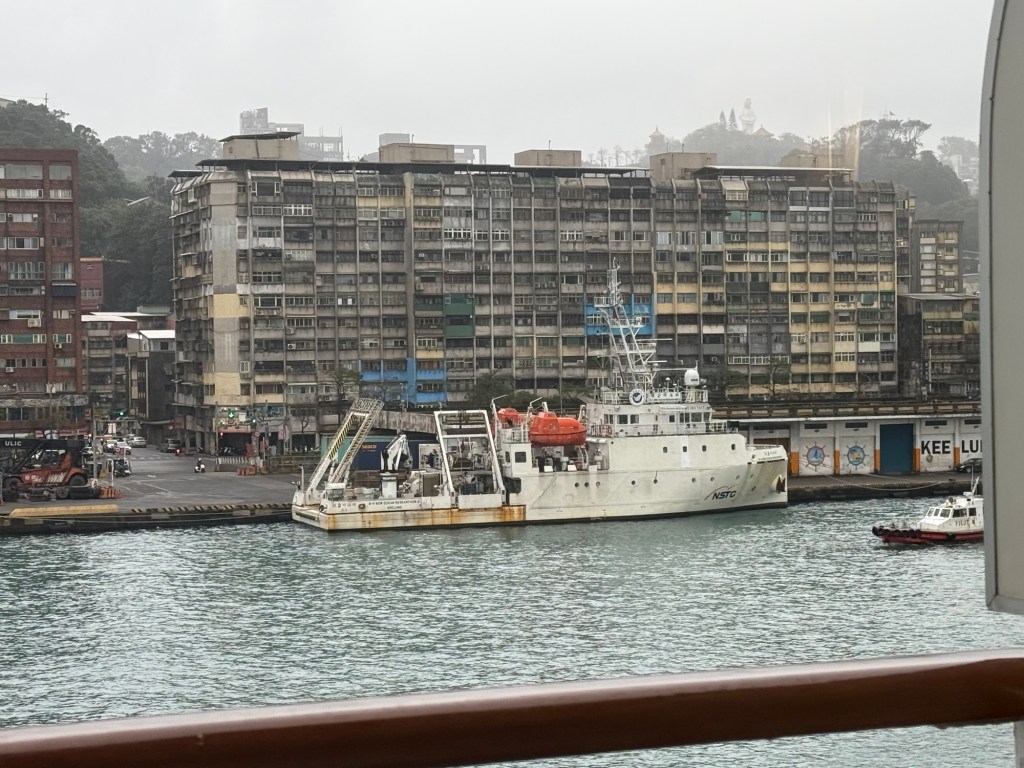
As before, it is quite apparent that the building are not well cared for … kind of looking shabby. My thoughts are that it is because of all the rain causing mold on the buildings. Also the constant rain would take away initiative to clean it up. 

Day 22&23-Feb 17&18/25-first cruising East China Sea, then Kagoshima, Japan

Today we have 40 kms winds with 3 metre seas….. a little rocky by not bad!

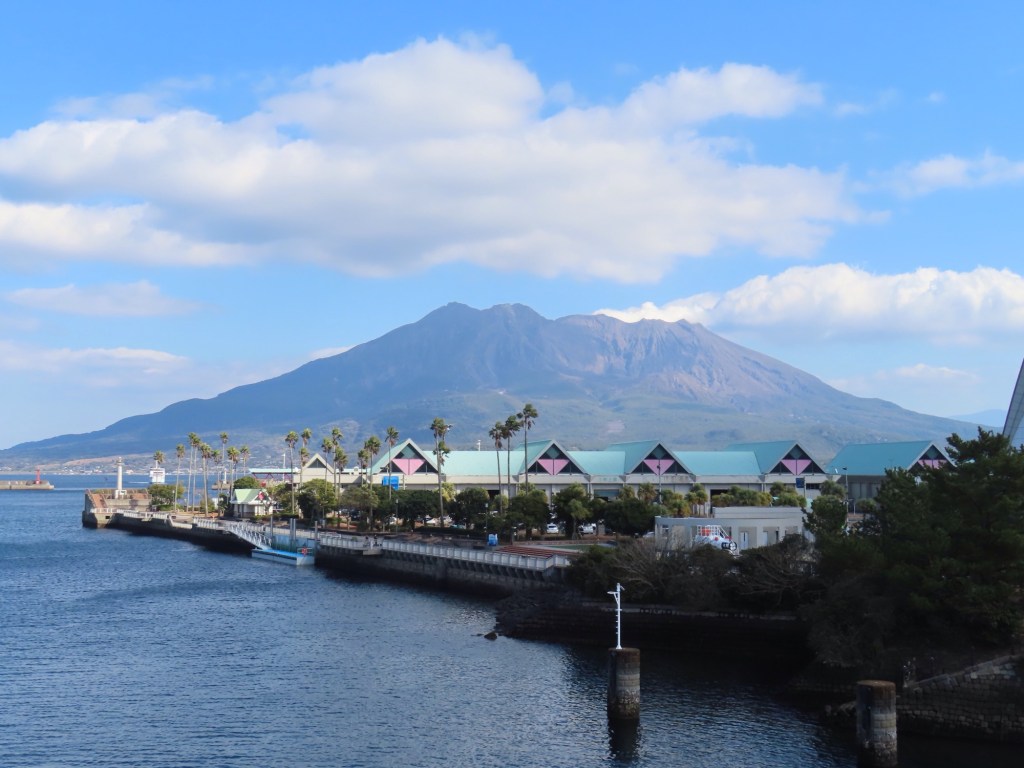
Feb 18-the day started out in Kagoshima, breezy and quite cool but it has steadily improved….. yeah!  This is our last stop/tour in Japan. The excursion is called Volcanic Sakurajima. It is on the southern most tip of Japan on island of Kyushu. 

Our guide is Naomi …. name means honest and beautiful. I am not sure that I would call her beautiful but she certainly was the best…. the best English spoken guide we have had. When question about her great English she said she was an English “geek”. 

In 1914 there was a great eruption. Sakurajima means Cherry blossom island but it’s not island anymore. Most of the flat land here is reclaimed land….many mountains surrounding it….70%  of Japan is mountainous. There are over 100 active volcanos in the country. There are 47 prefectures in Japan . In this prefectures  there are 600 islands spreading over 600 kms. There are 1.5 million people in this Prefecture.. 

In the 16th century Portuguese and Spanish came to the area. In 19th century began the modernization of Japan, starting here. Population of this city is 600,000. 

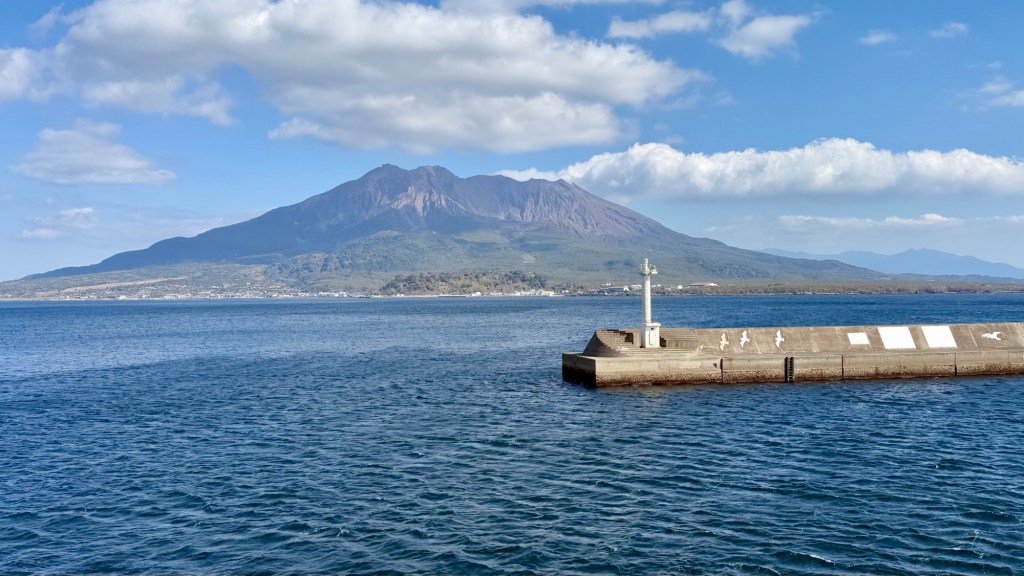
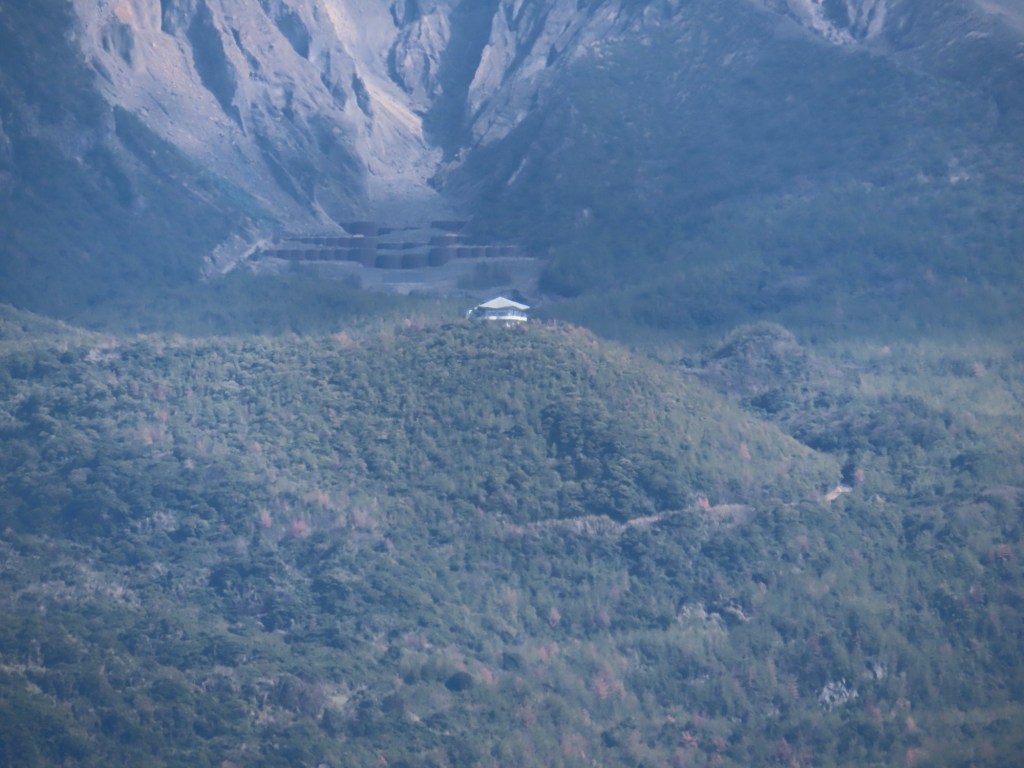
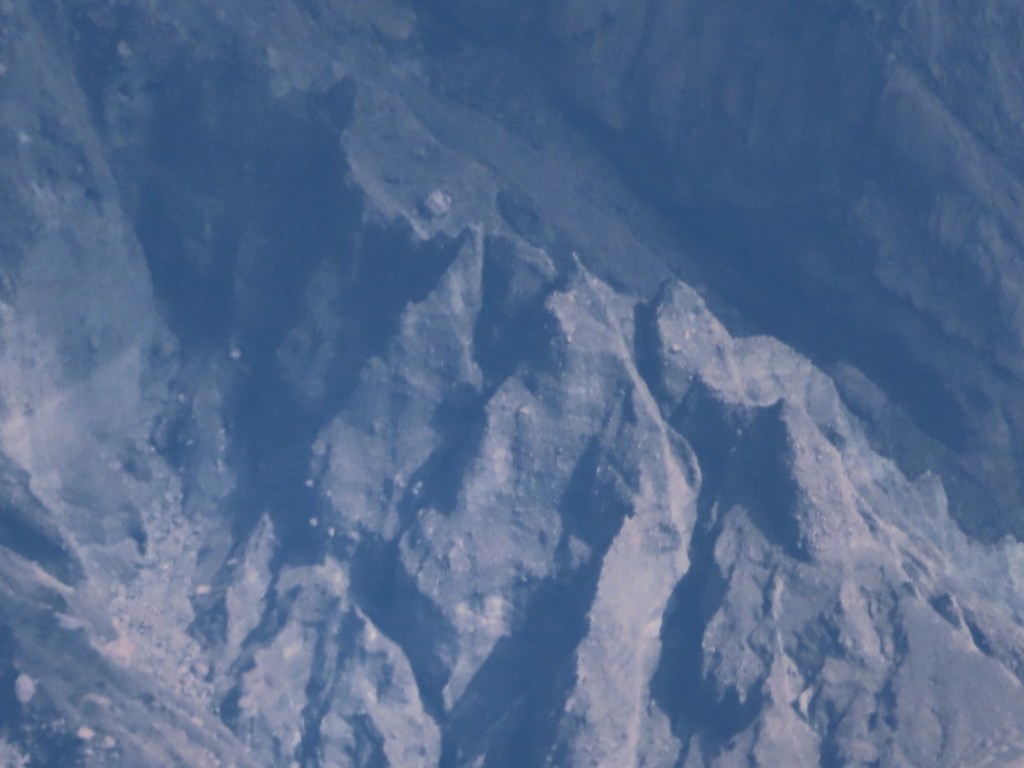
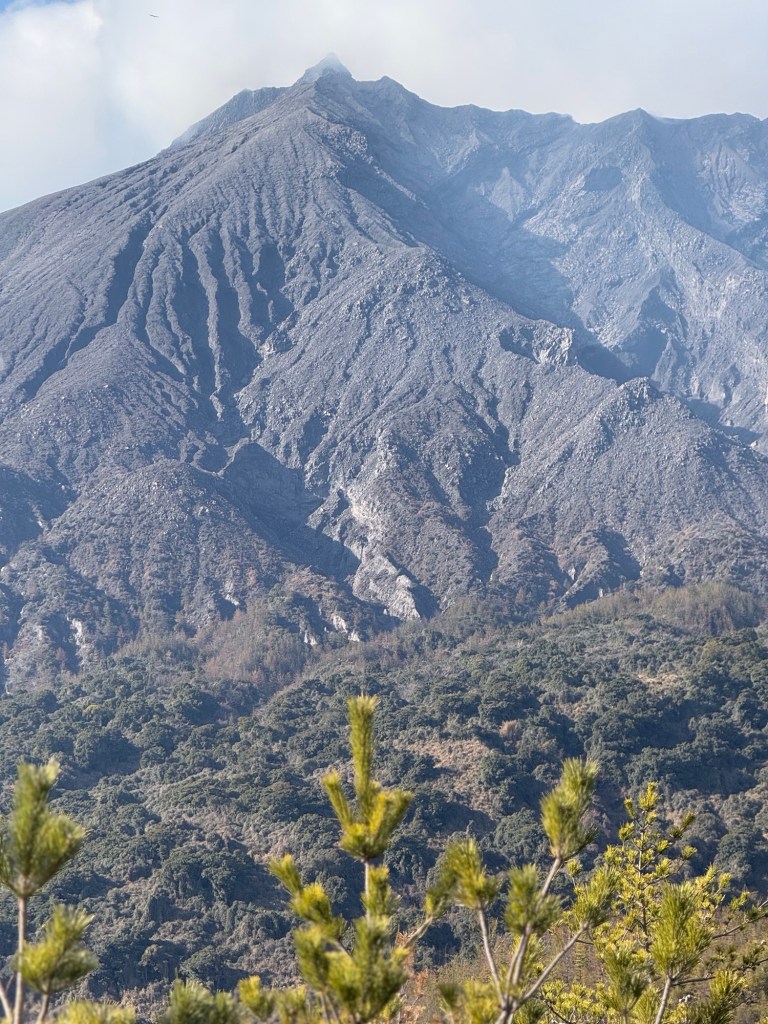
Sakurajima Mountain is comprised of two peaks   One is 1117 metres high, the other 1040 metres. It has erupted already 50 times so far this year. There are 300 ash collecting stations on the mountain. One side has deeper gulleys because the two mountains are of a different age… the newer has the deeper gullies. 

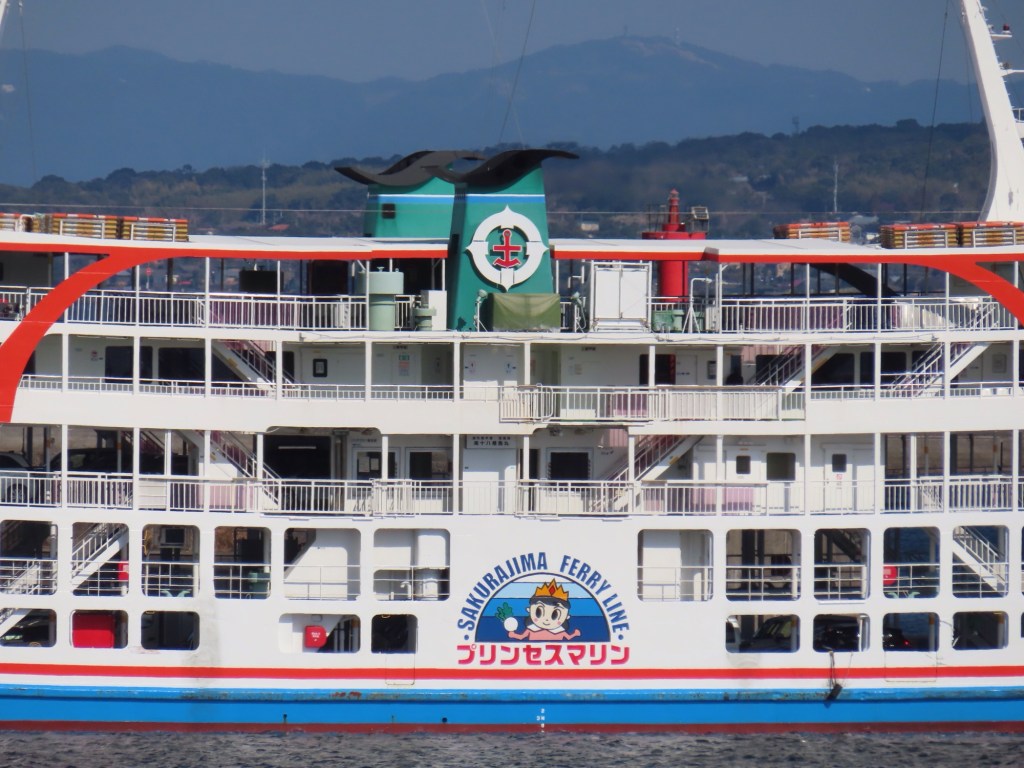
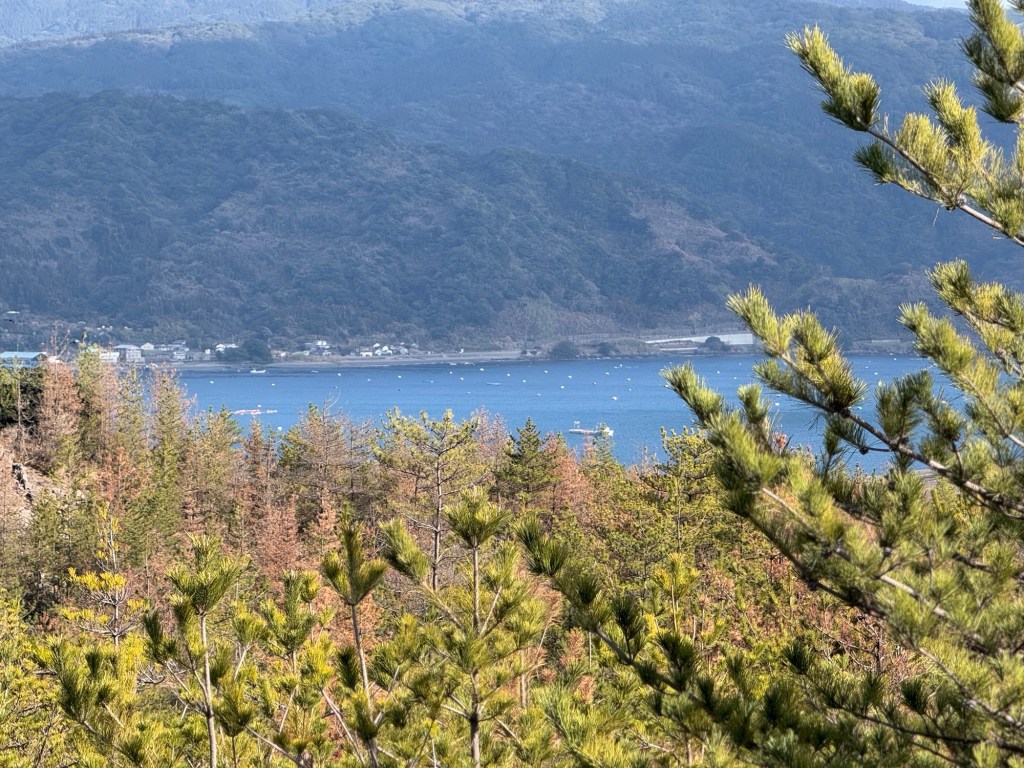
We take a ferry ride over to where we are going. Where we embark on ferry, there is an aquarium that has a roof like Sydney opera house with over 7000 fish.  There are no high schools on Sakurajima so students must travel to Kagoshima. Tokyo Bay is only 18 metres deep. Here in Sakurajima Bay, it is as much as 200 metres deep. It is rich with fish …. Dolphins resides in the bay. Every year they hold a 4 kms swimming event for school kids from the city to the “island” with a separate one for adults. Most cars in Kagoshima are grey in colour, to camouflage the colour of the ash. 

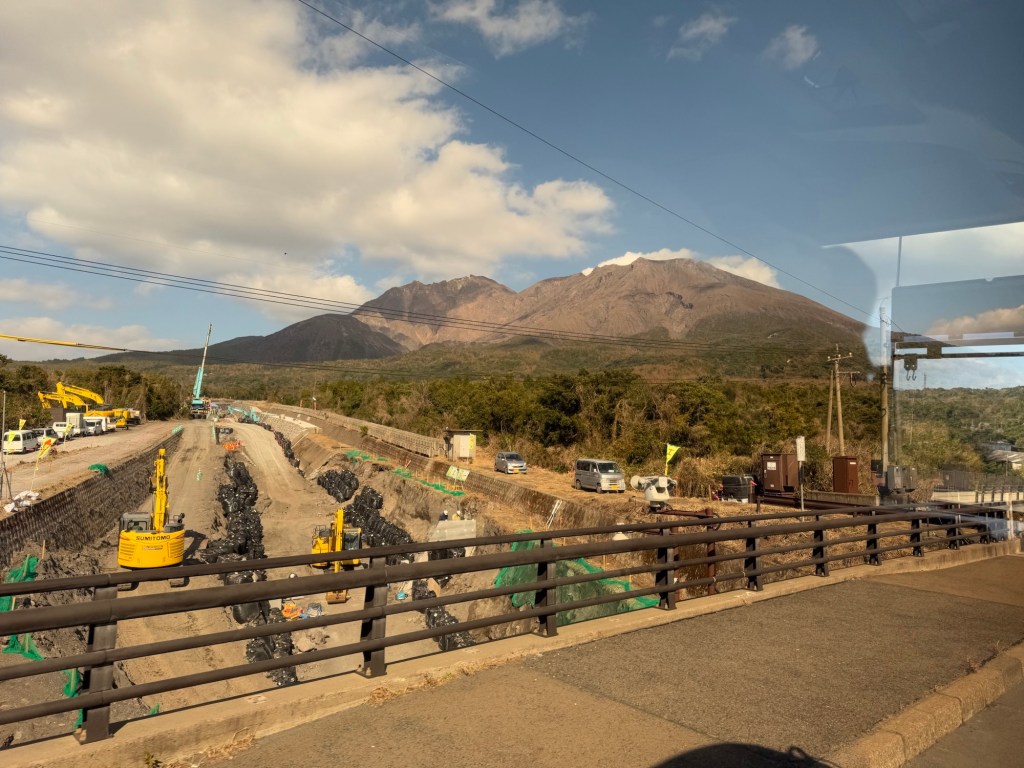
After only a 15 minute ferry ride we arrive on west side, then travel along the south to the east side to the lava fields. During the eruption of 1914, the lava flow lasted over a month, discharging 3 billion tons of lava, burying 8 villages and made it part of Kagoshima. It was no longer an island.  The sea at this point used to be 400 m wide and 70 m deep. It has erupted majorly 17times.

Shrubs along the road, covering the fruit in bags, are loquats. 

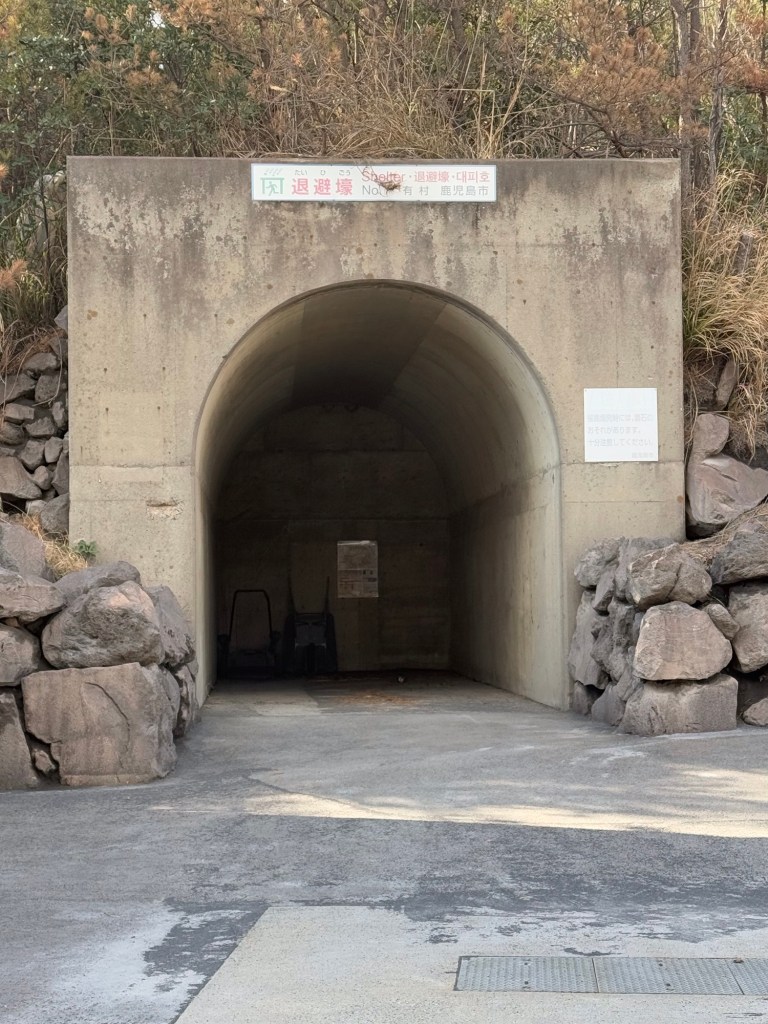
There are many what look like dry river beds, that have been created for mud slides caused when ash gets wet… which is often. There are concrete shelters placed every km.  Kids wear helmets to school (adults too), in case of eruption. 

3300 people live on the island. Why…because of agriculture…… huge Japanese radish (daikon)… record 31 kgs and more than 1 metre in circumference, many fish farms (yellow tail) & tourism to see the volcano. Sakurajima is the most active in all Japan. There are 2 stations monitoring it at all times…. With the latest equipment. 

In December before the major eruption of 1914, there were signs before  it blew…well water was boiling, there were 200 tremors , snakes came out in middle winter & earthquakes.  There are 28 evacuation centres on the  island. 

Lots of rain in Japan and because of the heating going on underground, it makes for 300 hot springs in Japan. 4 tectonic plates merge around Japan 

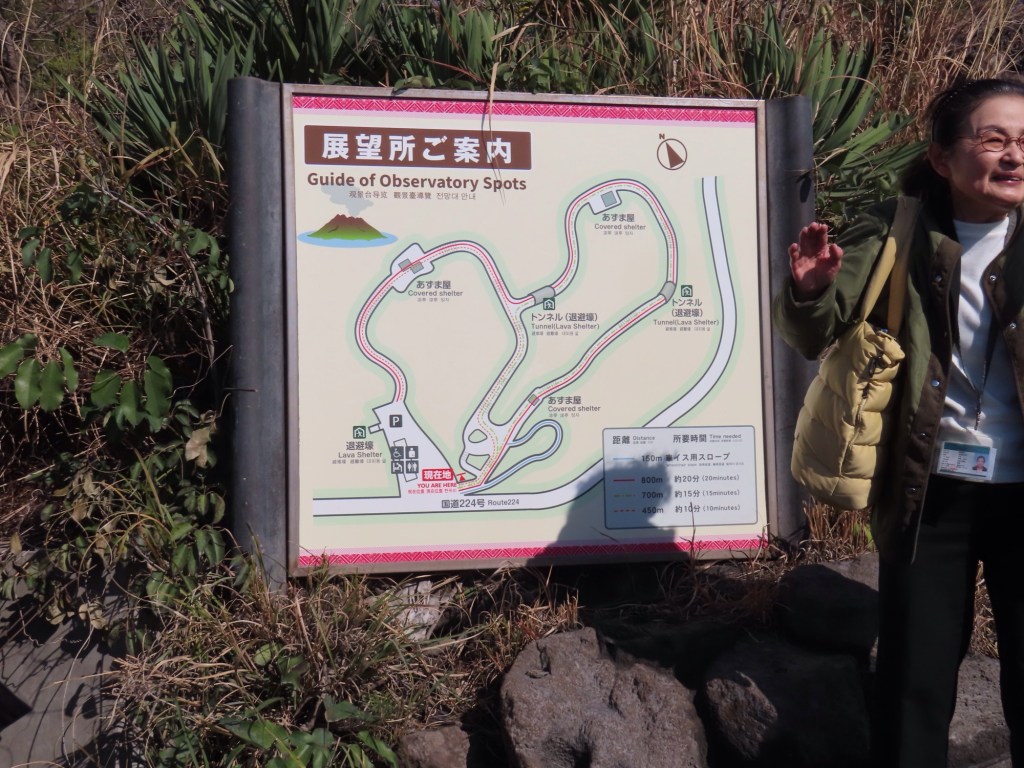
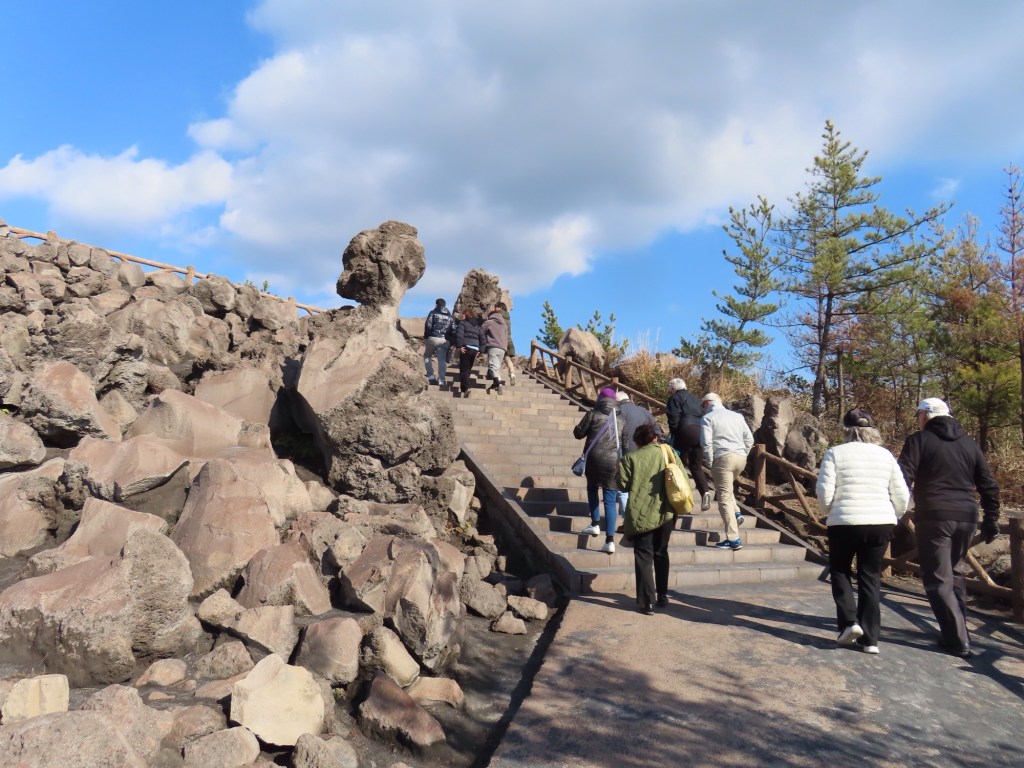
The Lava field here at Sakurajima is 40 metres deep. The hike to the observation spot is 200 stairs up & down. Naomi thinks that there is plenty of magma built up in the last 100+ years so expects it will blow sometime soon. 

There are 80,000 shrines in Hapan but only 55,000 convenience stores…. Lol!

Pine needles can be eaten. They would eat them when they were under siege. That is why there are many pine trees planted in castle grounds. 

Volcanic soil covers 2/3 the land in this area.  Sweet potatoes are a huge crop. Pigs eat sweet potatoes…. makes them more tender. Kagoshima is a big producer of pork, beef and chicken., also “Shochu” alcohol made from sweet potatoes (& rice). 

Wagyu beef ….. won first place in competitions but Kobe is the place that is “world famous”. 

This has been the most difficult post to download. Sorry but it is like 4 days late thanks to the blocking of wifi signals and although I have an eSIM, one is not usable if not close to a cel tower (like when in the middle of the ocean.

Day 21-Feb 16/25-Shimizu (Shizoka) , Japan

Since we were unable to book an excursion to see Mount Fuji from Tokyo, we are hopefully going to see it from this Shimizu…. hoping for sunshine☀️. As it turned out, it was beautiful pretty much all day.

Miya is our guide today. She says we are the first ship of the season in the port. 

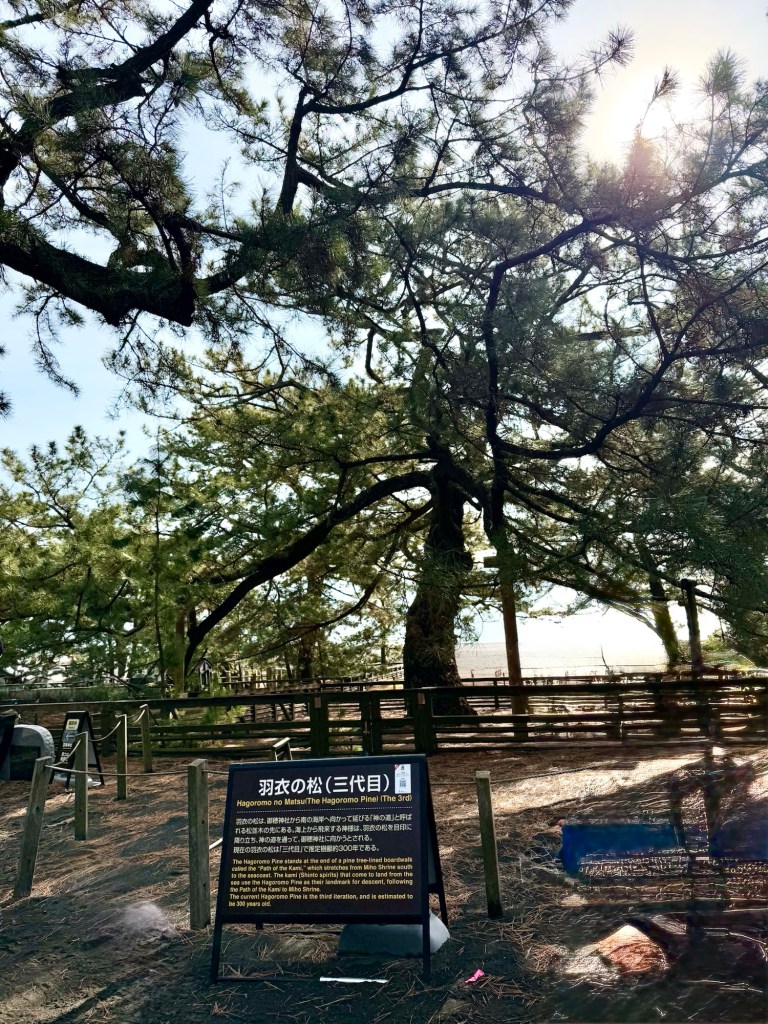
There is a statue on either end of a bridge ….of a celestial maiden … An angel wearing a Celestial robe … no wings. There is a story that goes with it but too long to write here. It has to do with Mt Fuji..

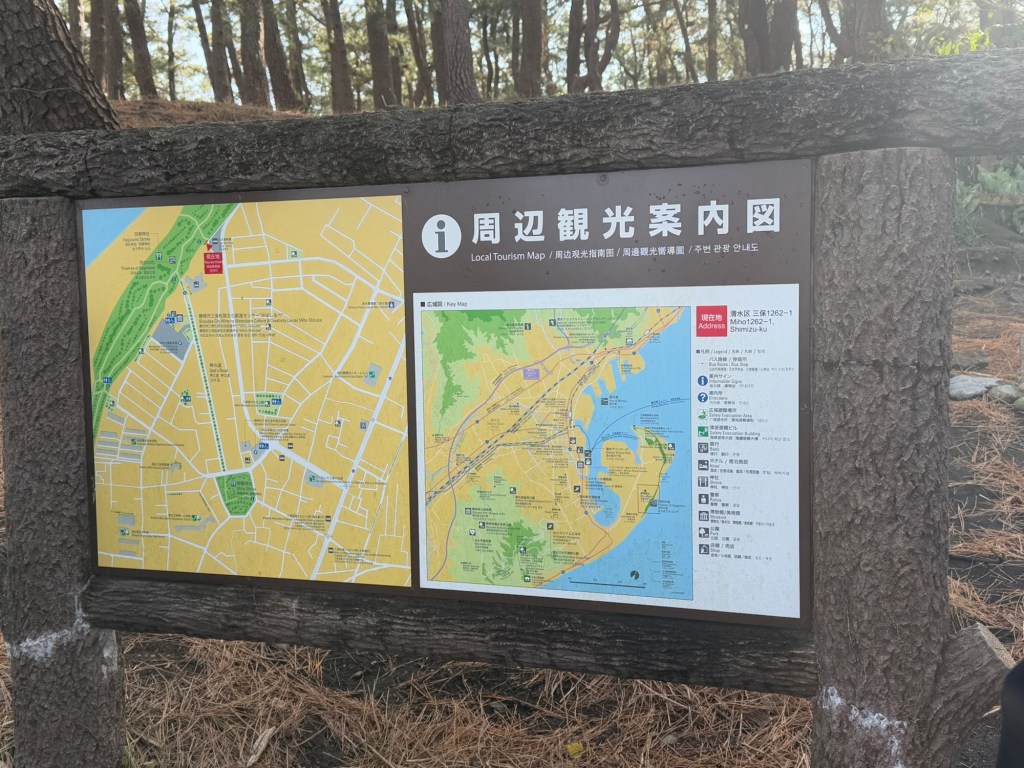
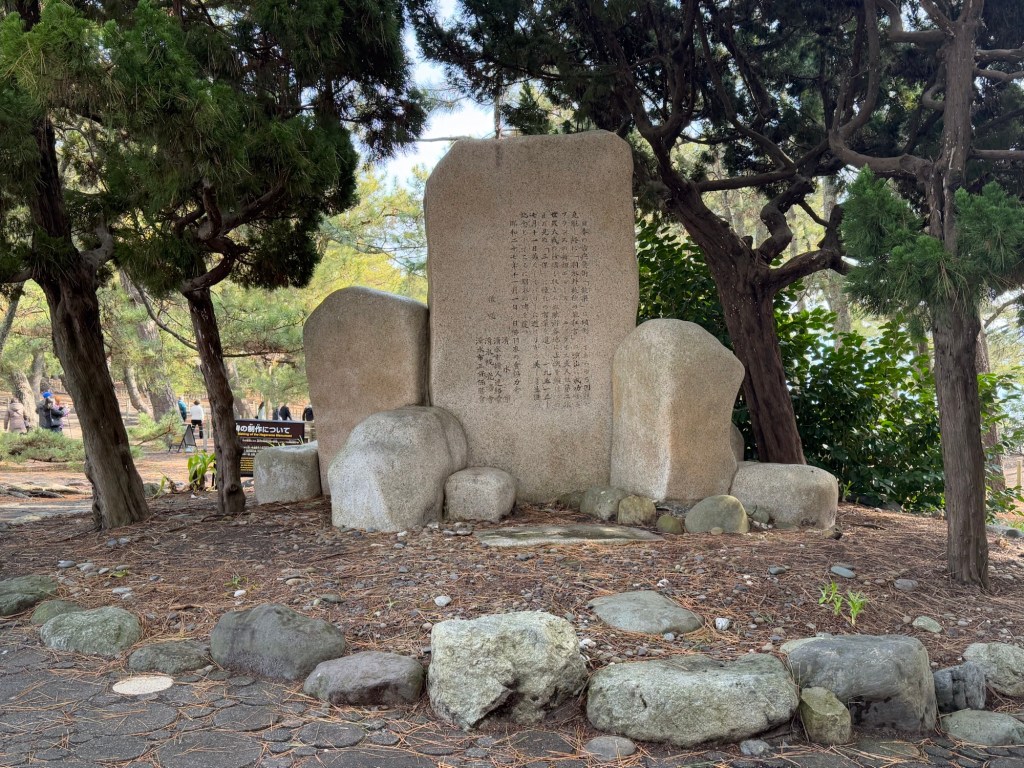
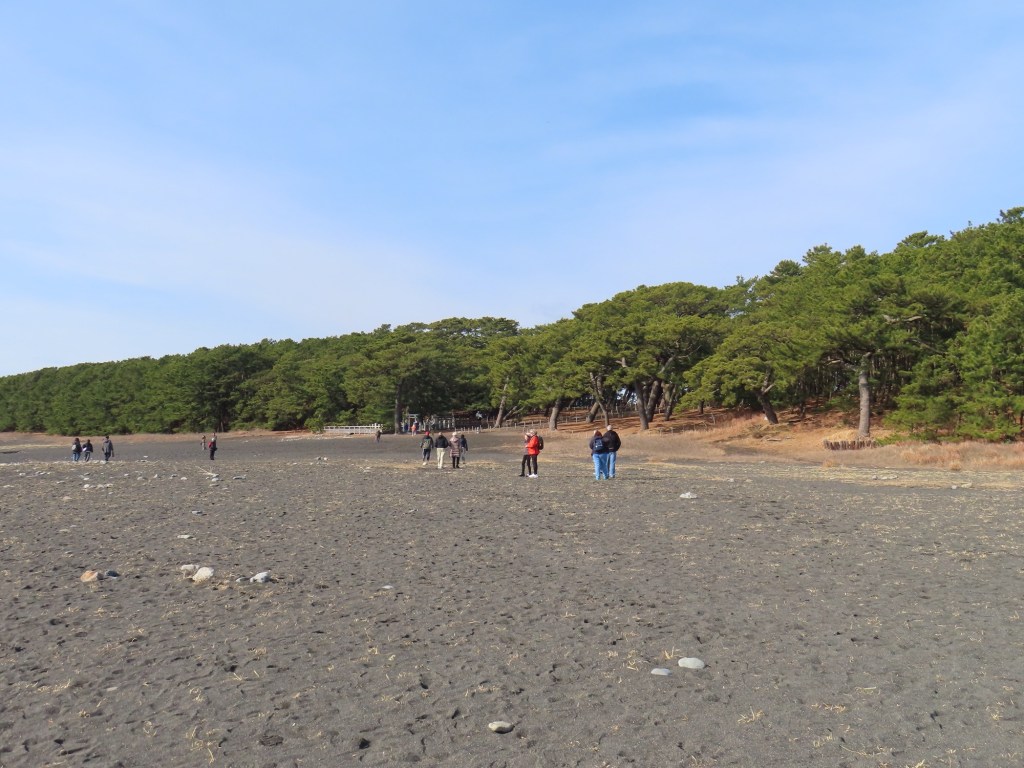
Our first stop is a pine grove (part of the story)…one of the trees is 650 years old and survived the last eruption of Mt. Fuji.  The rest of the pine trees are in excess of 300 years old. It is UNESCO  world heritage site. 

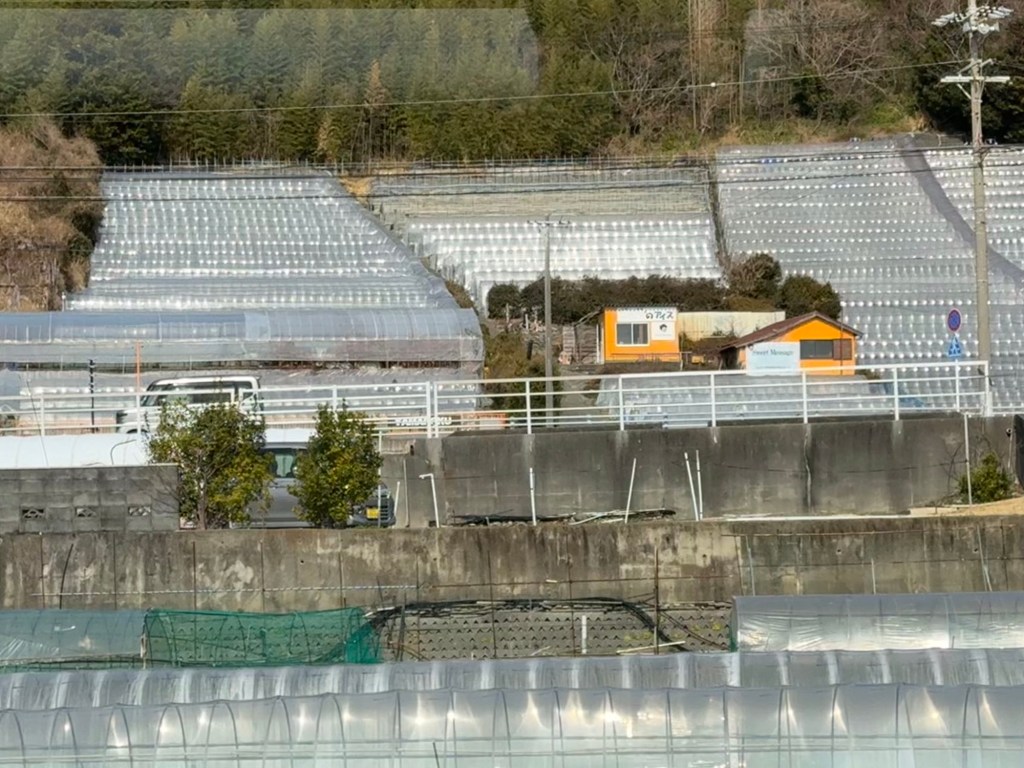
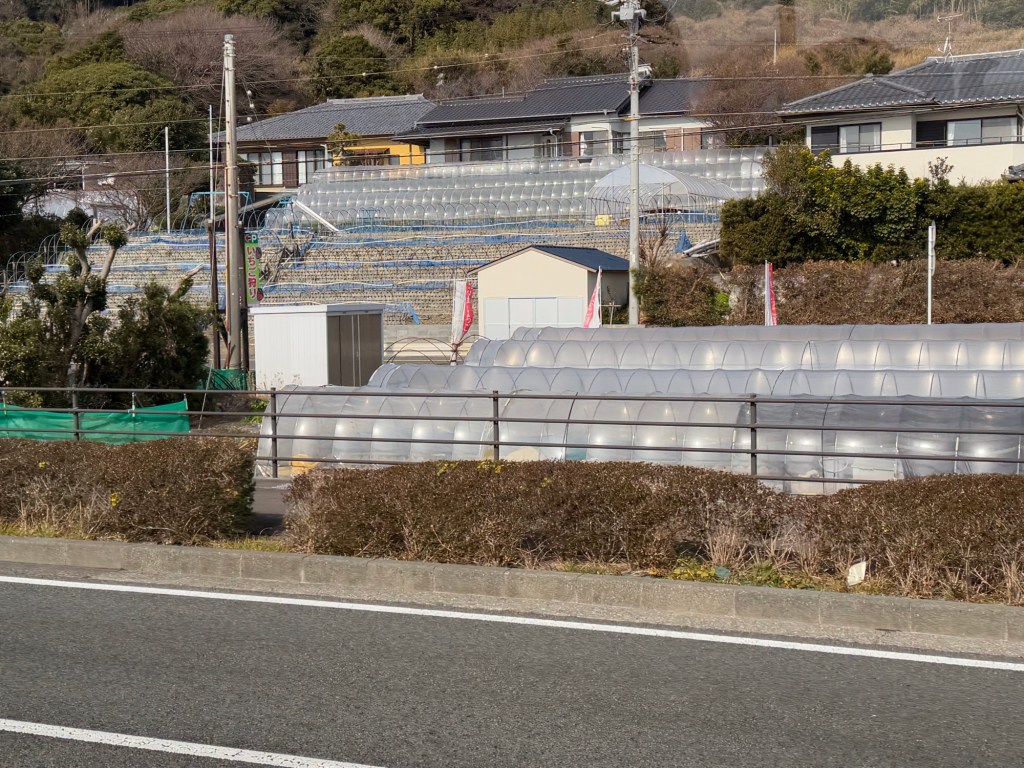
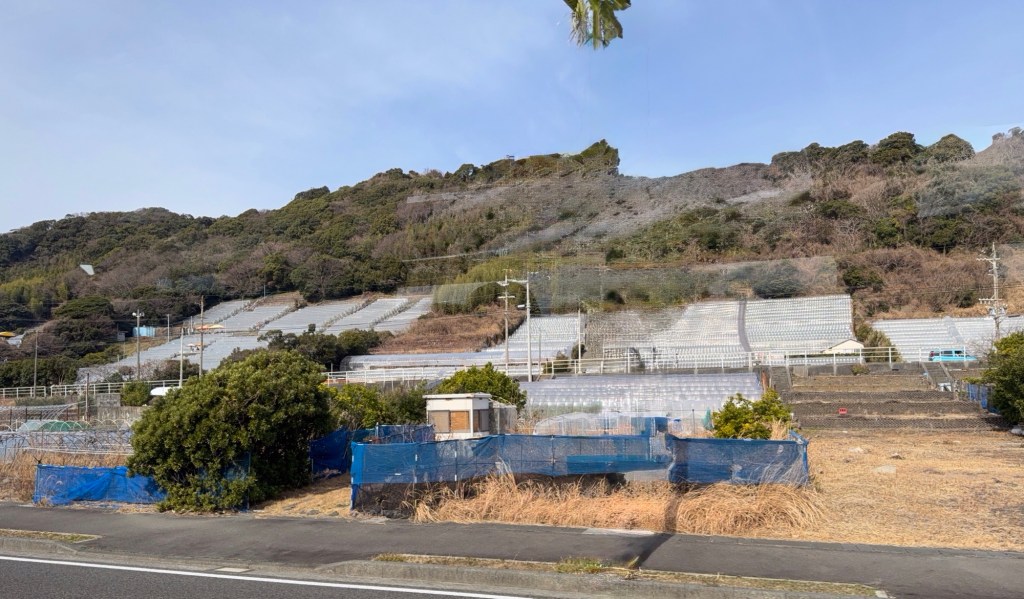
Strawberries produced  in greenhouses built on rocks. As a result the heat created from the rocks make them eco friendly. Season is from December to June. The area covered by these greenhouses go in and on….. massive. They must feed all of Japan with strawberries.

The sea at this point is very deep…2500 metres. There are lots of tetrapods used along the shore to prevent more sand and shore being lost to the sea. The area is also known for green tea, mandarin oranges, wasabi, horseradish, Yamaha motors and musical instruments,  Susuki motors.

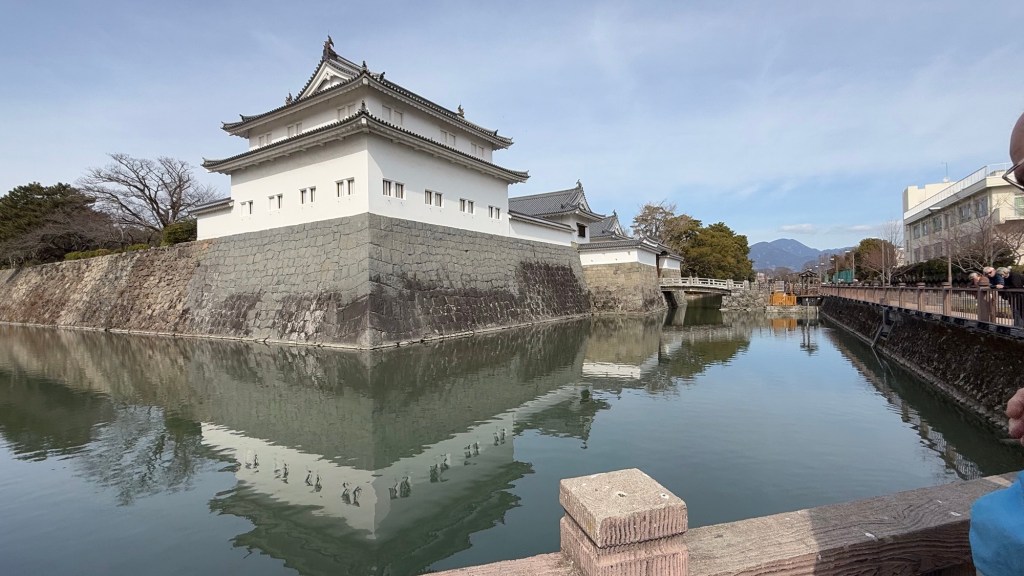
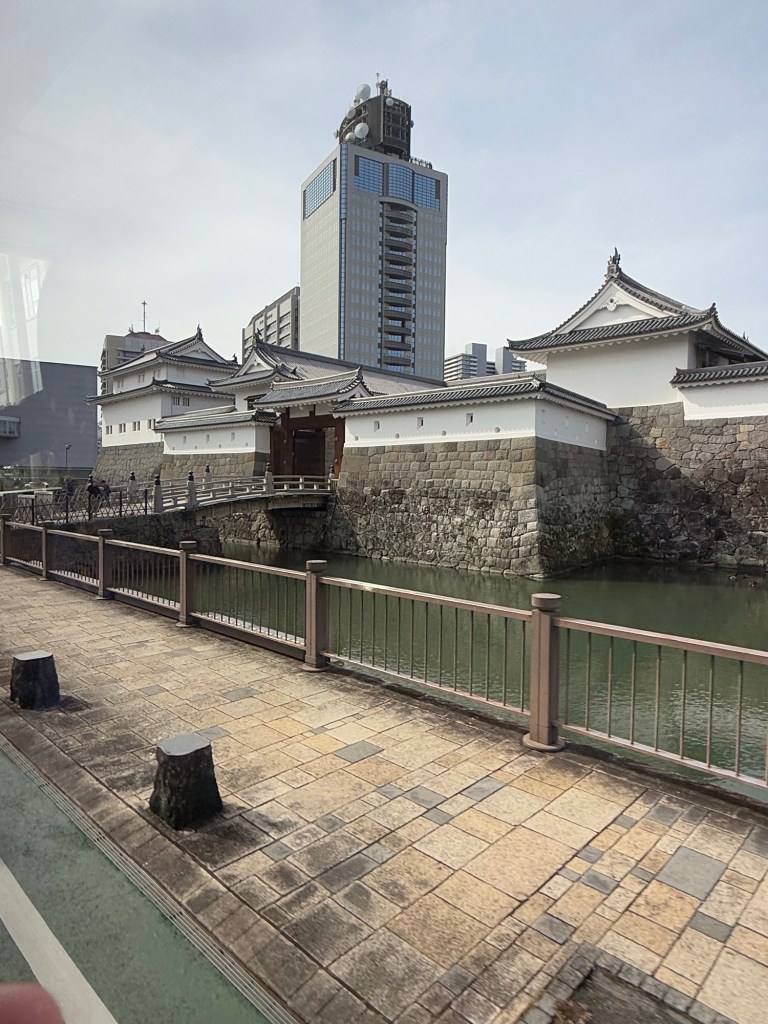
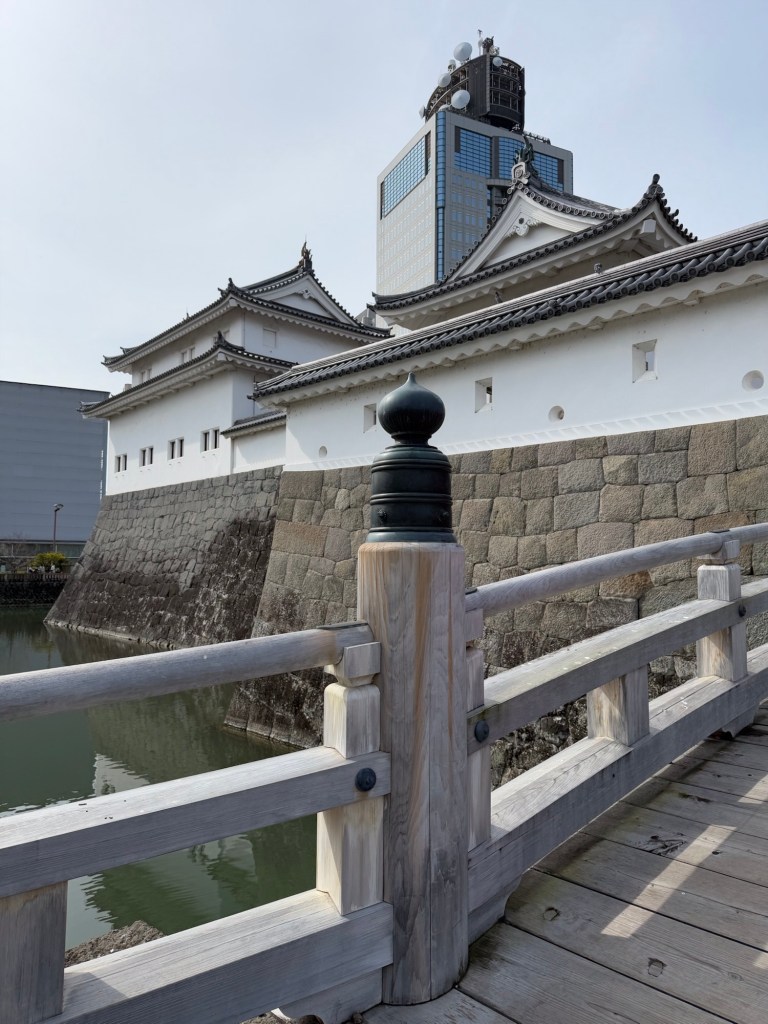
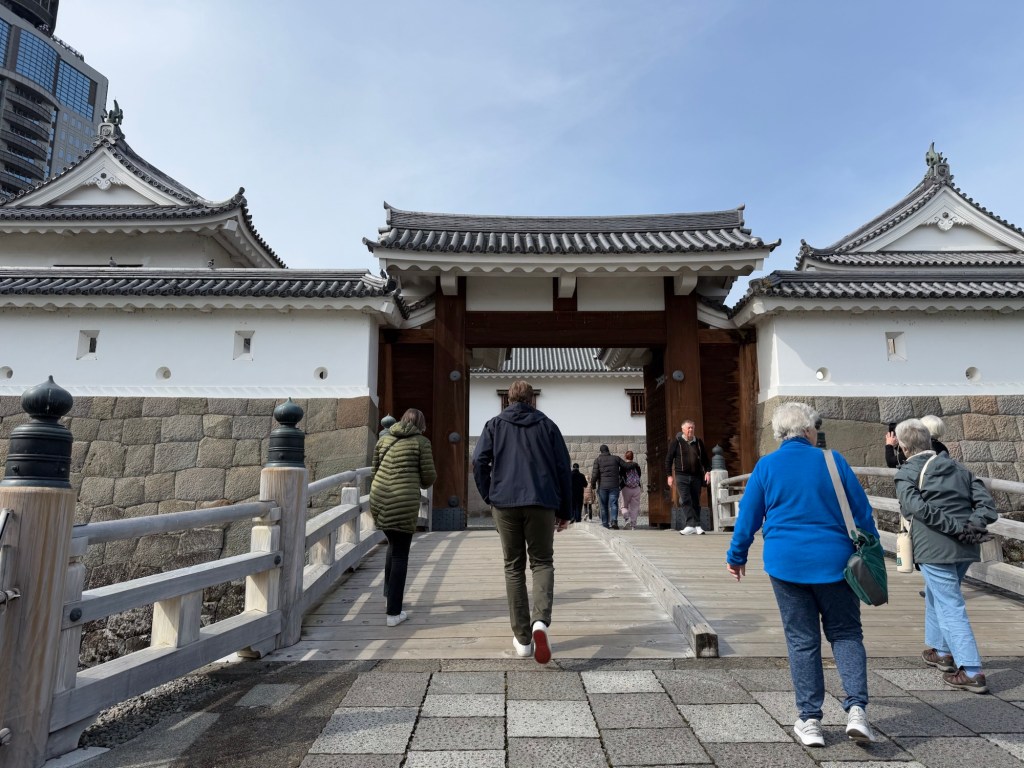
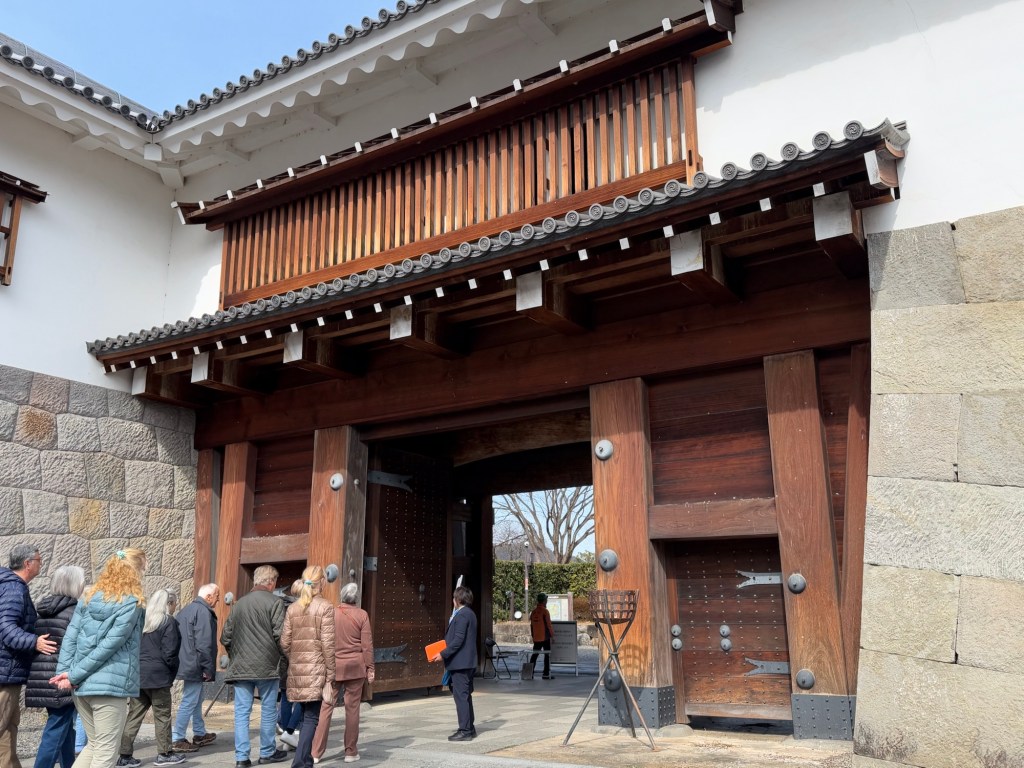
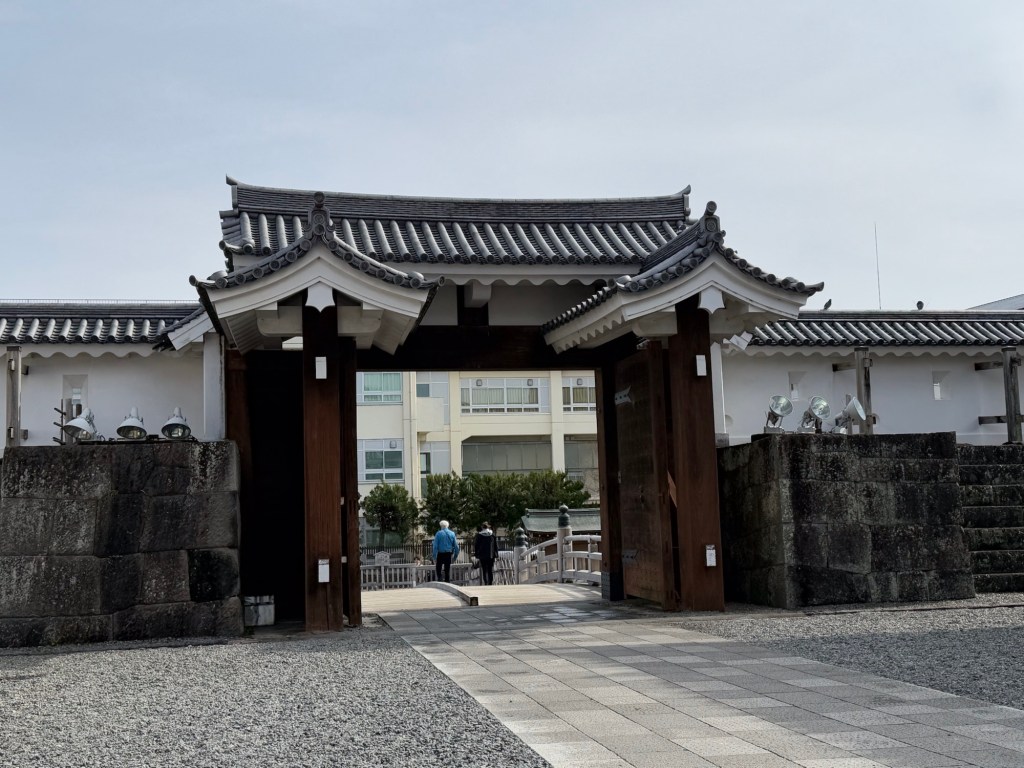
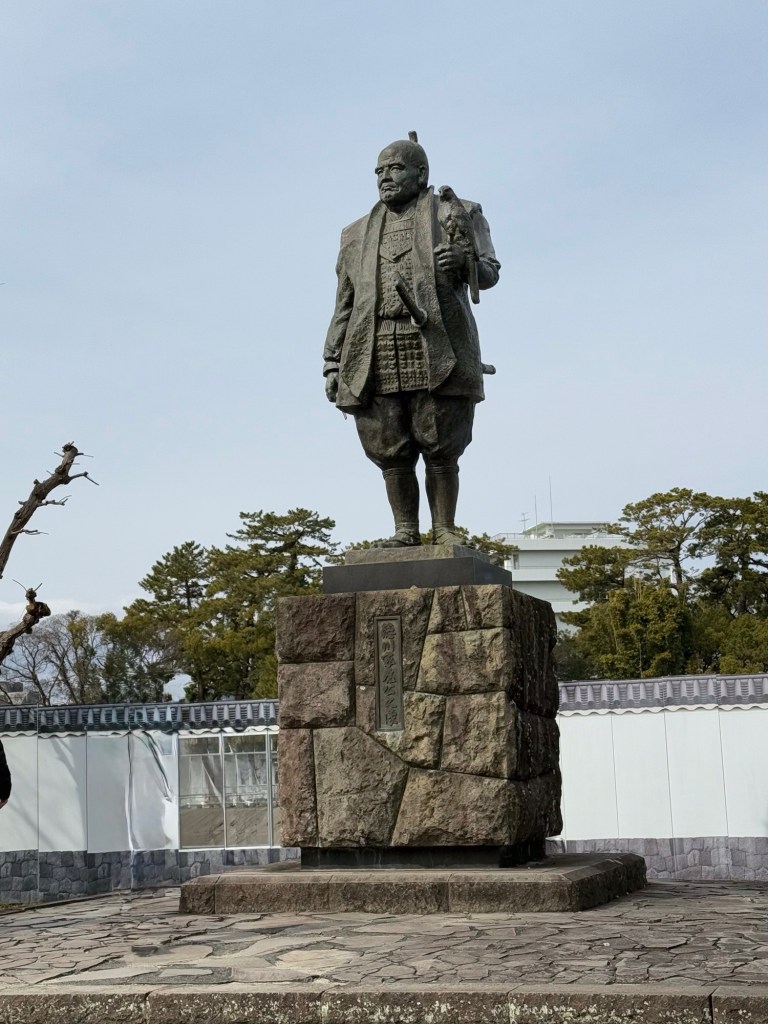
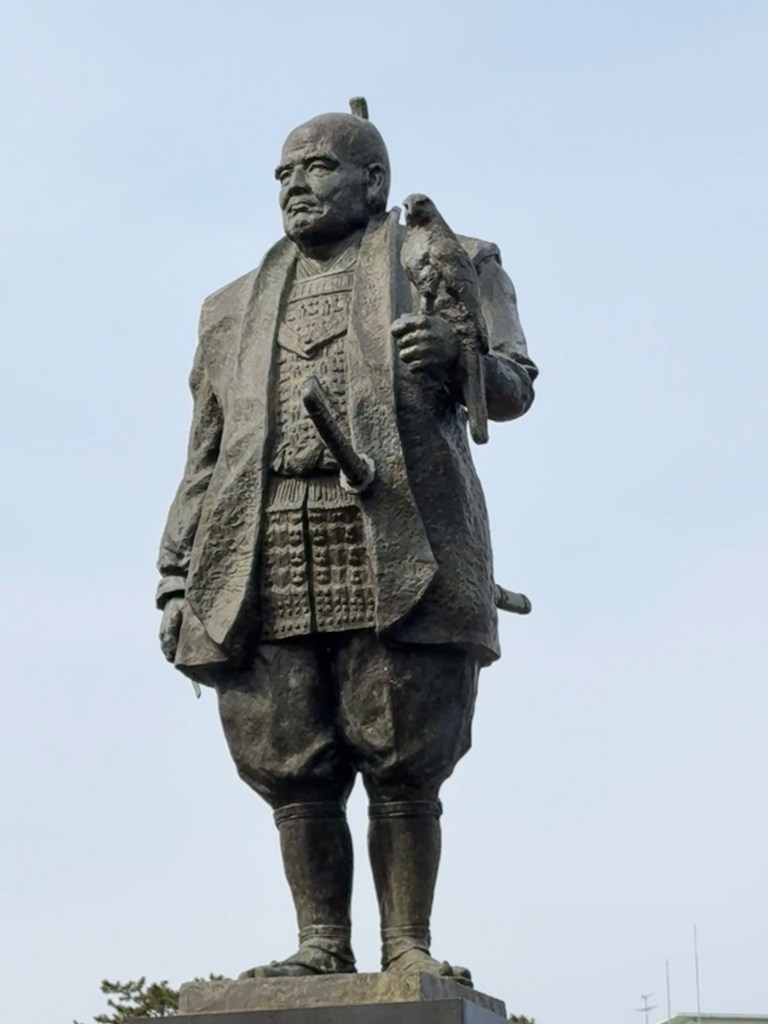
Sumpu (now Shizuoka city)Castle Park. The castle tower was build in 16th century by shogun but destroyed by fire…. twice. Now there is no castle… just gardens….extremely beautiful… wow! First shogunate …..Tokugawa Ieyasu 1549-1560…. Buried here. 

80% of Japanese are Shintoists but 80% are also Buddhists 

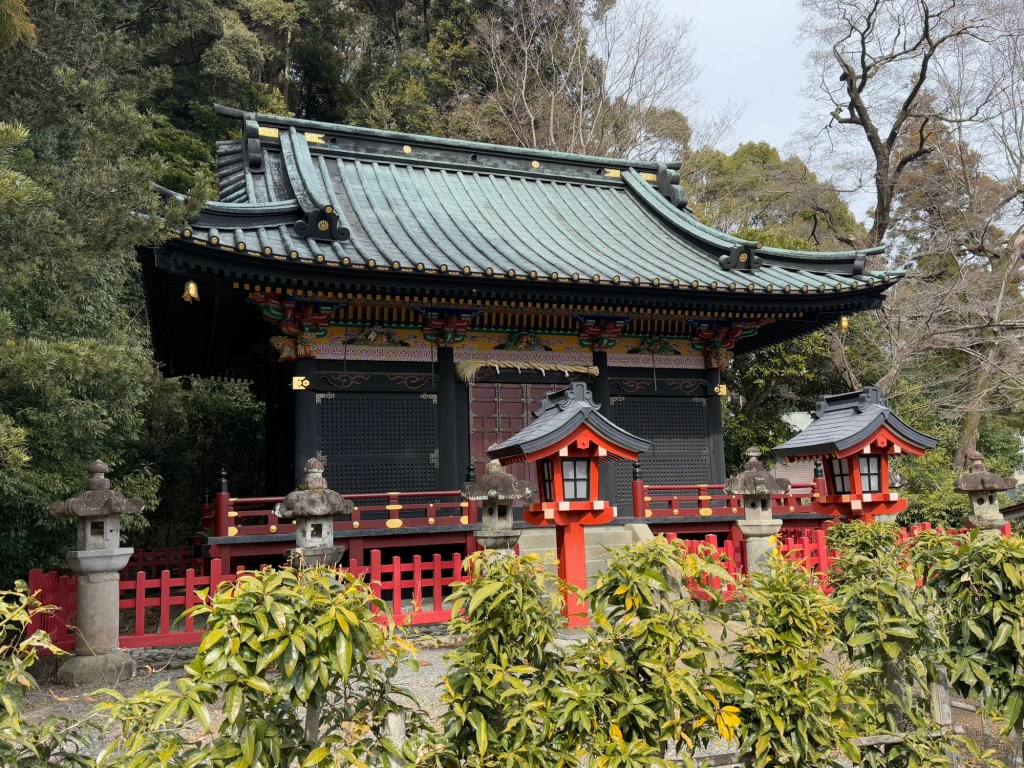
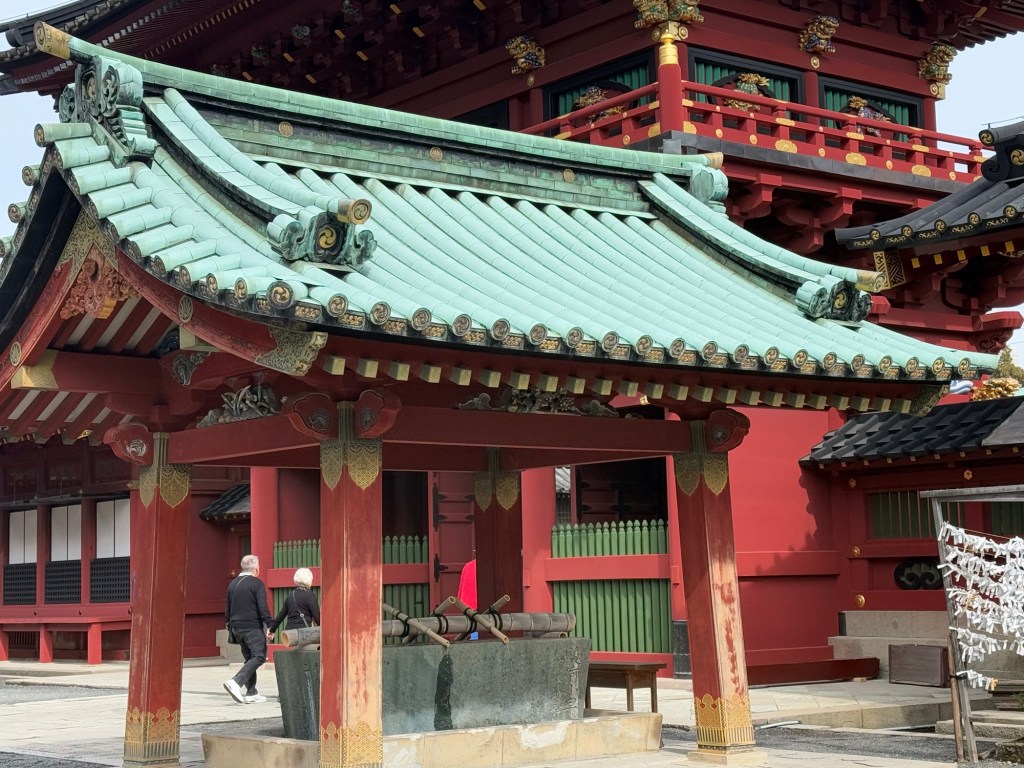
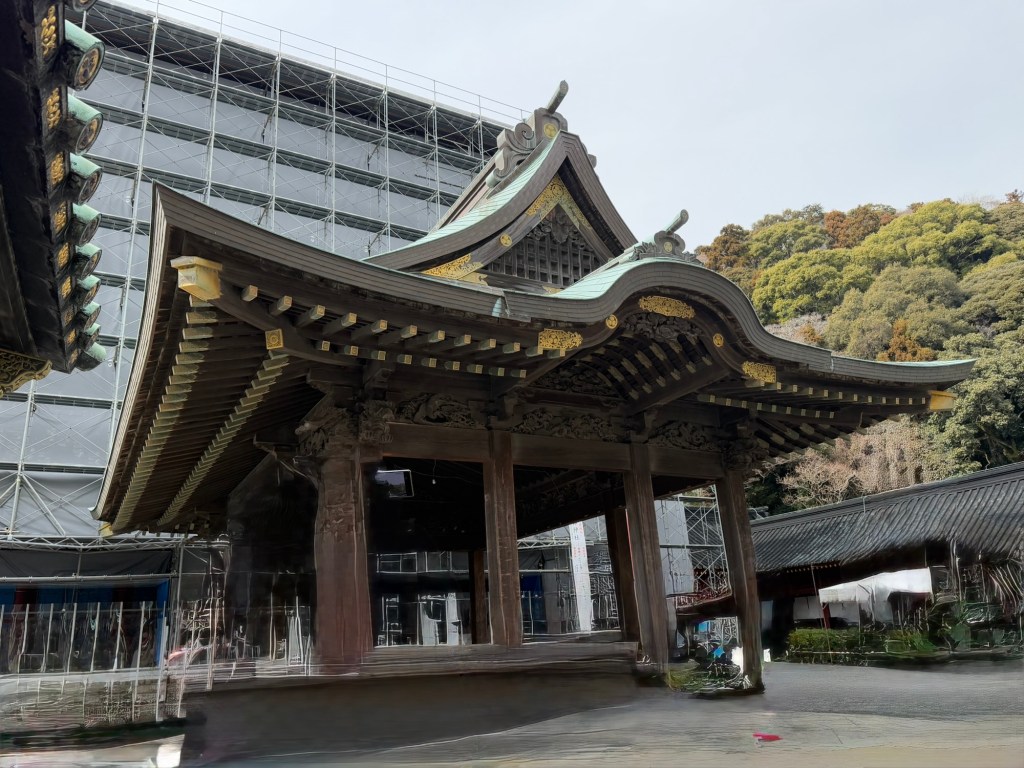
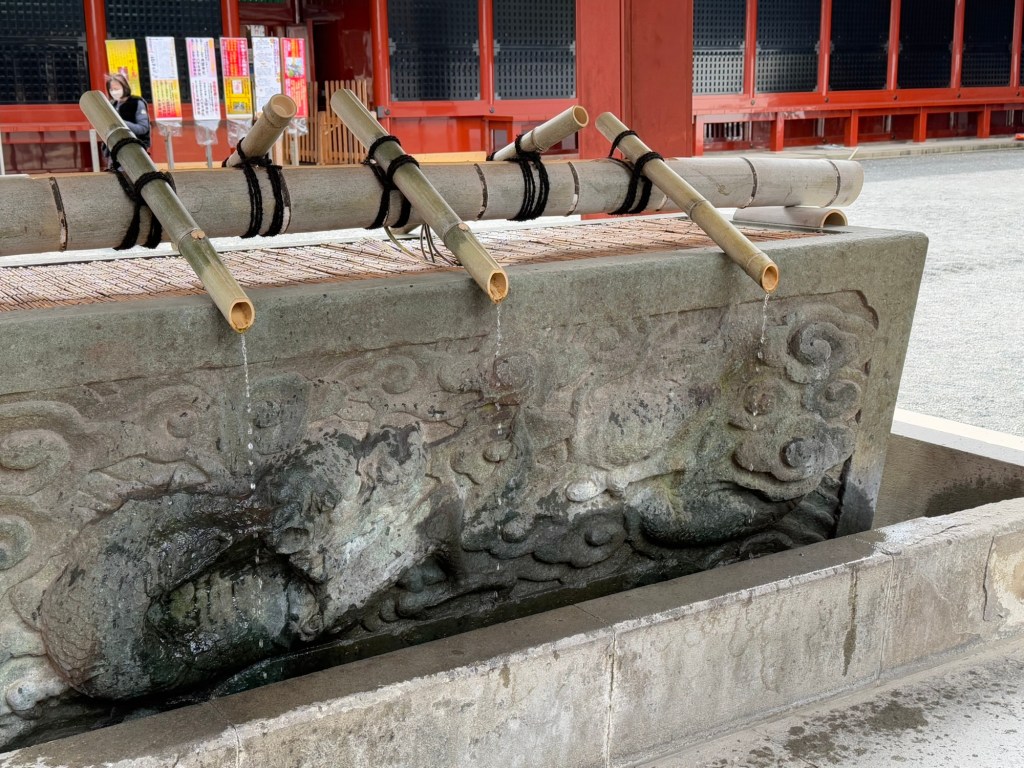
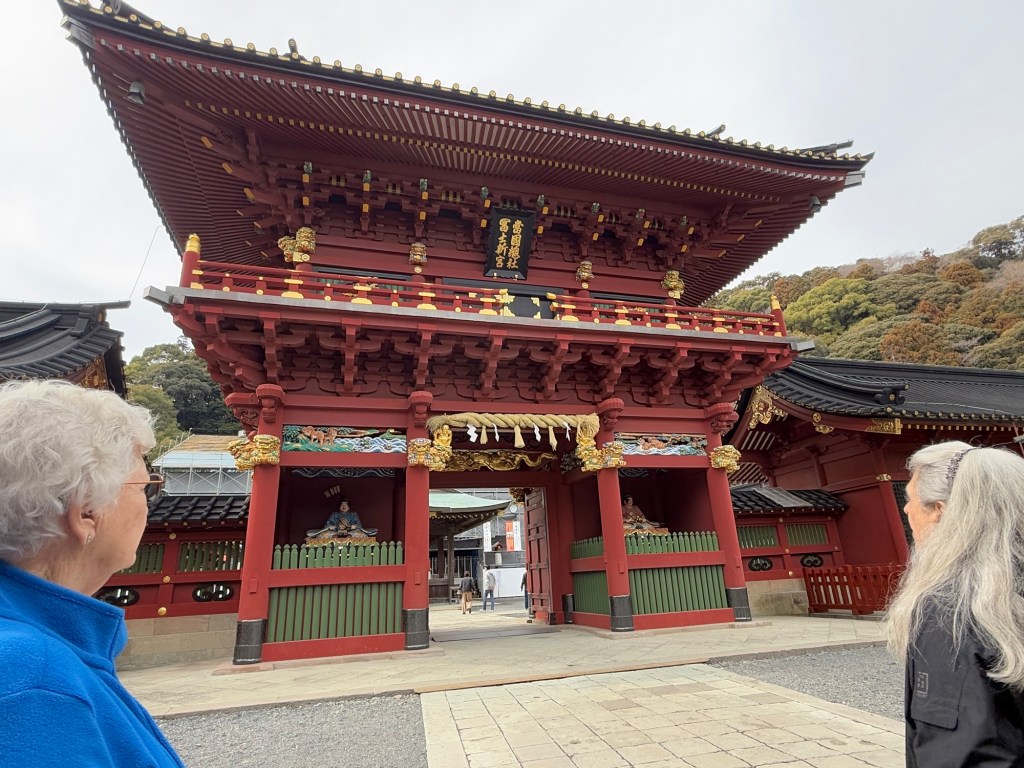
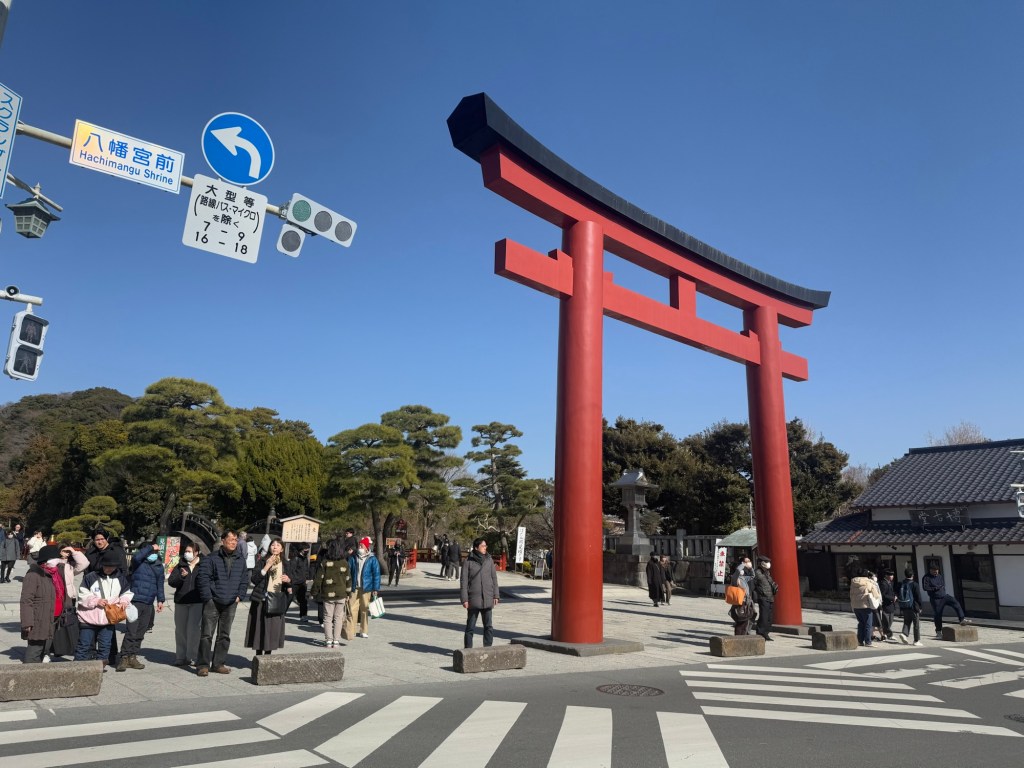
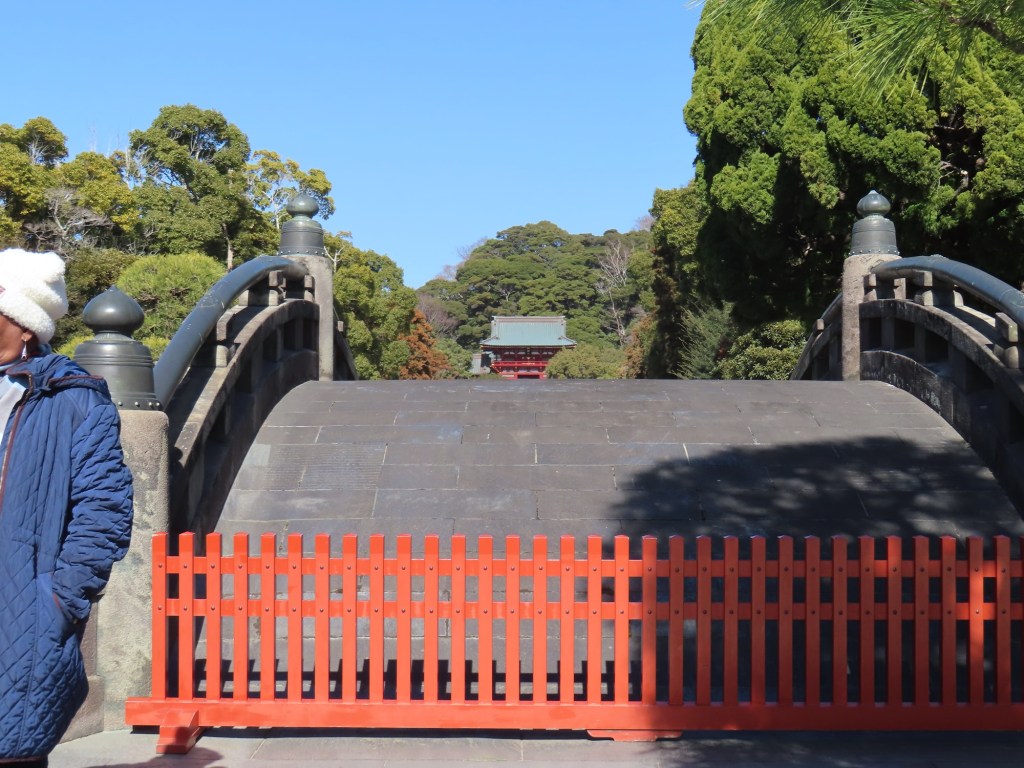
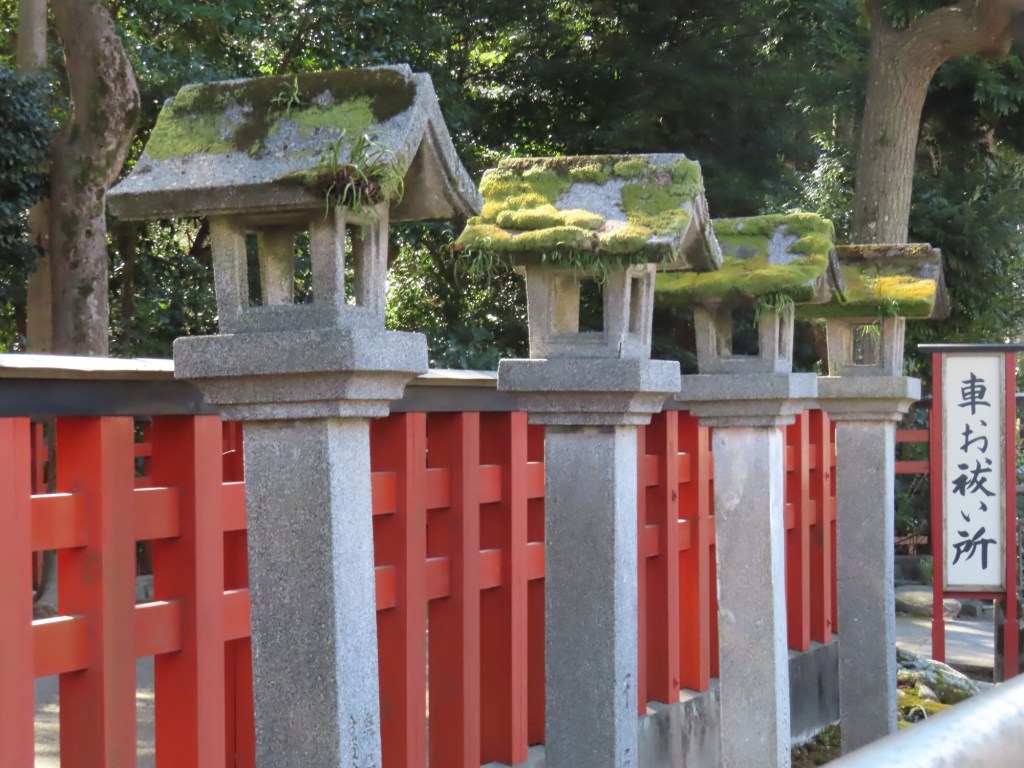
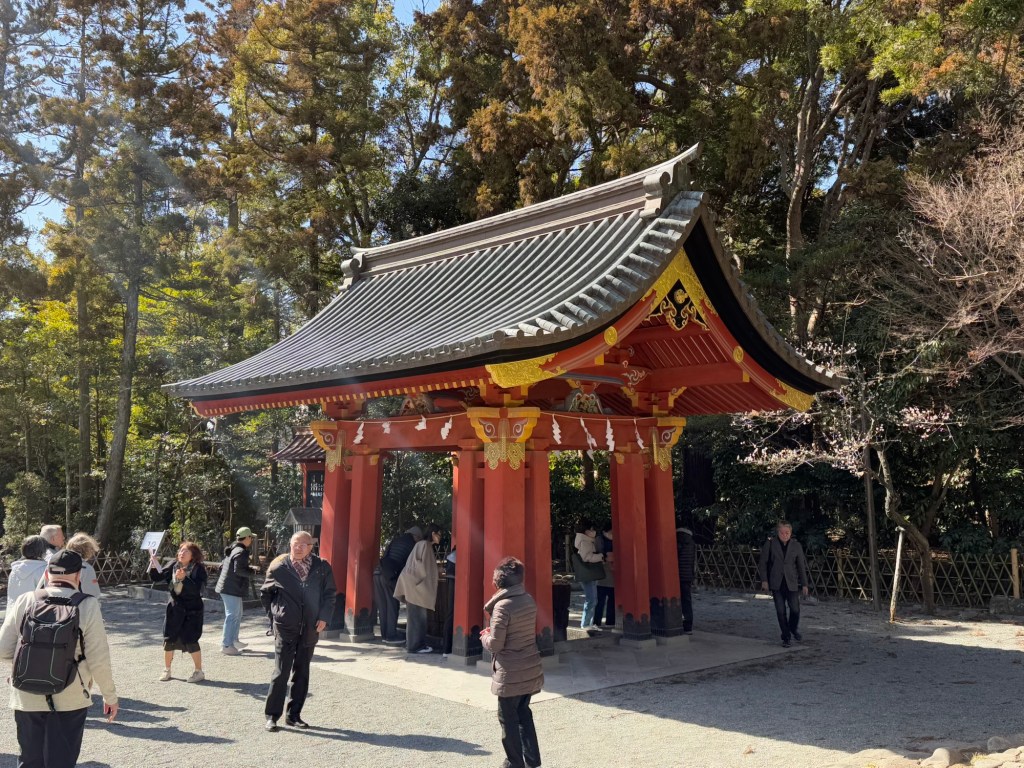
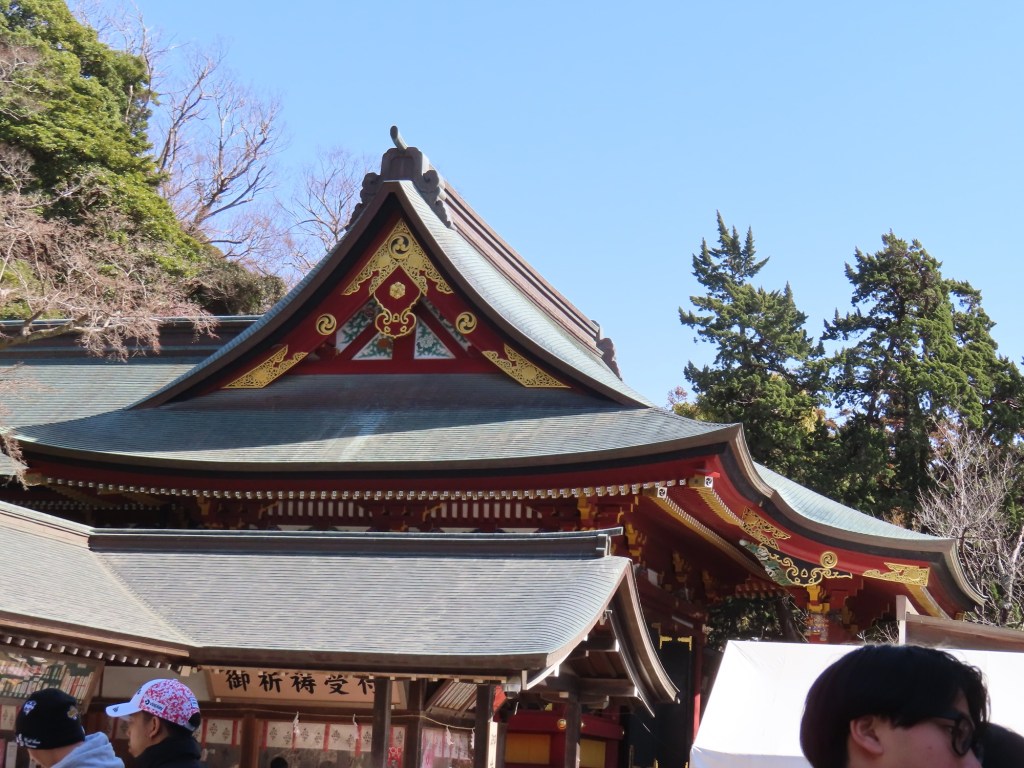
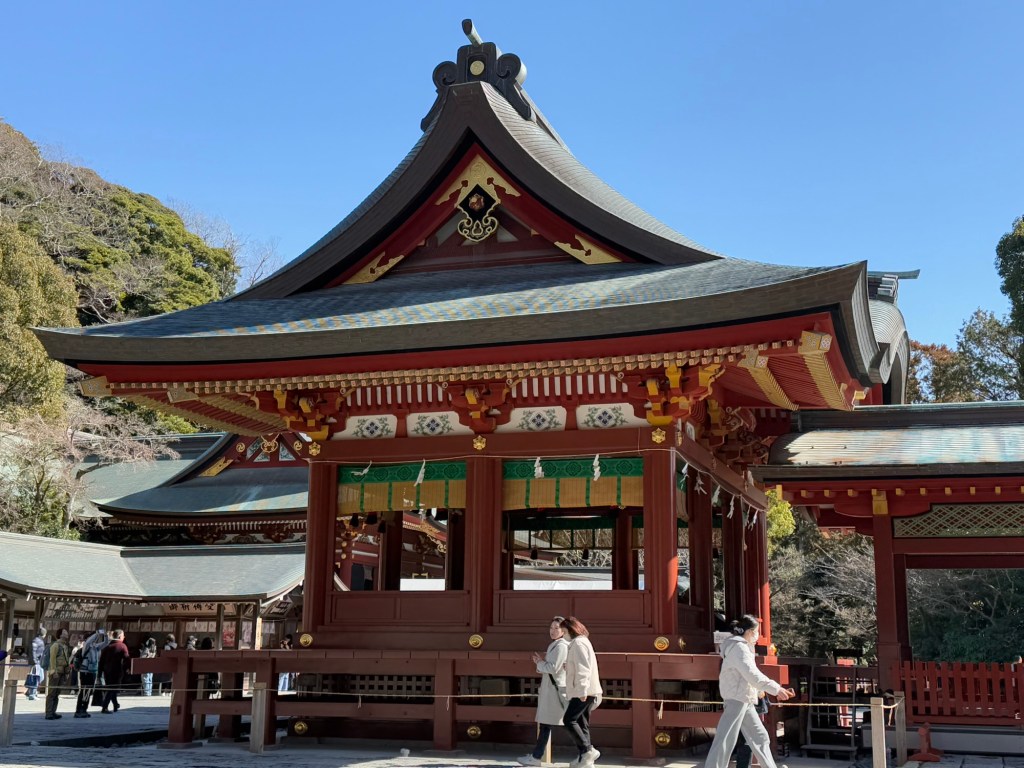
At the Sengen shrine there are actually 7 shrines. Torii gate is a kind of boundary between outside… (secular) world and sacred world. They are doing a 20 year makeover on these shrines so some structures were not visible. You can certainly see the difference between the buildings done and those not done.

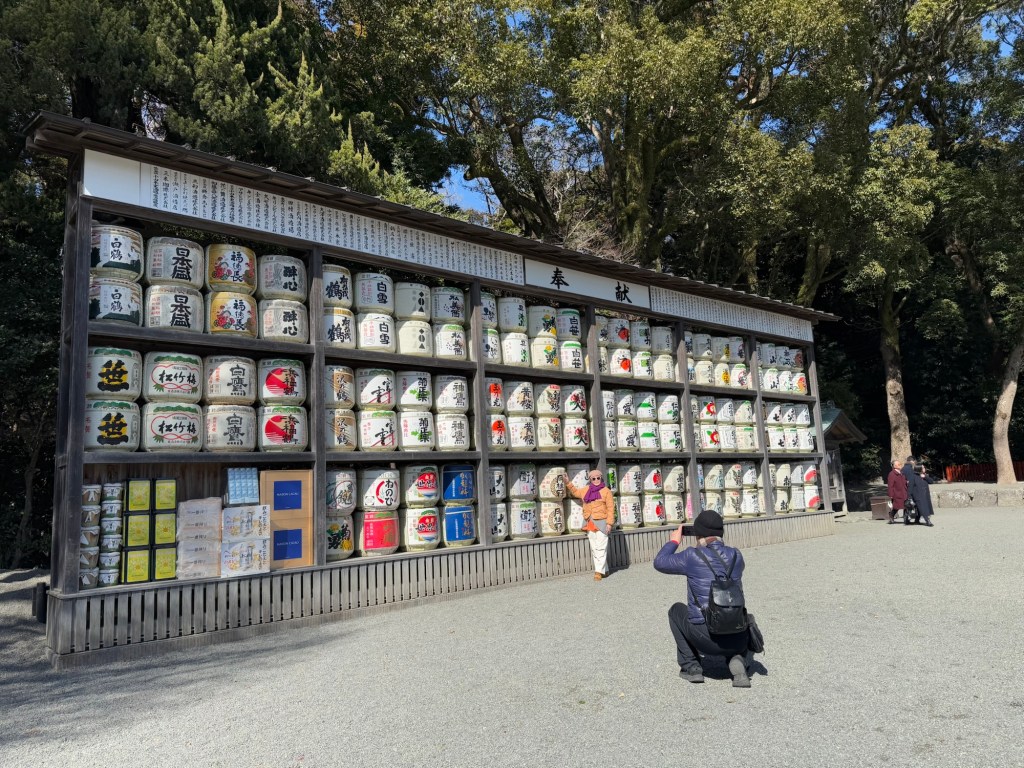
Sake is very important in Shinto rituals …. Used as a sacred holy water. 

Shizuoka has a population of 700,000 is also declining. Most of homes are 2 stories (very few with garden) with few tall buildings. 

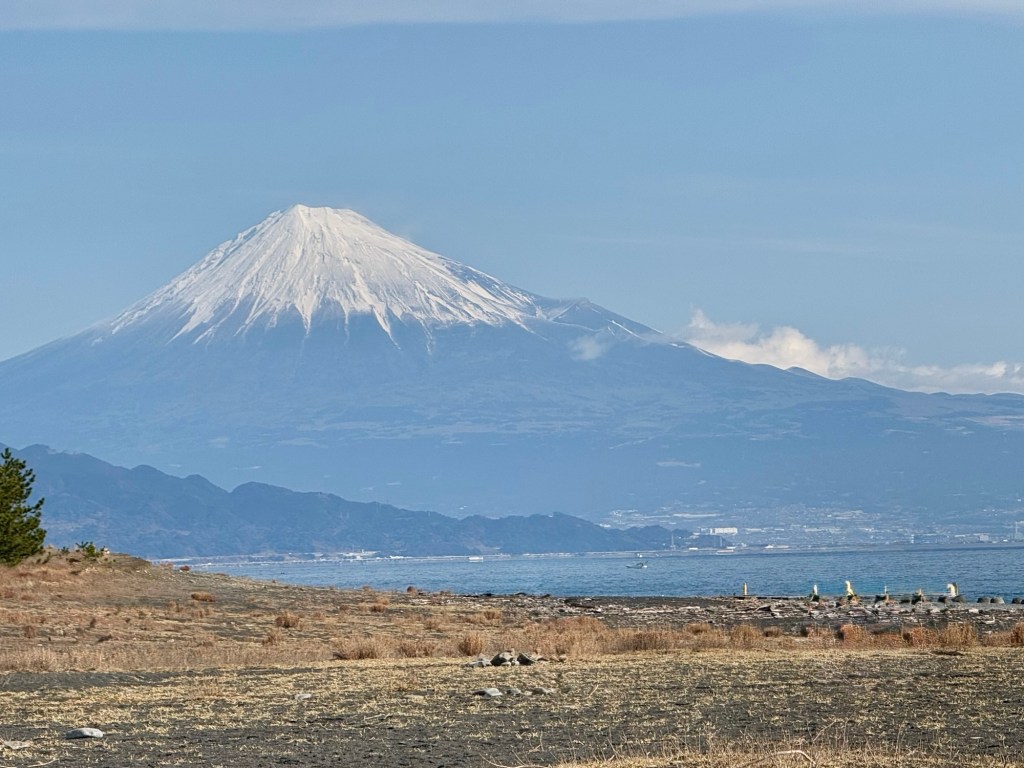
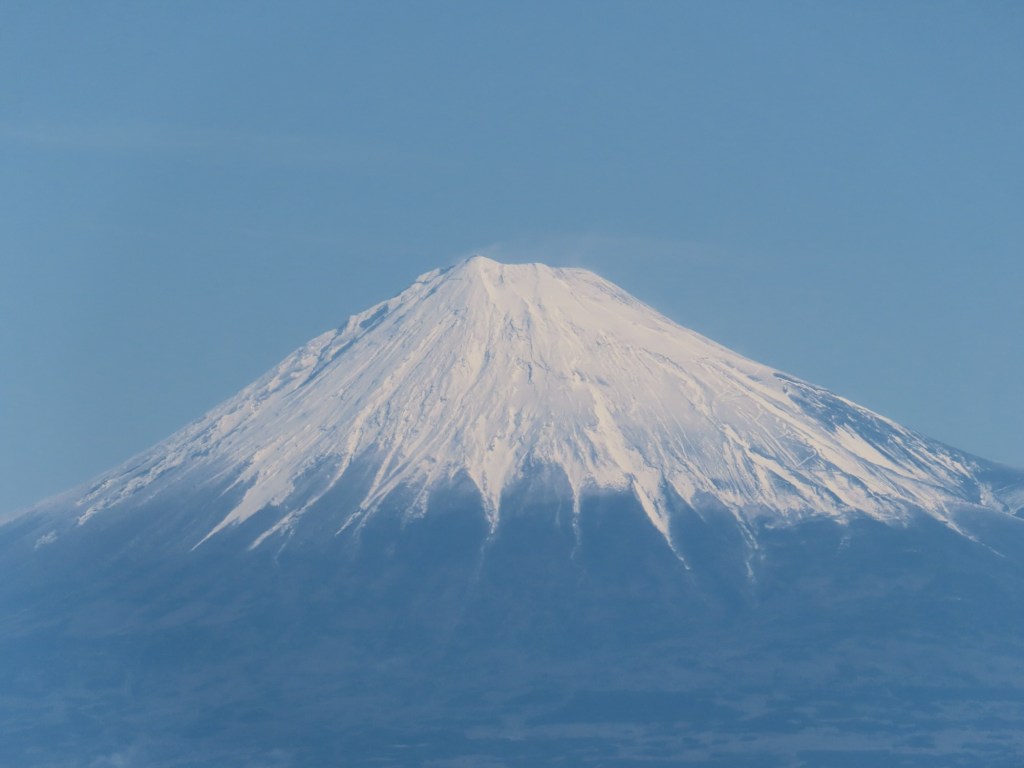
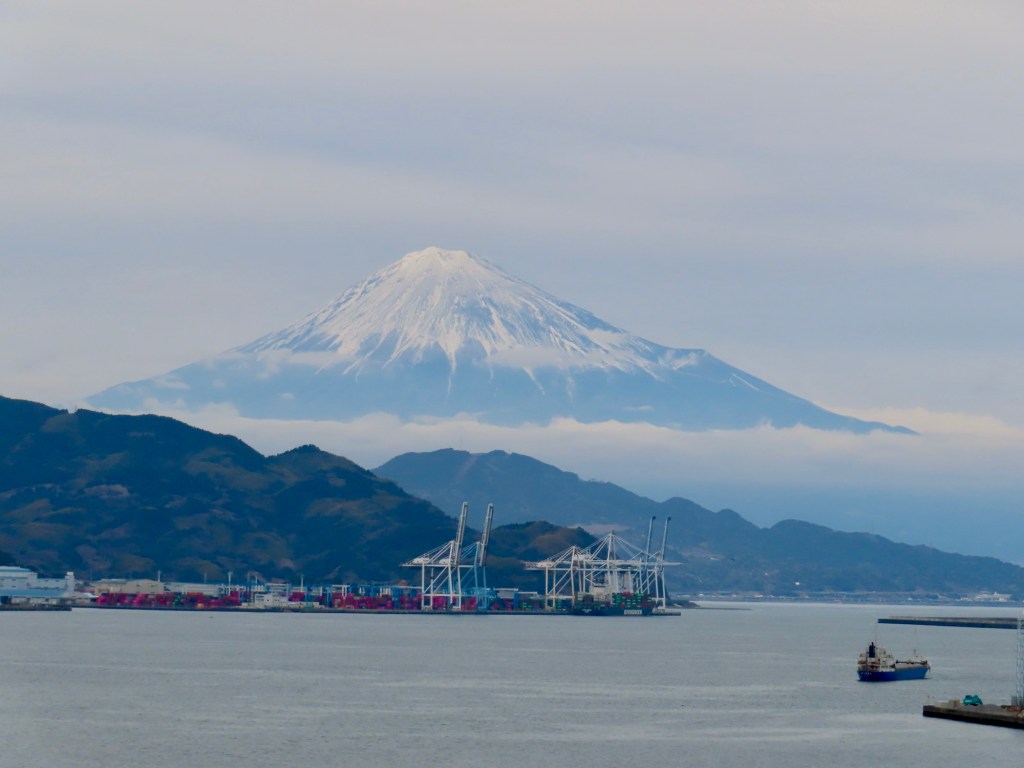
If temp is 16-17 C, clouds will form from the sea,usually covering Mt. Fuji but we are very lucky today. The mountain is totally exposed….. beautiful. Mija believes we brought luck with us.

Mt. Fuji is 3776 metres high…. more than 11,000 feet. Pictures don’t do it justice!

Days 17, 18,19 & 20-Feb 12,13,14 & 15/25-Tokyo

Feb 12th ……we were to have gone into Nagoya. As mentioned in the previous post, we passed by it in order to get to Tokyo earlier when high winds and rotten weather were expected. That did not materialize. I don’t know what the captain was thinking. Maybe, Tokyo Bay is too shallow. It took a long time to get into the port of Tokyo. He might have thought we’d be thrown off course. I don’t know, but we did not get to do or see anything on land. It’s our Linda’s birthday so we did celebrate her by going to “Jacques”, having a wonderful dinner and drinking champagne.

Feb13….Our excursion today goes to Kamakura

Our guide today is Romy-sad though understandable, her father told his daughter that Japan was guilty and so she grew up hating her own country. 

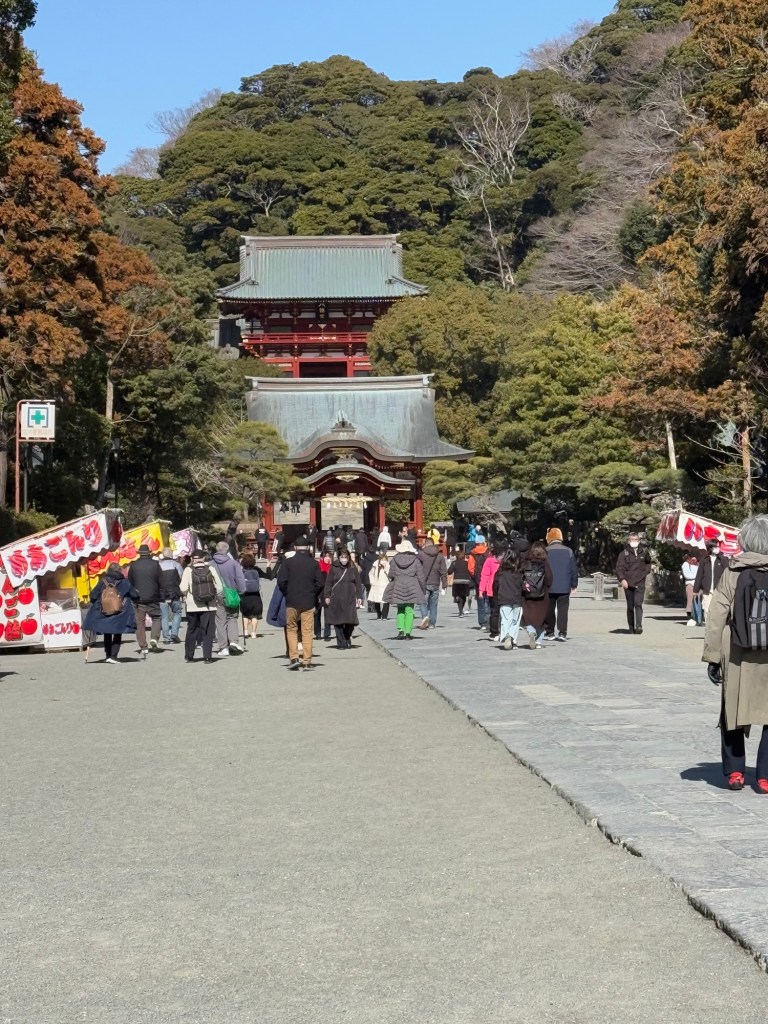
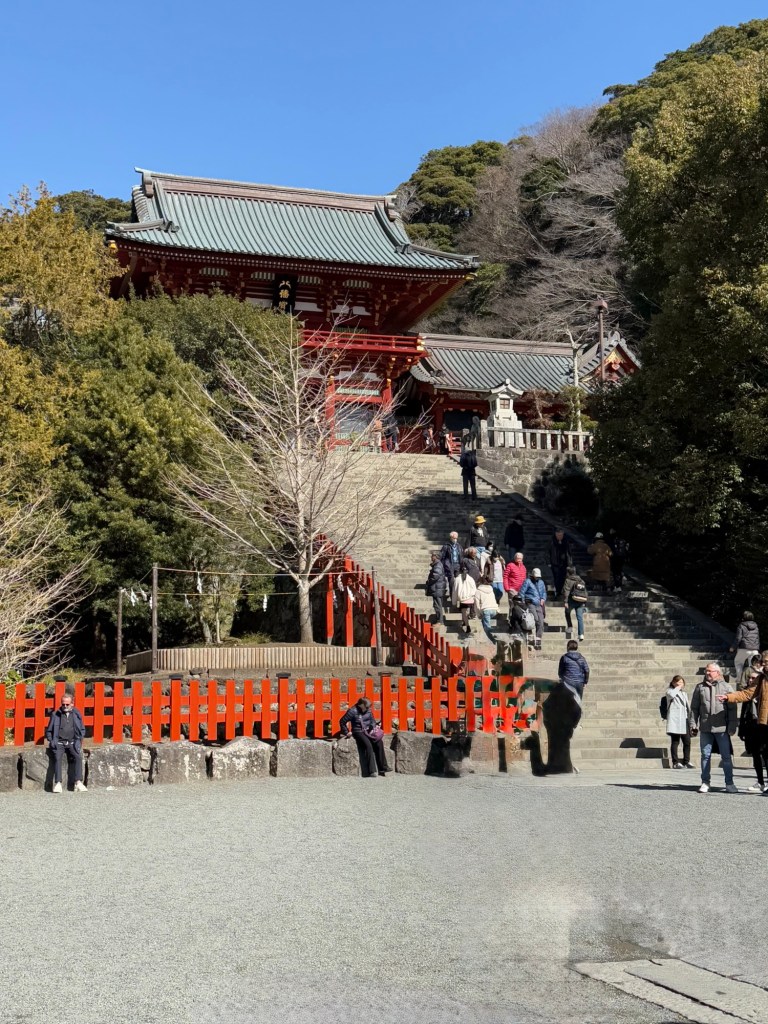
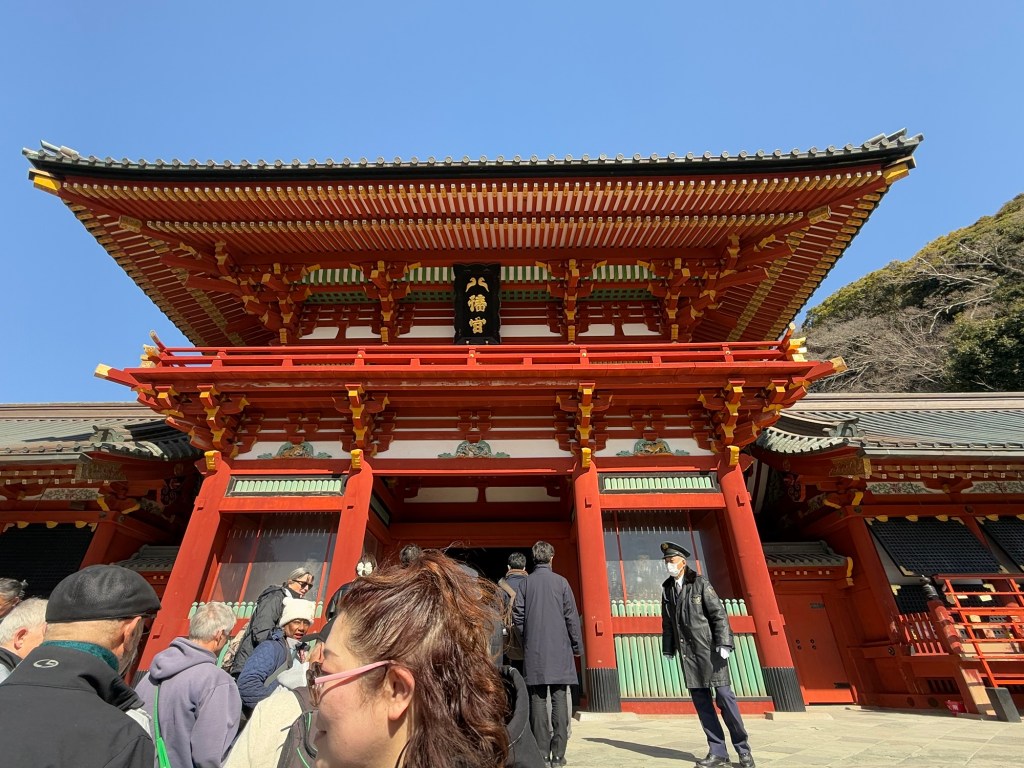
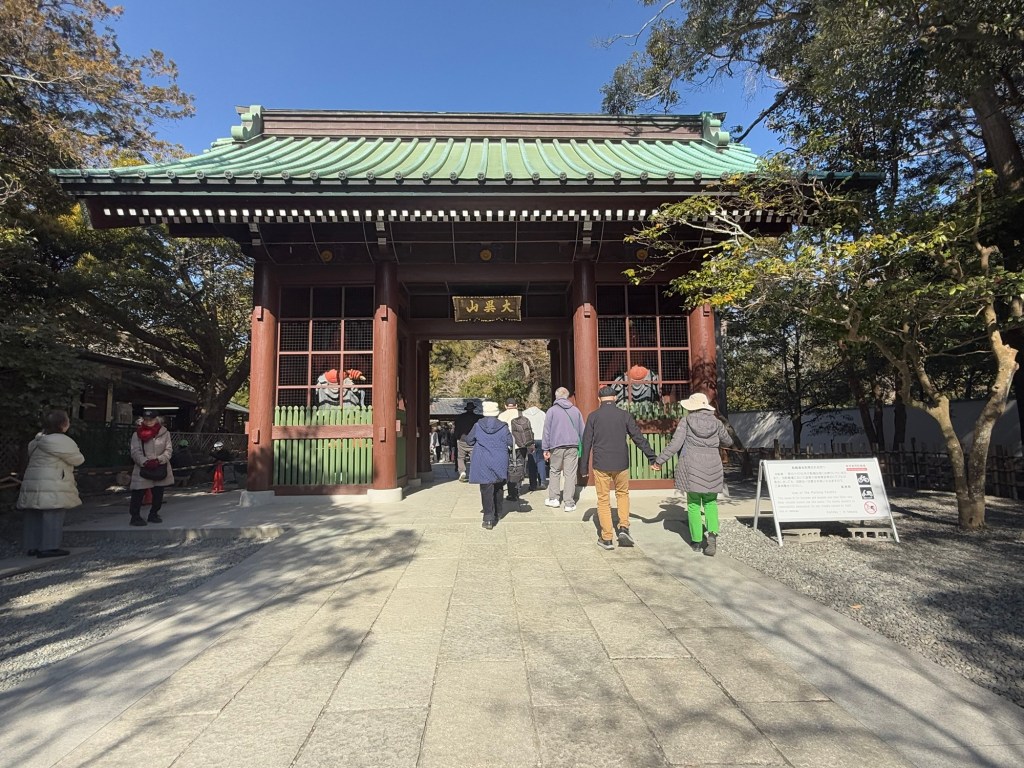
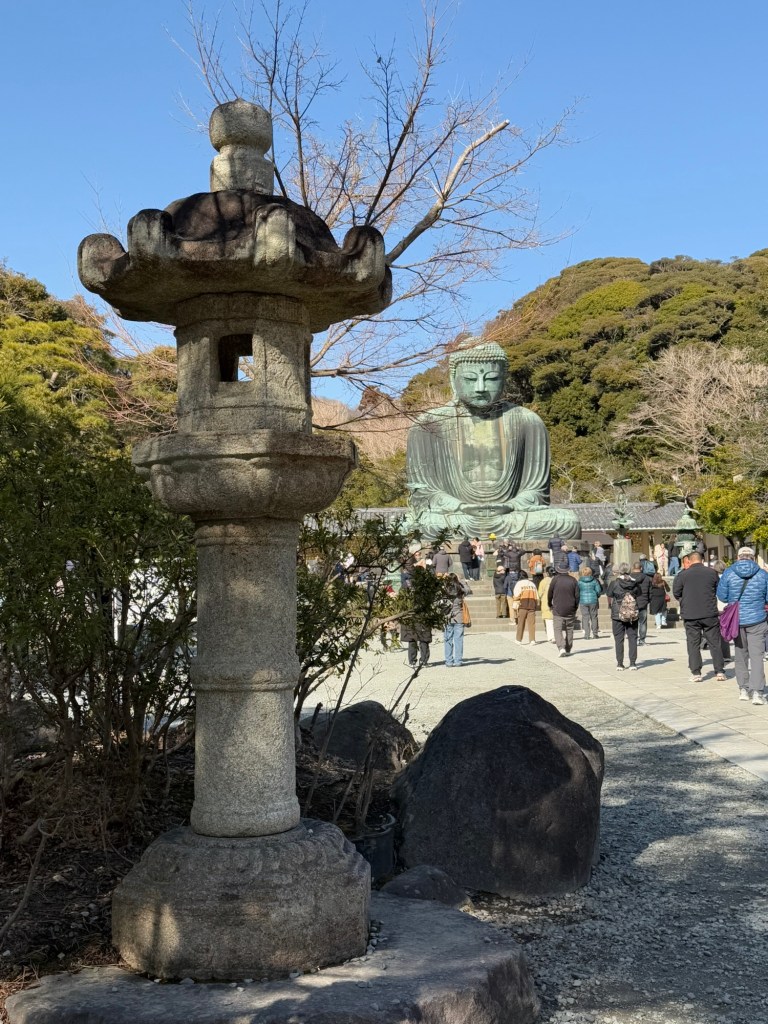
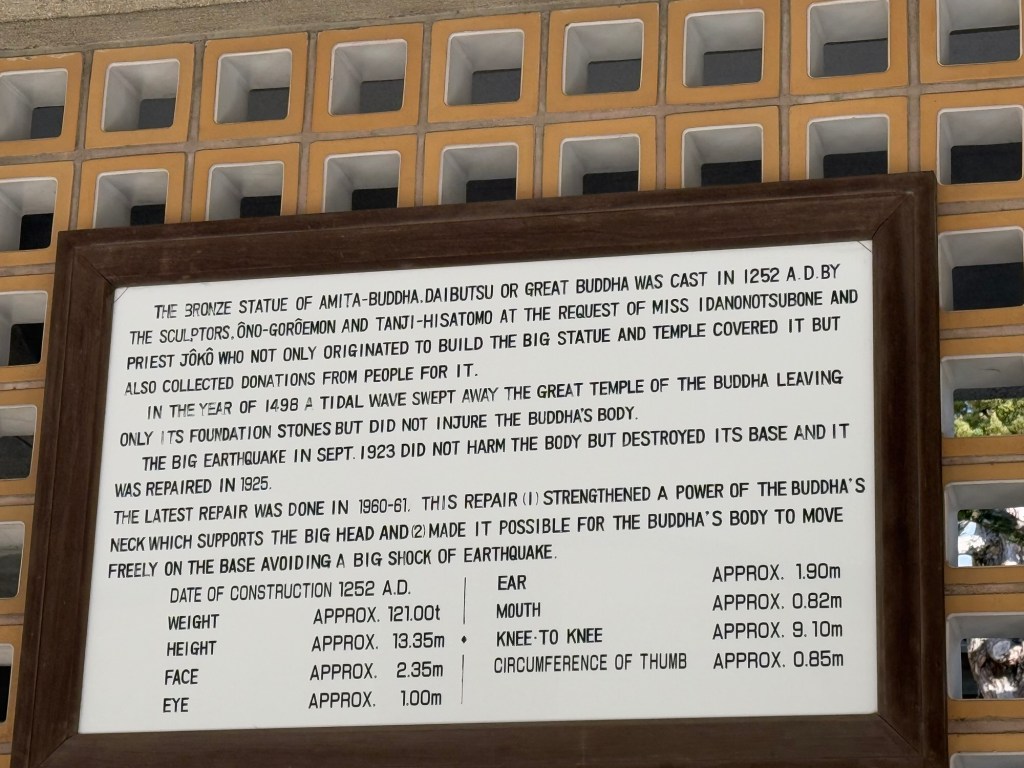
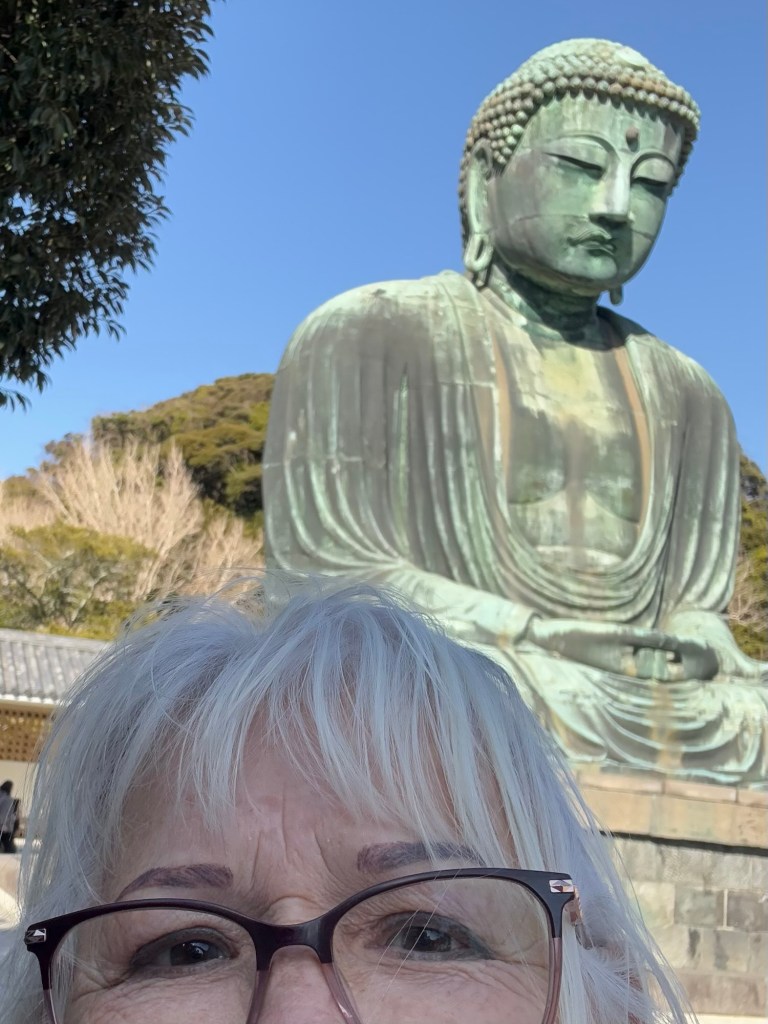
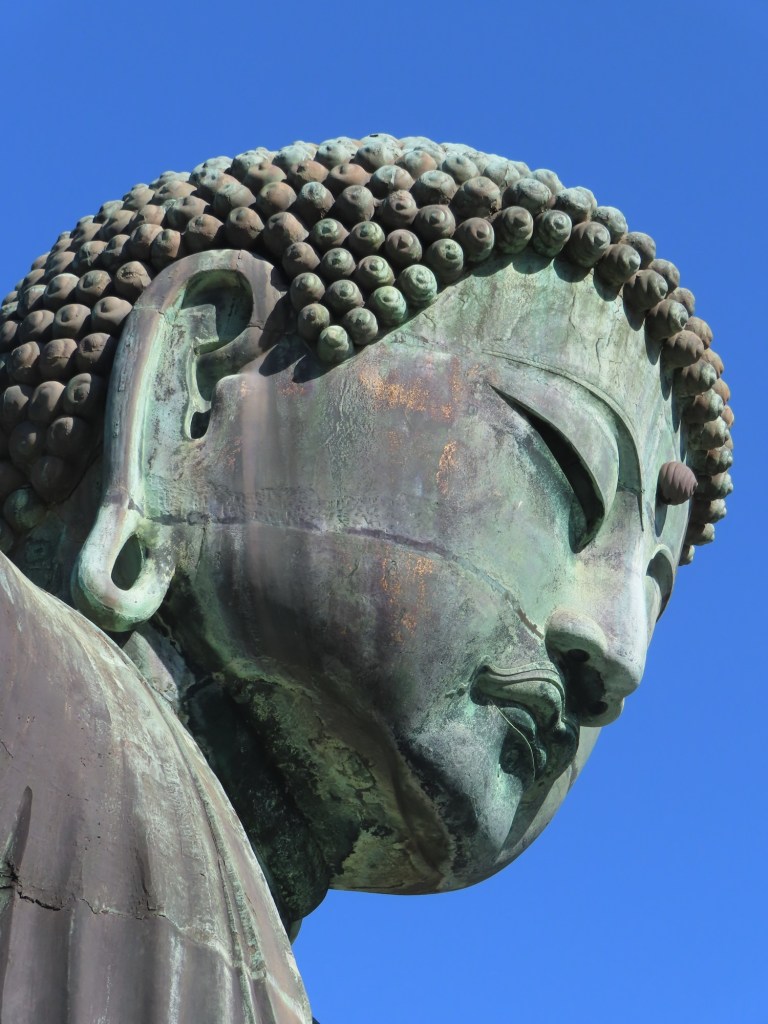
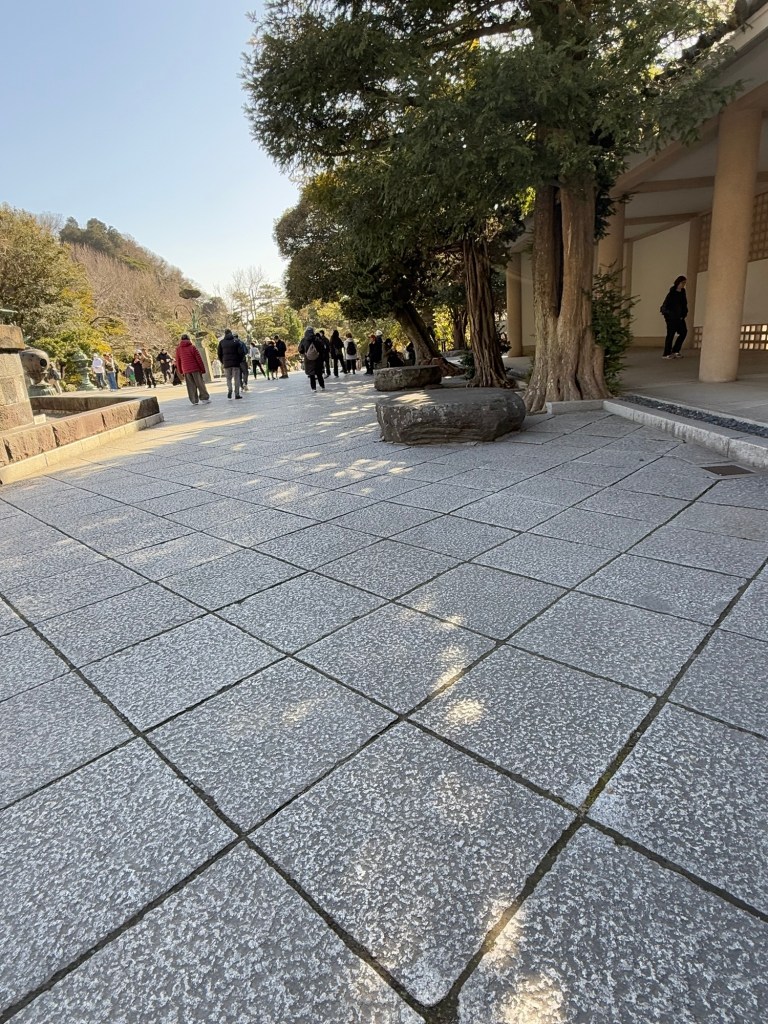
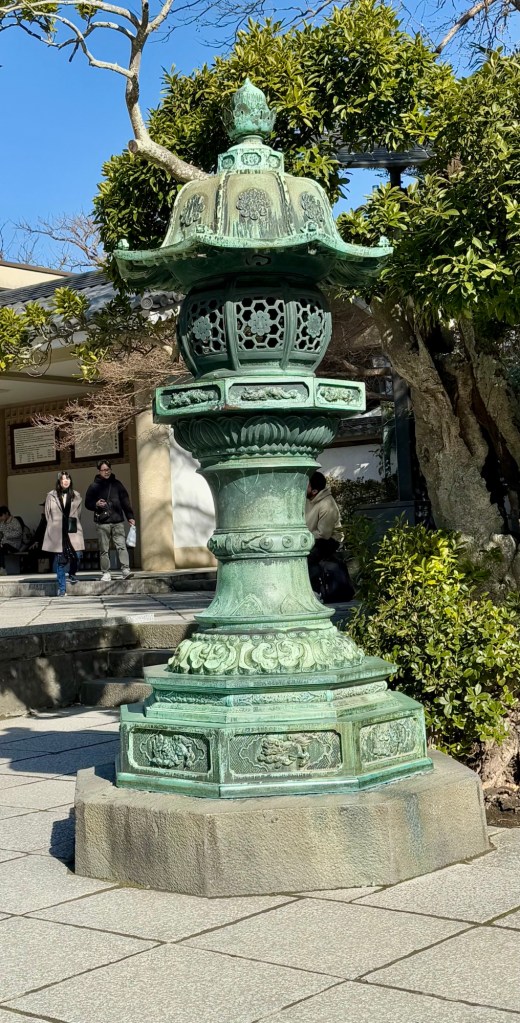
It’s an 1.5 hour to our first destination…. Historical Komachi Dori (dedicated to God of War) Shinto shrine … 11th century and giant Buddha (19tons) at the grounds of Kotoku-in…..erected in 1252

Fiji is active but hasn’t erupted in 350 years. Tokyo has a population of 14 million of which 3 million commute ever day. In 1868…. The country opened the ports to international trade. Previously they didn’t want Christians… because their missionaries colonized other countries and they didn’t want them to do the same with Japan. 5 ports that were opened in Yokohama, Kobe, Nagasaki, Kamakura and Niigata. Two national airports here… Narita and Haneda. 

 Japan’s economy is continuing to decrease as with a lot Asian countries. English is taught in middle and high school for 6 years. For 60 years it’s been mandatory 

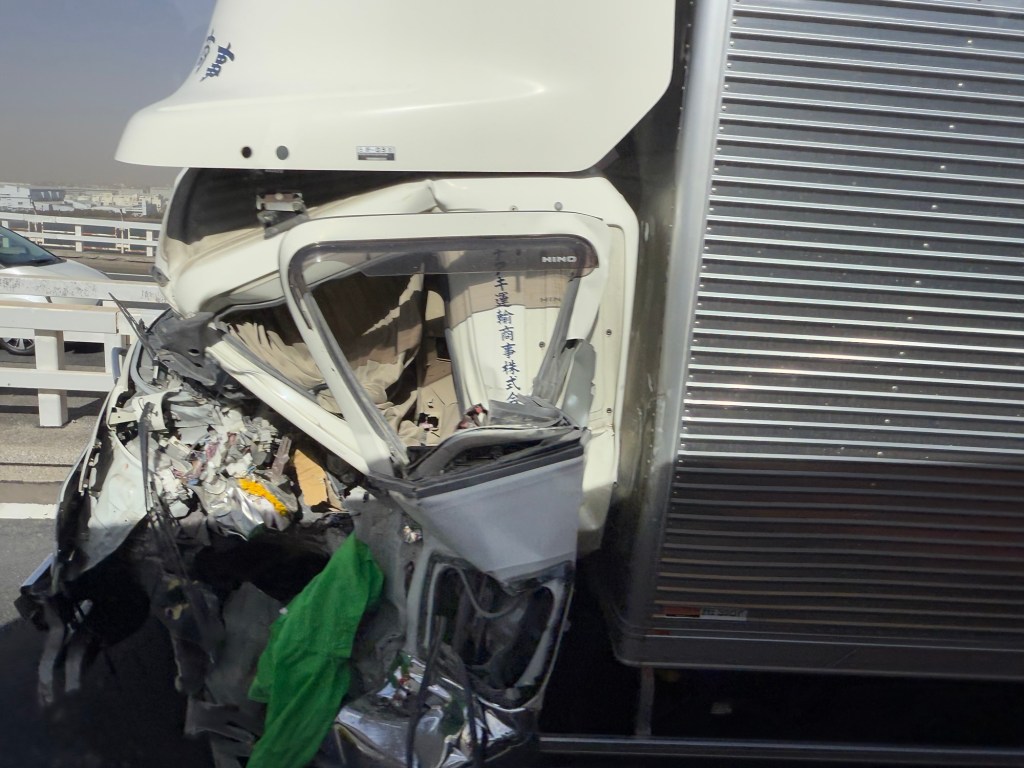
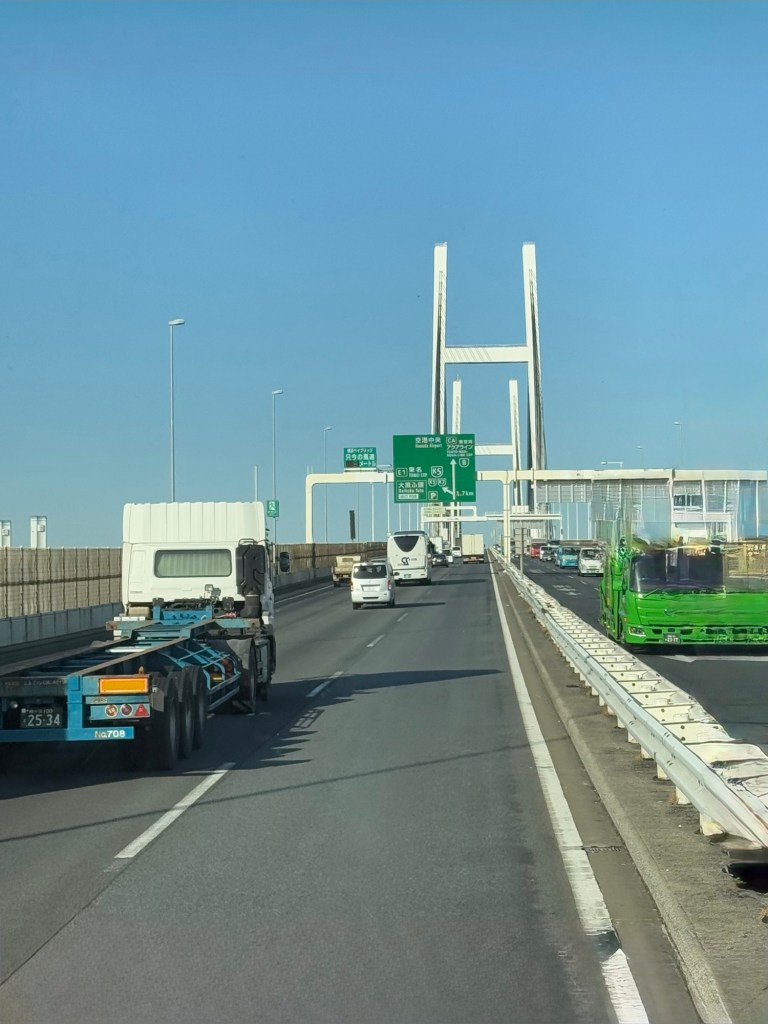
There was an accident on the bridge that caused a big delay in getting to our destination on time. Once off the highway, it was quite a windy narrow road.

Japan armed itself during the 1800’s so that they wouldn’t have the same problem of opium like China had. Not sure why they attacked the US when apparently they are very interested to keep learning the American  form of democracy…. (We’ll see how that goes).

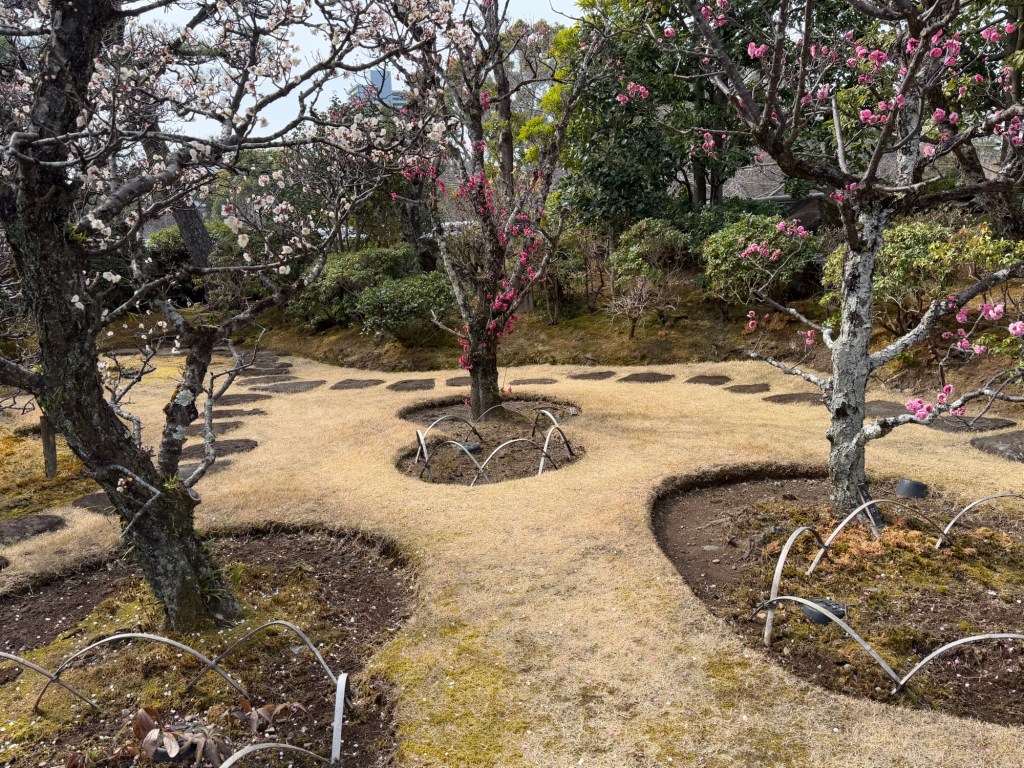
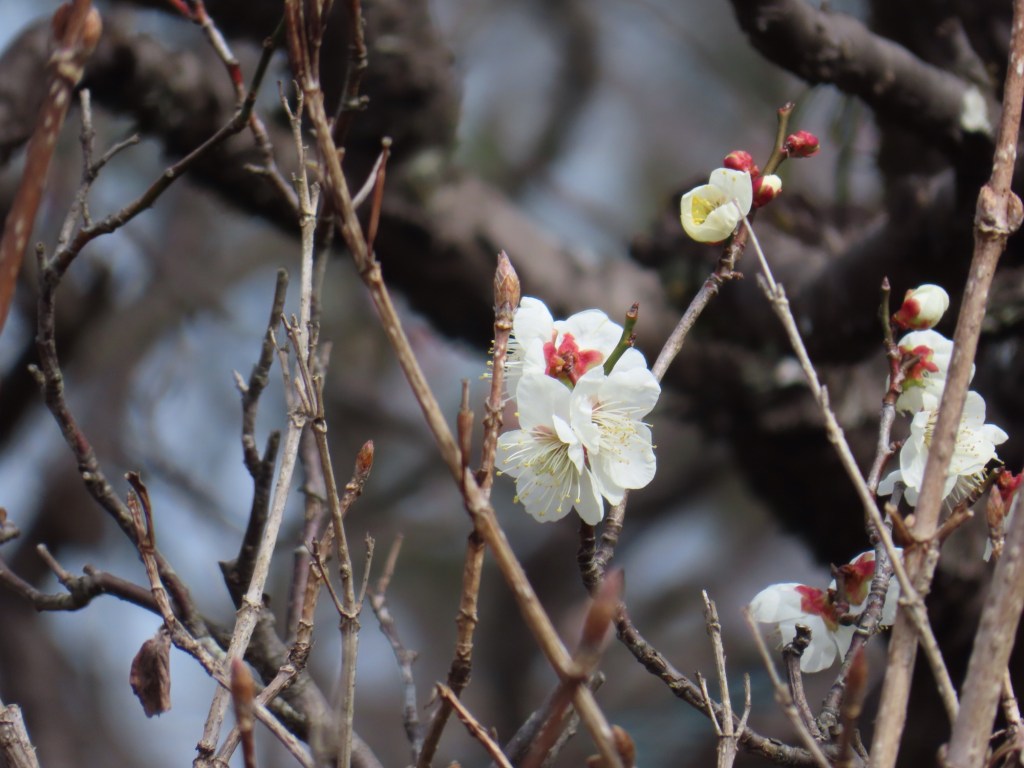
Pine, bamboo and plum trees are considered noble trees.

Geisha is a woman of arts like music, singing poetry….. not a courtesan. Funny, but the southern Japanese doesn’t understand northern Japanese because of dialect differences. For some reason I didn’t expect that. 

Shintoism is about this life, nature. 90,000 Shinto Torii gates in Japan.

In between, we shopped a cool pedestrian street. There was some interesting stuff… should have bought something but always pressured for time.

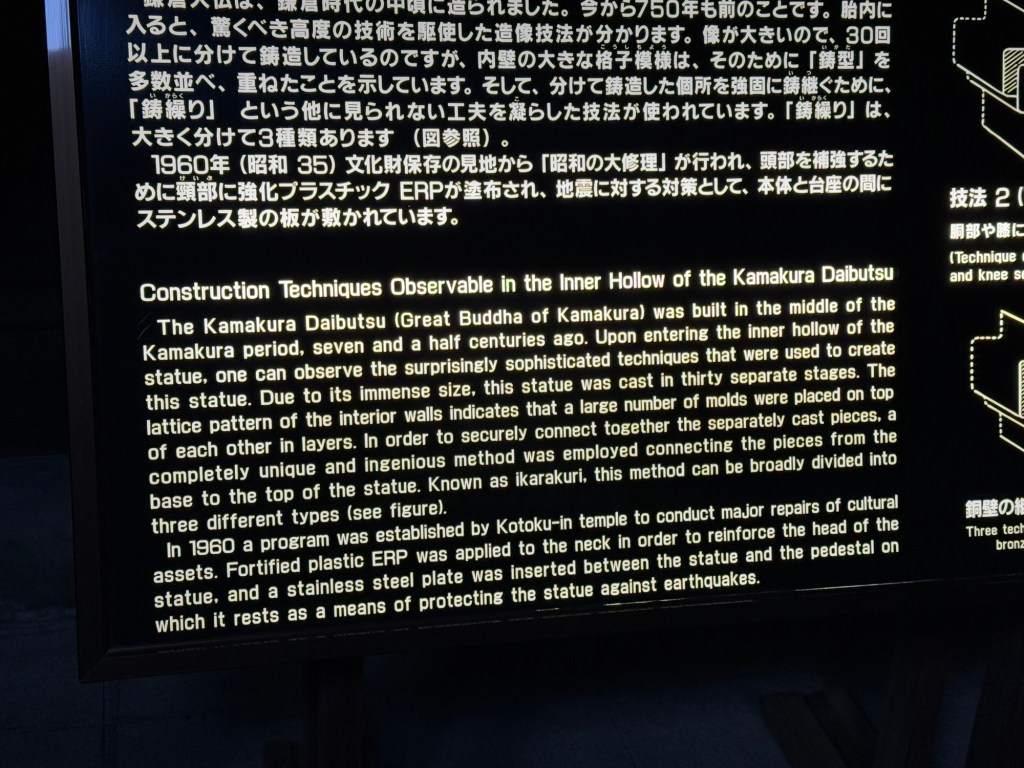
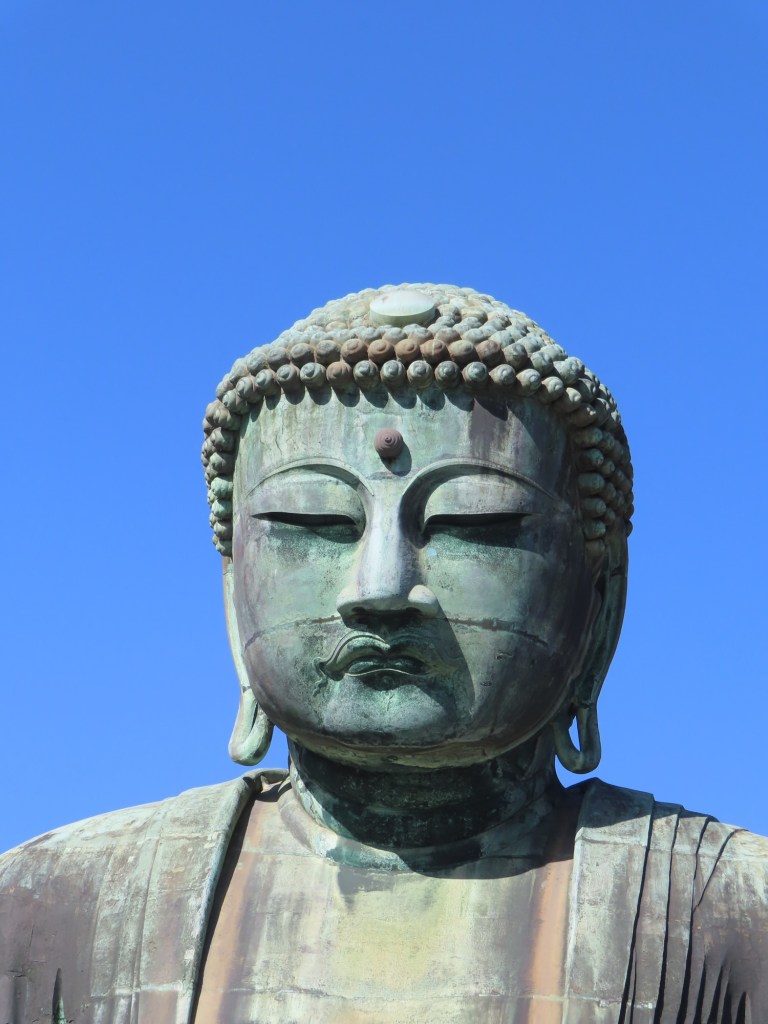
Buddhism is to look to the future after death.  Amida is name of the Buddha….. means “in your heart”. The giant Buddha built in 13th century …is made of copper…. Is 13 metres high.

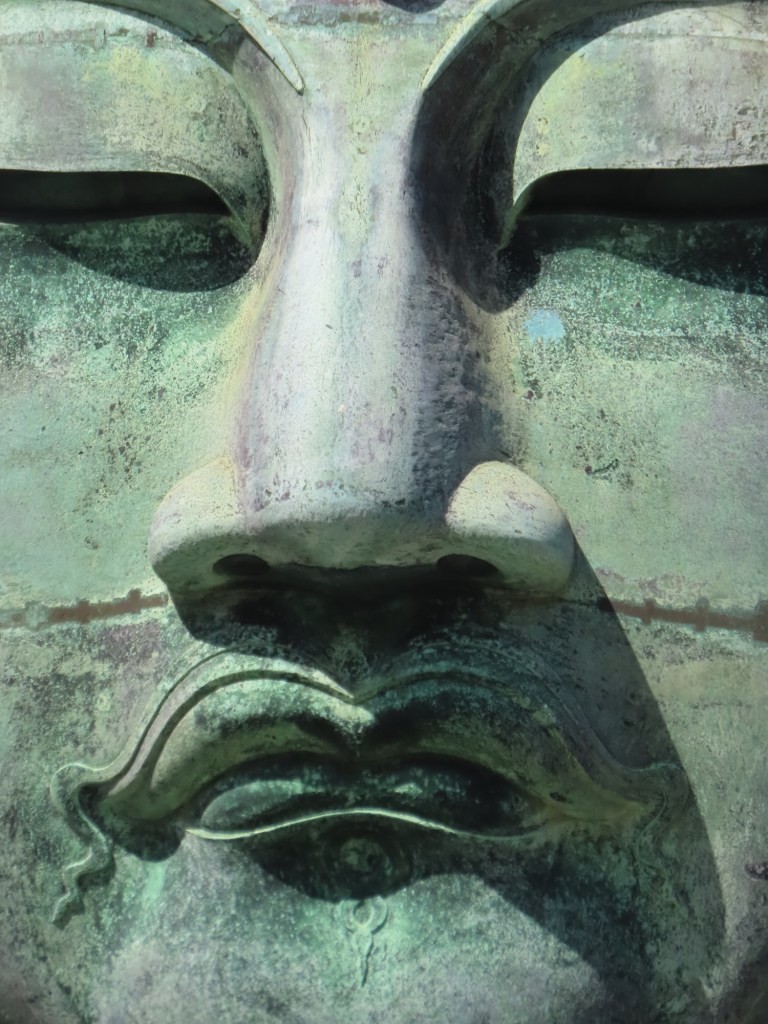
Hair on Buddha is means wisdom. The one button on his forehead means give light unto the world. Hand gesture are different with each Buddha. His is meditative.

It was erected in bronze in 1252 …and was inside a temple but in 1498 a tidal wave destroyed the temple leaving the statue standing leaving the foundation stones. In sept 1923 an earthquake destroyed the base. 

Again there is so much industry along the roads…. It’s hard to imagine that their economy is not doing well.

Hiroshima means broad island (shima means island)… happiness Island

Port area of Tokyo is only 25 years old…. Built on reclaimed soil.

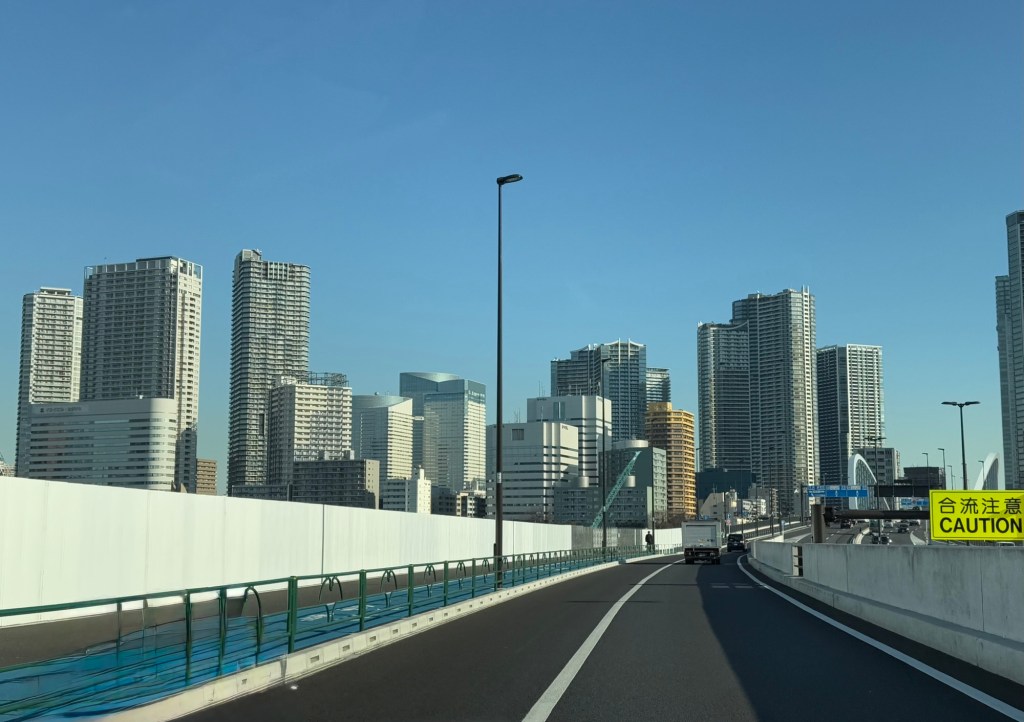
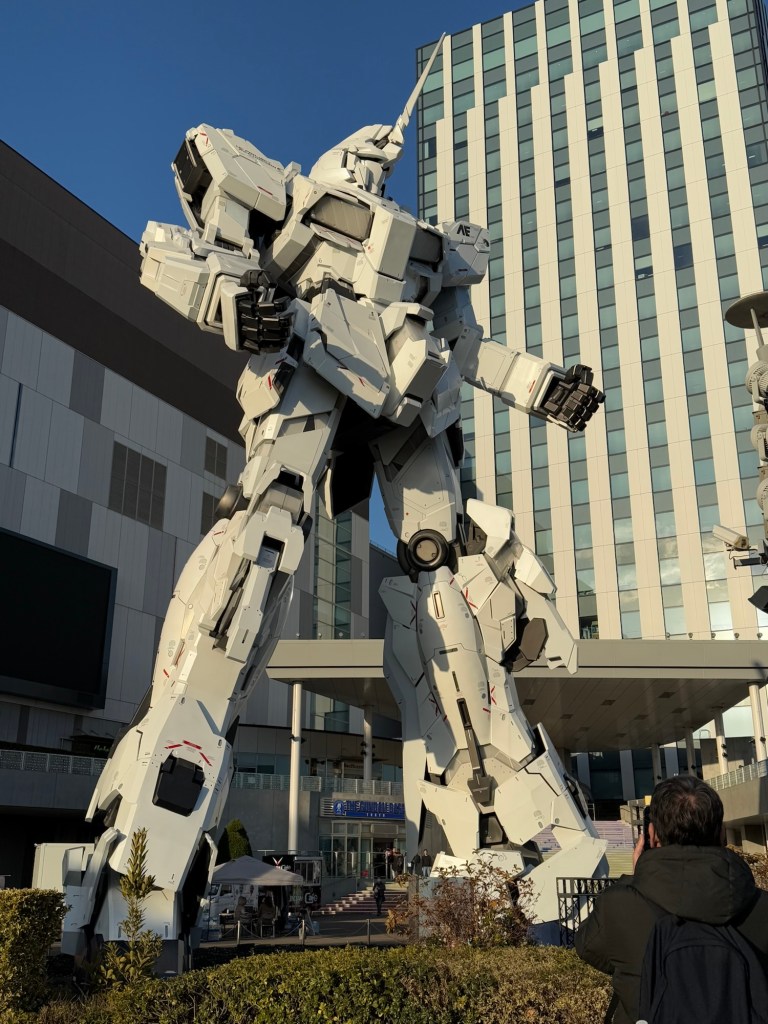
Feb14…. We just took a taxi to go shopping but he drove us to the very high end Ginza shopping area….way out of our league so we left. Next to the Tokyo Diver Mall….. ho hum! Not too much of interest to see so walked the rest of the way to the ship.

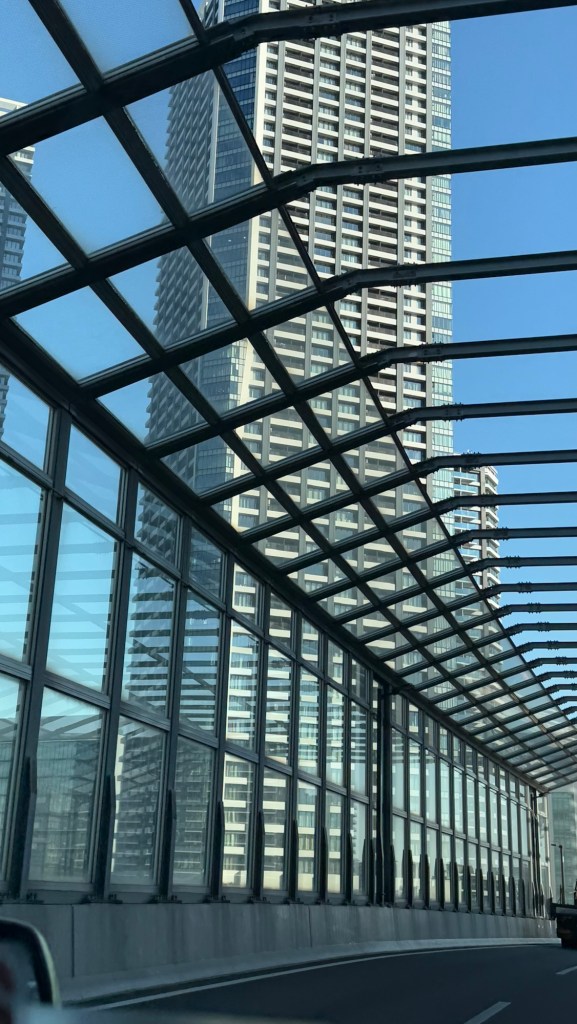
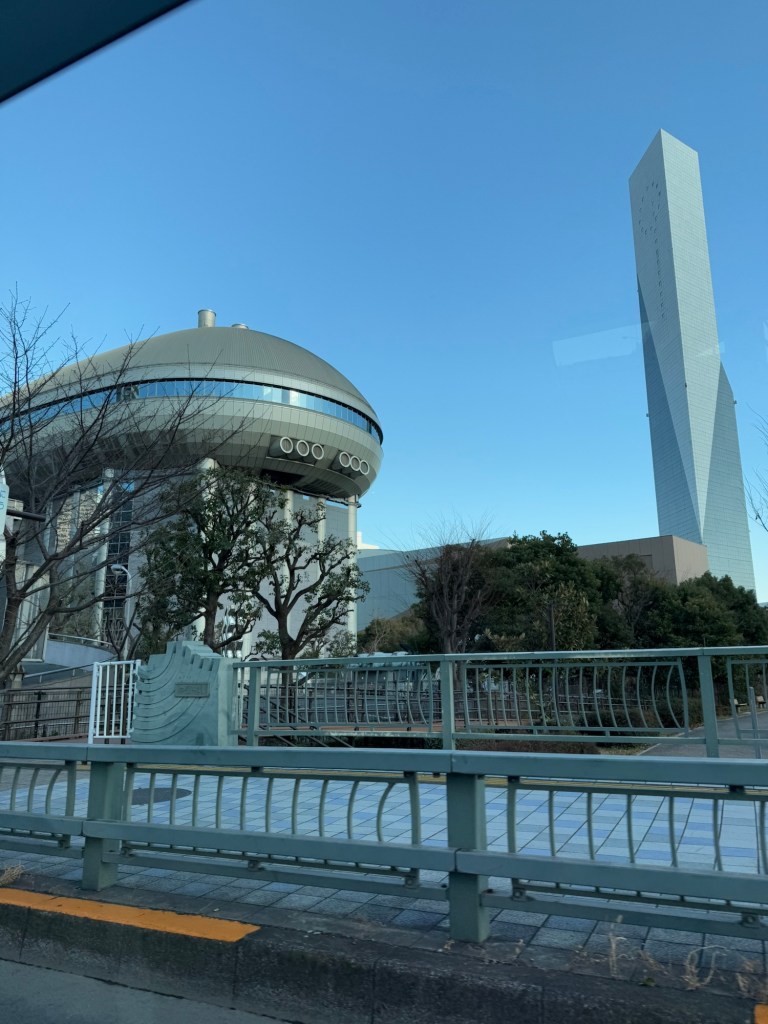
Feb15 This is our last day in Tokyo but I am too sick to venture very far. The other 3 went in search of something interesting but I am afraid Tokyo is just a big, absolutely spotless city. The buildings are sleek and a whole lot more interesting architecturally than ours but nothing compared to Shanghai. There is NO garbage, no garbage cans anywhere (we did see near the pier, recycle containers…..once) ….. like you’ve never seen.