Huge amount of building…. Most privately owned by European Moroccans. Onto High Atlas Mountains this morning.
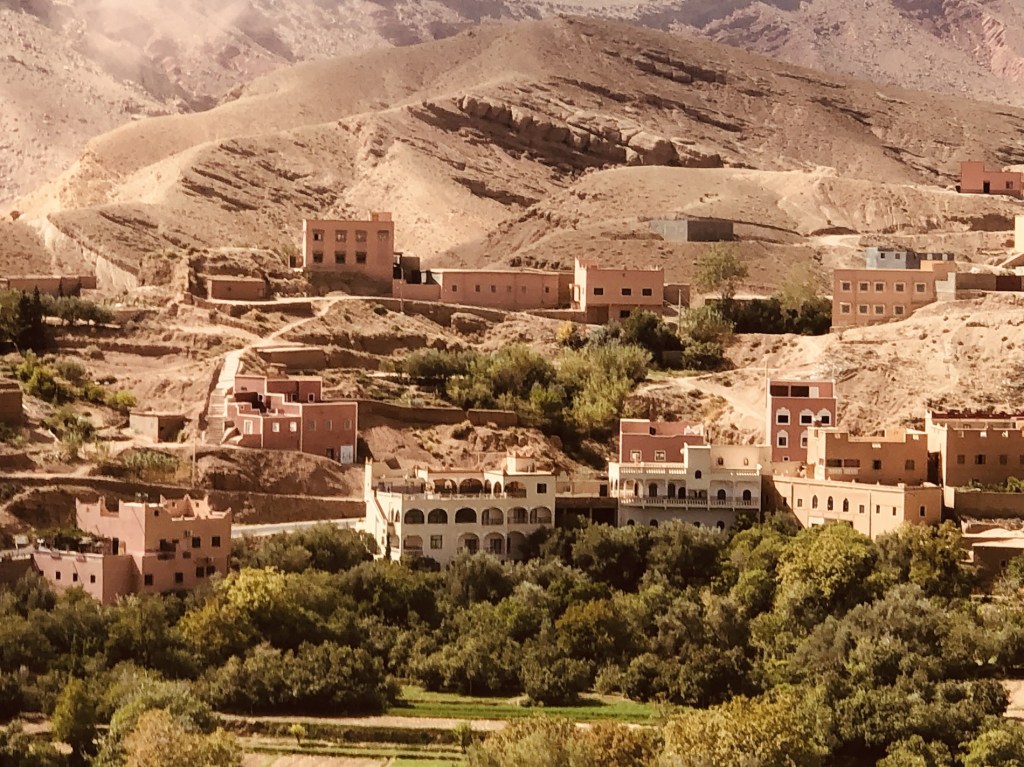
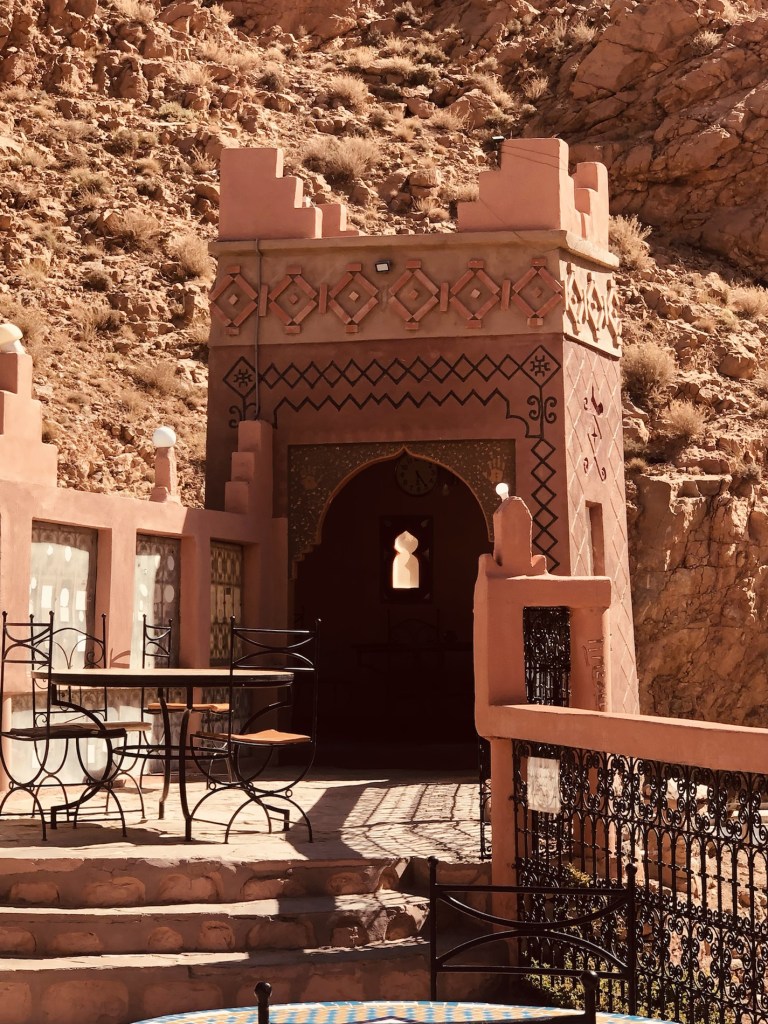
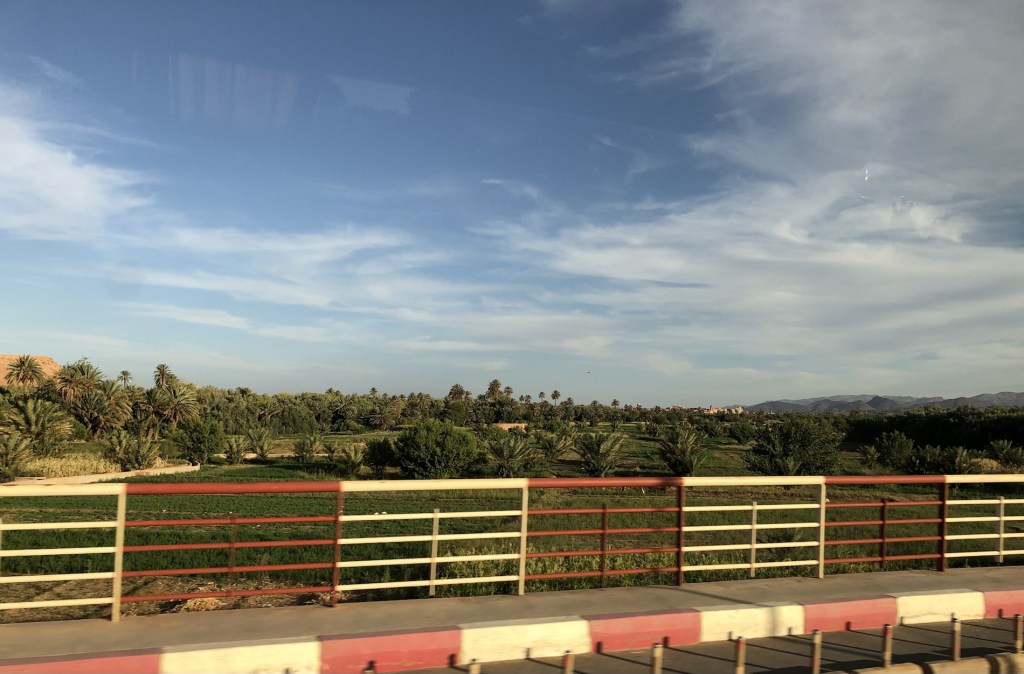
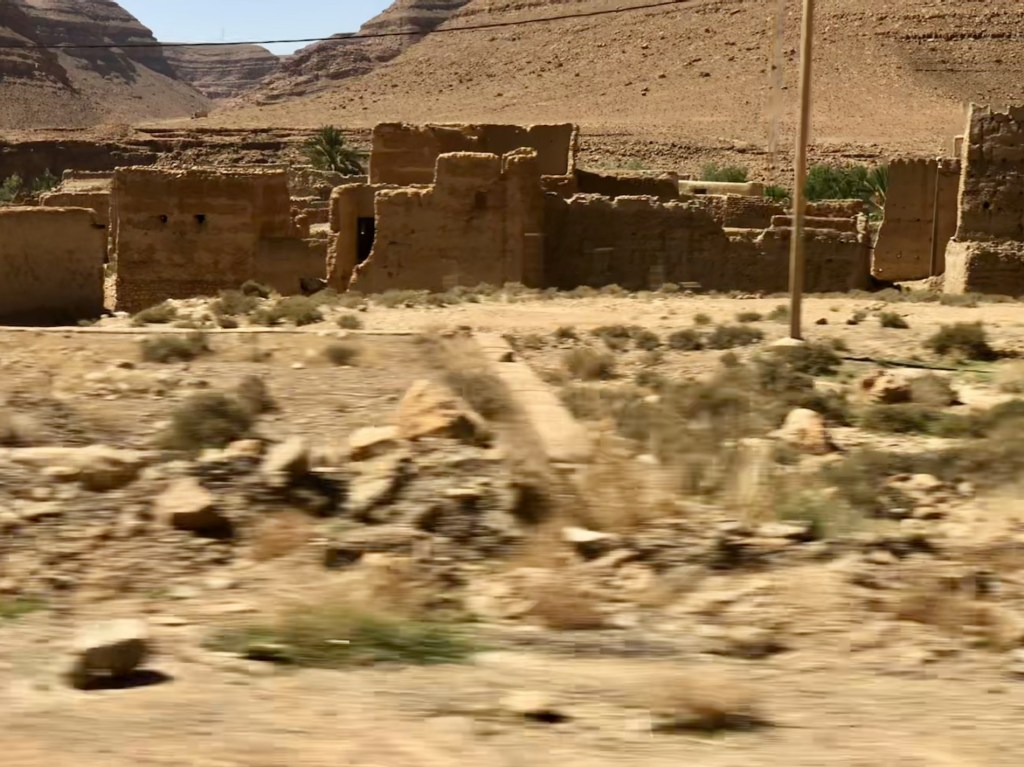
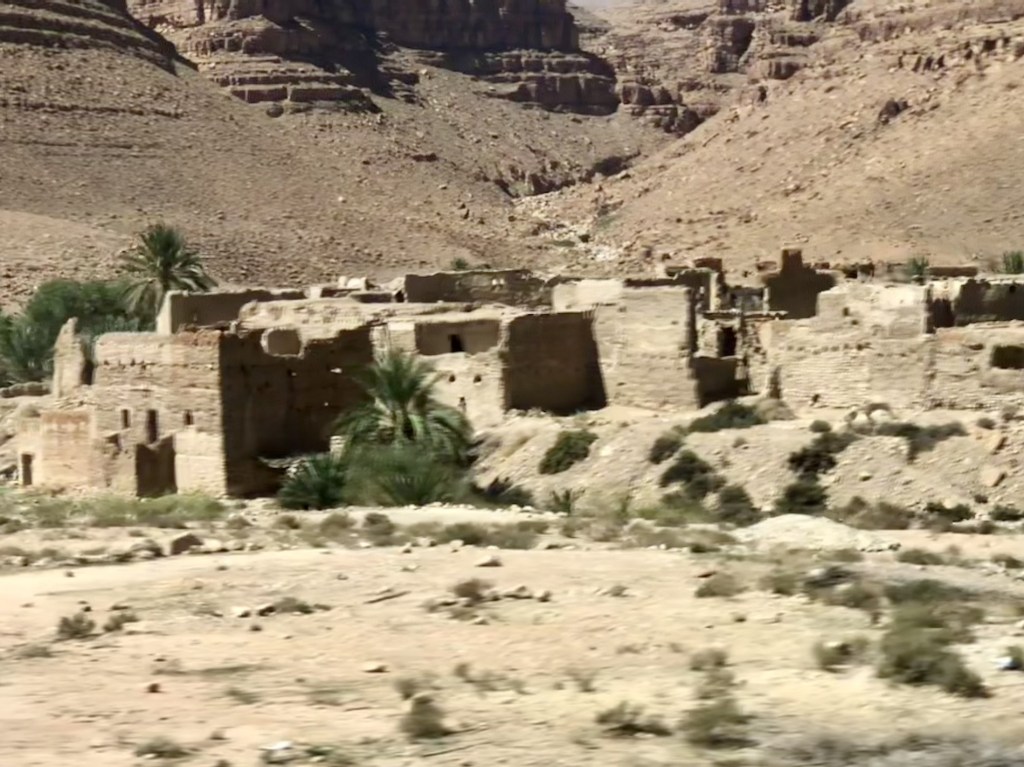
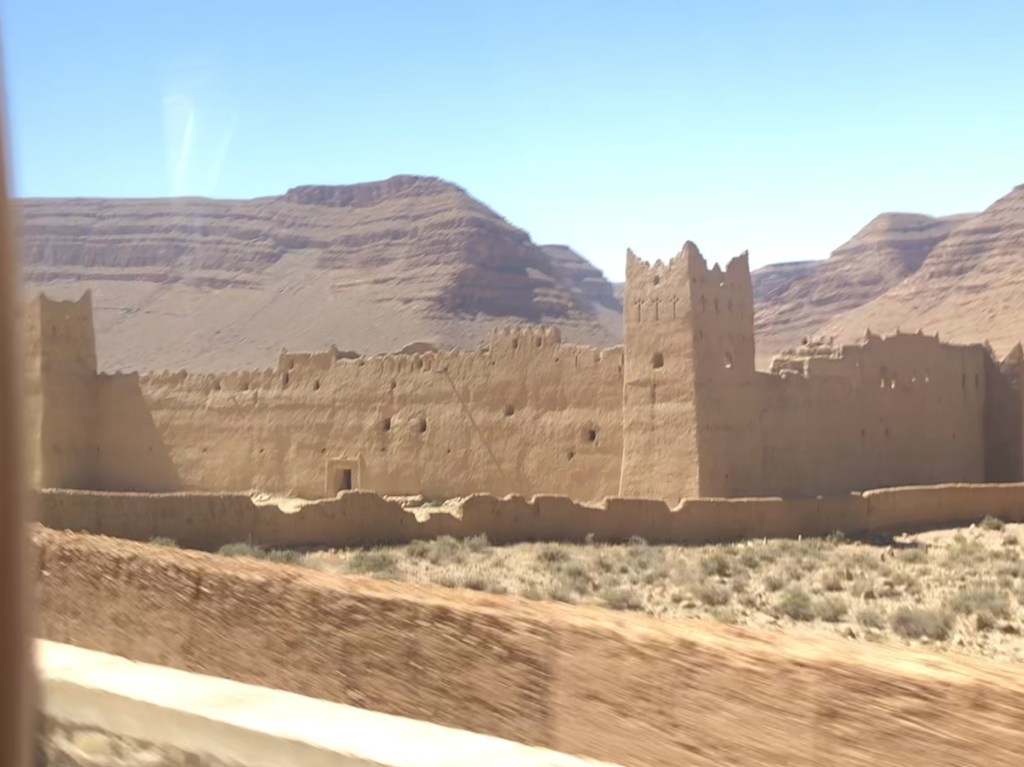
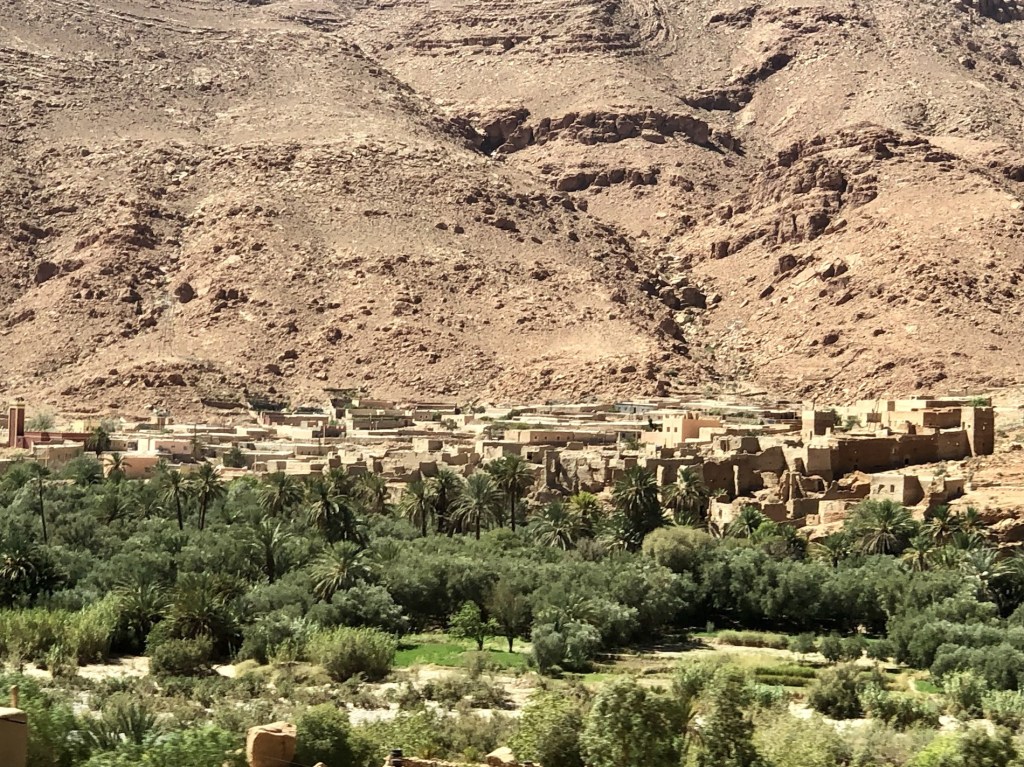
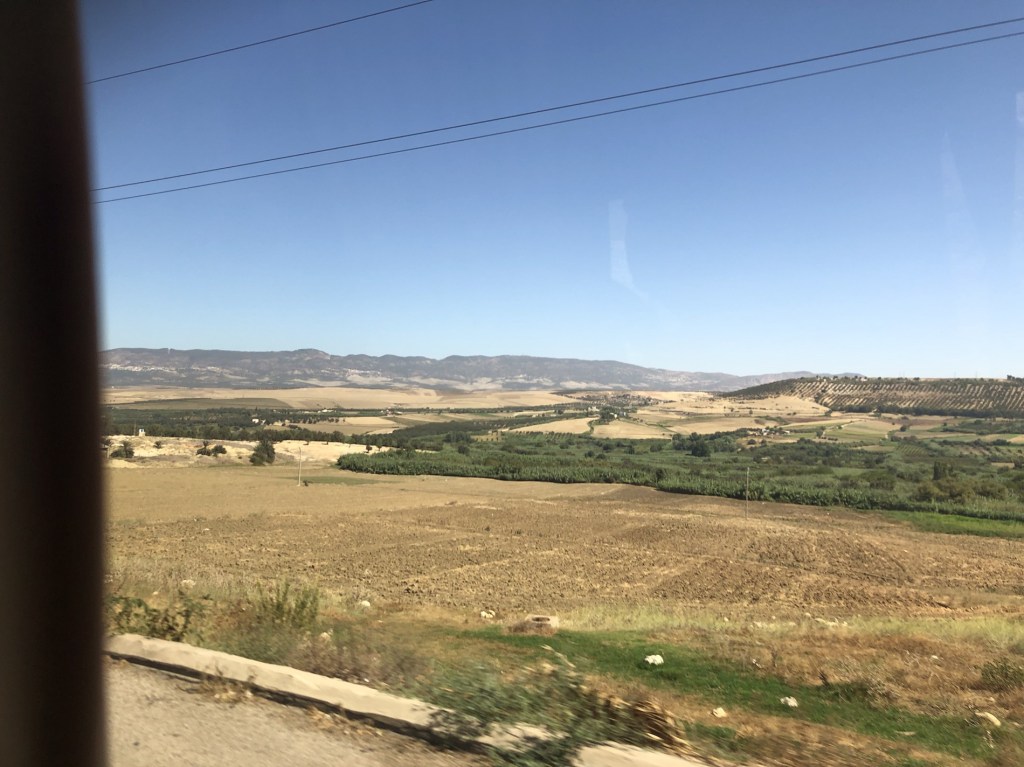
Going to Dades Gorge (2.5 hour driving)view of most beautiful, Valley of 1000 casbahs on way to Ouarzazate. Unbelievably spectacular!!! Very Berber architecture. Boumalne Dades is the name of this town.
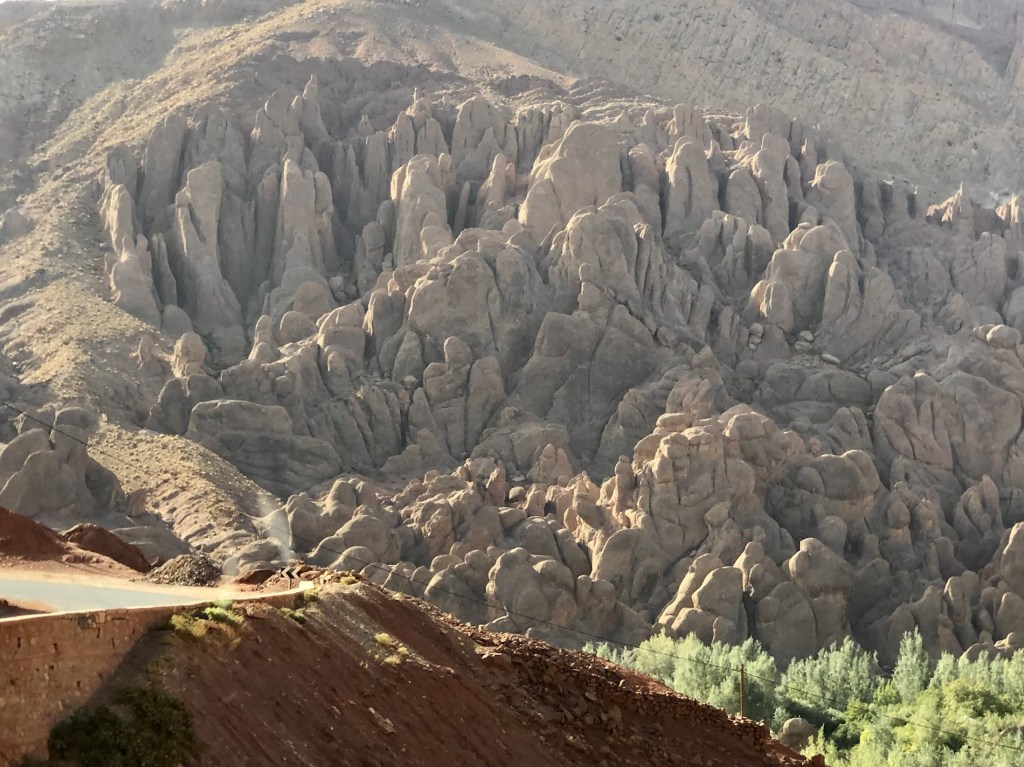
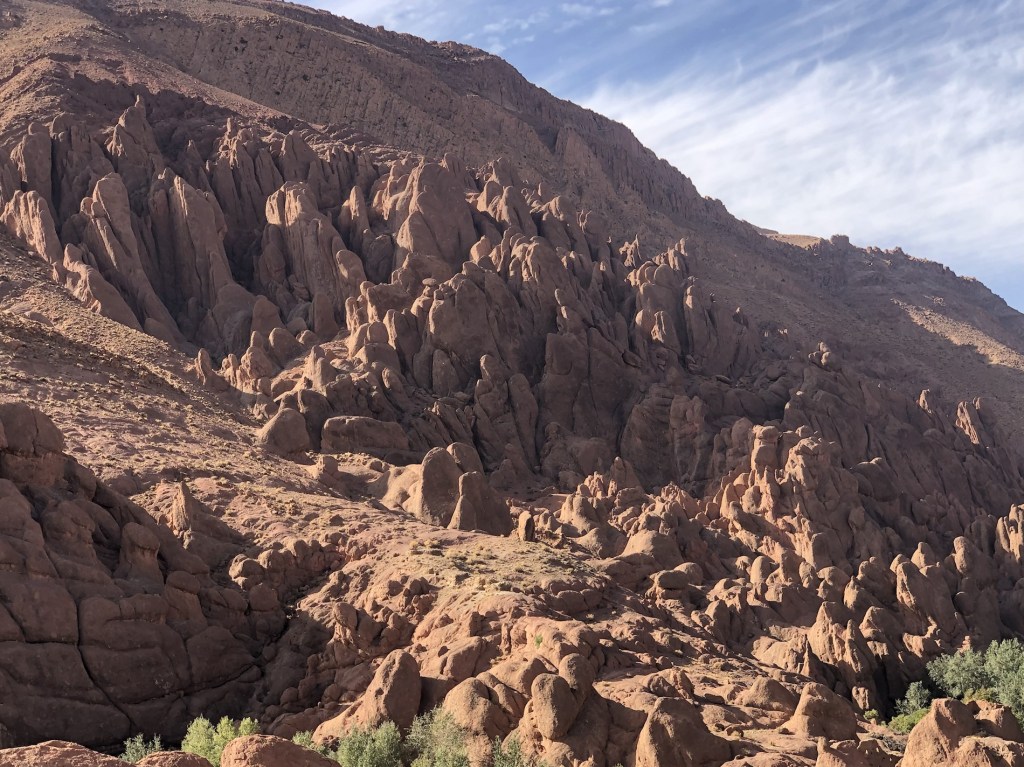
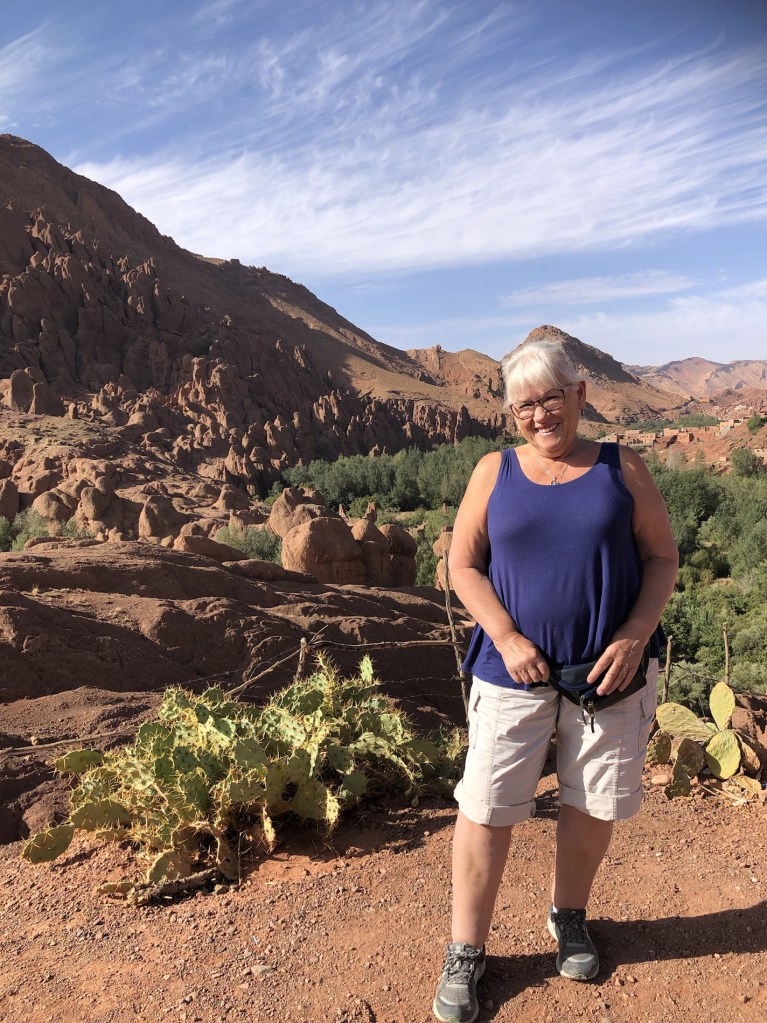
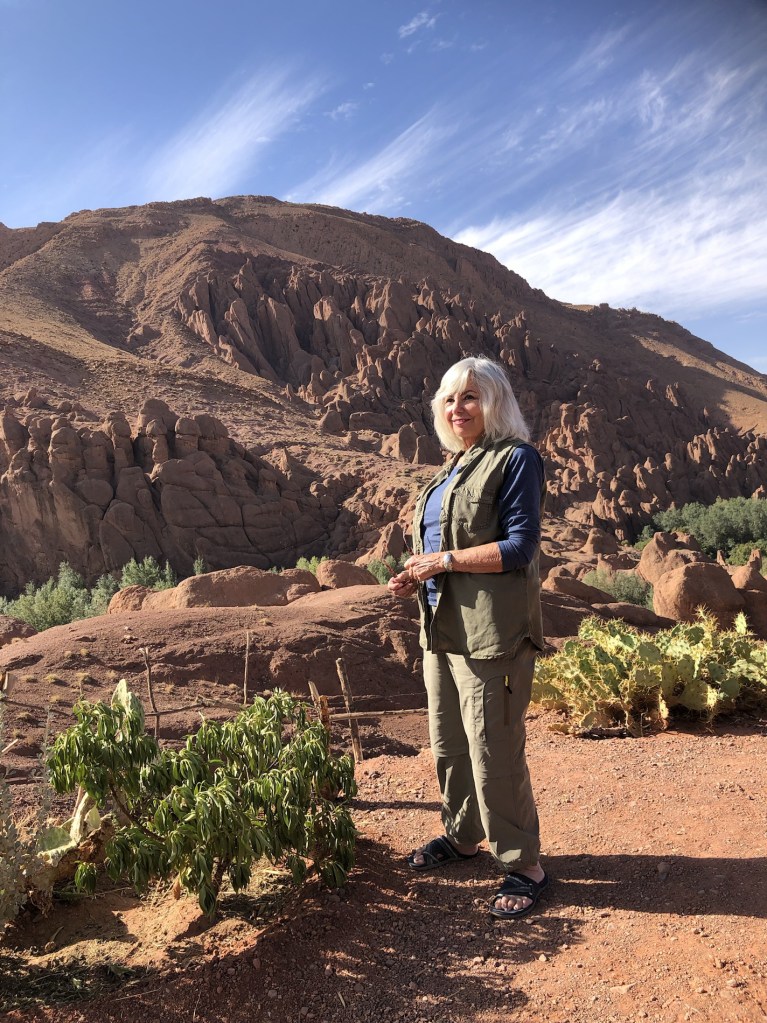
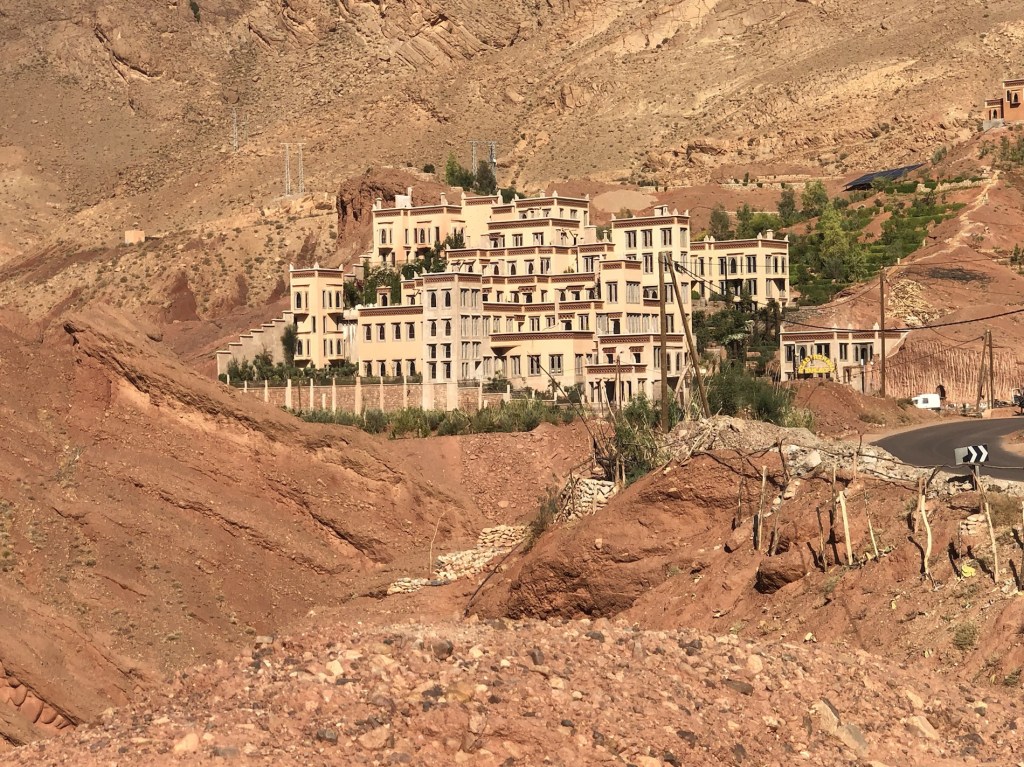
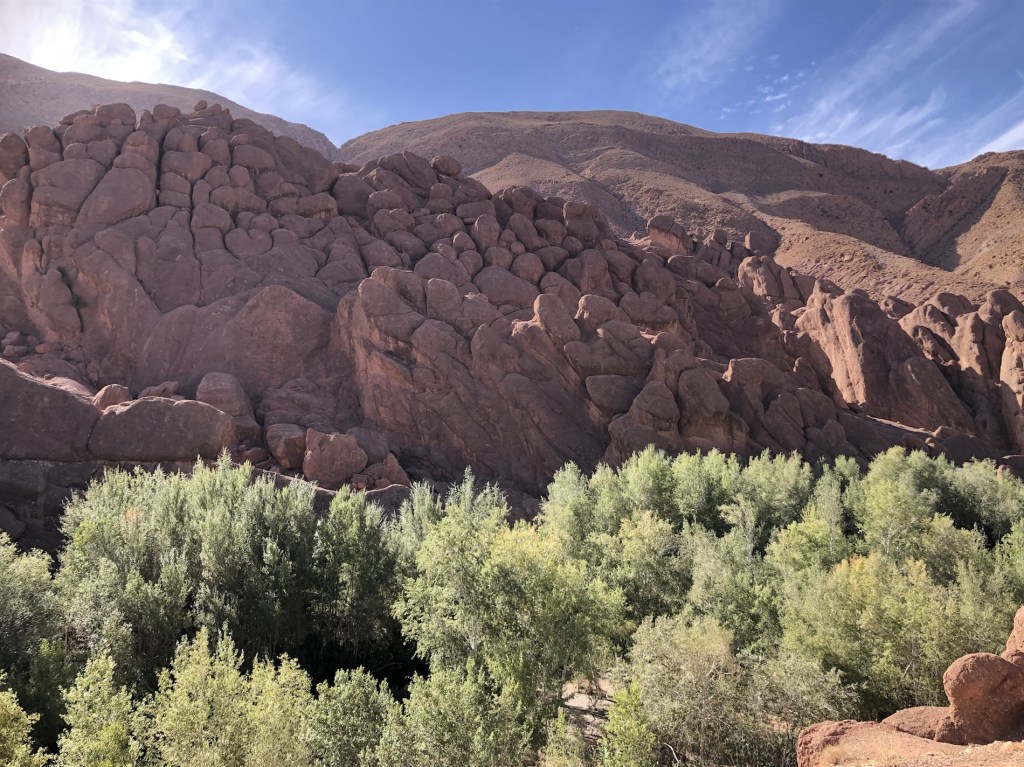
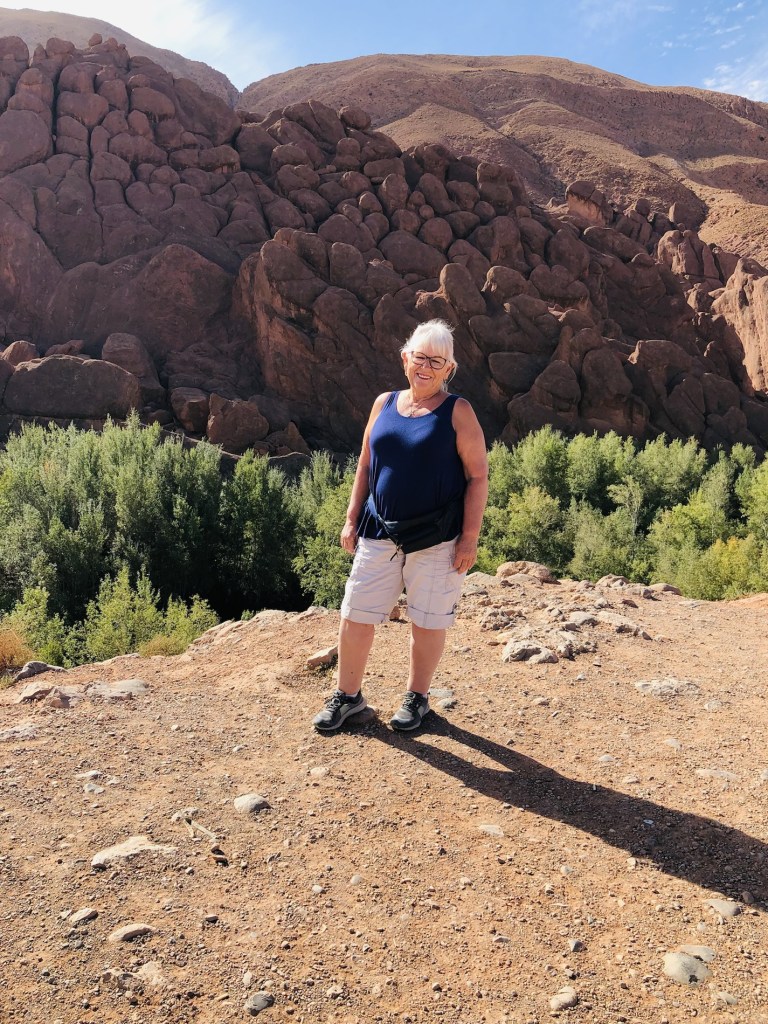
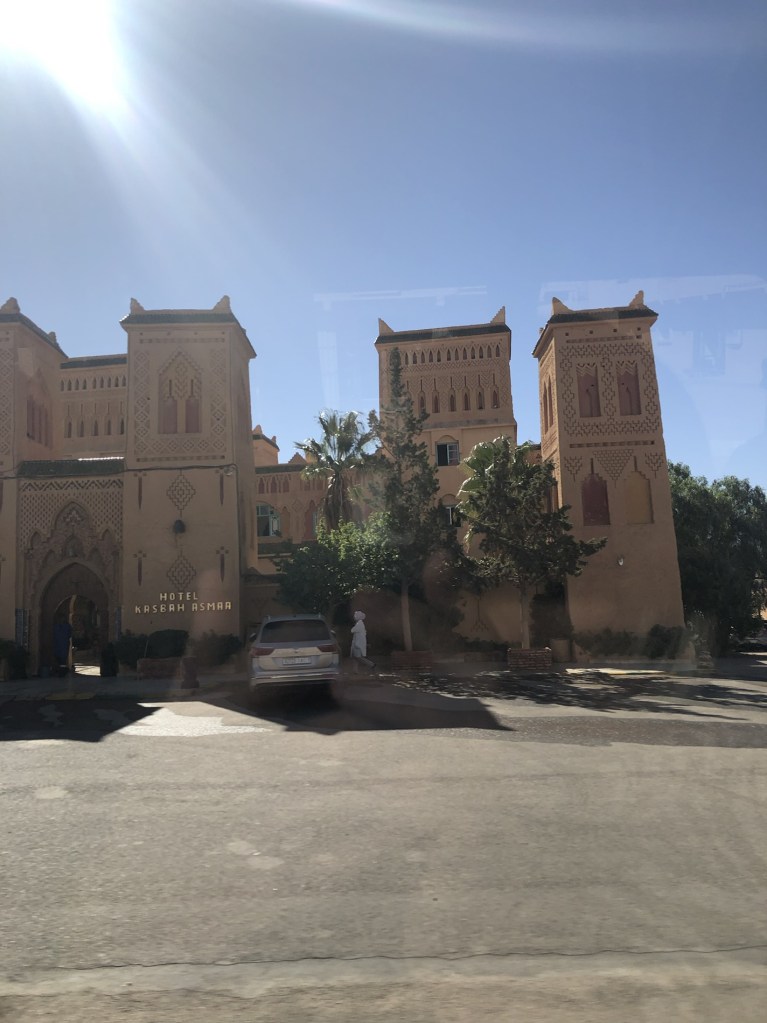
New hotelThe locals call these mountains “Monkey Feet”
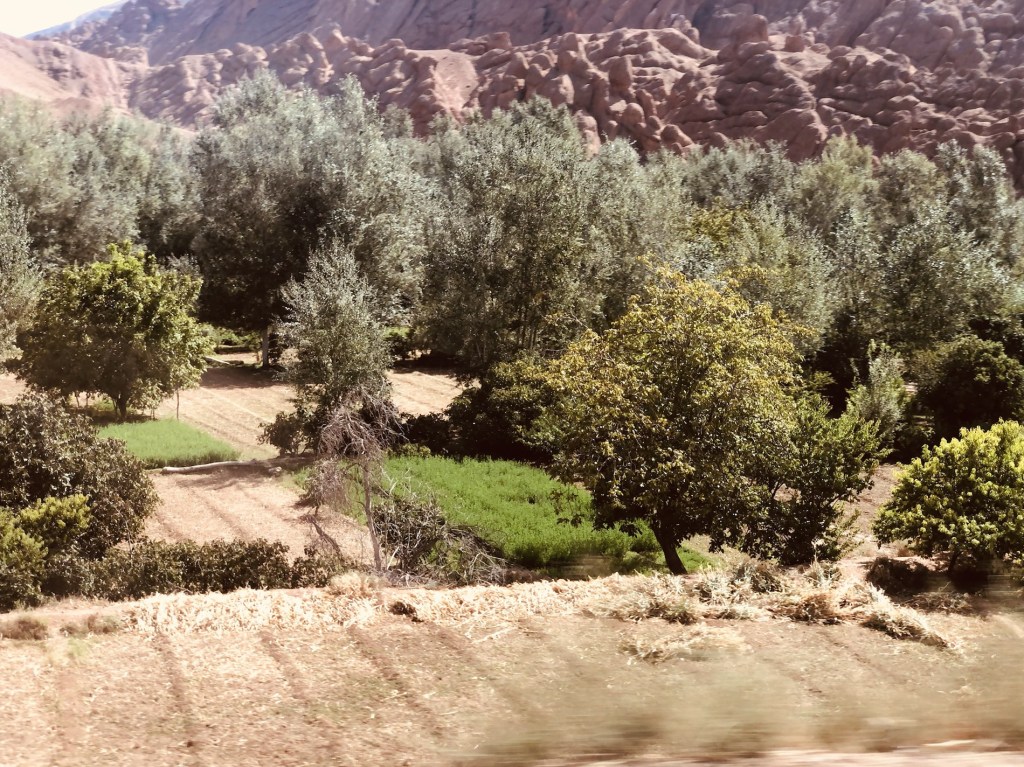
Women carrying grass to feed to animals at home. Hard working women looking after home, children and husbands while men are drivers, policemen & like.
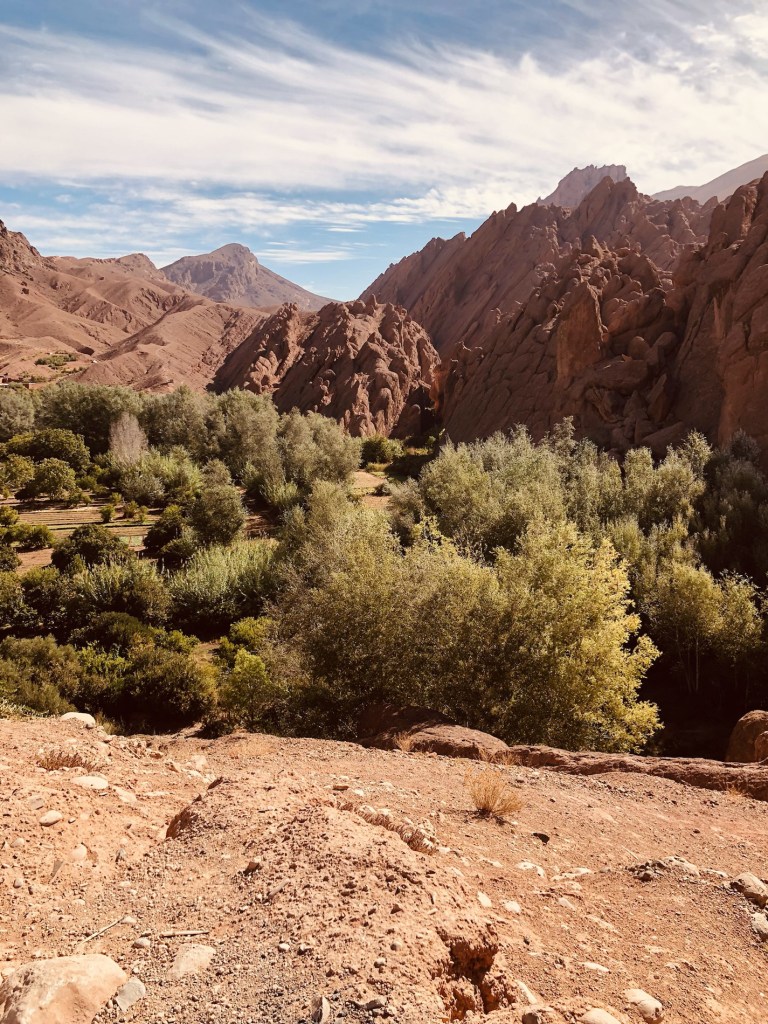
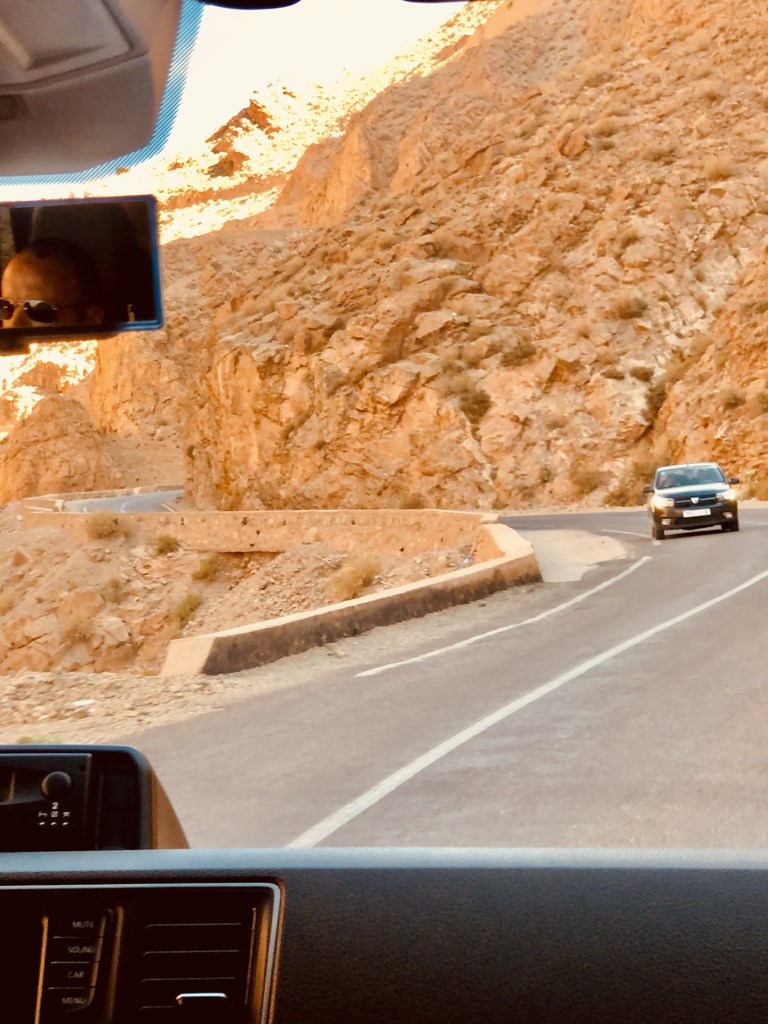
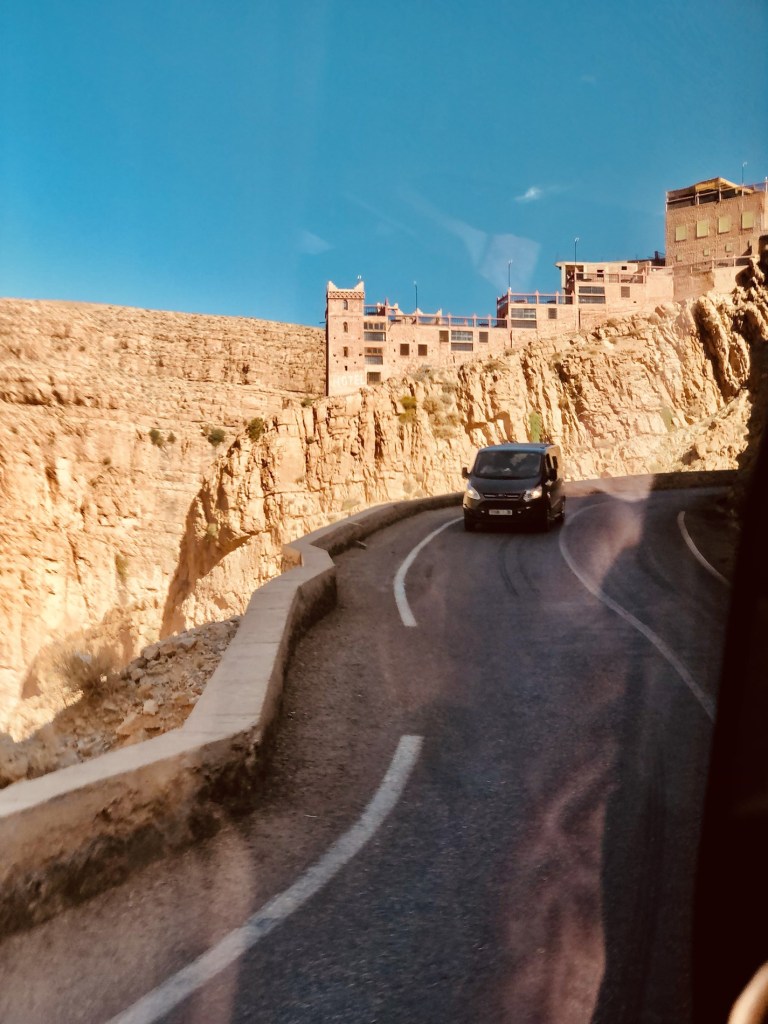
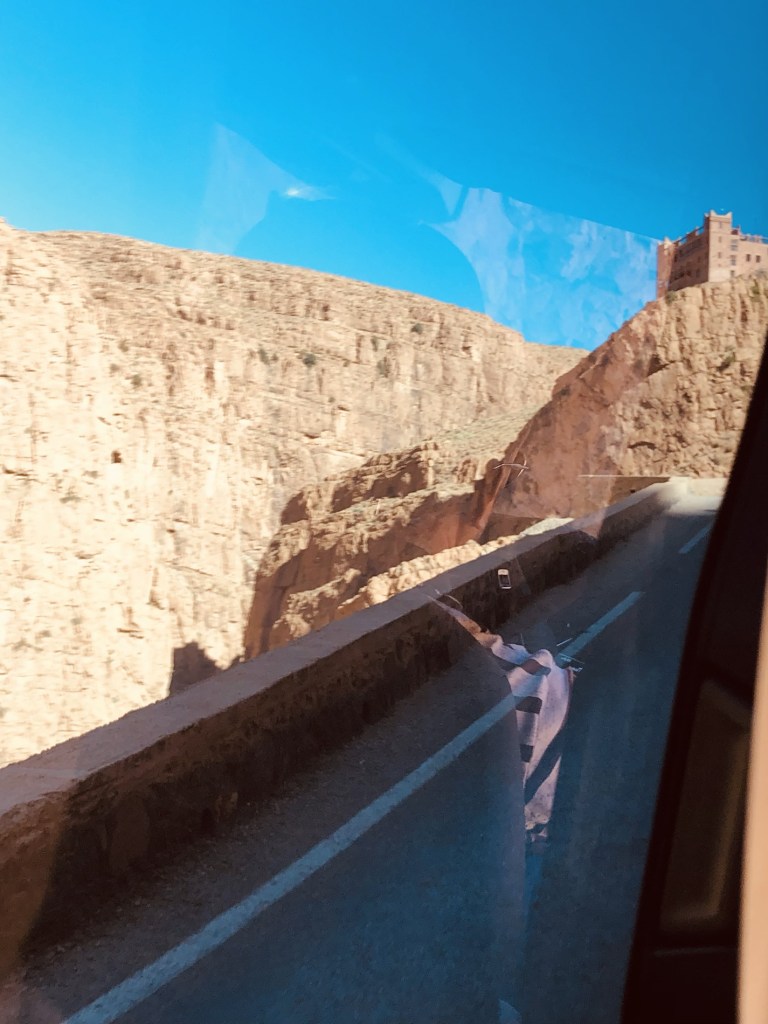
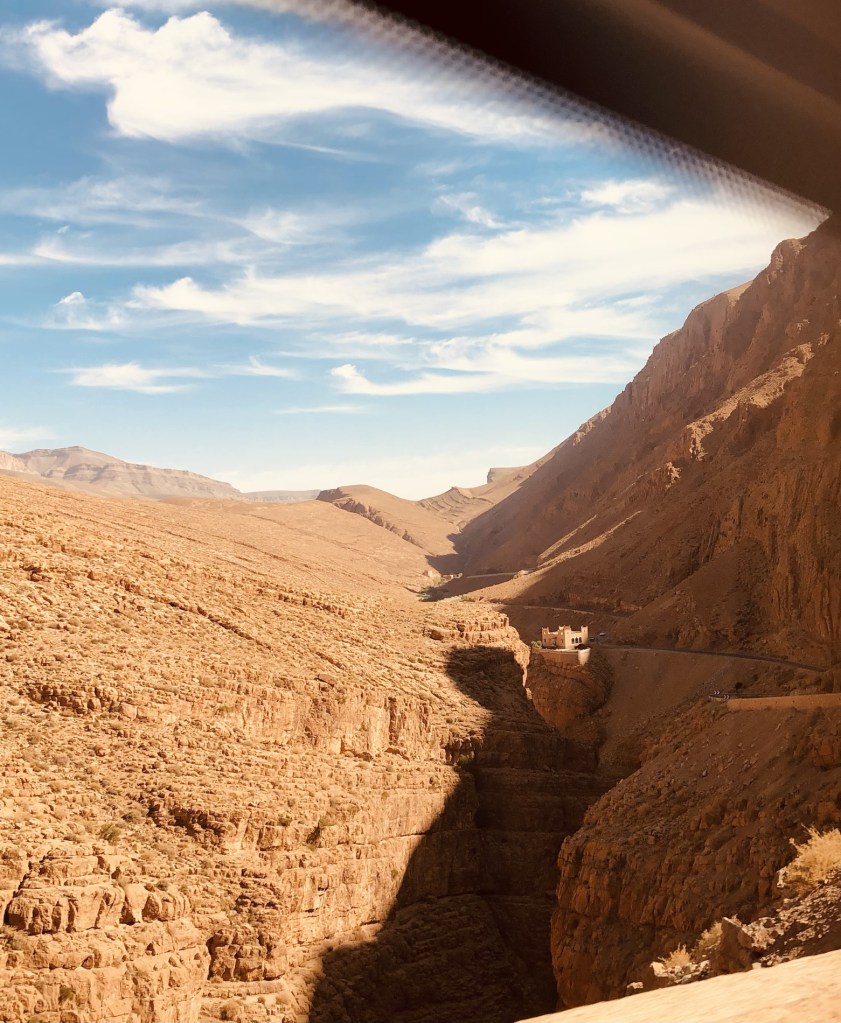
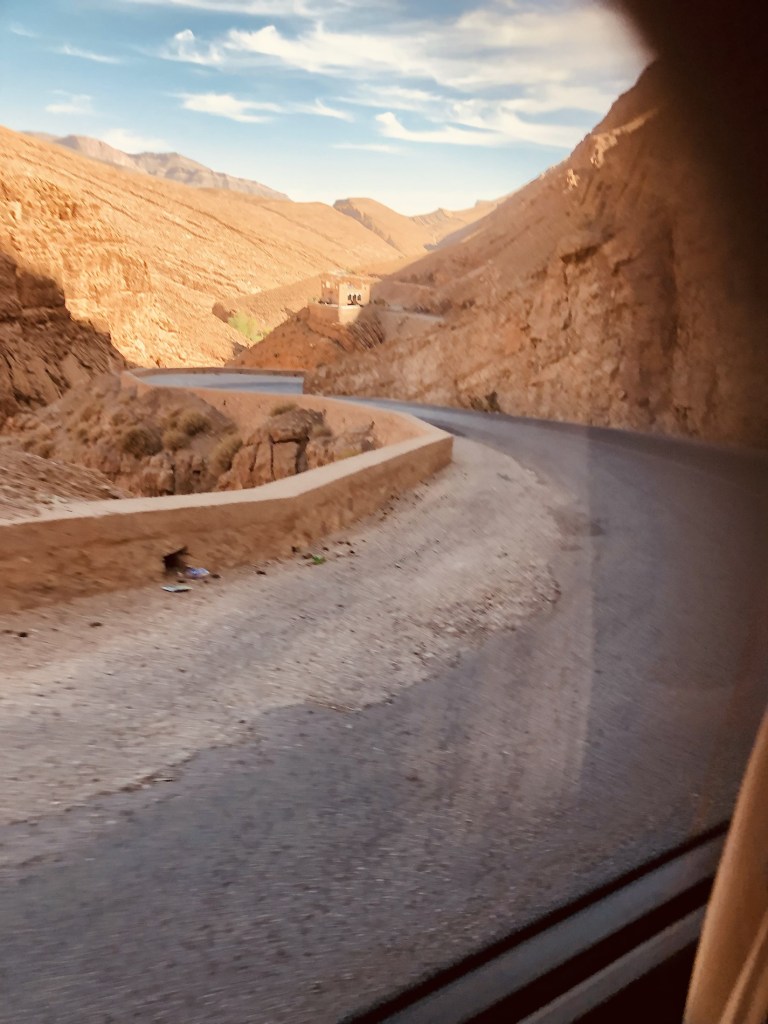
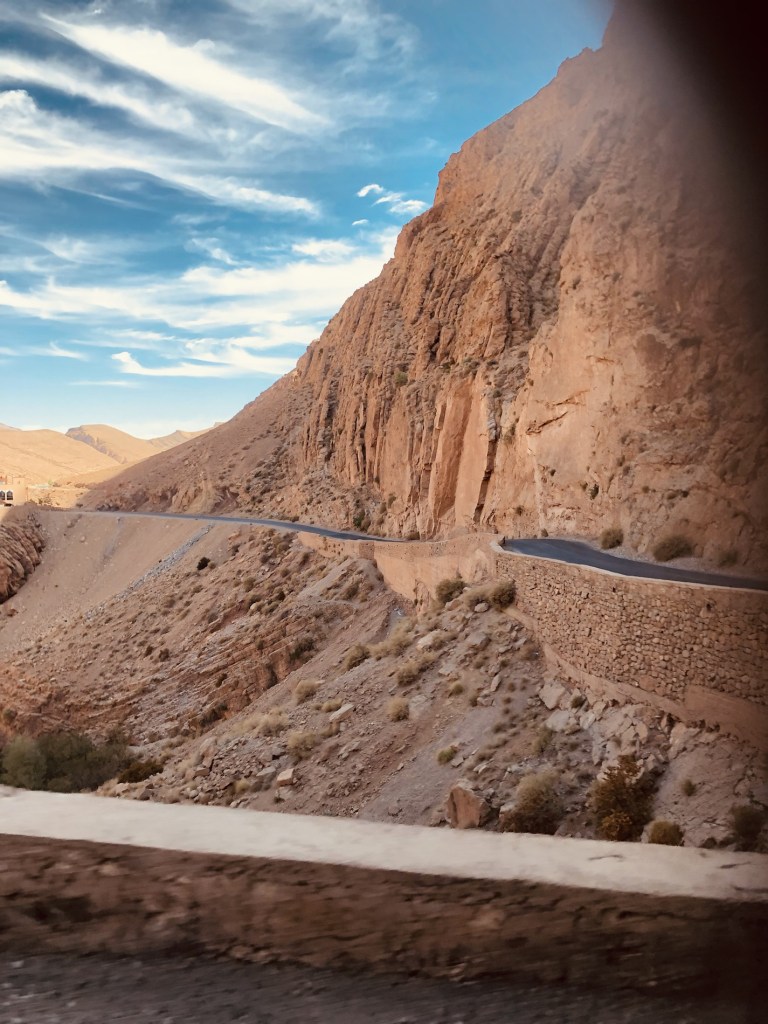
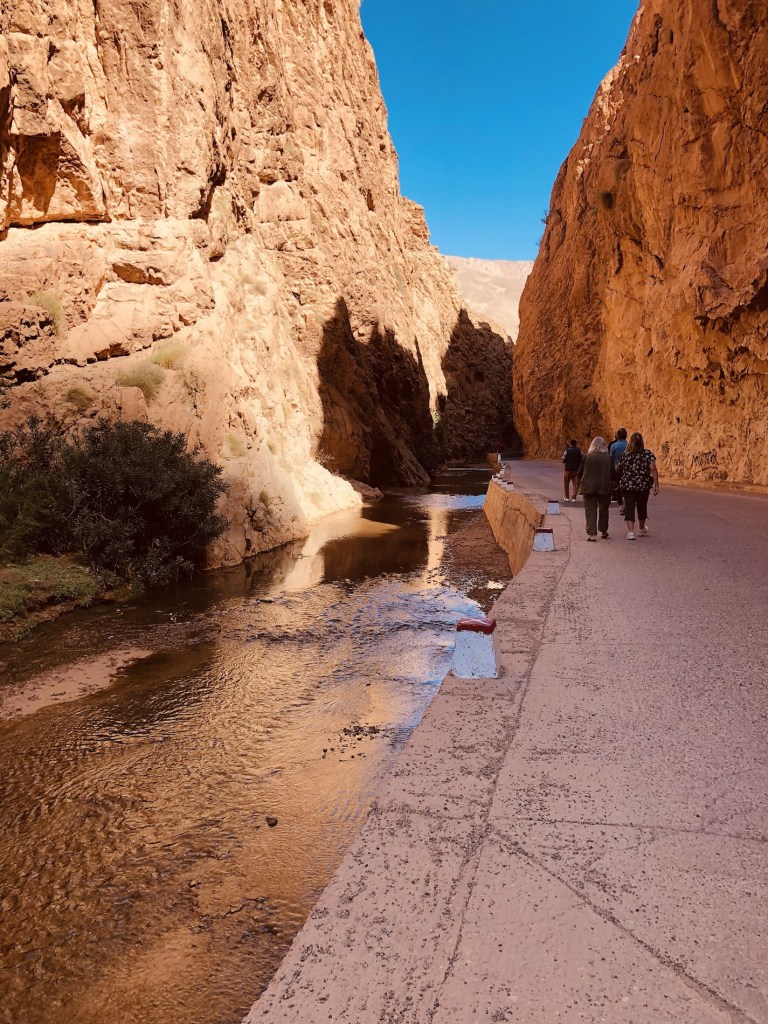
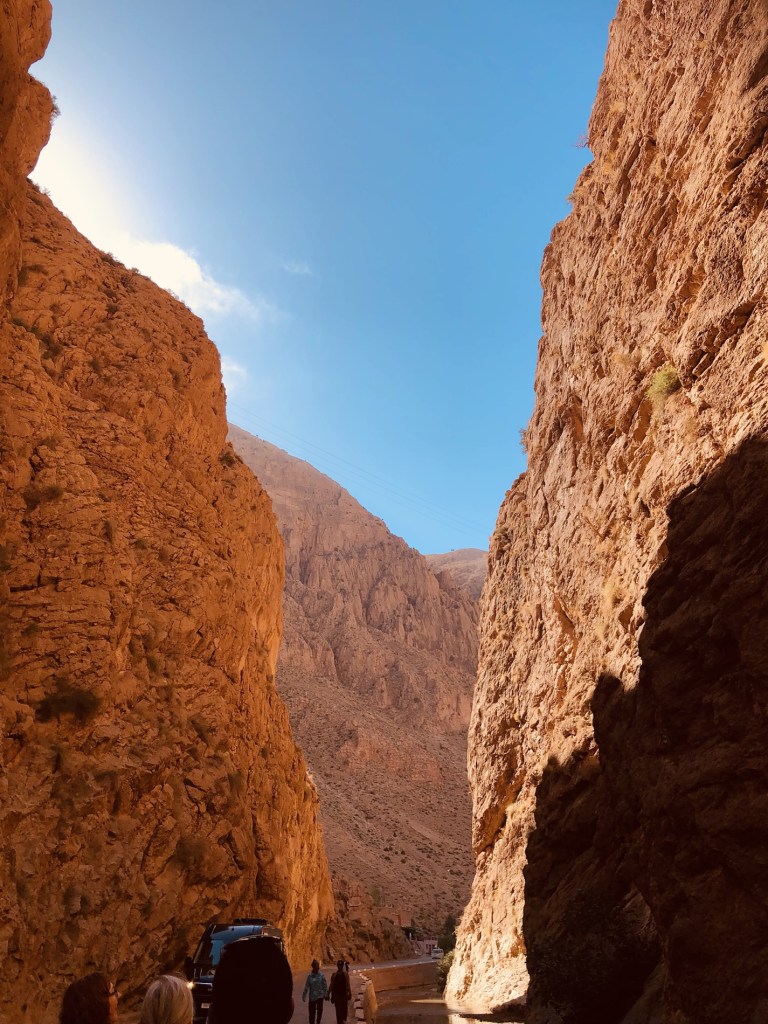
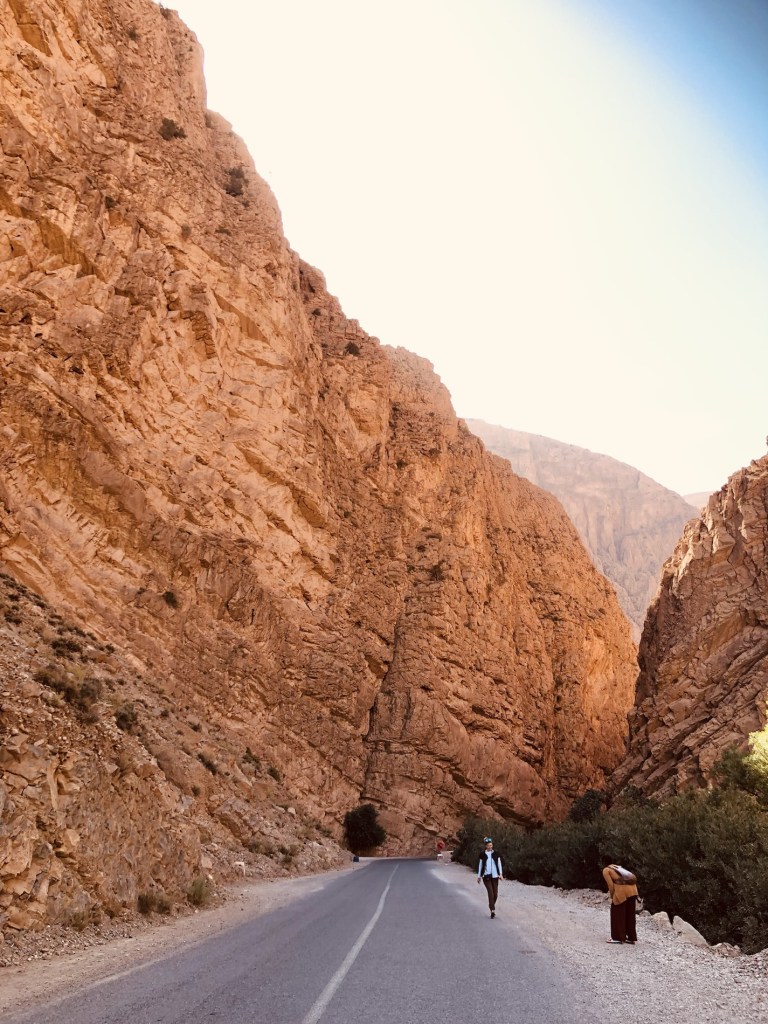
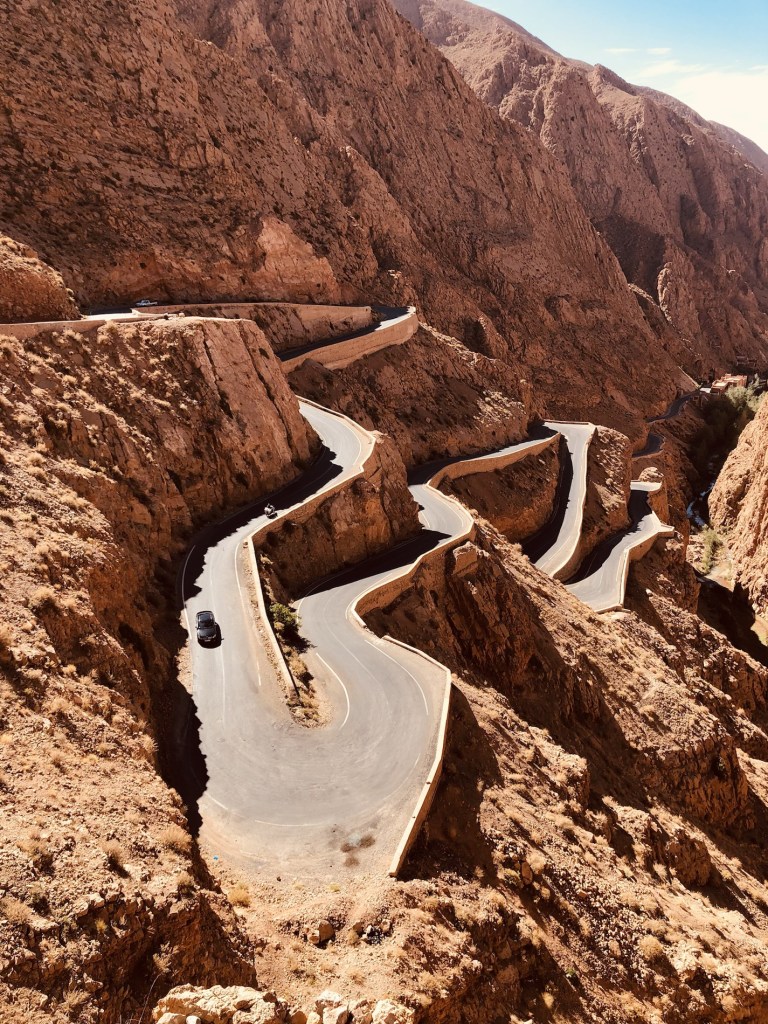
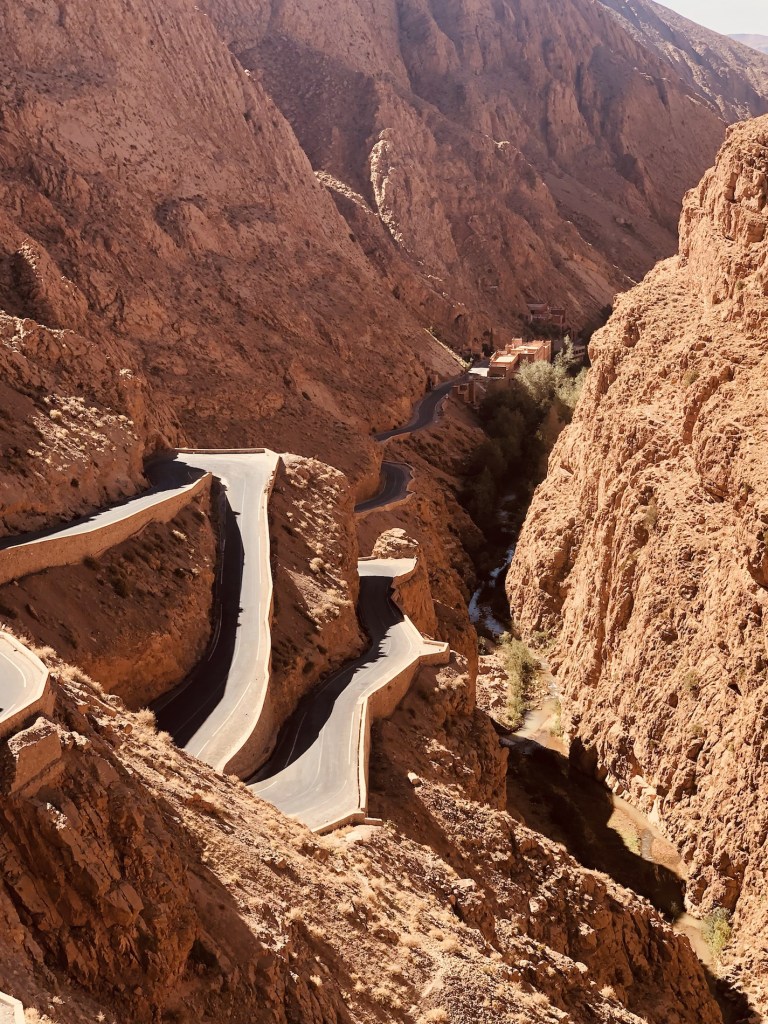
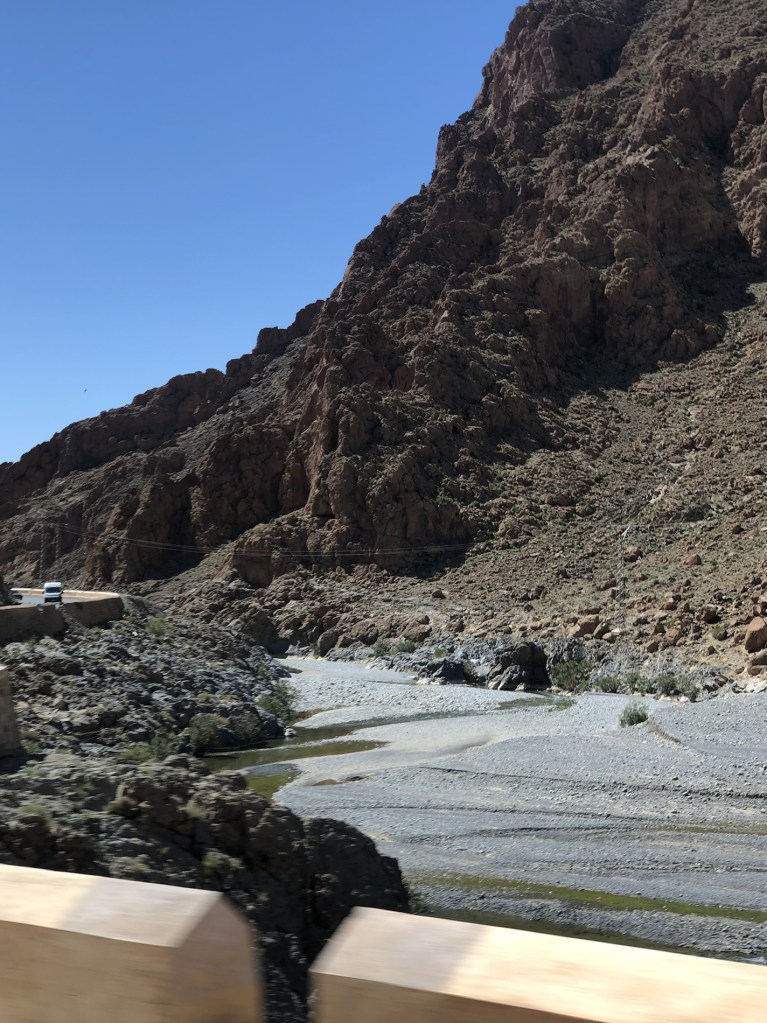
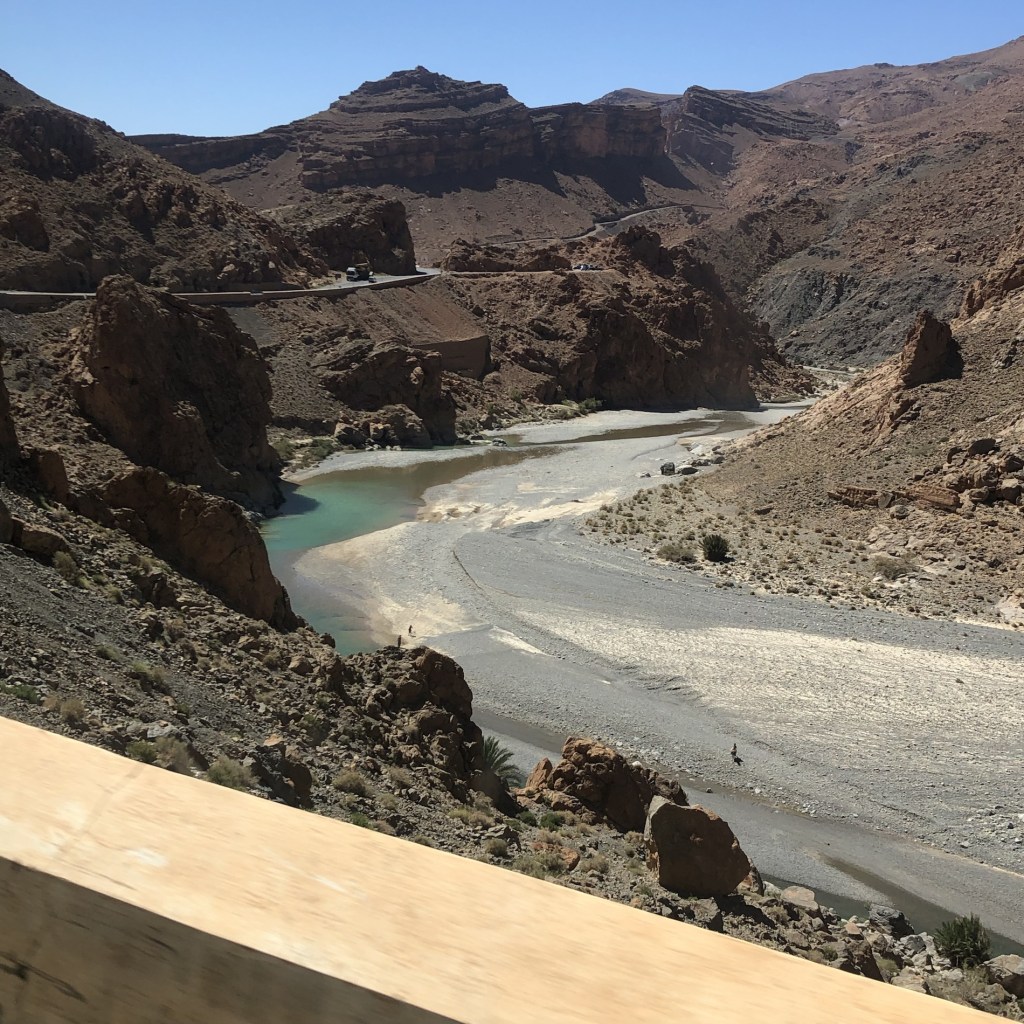
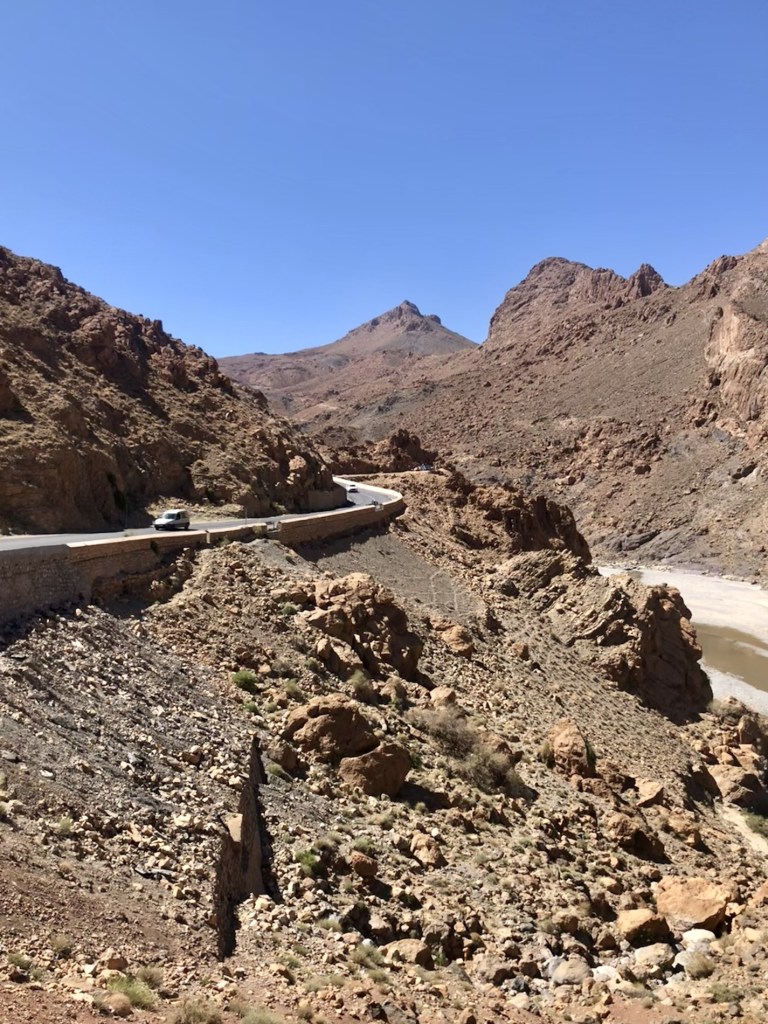
Then we got out and walked the Dades Gorge….. amazing, awesome spectacular rock formation of the gorge. The switchbacks….OMG!!!Motorcyclists…. This would be your dream road!!!
Heh you motorcyclists…. How’d you like this driveOn some of the corners, the retaining walls obviously had been hit… we no longer there
City of Roses…. “Kalaat M’Gouna” Once a year festival of roses… roses, rose water, perfumes and crafts… from what looks like wild rose buses. They bloom in April or May. Pink taxis too.
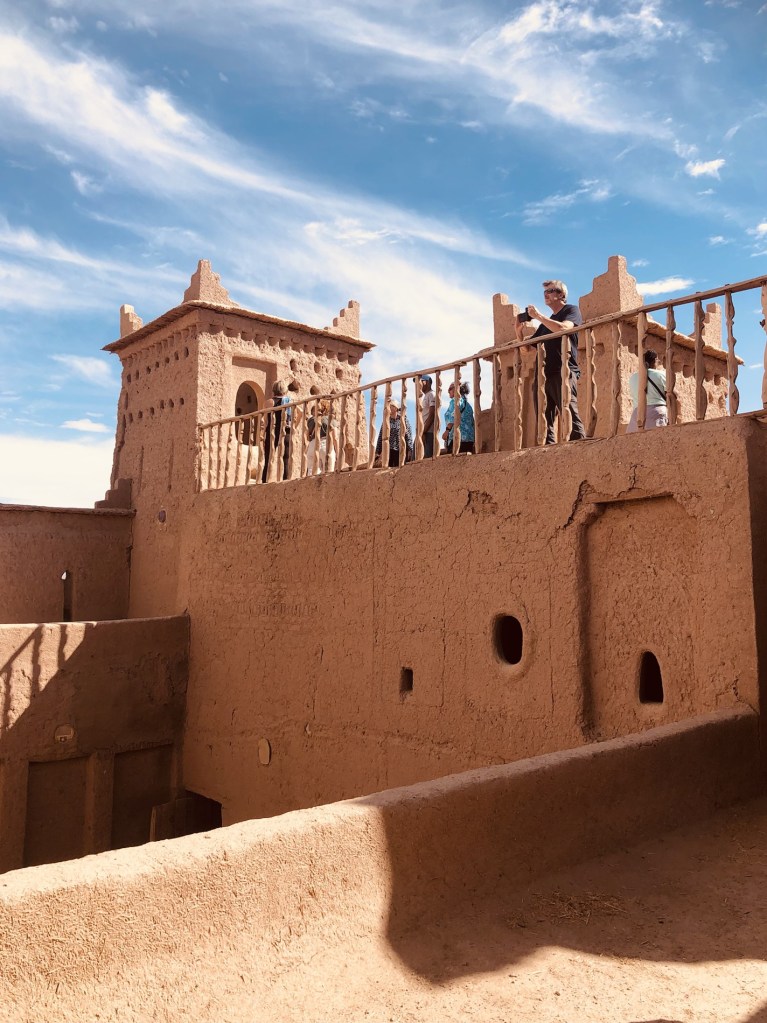
Skoura….. Amridil casbah … oasis 25 sq kms …. From 17century…. 150 casbahs. Used for movie making.
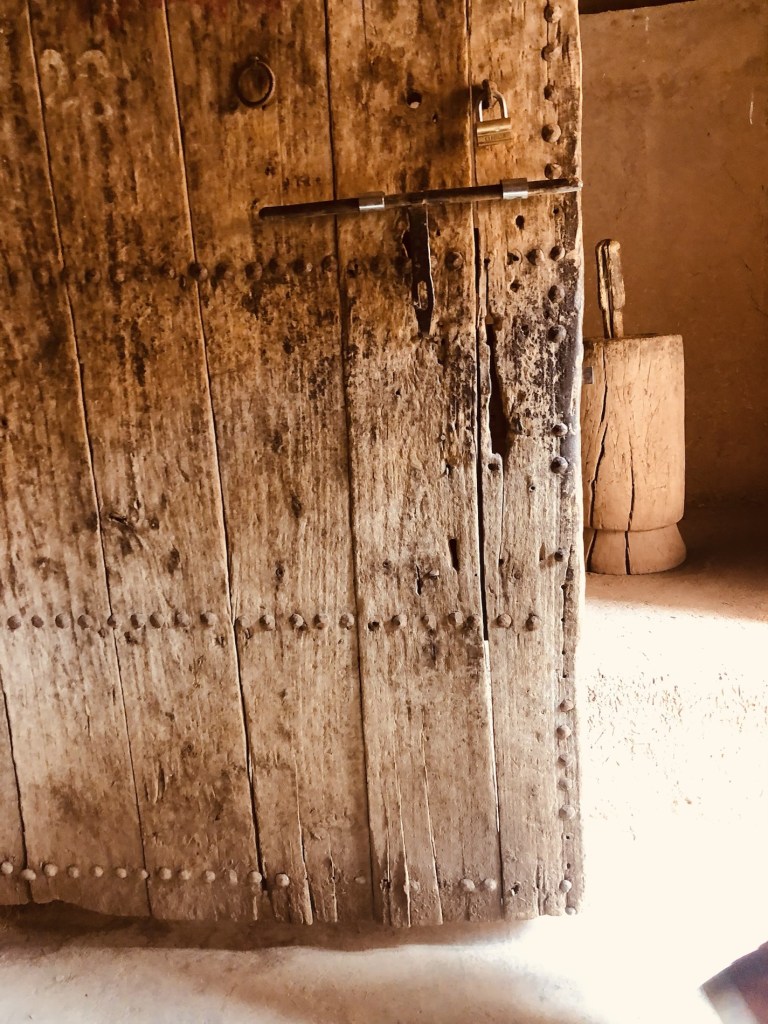
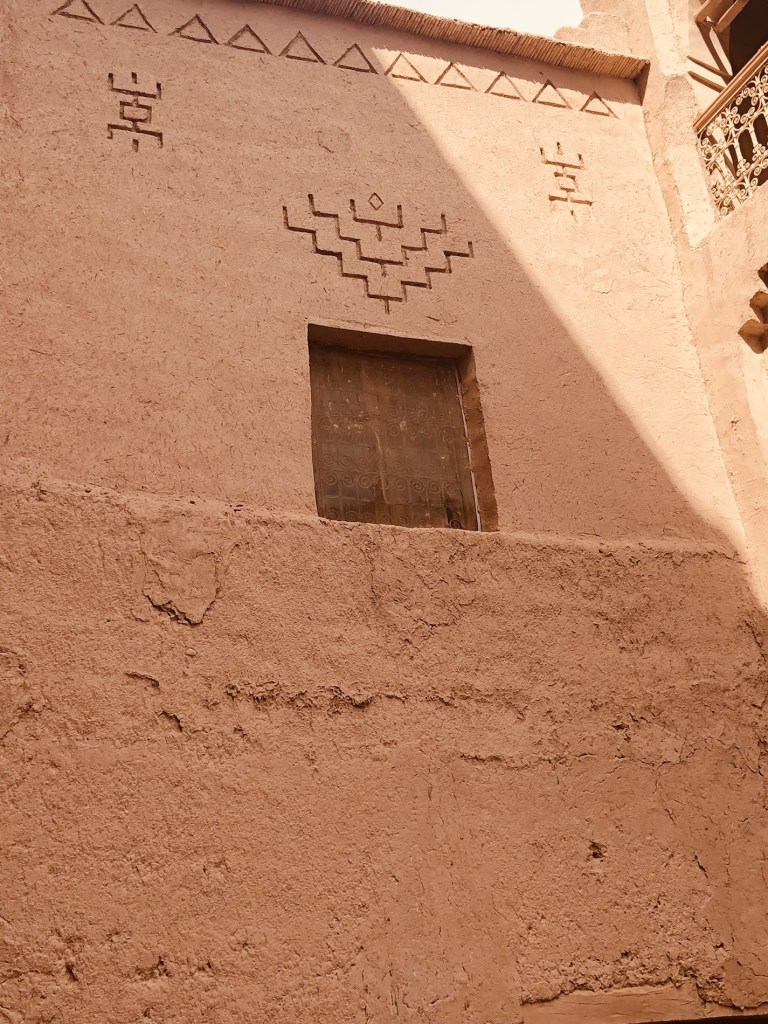
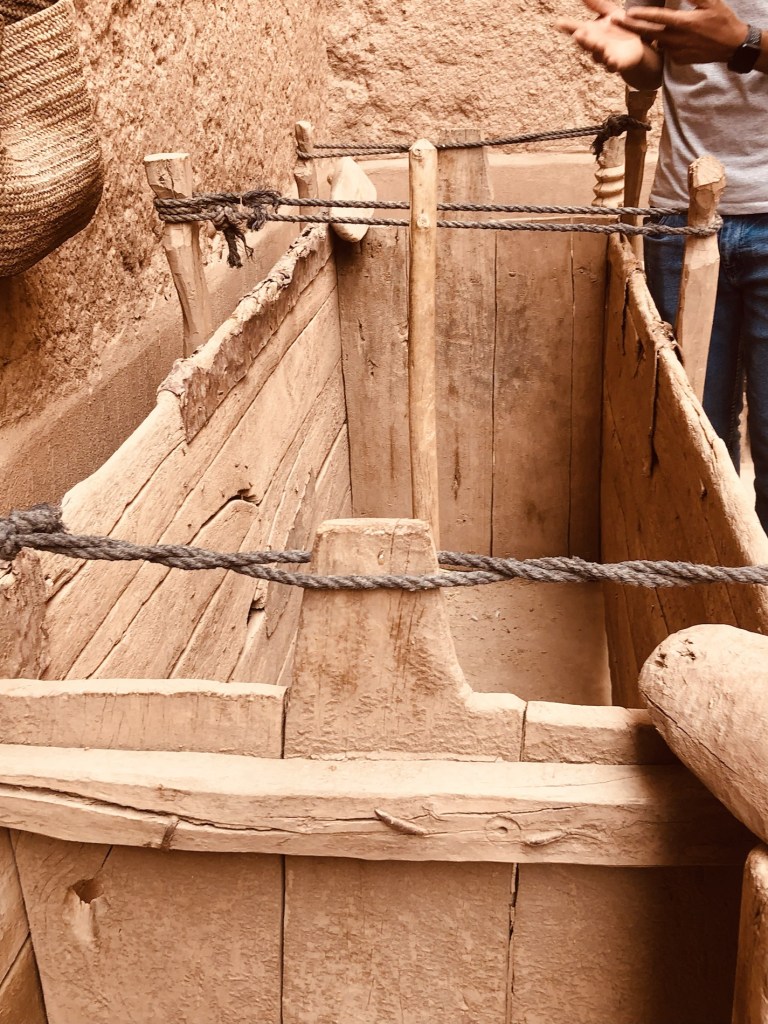
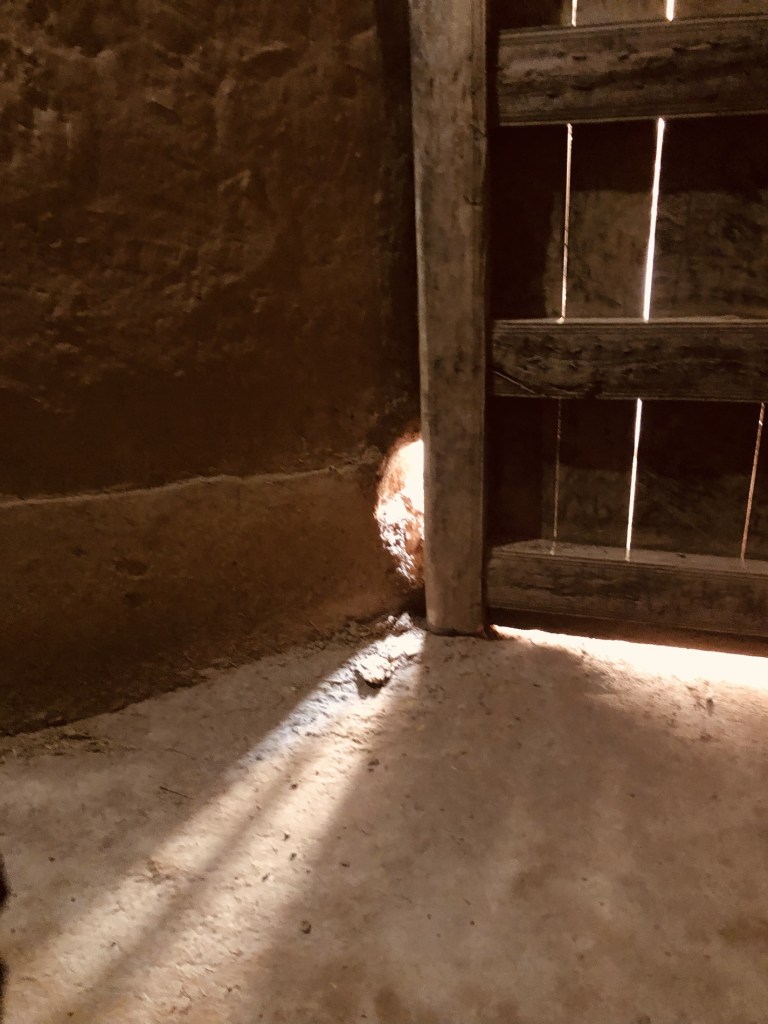
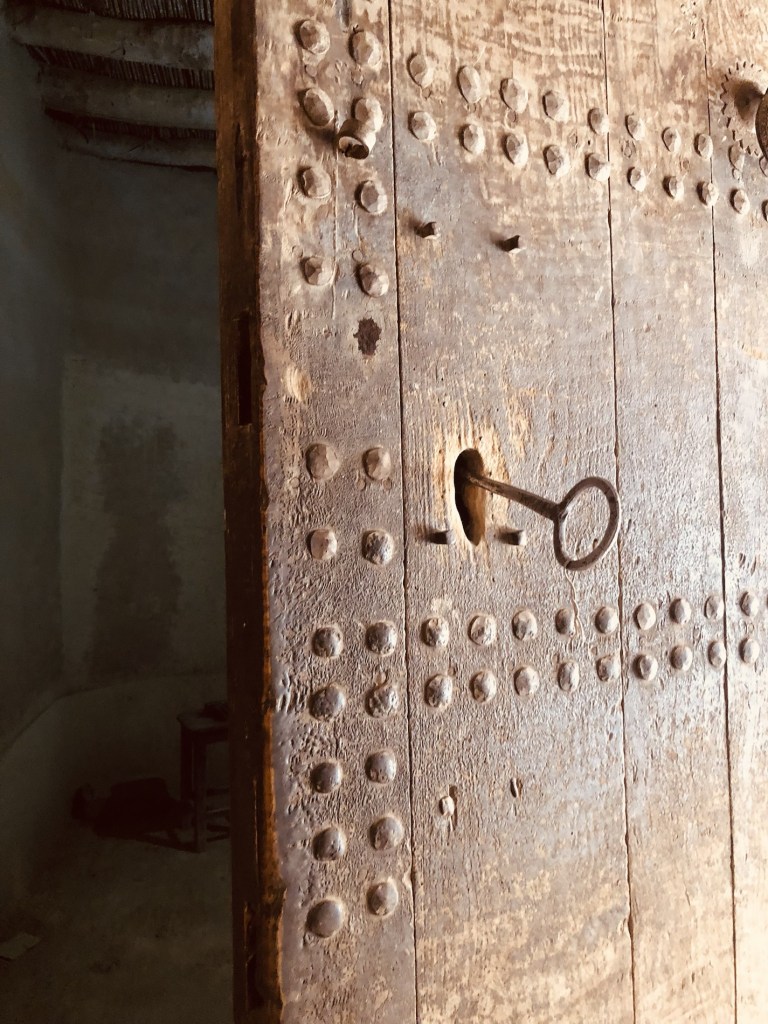
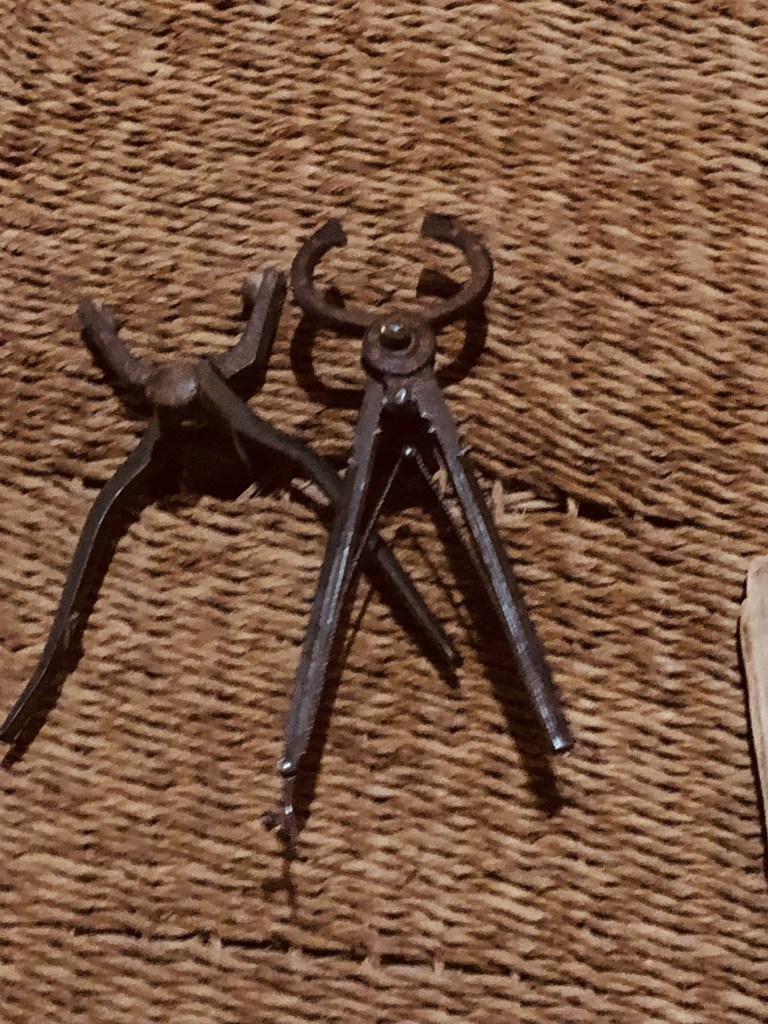
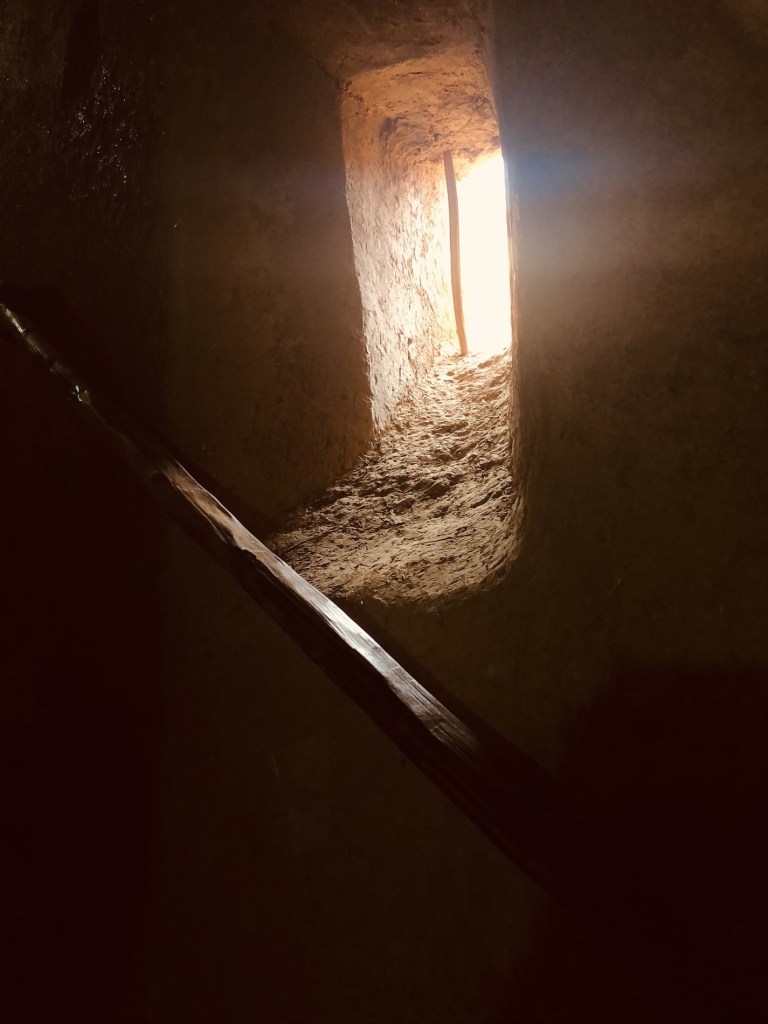
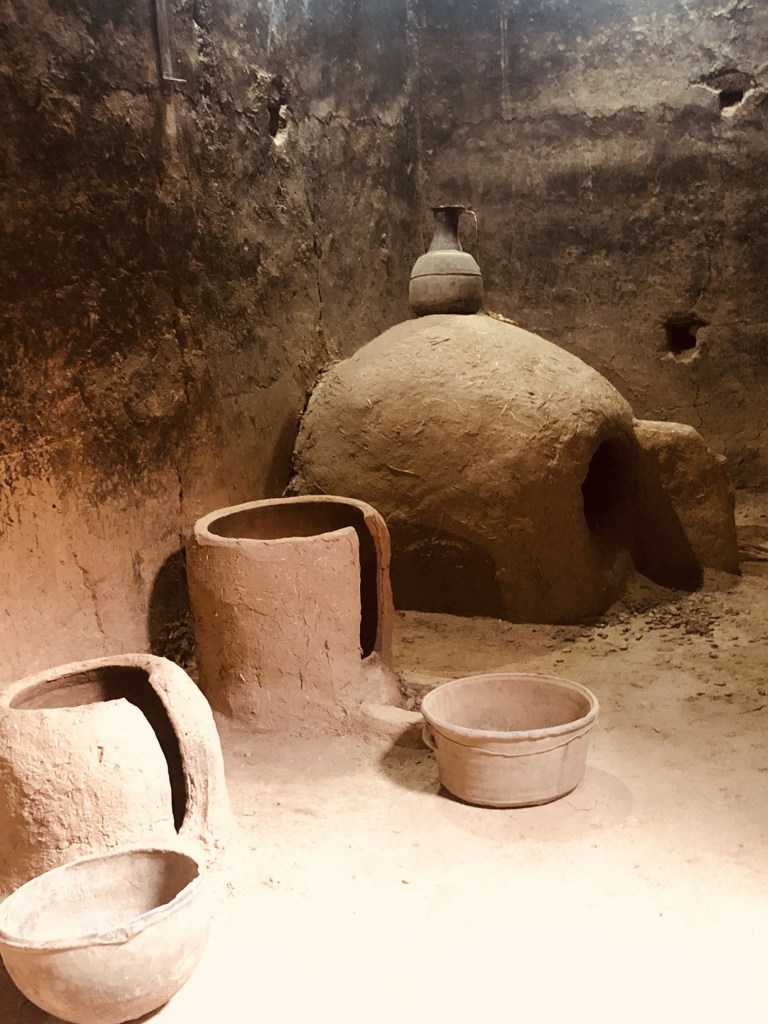
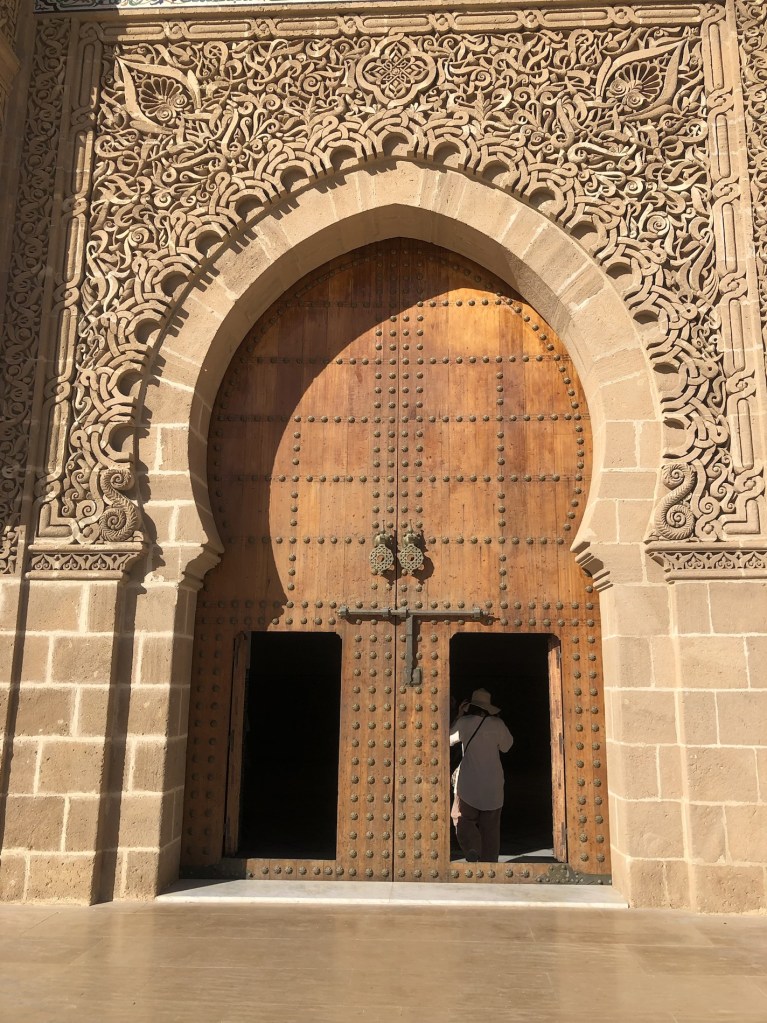
The front door with all kinds of locking protection used during tribal warsJewish and Berber symbols Islamic architecture Making if the thick wallsCat doorUsed for pulling teeth
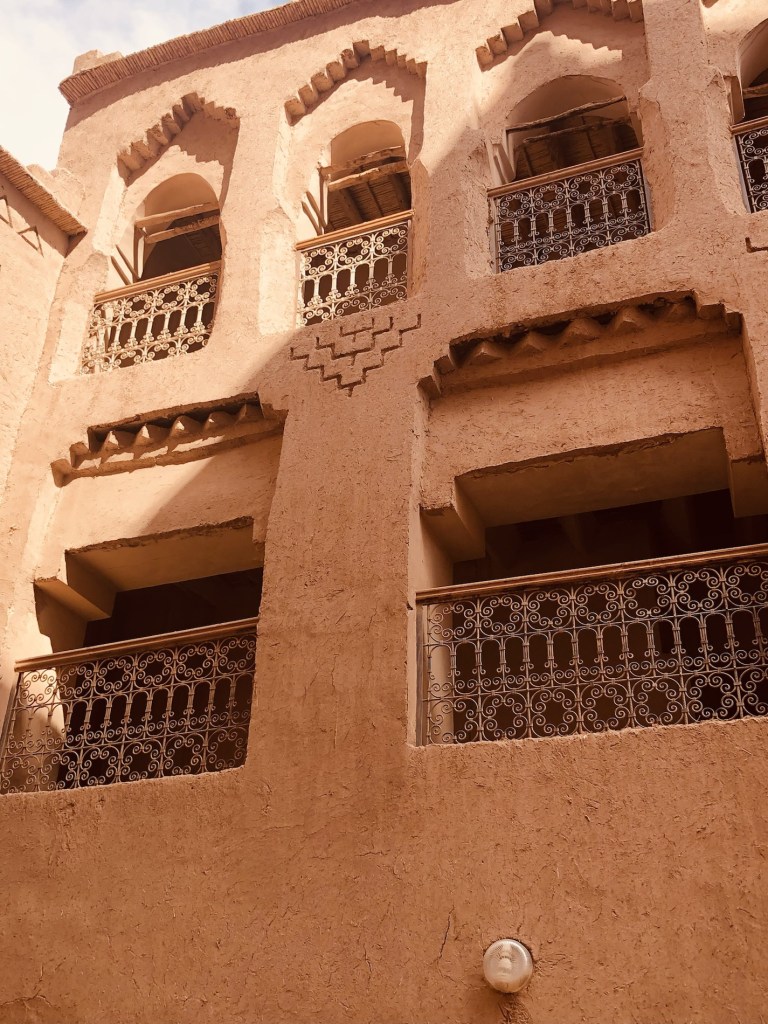
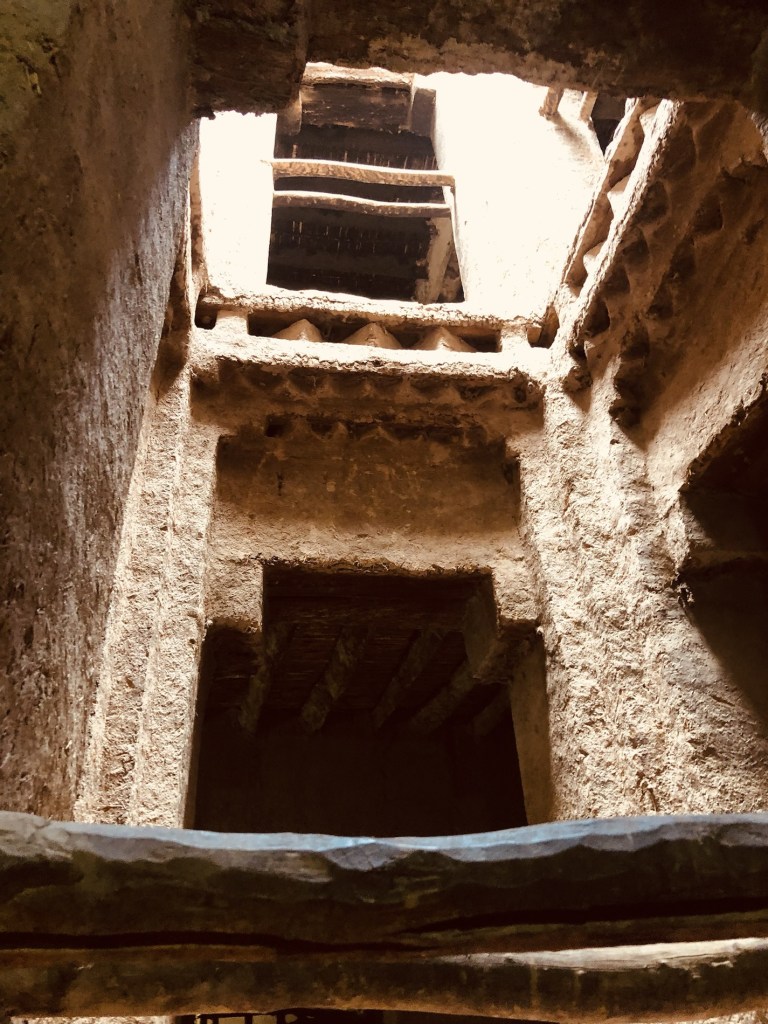
Needs 4 floors and 4 corners. Old made in pyramid style wider on bottom…1.5 (?) metres thick walls to smaller the higher it was built. … no hole in bottom floor for prevent attack. Made from mud and straw. Tamarack… doors. Stairs were of different heights for protection.
About 100 people lived in casbah… 20 in each of 4 salons with separate bedrooms for boys and girls.
Near Ouarzazate… golf course and rentable homes… also jet ski on the lake. 2 million power customers by solar plant…. Largest in Africa. State run power grid but no rhyme or reason to charges.
Roads are generally very good but lots of road building going on.
96,000 people living in Ouarzazate… cinema city
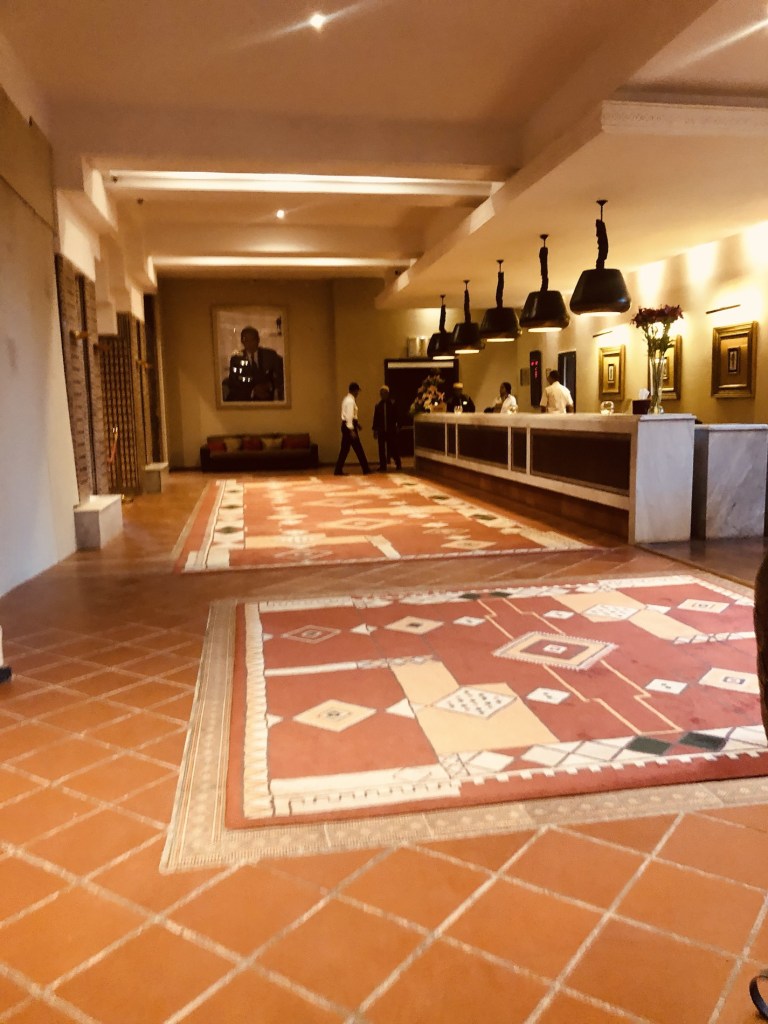
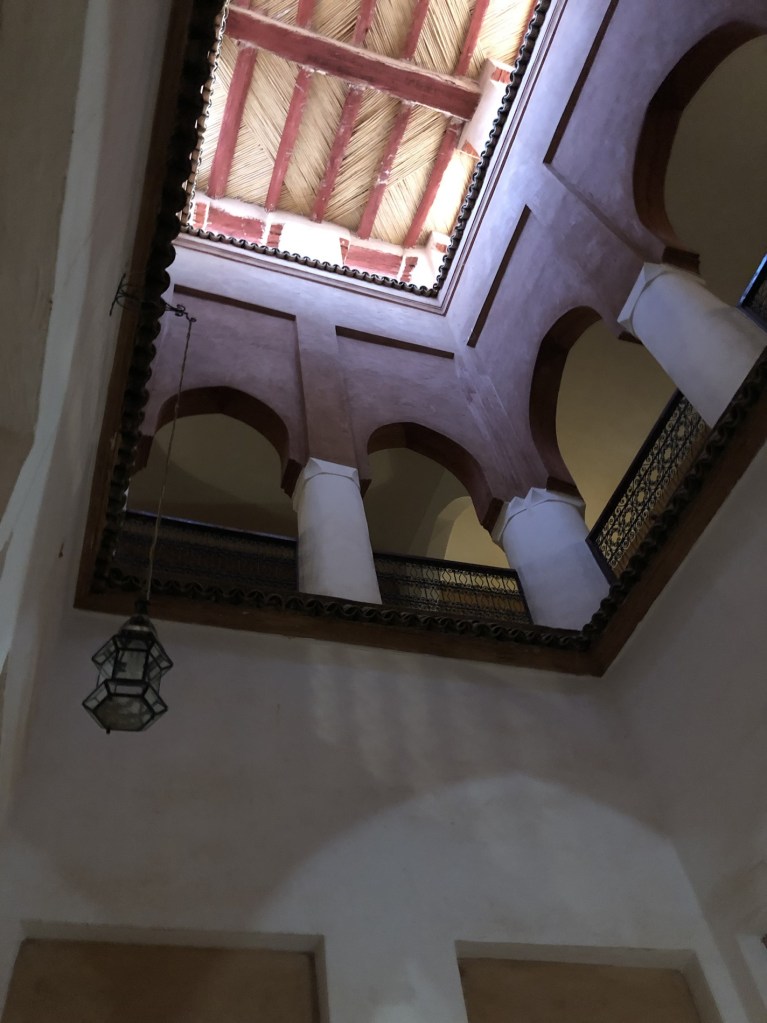
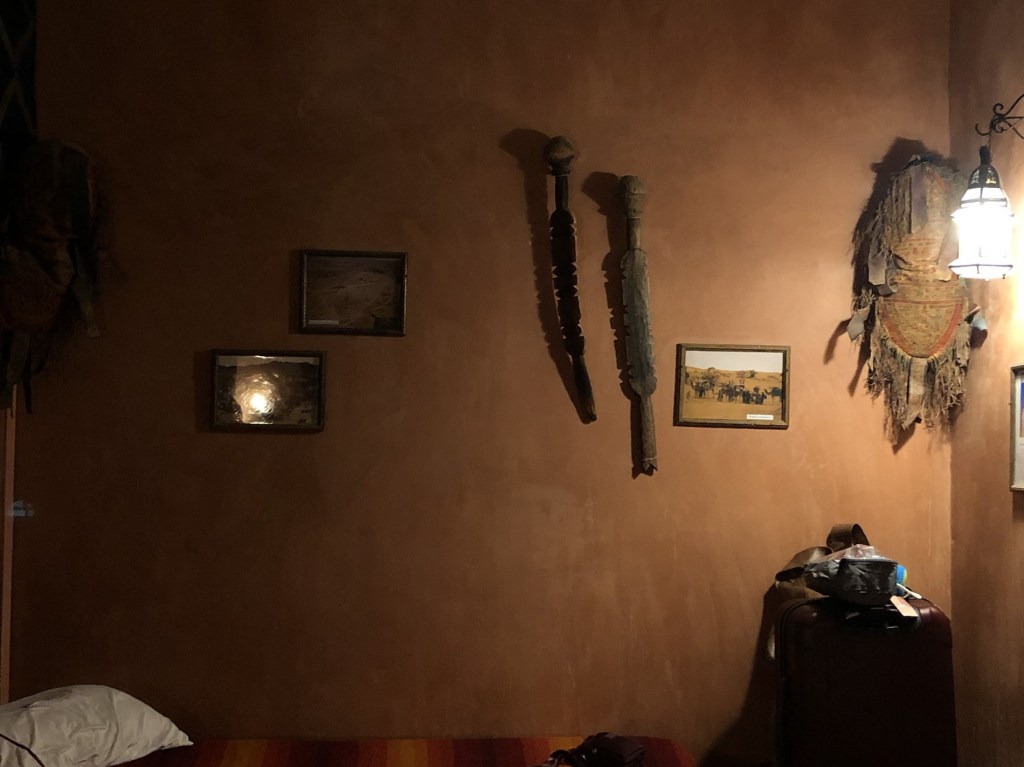
Trying to find our rooms was like a puzzleOur hotel Berbers Palace in Ouarzazate… pretty luxurious!
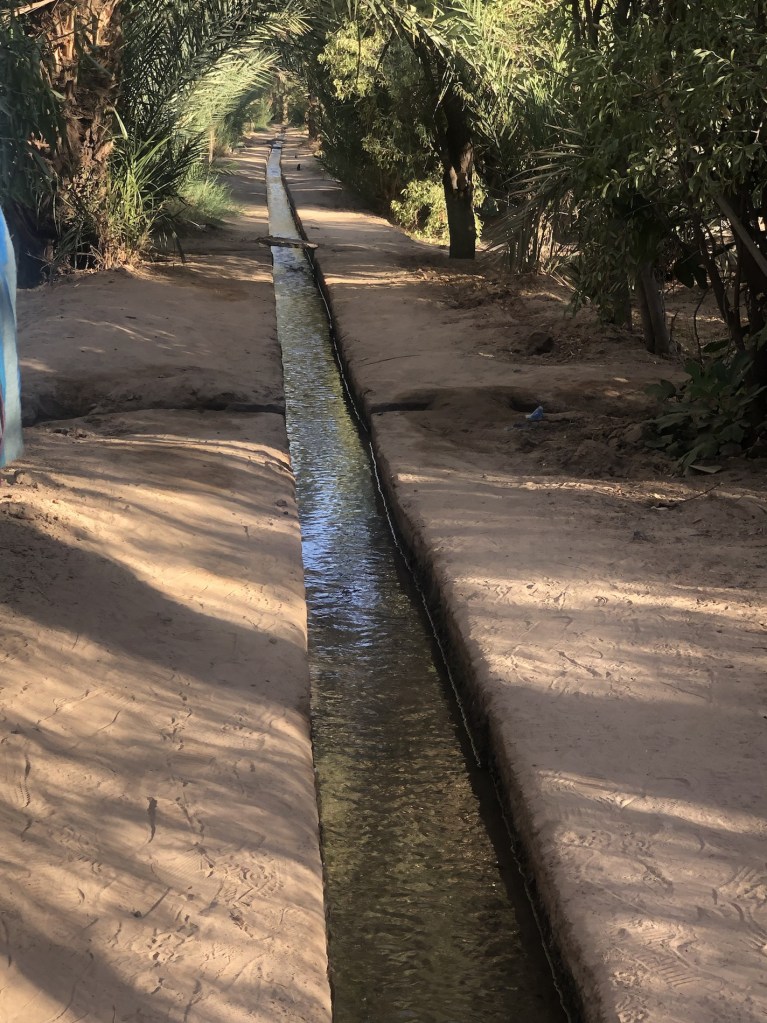
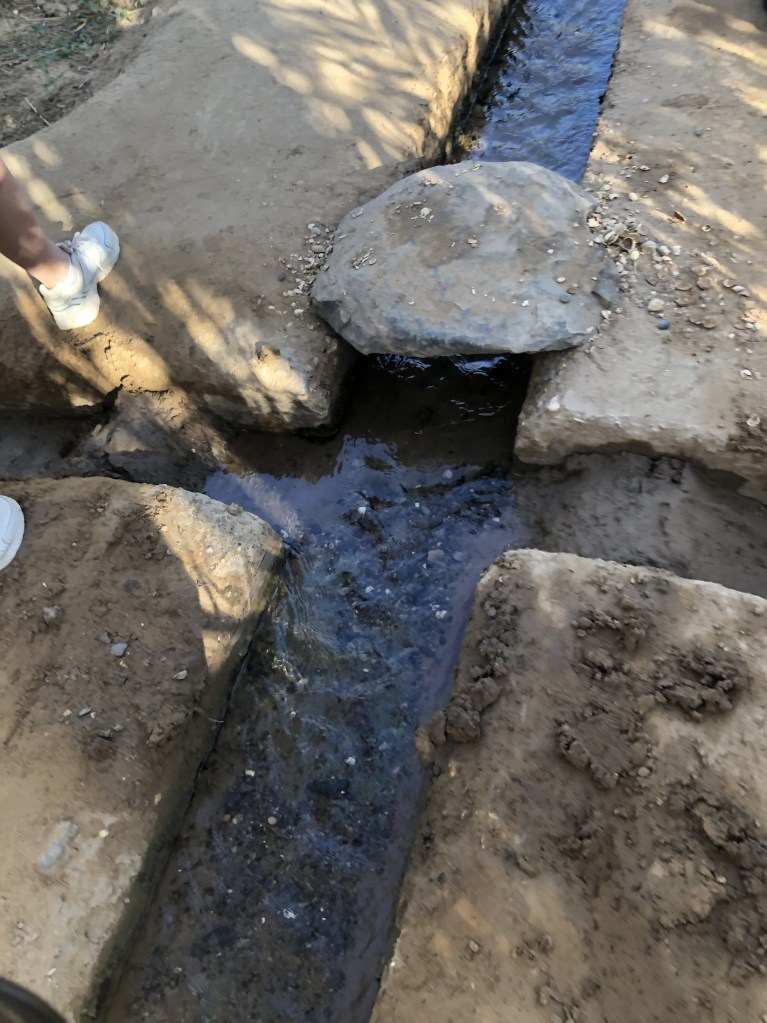
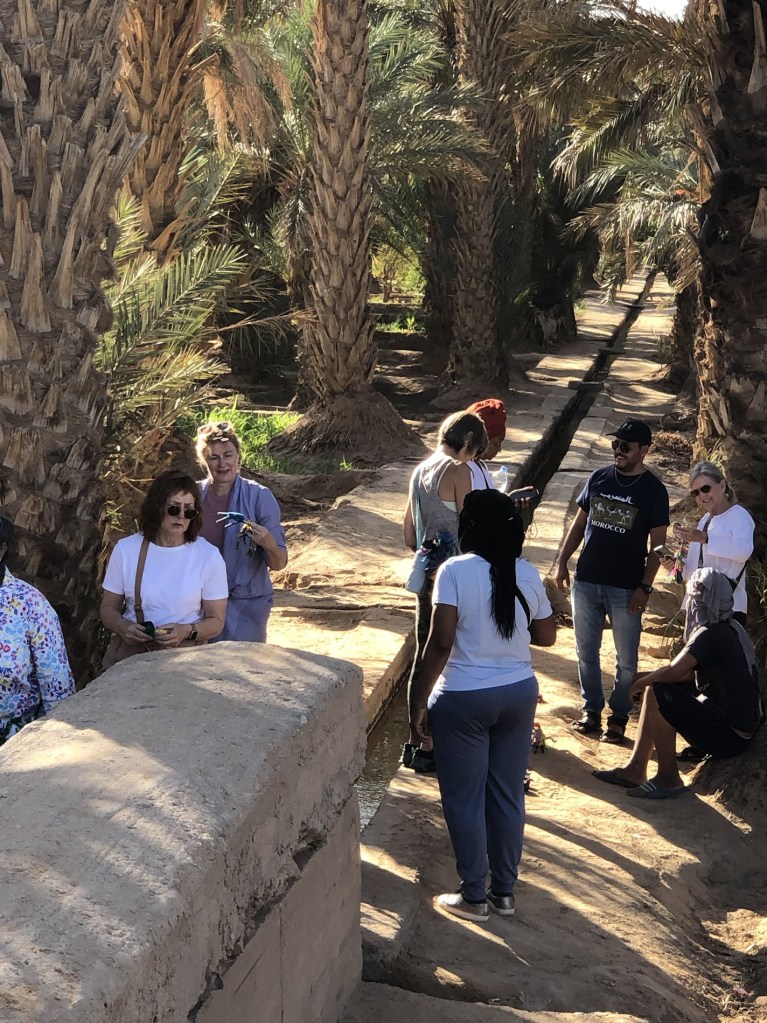
Walking thru oasis. The irrigation is controlled by the chief of the tribe …..he is responsible for the community…..is the one who organizes the review system here between the families. Each family is responsible for maintaining their own section. Family has one hour & half hour or two hours,depending on how big the families and how long it takes to water the farm. At a meeting once a year between parties of the tribe plus the responsibility irrigation they sit down and talk about everything. Of course, global warming and climate change, farming is hard to make a living. Animal are important too but most of the families have turned their attention to work in tourism. You never forgot about the farming, but “I would say 99% of the families rely on tourism”. The national healthcare system during COVID, depending on income previously, got benefit of $150 per month for this job so it’s like a minimum wage for them that they wouldn’t be doing that.if this seems a little mush-mashy, it’s because I thought I would just record what Mustapha was saying but…. OMG… not a good idea. I tried to fix it.
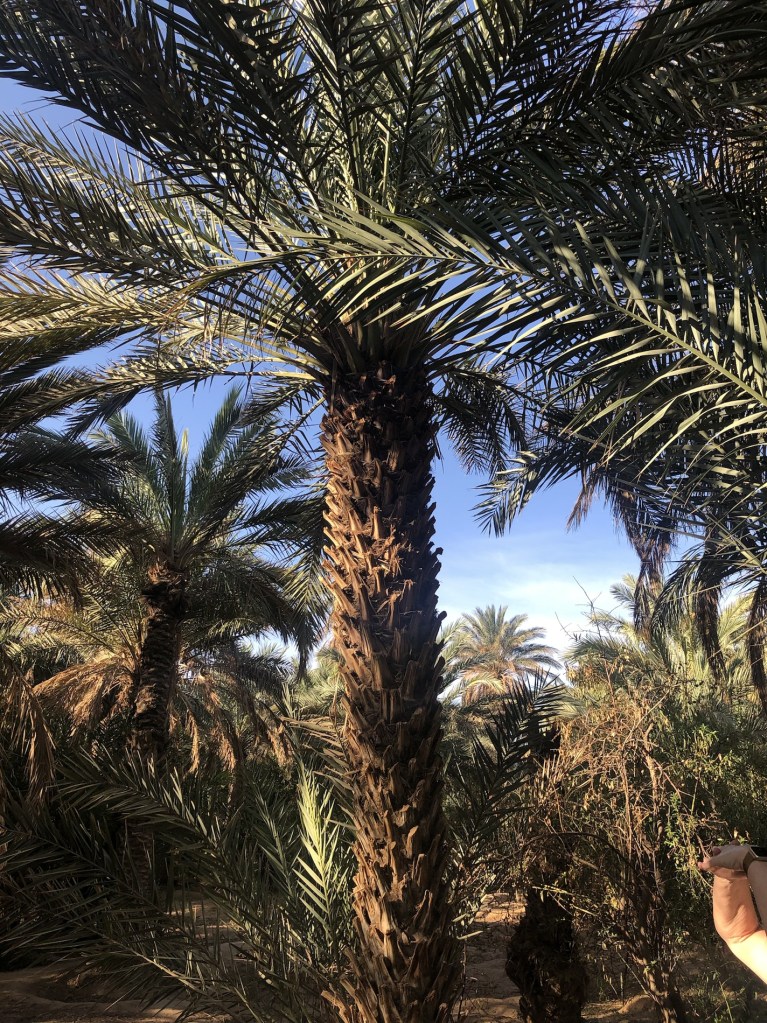
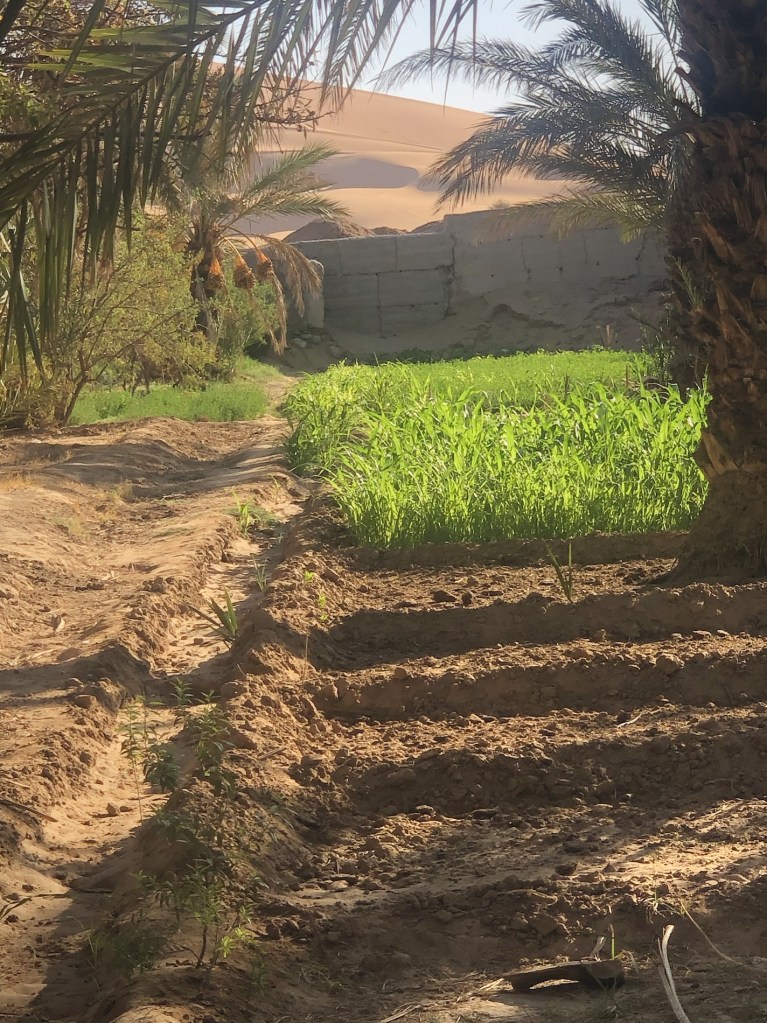
Irrigation that flows in this oasisDate palmHow to change direction of the flowChilli peppers Corn grown as well… protective wall beyond Some of our group
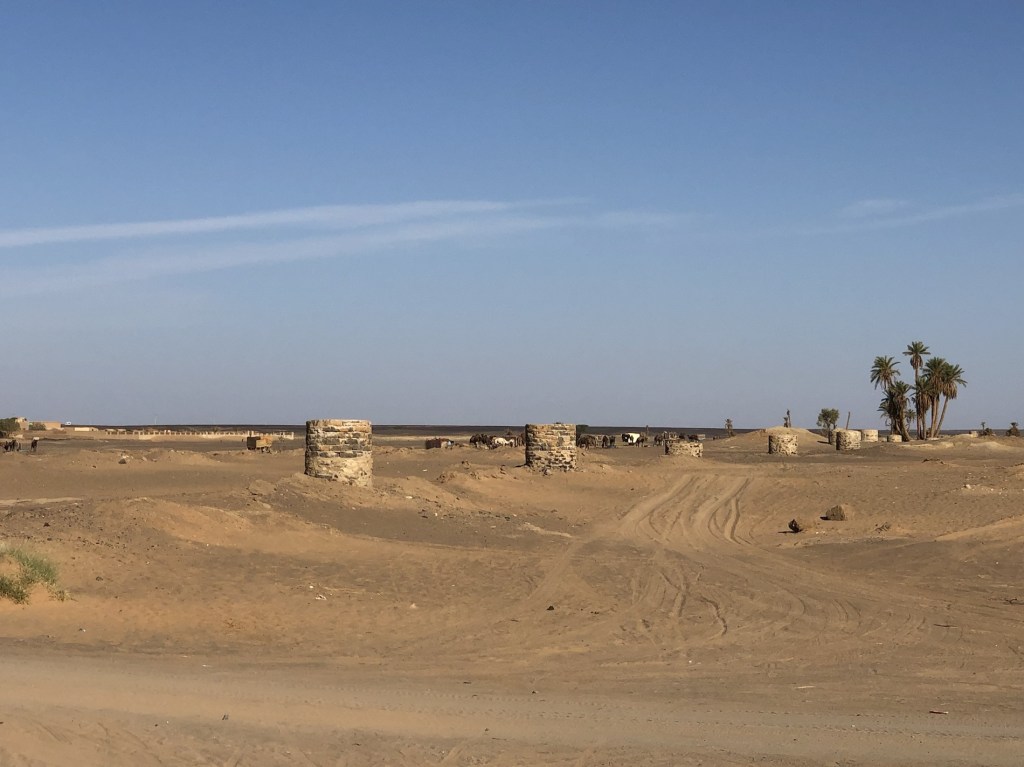
Walls of the well/ irrigation lines round and rising from the desert, keep sand out plus some animals. They get a lotta wind here in winter
Mehya… alcohol made from figs. Camals have 12 months gestation …,one birth at a time. Live 30 years.
Erg Shabbi….the highest dune, is 160 metres high.
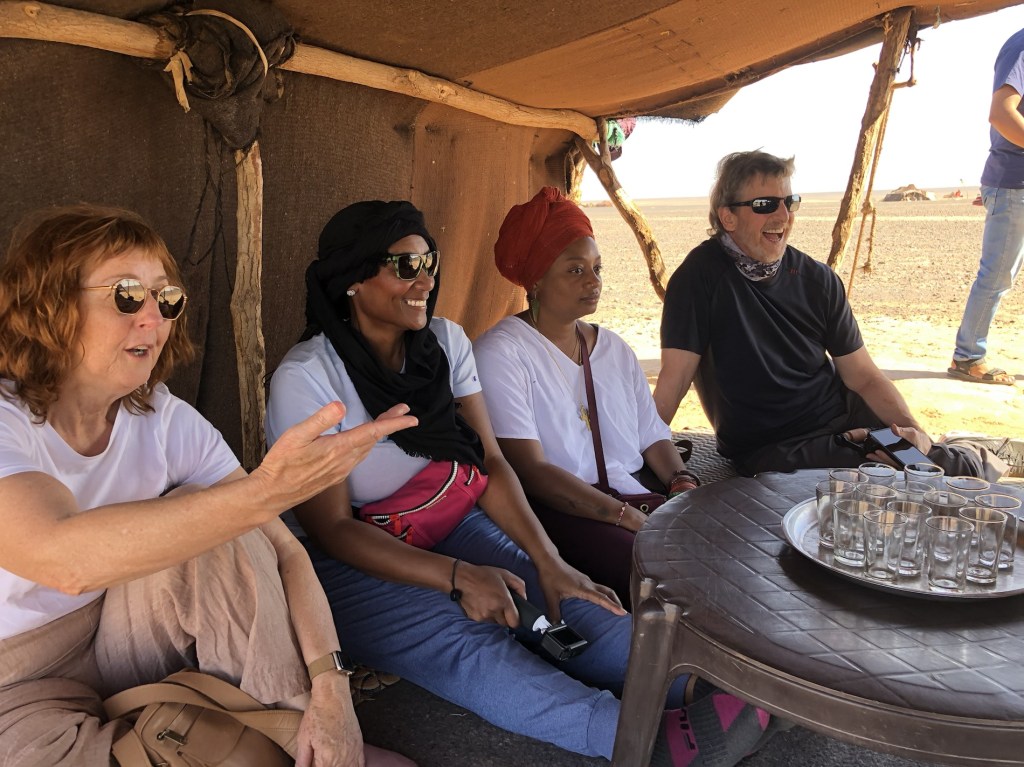
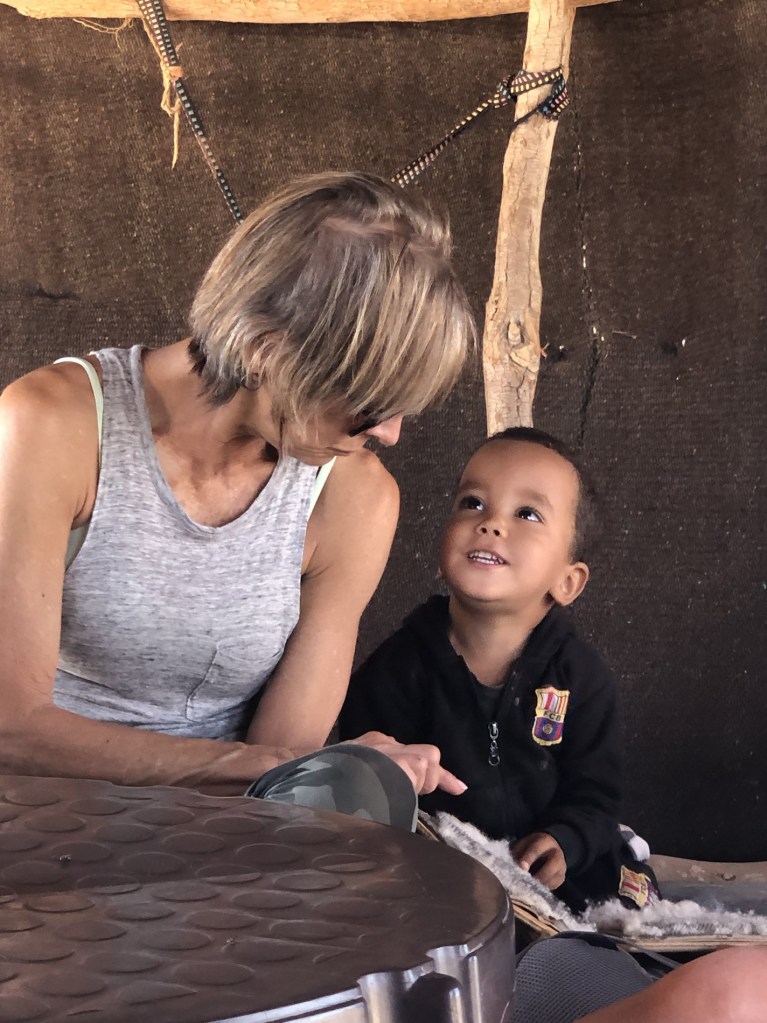
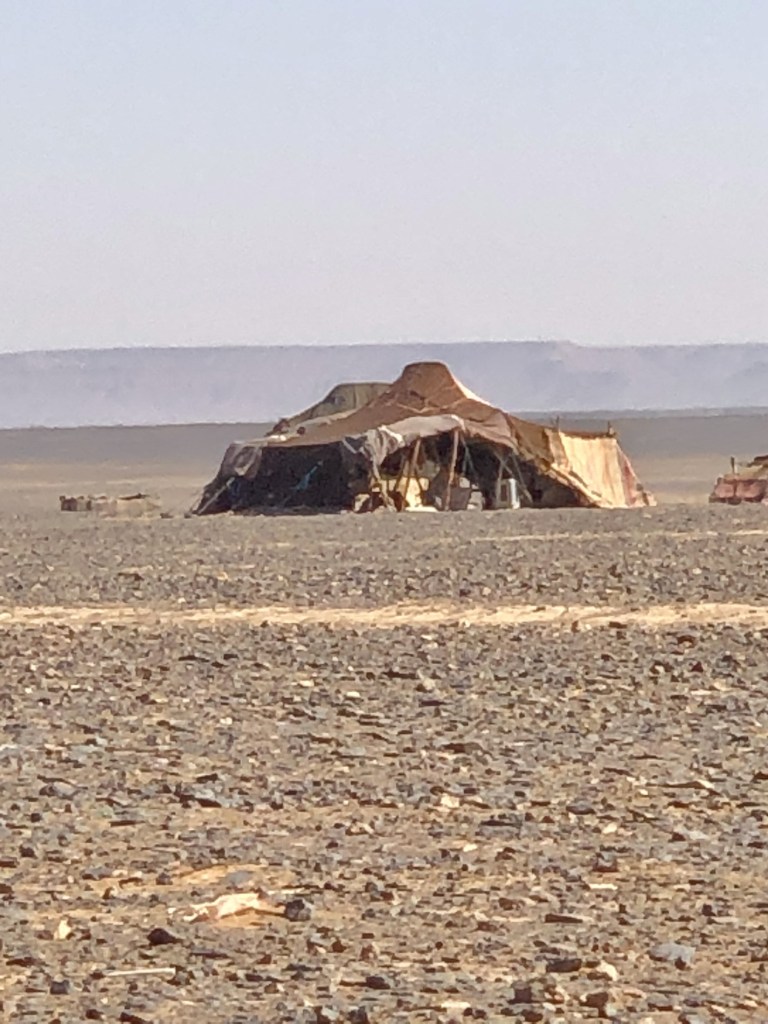
We stopped and had tea and conversation with Berber nomad woman and her family.
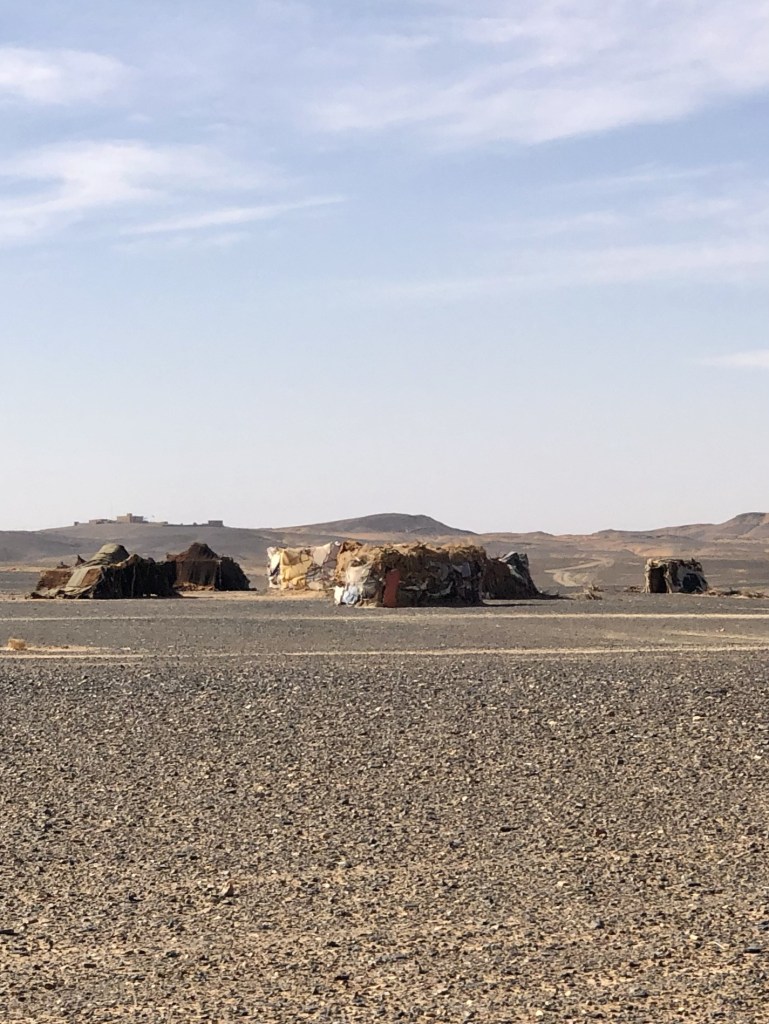
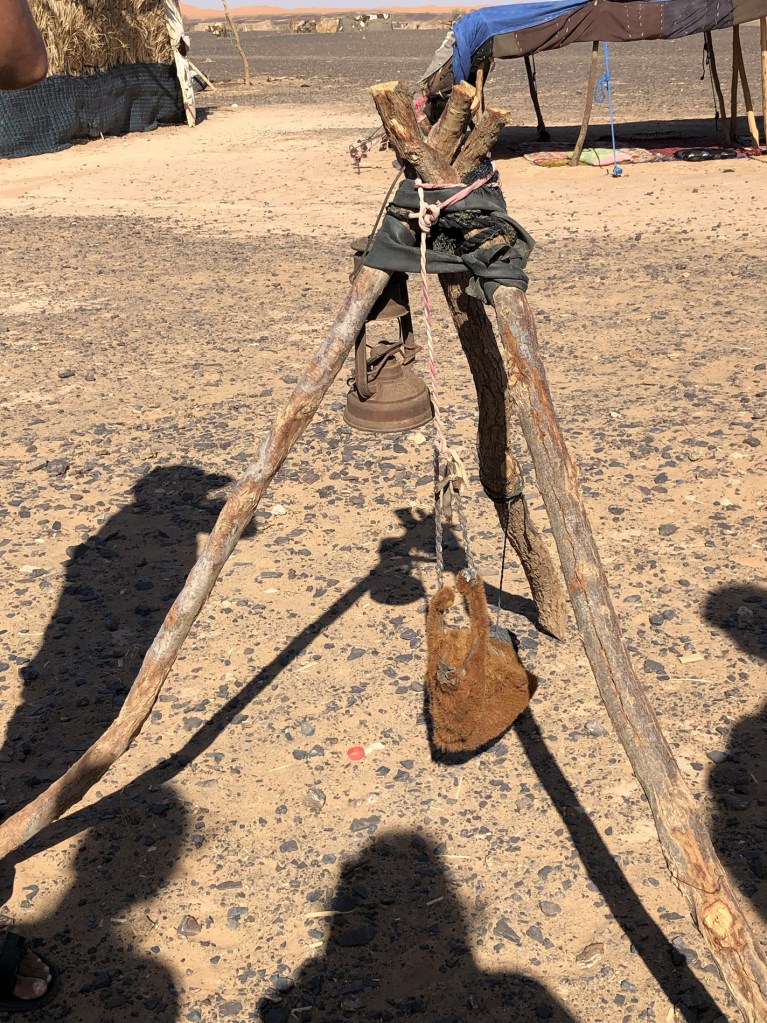
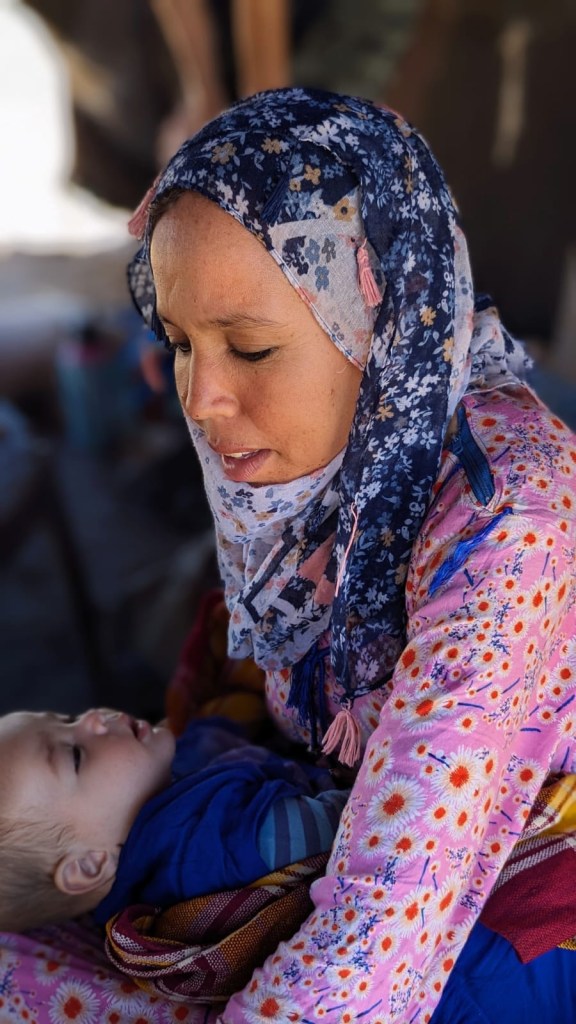
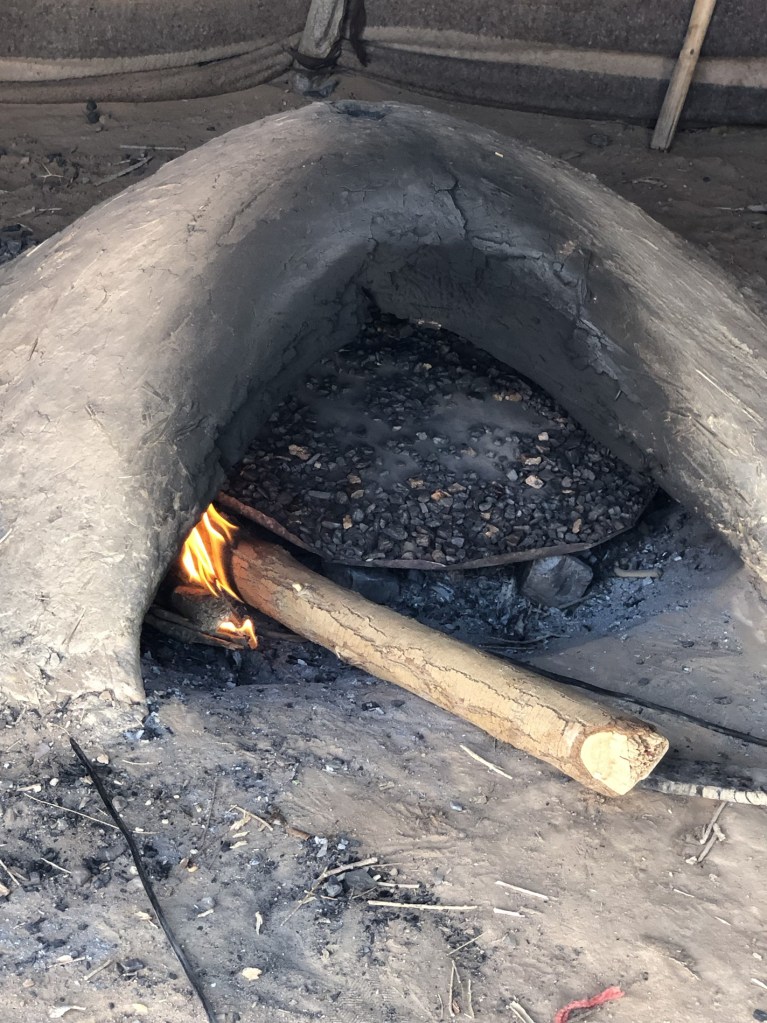
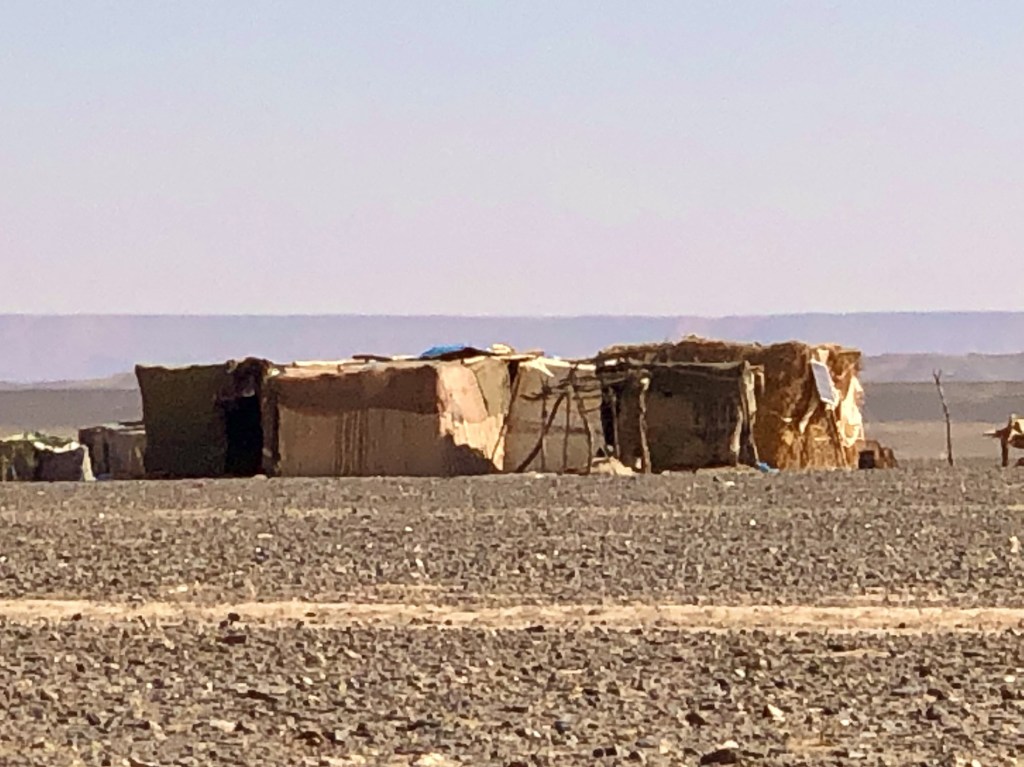
Berber nomad campGoat skin for making cheese and wheyBerber mom Mona and baby Ishmail (Linda’s photo)Oven Beautiful little boy Omar interacting with LauraSome of their shelters
Goat skin bags containers ….shake for half an hour and it gives you cheese, you take the cheese out and you have whey.
Nomads gathering… Mona is mom, Omar and Ishmael ….her two kids plus the dad.
There is no crescent moon in Moroccan flags cuz that is sign of Ottomans who never ruled the country.
Nomad berbers when marry, bride wears white and face is covered before marriage. Ladies use kohl for eyes and henna on nails.
These people only shower every 15 days or so but no smell. They very seldom get sick.
Border between Algeria and Morocco closed since 1991. Border with Algeria to be avoided. Different culture, people, oil producers change attitudes.
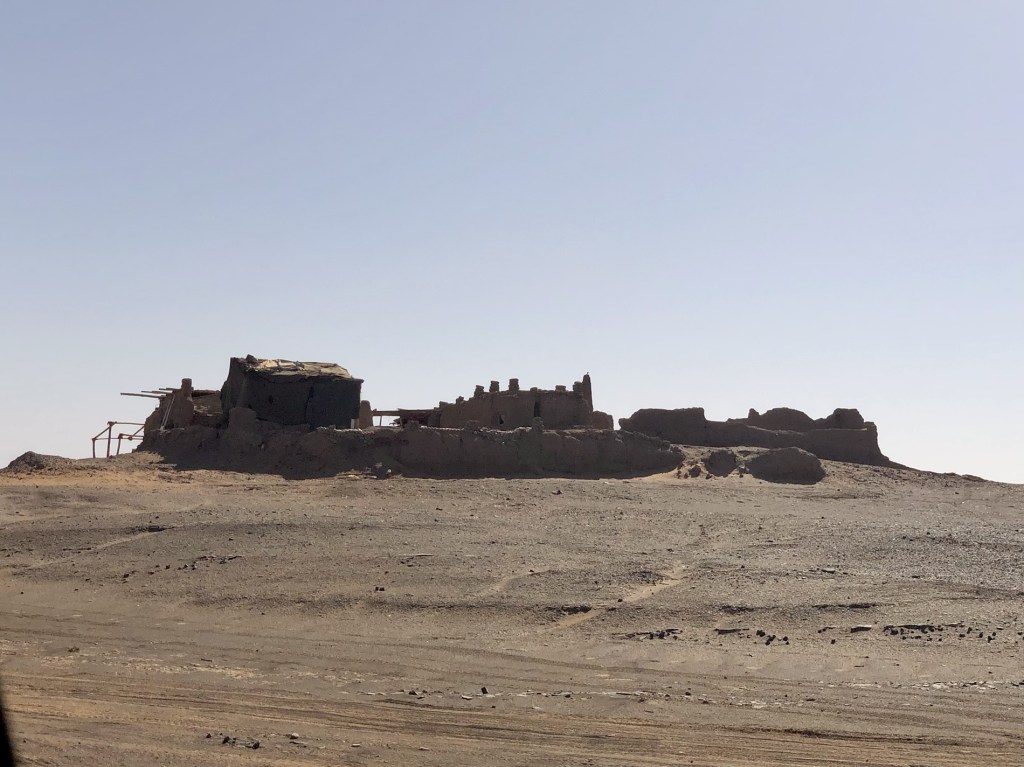
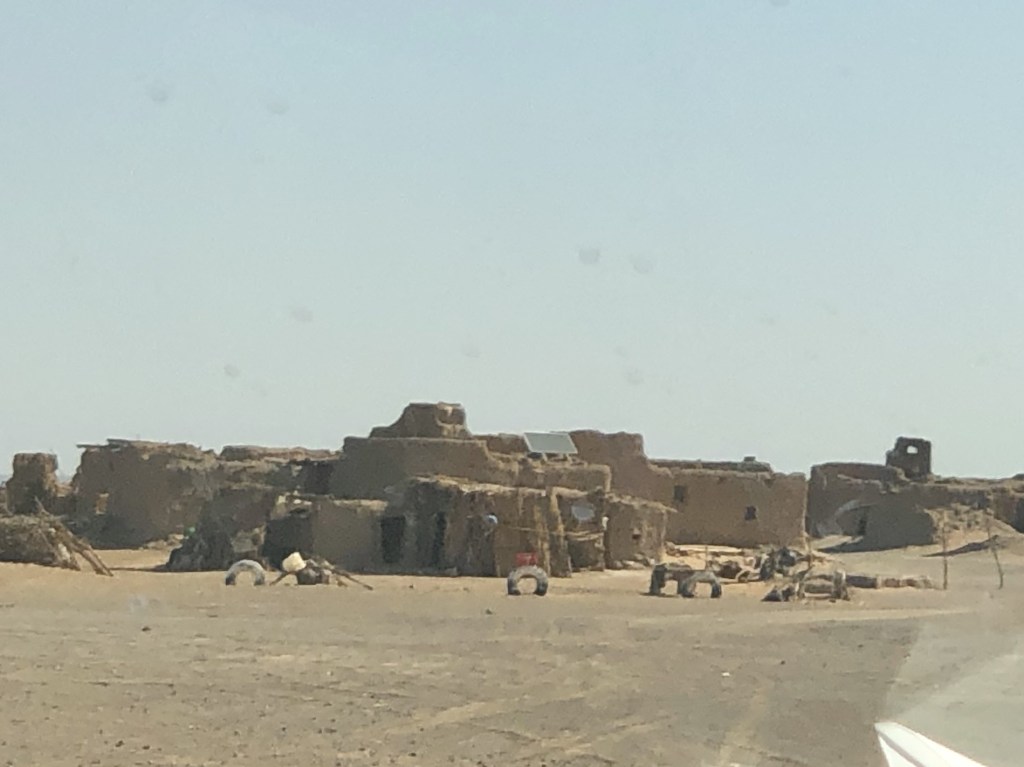
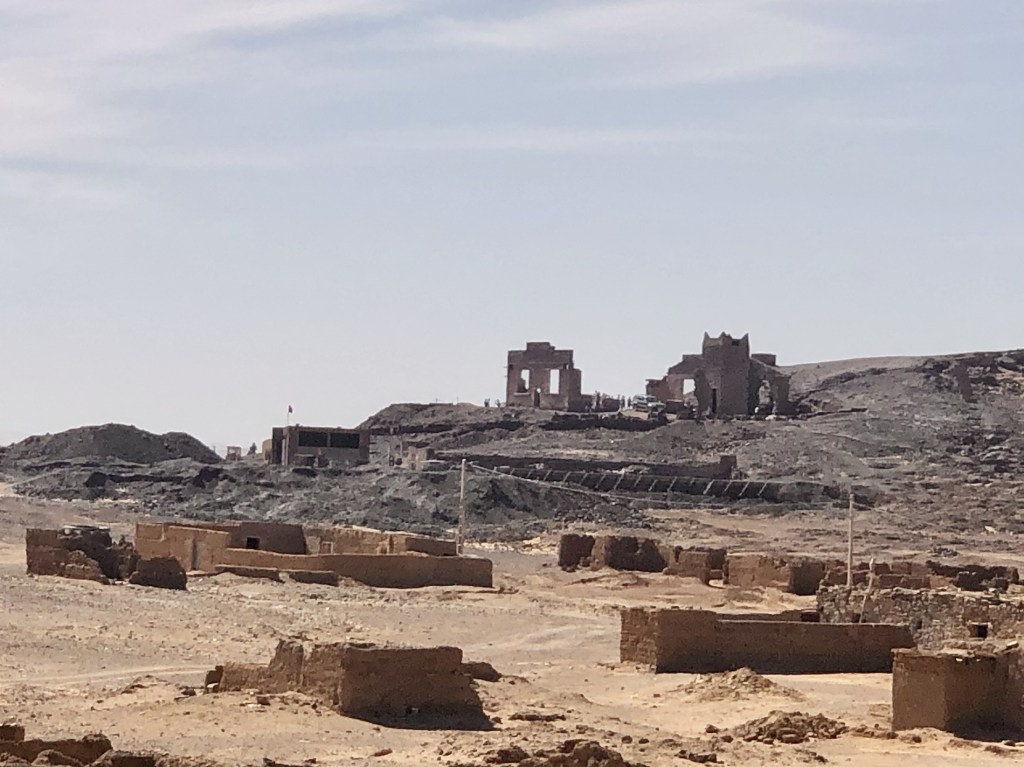
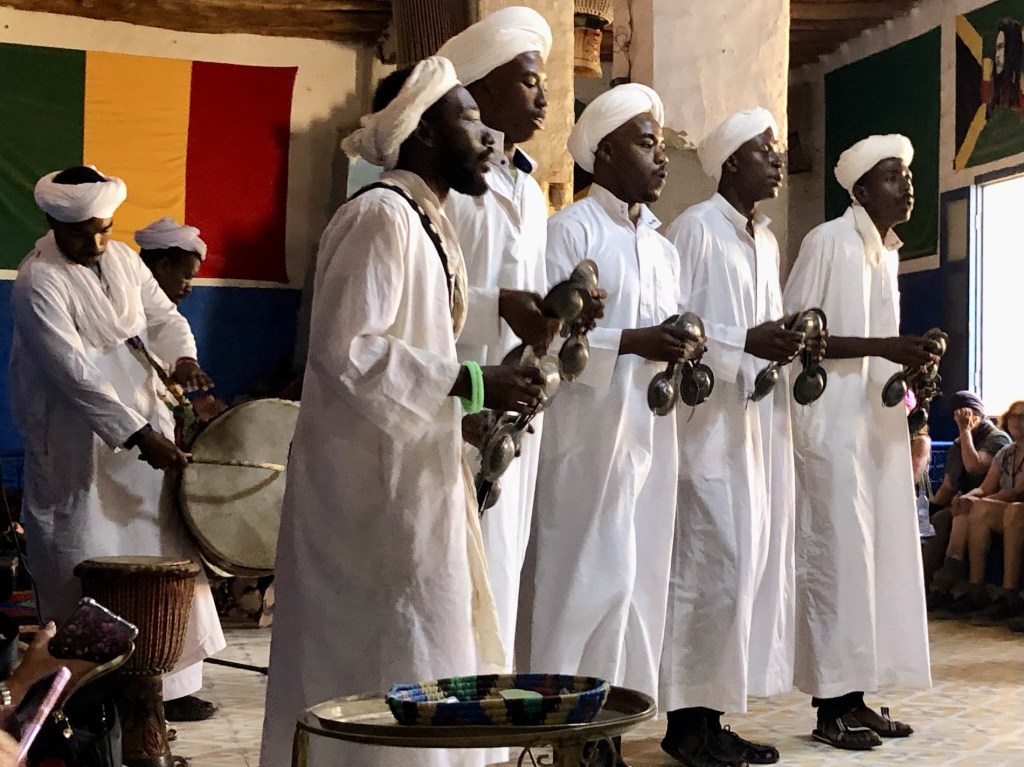
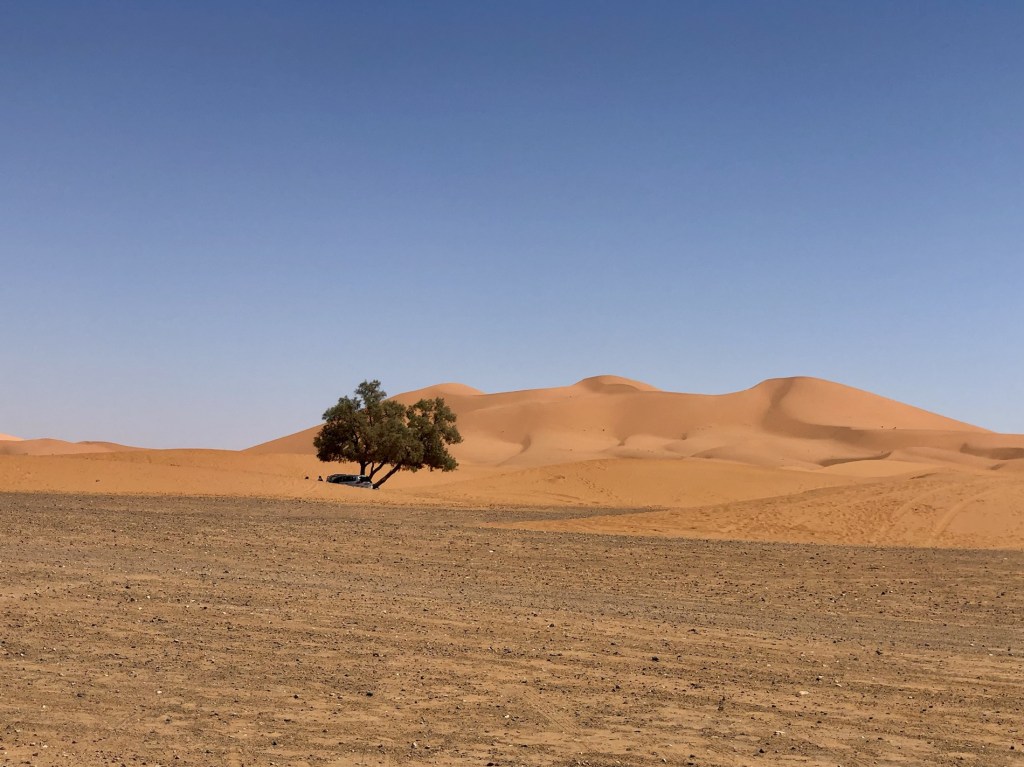
Abandon coal mineMiners accommodation….abandonedWhere we stopped to listen and watch and dance some sub-Saharan performersMusiciansThe dunes… love them!
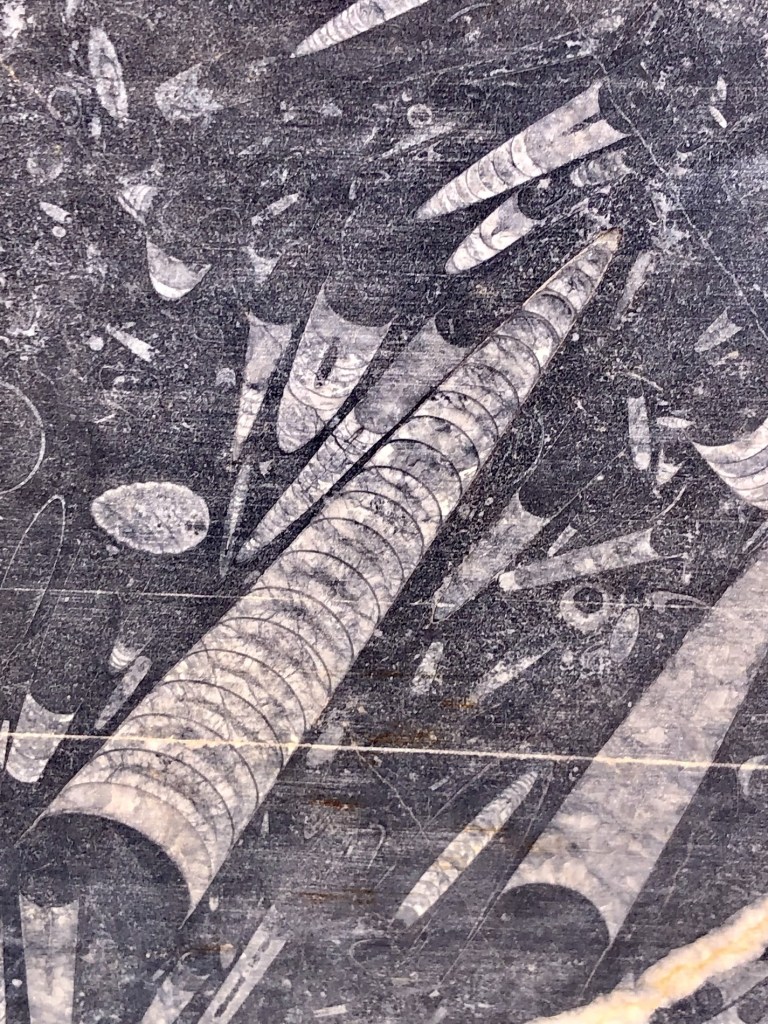
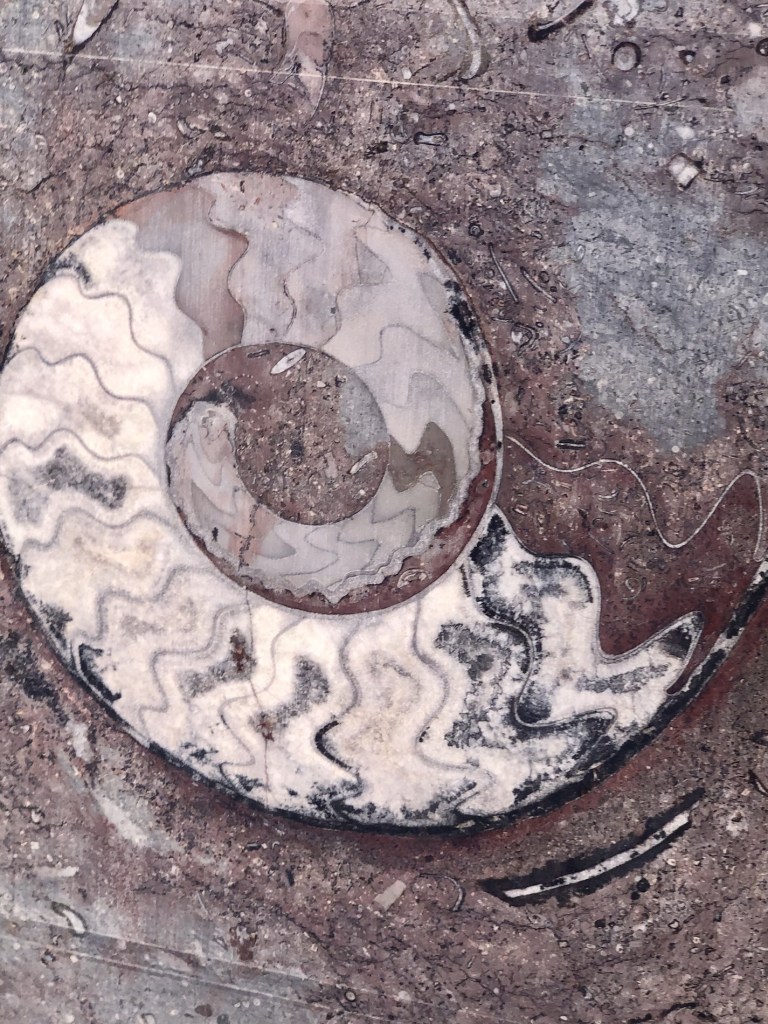
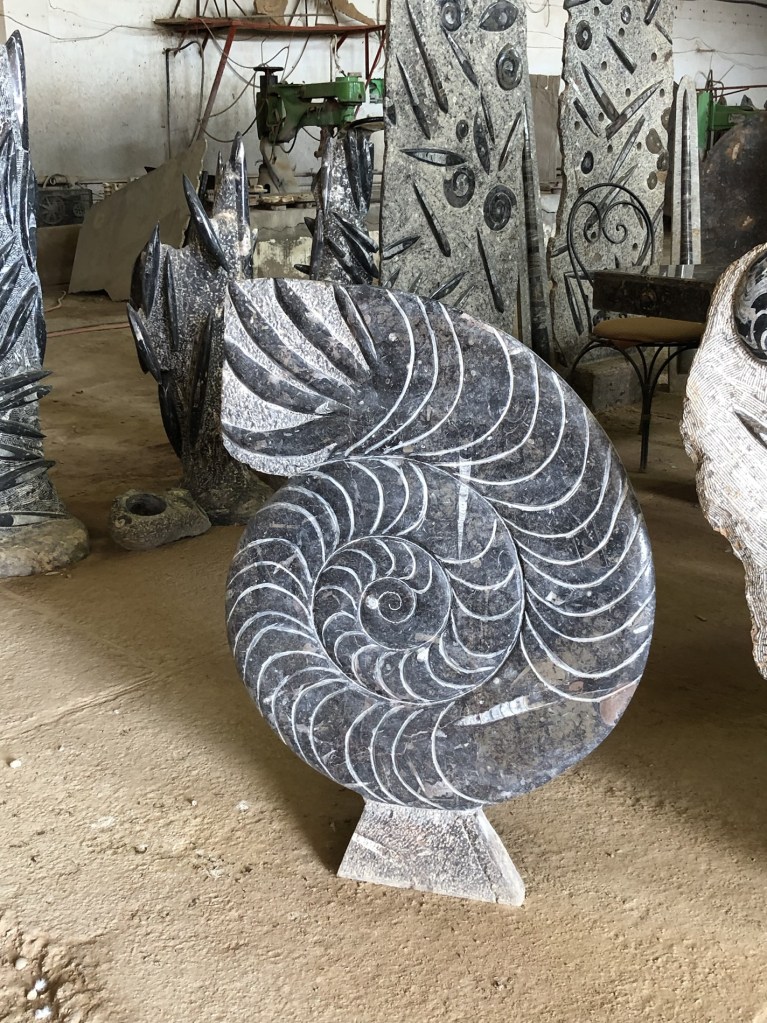
Fossil yard … from 300 million years ago, the desert was under Mediterranean Sea…snails (ammonites) and squids.. sliced into slabs for table tops, water fountains and the like.
Squid fossilsAmmonites
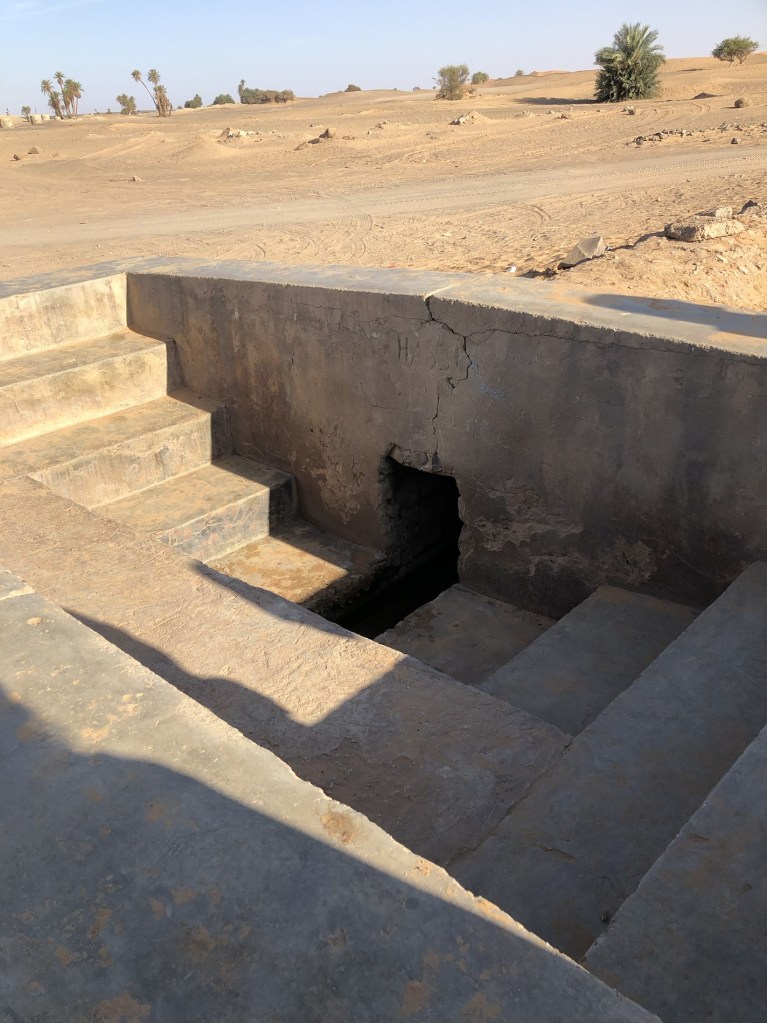
Stopped by an ancient 14th. Century irrigation system, under the desert. It had a well 5 metres deep to underground tunnel of at least 3 meters deep and wide with a gradual slope to it. It has dried up since droughts in 18th century and not been maintained by the state.
Going down into centuries old water supply under the desert
45% agriculture… tax exempt up to $50,000 USD; 40% in tourism. 8,000,000,000 USD worth sent home by Moroccans abroad. Last year 3,000,000 returned in summer last year after being not allow because of COVID.
High Atlas Mountains lots of minerals …. Biggest being silver. #1 tourist destination in Africa.
Ait…name of tribe or family. When woman marries she does not carry husbands name but retains family name. Children take father’s name.
35,000 people in Tinghir…. 20 kms oasis.., pretty town.
High Atlas MountainsOasis of TinghirInside our hotel in Tinghir… very cool decor
Ifran, a city in Middle Atlas Mountains -1600 metres high… looks alpine……has a ski resort. It is a university town… $10,000/ year. Runners come to train because of altitude. Lots of snow in winter. Lovely, lovely town…. Very green. Most treed area of North Africa (cypress, pine). Forest is protected from farm animal grazing.
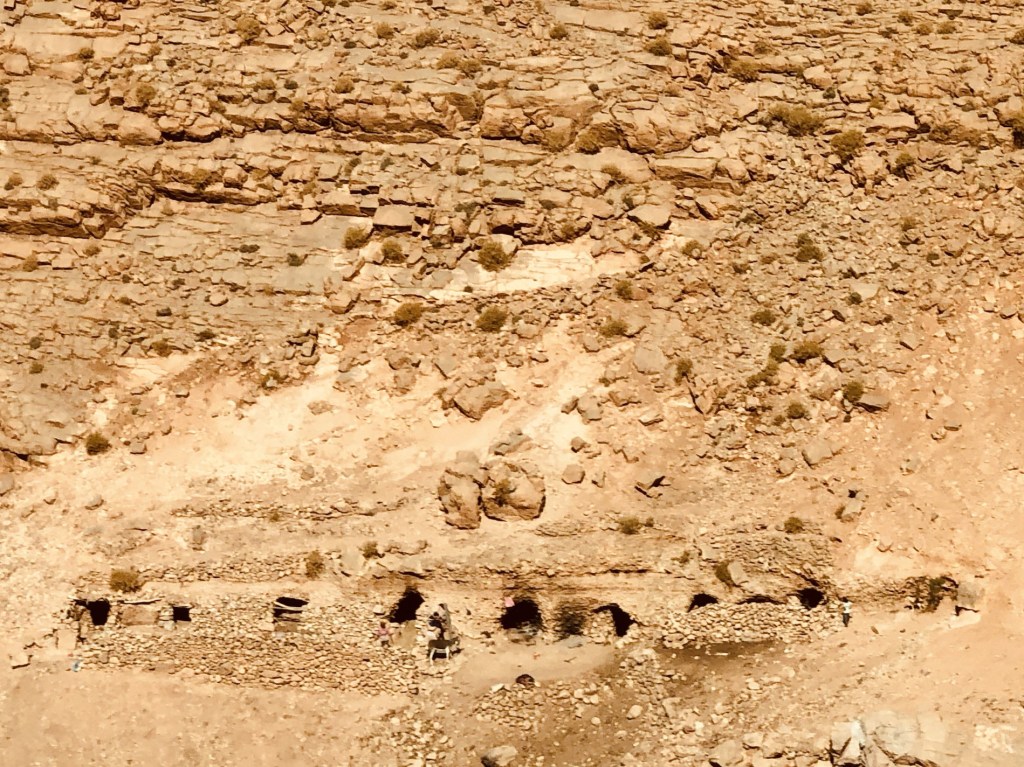
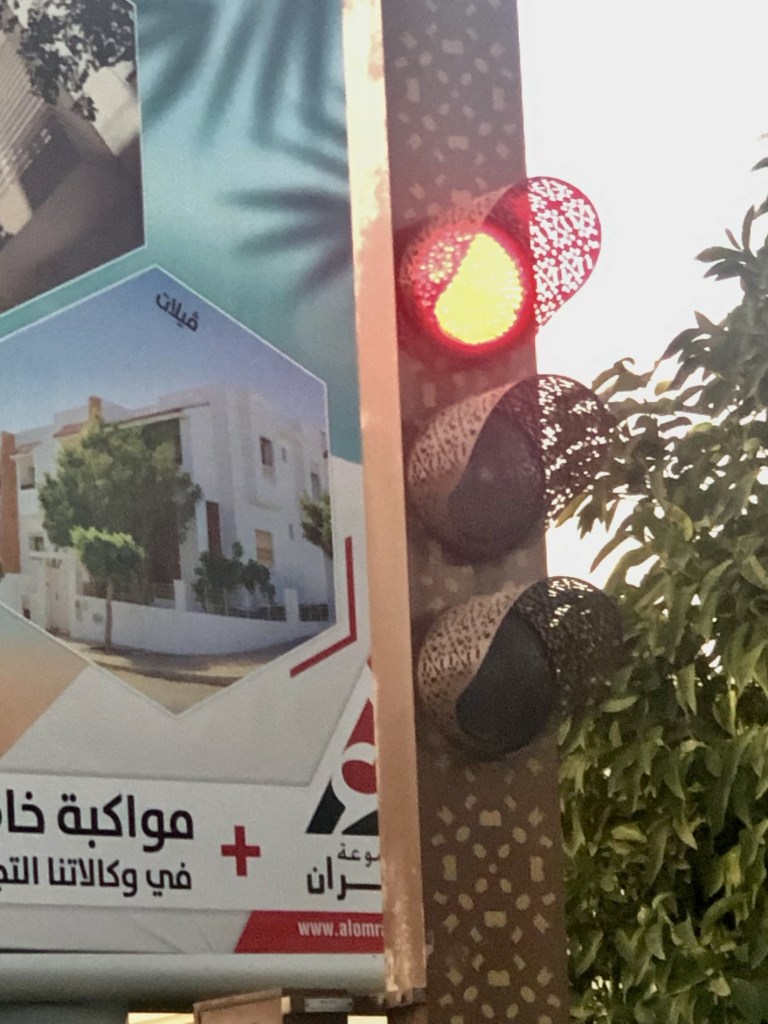
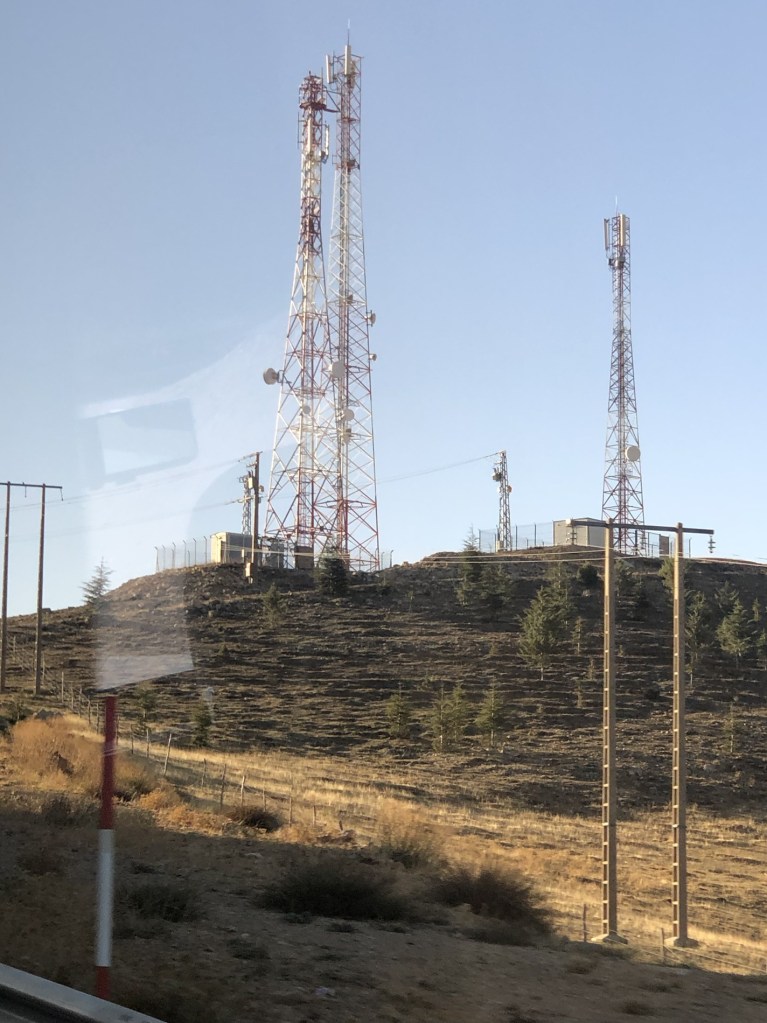
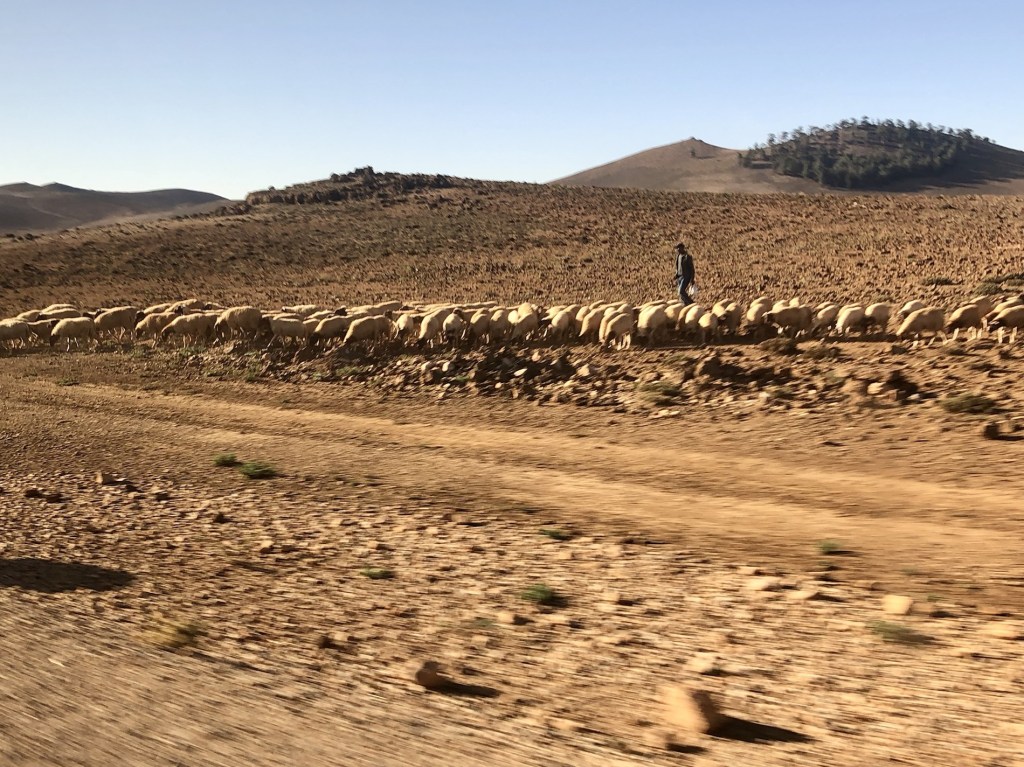
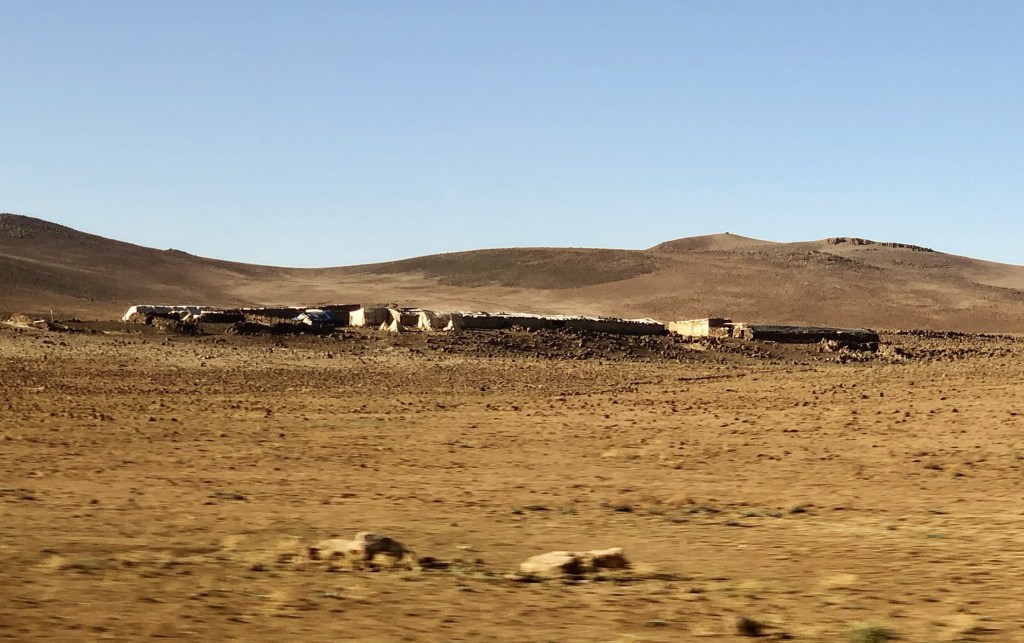
Filigree on traffic lightWifi is maybe sketchy in places but is available everywhere including the desertWinter wind blocksGoats/sheep of the nomads Semi-nomadic shelters
Barbary macaque monkeys… here and in High Atlas Mountains & Gibraltar), wolves, foxes also. Most other animals have been eliminated by farmers. We did not see any Barbary Apes….. they were noticeably absent.
Sometimes in winter this road will be closed because of snow. Lakes in area have flamingos but because of drought, some have dried up. Lots of storks in country. Raven presence means a dead animal nearby. December-March…they will have 1 metre snow. Middle Atlas best area for lamb. Apples and cherries grown in this area.
A human interest story of one of the gals on our tour. She and her family lived through the hurricane Katrina that devastated New Orleans. Now in therapy how many year after the fact, still suffers from PTSD especially every time another hurricane threatens N.O. …Going into panic mode…. Having the need to keep everything that has some connection to someone or something … not being able to part with stuff (maybe I need therapy too but from what I don’t know).
Still in Middle Atlas but we can see the highest mountain in the Atlas Mountains at 3300 metres.
Arena in Casablanca is 60,000, increasing to 90,000 capacity in hopes of hosting World Cup of soccer in 2030.
Midelt… nice town… camping and hiking to highest mountain (9,900 feet). GAdventures hiking tour has mules for packing stuff and own chef.
The country plants over million trees a year…. pines to prevent erosion, junipers are native.
We arrive in the town called Rich for pit stop and snacks, mid way to High Atlas Mountains
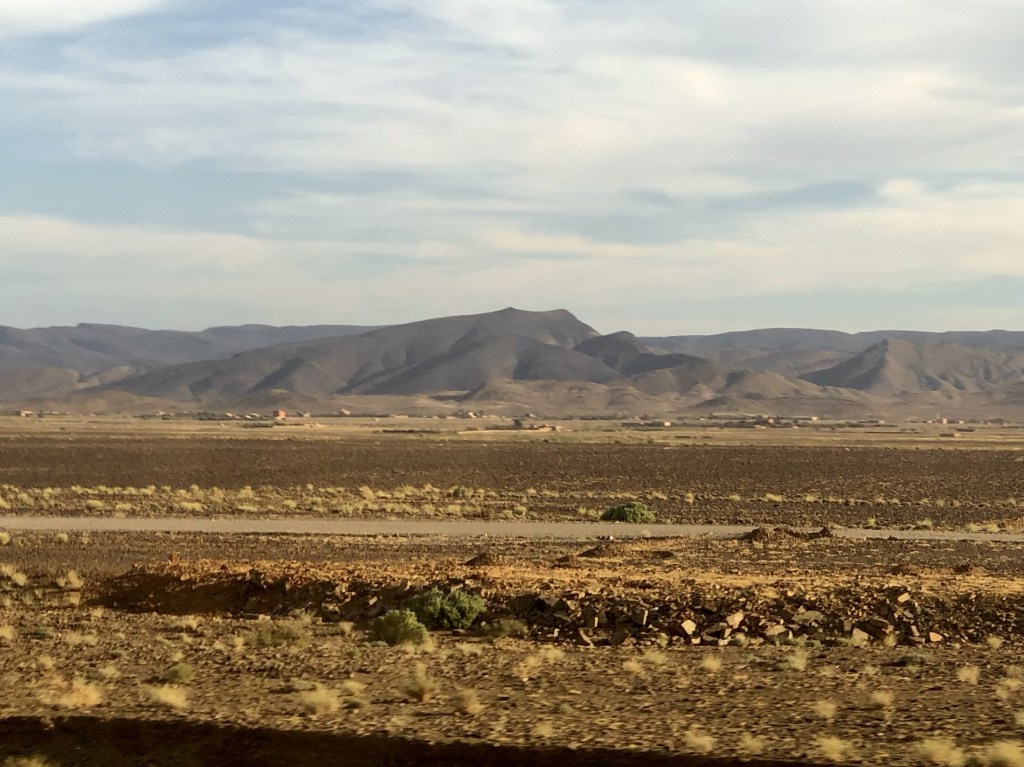
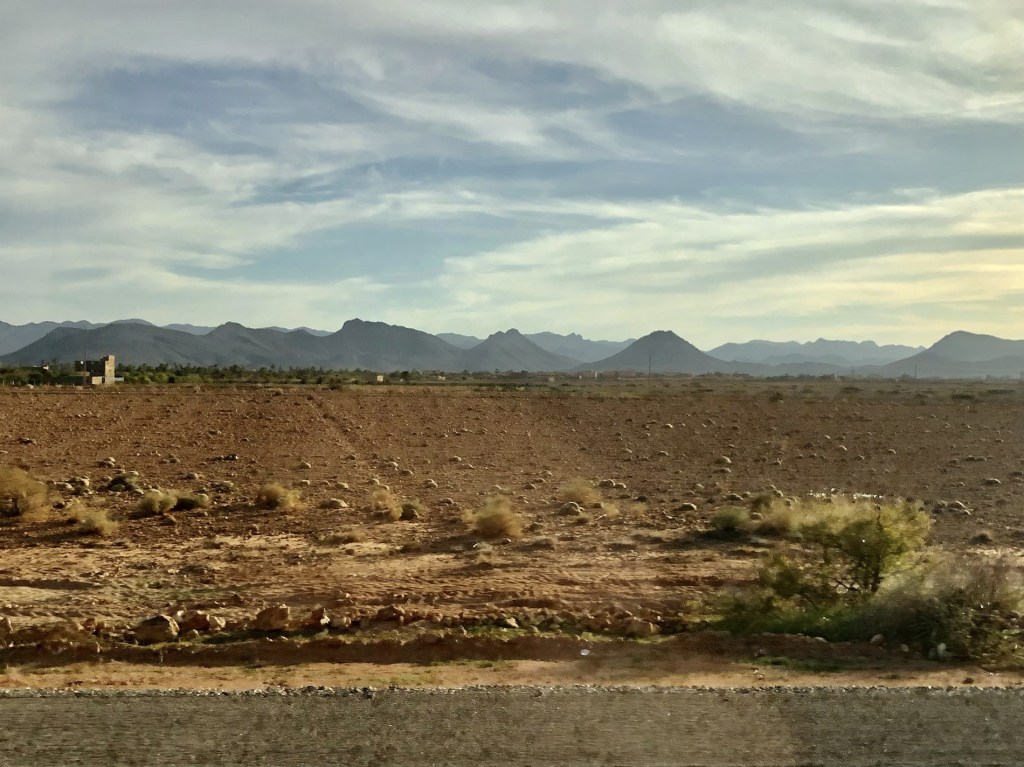
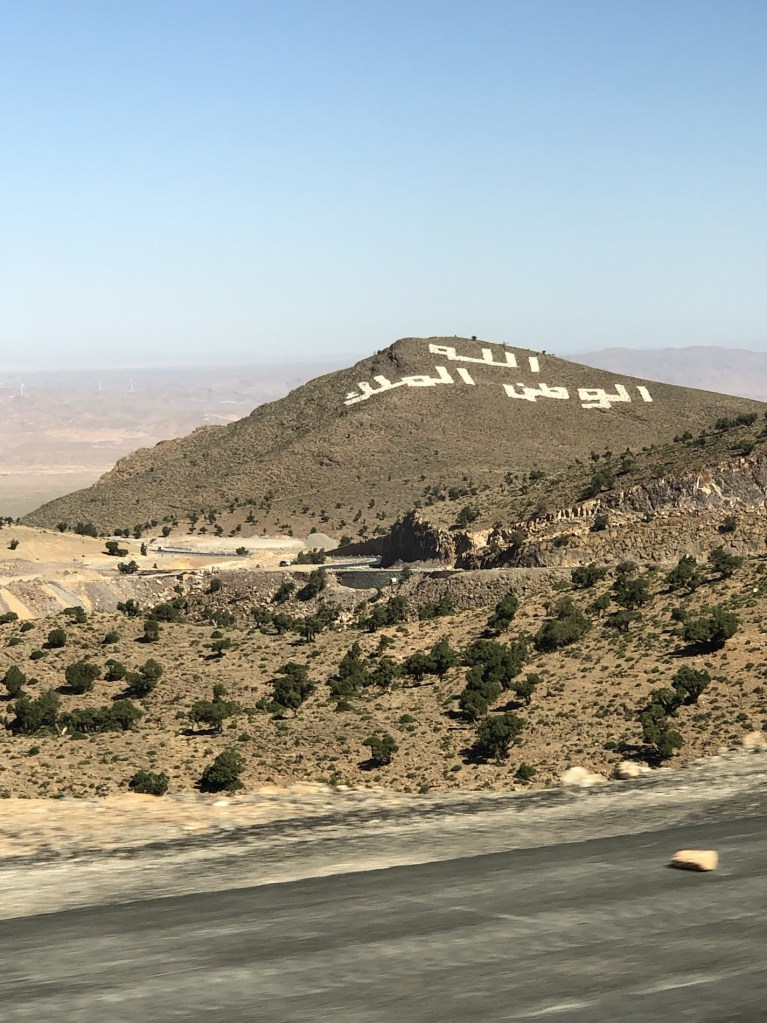
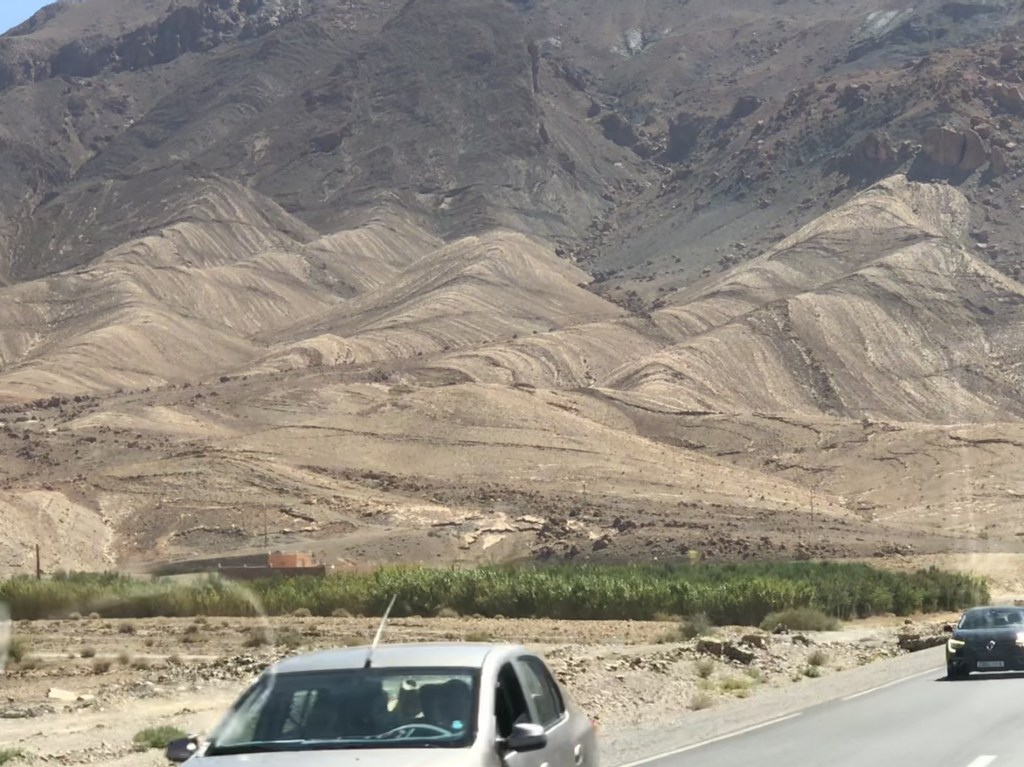
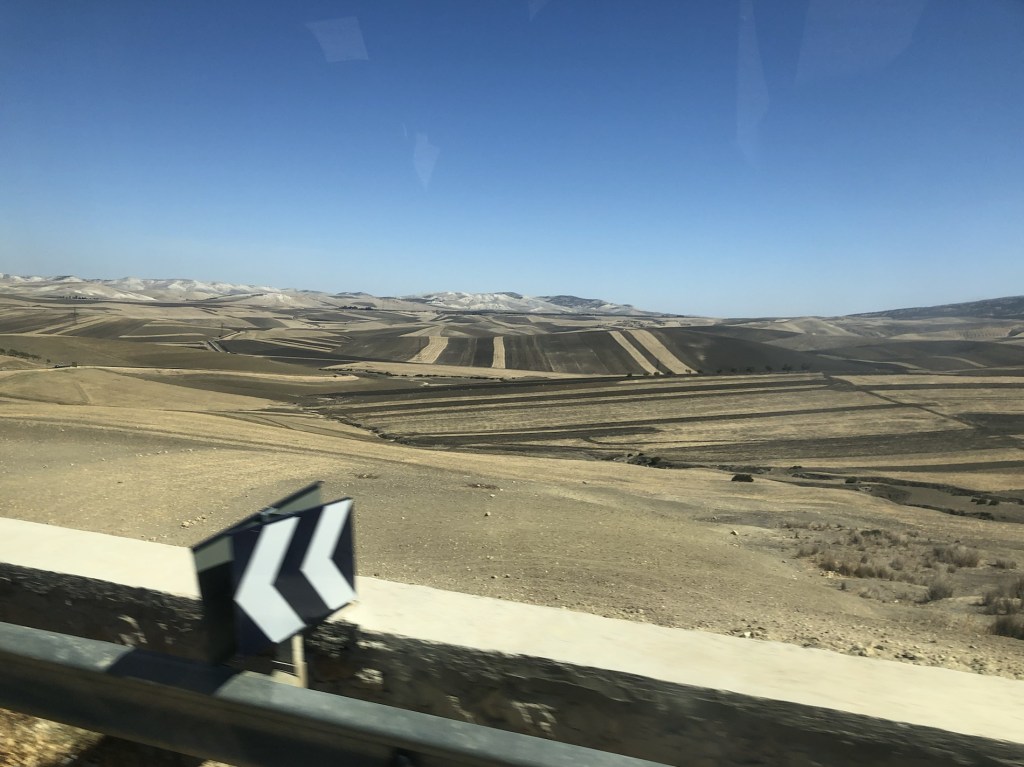
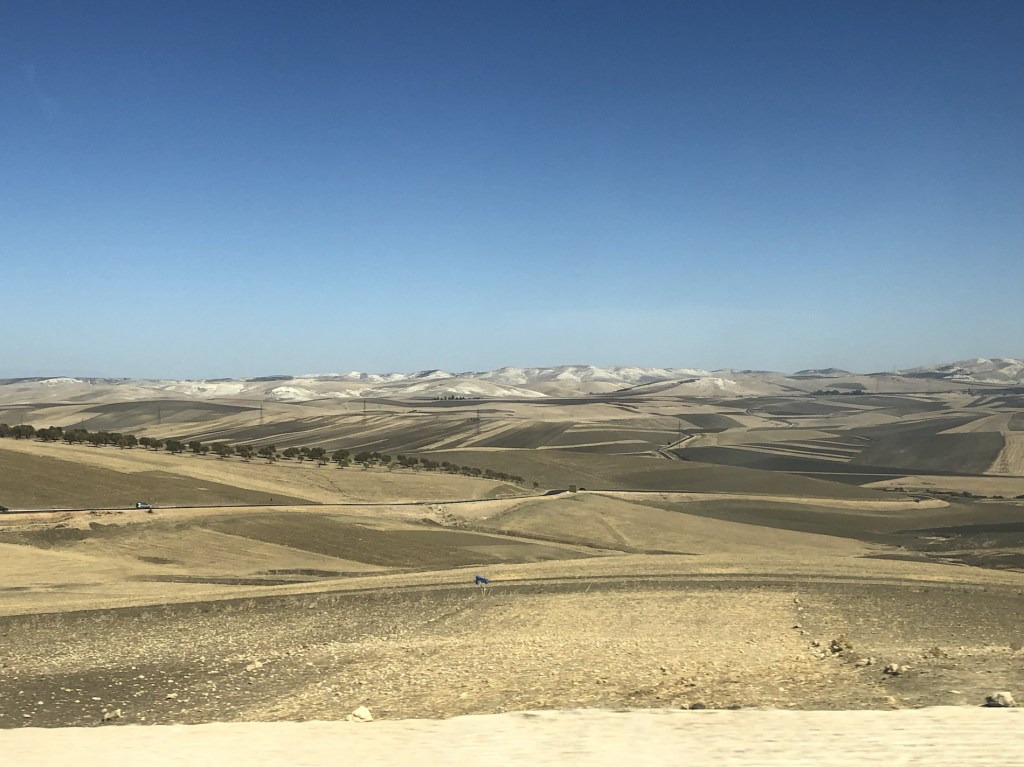
Spectacular scenery driving in High Atlas. It’s been about 10 years since beginning of drought.
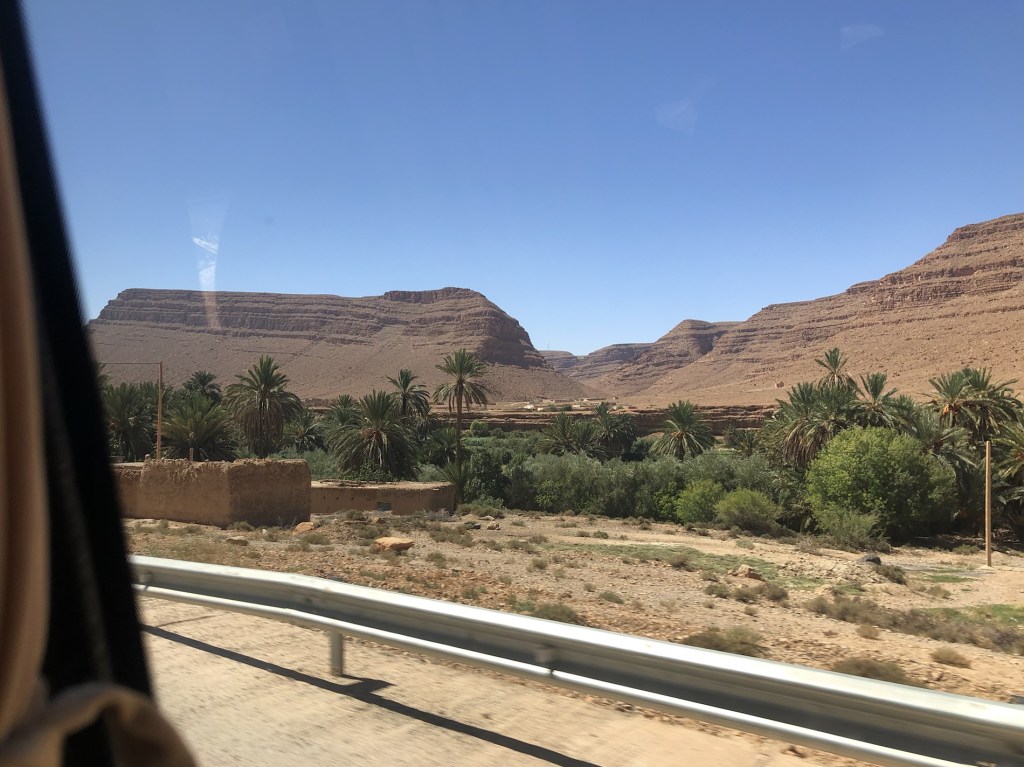
High Atlas 60 million yrs old (drier than Middle. Anti-Atlas is 550million yrs old. Tamaracks, palm trees, dates planted. Casbahs are clay buildings/villages that were originally forts….military protection, are now homes. Warmer in winter, cooler in summer because made of clay and have thicker walls. Berbers always built near stream… in mountains and desert…. not in cities which are predominantly Arab.
Since 2006, every home in country has electricity.
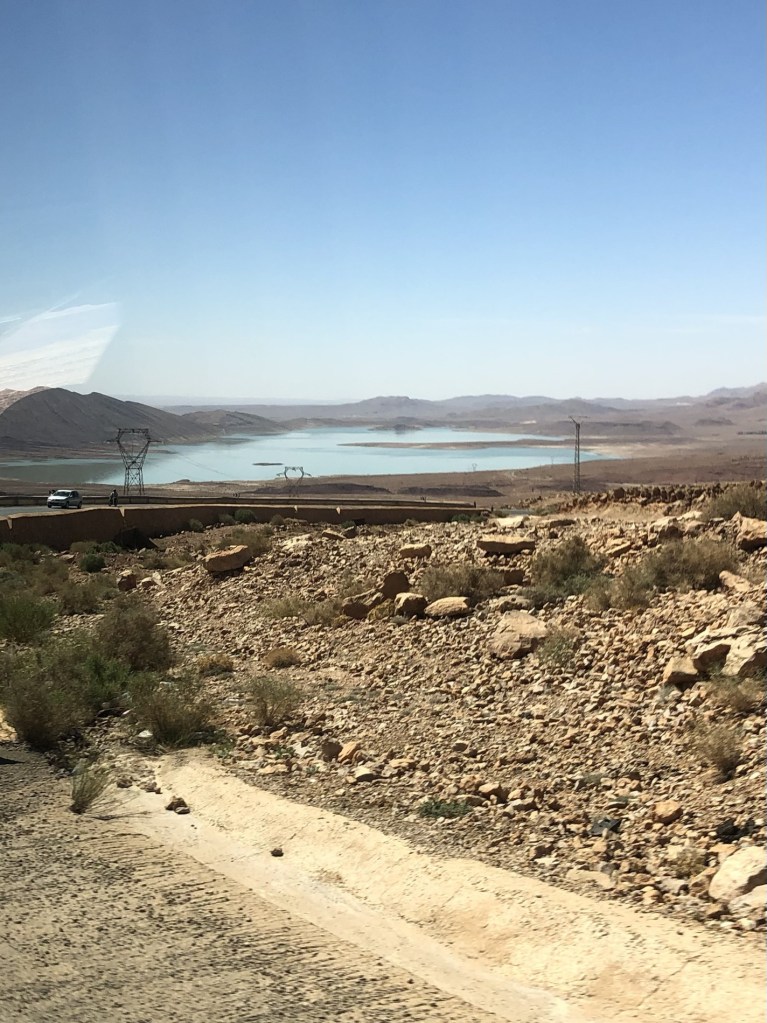
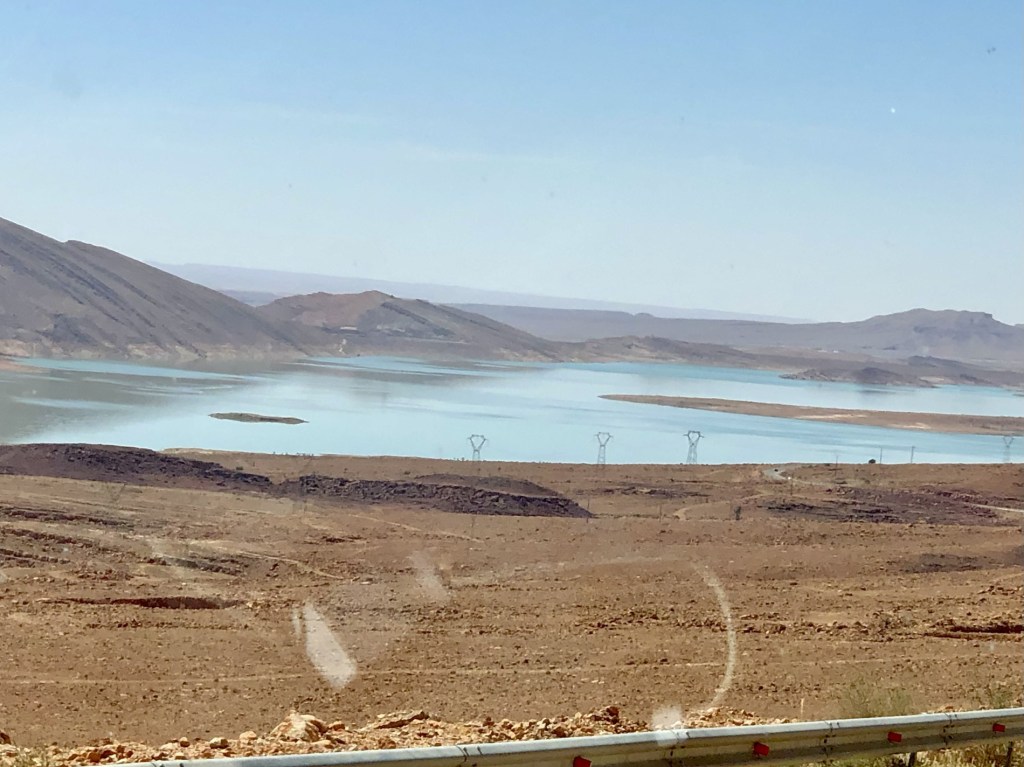
Oasis created from dam
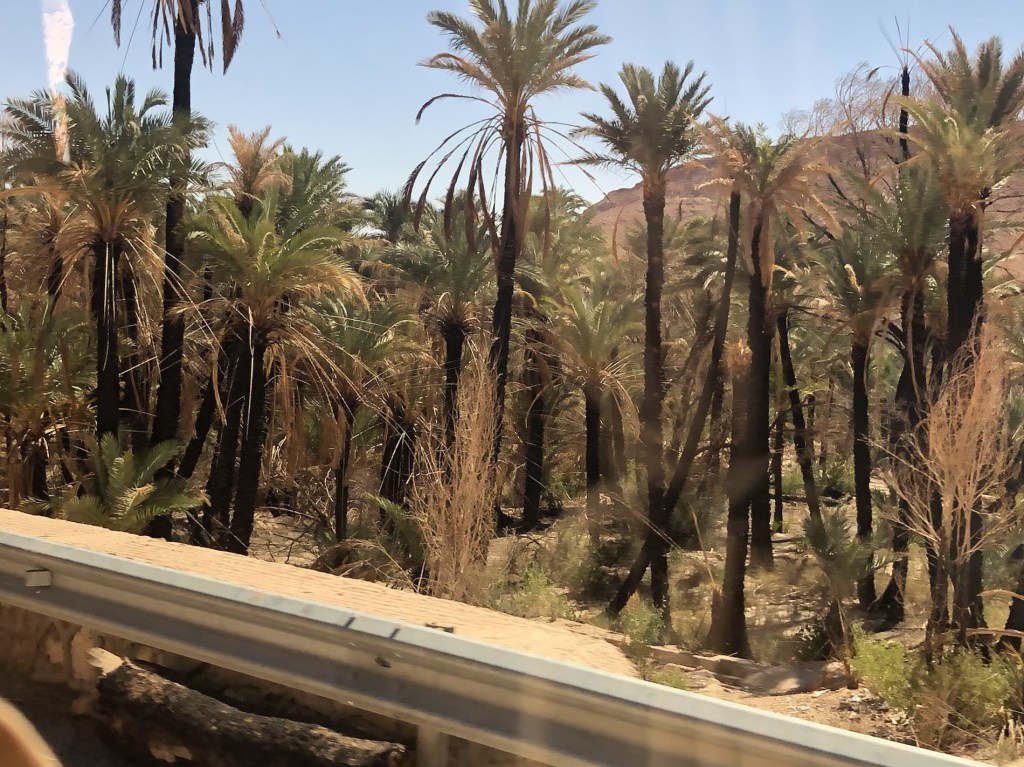
The dam seen earlier provides irrigation for the oasis near where we are stopping for lunch. All the people that live here each own a patch of land for growing dates and olives. There is evidence of the fire from extreme heat burned 30 kms….. in an oasis.
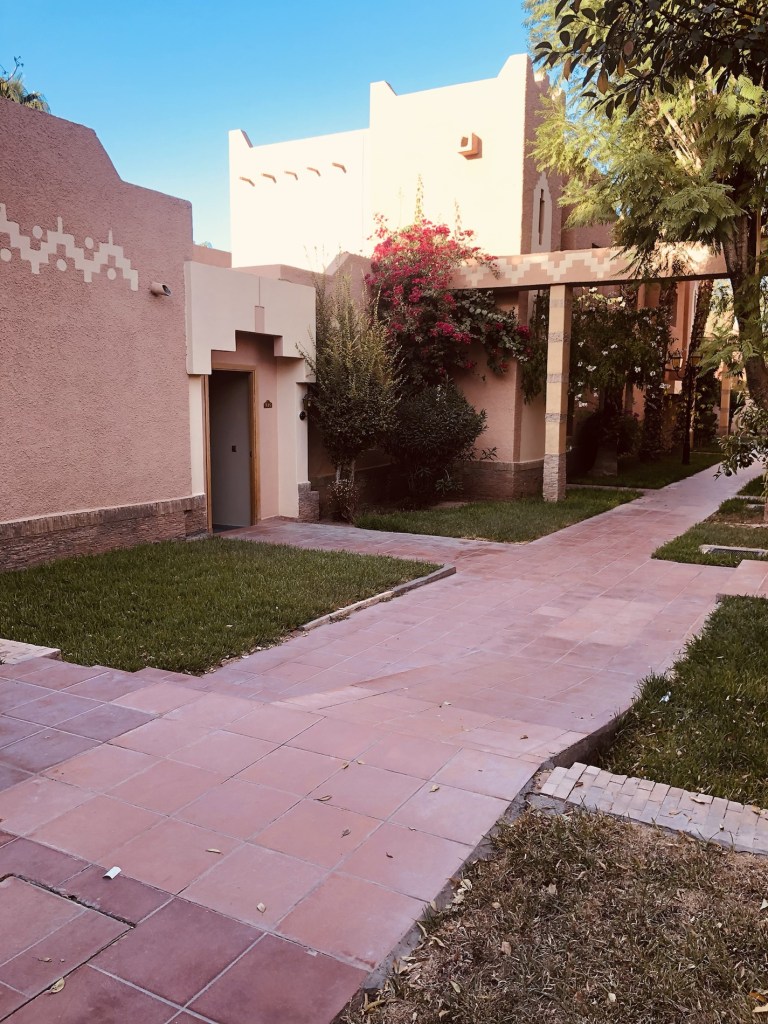
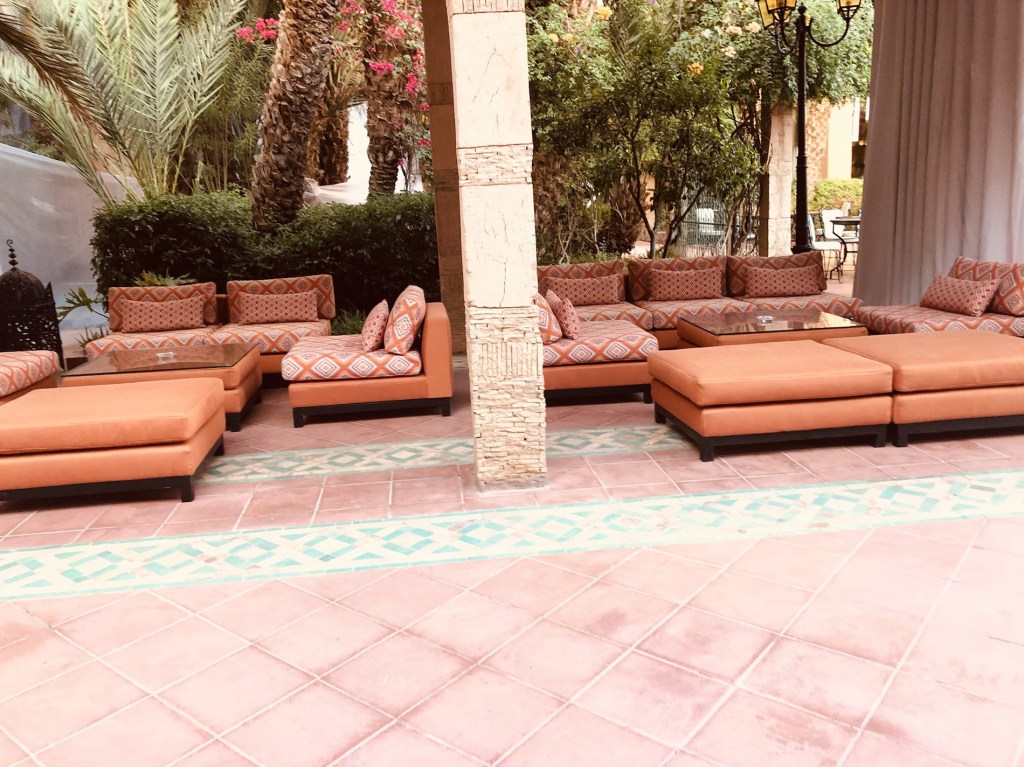
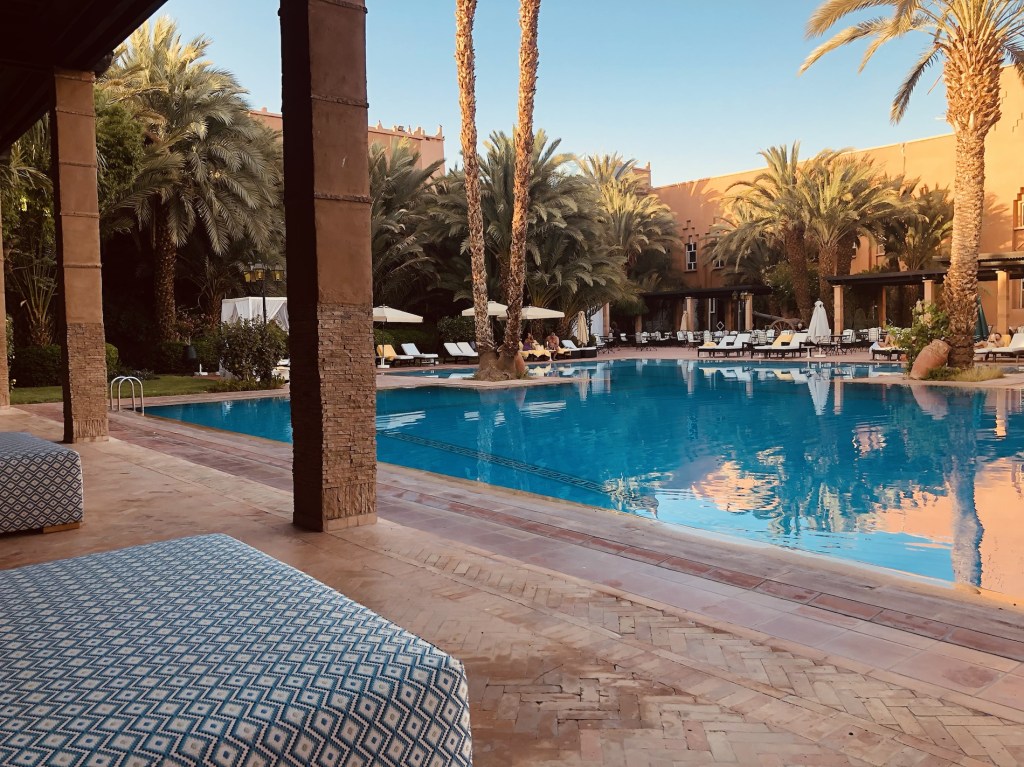
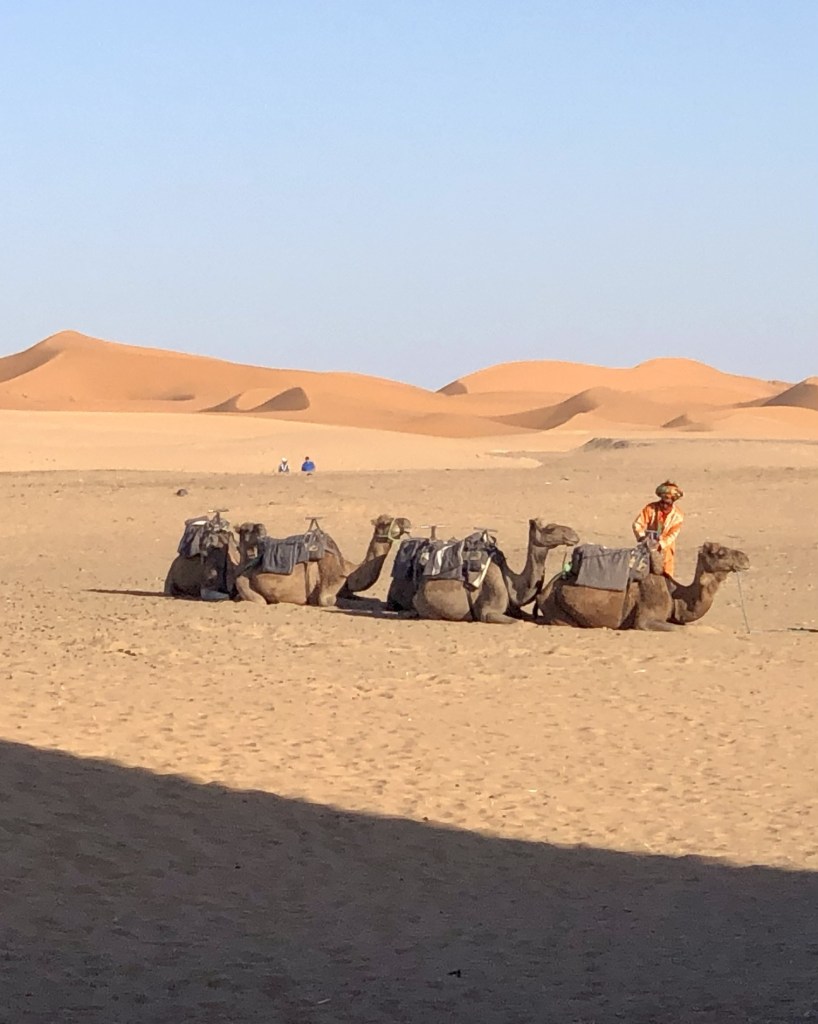
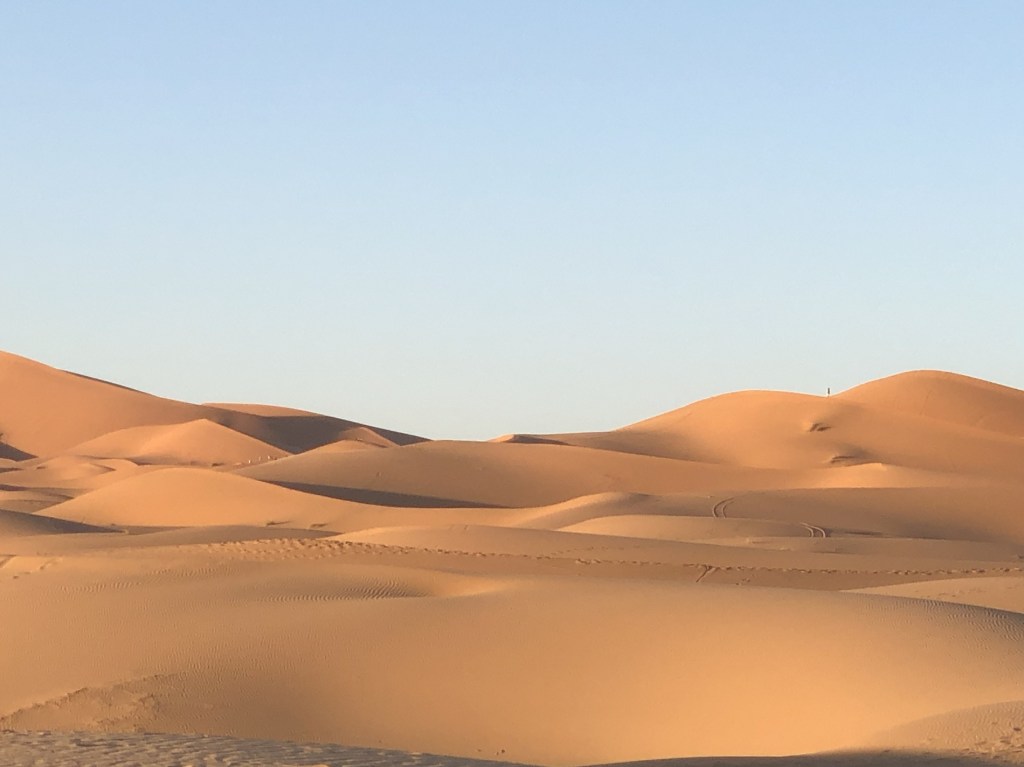
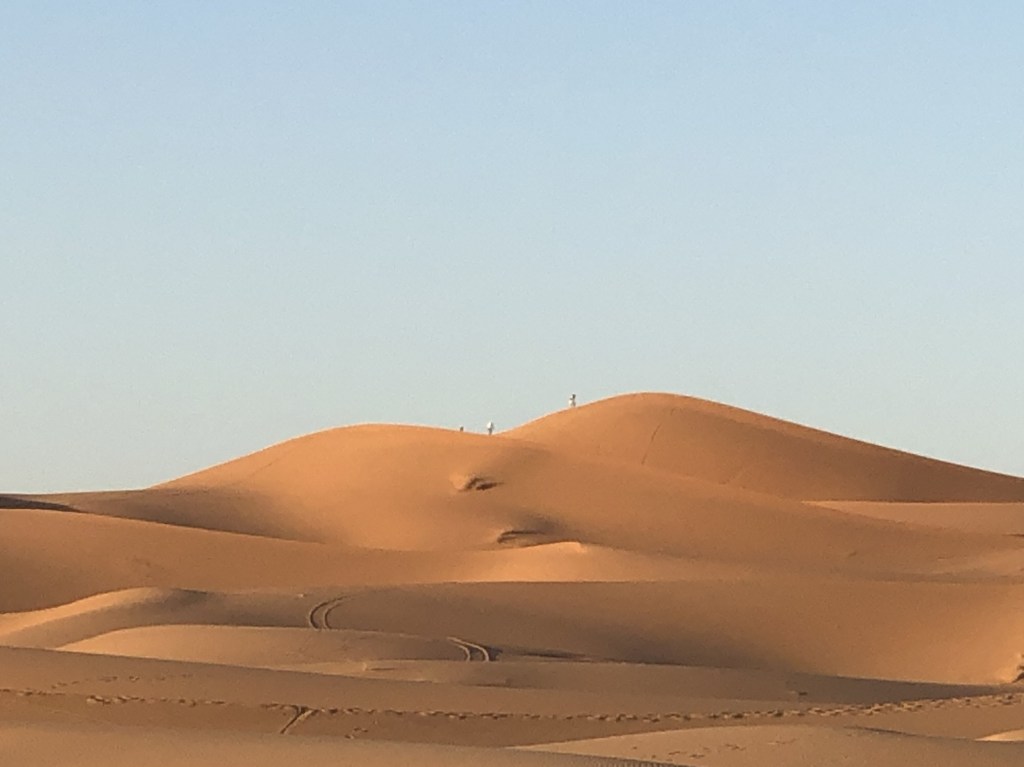
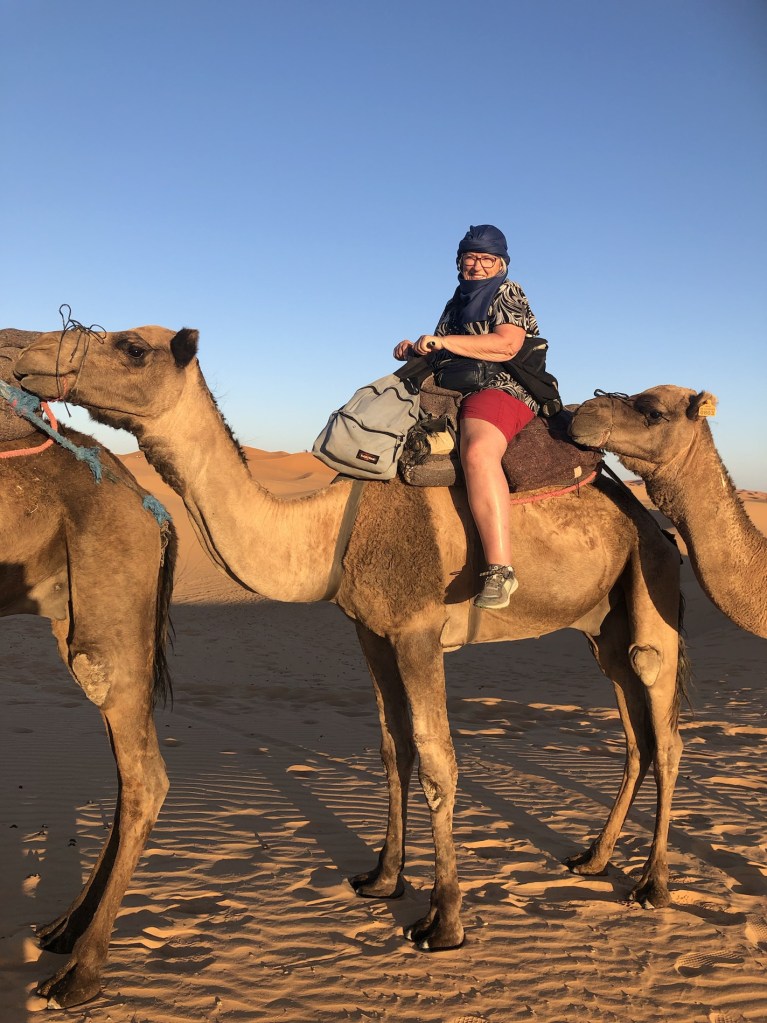
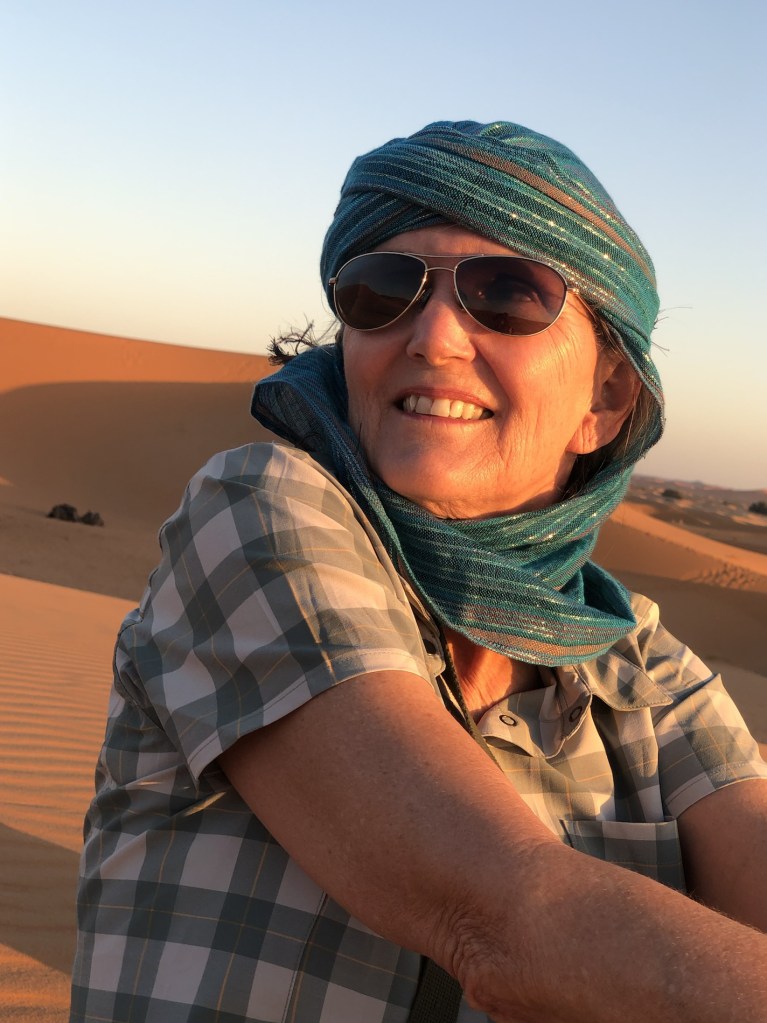
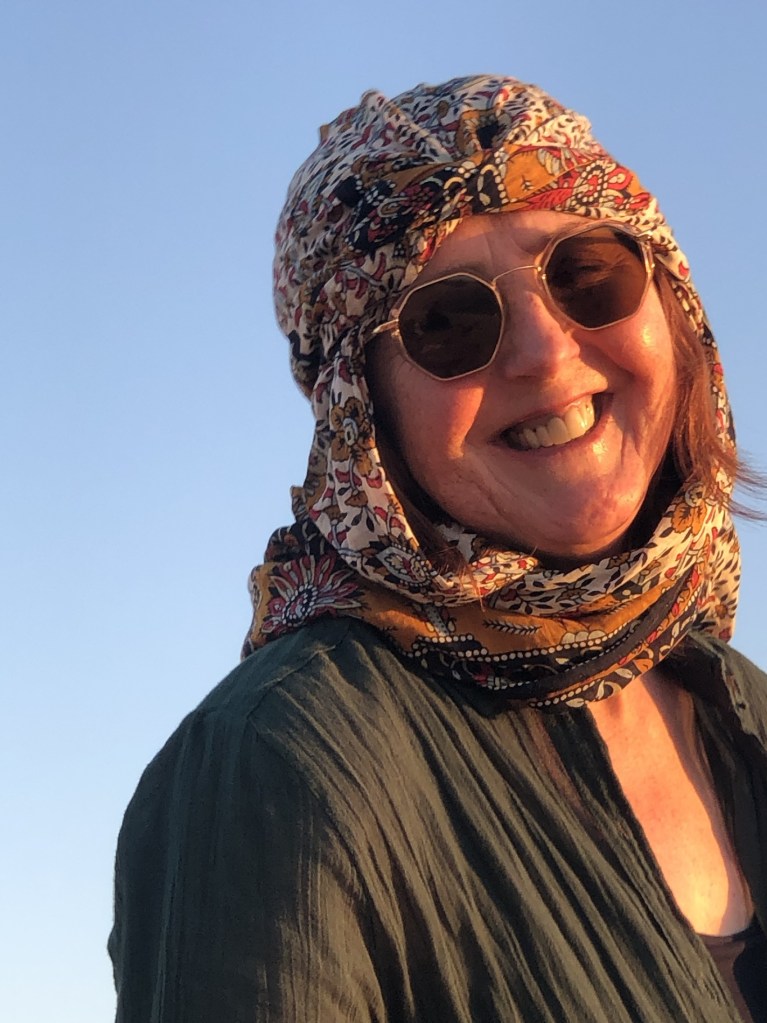
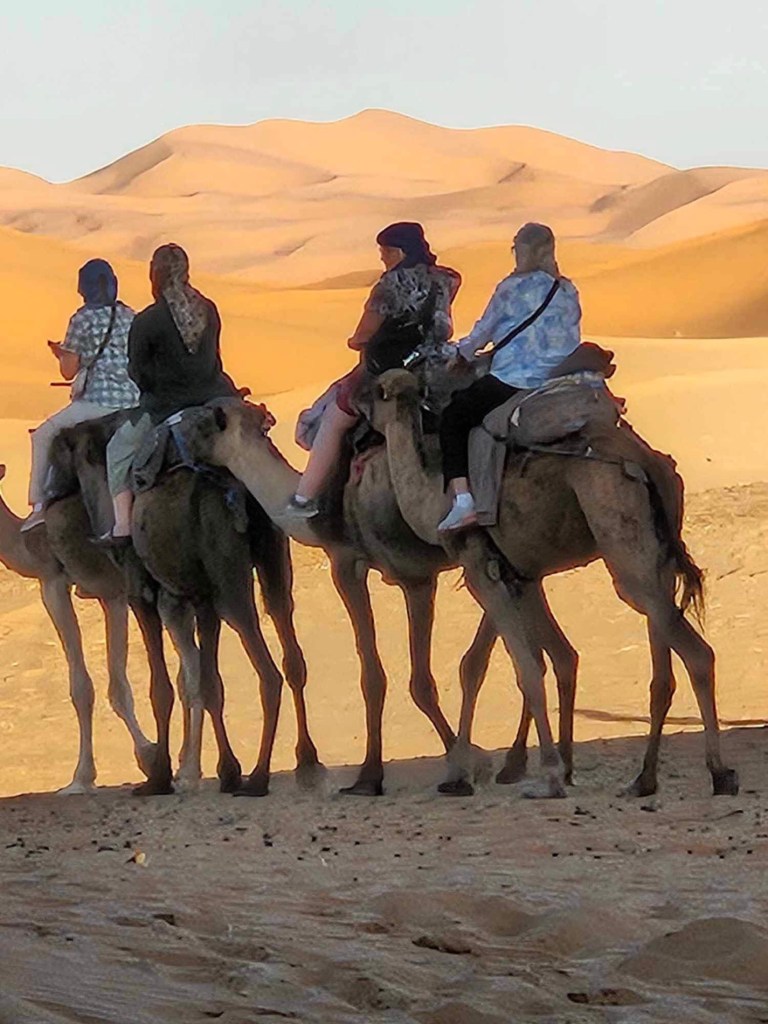
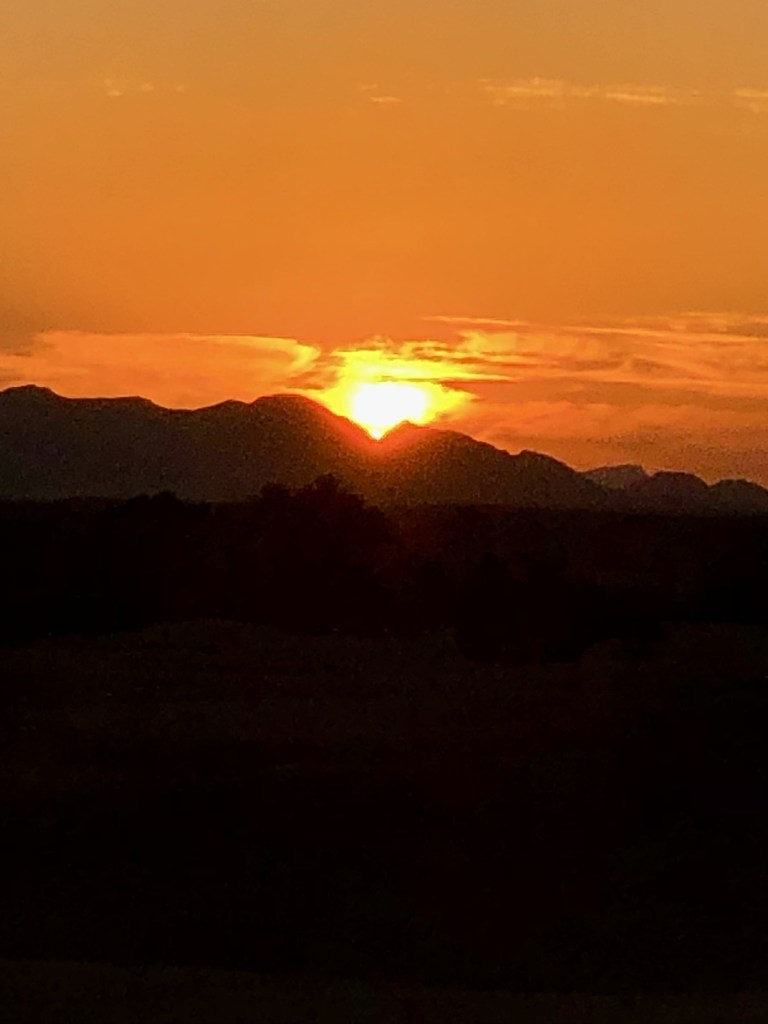
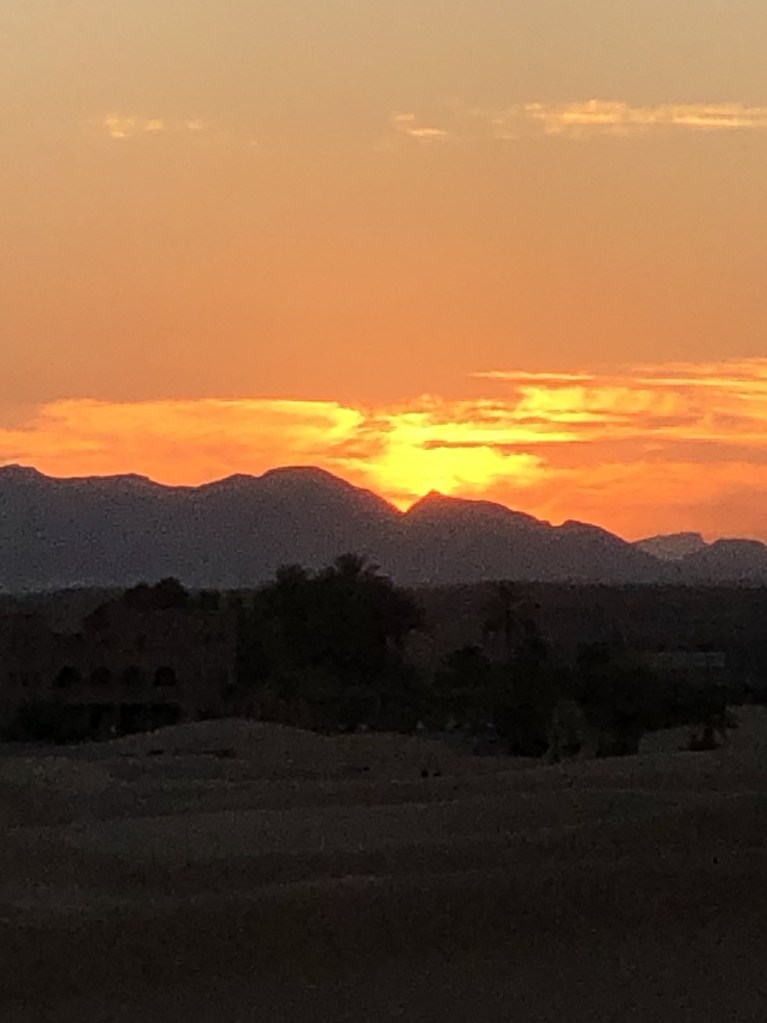
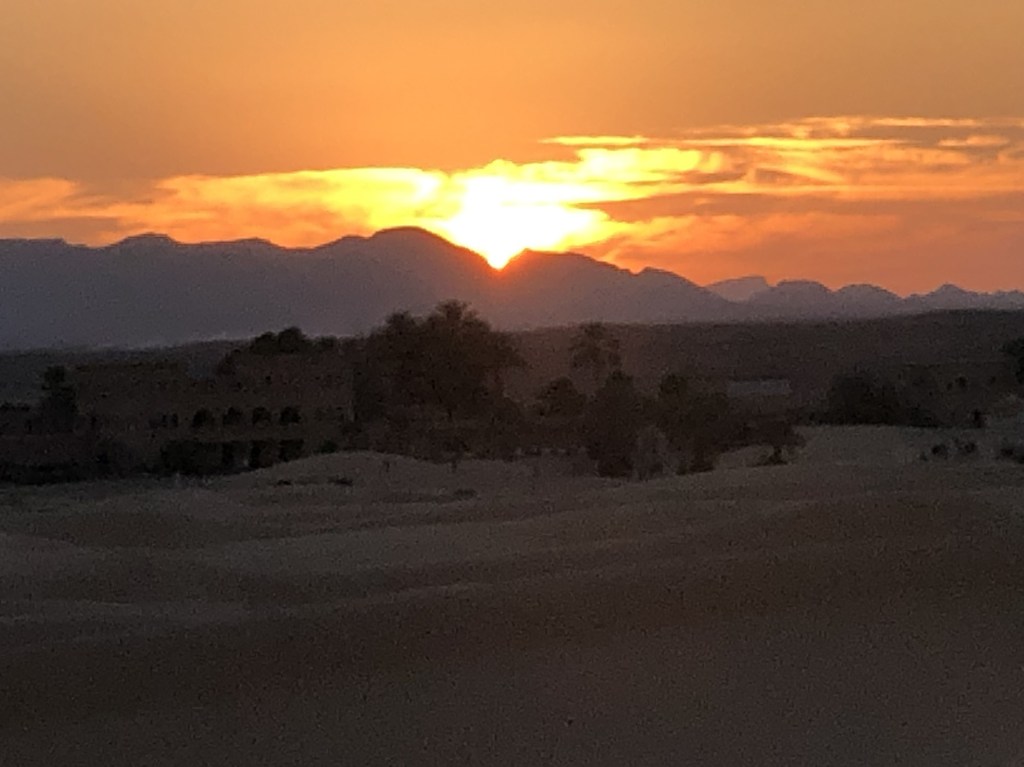
We arrived at our casbah hotel literally on the edge of the dunes of the Sahara in Merzouga. Gorgeous infinity pool to cool off in…yes!!! Later some walked the dunes to watch the sun set. 4… no 5 of us rode camels…. best camel ride I’ve had!
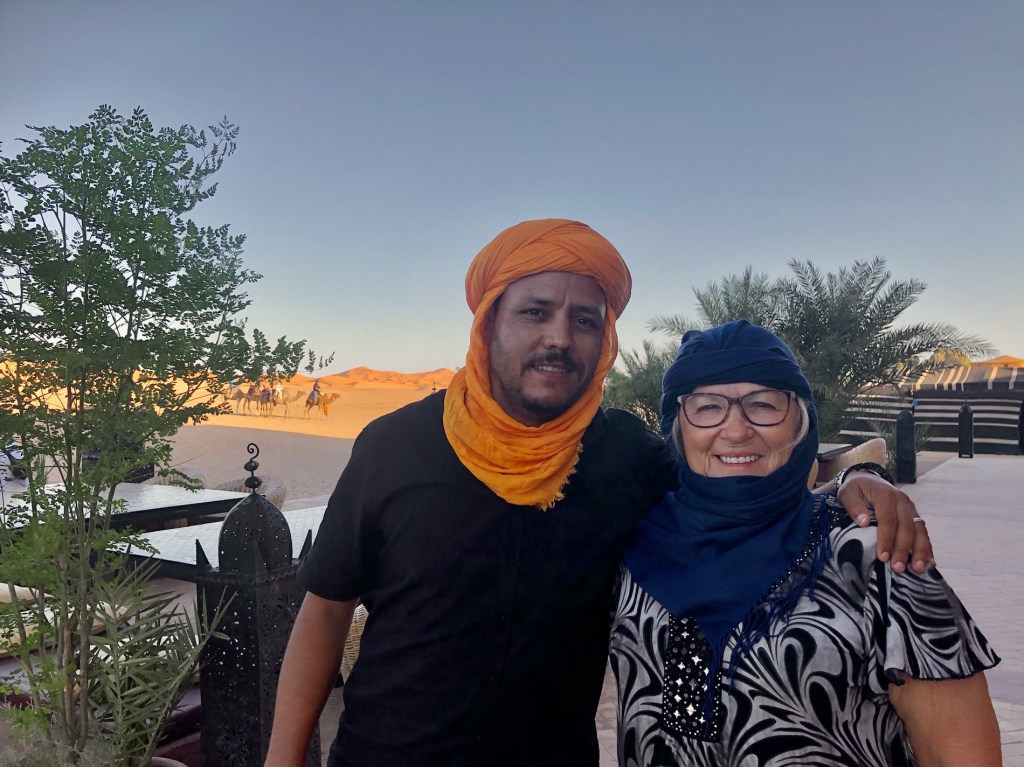
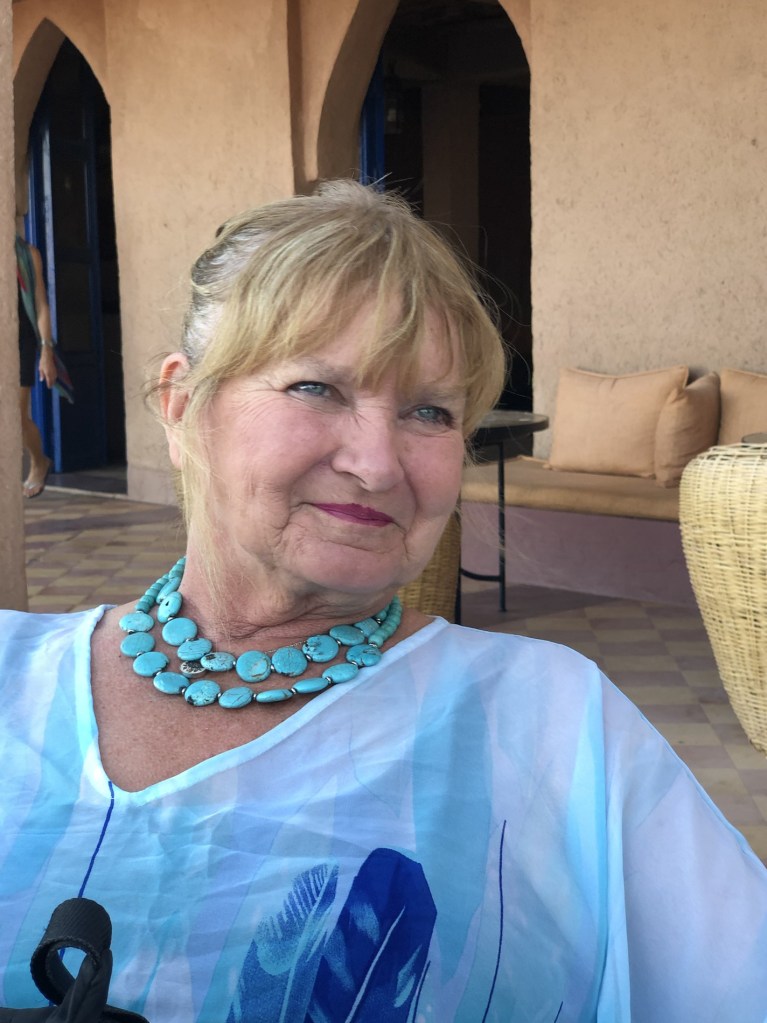
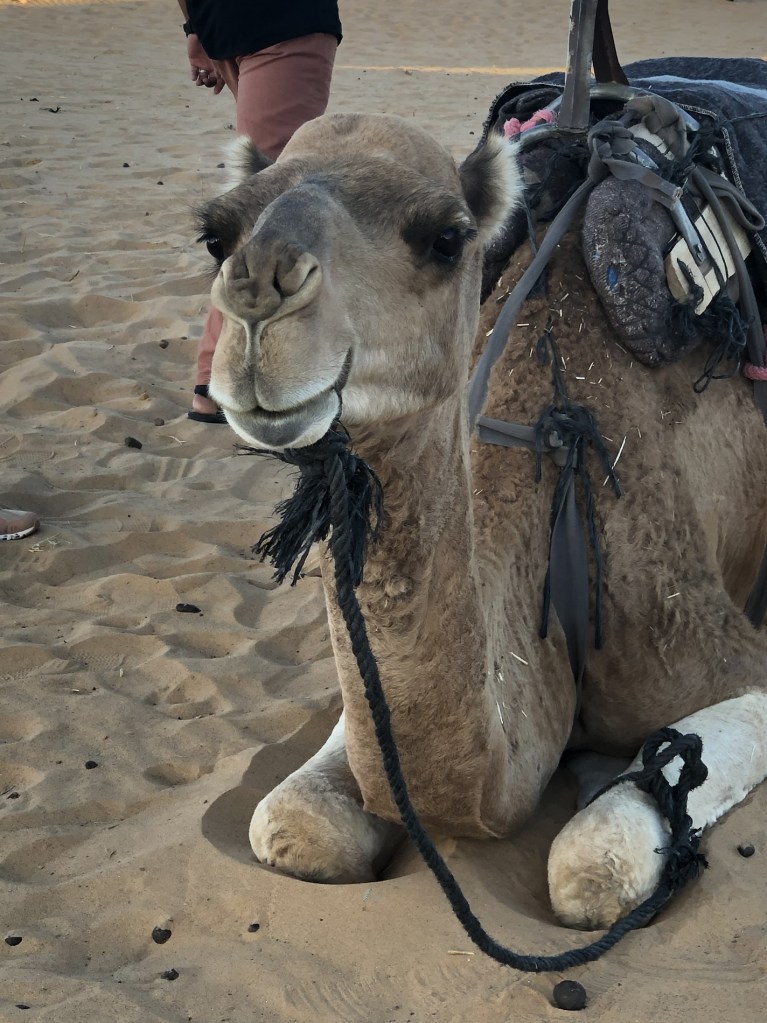
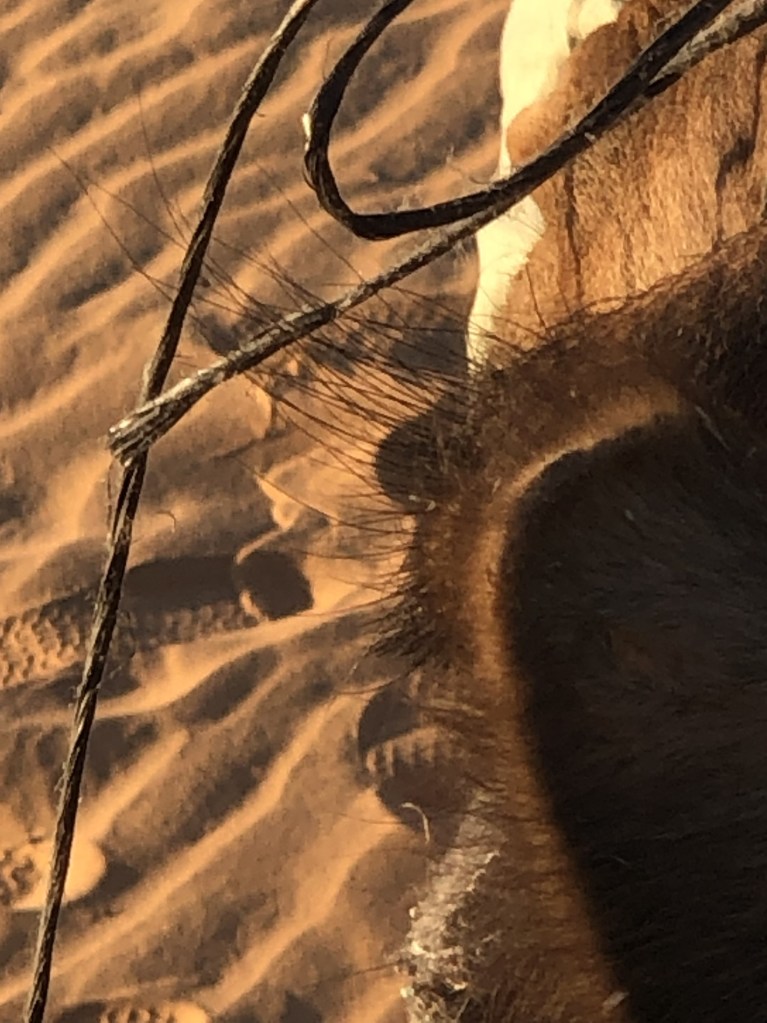
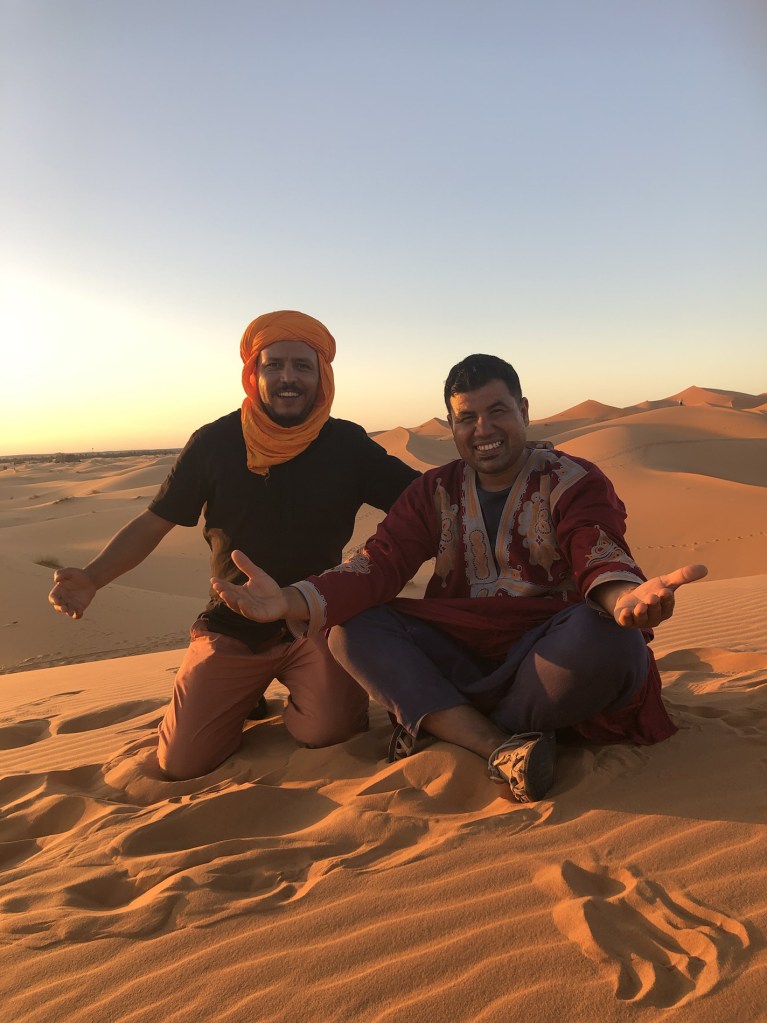
Mustapha our CEOWith meMarilynYou’ve gotta love that faceGorgeous dunesCheck out the length of those eyelashesMaryAlice4 of us heading off into the sunset… Mary, Alice, me and Marion
1st classified world heritage site in Morocco. Is first Arab city of Morocco….Moorish architecture.
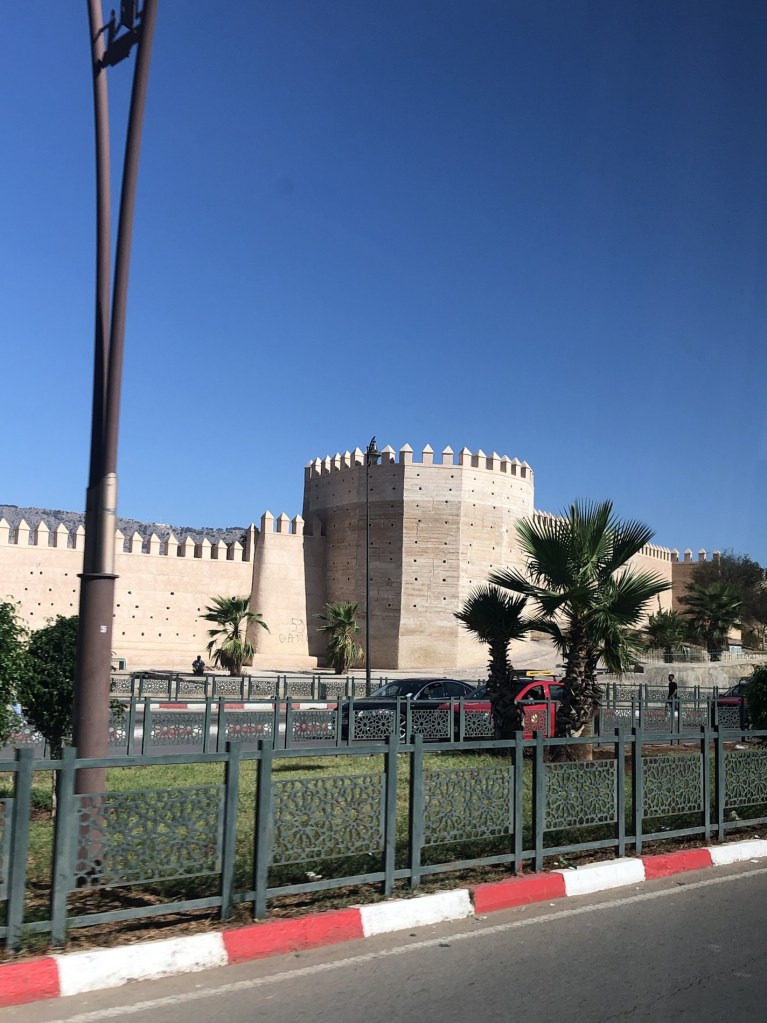
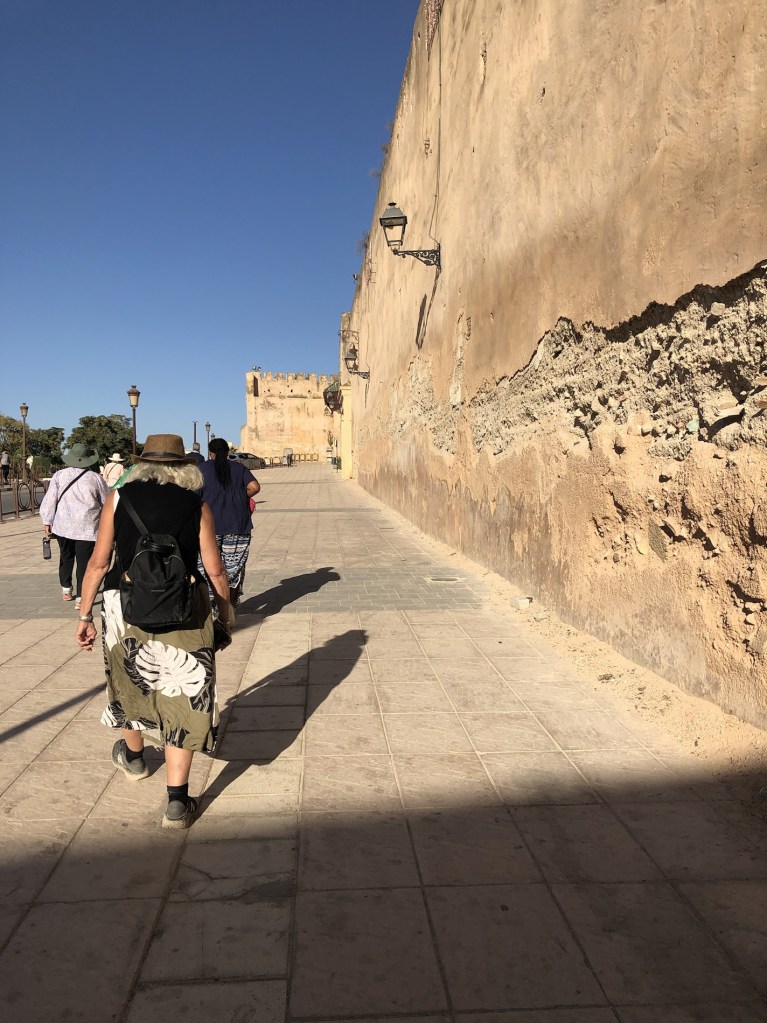
13th century… old city Medina. New build 20th century. Walls built 17th century. … is the most Islamic Medina.
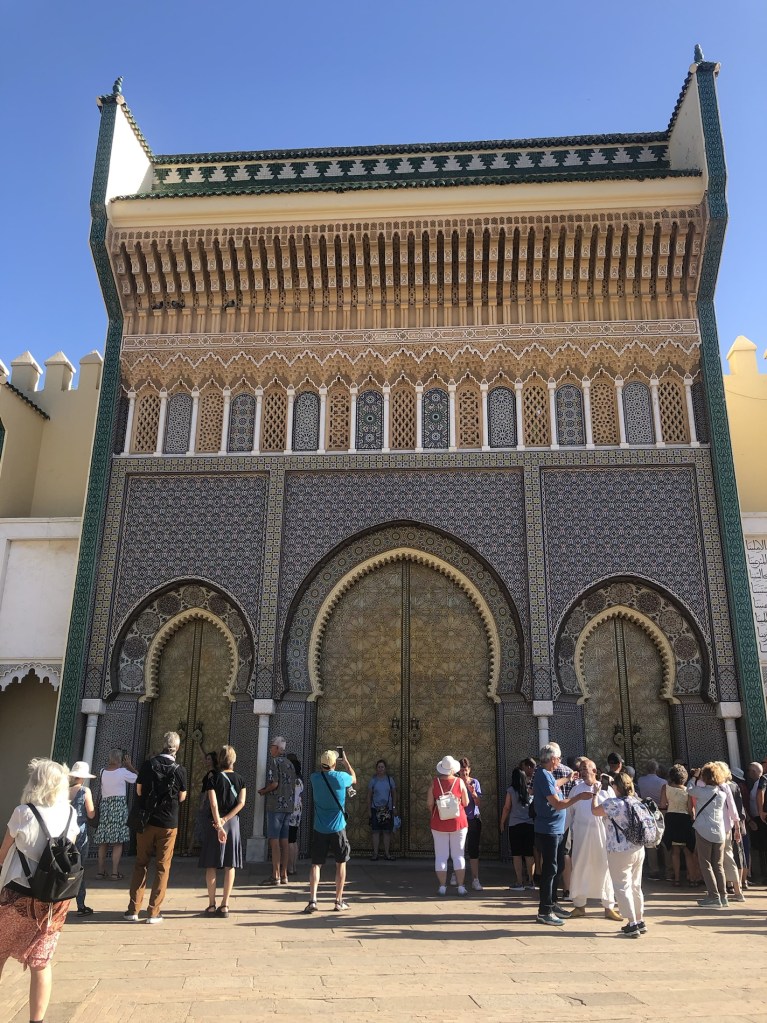
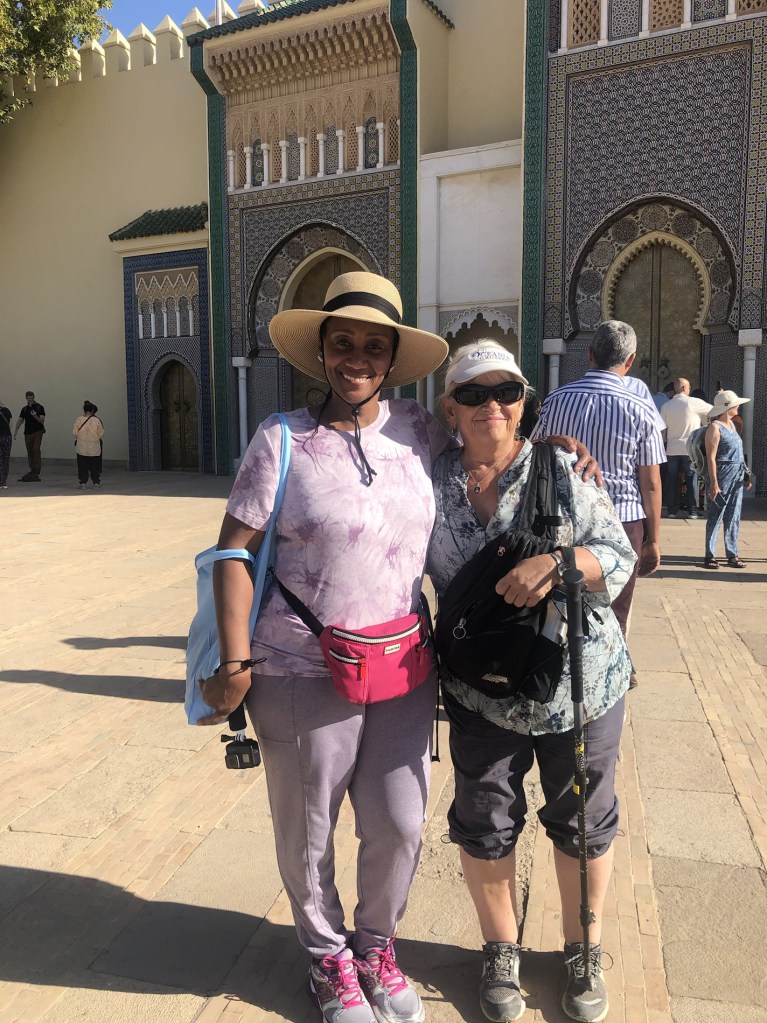
Royal palace…1968 facade. Walls from 14th and add-ins and grounds in 17th century.
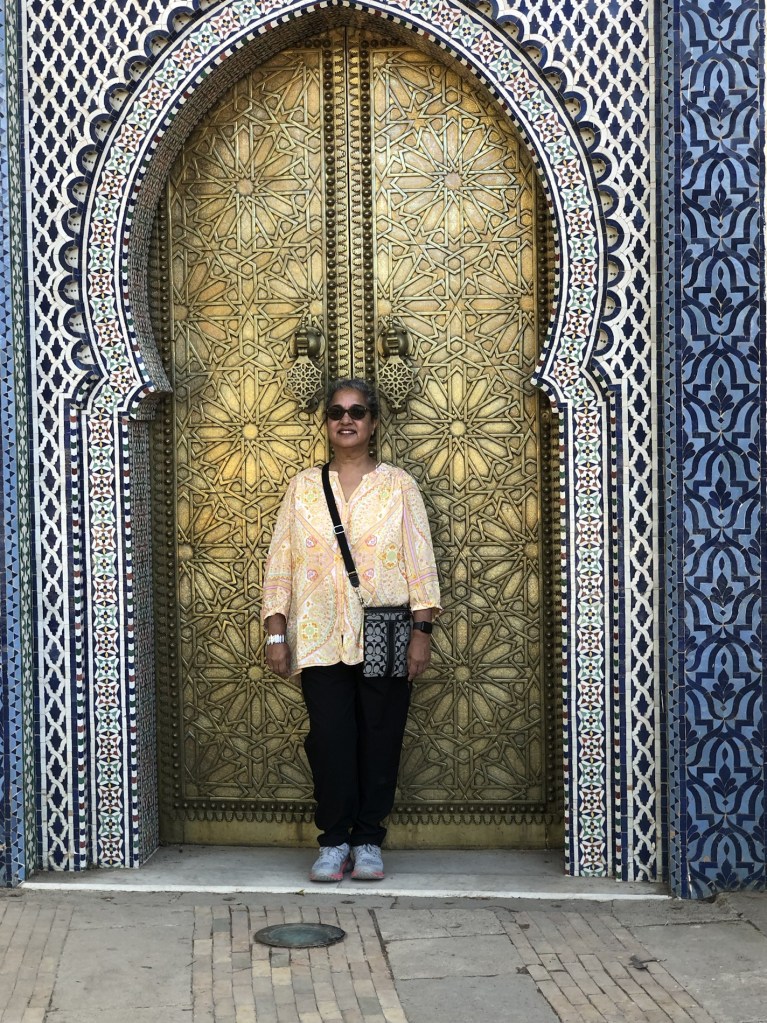
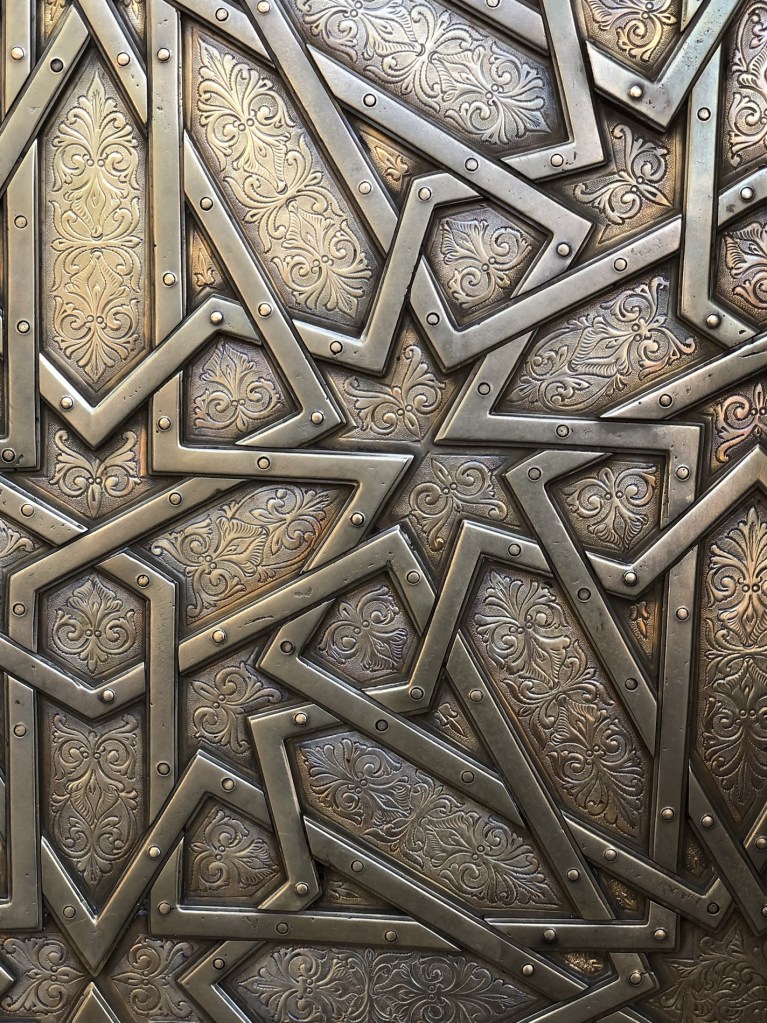
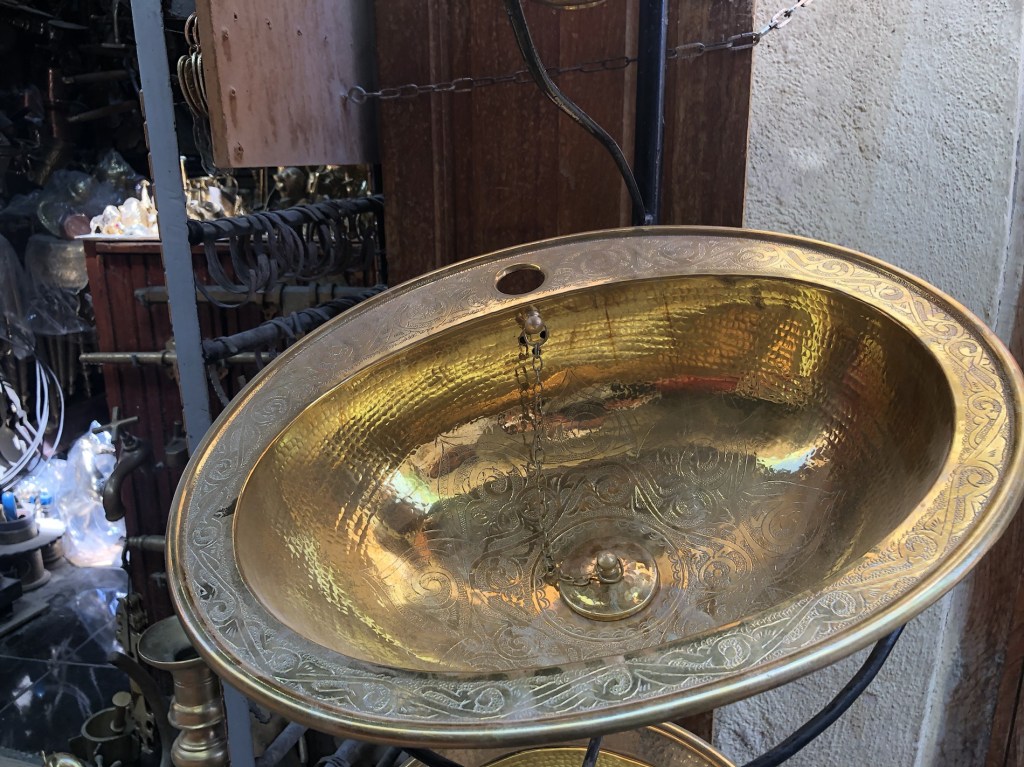
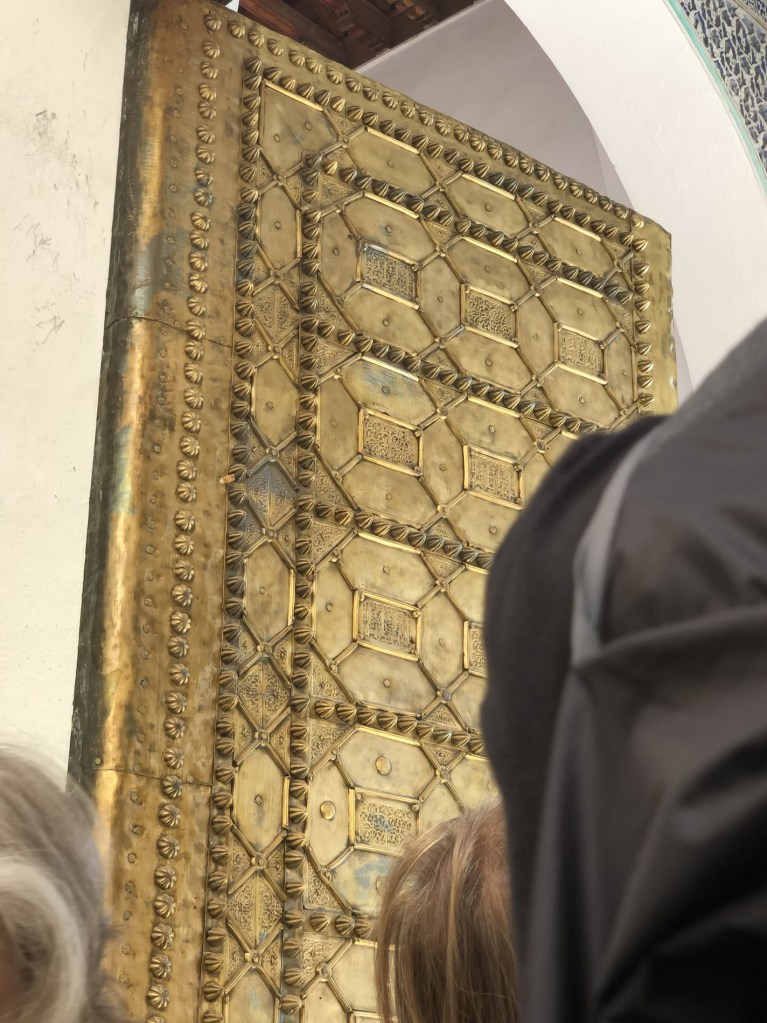
MarionLook at the metal workmanship
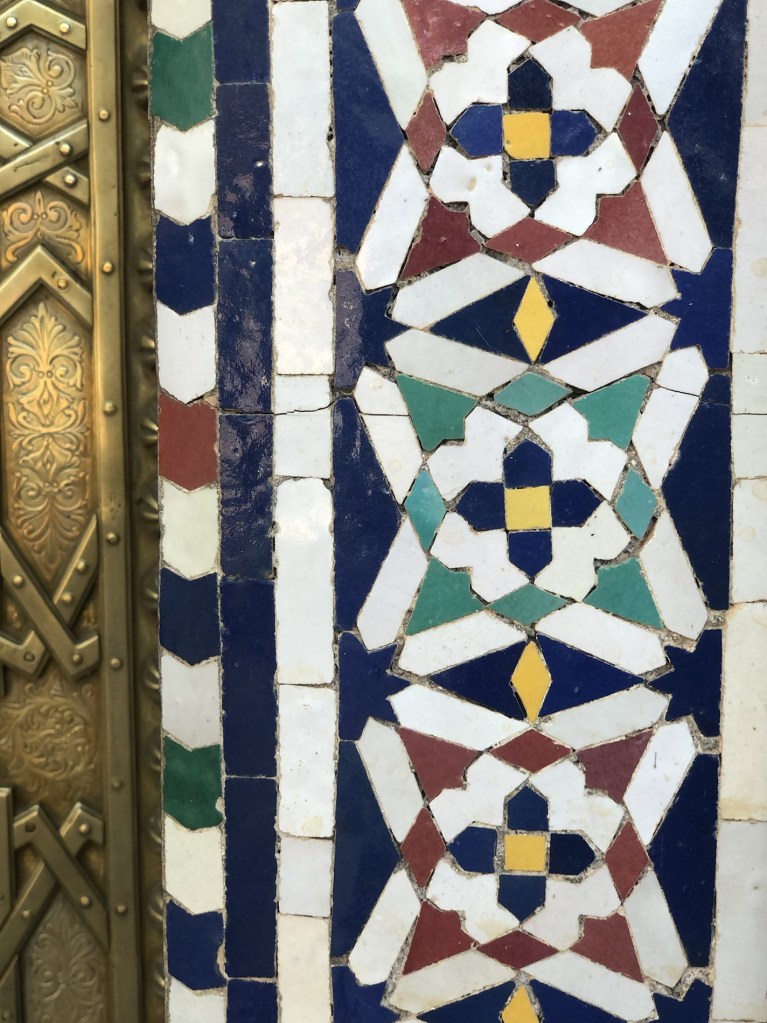
All the roofs are open to the sky. Windows face inside… no outside, for privacy. Blue is colour of Fez as well as Jewish. Hand chiselled doors (workmanship of metalwork)
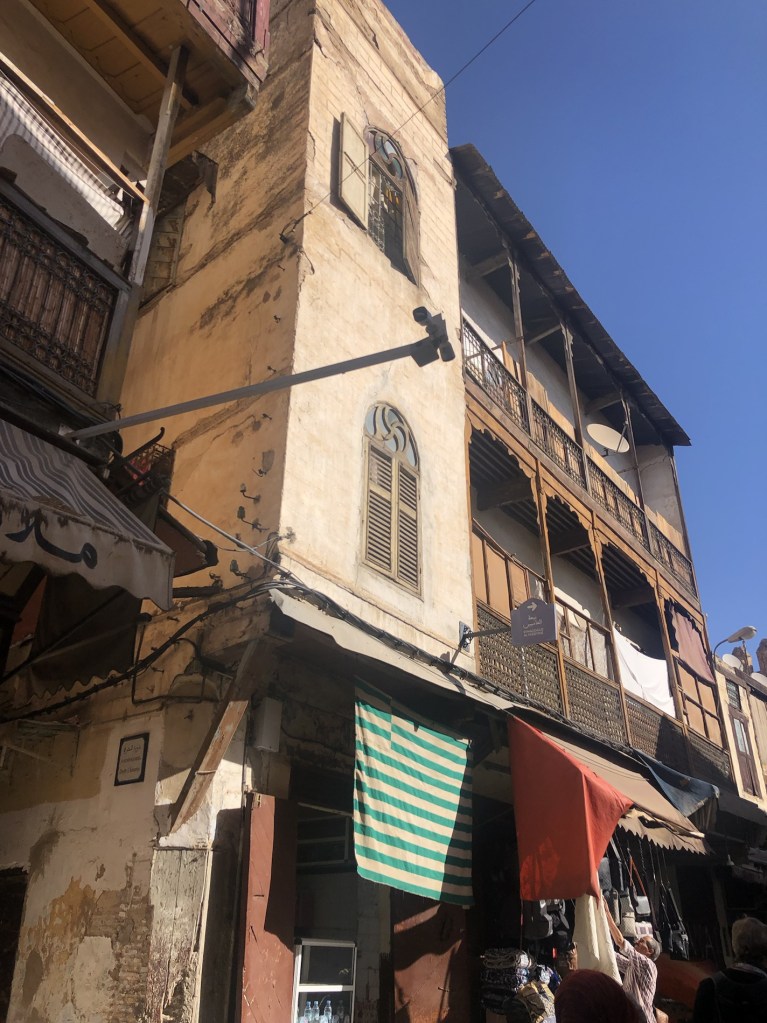
Jewish area buildings made from clay….have balconies over street. That is Spain influence. …Berber don’t do idols and pictures of religious symbols because they were nomadic. They made nothing that can’t be taken… so only artist leather, clothing, metalwork & or the like. Fez … known as trade and university centre. Jews started to arrive in 1492 after there was already a settlement here… the walls are I think, 13 feet thick.
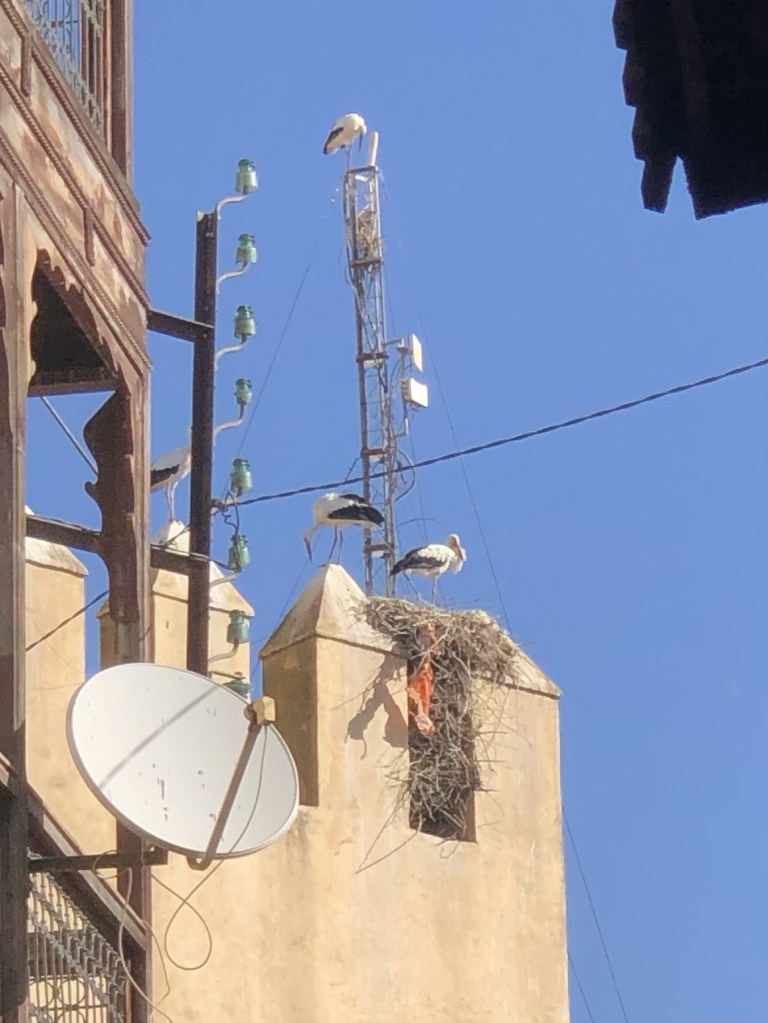
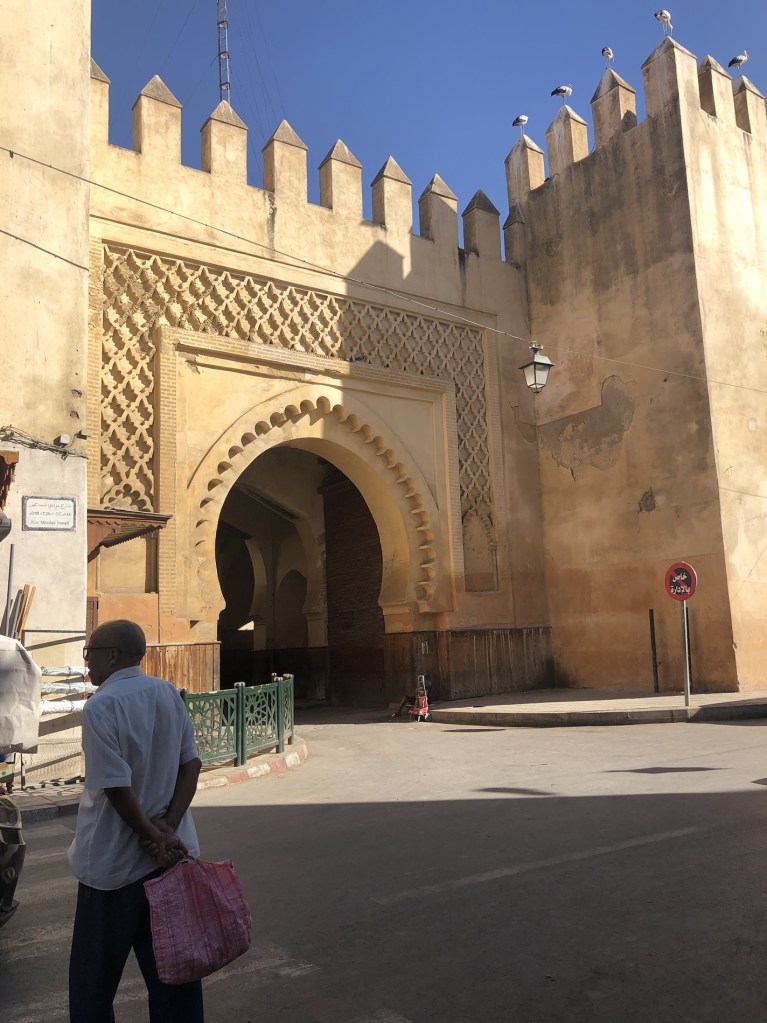
My friend Lois and meBalconies of the Jewish sectionBalconies Spanish influenced Storks on the top of walls
Idris II… wanted Fez to be a trade centre. Made stop for travellers outside the Medina walls, 80 kms away.
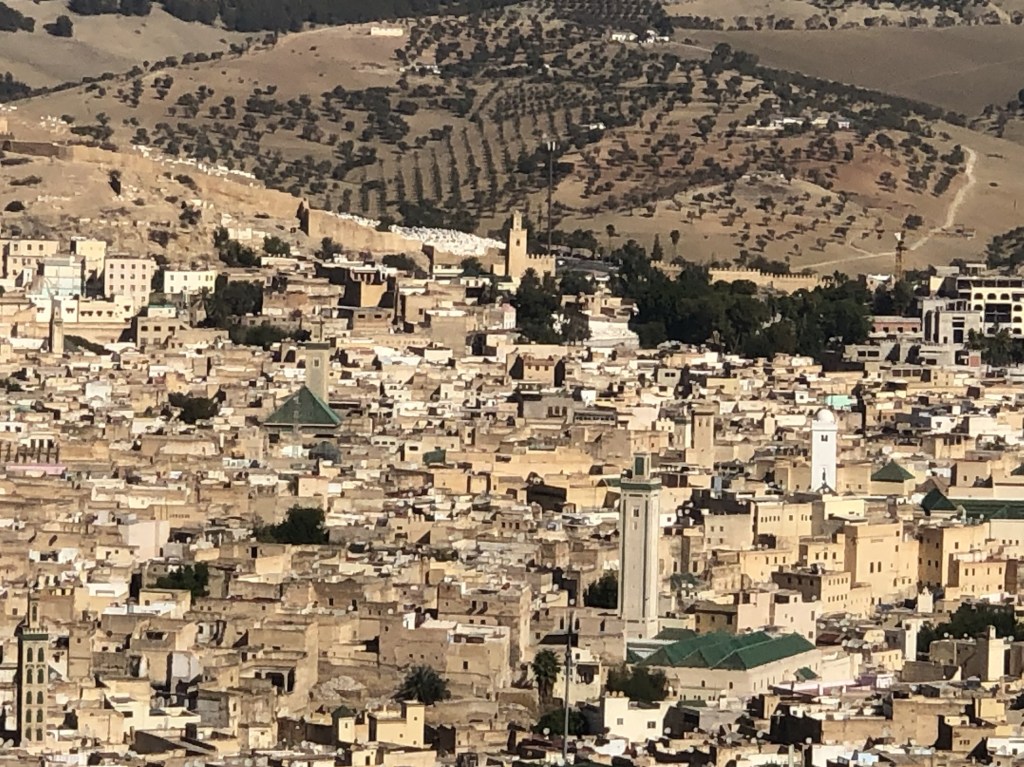
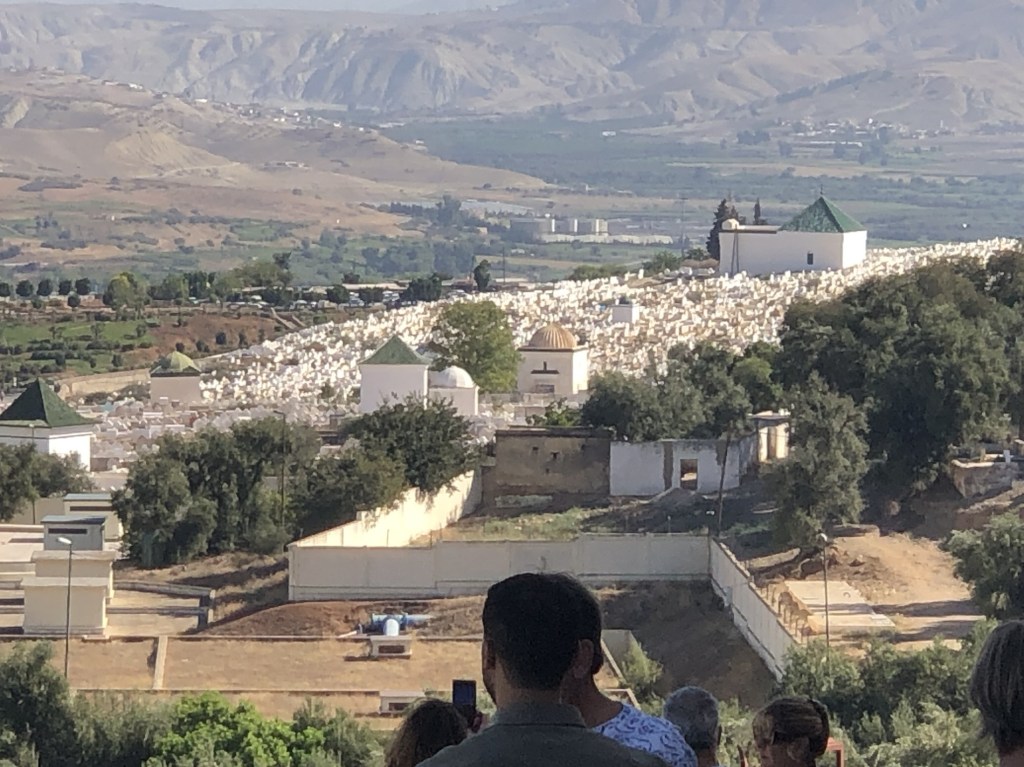
Drove out and up to get panoramic view of Medina…. Huge!
Huge MedinaCemetery outside city walls One of the gates
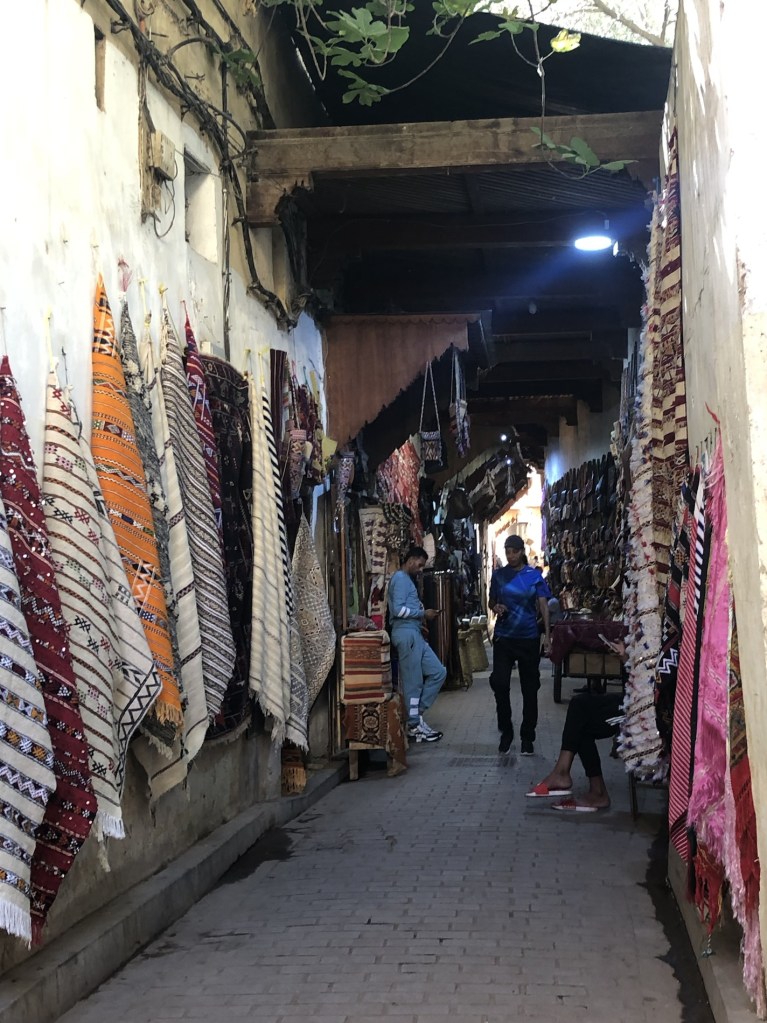
The Medina was started in 789 AD. There are 9000 alleyways. It’s a maze! You could get lost in it and never find your way out of it. So many craftsmen (it’s a working city) and products for sale, carts being pulled and pushed through the narrow lanes. People bumping their way through. It is really quite something. 97,000 population inside walls. More outside.
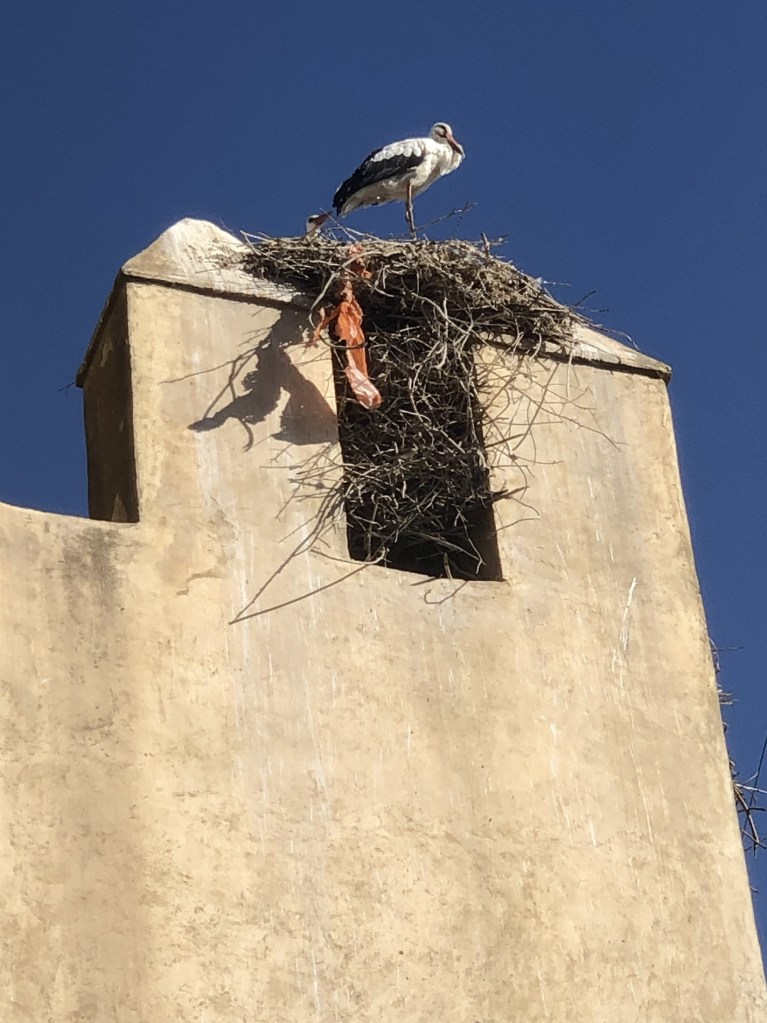
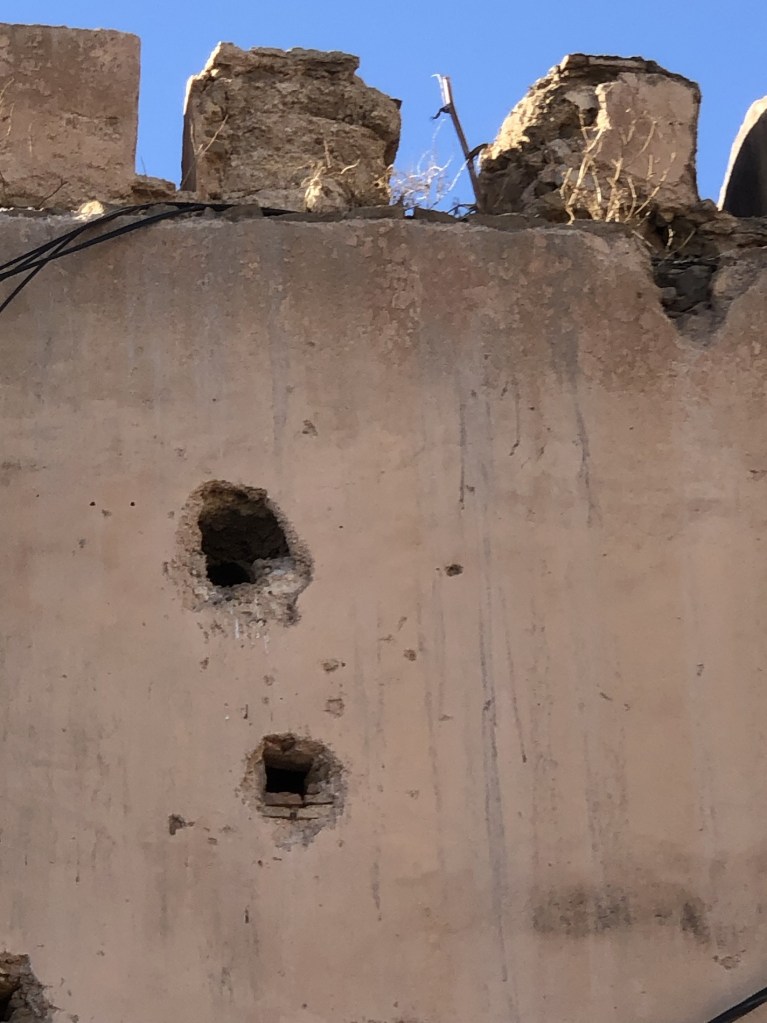
The holes in walls is for drainage. Many are taken over by birds for nesting. On top of the gate in Jewish section had huge number of storks and their nests.
Lesson for the day…mule is cross between horse and donkey. They cannot breed.
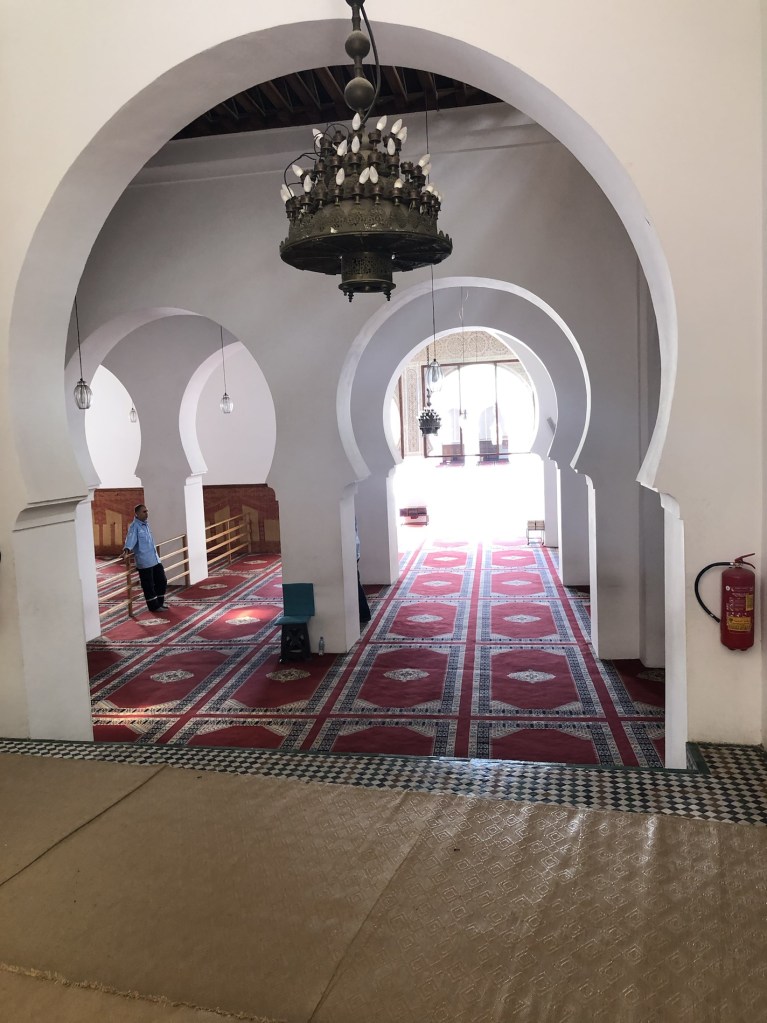
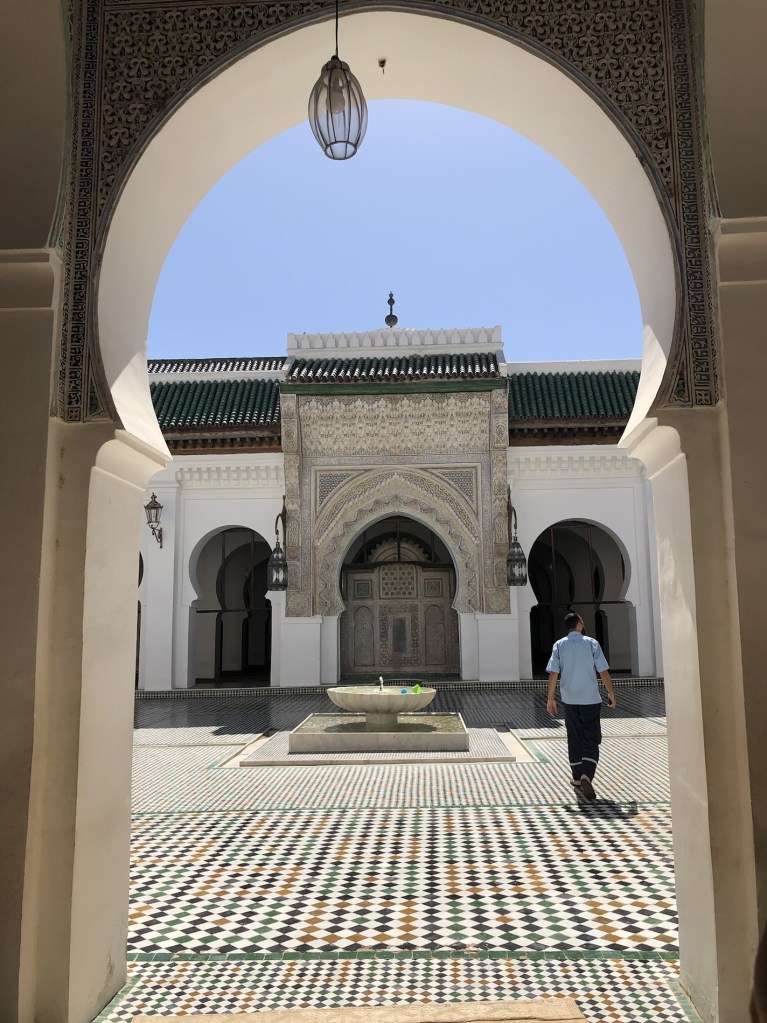
Qaraouiyine is the oldest continuous university in world. The university founded in 856 by a woman, is all about Arabic language and religion. It was the only university in the country til 1957.
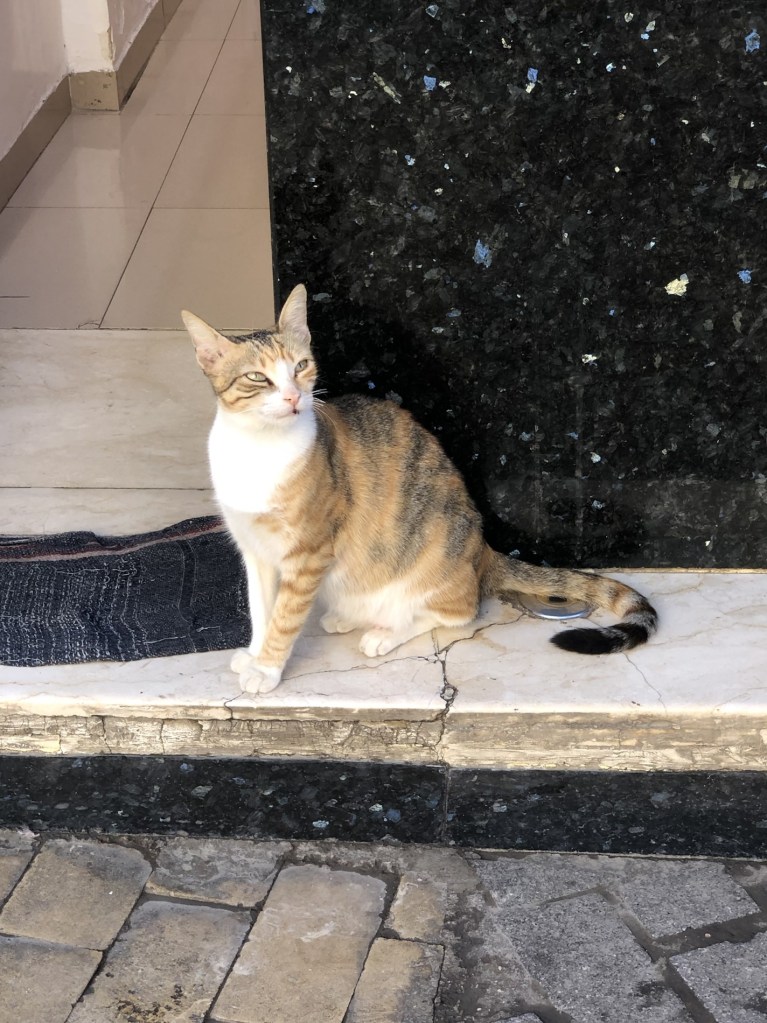
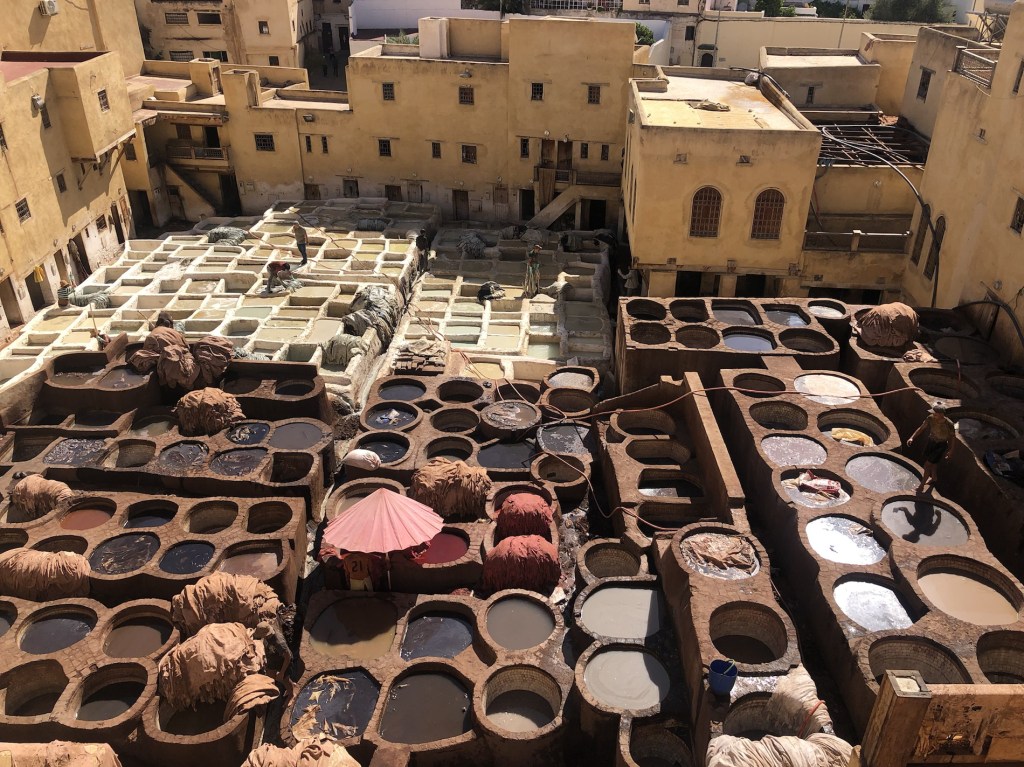
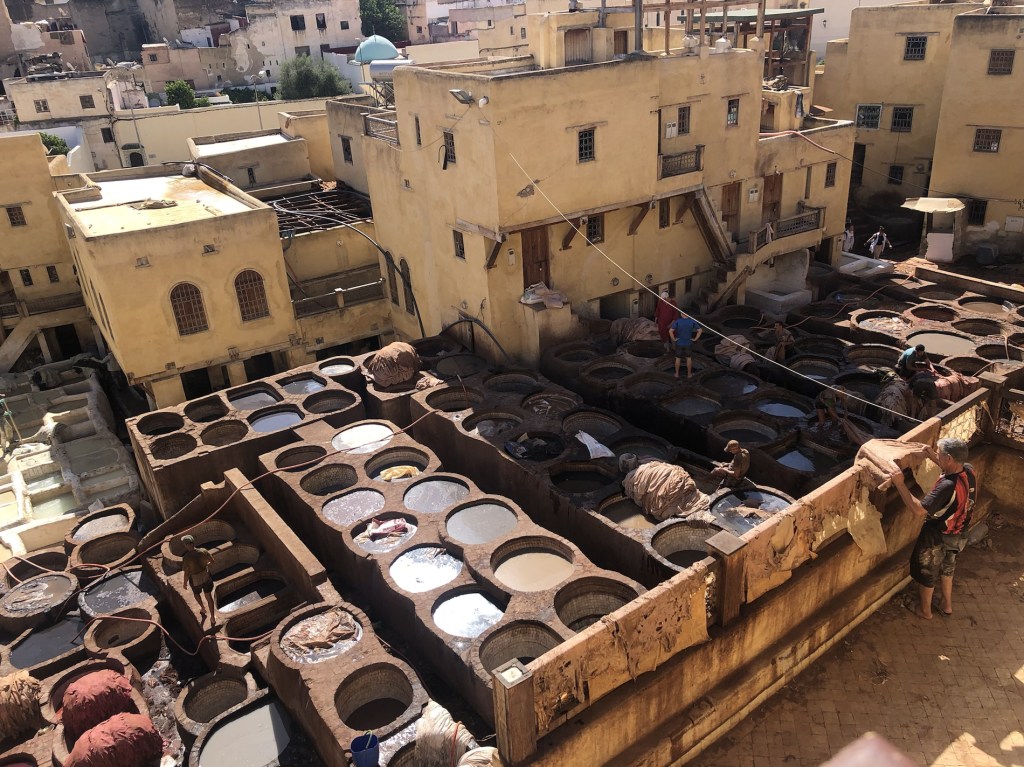
Vats for preparing leatherOldest tannery. Use goat, sheep, dromedary and cow.Sleeping cat with teeth showing Metal sink
It takes 5 weeks from beginning to end to dye and produce the leather. They never kill the animal for the hide but for the meat and then use the hide.
There are 272 pillars of university/ mosque
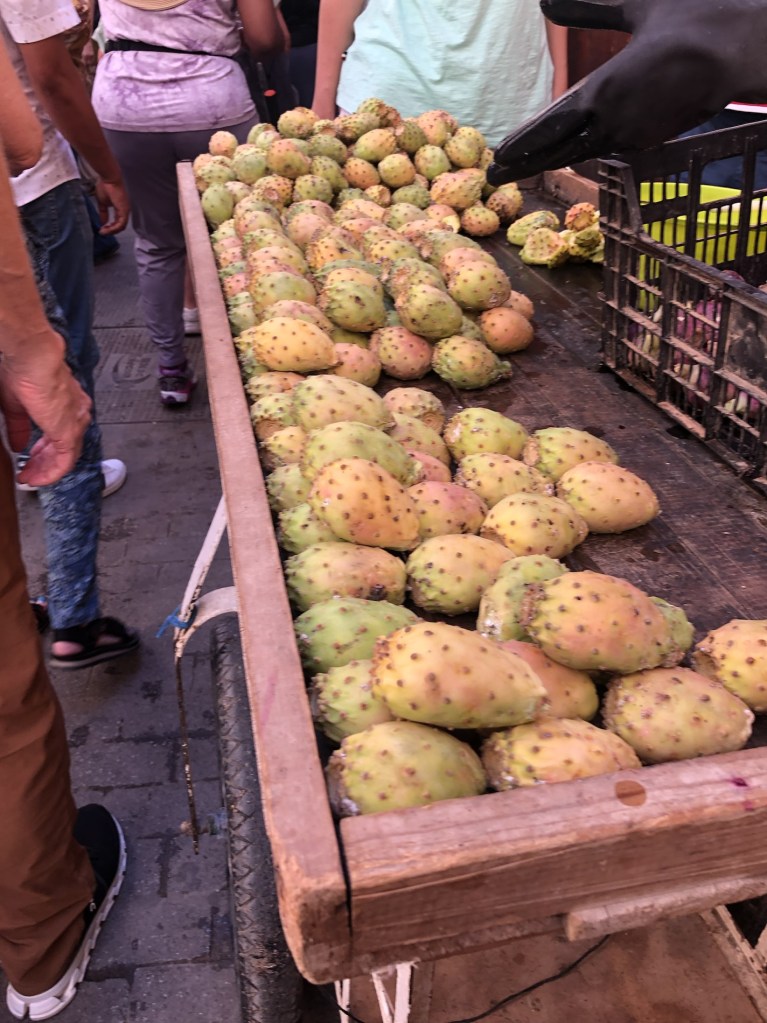
Metalwork doorsPrickly pearLoisMarilyn
Scarfs…. Made from silk threads of agave (did not know agave could produce a silk) is mixed with cotton or wool.
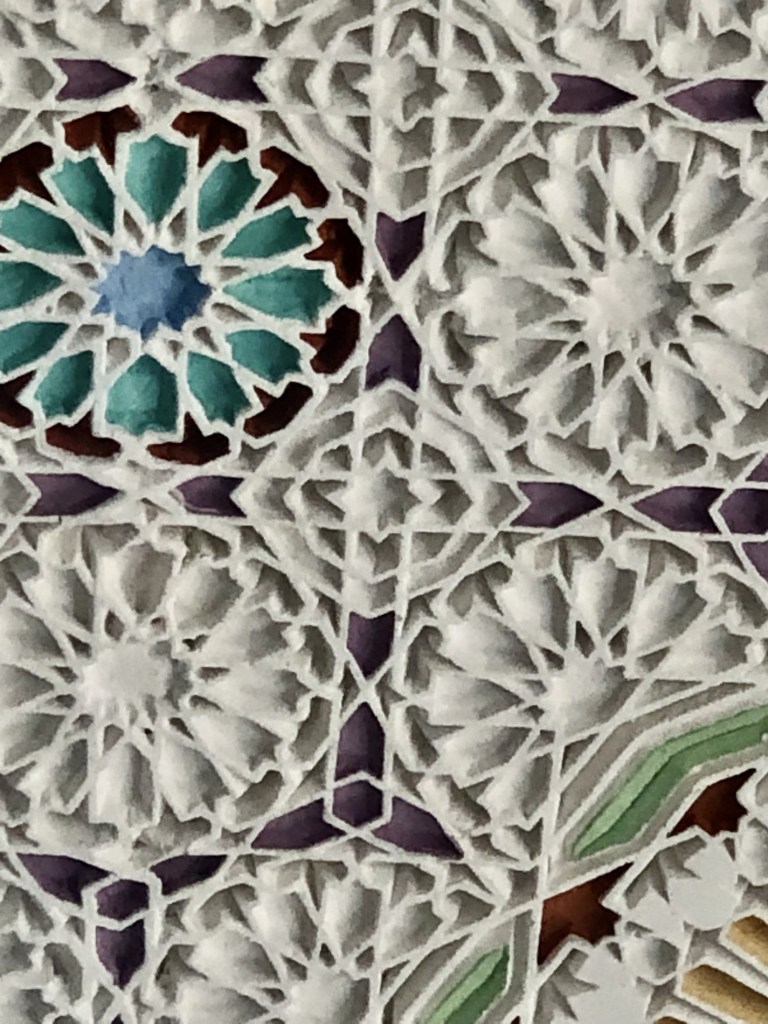
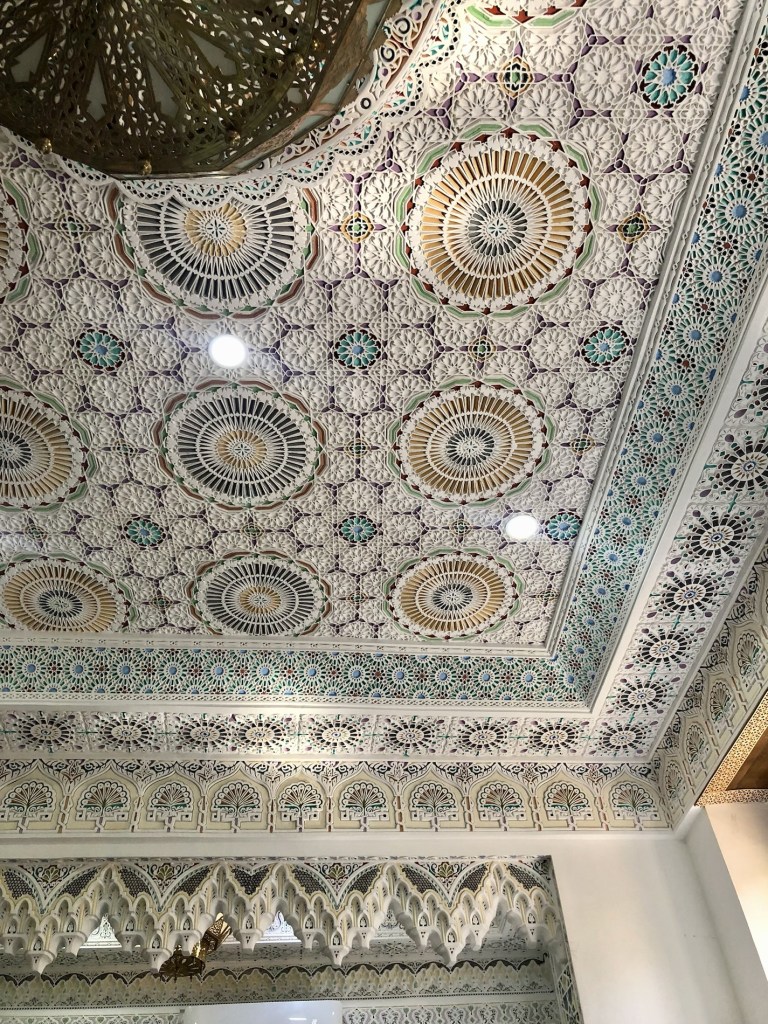
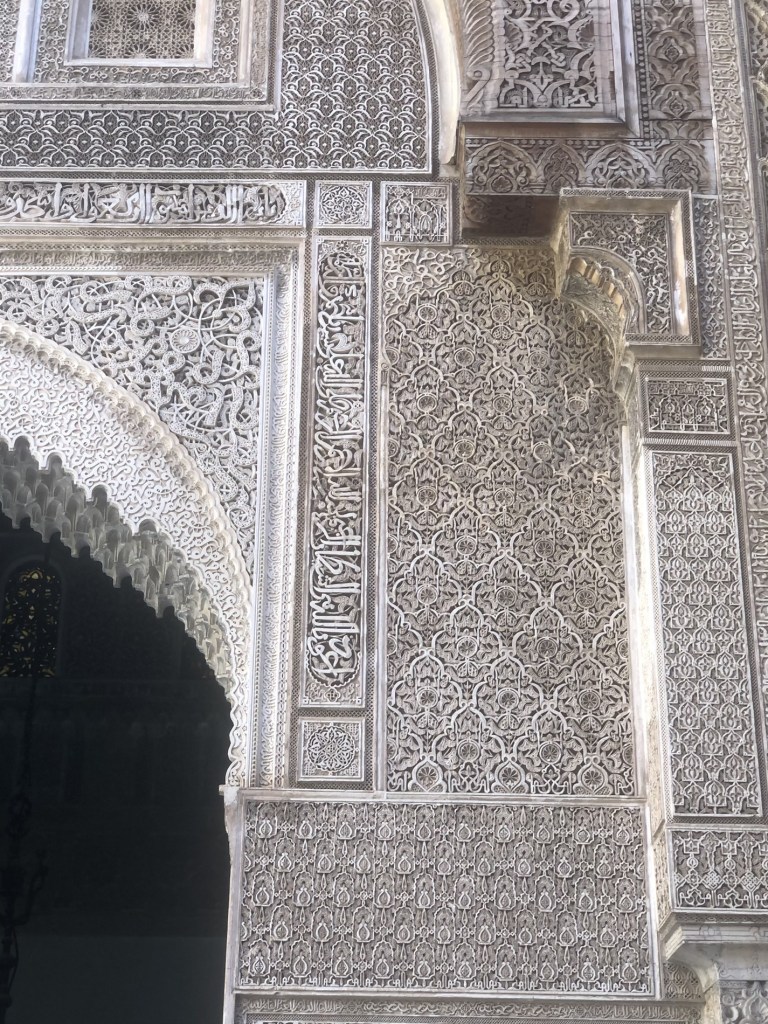
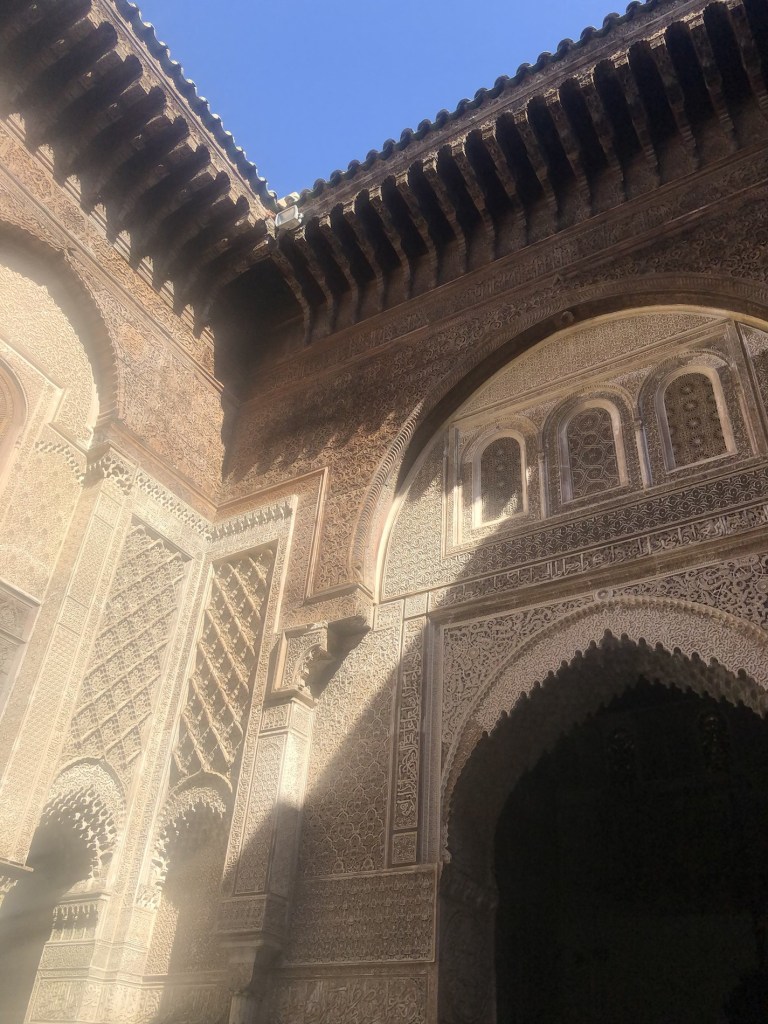
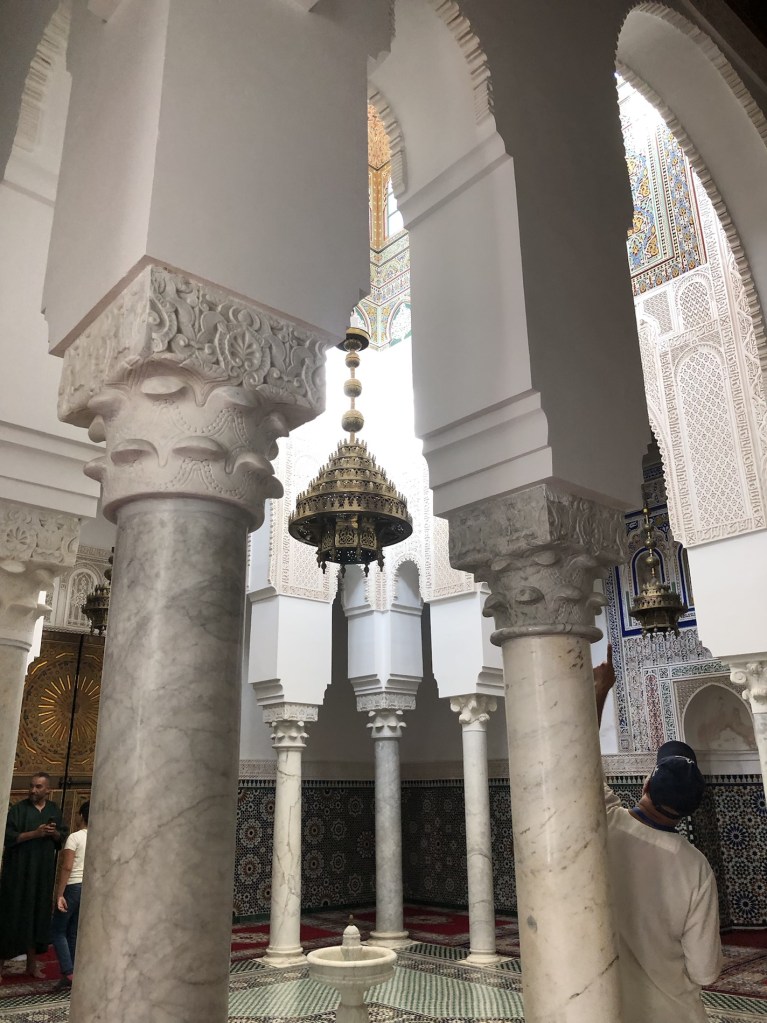
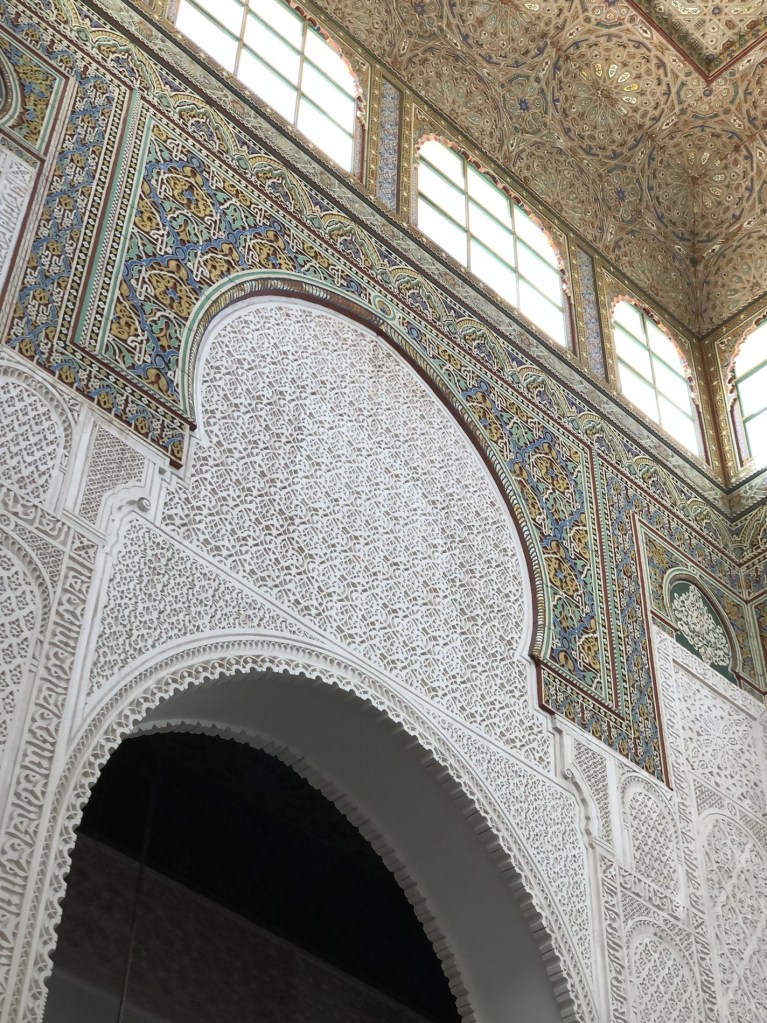
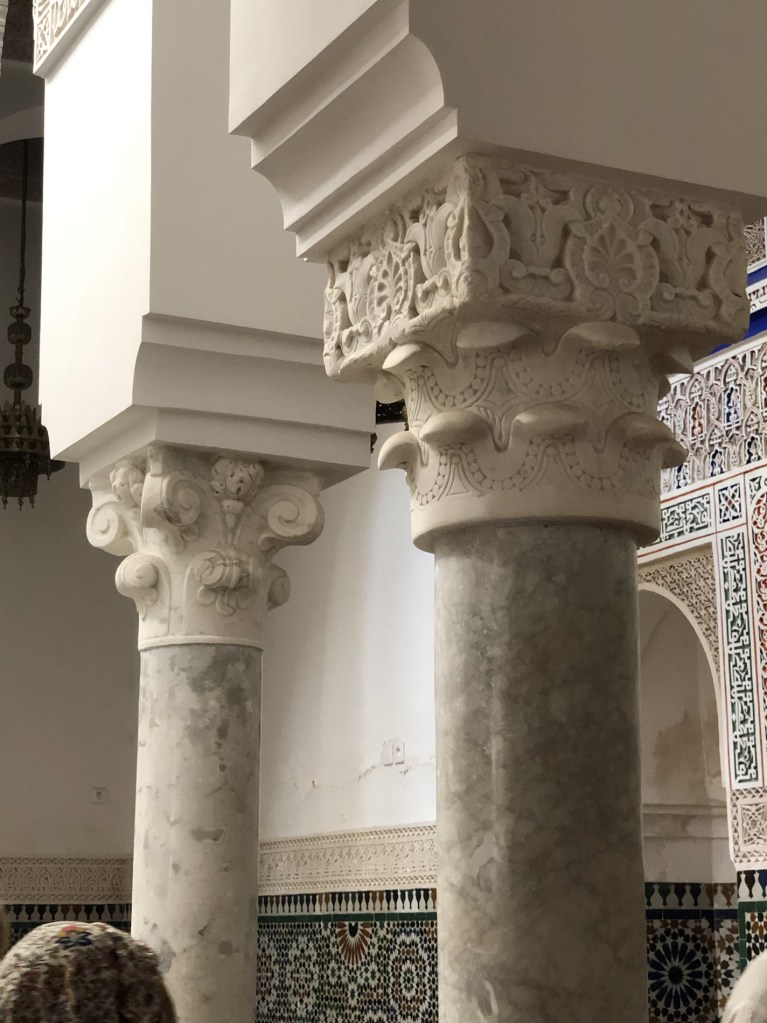
The mosque…carved in plaster…. No pictures just art. Everything must have inscriptions from Koran. 1323AD started to be built and opened 1325AD.
I wished that I could have taken videos or pictures of people and the crush but it is not acceptable.
While driving along the highway, Mustapha our CEO, filled in some info:
Rabat… capital city… French chosen capital. Independence in 1961….Kept Rabat as capital.
Almost every city has a King’s palace.
As we turn inland, we see a national park. There are a forest of oak cork. The bark has been stripped for the cork. Other side has eucalyptus for making paper. This is the green part of country… is rainy part… the breadbasket. Most farms are not irrigated… dependent on the rains that start in October. Lot veggies are exported. They also have vineyards. Major citrus producers. Pomegranates.
There are 12 states.
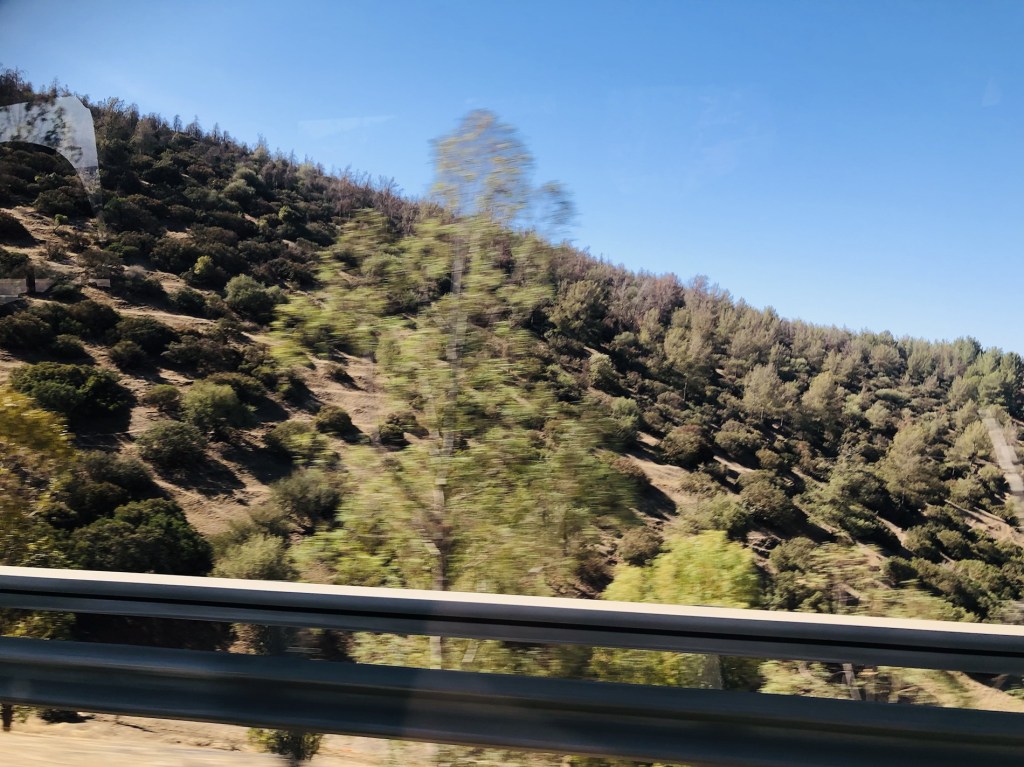
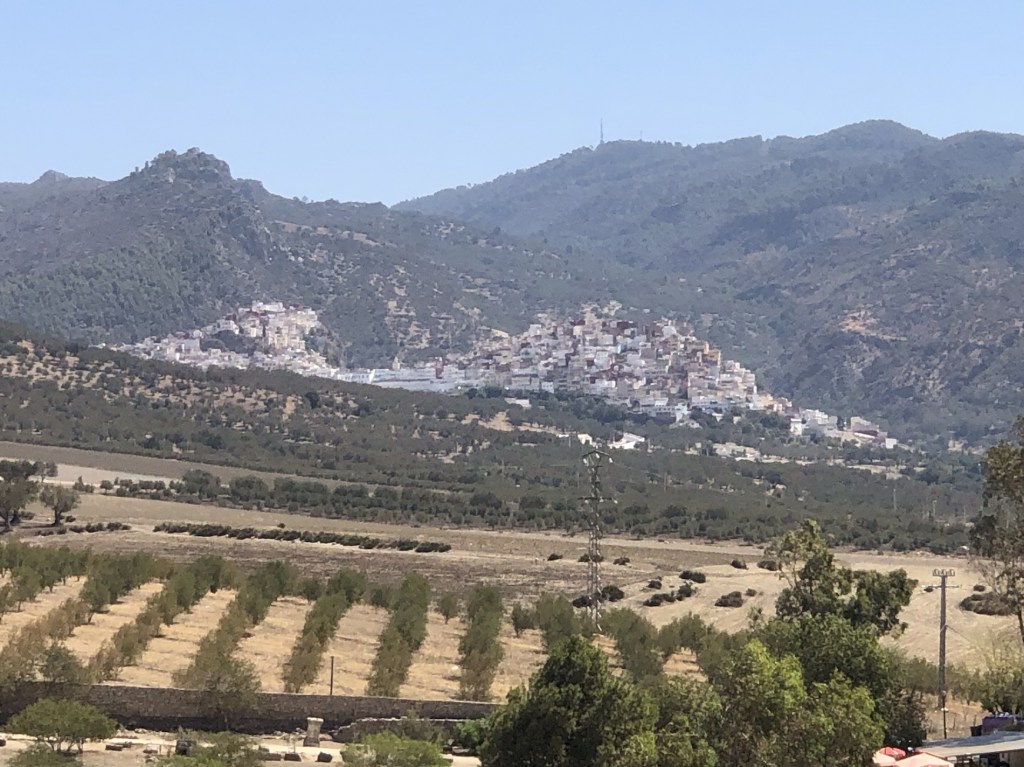
Little Atlas Mountains we pass today….
Middle Atlas Mountains used for grazing…. After we visit Fez.
High Atlas ….highest mountains in North Africa… prevents at 13,600 feet, the Sahara desert from moving further into Morocco. It gets to 50 +C in desert in summer but freezes and has snow in winter.
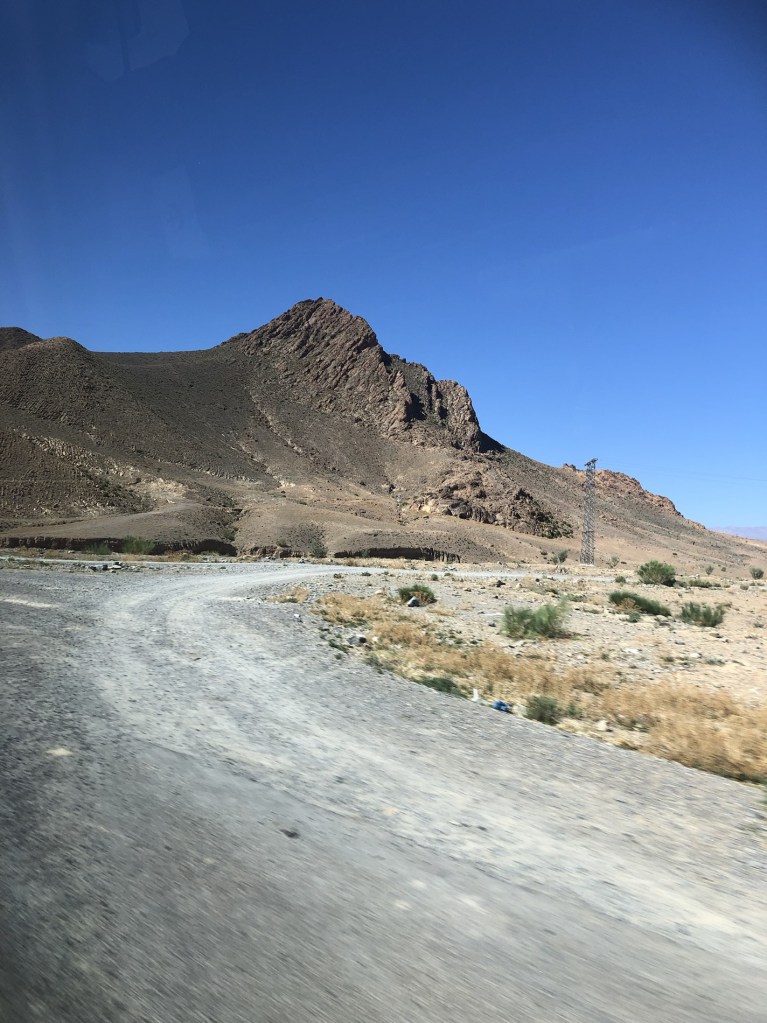
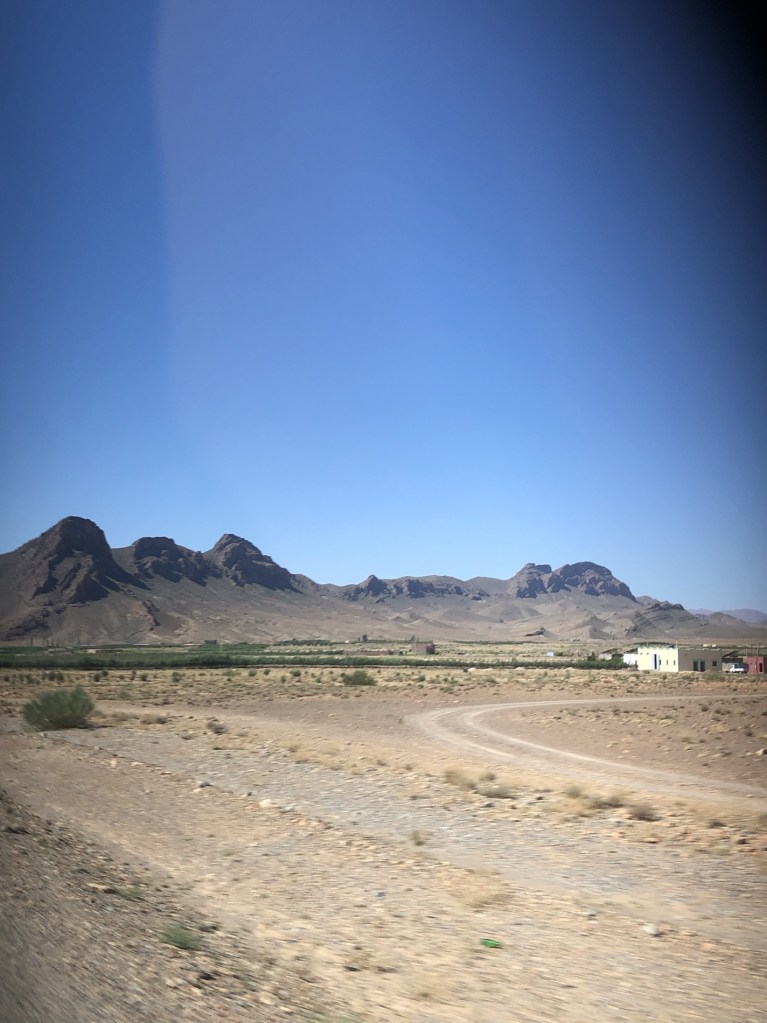
Anti-Atlas…. South of High Atlas… volcanic…. No snow, lots of minerals
Berber are the natives… speak Arabic but also own language… are Moslems. 68% of population have some Berber. Large Jewish sector… there are Jewish community centres near kings palace in every city….they brought economic prosperity to the areas
Berber and Arabic are 2 official languages. Although French is widely spoken, is the business language, it is not official. 2011 was when Berber language (a combination of 3 dialects) after being neglected for centuries, was made official and now taught in school. (Looks Greek and is written from left to right unlike Arabic)
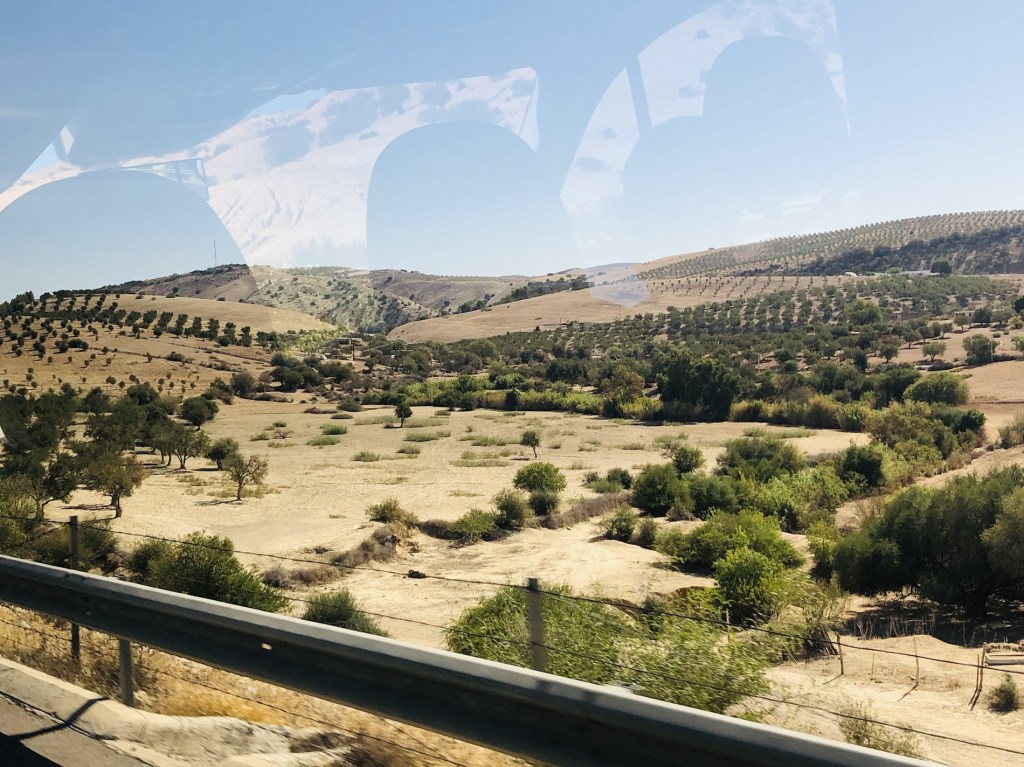
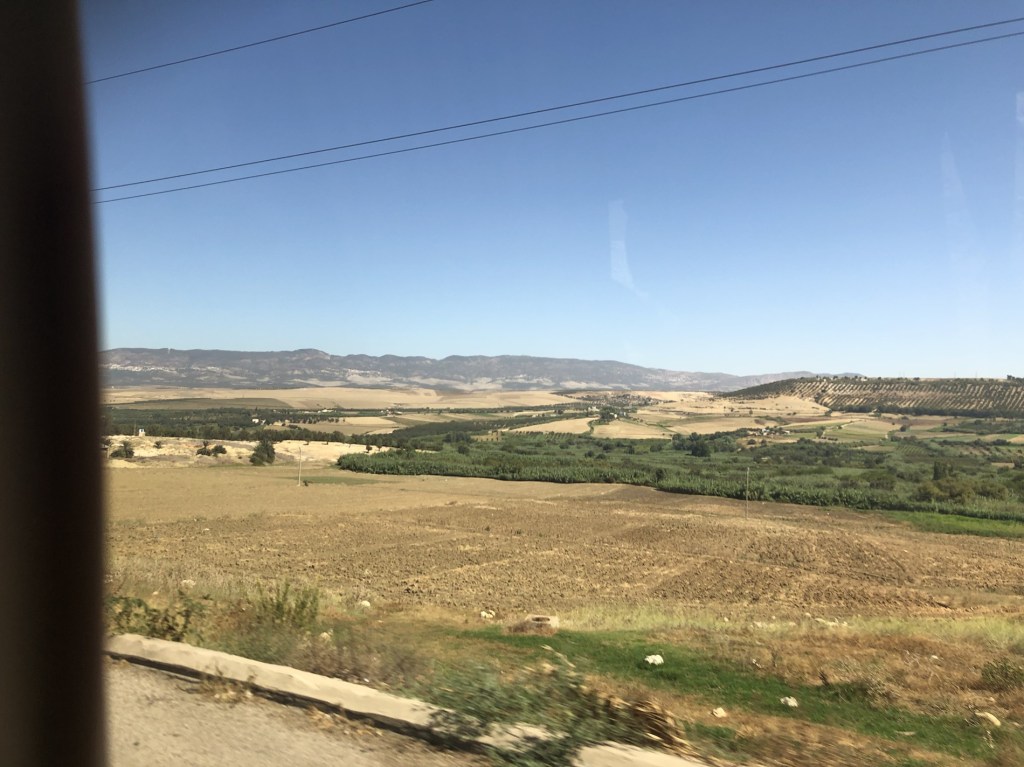
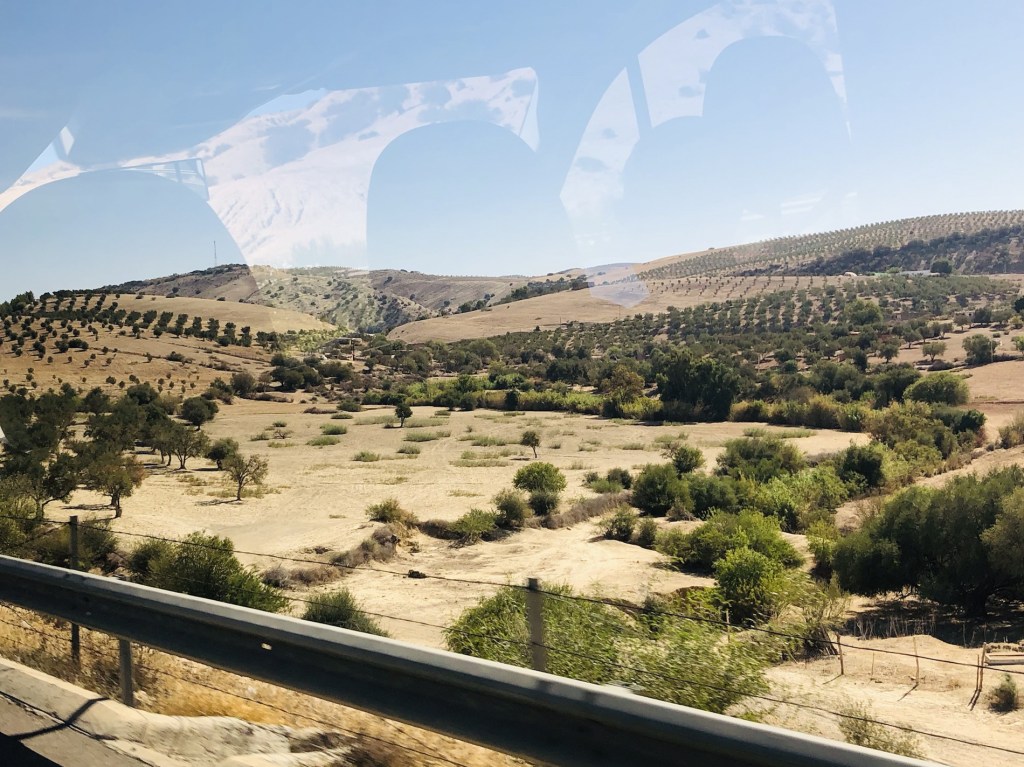
There doesn’t seem to be much in the way of garbage. Actually I saw someone picking up garbage with those pinchy things for picking up stuff. The farms are very organized… could be somewhere in North America (or Australia) although I did see “a” farmer using a horse and hand plow. Better that than the poor women with hoes hacking the dirt on the mountainsides in Uganda.
4th producer of olive oil in Mediterranean. Meknes state
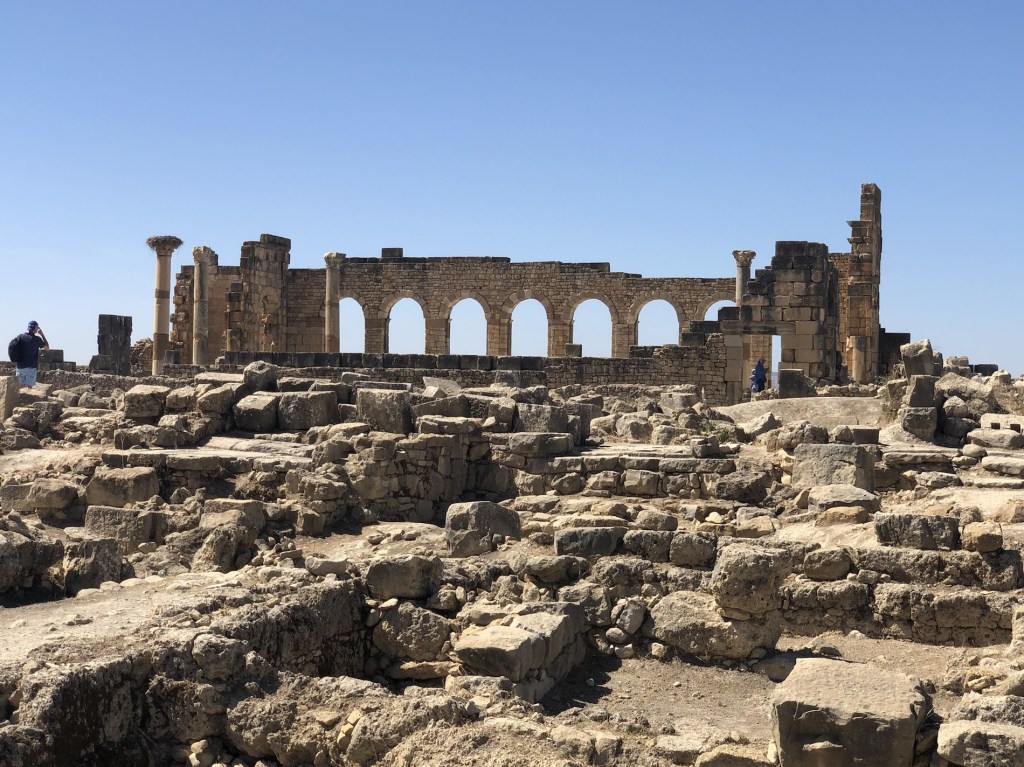
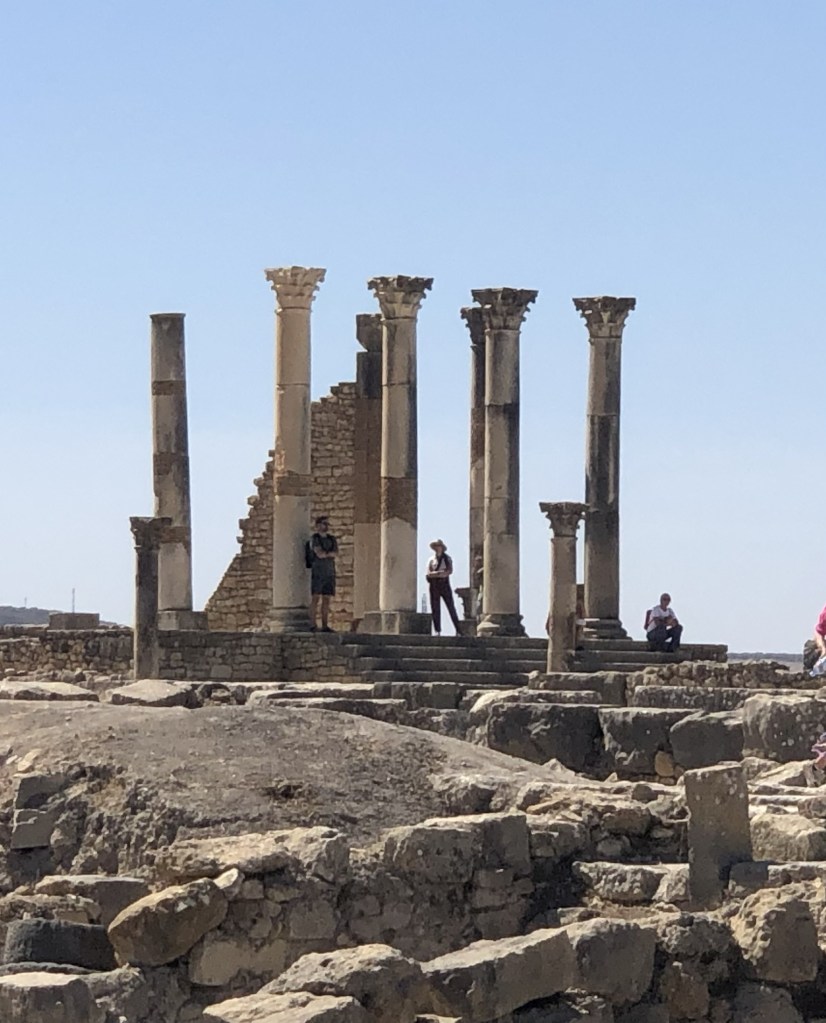
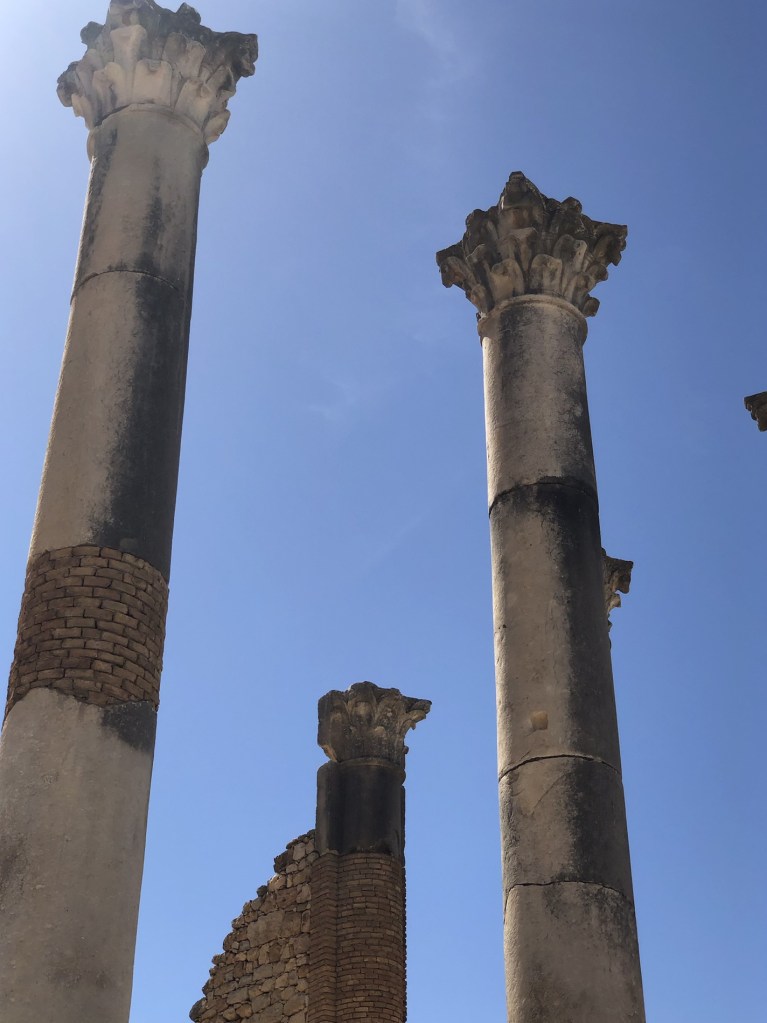
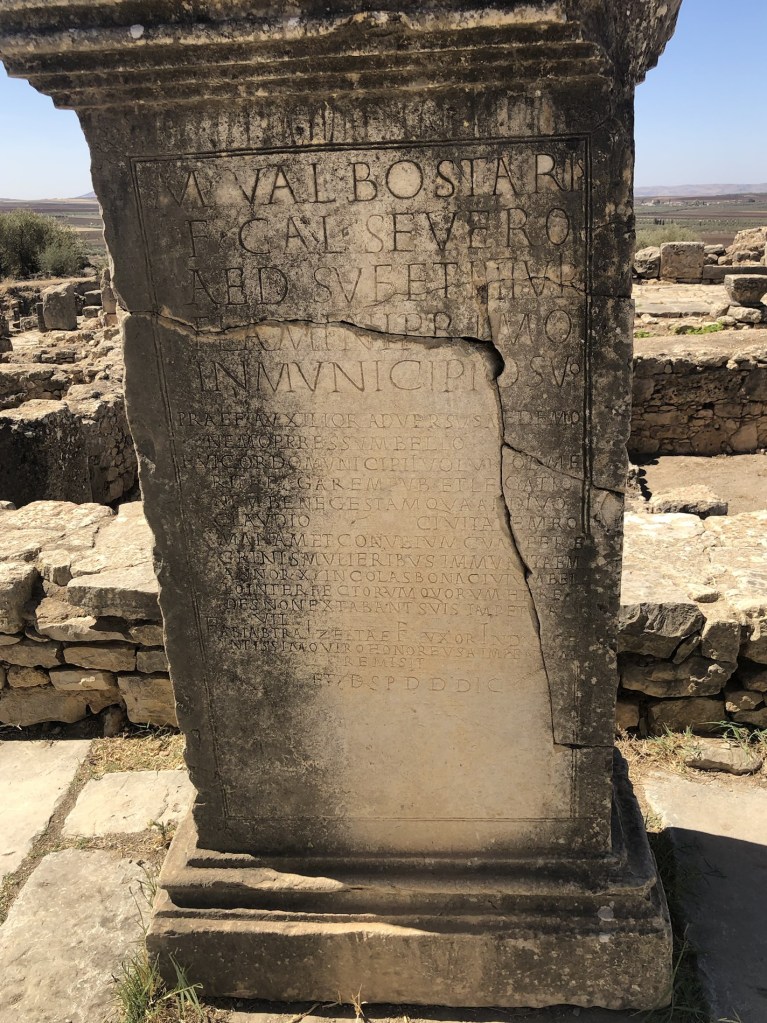
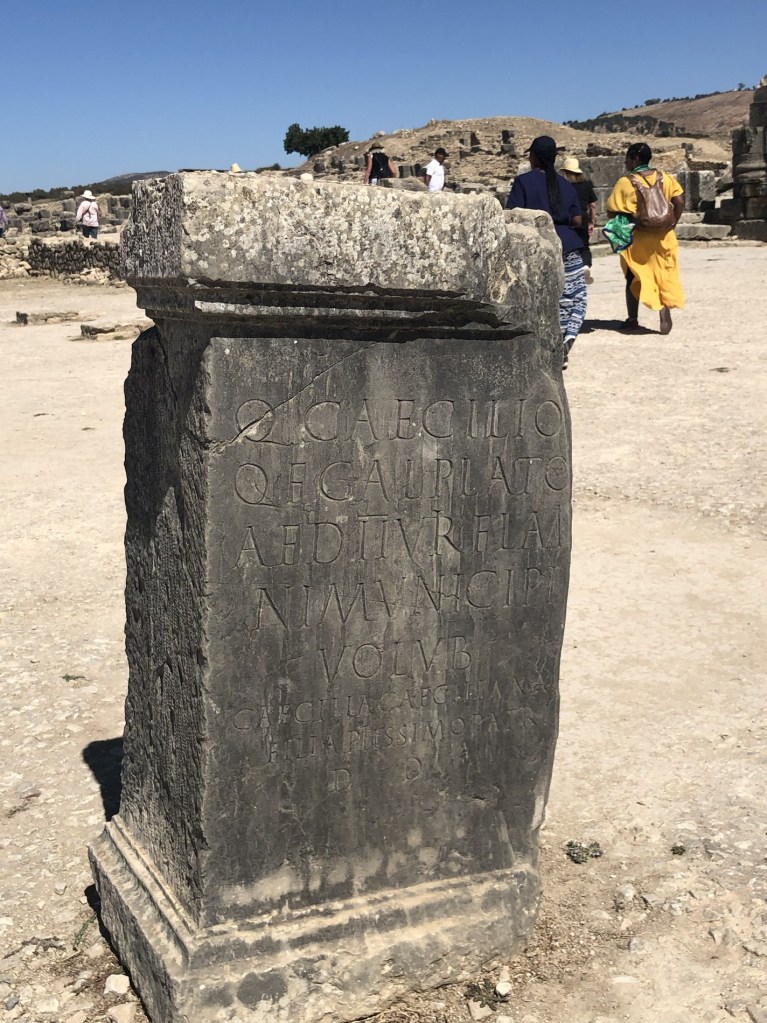
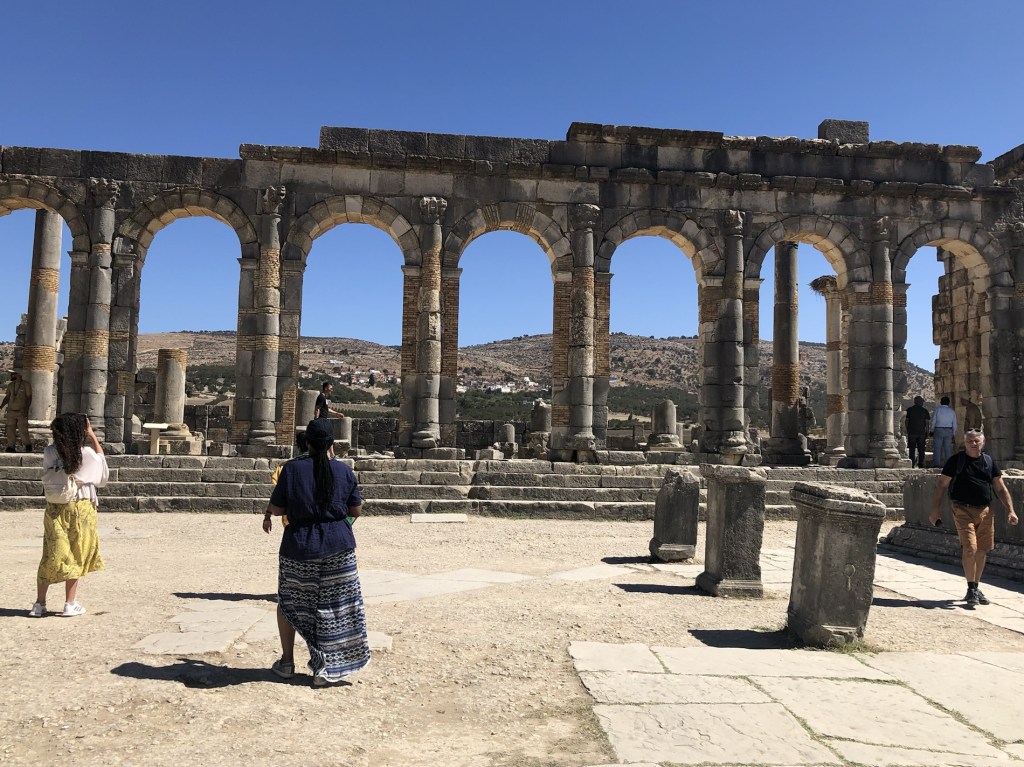
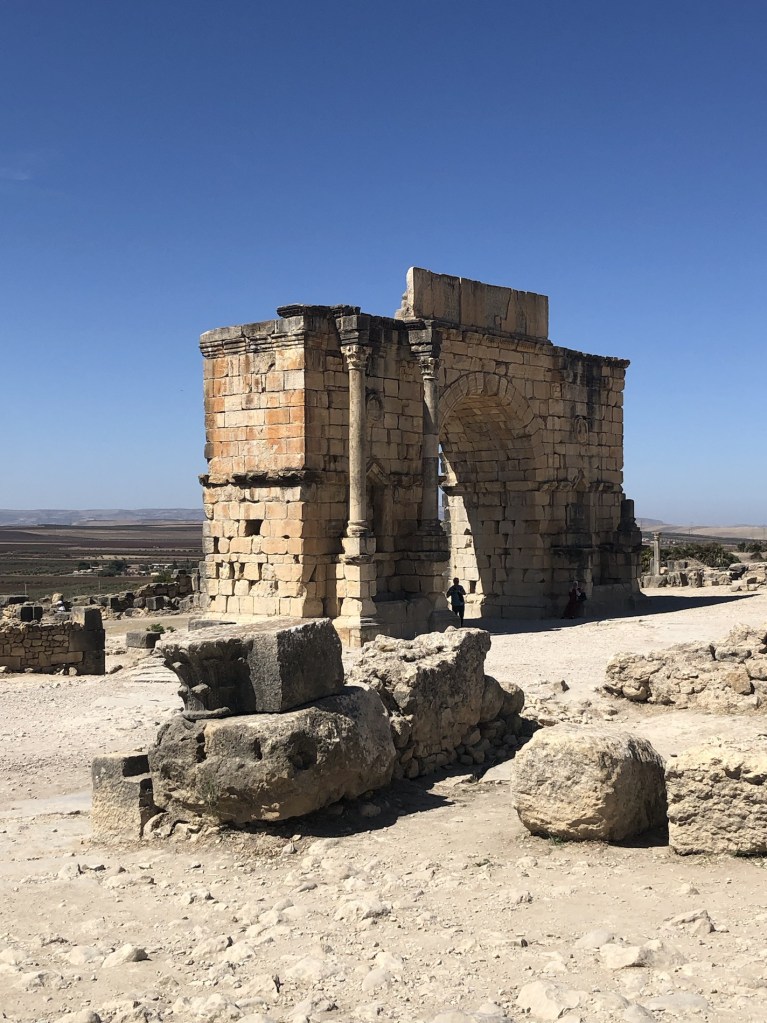
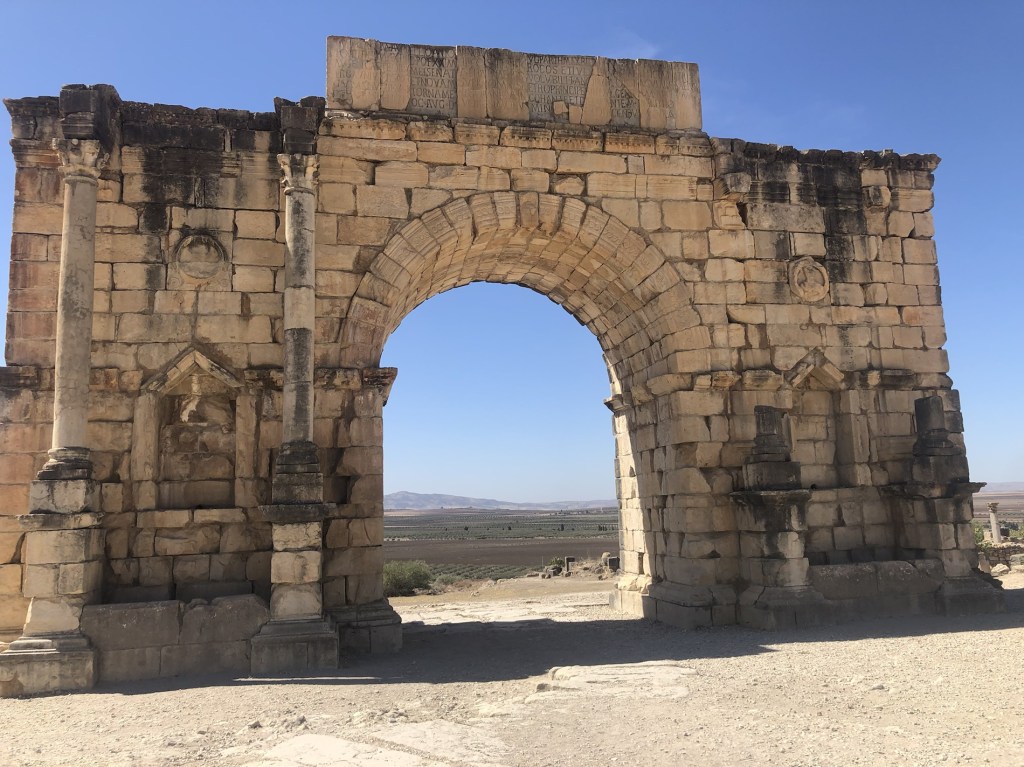
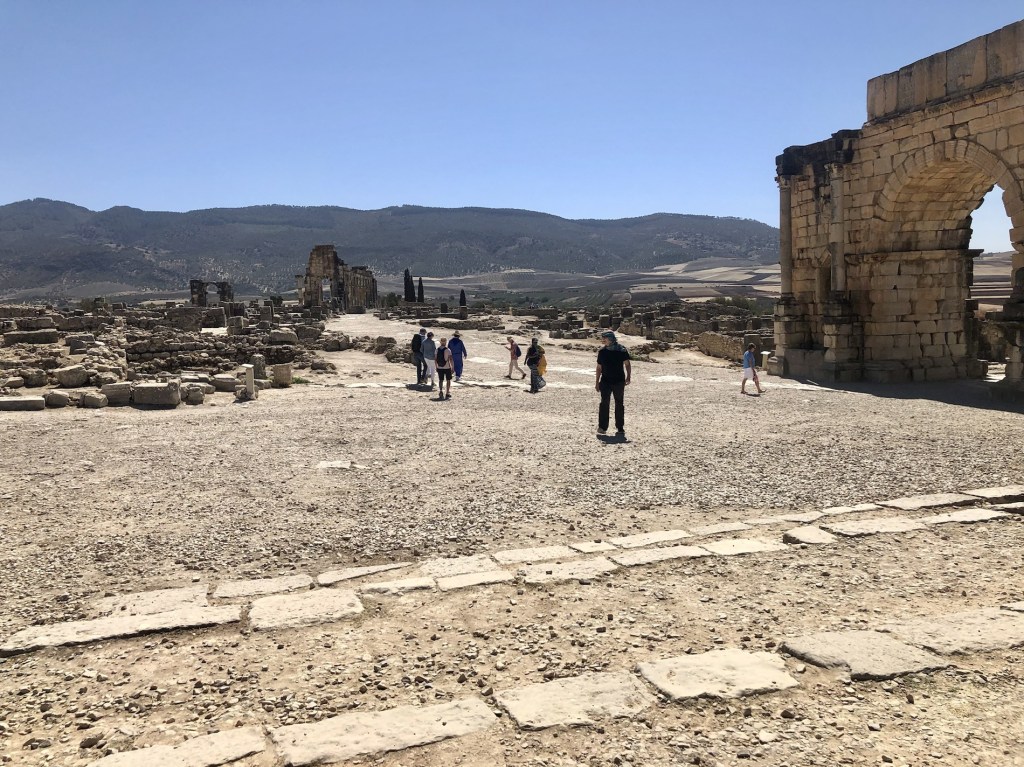
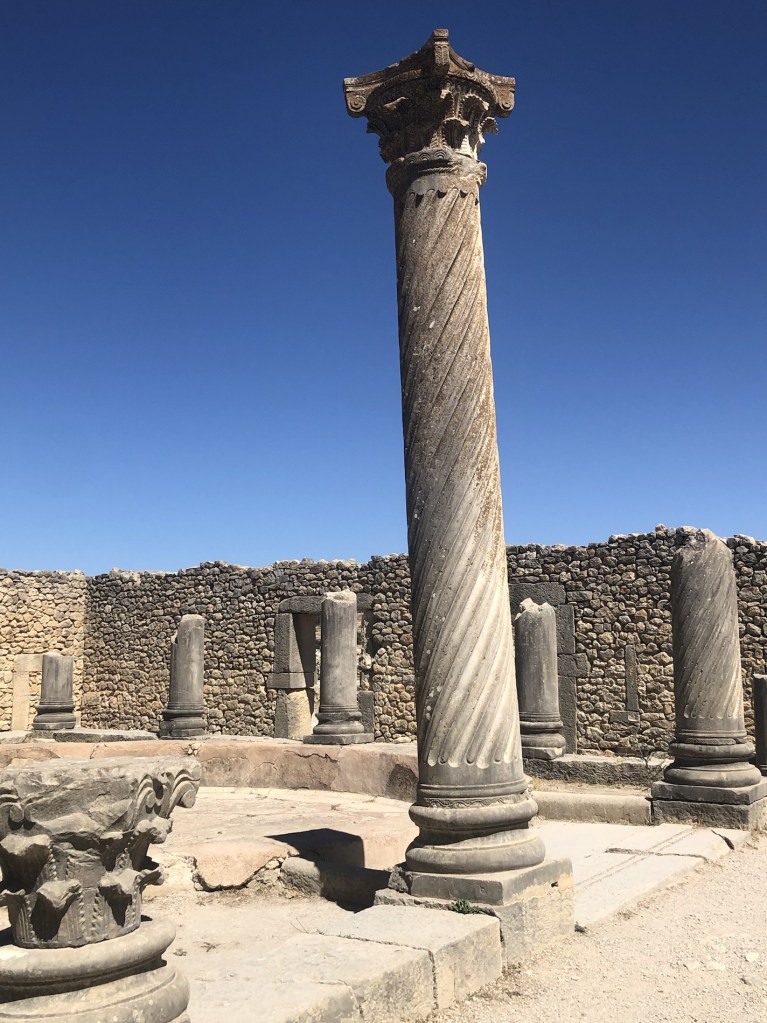
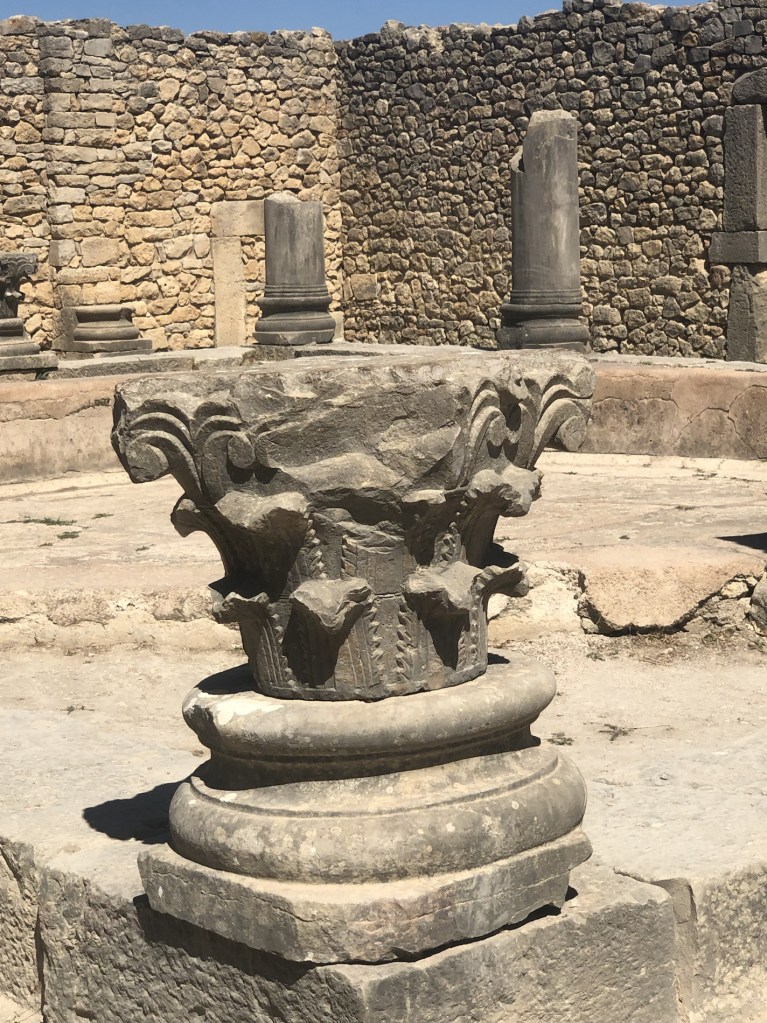
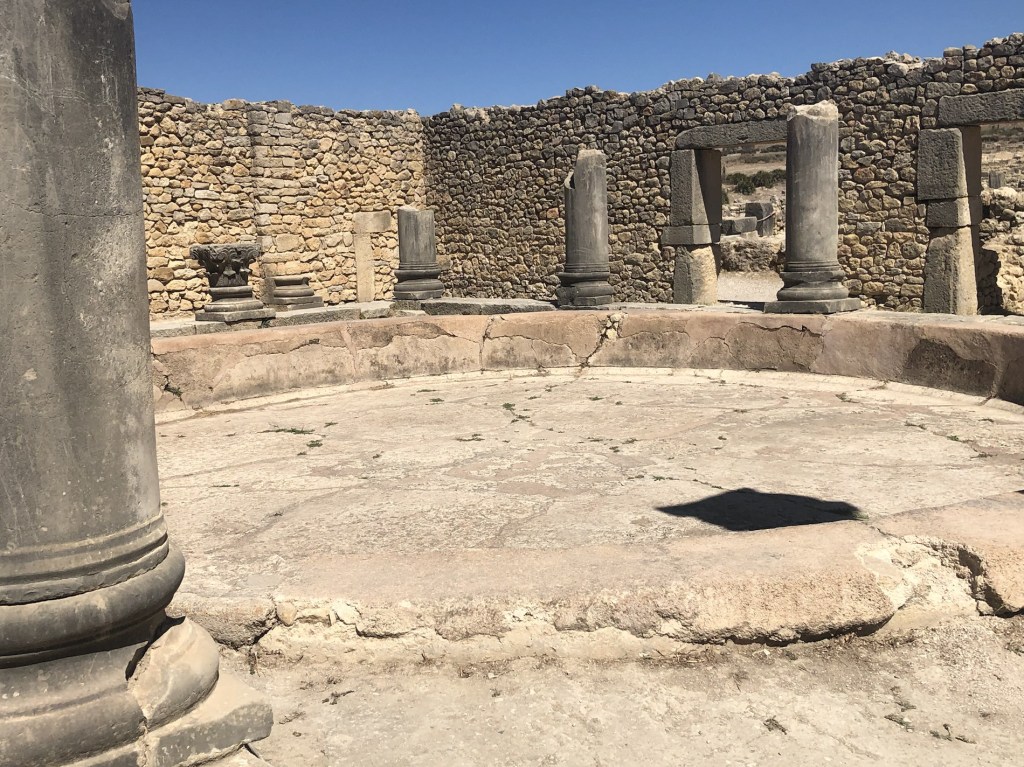
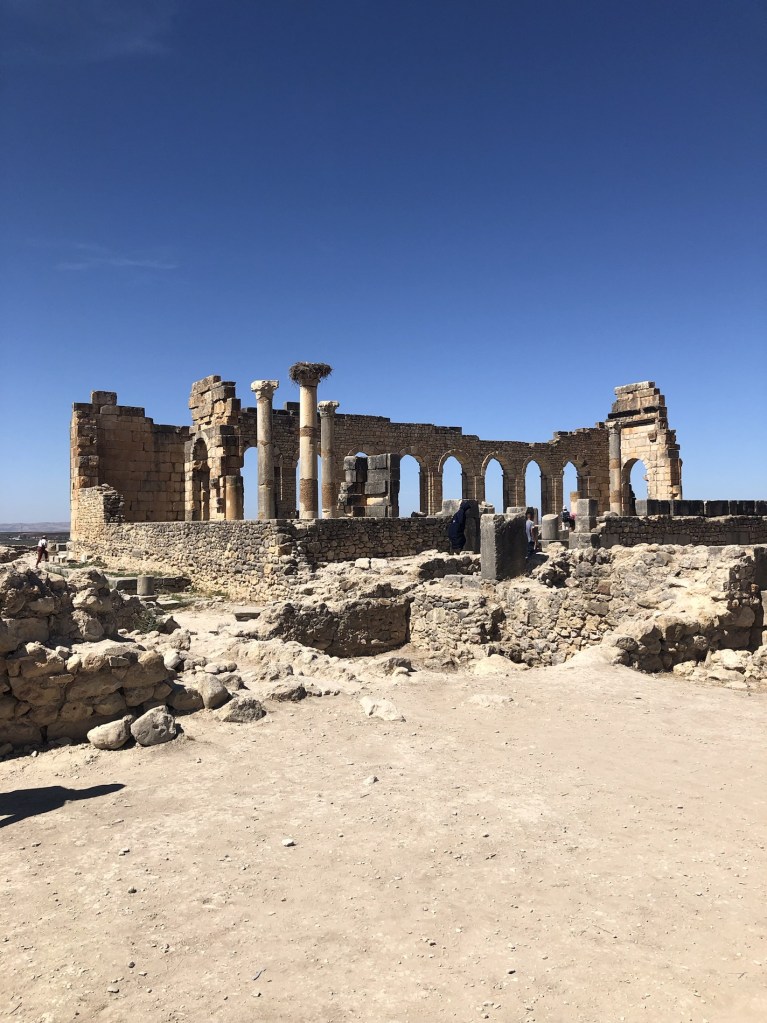
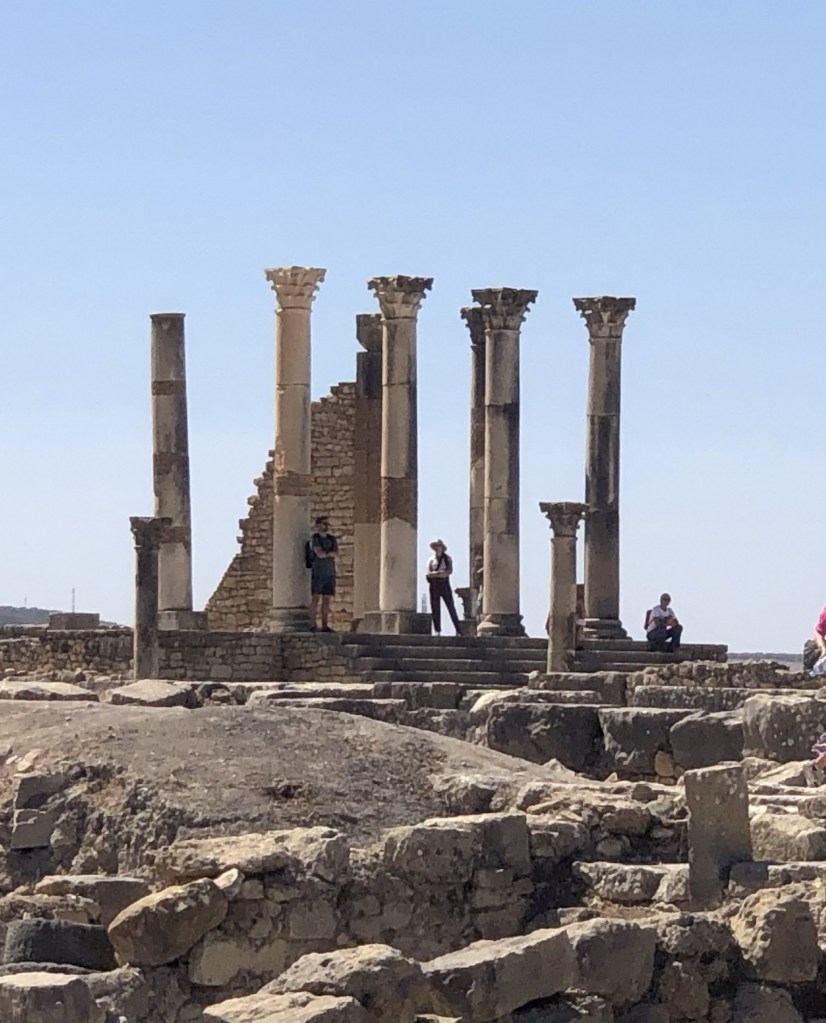
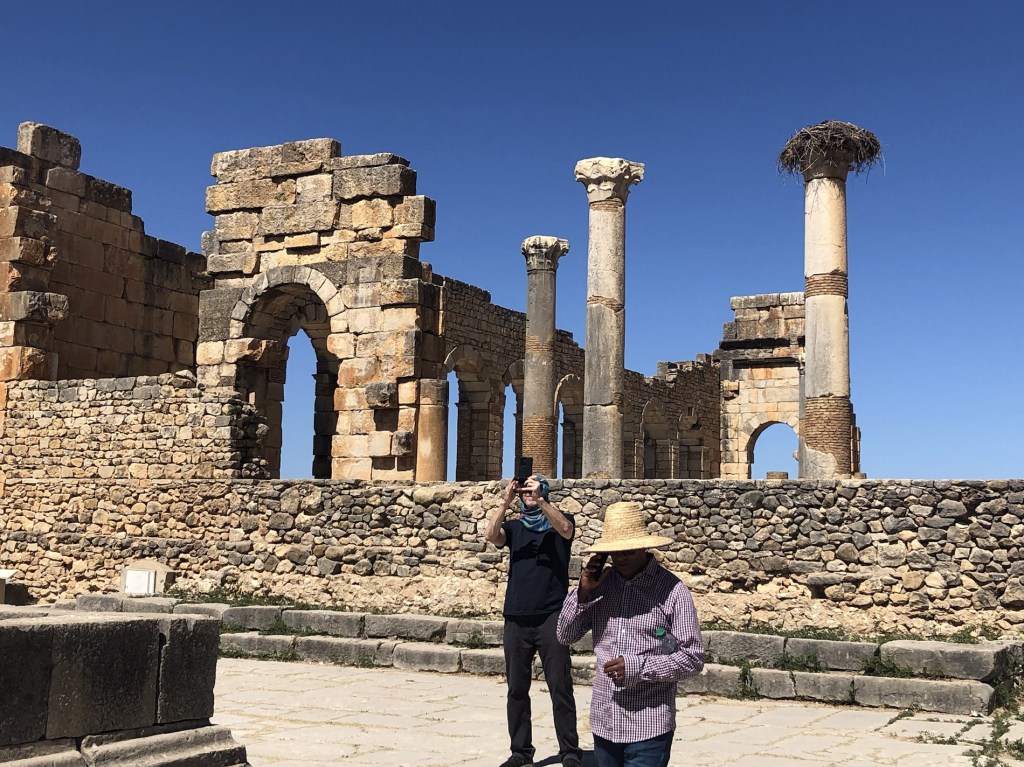
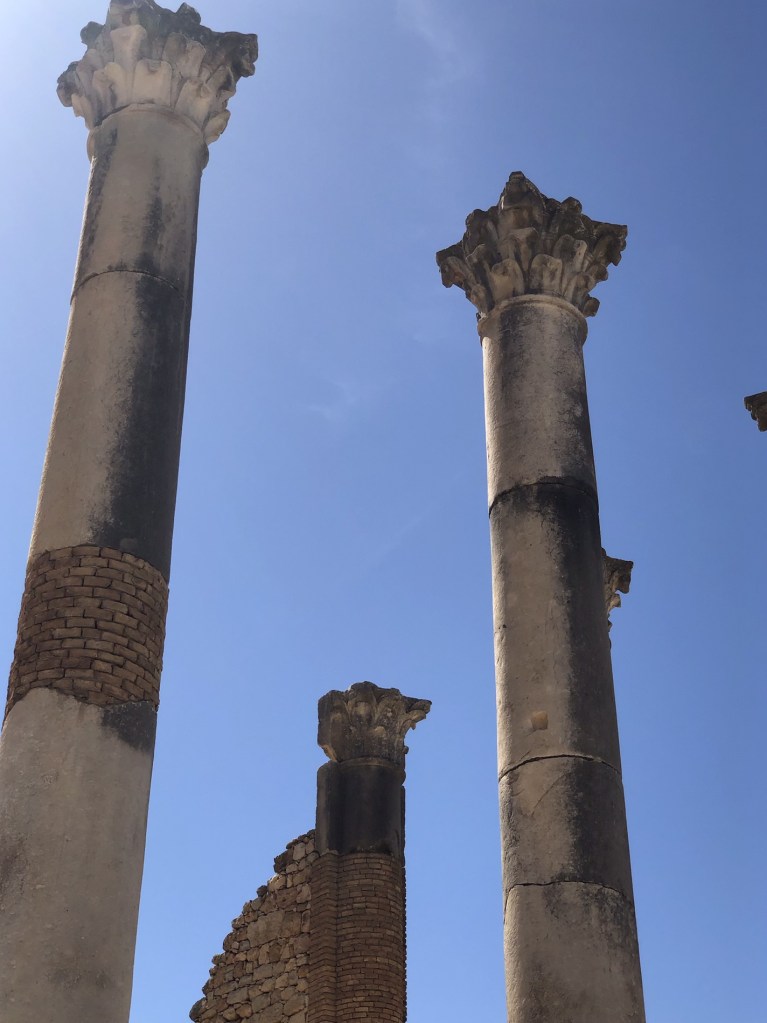
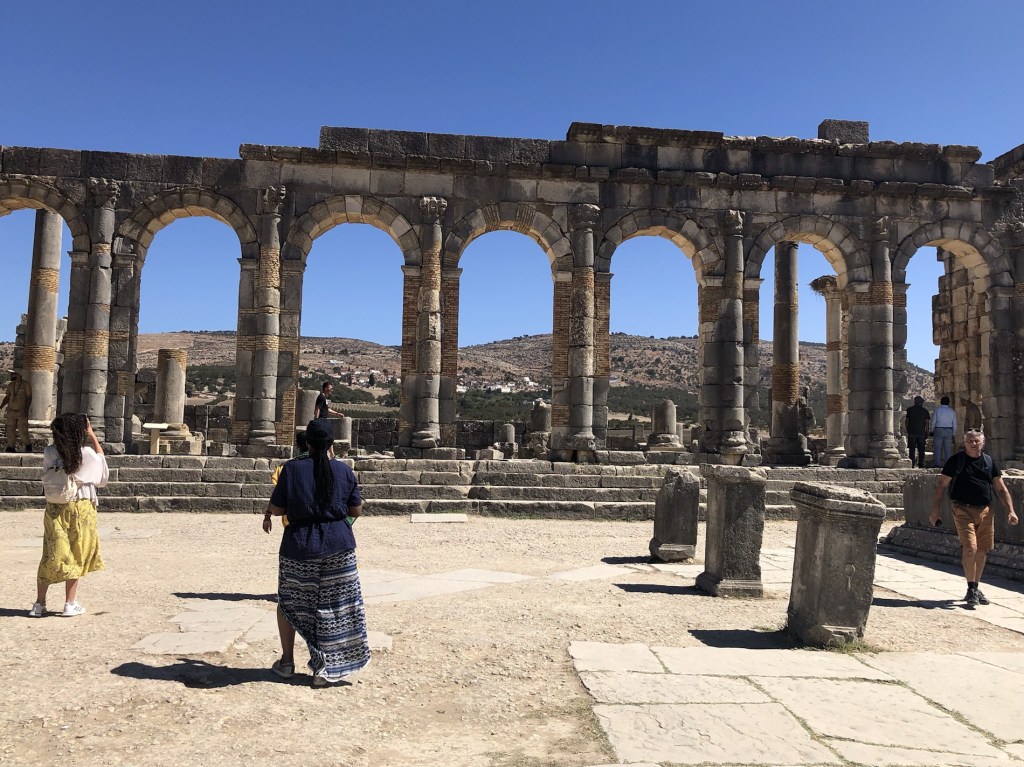
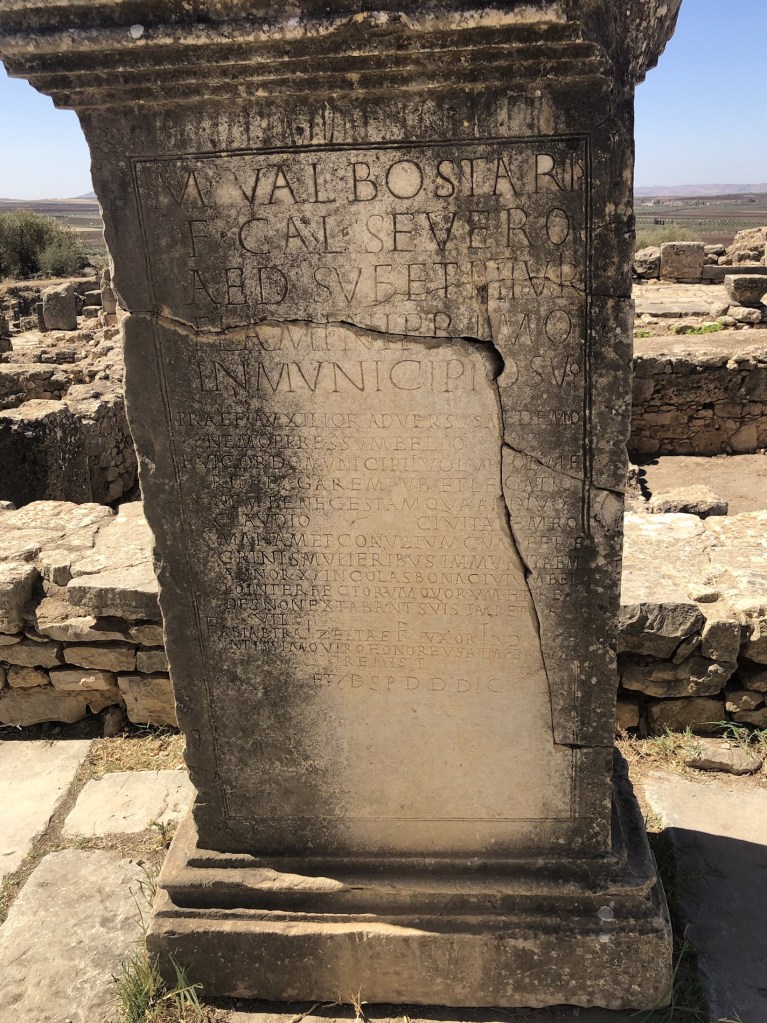
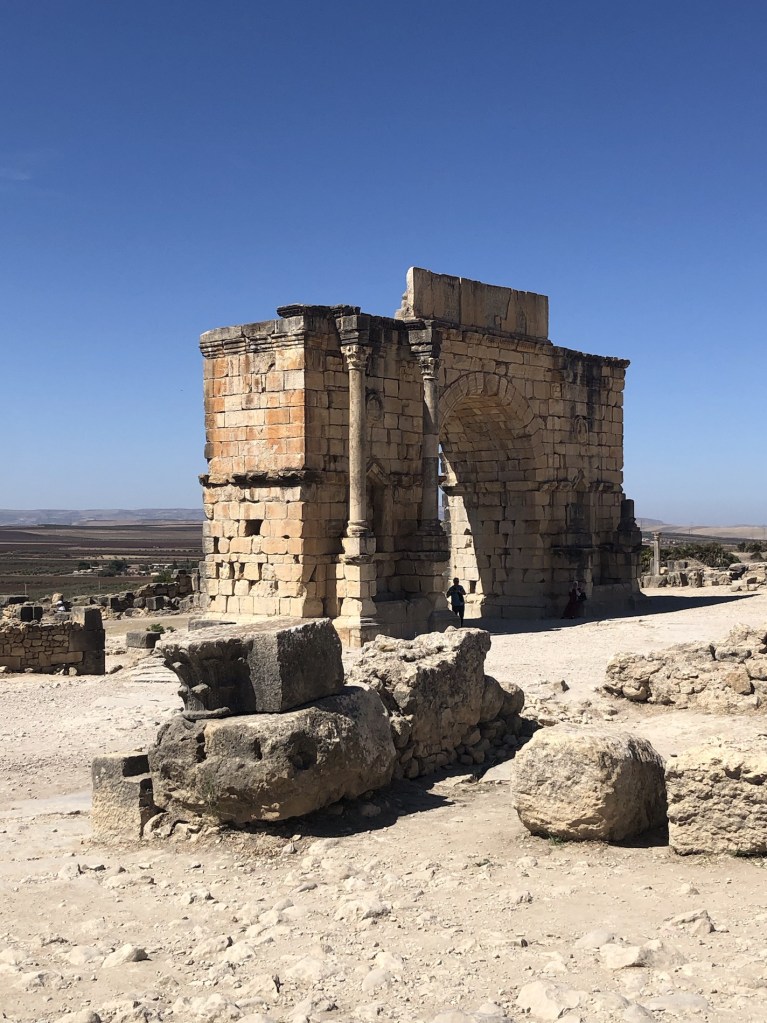
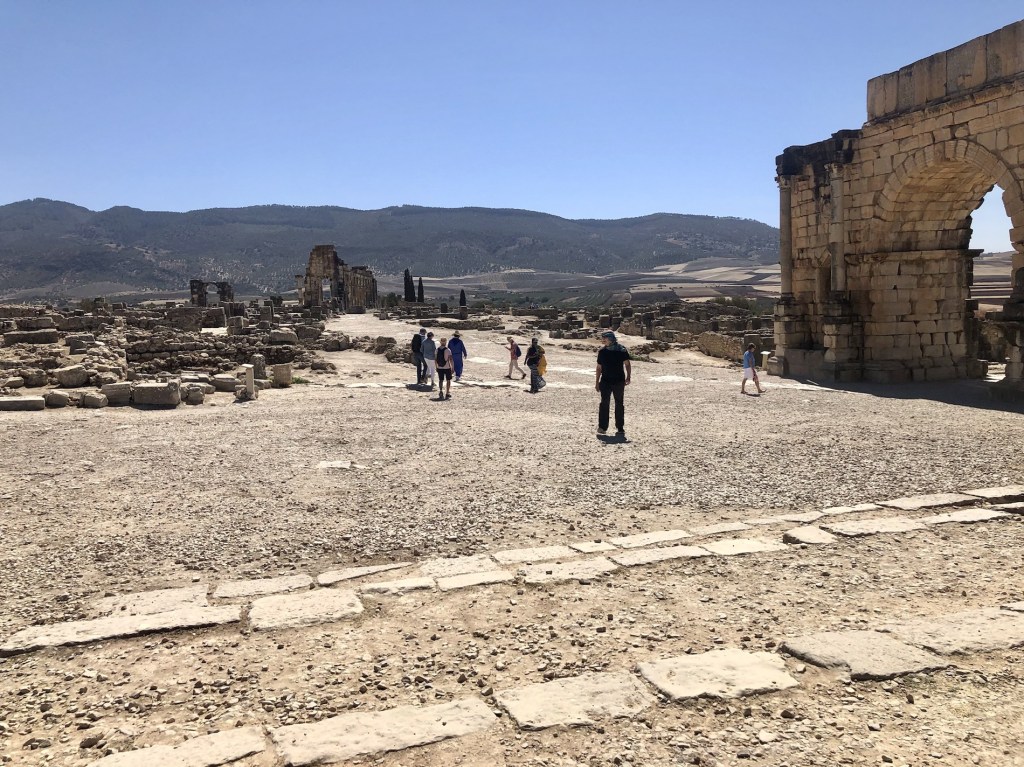
Volubilis -had been inhabited since 3rd C BC-is a world heritage site …. Roman. Only inland site. 350 kms from sea. Limestone twisted pillars.
Our sole male of the group, Michael
First populated by Berbers, then Romans and finally Arabs… Islam was first introduced here in the 8th century. Earthquake in 18th century buried it. It was discovered by French starting in 1915.
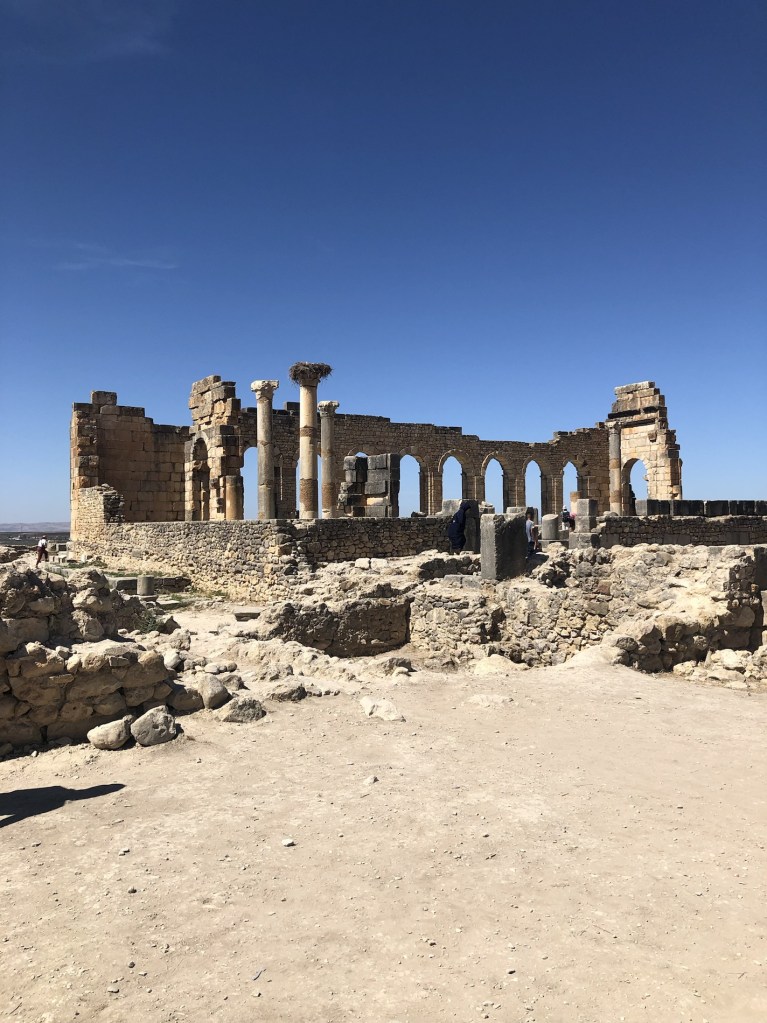
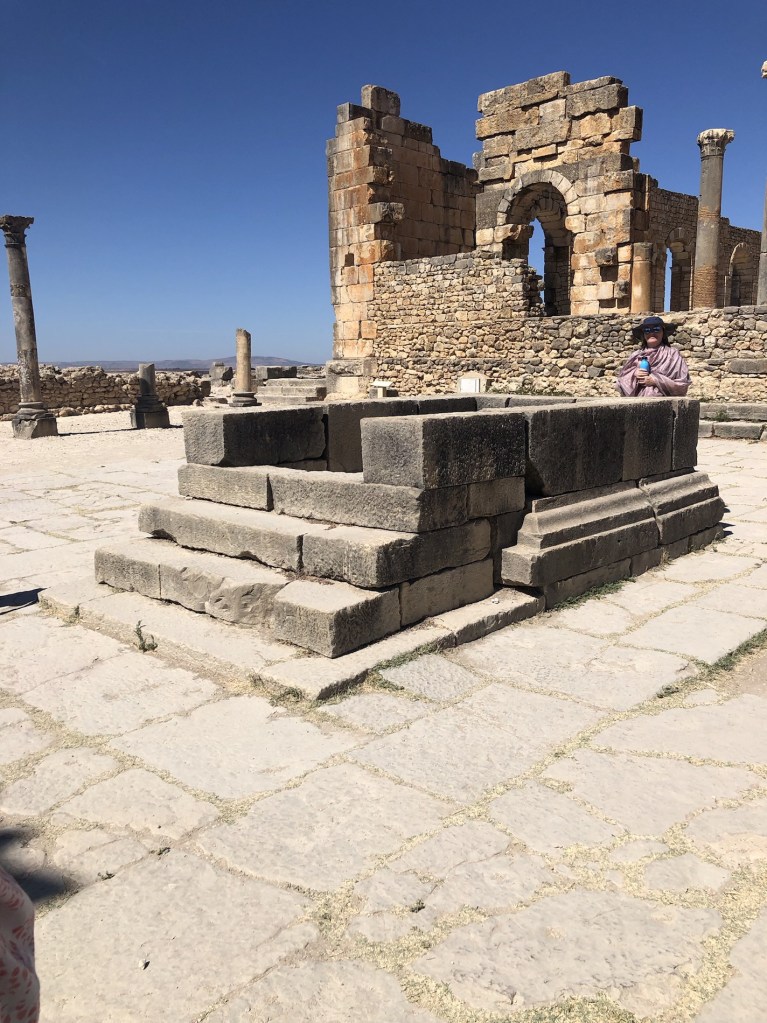
The surrounding area looks like Italy and Sicily. “Suburb” means the outside for poor people. Inside for patricians. 1755 earthquake, Volubilis was intact until then. Volubilis means morning glory. Agave has been planted to prevent soil erosion not for producing tequila. The city centre is the Temple. Storks nest is been taken over by sparrows. The guide said they are “squatters that took over the condominium”. It was occupied by the Romans from 25bc -285 ad.
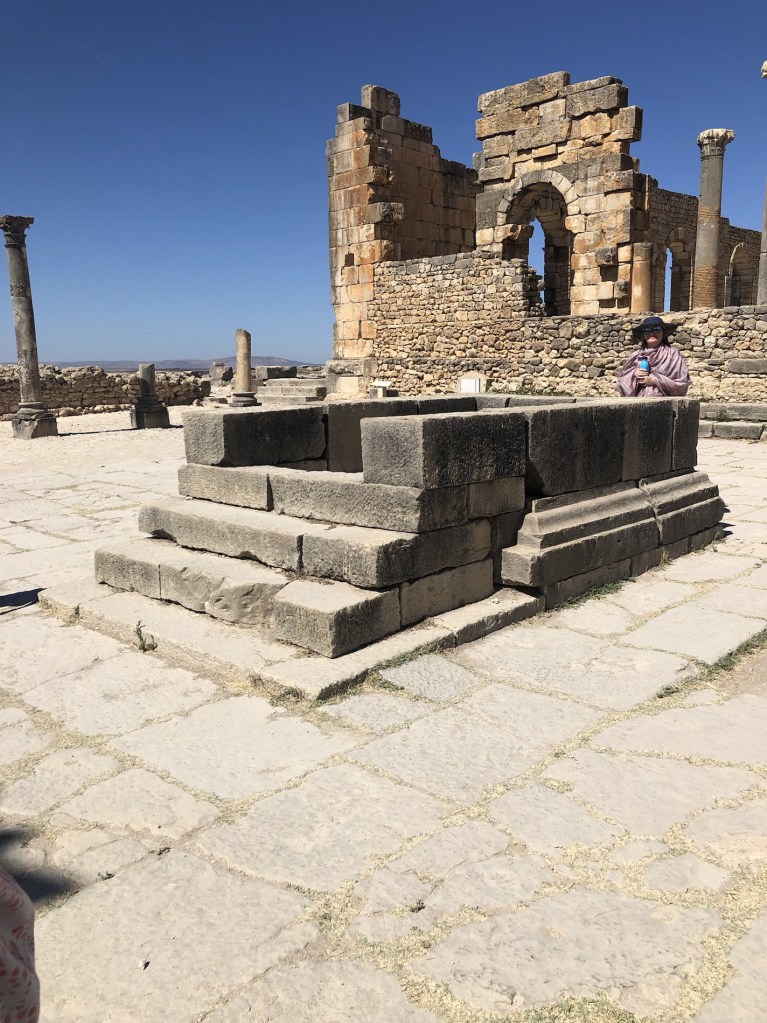
Sacrificial platform
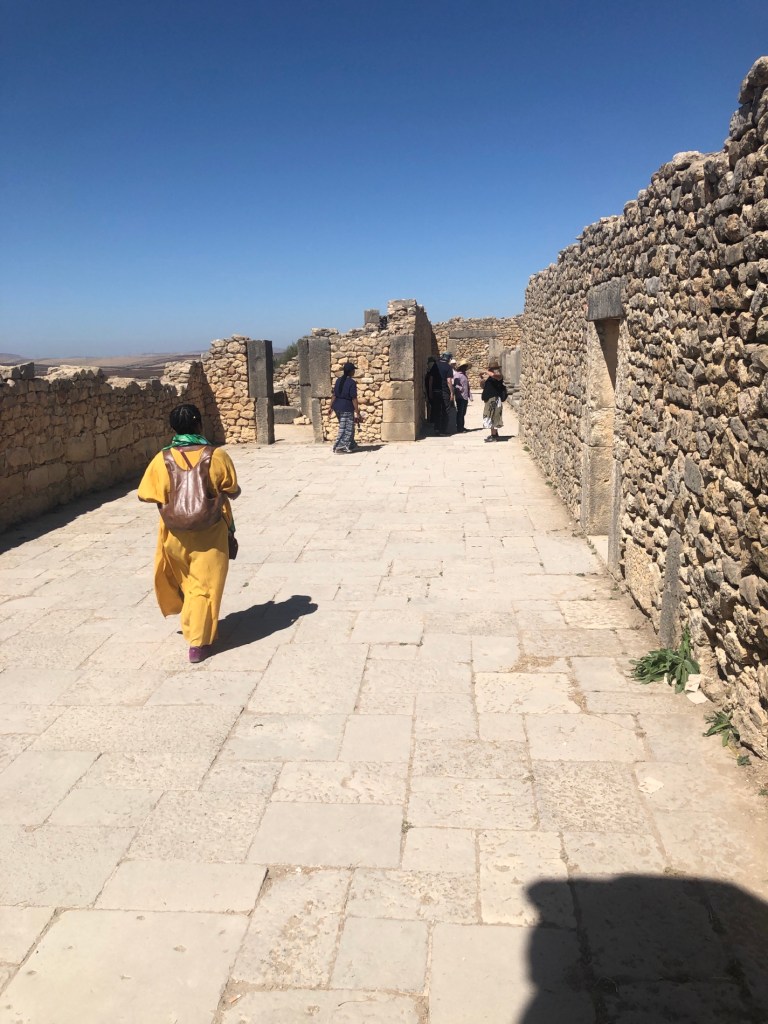
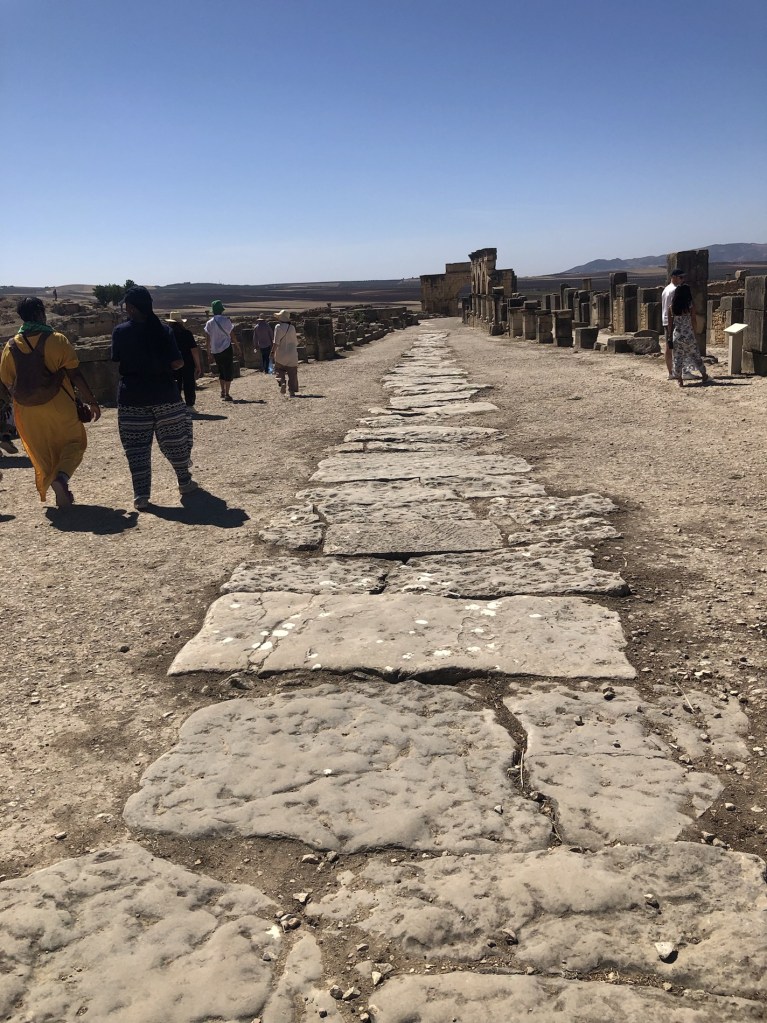
4000 lived inside city. The 15,000 Berber slaves lived outside….In the suburbs. The Citadel or basilica … was most important
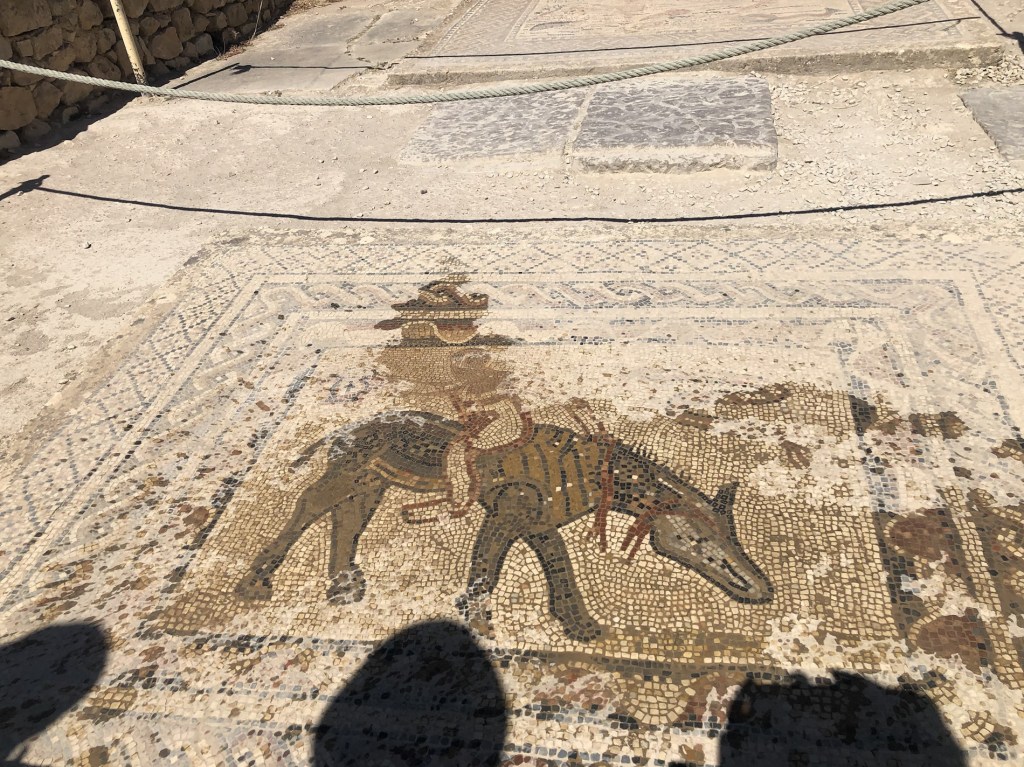
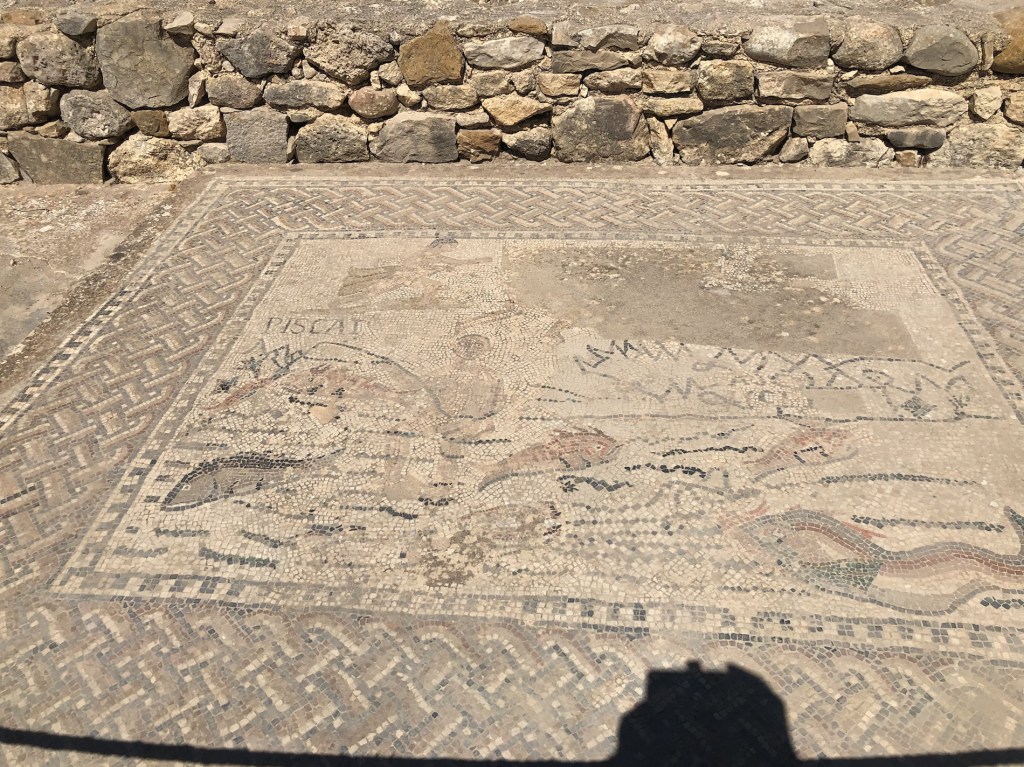
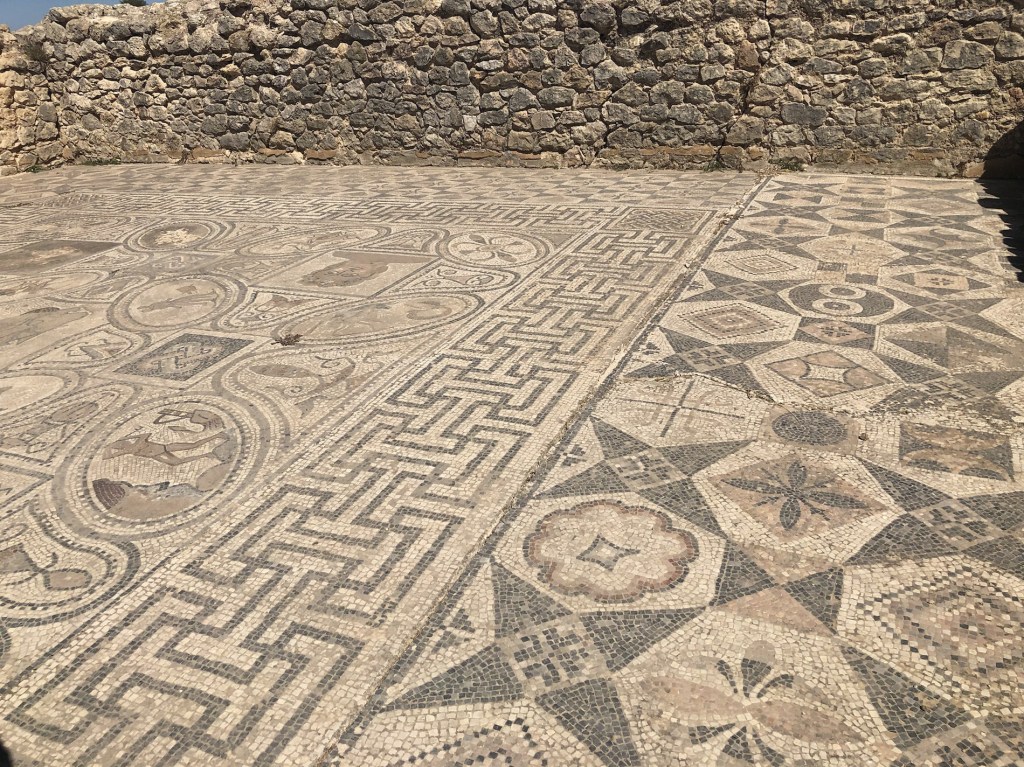
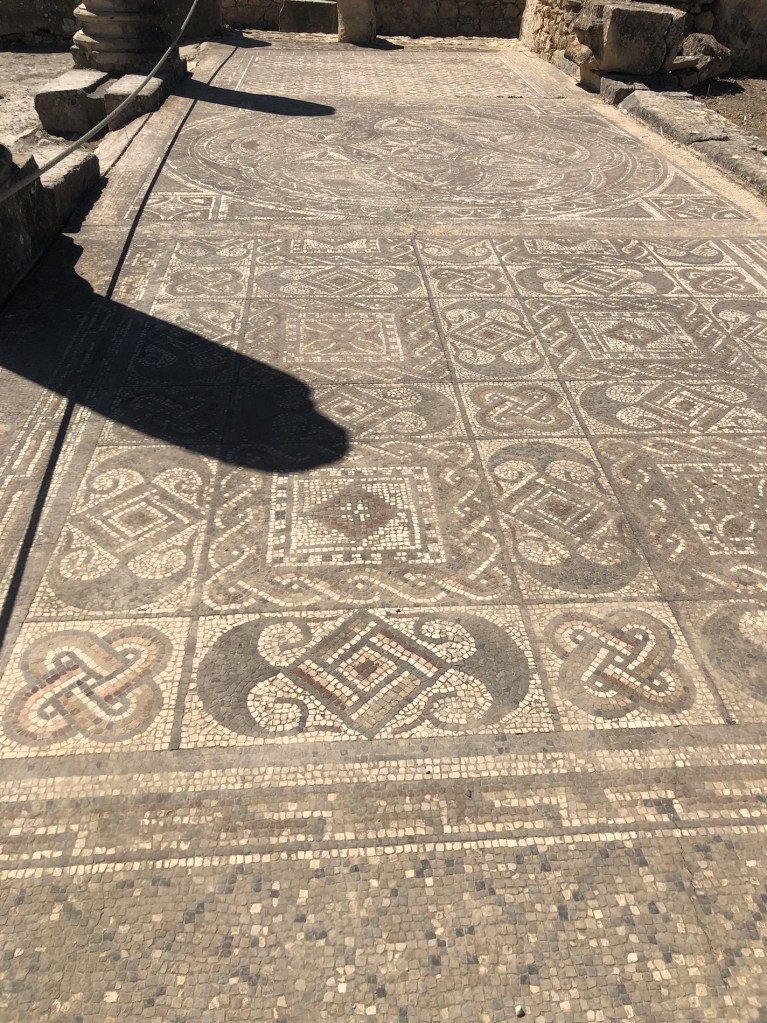
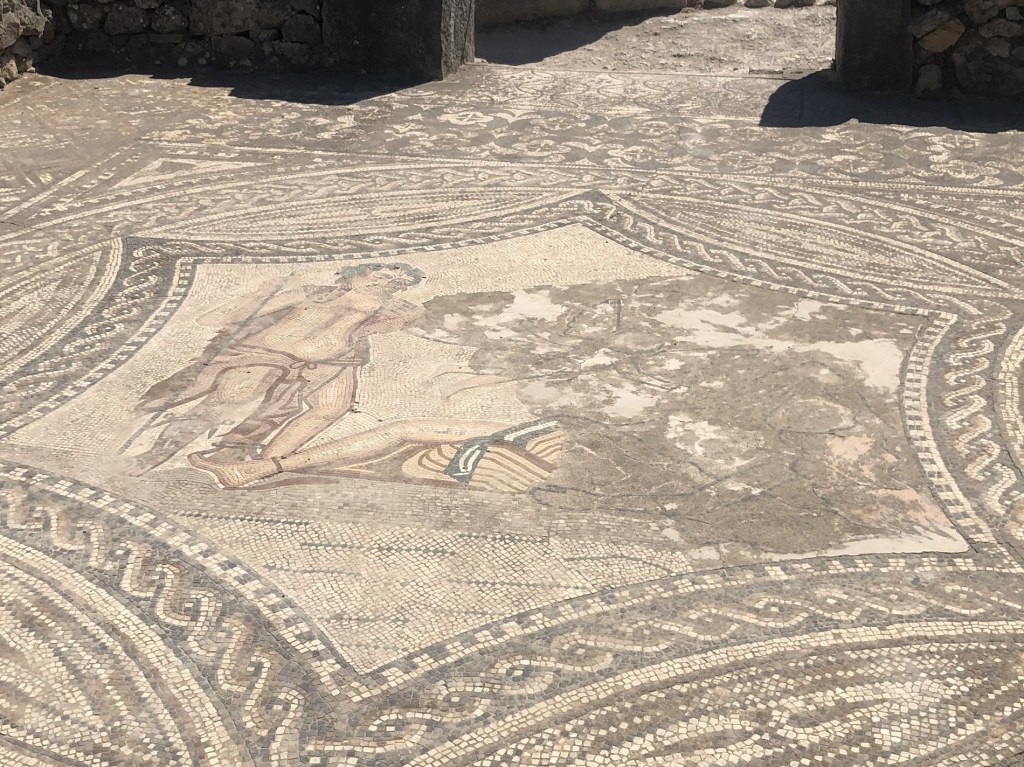
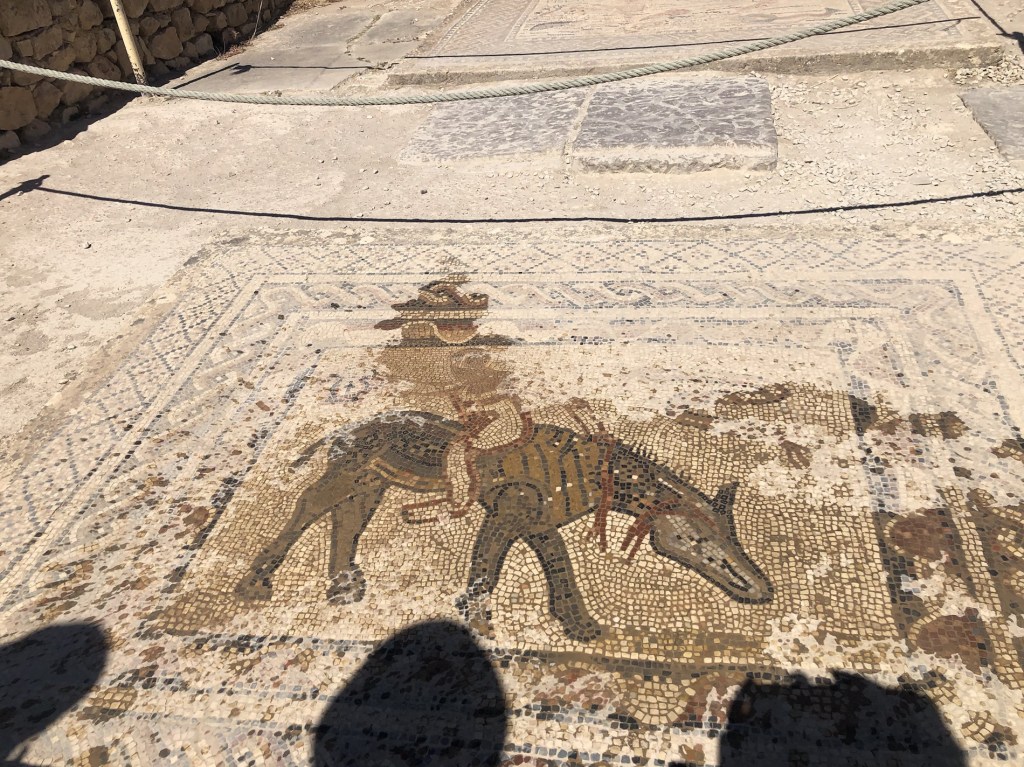
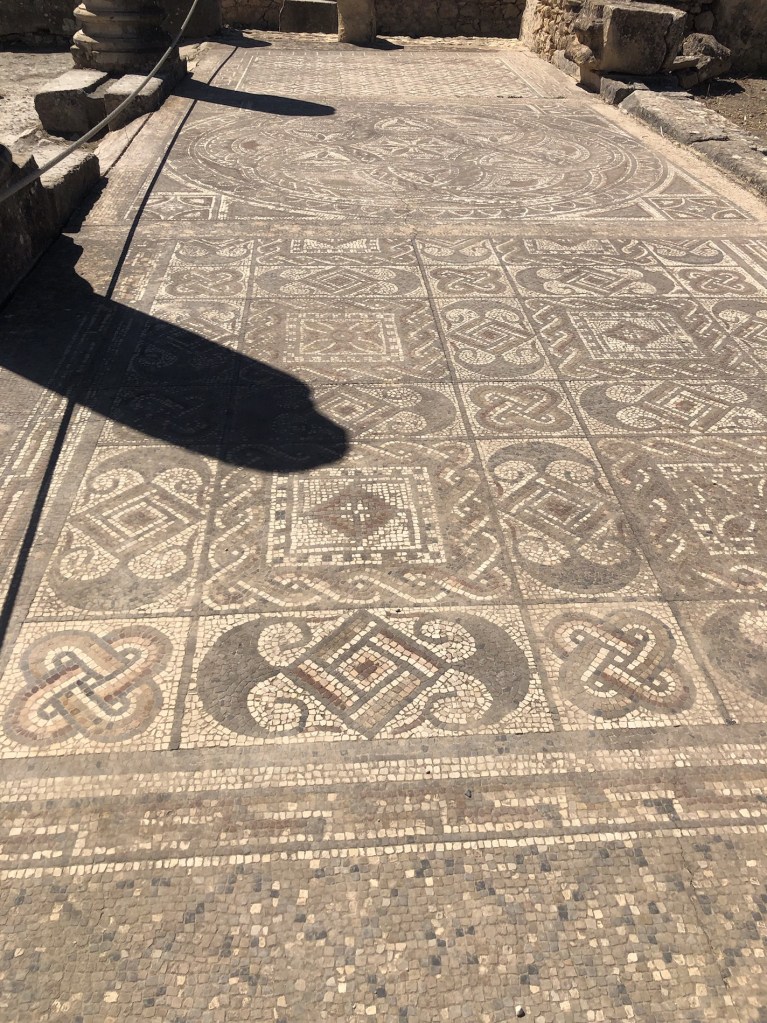
Agora… or forum means open place. (agoraphobia meaning “fear of open spaces”). There were 7 gates with 2.5 kms walls. Volubilis was famous for the mosaic floors of the Peristyle houses…. They were for the aristocracy…… to show off.
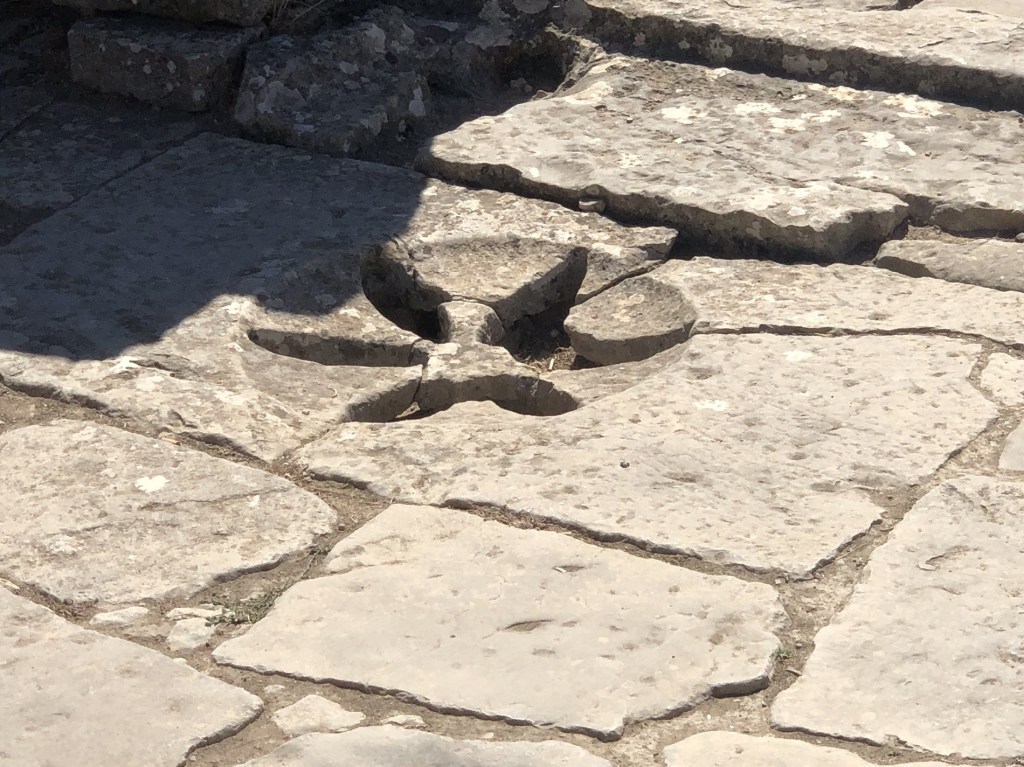
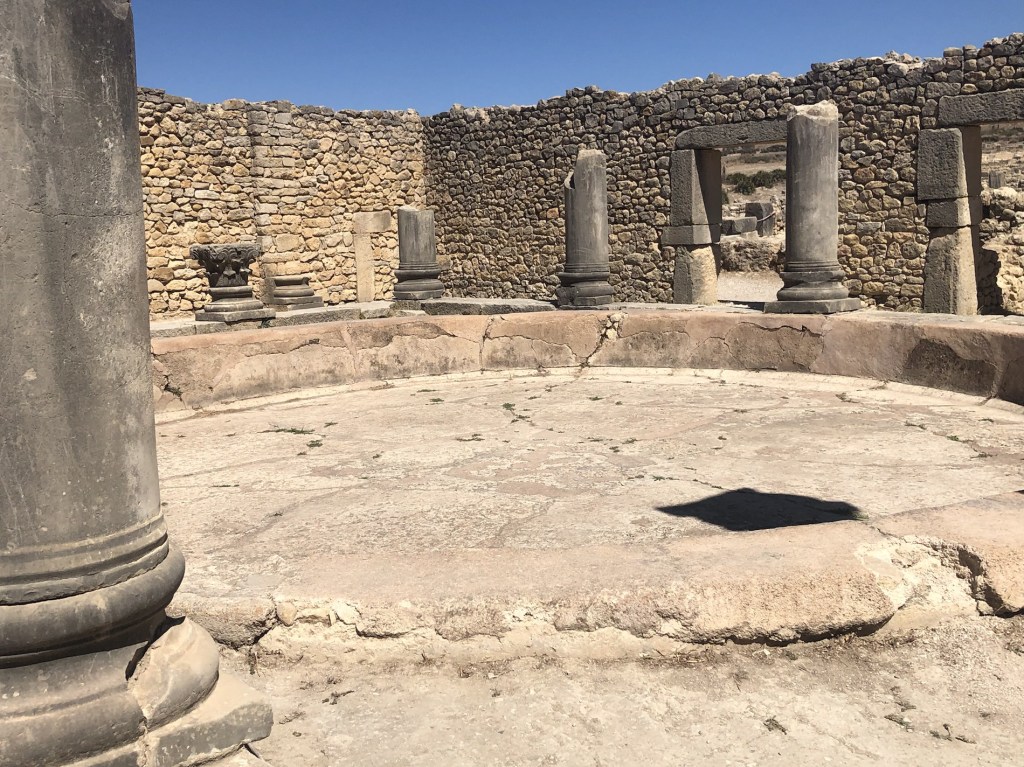
Laundry washing stationNote the spiral columnFine pool in one of the peristyle homes
It is another scorcher again….39C or 102 F plus humidity.
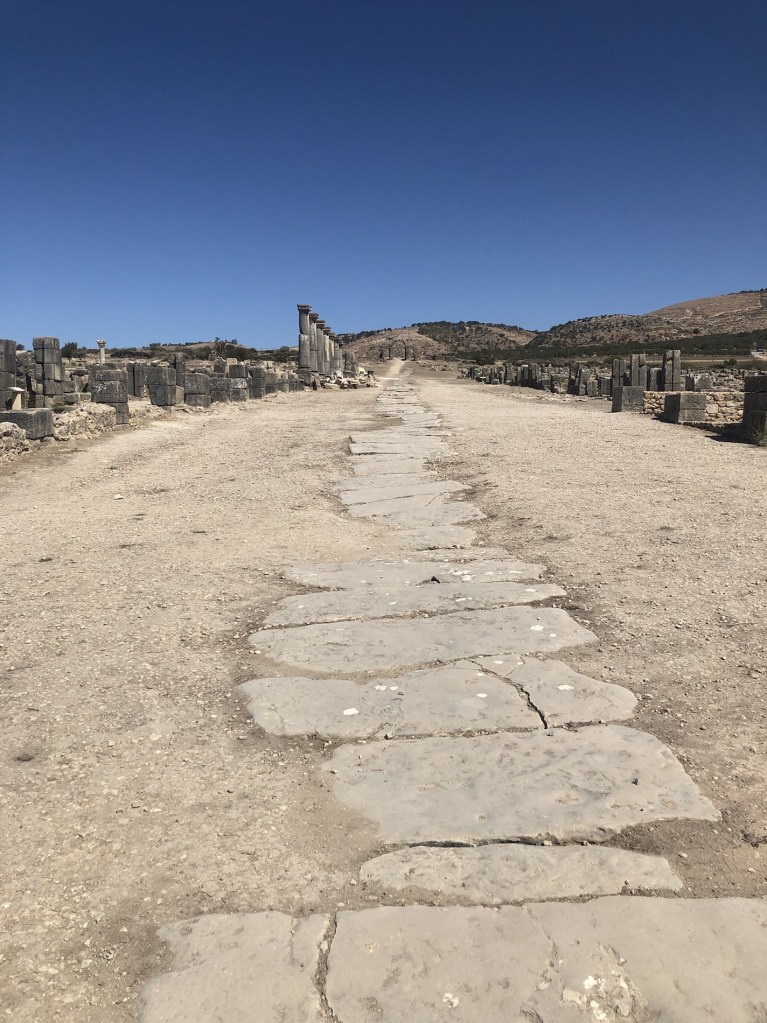
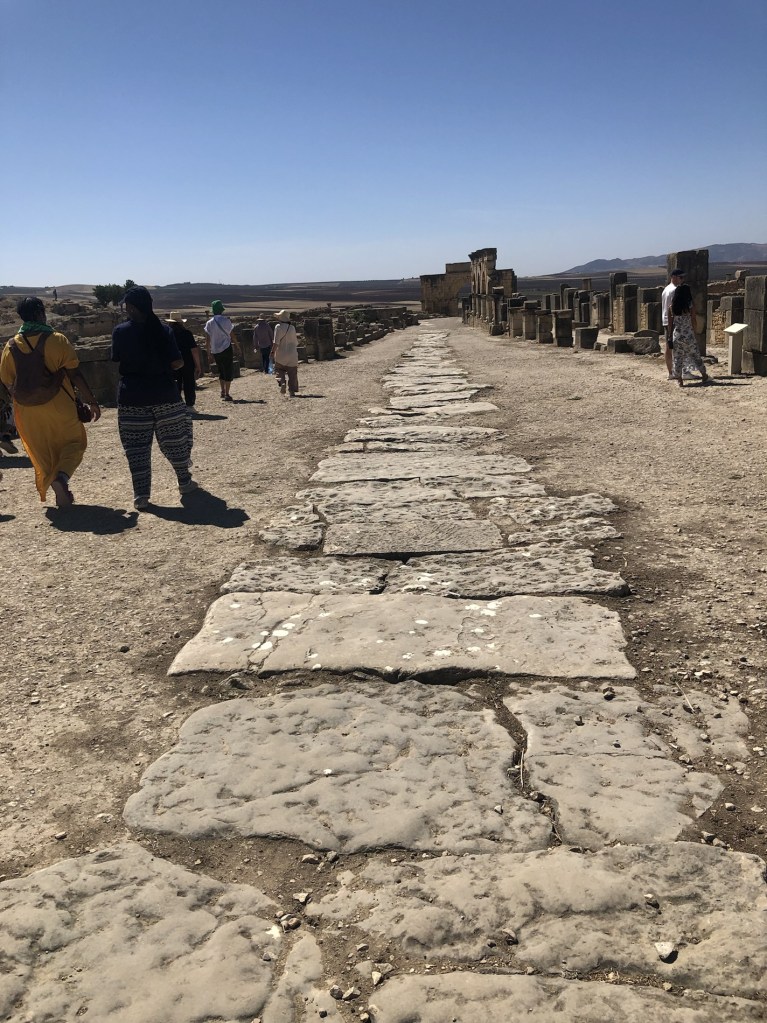
Most well preserved examples of mosaic floorsThe sewer runs under the wide avenue fir the chariots The sewer runs under the wide avenue fir the chariotsThe surrounding countryside could be in Italy or Sicily
The olive trees at the site were all dried and shrivelled because of drought the previous year…. Causes the cost of olives to rise.
We stopped for lunch at Association for women and children. It is a GAdventures sponsored Women’s workshop at M’haya
Meknes-1 million population. It was imperial city in the 17th century
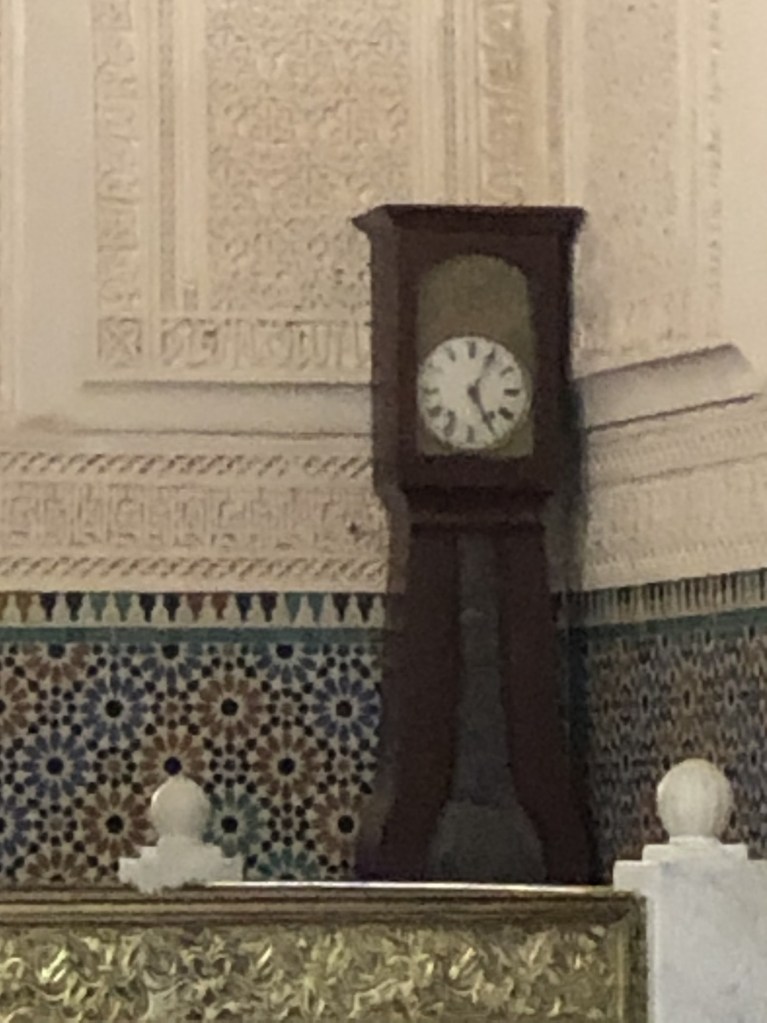
Blue ..Fez; red or gold… Marrakesh , green – Meknes, white-RabatAlice4 clocks … gifts from Louis XIV
Cement plant…. Export to other northern African countries.
2nd longest reigning kingdom in world …. Is the richest family in Morocco at 2.5,000,000,000 dirhams.
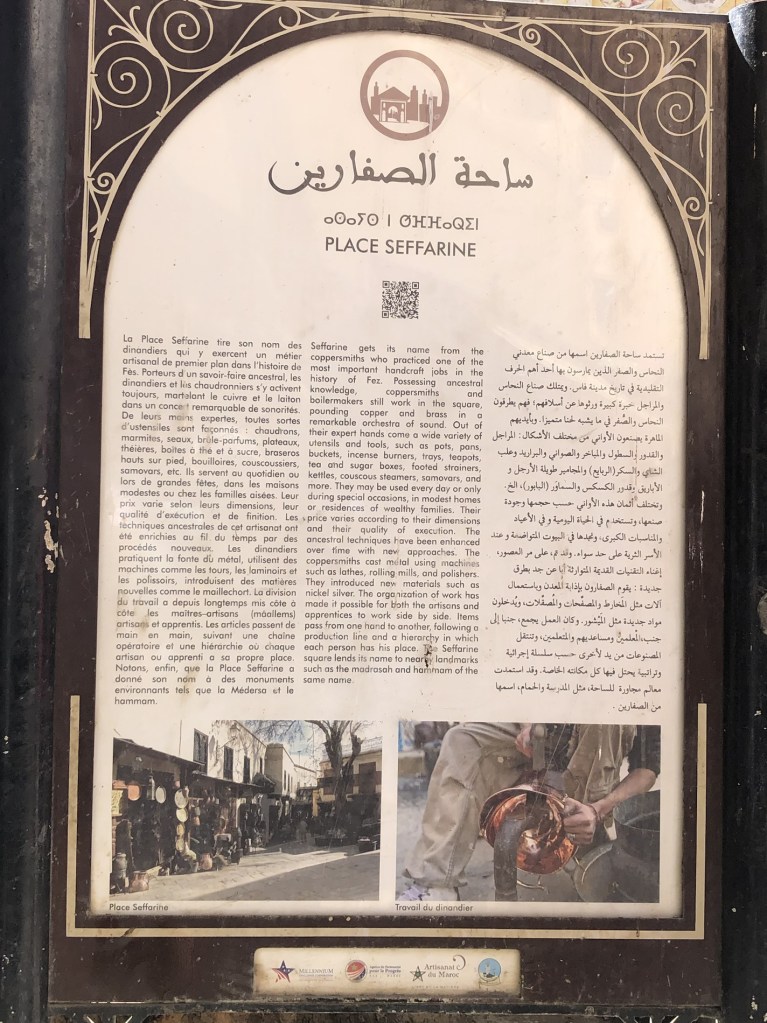
Medina, means walled old city. Each must have a souk meaning market, central square, casbah (seat of power) plus Jewish section. Residual area has bakery, public bath & Mosque. King used 60,000 sub-Saharan slaves to build it. Almost 45 kms of wall …. built in 17th Century.
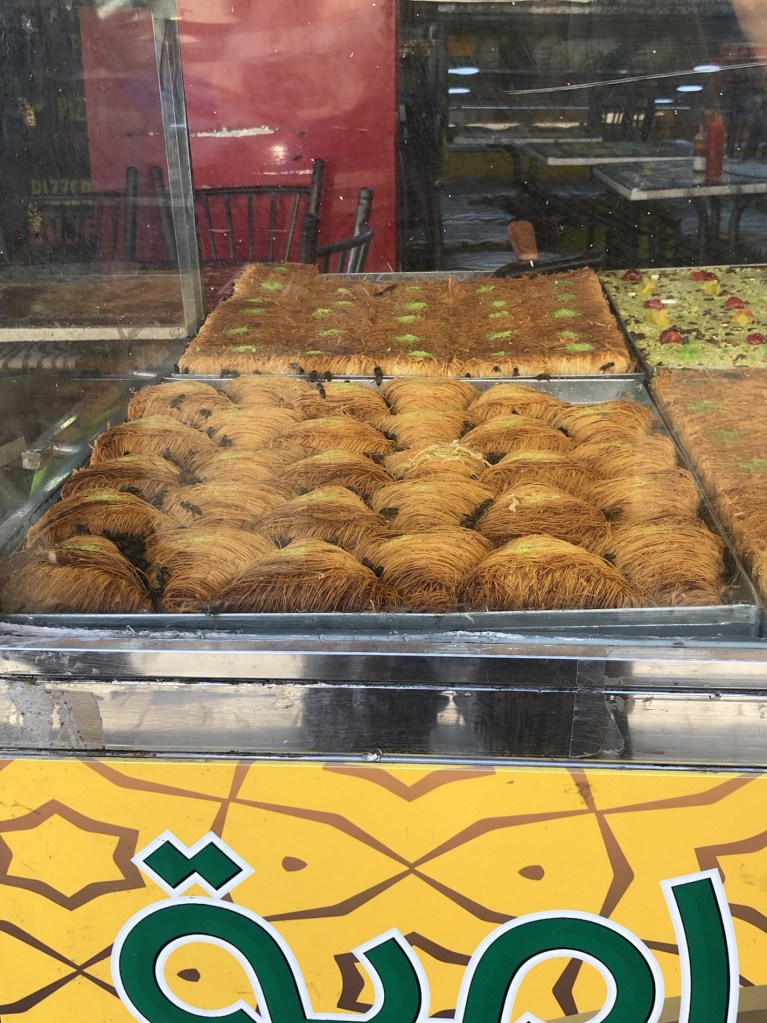
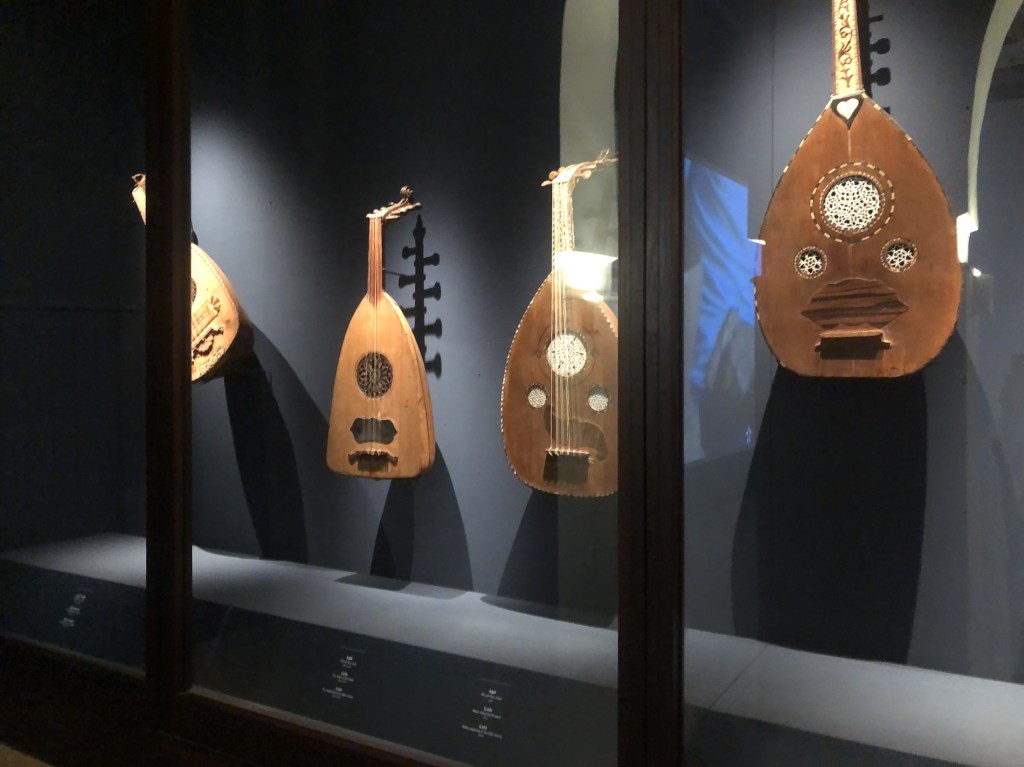
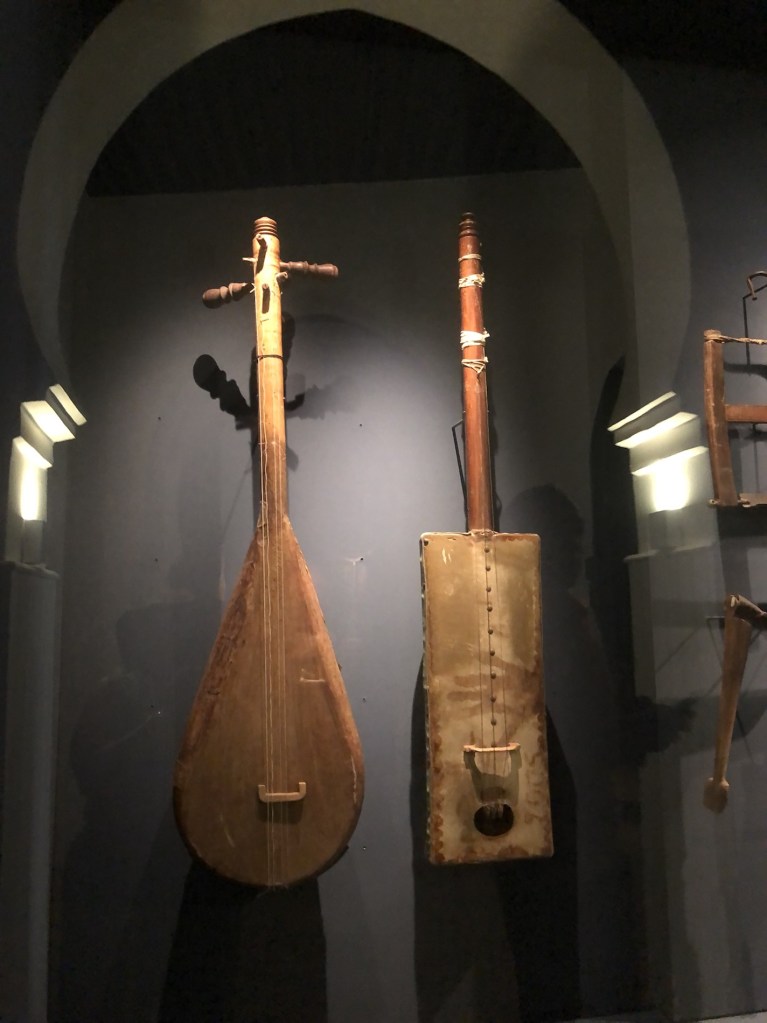
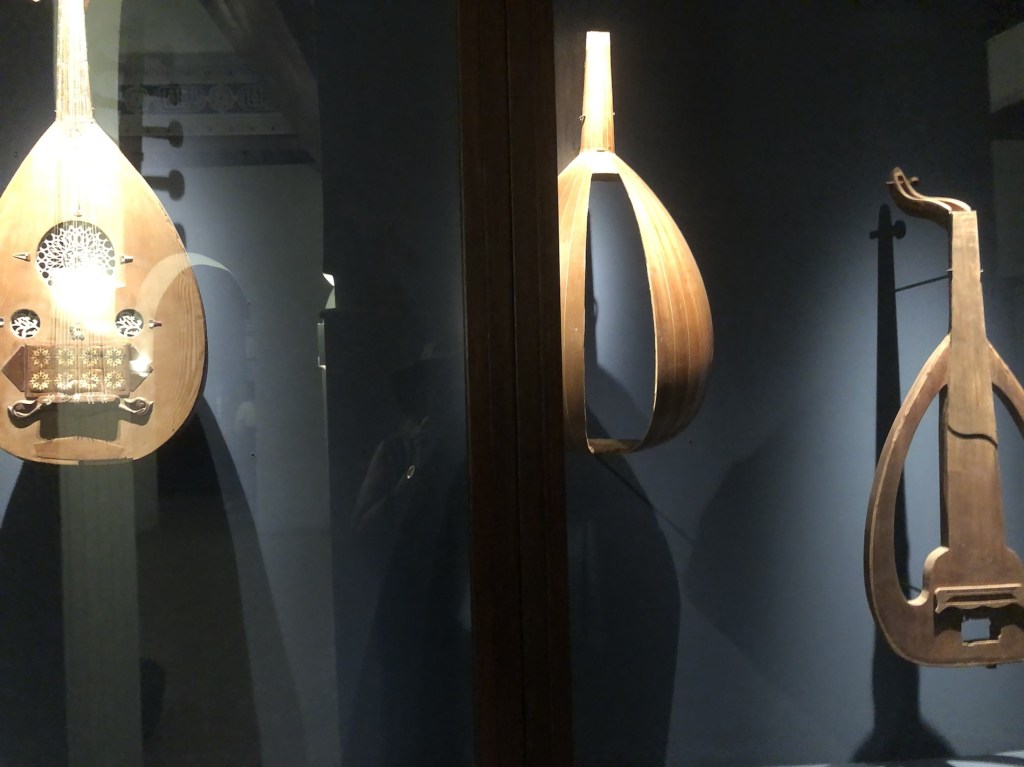
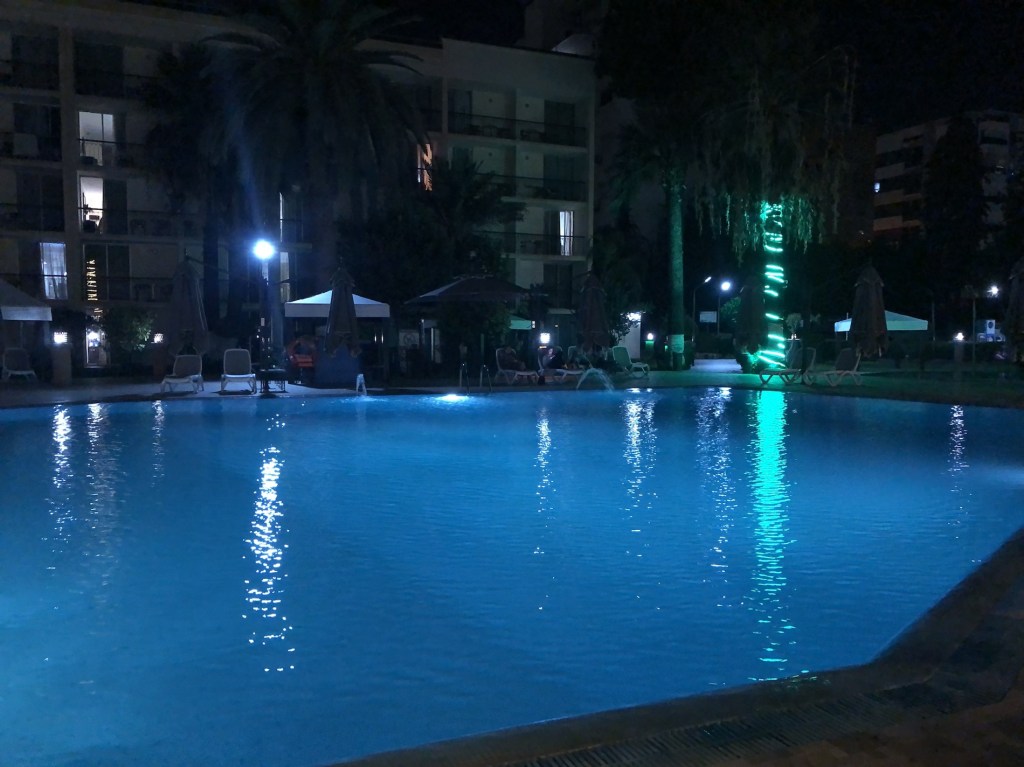
Ventilation hold now used for nesting birdsBees on the the dessert treatsMusic museum piecesThe pool at our hotel… home away from home for 2 nights
Meknes Medina has had world heritage status since 1996.
While driving along the highway, Mustapha our CEO, filled in some info
Rabat… capital city… French chosen capital. Independence in 1961….
Kept Rabat as capital.
Almost every city has a King’s palace.
As we turn inland, we see a national park. There are a forest of oak cork. The bark has been stripped for the cork. Other side has eucalyptus for making paper. This jams the green part of country… is rainy part… the breadbasket. Most farms are not irrigated… depend on the rains that start in October. Lot veggies are exported. They also have vineyards. Major citrus producers. Pomegranates.
There are 12 states.
Little Atlas
Middle Atlas Mountains used for grazing
High Atlas ….highest mountains in North Africa… prevents at 13,600 feet, the Sahara desert from moving further into Morocco 50 +C in desert but freezes and had snow.
Anti-Atlas…. South of High Atlas… volcanic…. No snow, lots of minerals
Berber are the natives… speak Arabic but also own language… are Moslems. 68% of population have some Berber. Large Jewish sector… there are Jewish community centres near kings palace in every city.
Berber and Arabic are 2 official languages. Although French is widely spoken, is the business language but not official. 2011 was when Berber language (a combination of 3 dialects)after being neglected for centuries, was made official and now taught in school. (Looks Greek and is written from left to right unlike Arabic)
There doesn’t seem to be much in the way of garbage. Actually I saw someone picking up garbage with those pinchy things for picking up stuff. The farms are very organized… could be somewhere in North America although I did see “a” farmer using a horse and hand plow. Better that than the poor women with hoes hacking the dirt on the mountainsides in Uganda.
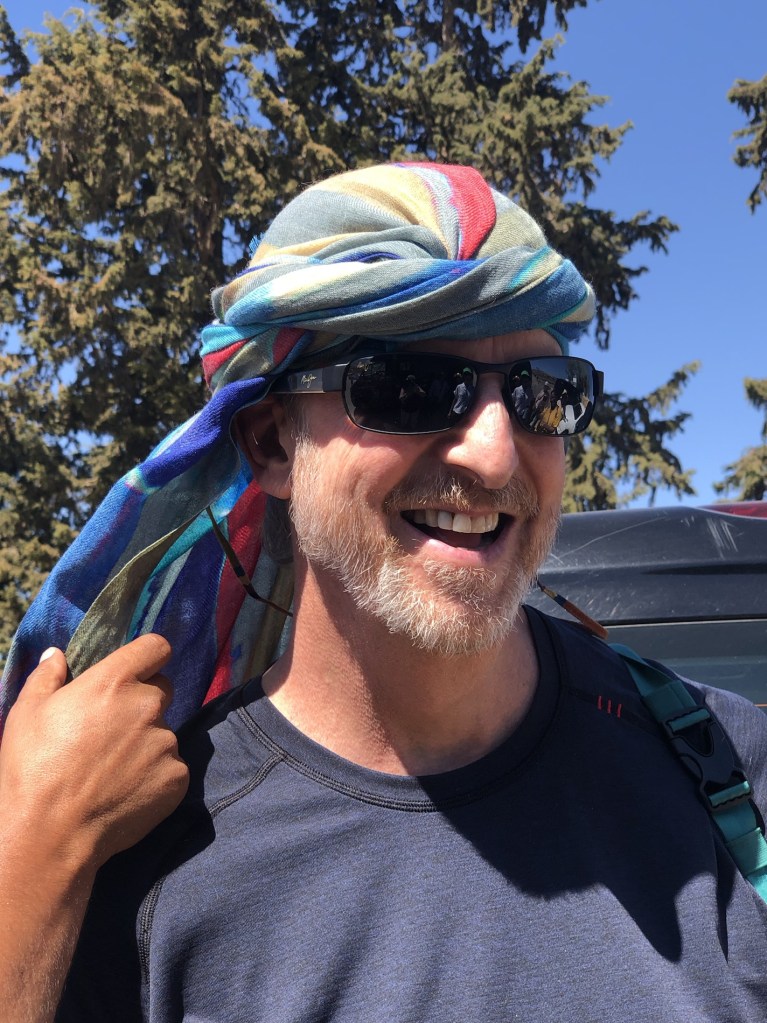
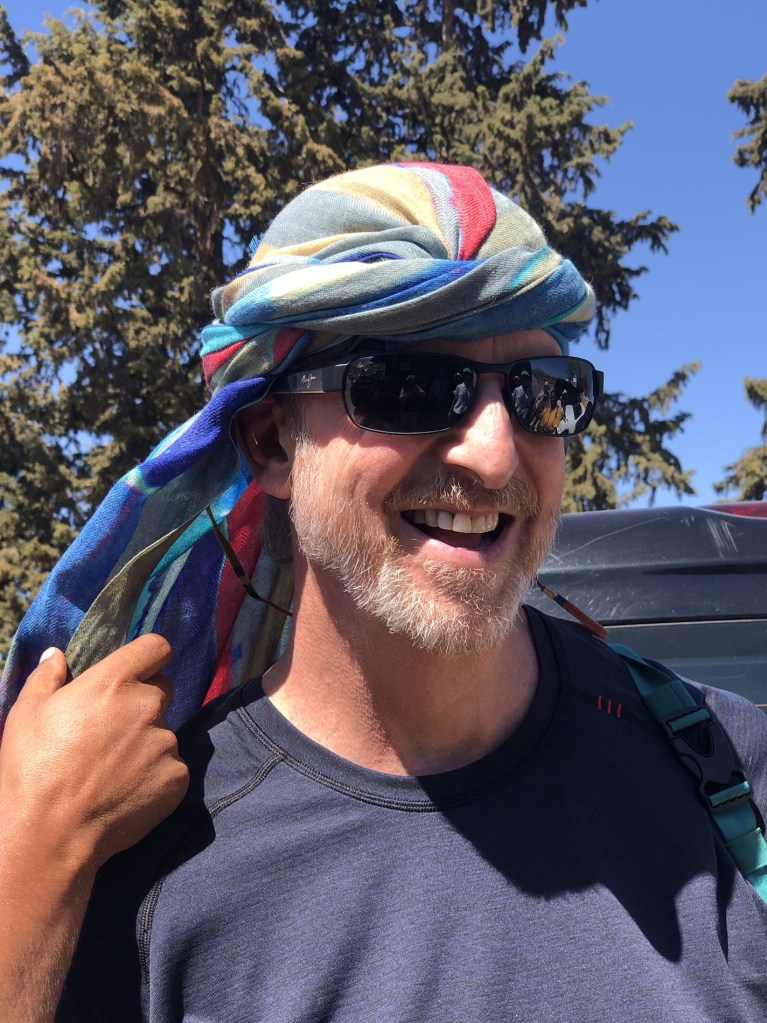
Our sole male of the group with Arab head gear
4th producer of olive oil in Mediterranean. Meknes state
Volubilis -had been inhabited since 3rd C BC-is a world heritage site …. Roman. Only inland site. 350 kms from sea. Limestone twisted pillars.
First was Berber, then Roman and finally Arab… first introduced Moslem here in the 8th century. Earthquake in 18th century buried… discovery by French starting in 1915.
The surrounding area looks like Italy and Sicily. “Suburb” is the outside for poor people. Inside for patrician. 1755 earthquake intact until then. Volubilis means morning glory in English. Agave has been planted to prevent soil erosion not for producing tequila. The city centre is the Temple. Storks nest is been taken over by sparrows. They are squatters that took over the condominium. It was occupied by the Romans from 25bc -285 ad.
Sacrifice platform
4000 lived inside city. The 15,000 Berber slaves lived outside….In the suburbs. The Citadel or basilica … was most important
Sewer drain
Agora… or forum means open place. (agoraphobia… fear of open spaces). There were 7 gates with 2.5 kms walls. Volubilis was famous for the mosaic floors of the Peristyle houses…. They were for the aristocracy…… to show off.
Example of mosaic tile floors…so impressiveBath in one of homes Sewer u dear wide avenue used for chariots
I’ll have to post more pictures another time….too frustrating ….sorry again!
It is another scorcher again….39C or 102 F plus humidity.
The olive trees at the site were all dried and shrivelled because of drought the previous year…. Causes the cost of olives to rise.
Association of women and children
Lunch at a GAdventures sponsored Women’s workshop at M’haya
Meknes-1 million population. It was imperial city in the 17th century
Cement plant…. Export to other northern African countries.
2nd longest reigning kingdom in world …. Is the richest family in Morocco at 2.5,000,000,000 dirhams.
Medina , means old city. Has souk meaning market, central square, casbah (seat of power) plus Jewish section. Residence area has bakery, public bath & Mosque.
King used 60,000 sub-Saharan slaves.
Almost 45 kms wall …. built in 17th Century
Meknes Medina has had world heritage status since 1996.
Our CEO will be Mustapha….. nice guy that speaks wonderful English. All the people on tour (12) with the exception of one gal from Australia and us 3, are from the US.
We did nothing today but sleep in, get money from the ATM and rest up. I have not taken a take-a-break til today.
We got in late last night….. probably somewhere between 2-3am before hitting the pillow.
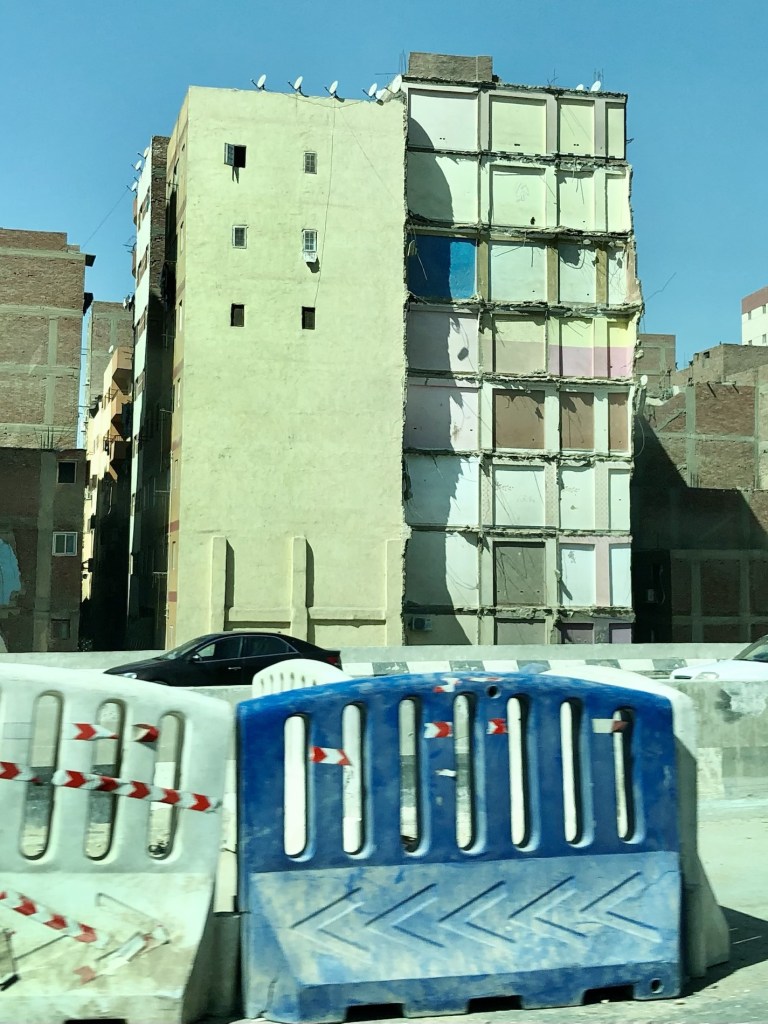
Street level of this area… not too far from the waterfront, is not too bad but looking at the surrounding area from the 14th and 17th floor, it looks like war torn zone with all the abandoned derelict buildings.
Mohamed picked us up to go to airport at 6:30 am… not too early. Traffic was light …. the city is quite small so it was easy. The airport was pretty easy too other than they wanted to see tickets (that are non-existe but are in the system and attached to our passports). That was a little angst creating but got through it. The rest was a breeze. I have to say that Luxor is like alparadise compared to much of the Middle East. It is an oasis in the desert.
It was only an hour on the flight to Cairo.
Kahleb picked us up as prearranged and took us to McDs for some breaky….. the slowest service ever!!
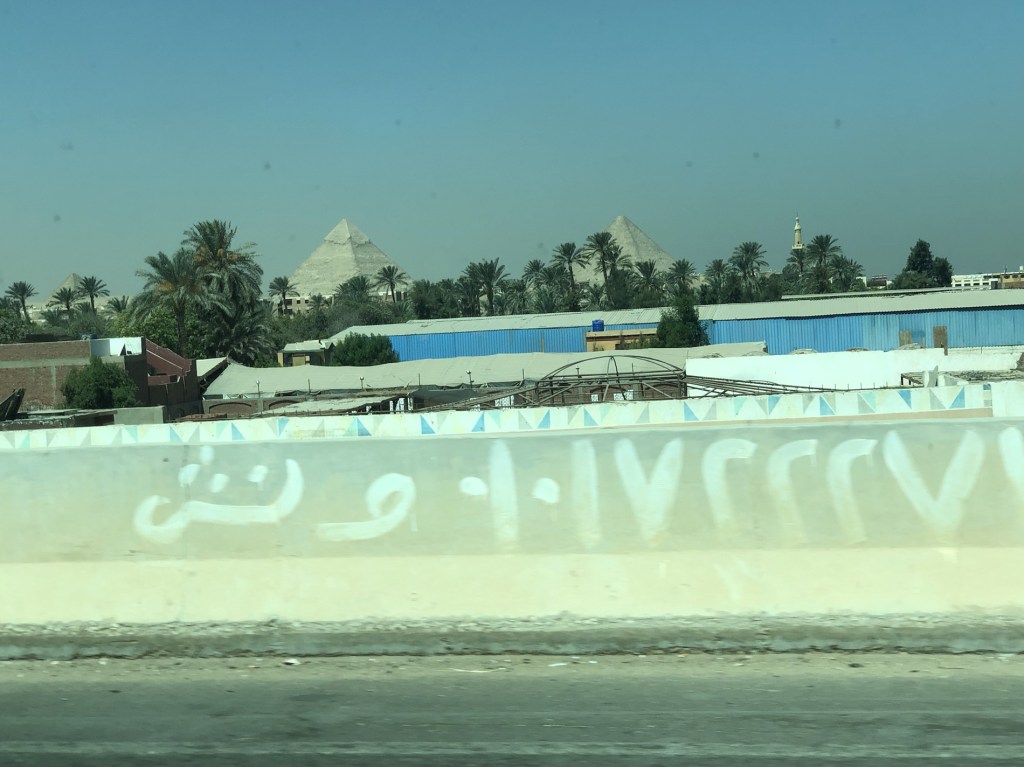
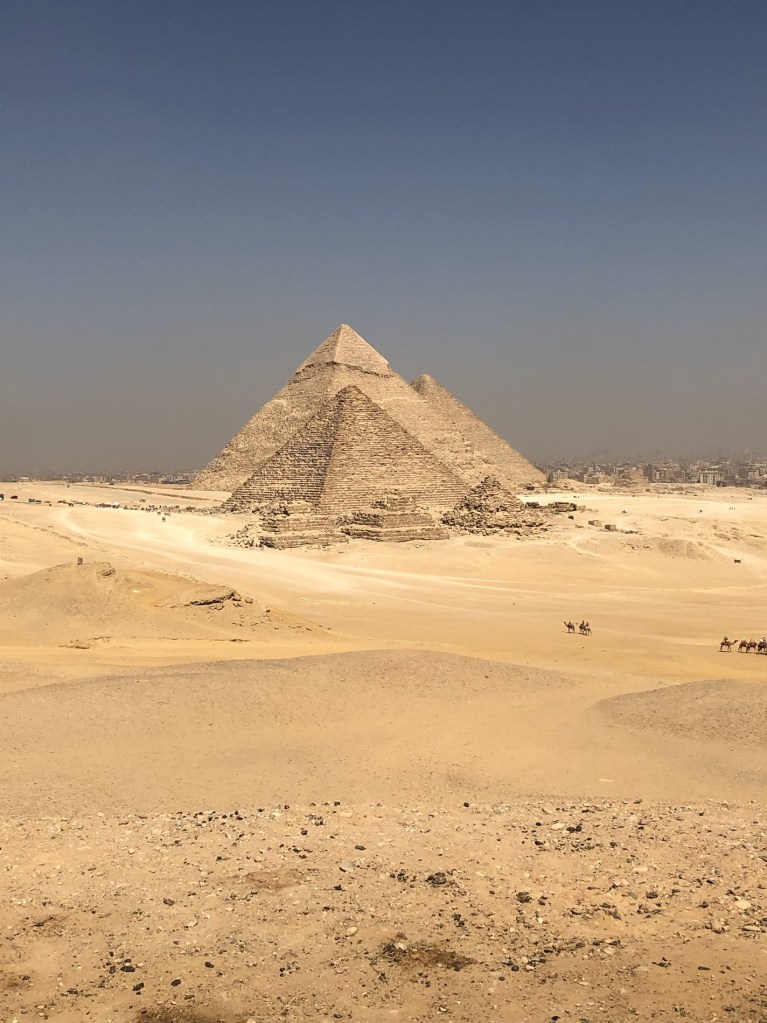
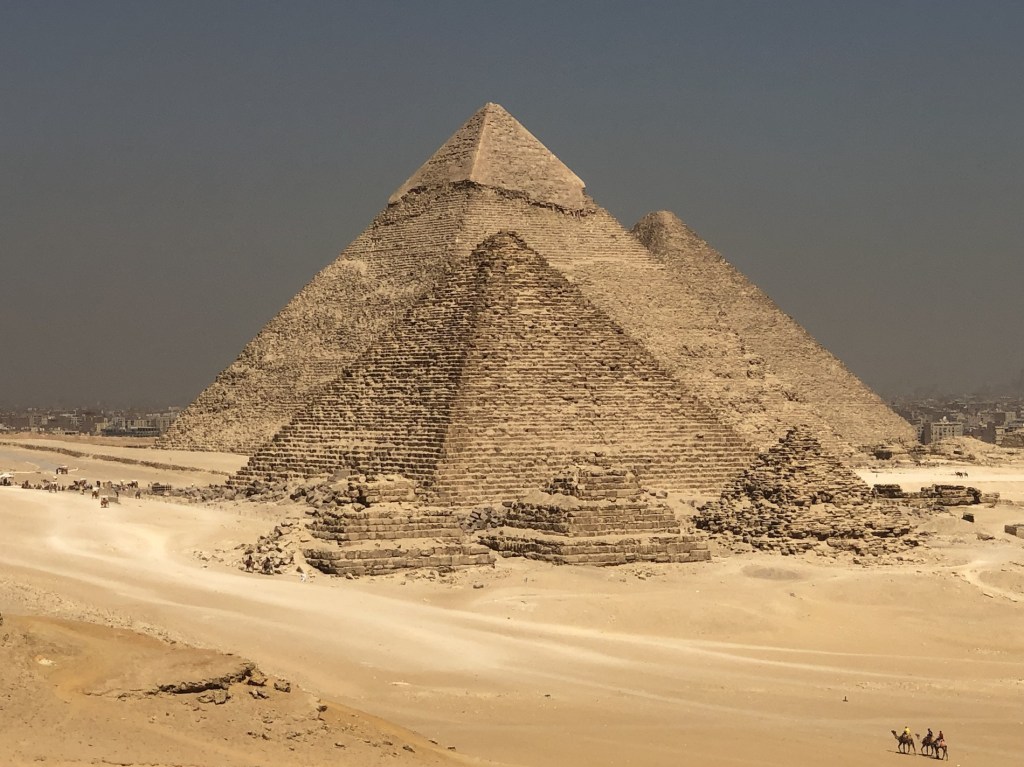
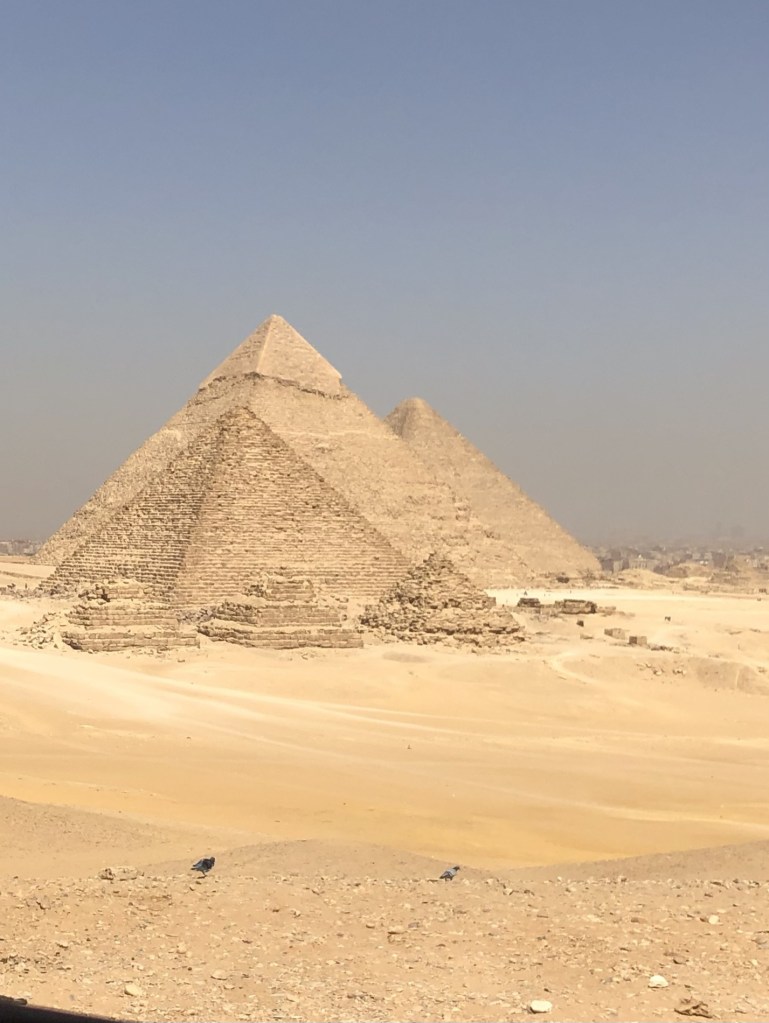
We are heading to the pyramids. OMG this city is humongous….. about 19 million. So many highways and so many apartments…. They all seem to be less than 12 stories.
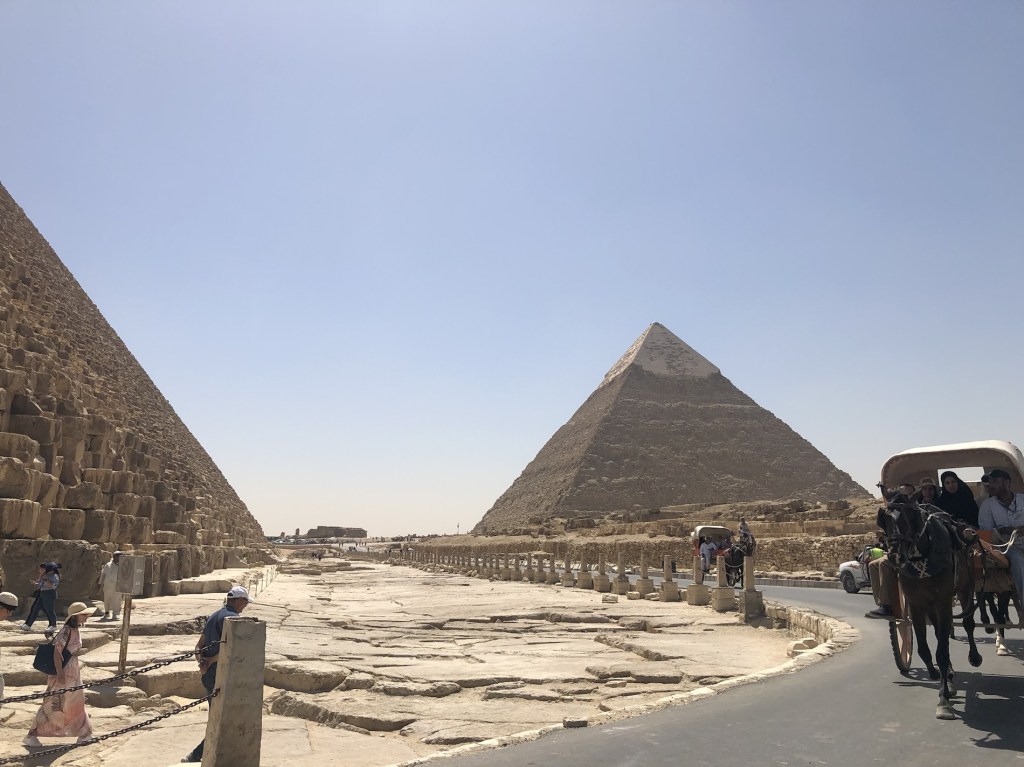
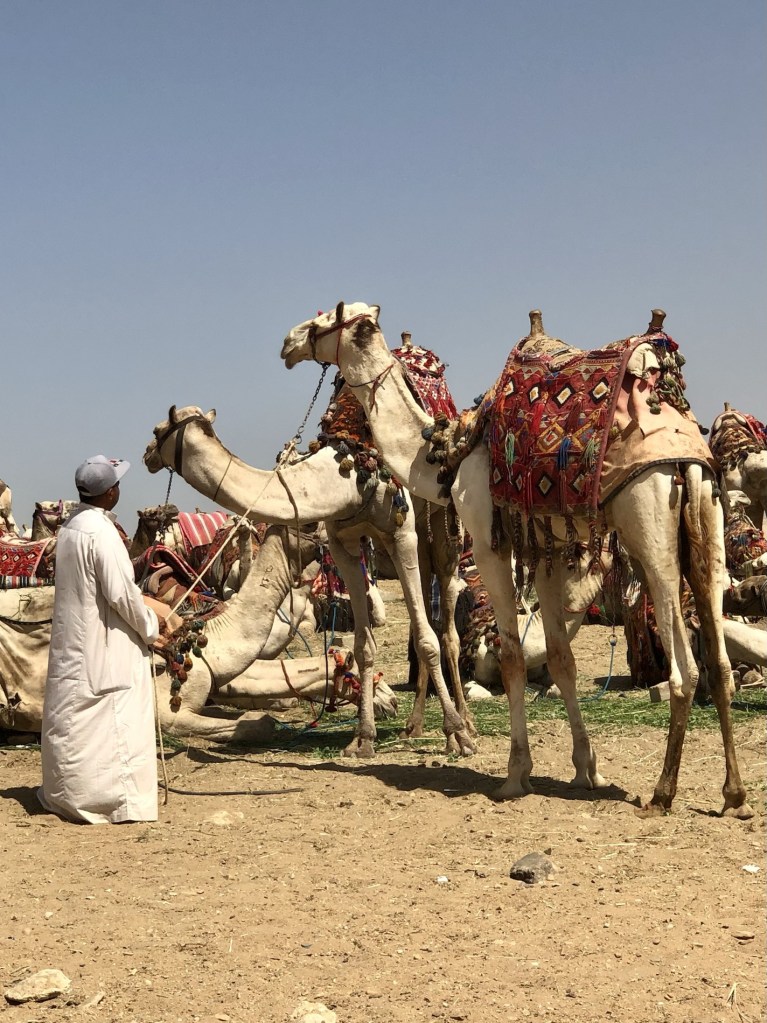
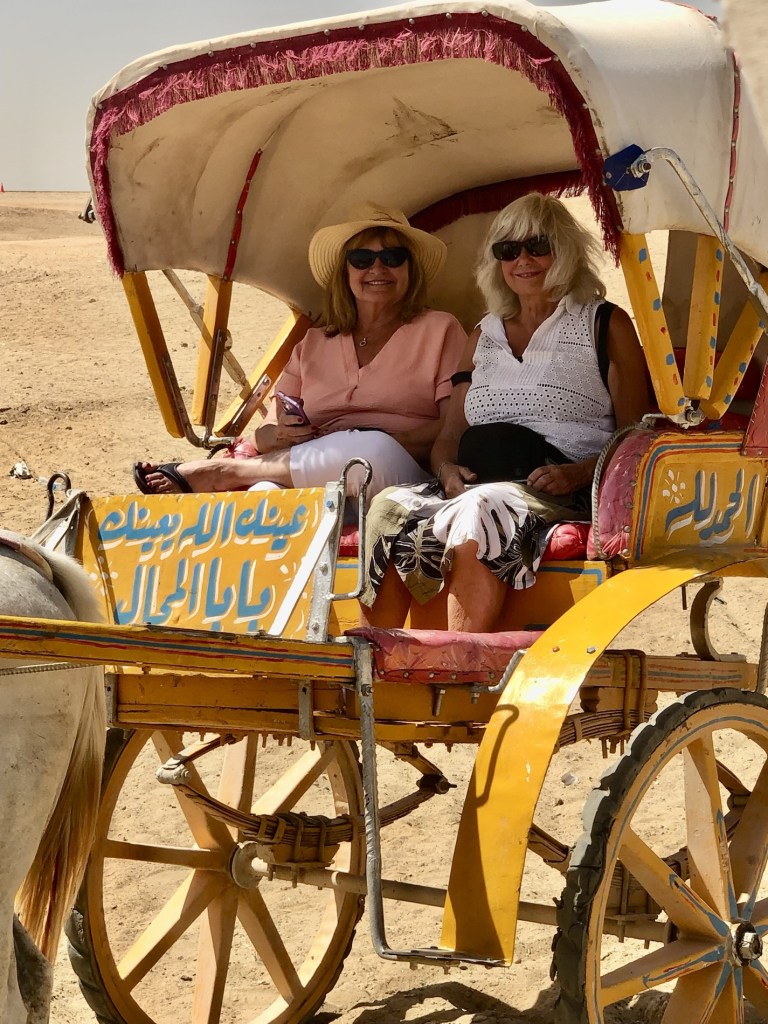
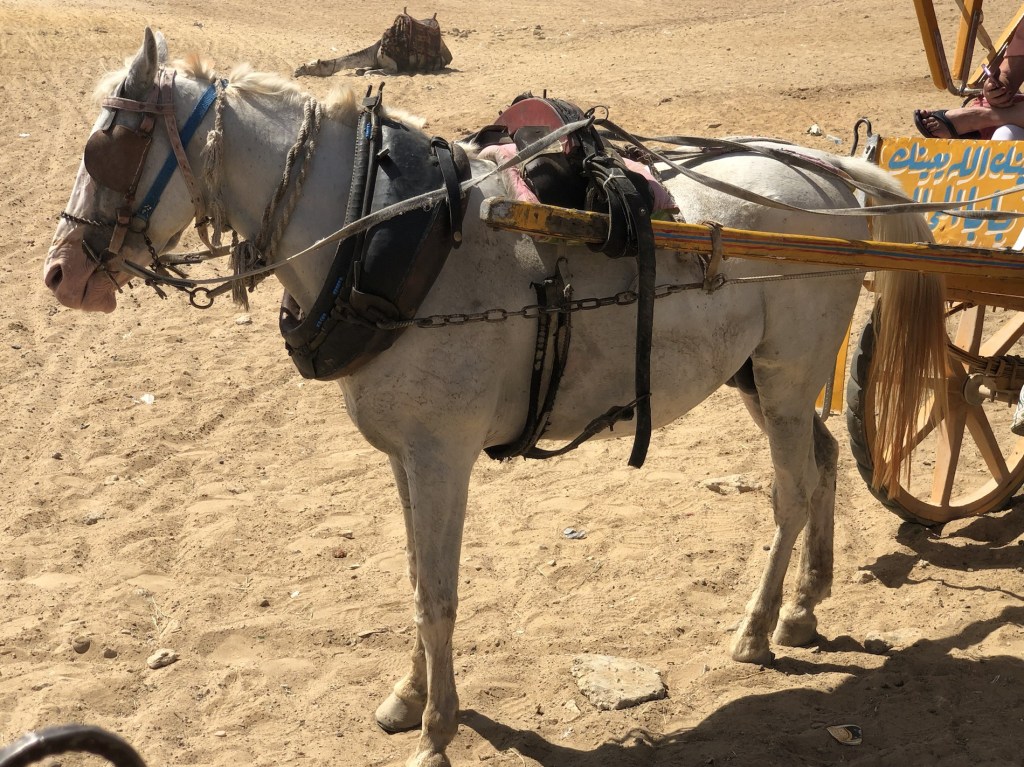
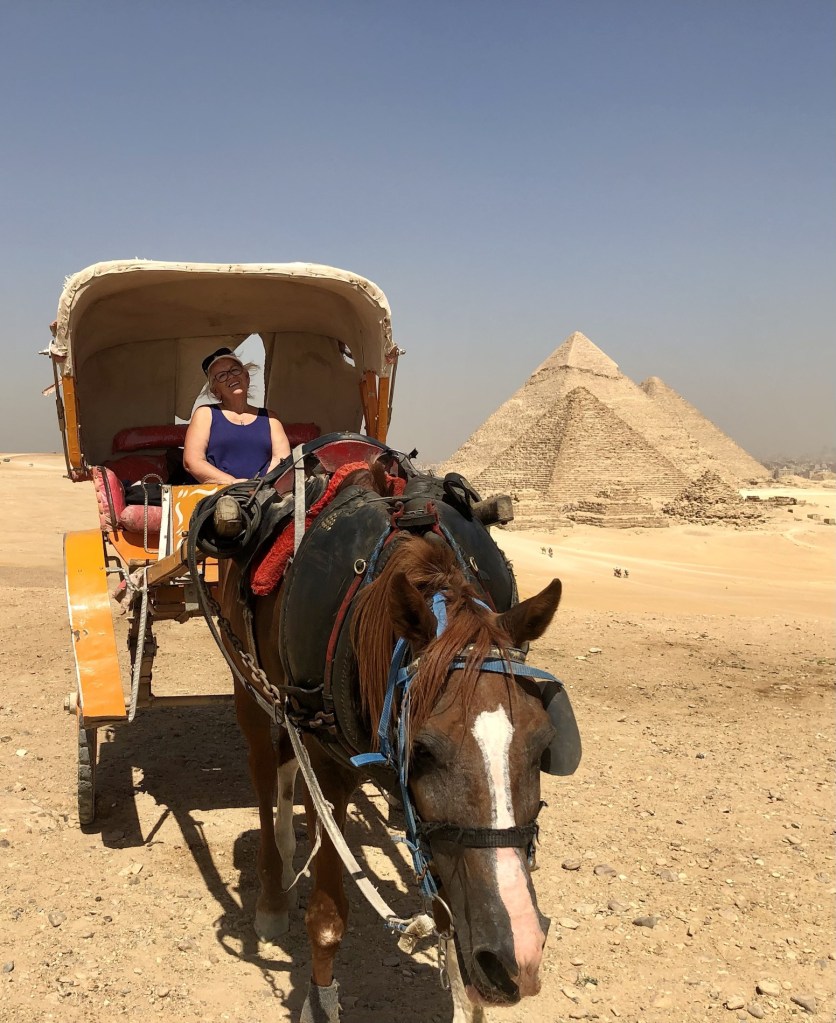
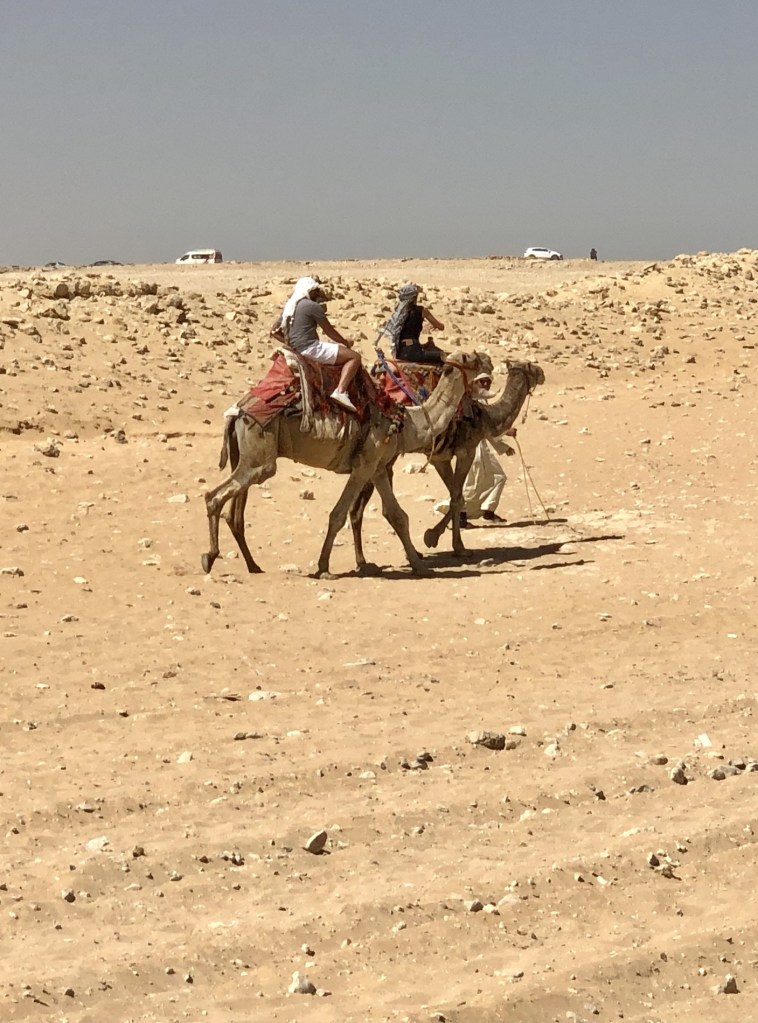
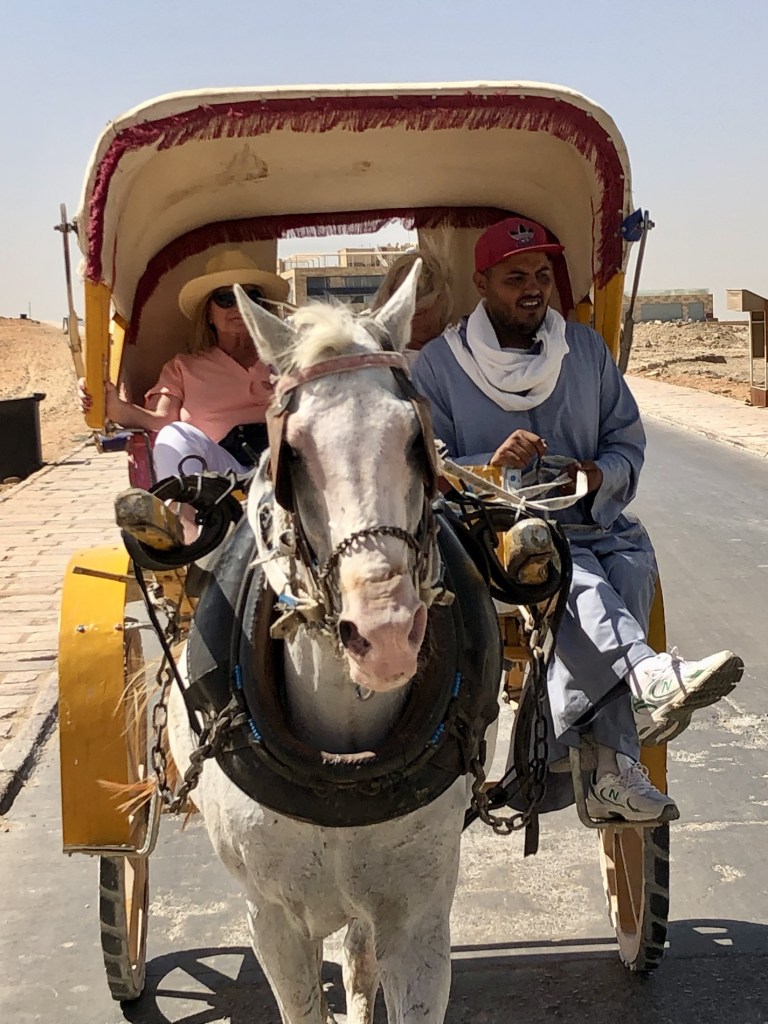
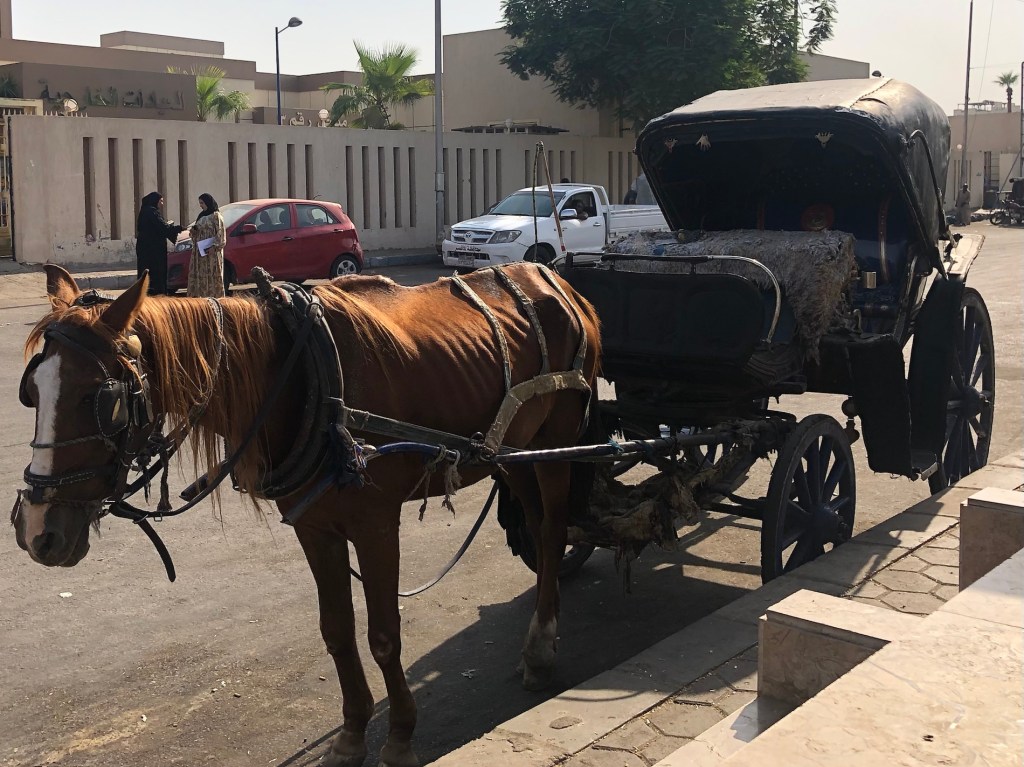
Took a horse and buggy…. OMG what a dilapidated buggy and poor starving horse (rib cage showing)!!! Up and around the pyramids.
There they park ….. off in the distance. Linda and Marilyn Me (Gail)The Pyramids of Giza The Sphinx…. Please click on picture to actually see it. It is really quite small.
50USD for an hour of being jarred and then they want tip on top…!!! Some people are thinking this is all terrific. I just want to go home. It is annoying the hell out of me everyone with their hands out.
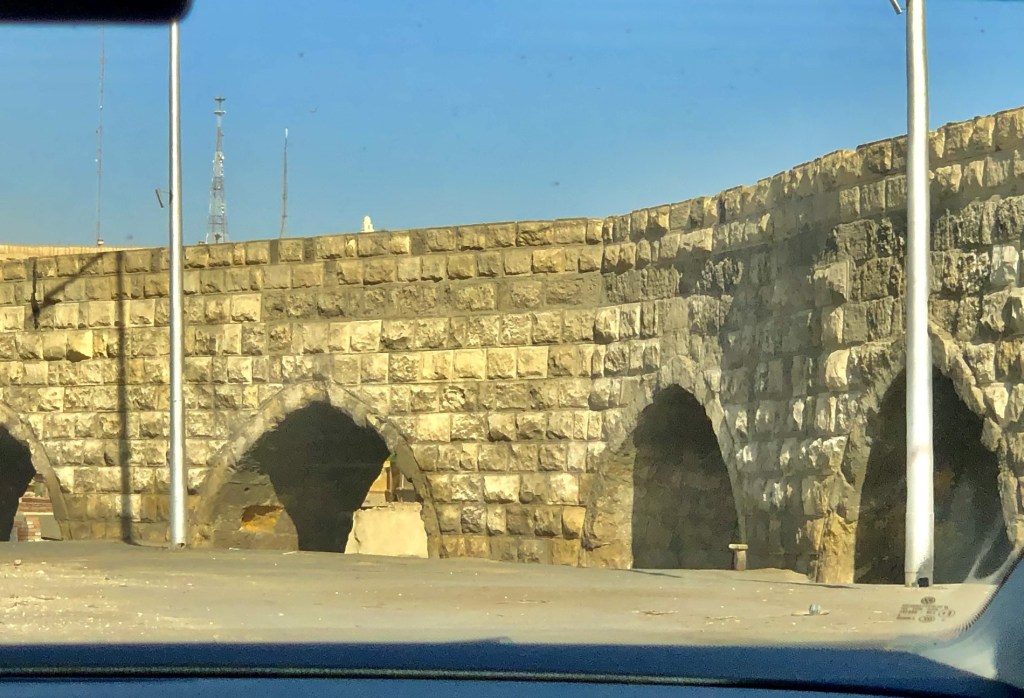
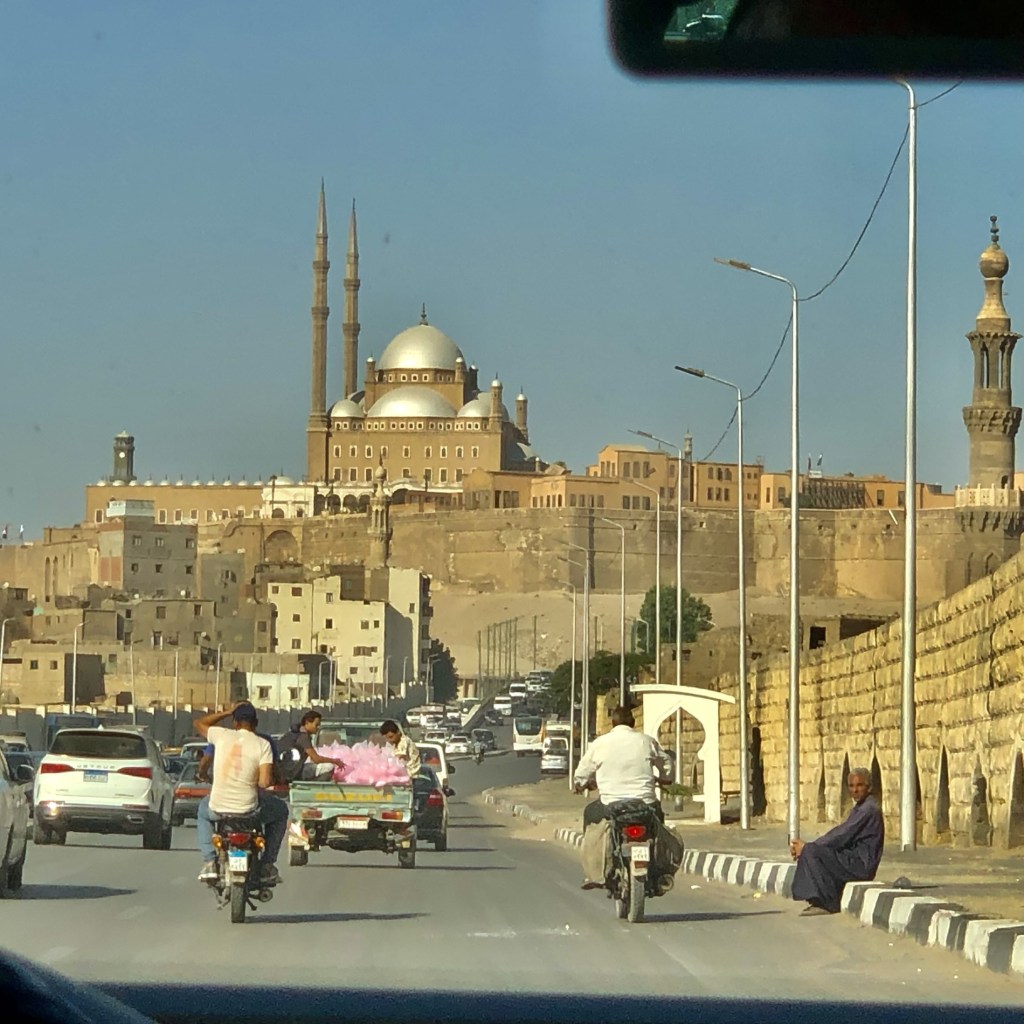
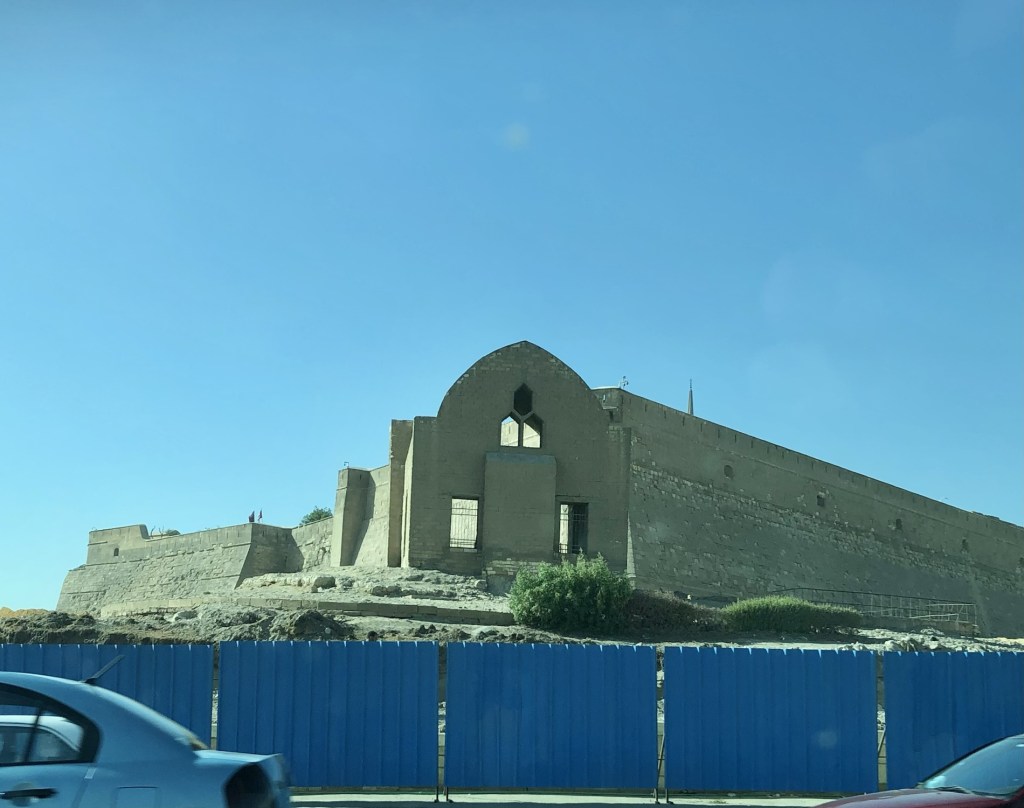
Part of buildings are torn away to make way for more freewayCoptic cemetery Ancient aqueduct Sultan Hussein Mosque
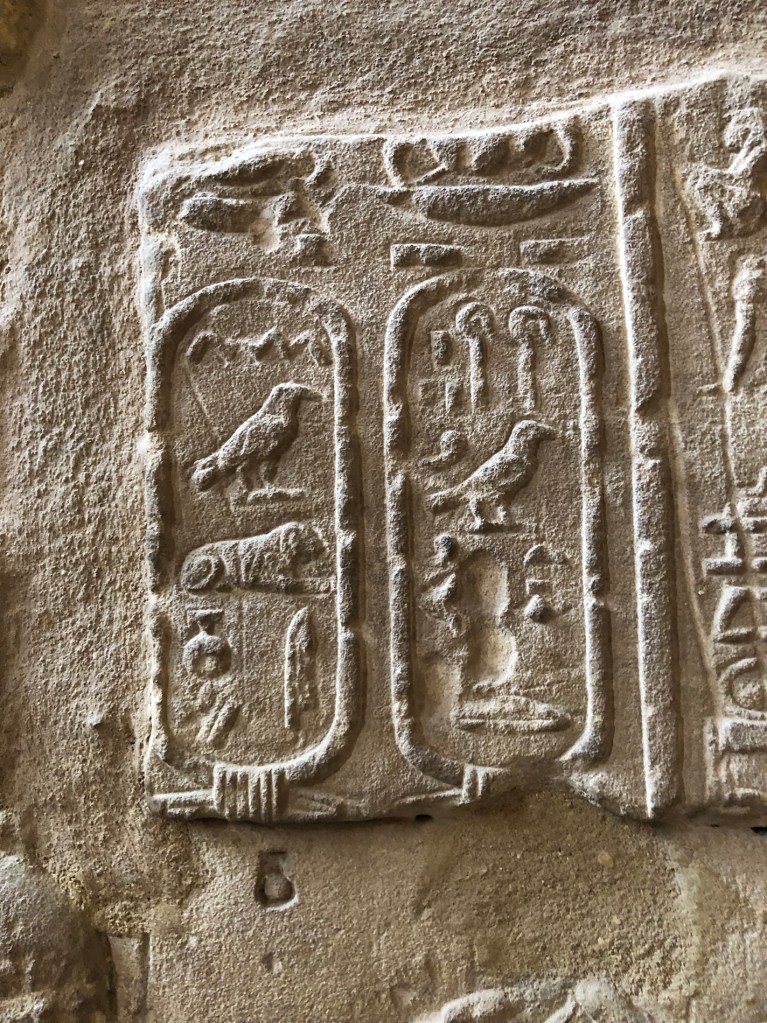
It is one of the best-preserved temple complexes of Ancient Egypt. Started 54 BCE
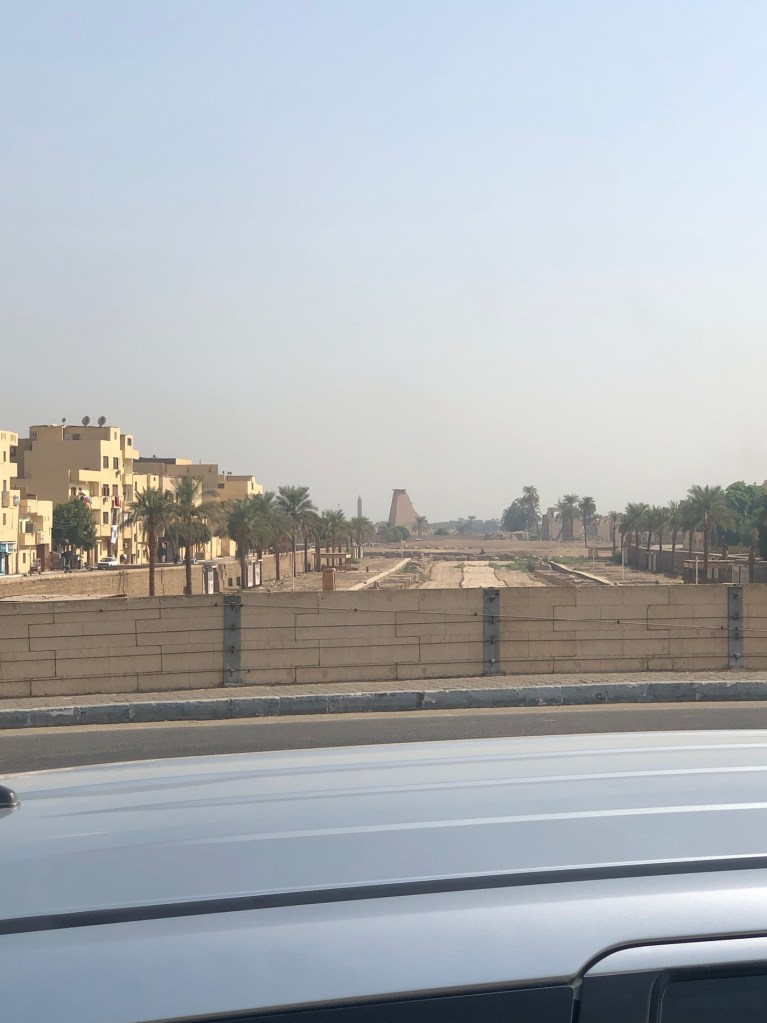
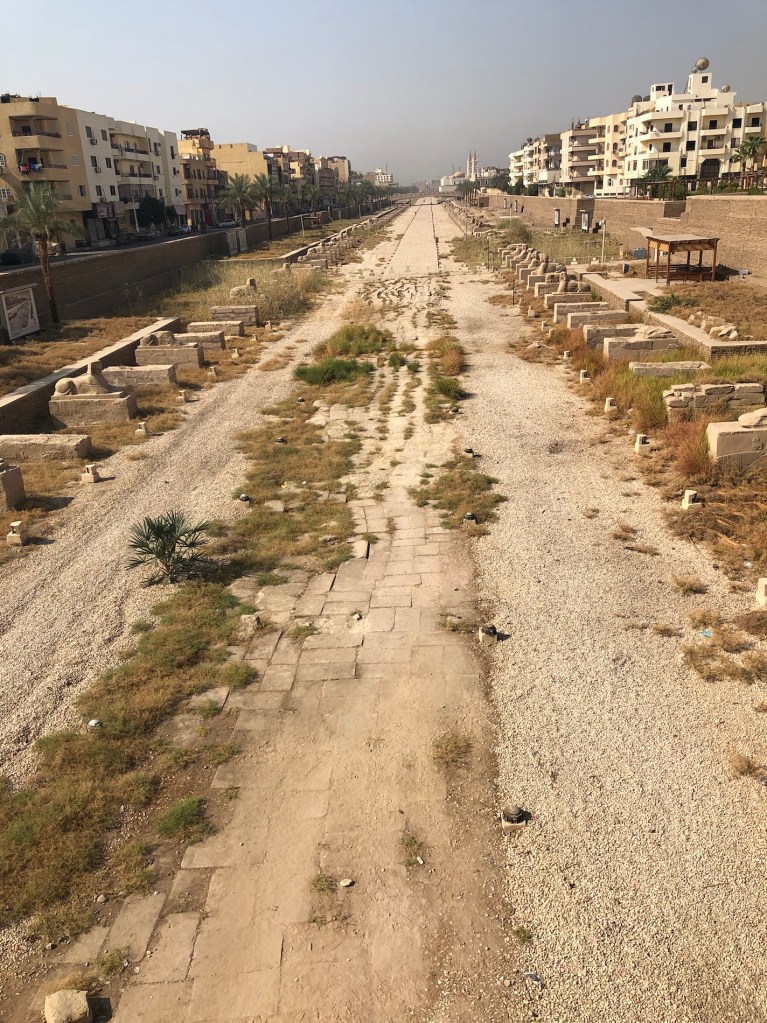
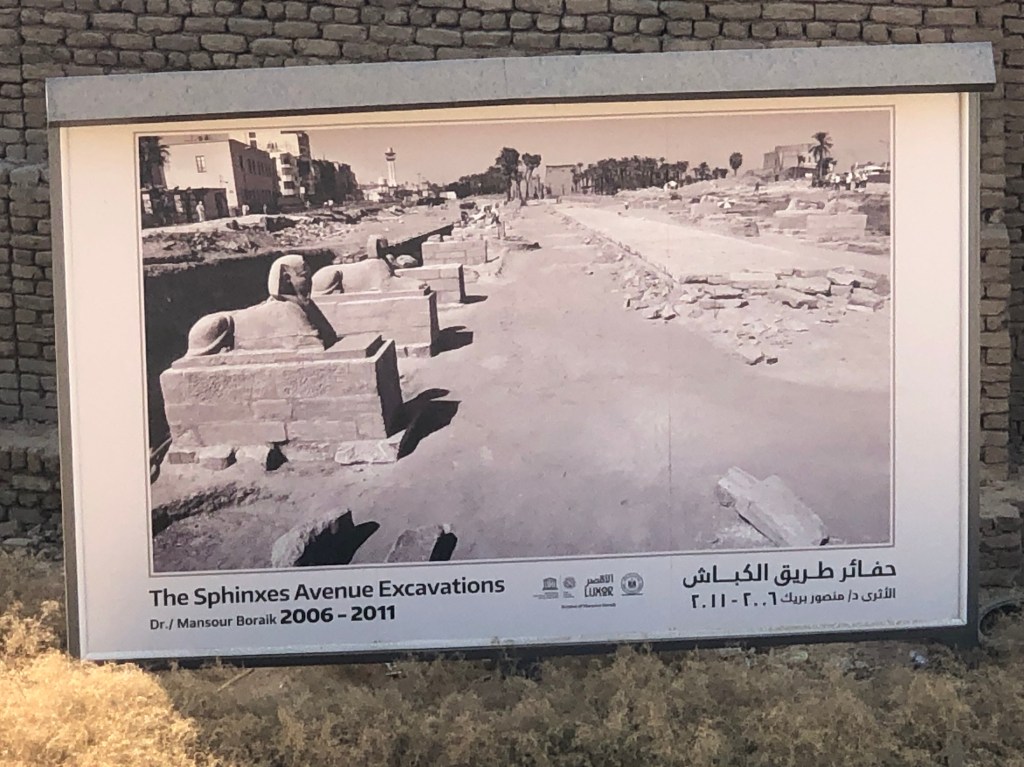
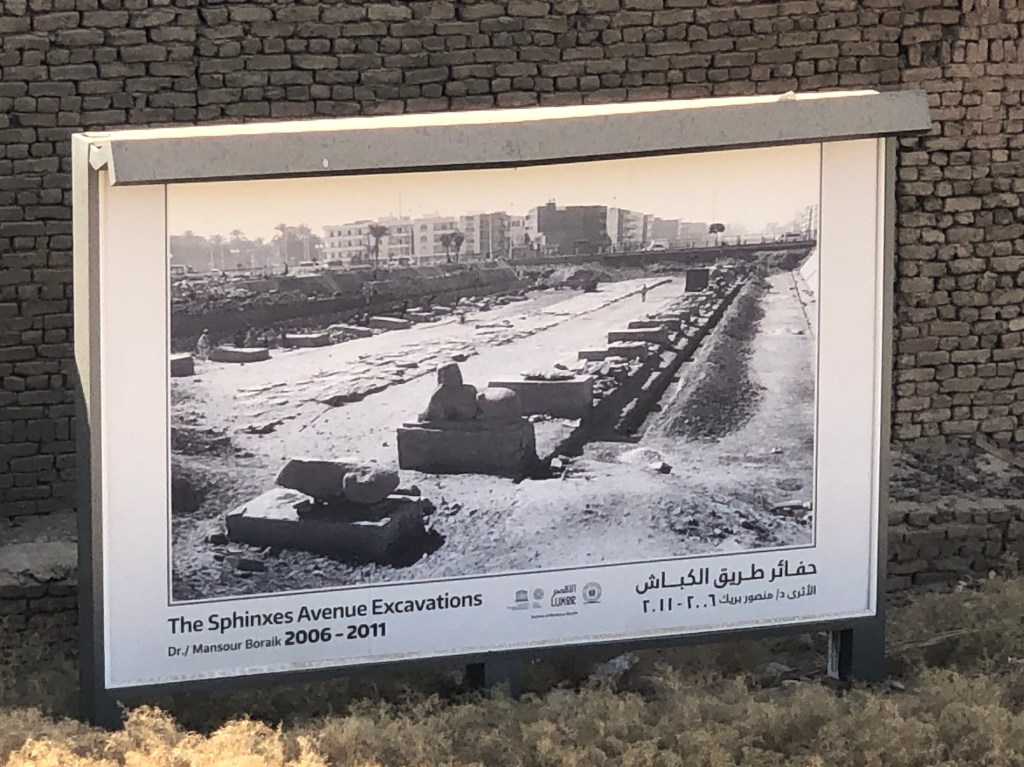
On our way we stopped on a bit of overpass to see Sphinx Avenue… 2 miles long road between Luxor and Karnak temples. 1050 sphinx’ line the road. Started to be built 1475 BCE … 6 kings took part in the building of it. It was previously covered with houses. The government paid the people that lived there to dig it out… starting 2006. It was opened in 2021.
Luxor Temple on one end and Karnak Temple on the other end of sphinx lined street
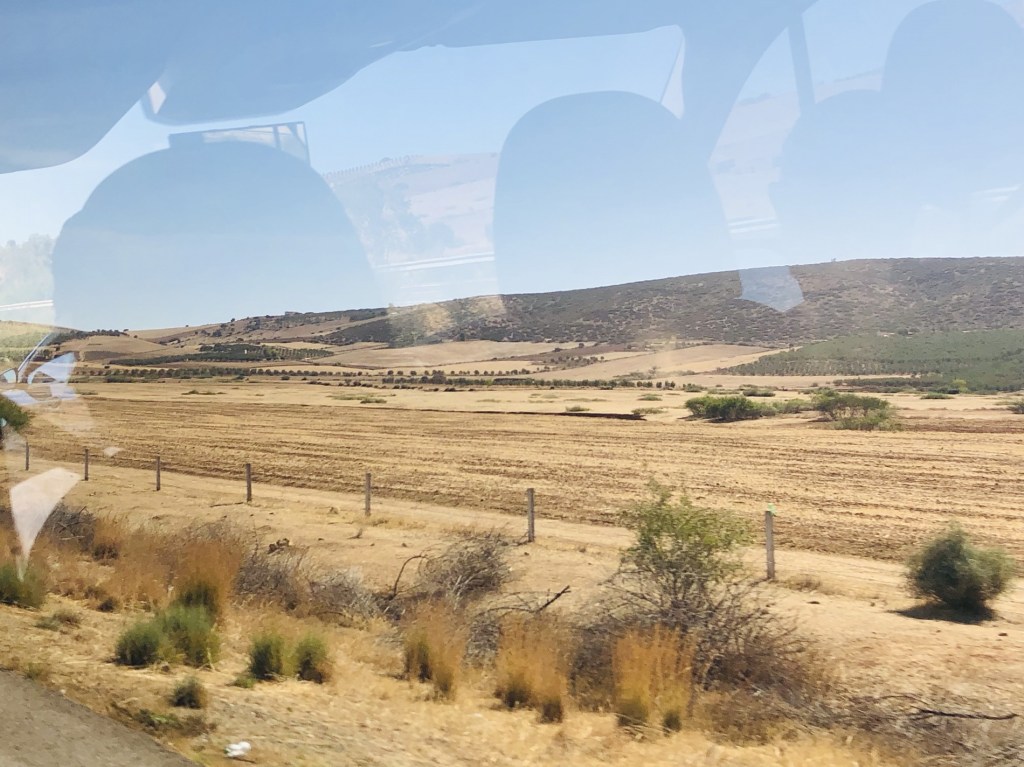
We drove through desert and fertile fields, on super new highways and less than idea country roads along the way.
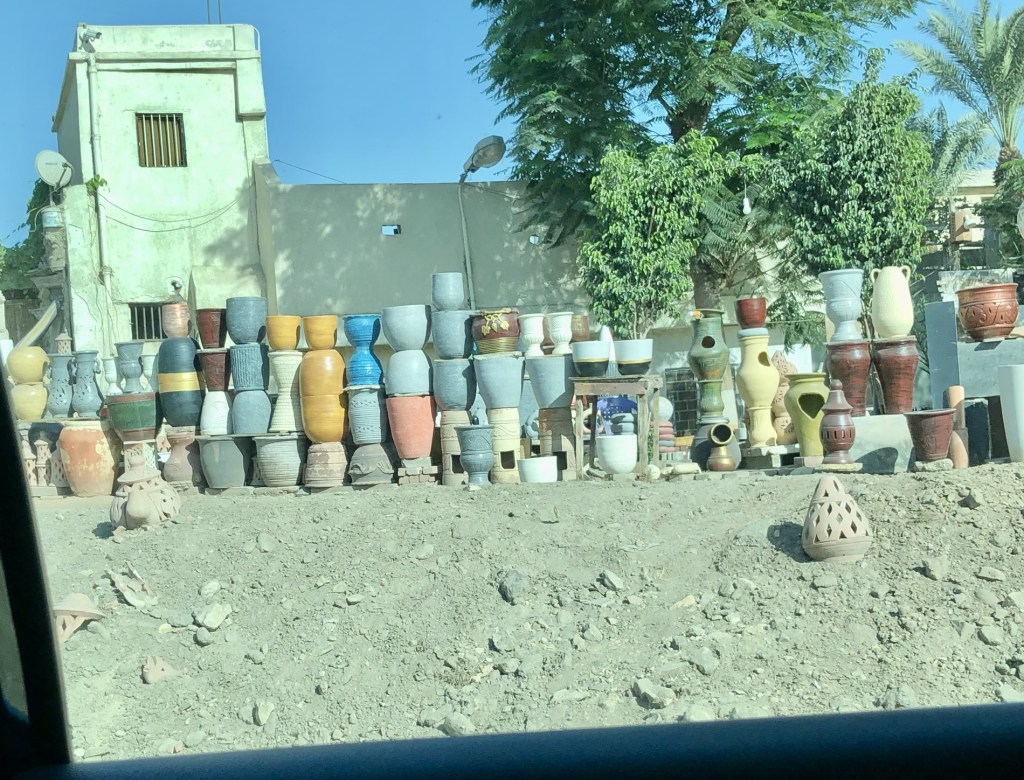
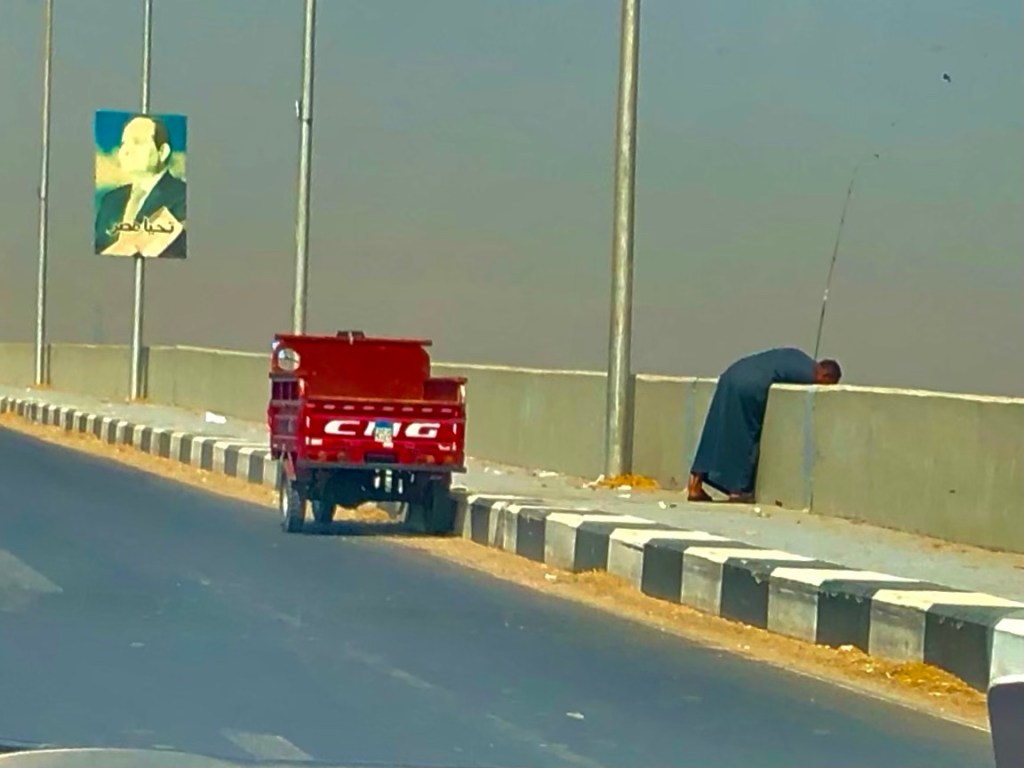
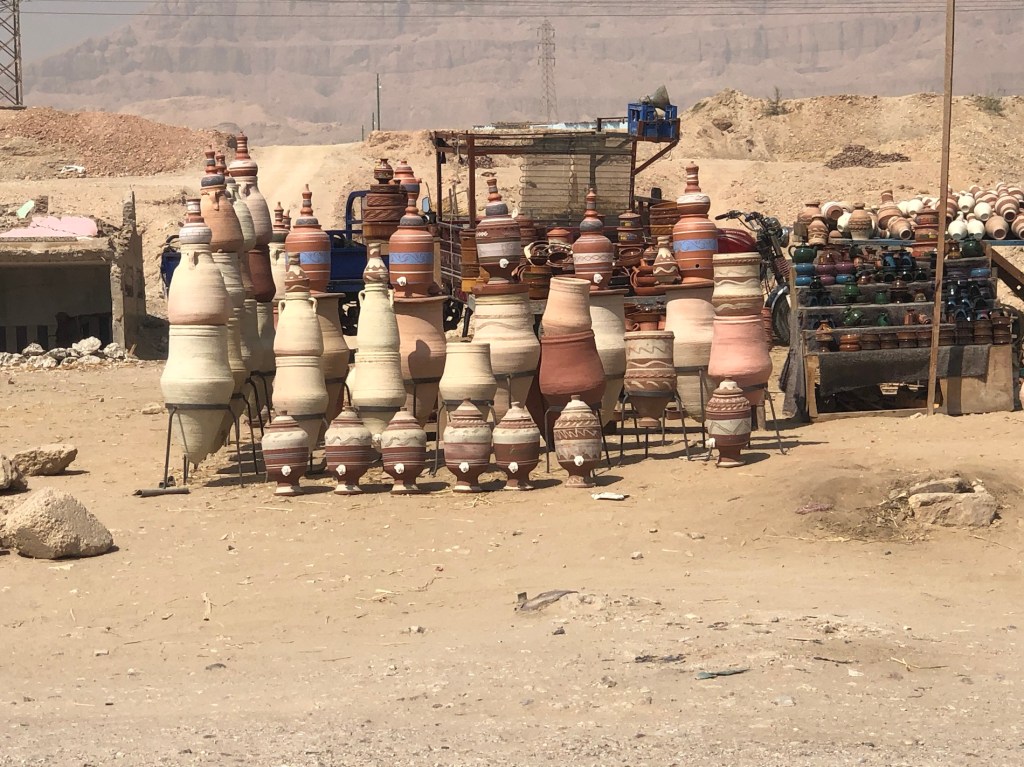
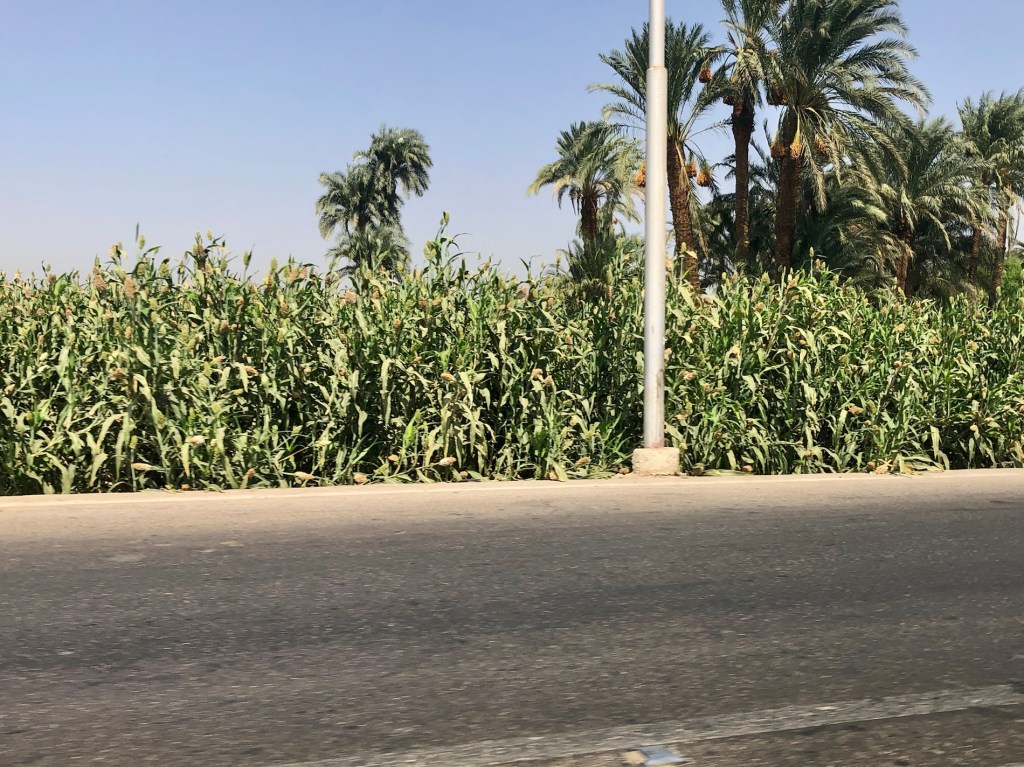
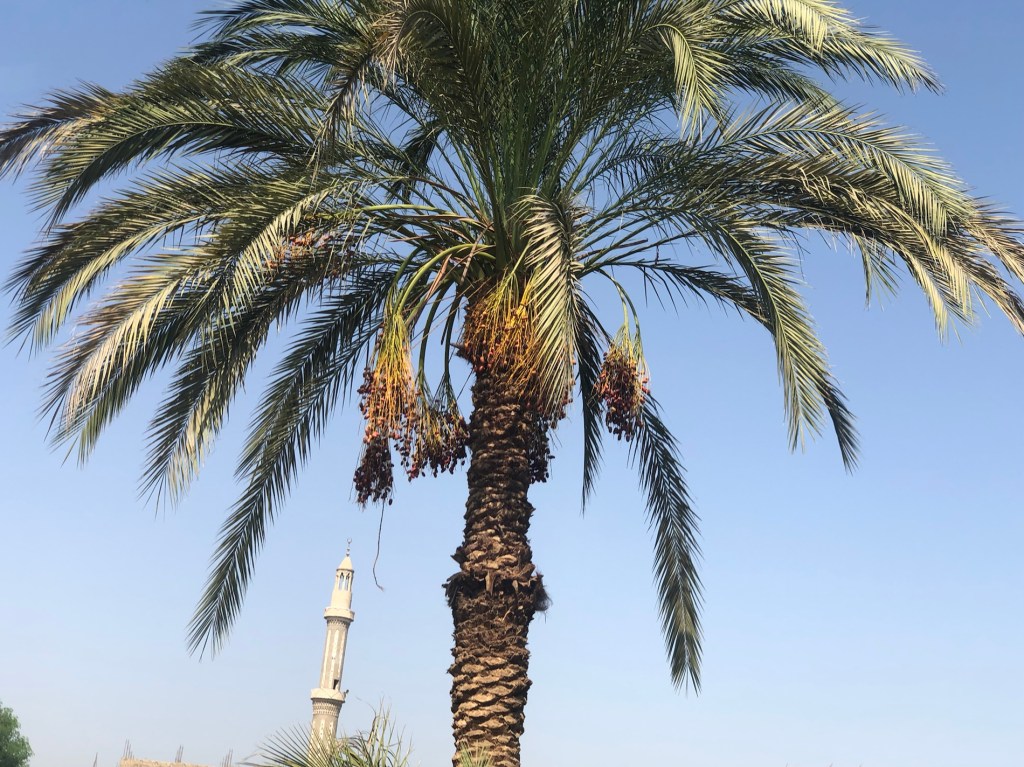
Note the automatic gun resting on the police checkpoint turret Fishing from the bridge… “oh, I’ll just pull over right here”Pottery for saleMaize for animals… different than cornDates
Papyrus papers lasts over 3500 years….discovered 1905
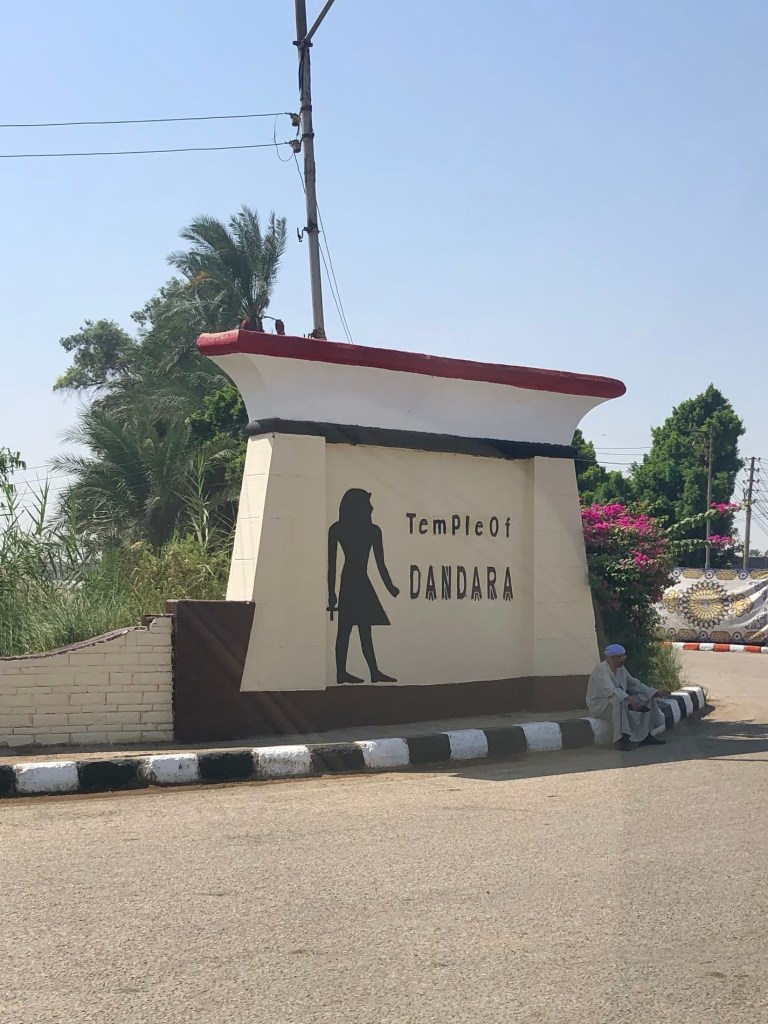
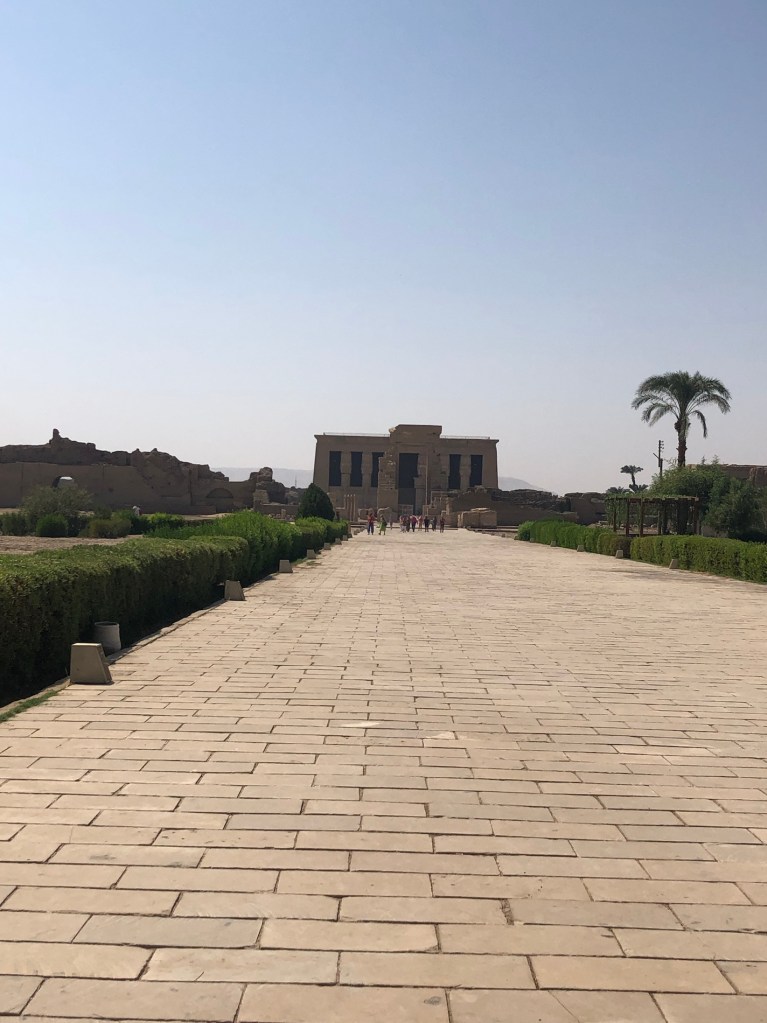
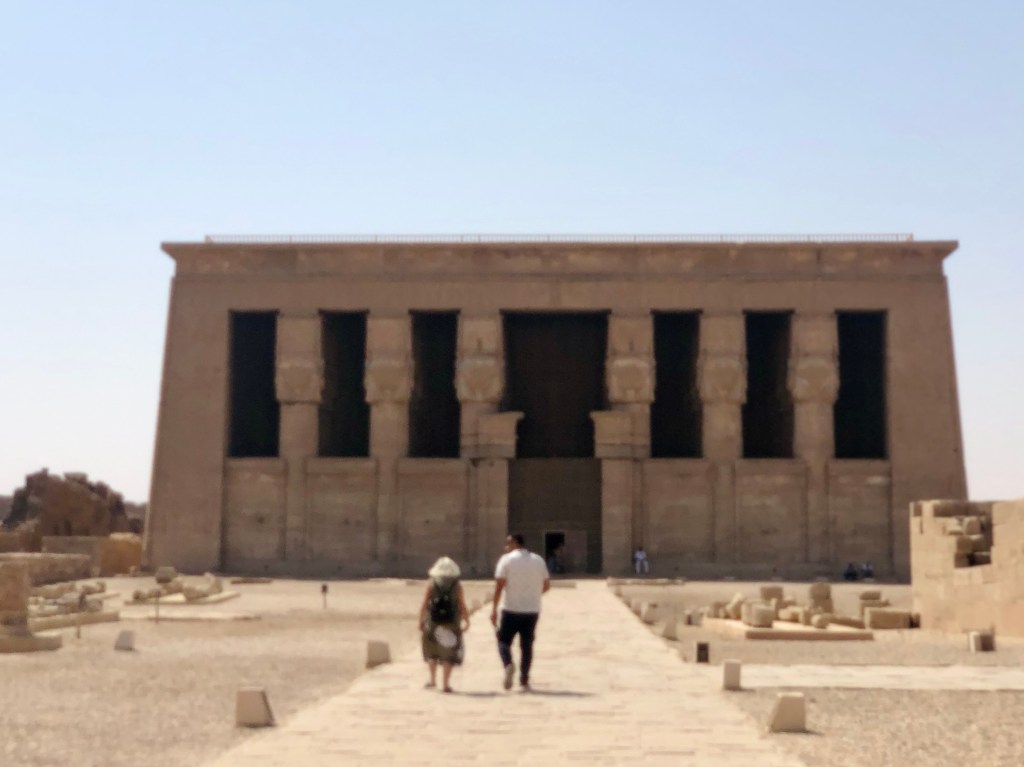
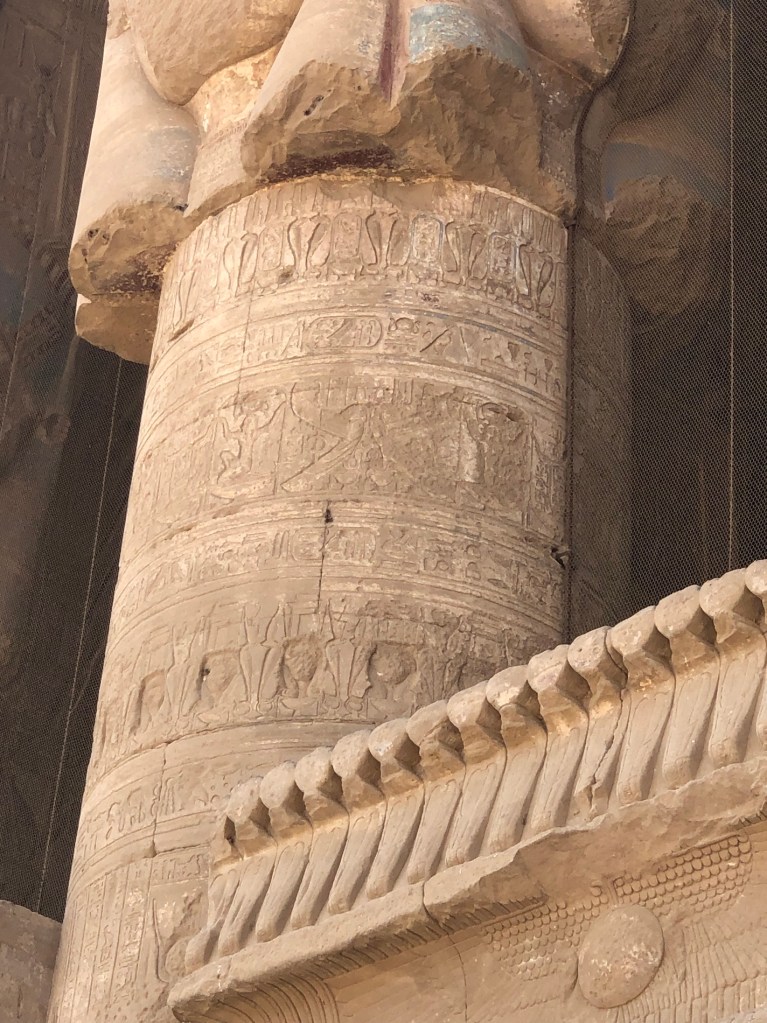
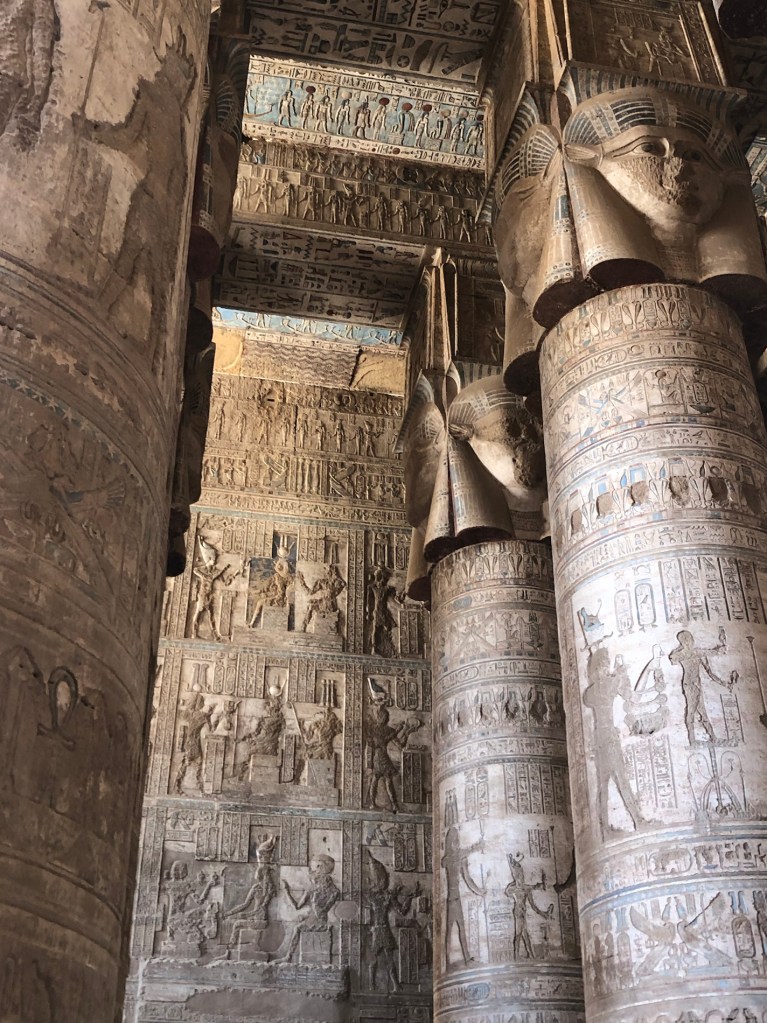
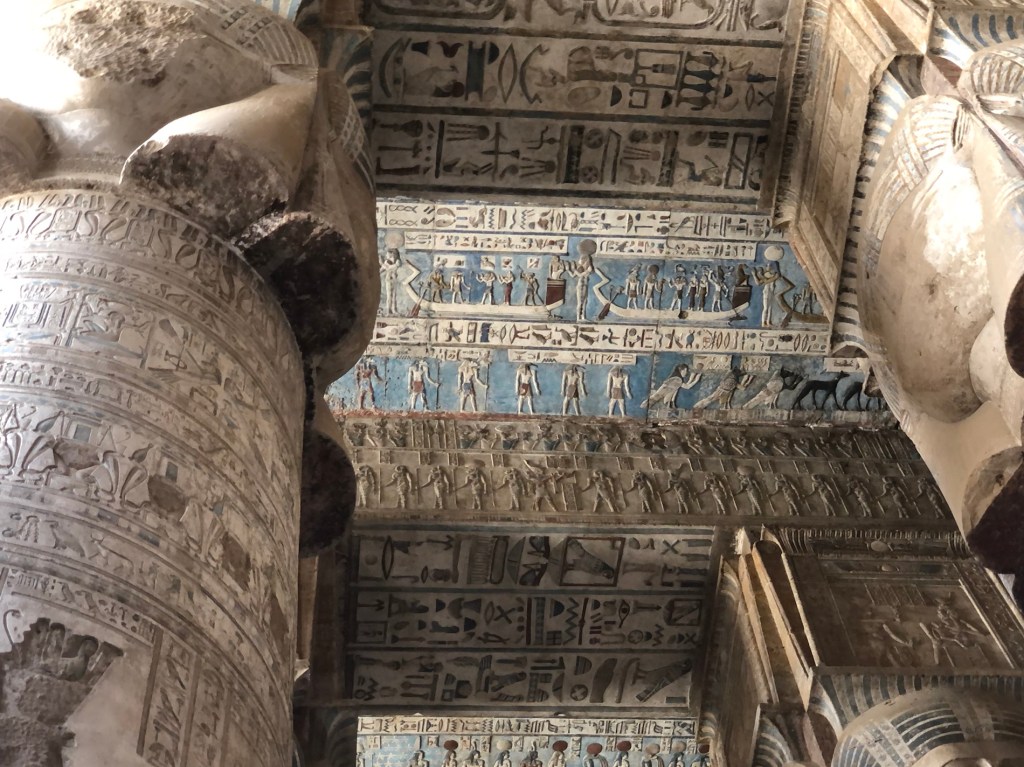
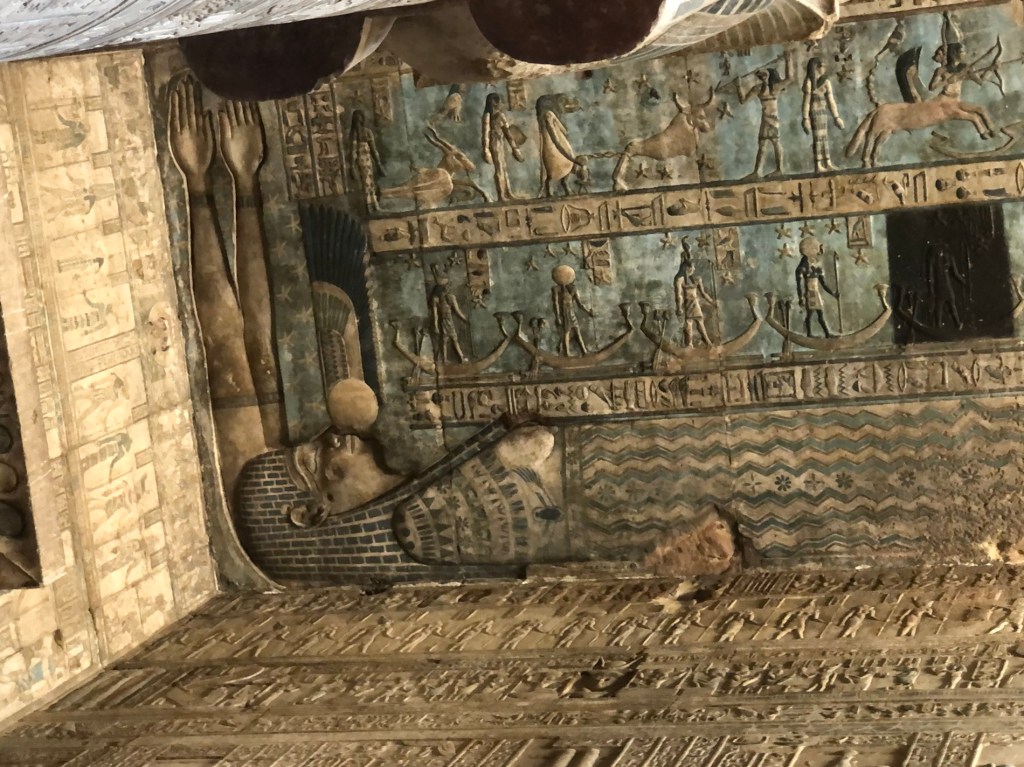
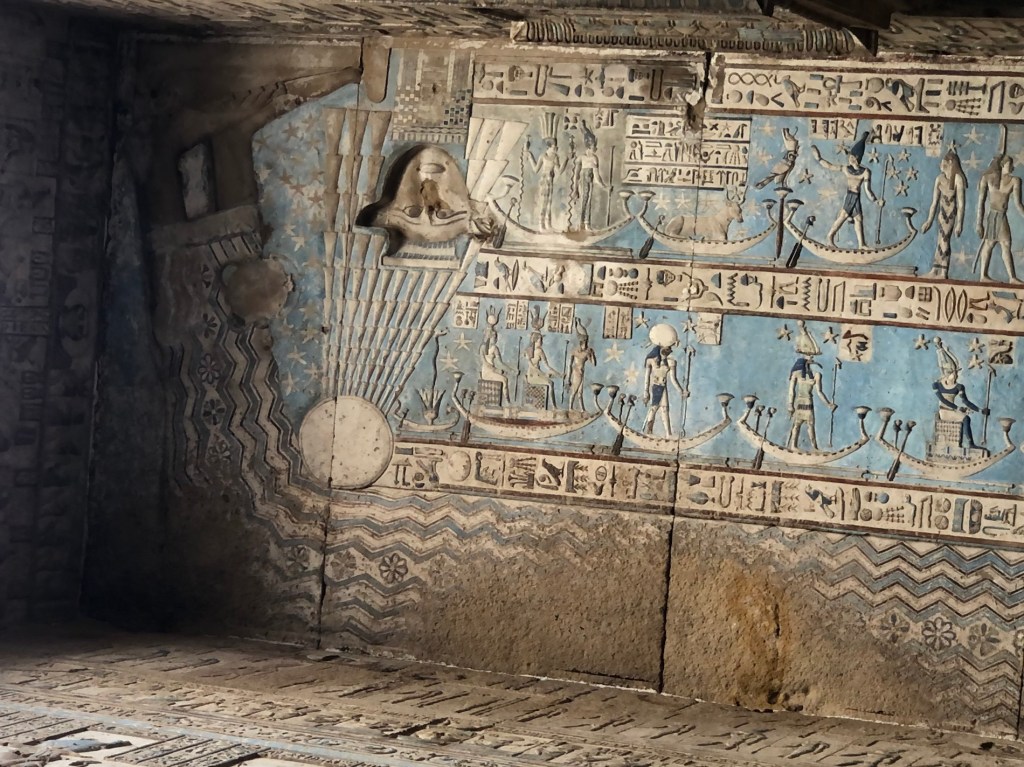
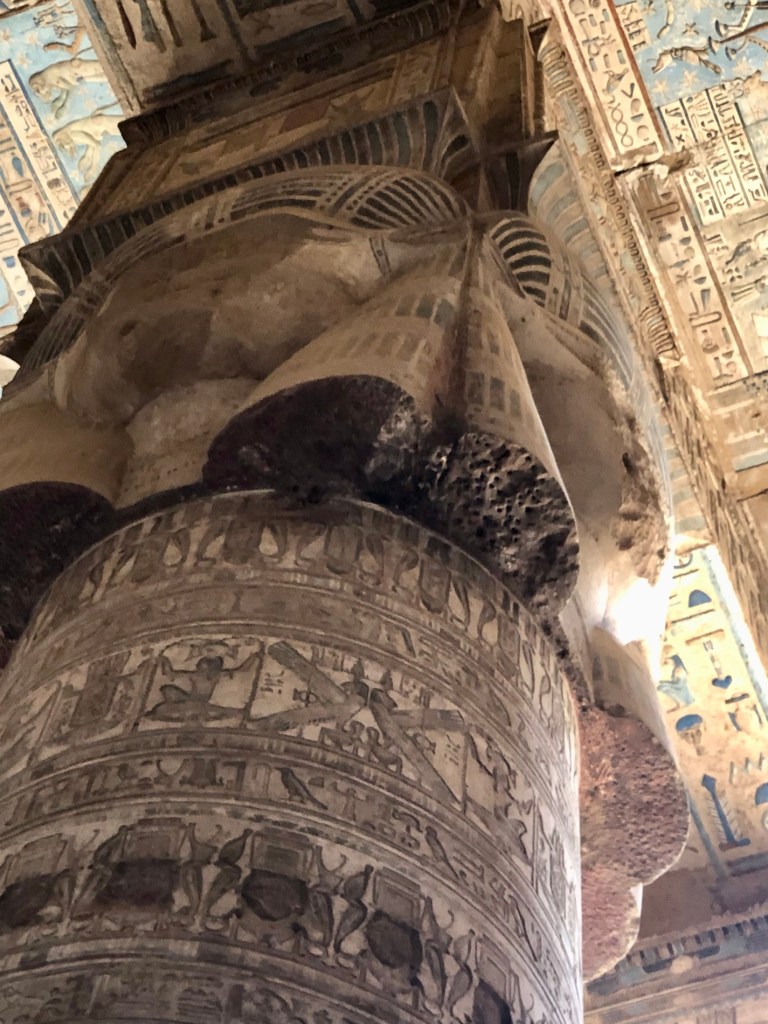
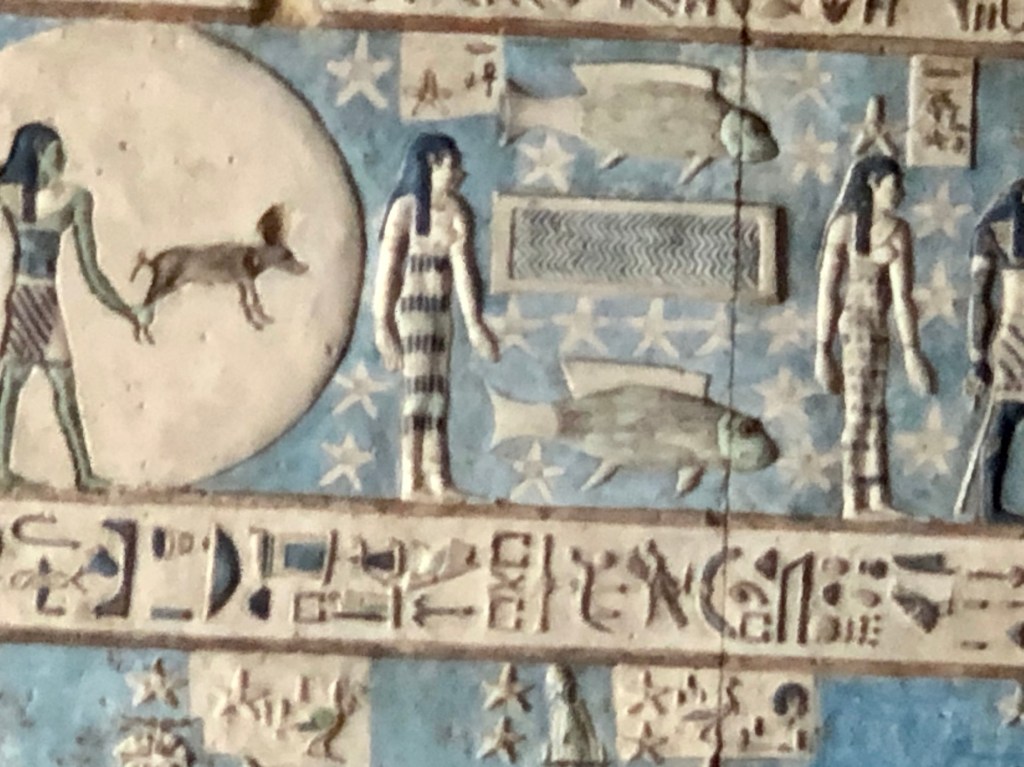
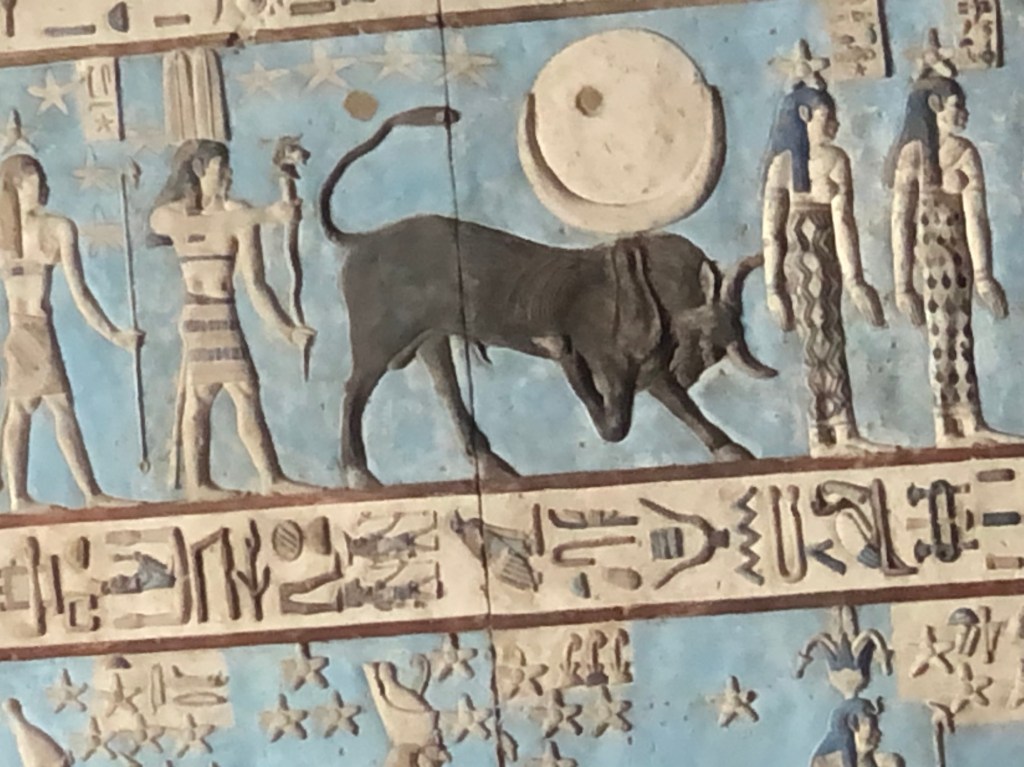
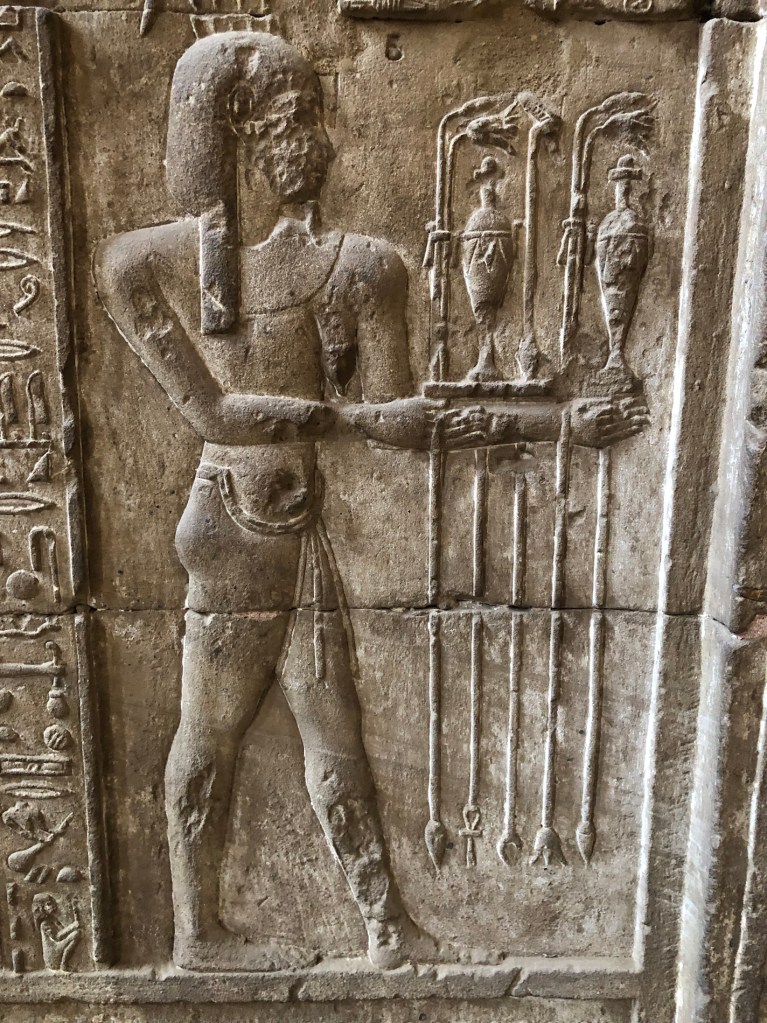
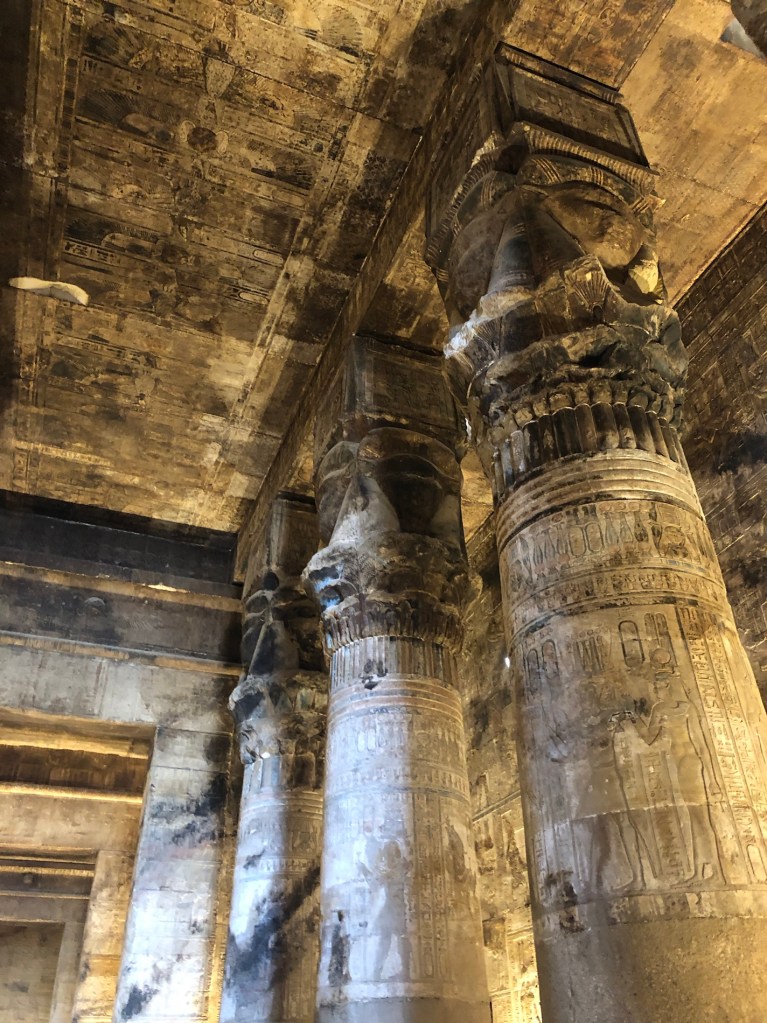
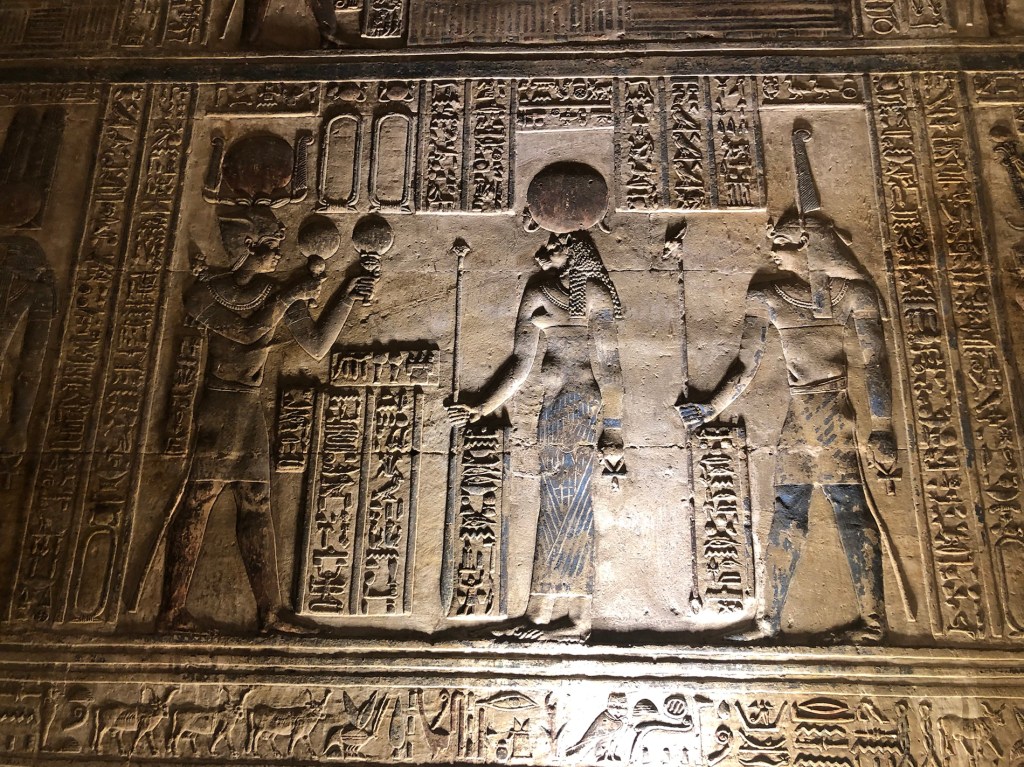
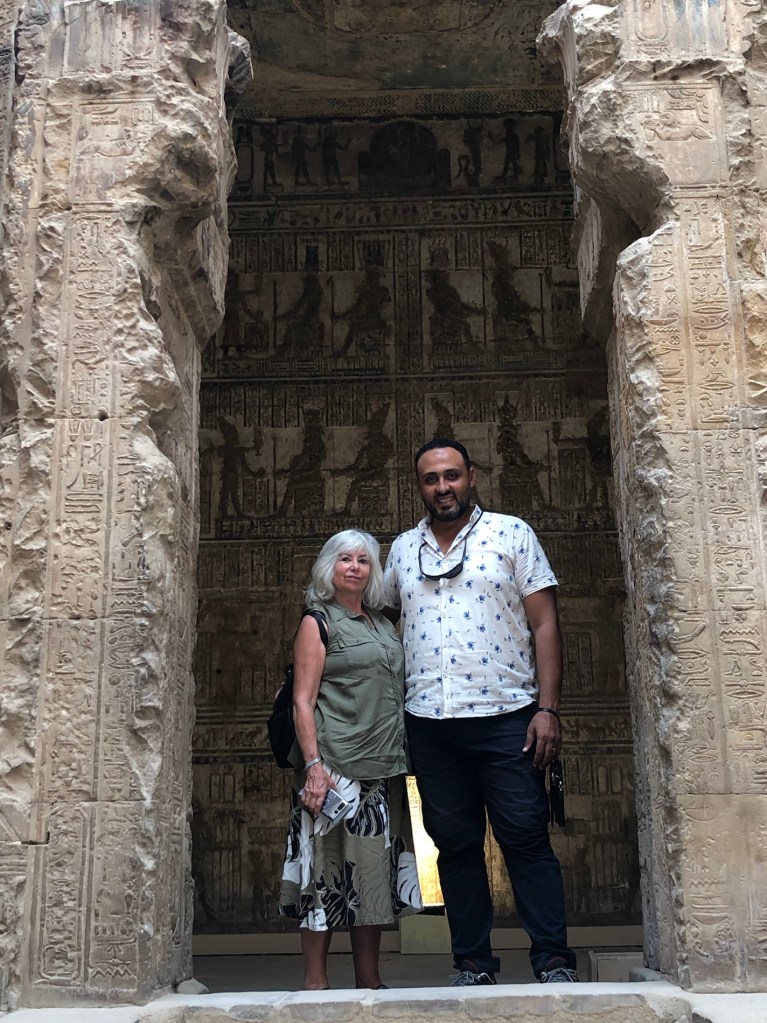
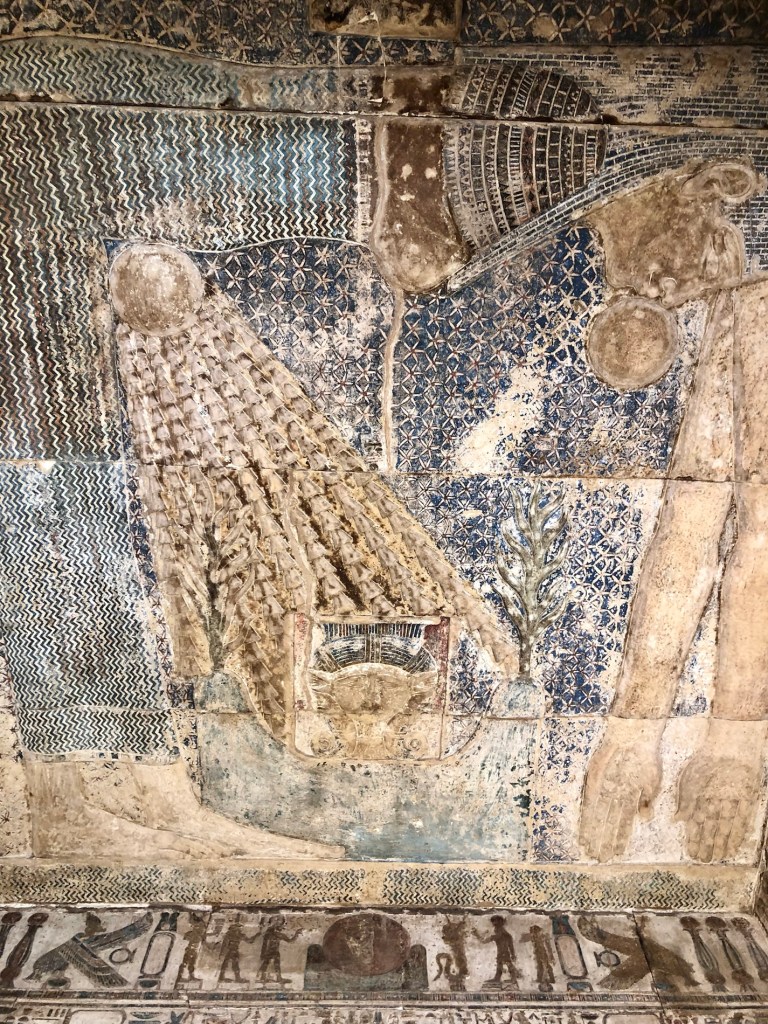
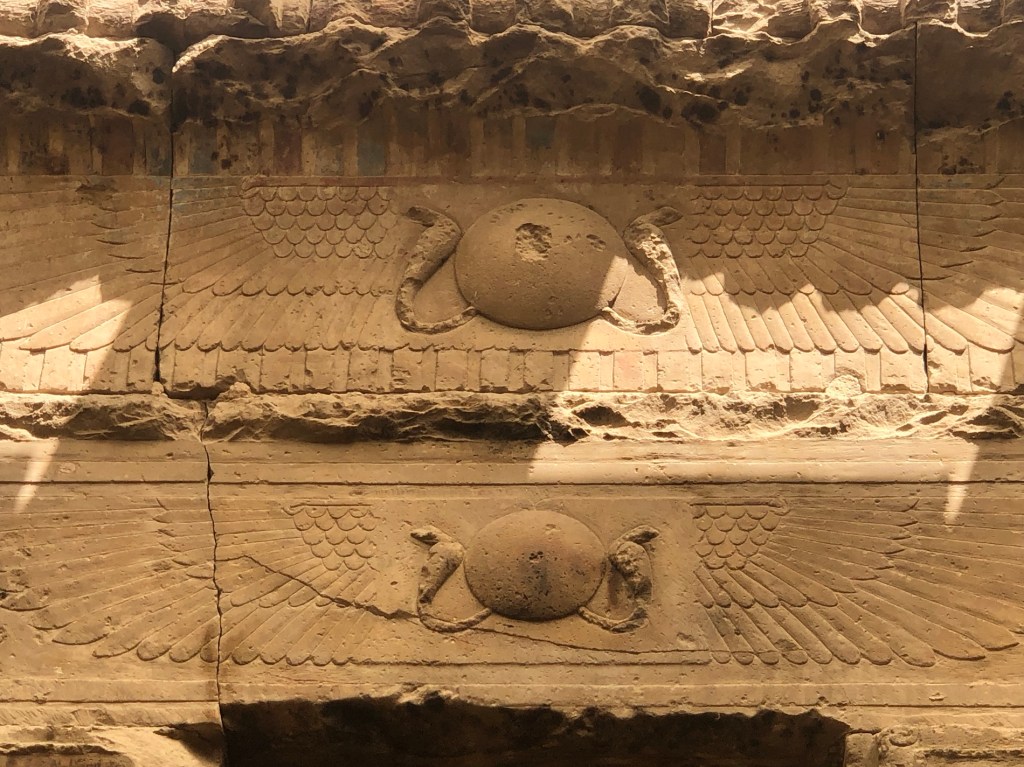
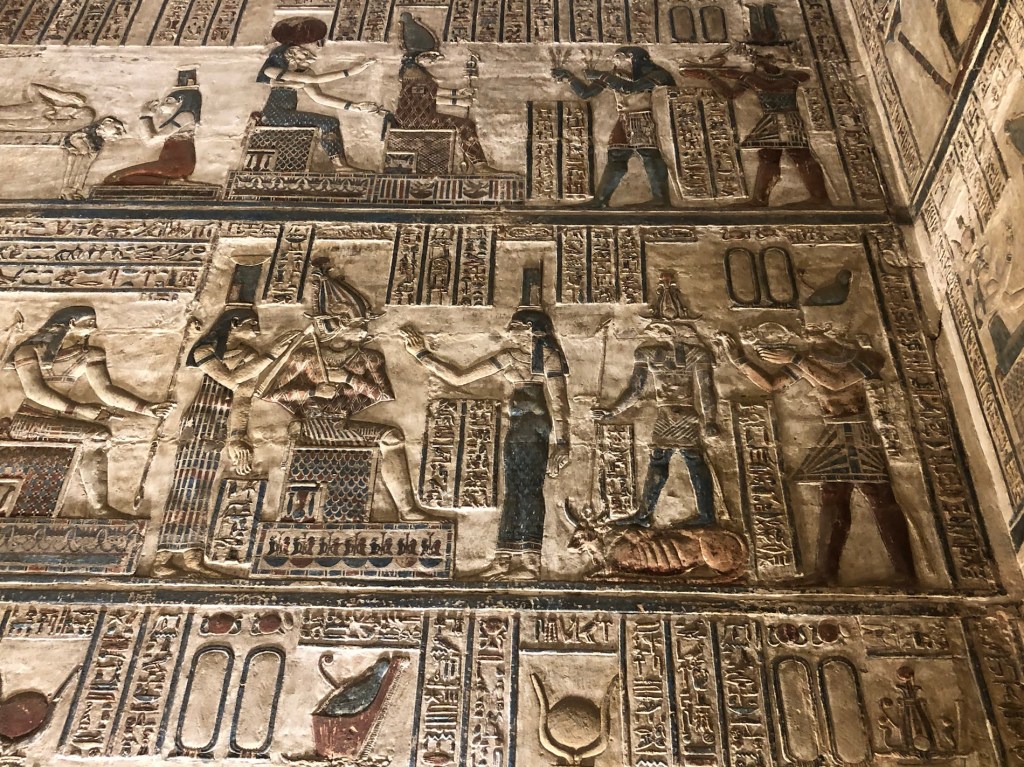
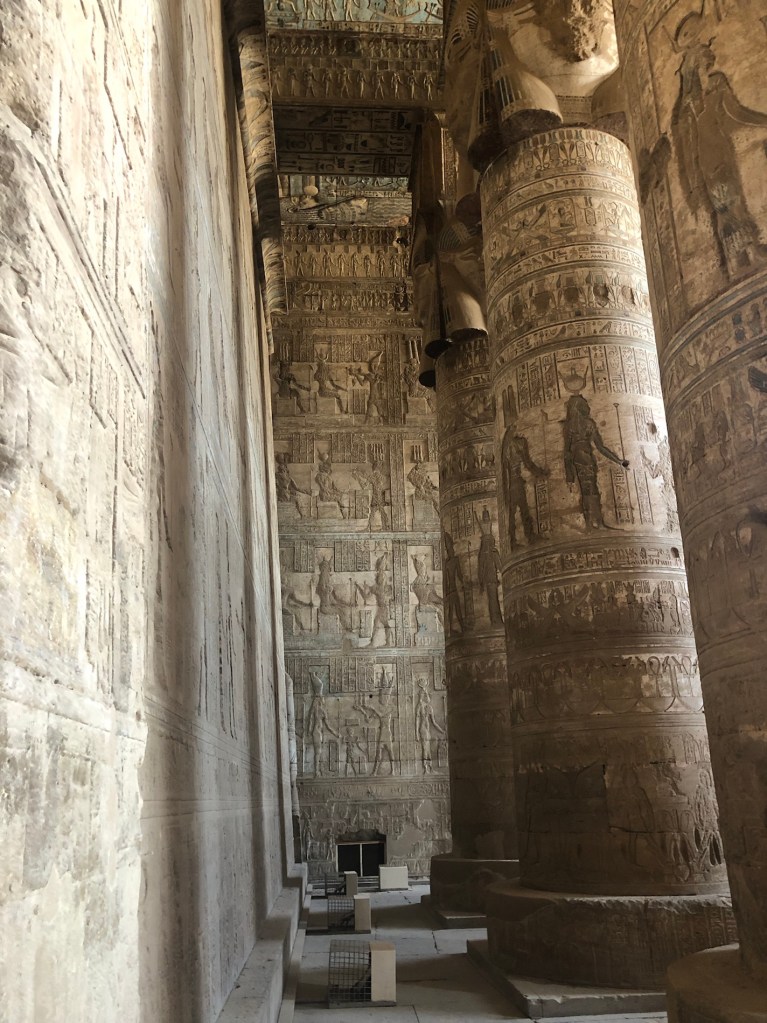
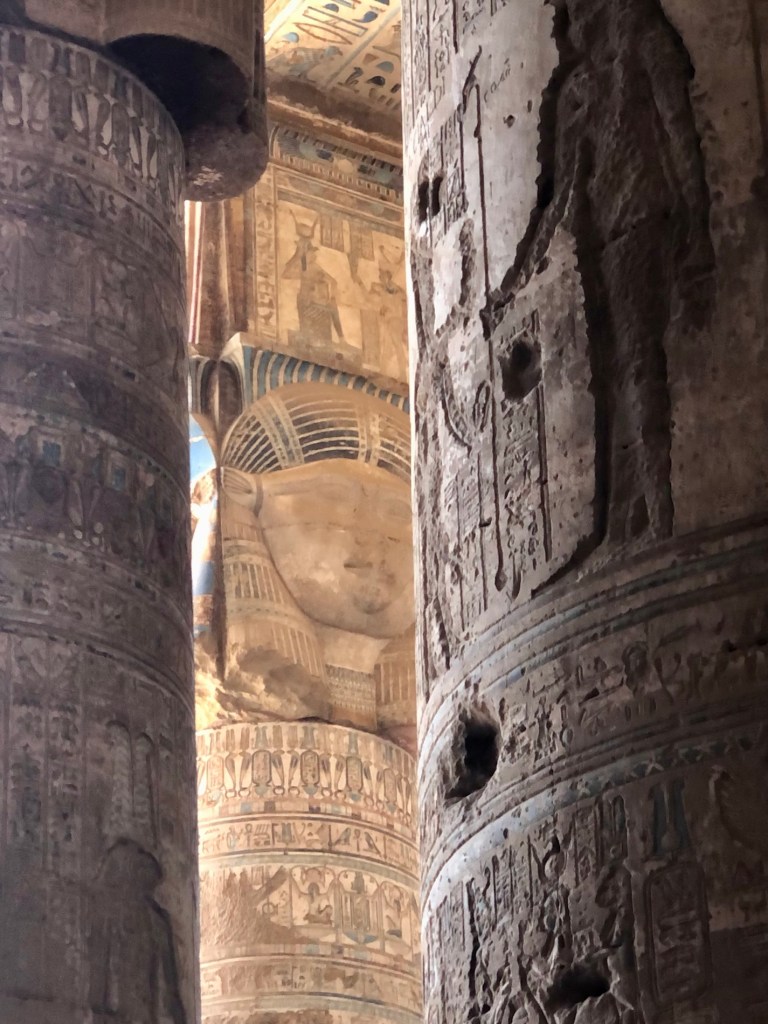
Dendara Temple, the tremble of Hathor … cow goddess, goddess of motherhood, music and love
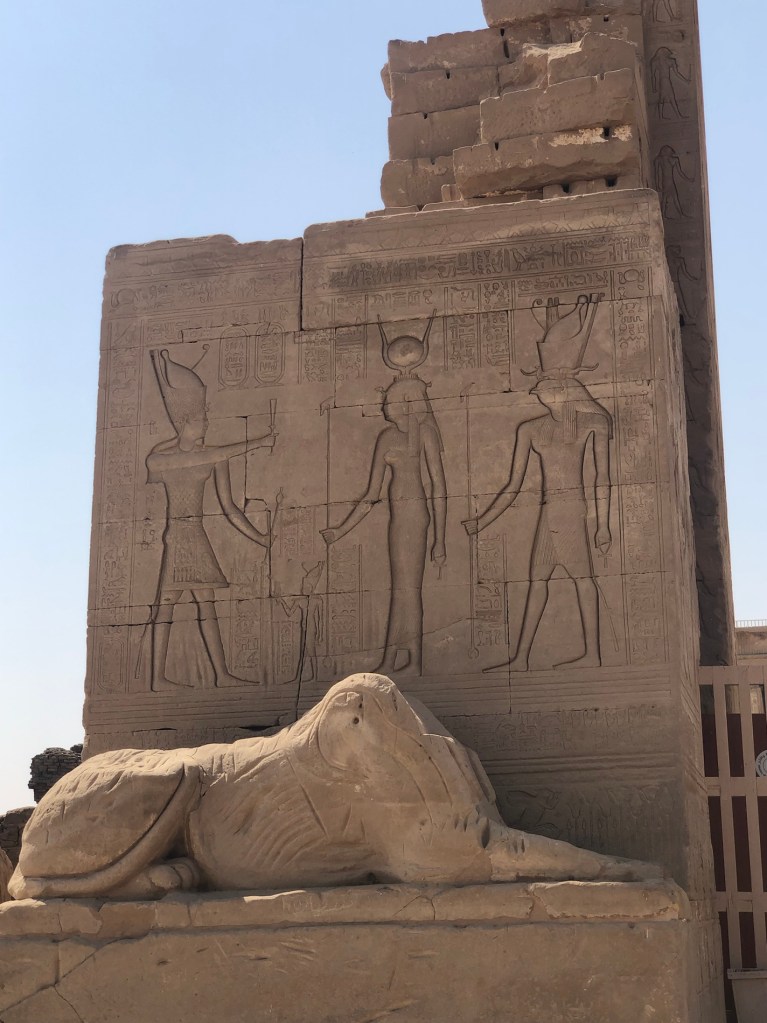
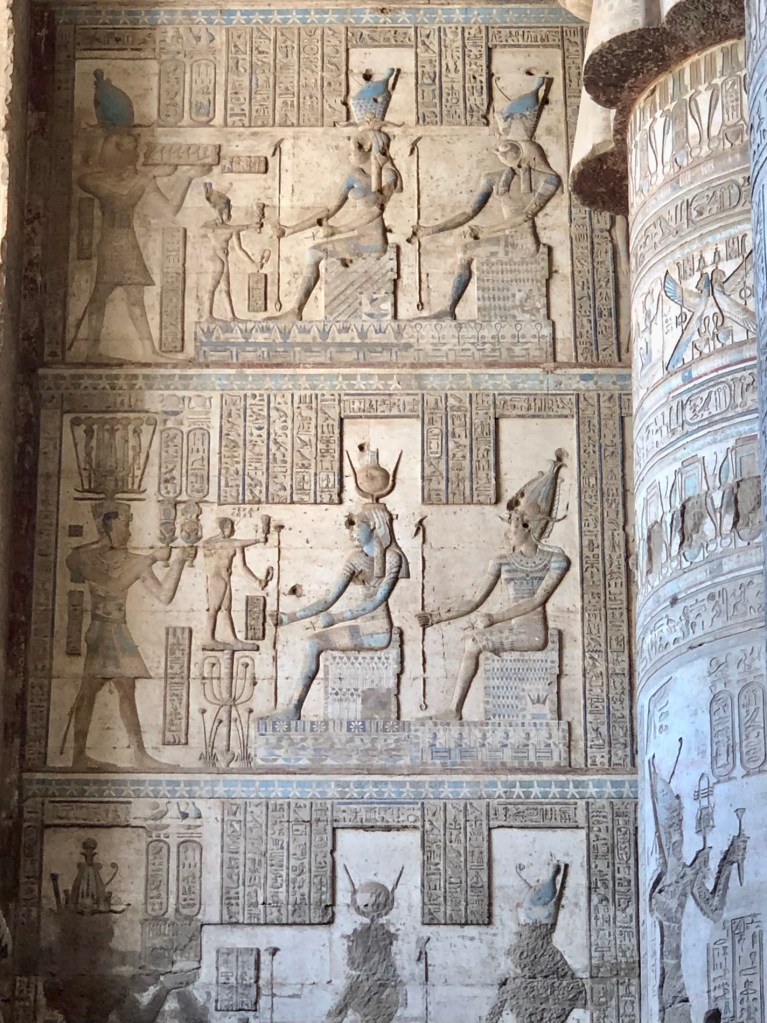
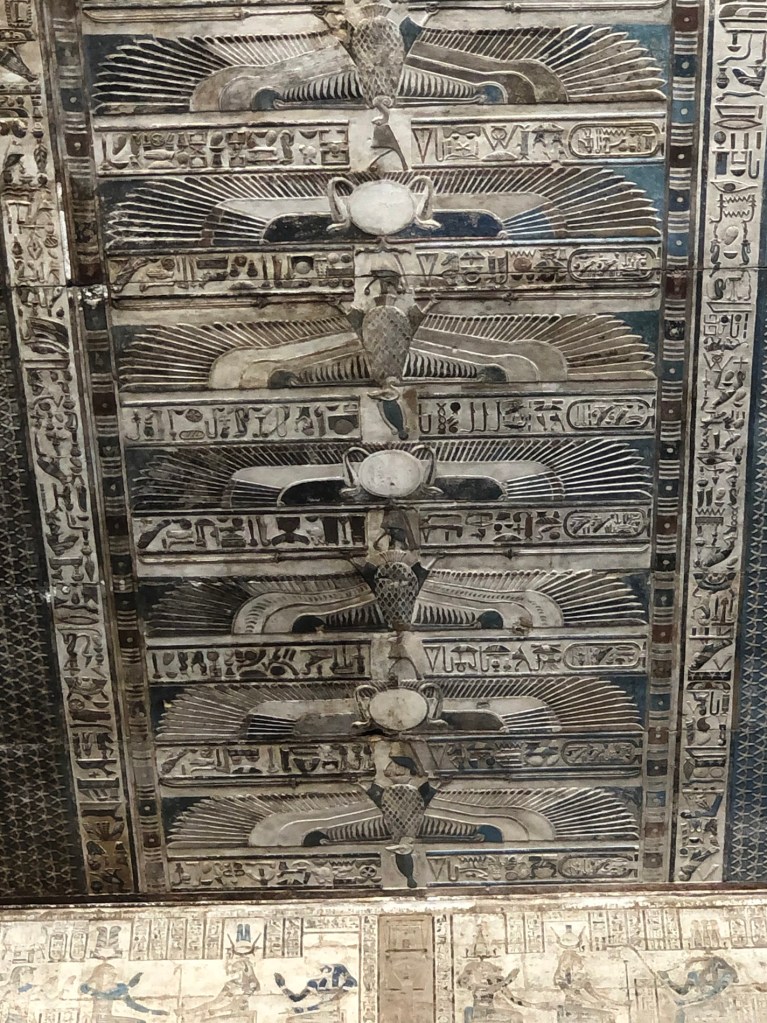
You can see the damage the Christians trying to take cover from Romans did to the temple. They built fires that tarred the ceilings and walls, obliterated paintings and relief work by chipping that which they could reach and punched holes through the stone to put rings to hold the horses and donkeys.
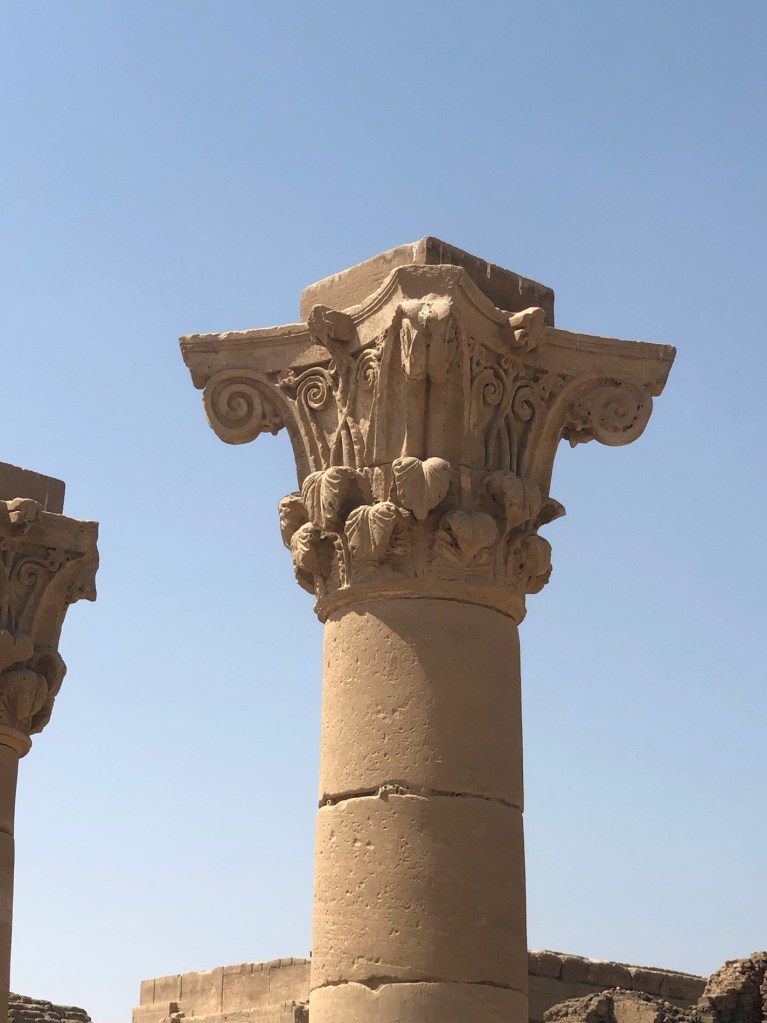
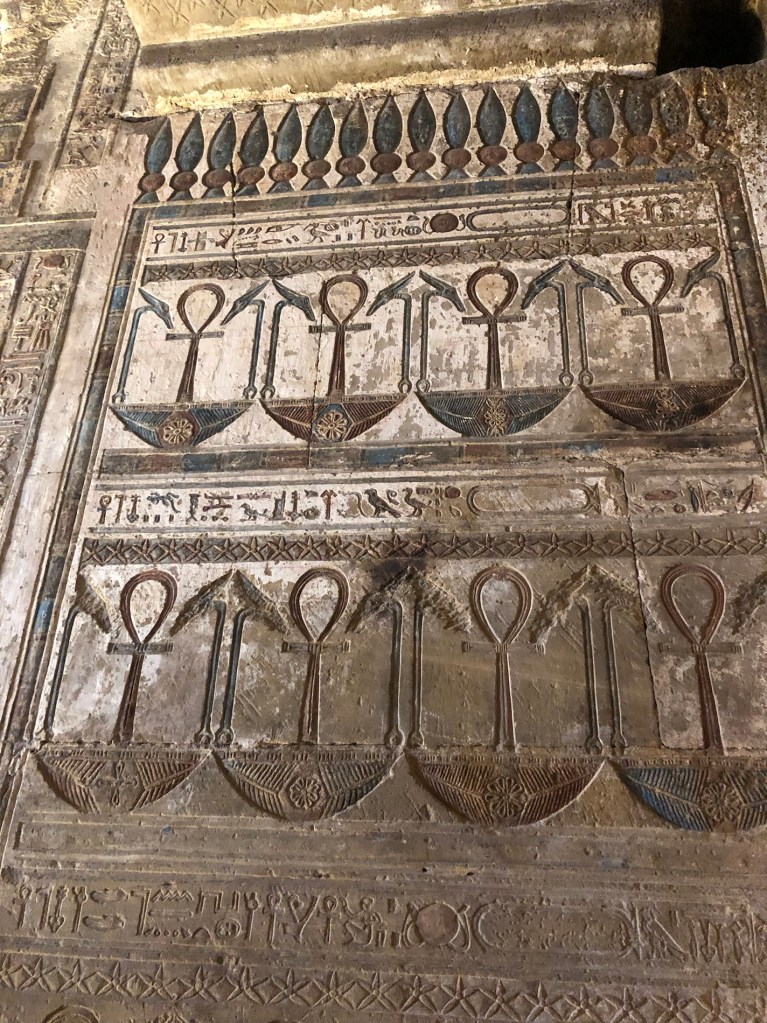
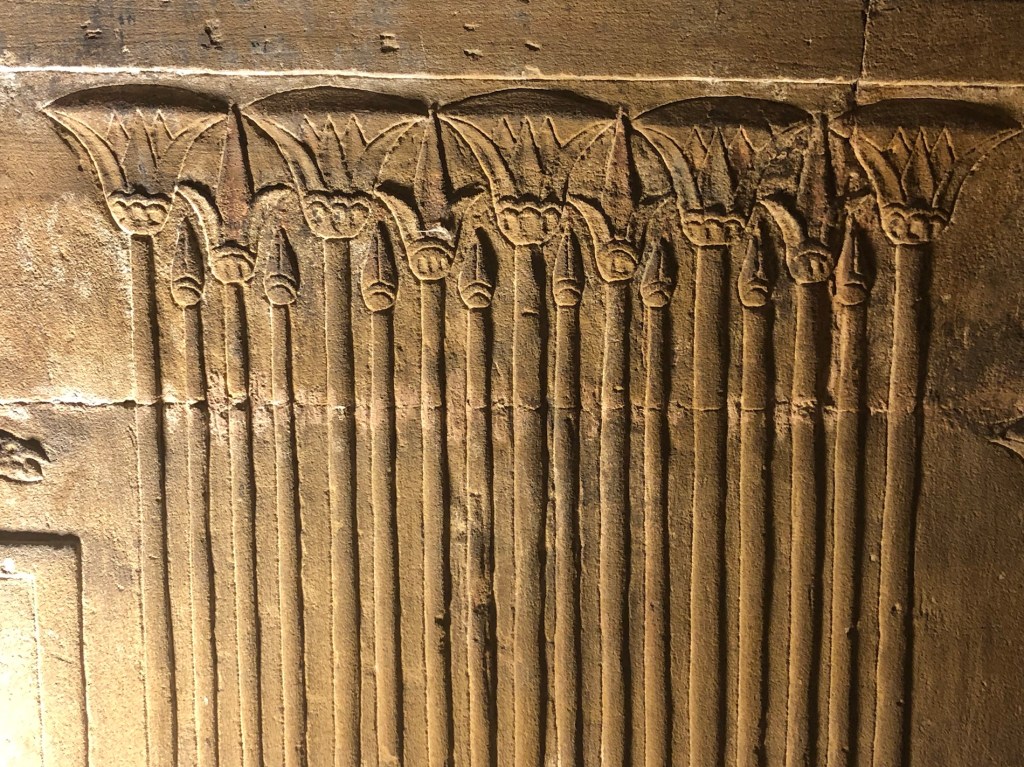
Amazing and colourful temple like no others. Funny, I had never even heard of it. Ceilings about 50 feet (16 metres) high in first part, less as you travelled inside. The exterior had open air courtyard. The common people were not allowed into the inner sanctum …. Inner sanctum was only for priests & the hierarchy. All the astrological signs were shown. The colours are amazing and the details incredible and massive especially when you think of how long ago it was. The amount of inscription, etc….how long it took and how many artisans to do the work.
100 sq metre…8000 E pound 275usd/ month for rent. Most people rent. Farms are owned but passed from generation to generation.
Papyrus …1week in water for light colour, 2 weeks for dark.
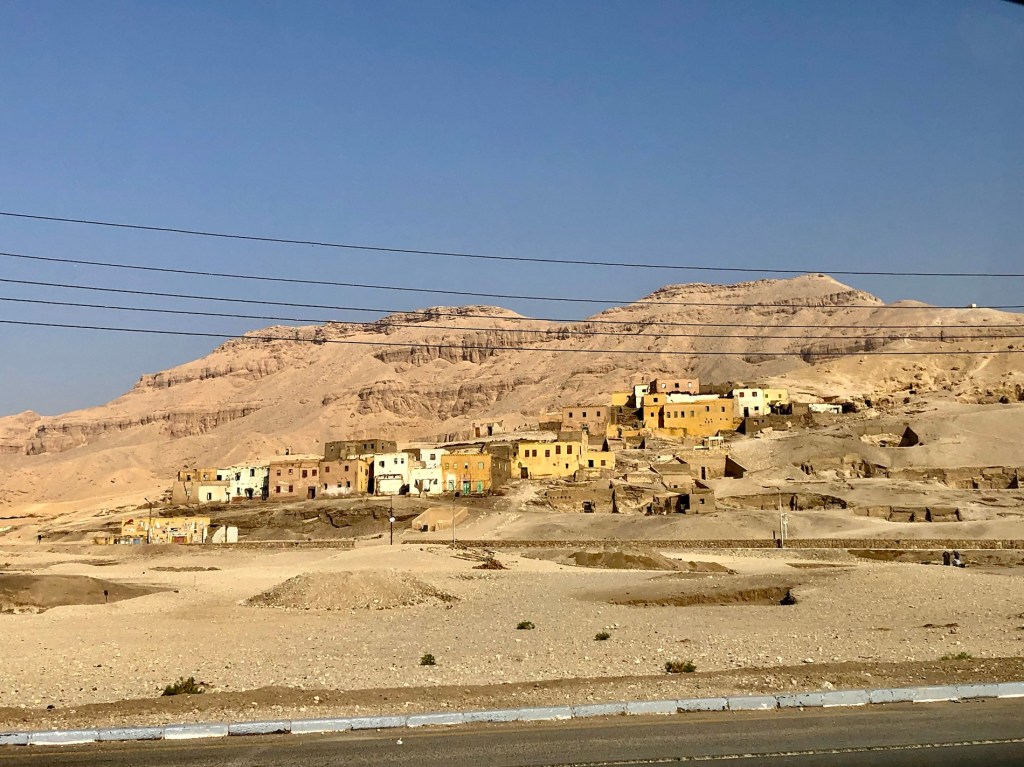
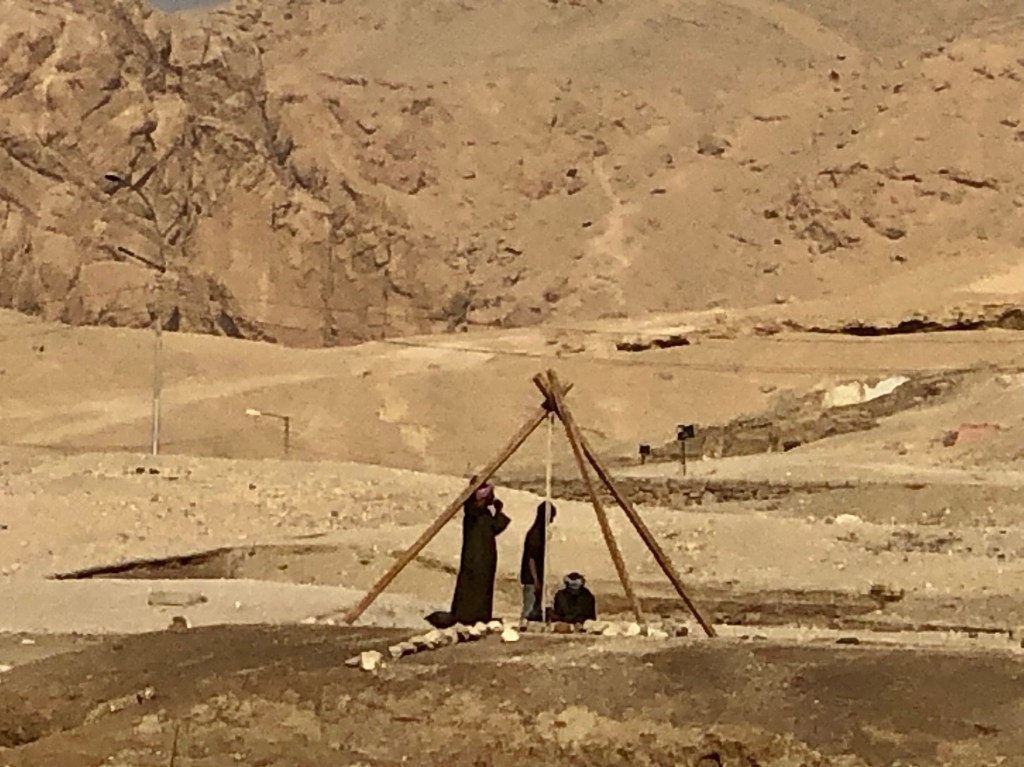
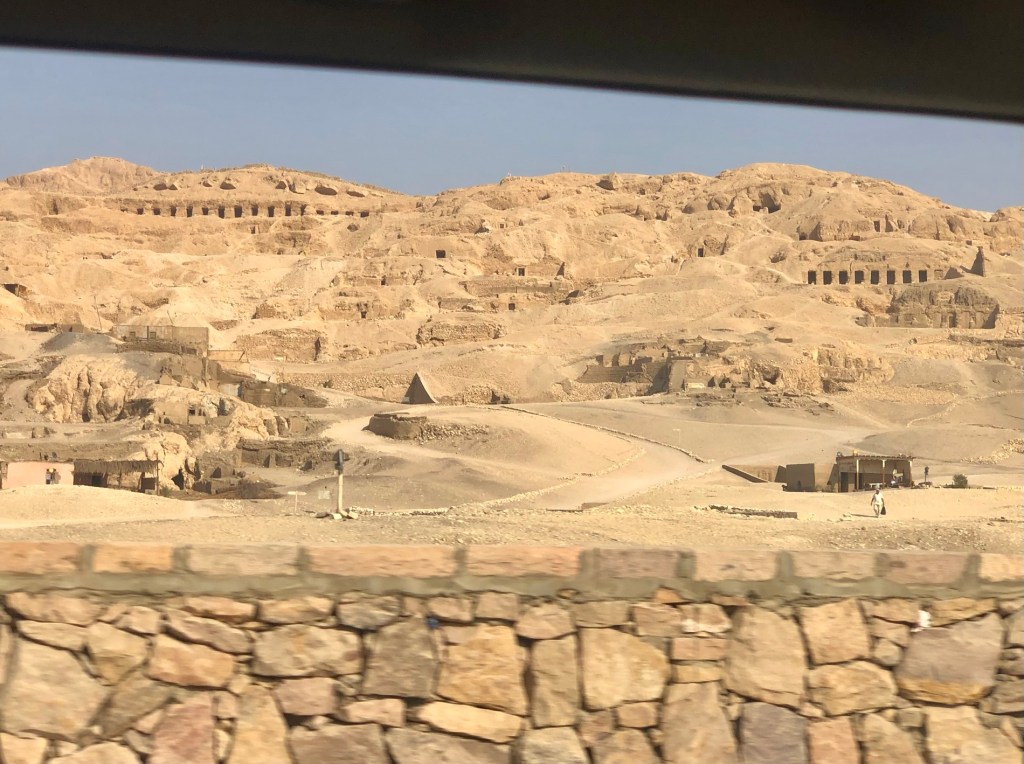
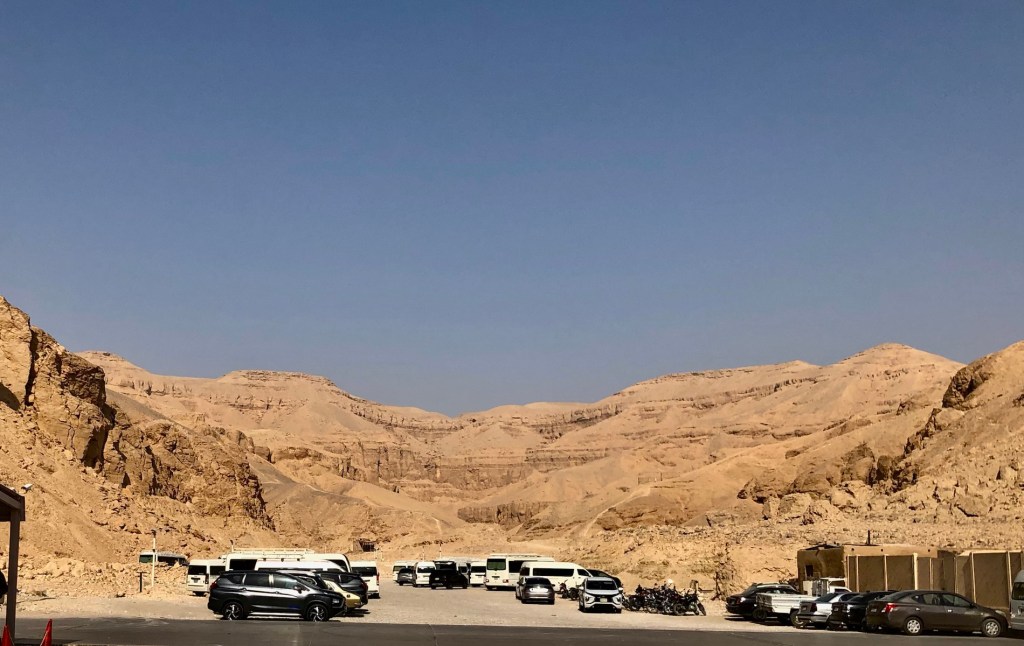
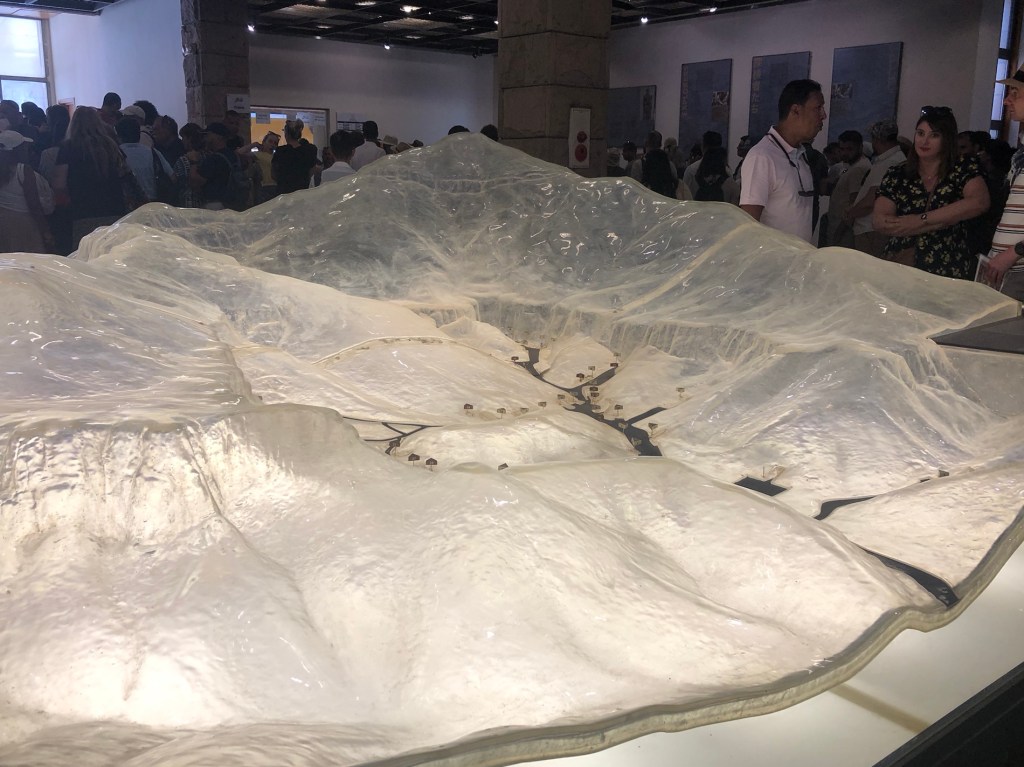
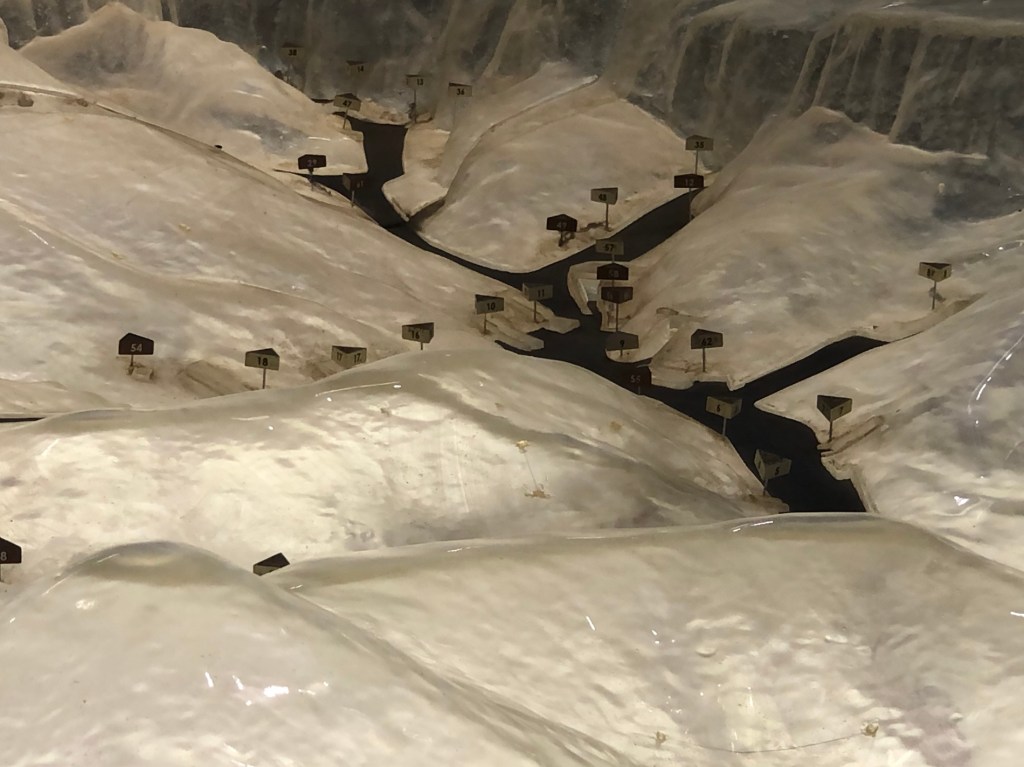
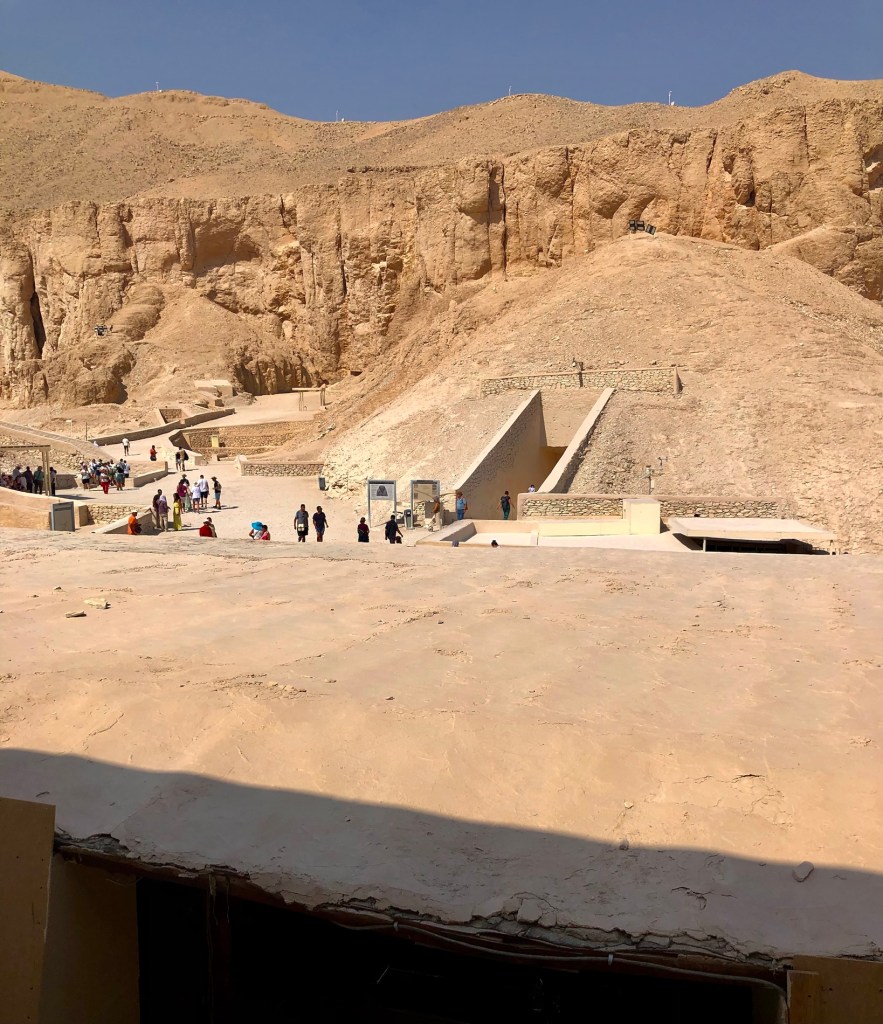
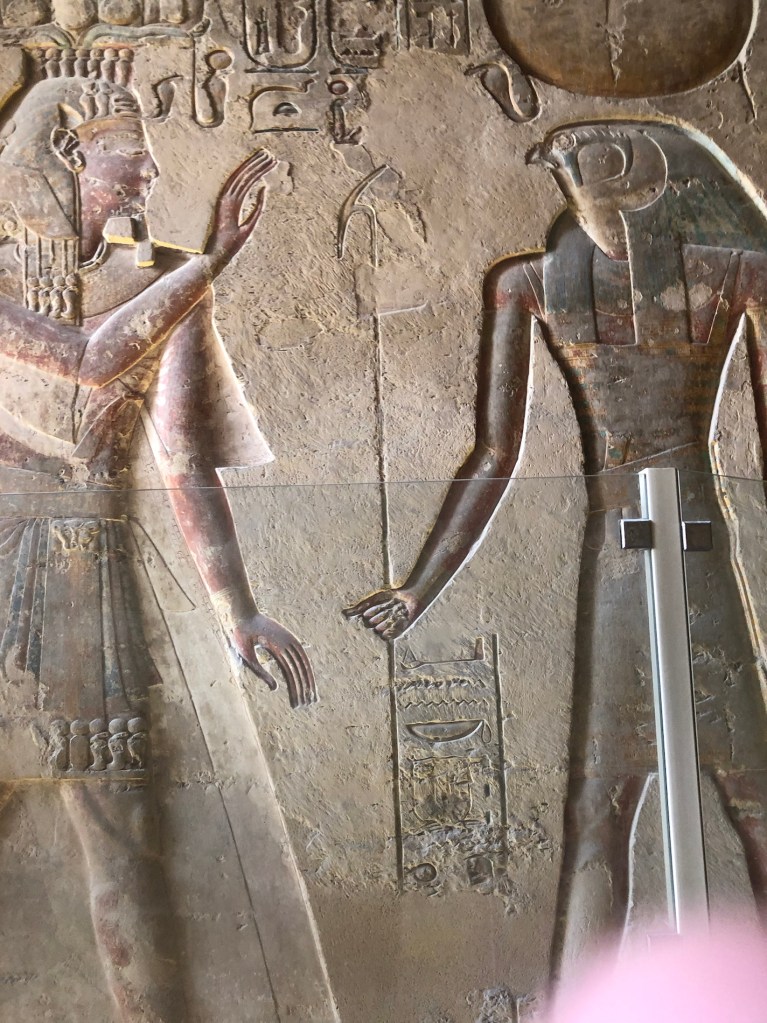
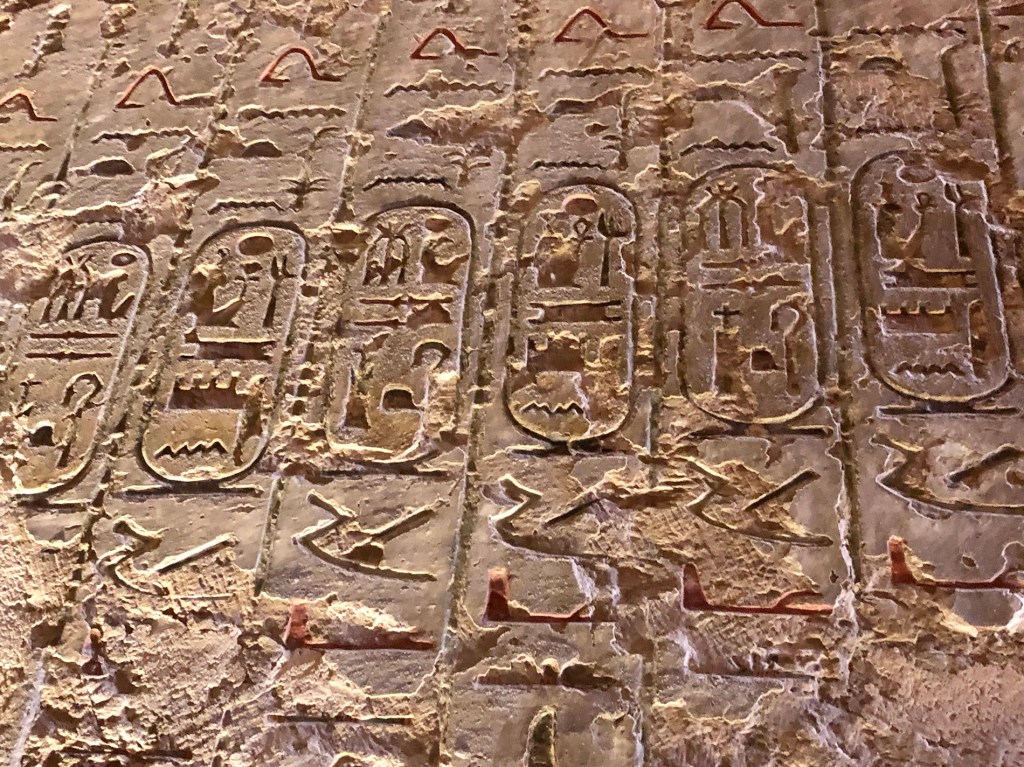
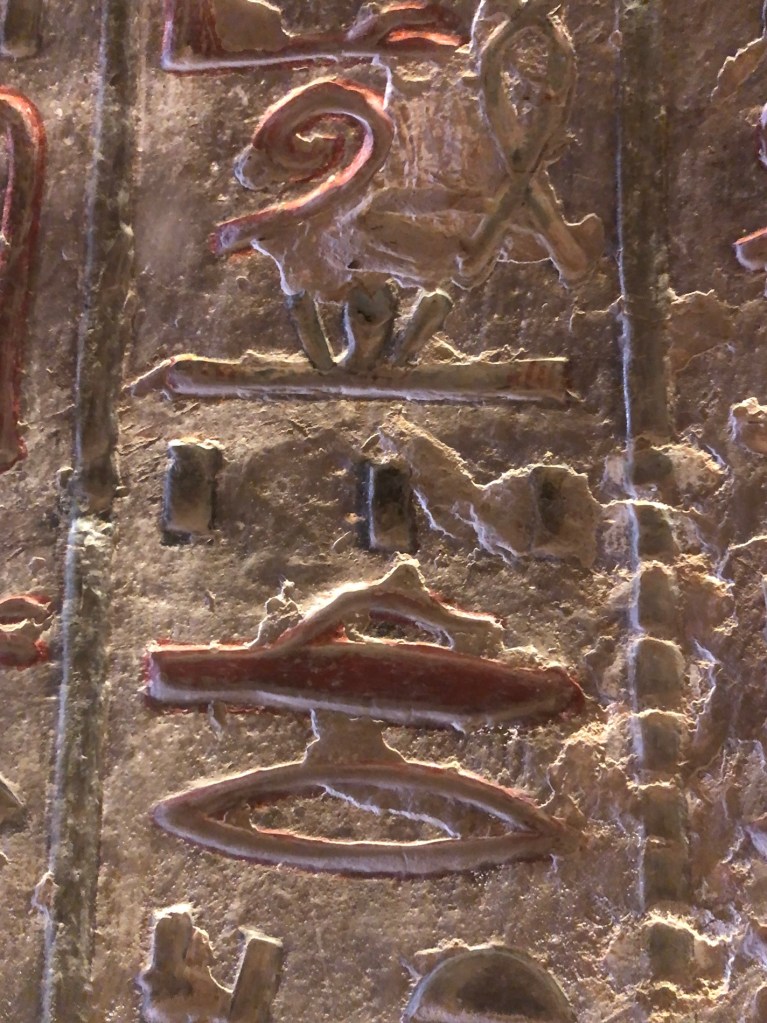
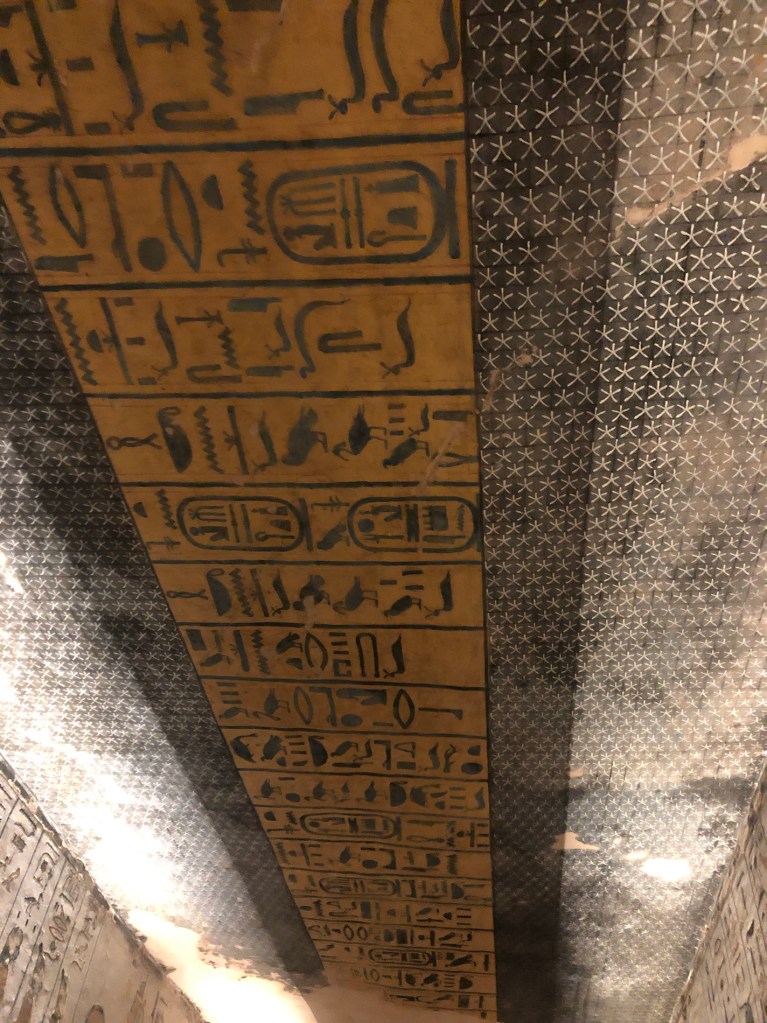
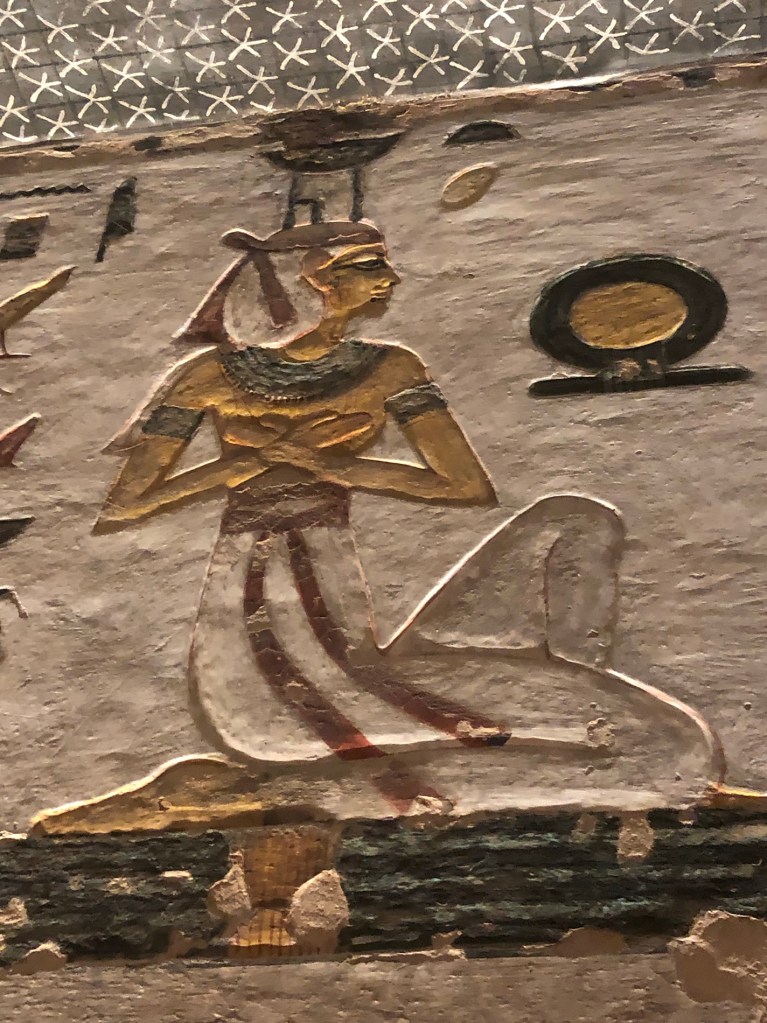
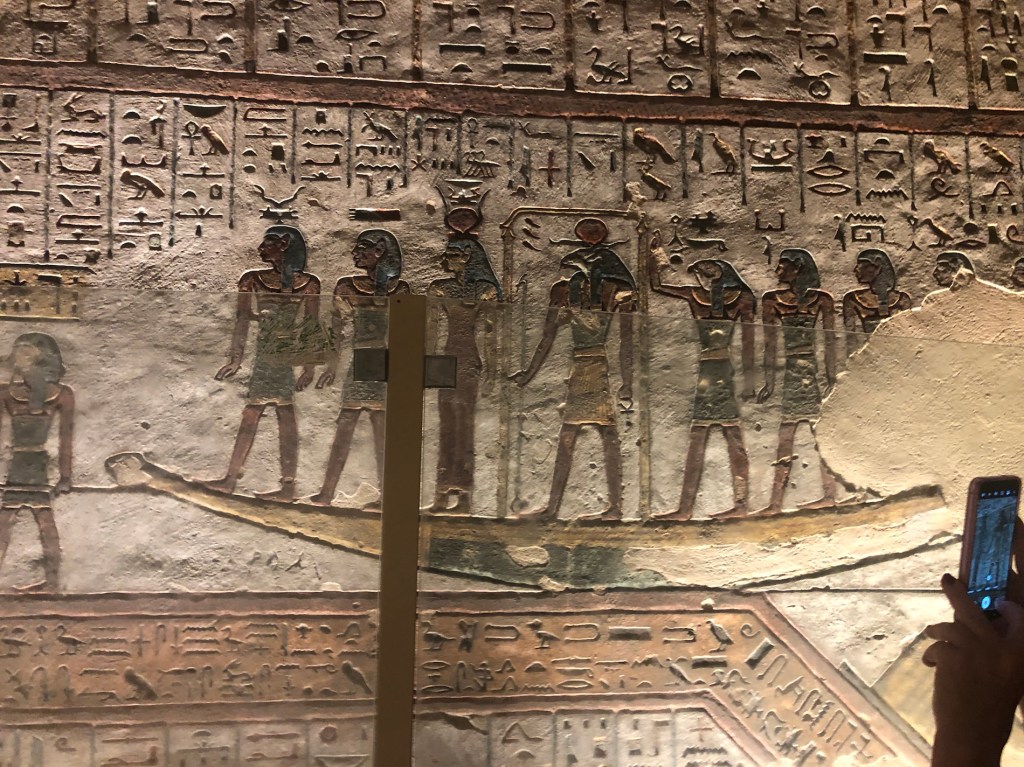
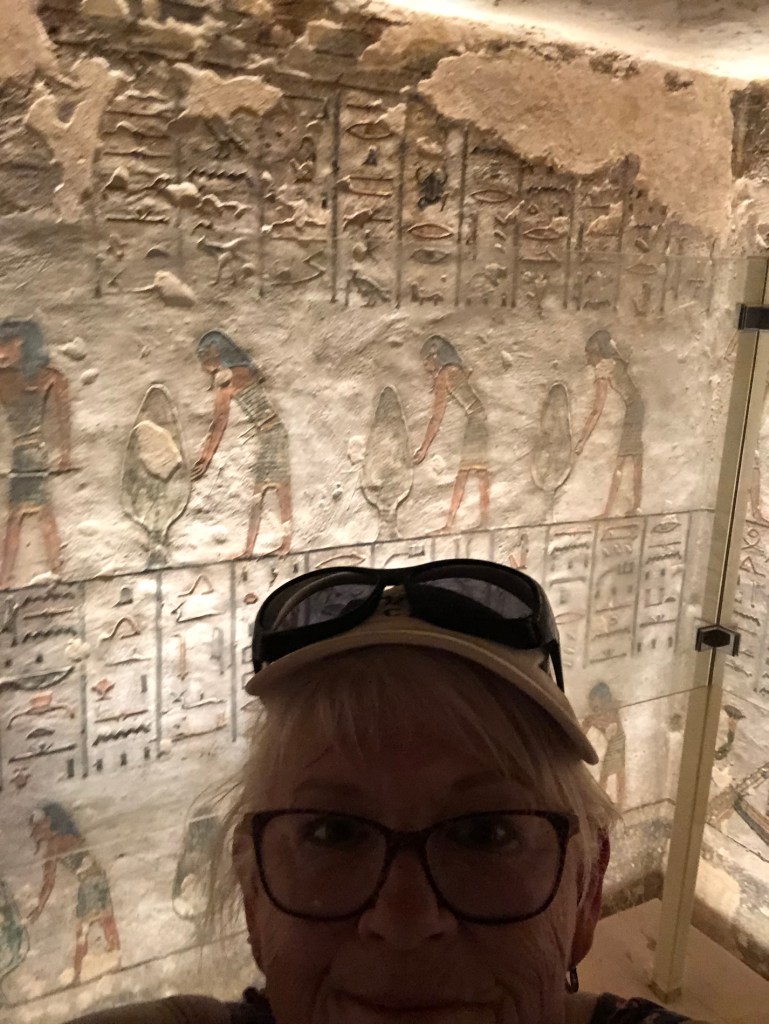
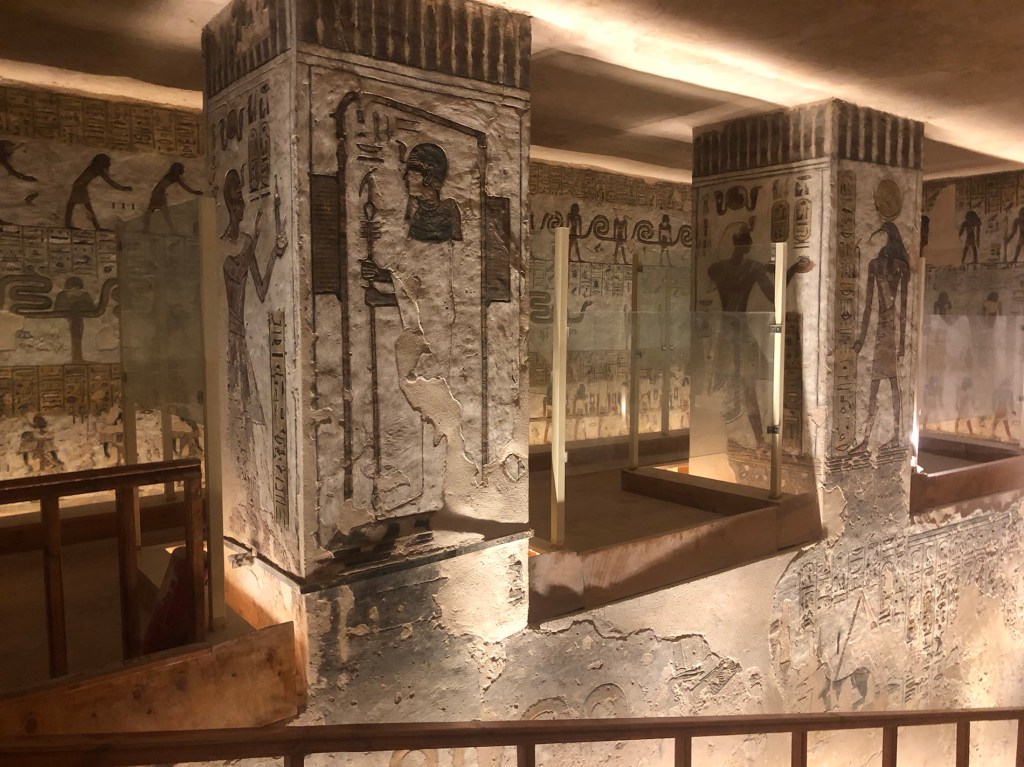
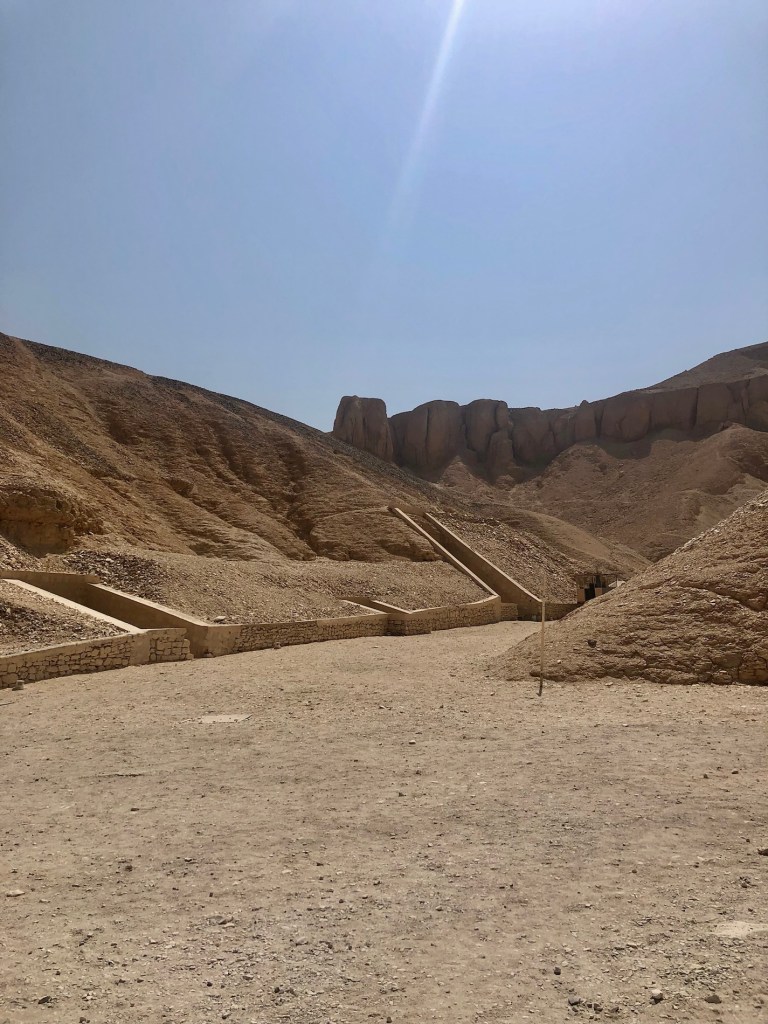
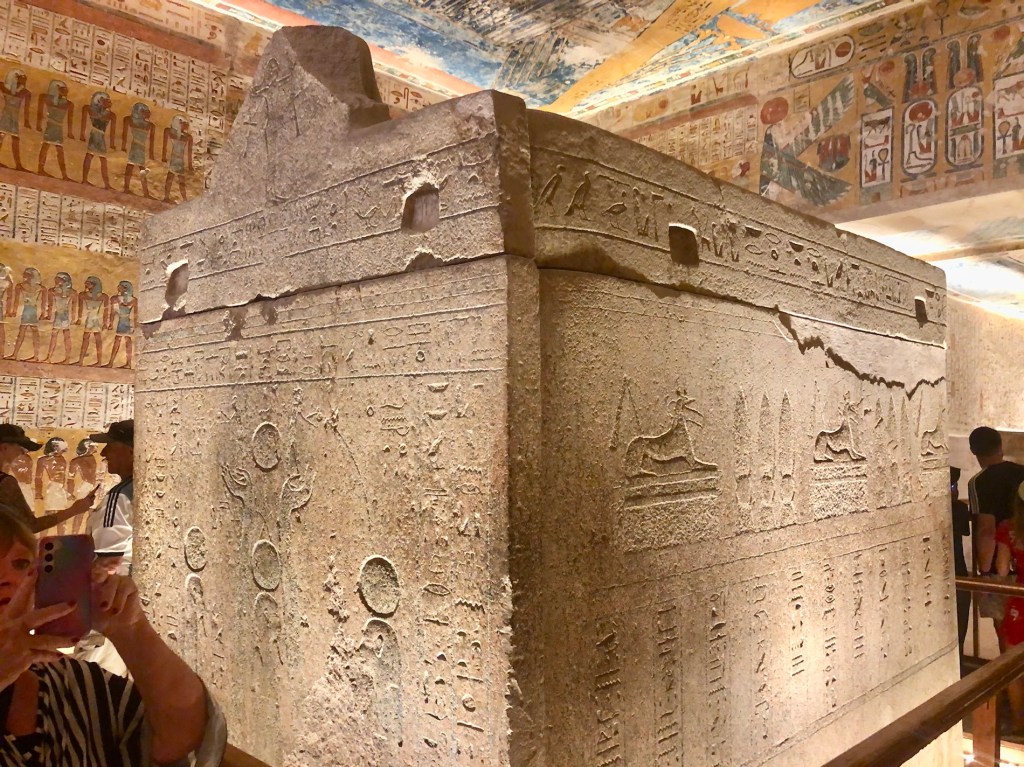
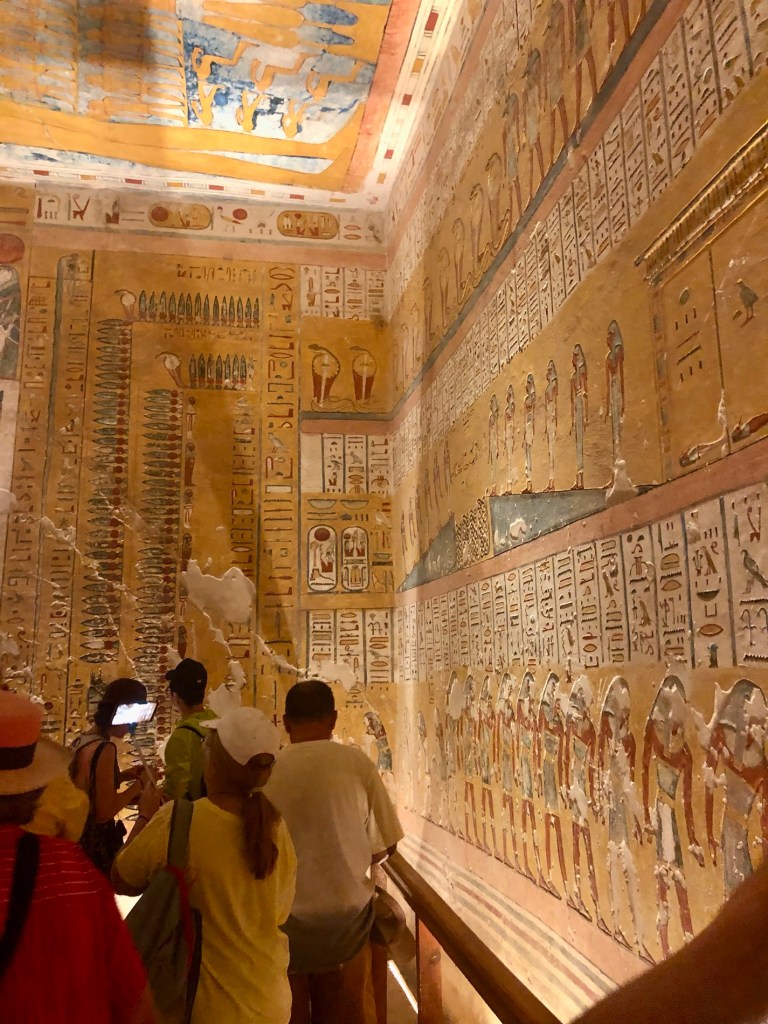
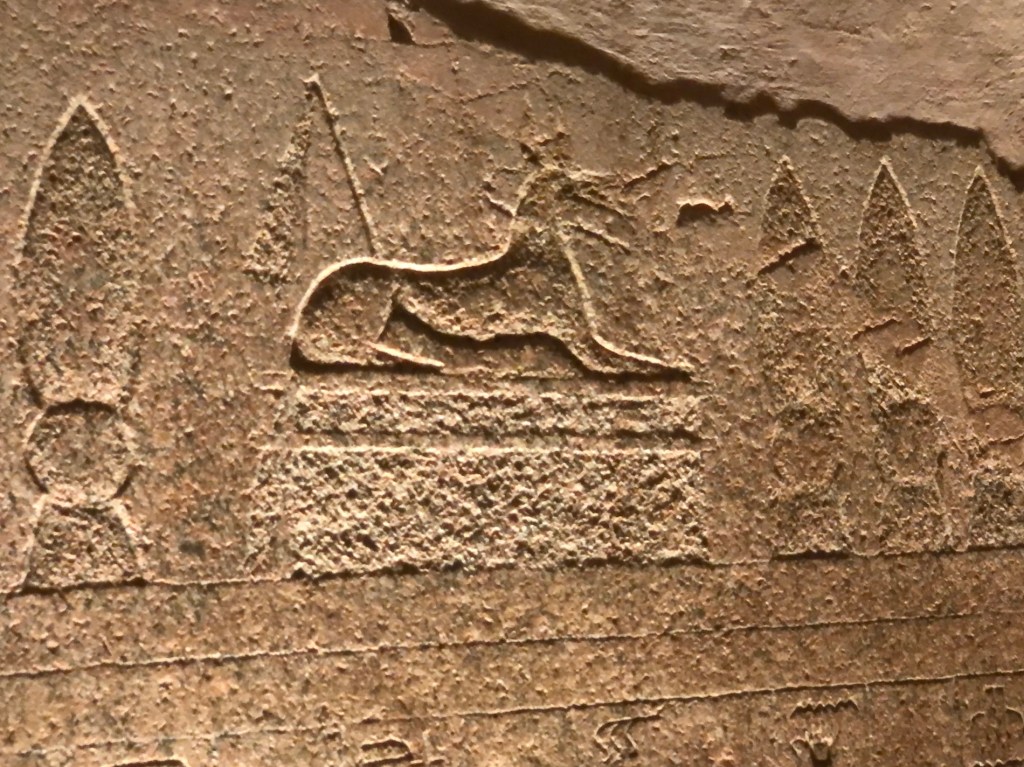
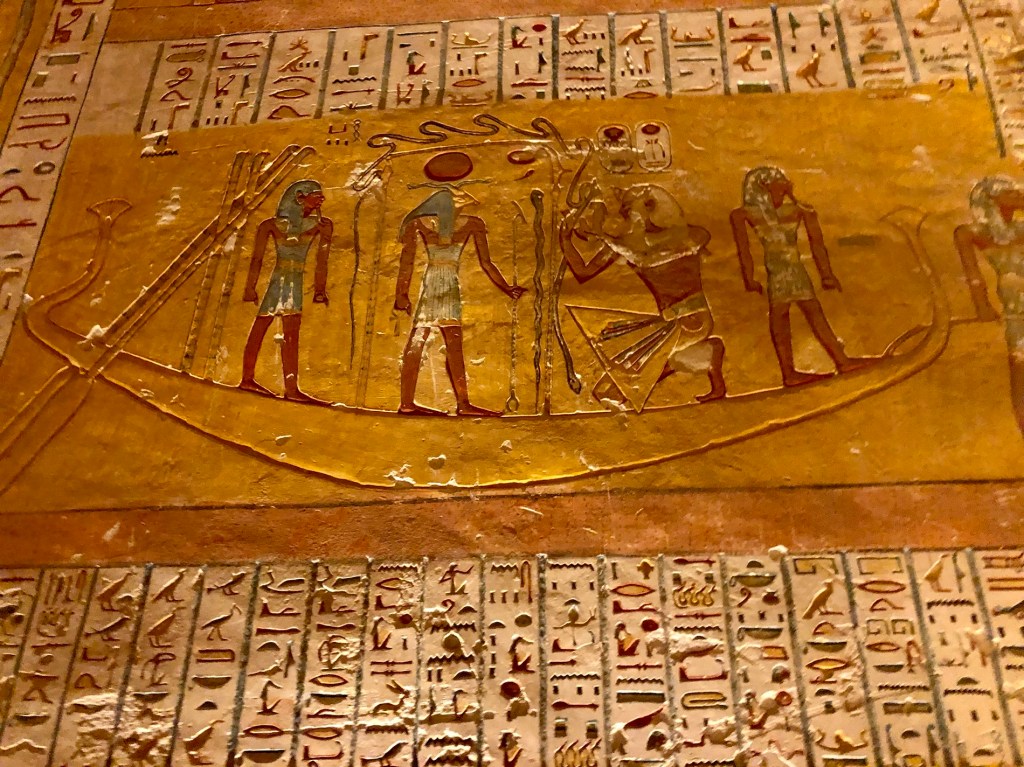
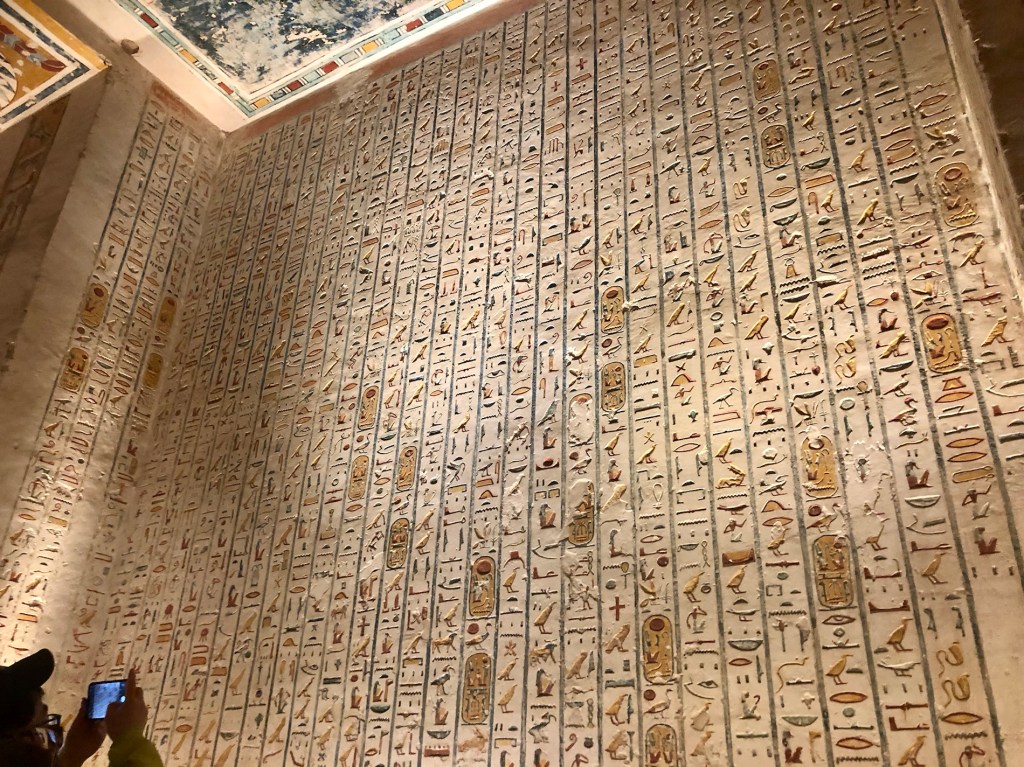
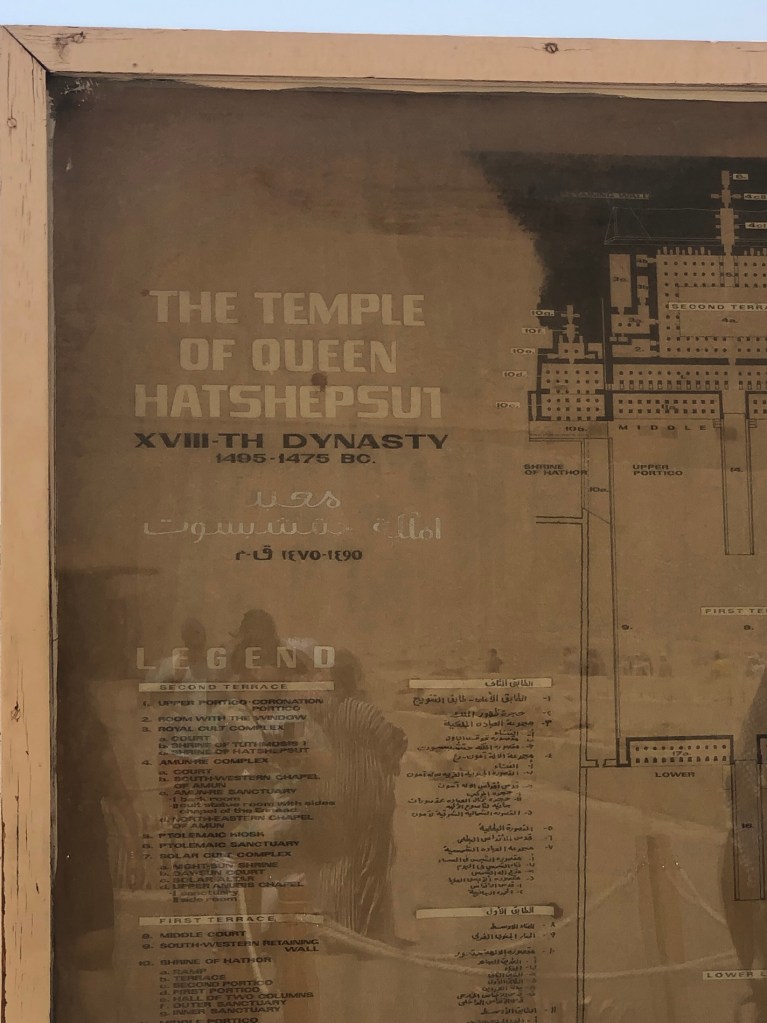
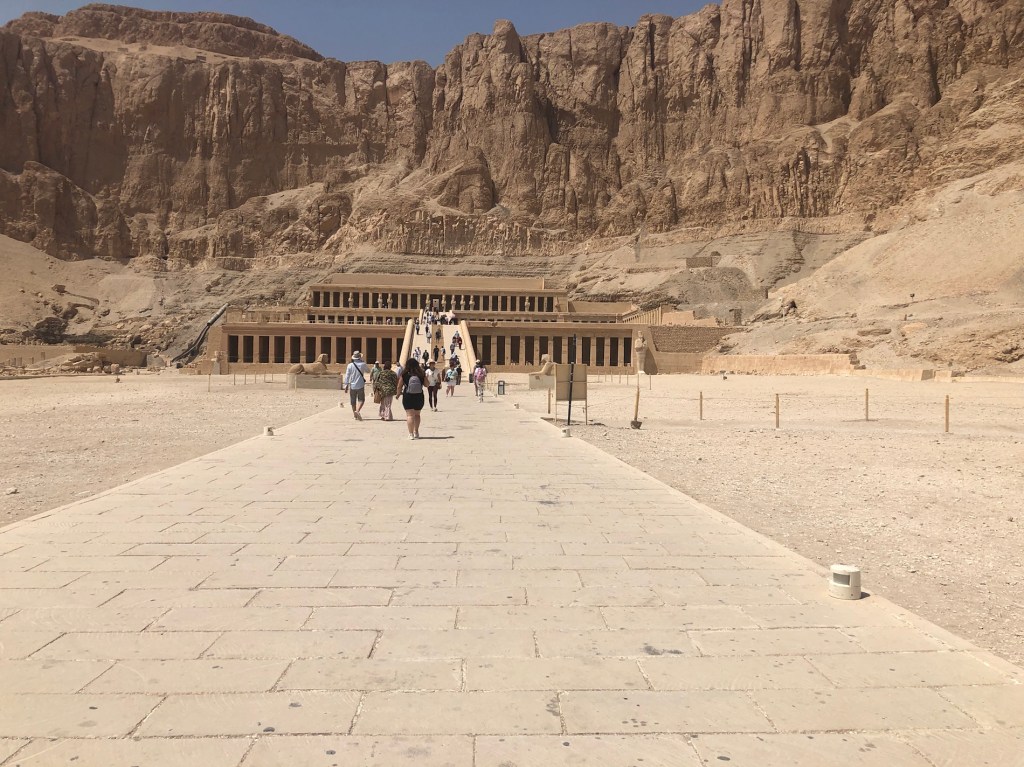
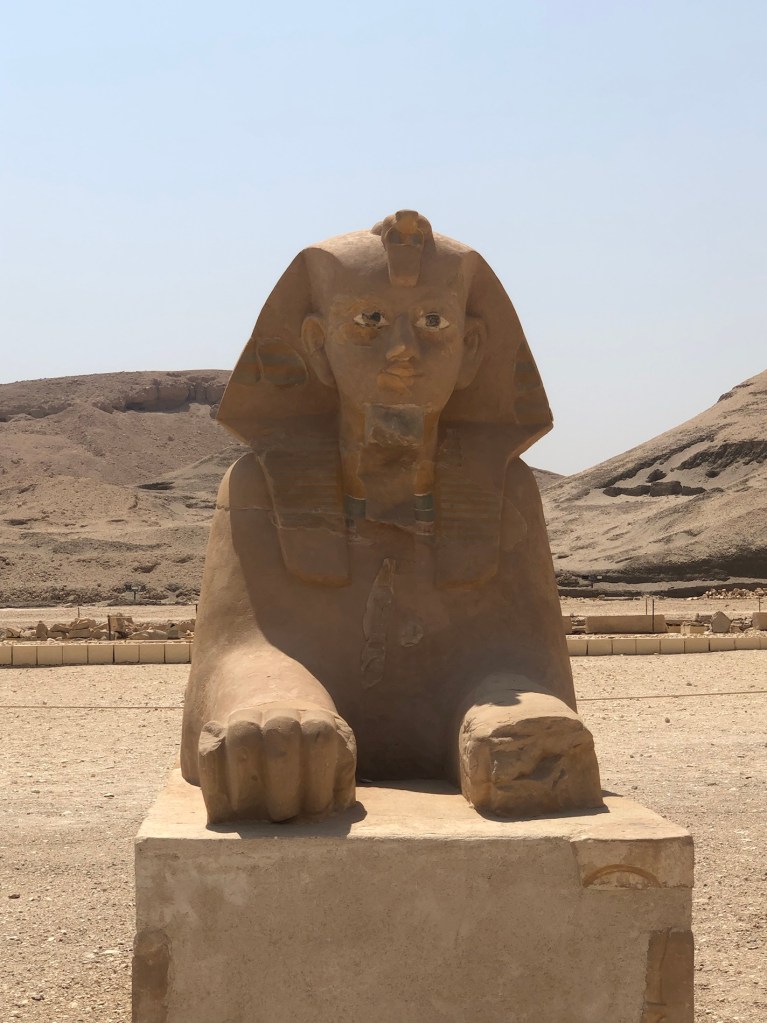
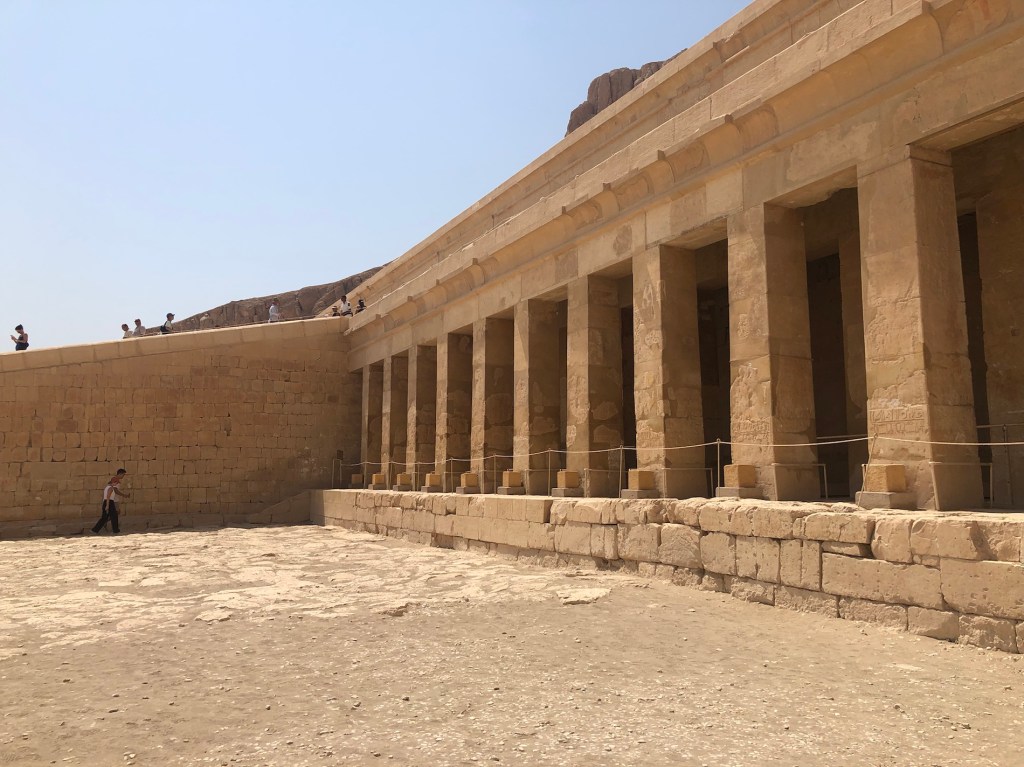
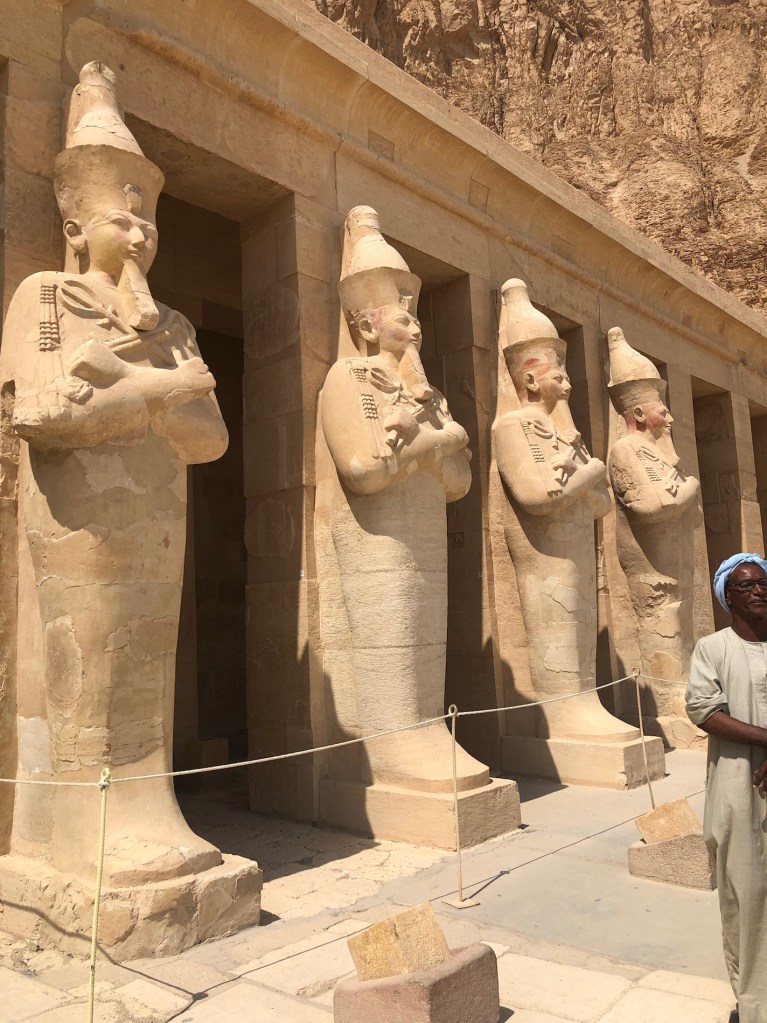
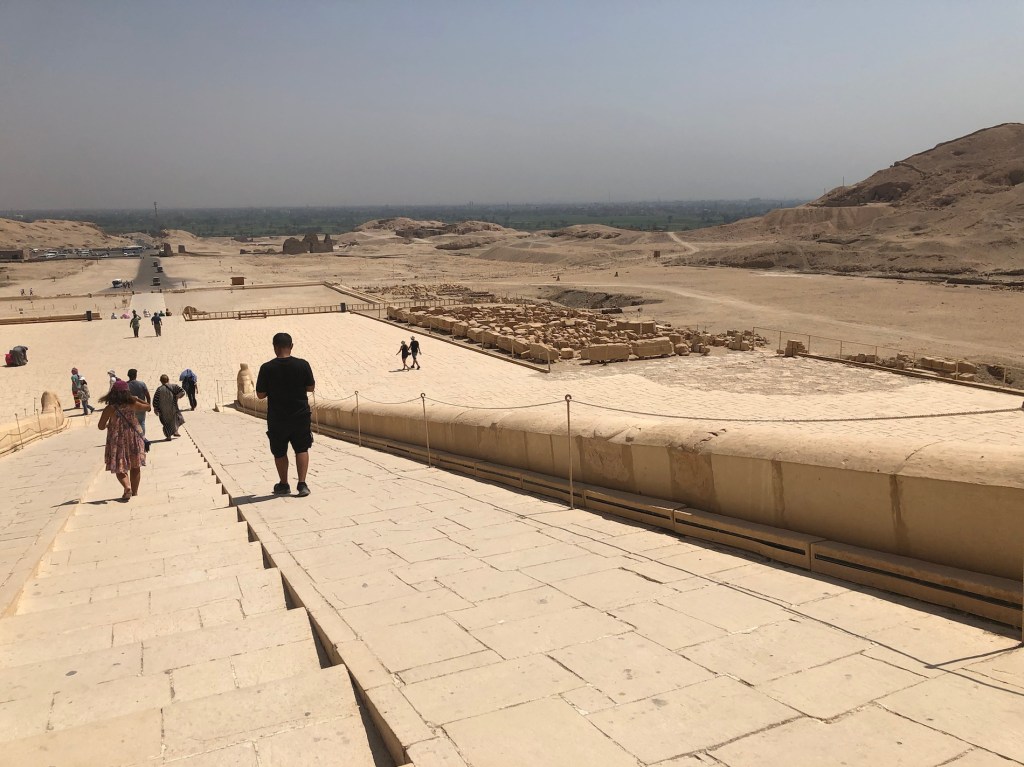
Abandoned homes that once when digging underneath, discovered TombsMore excavations going on. Homes of workers & artists that had worked on tombs of the kingsDesolate mountains. How anyone could find these tombs amongst that…. Well!!!The Valley of the Kings mapOnly 62 tombs found so far Several of the entrancesAll of these are from the tomb of Ramses IIILargest sarcophagus Tomb of Ramses IVAlabaster artist in ancient ways Some new, some ancient artifactsBread for saleThe usual garb. How much do you want to bet they don’t have much under that? The only way to keep cool!!The entrance had been lined with many(?) sphinx’ The mortuary Temple of Queen Hatshepsut (1473-1458 BC)… first female to rule Egypt

















 gailstraveladventures