Wonderful freeways, beautiful homes along the way, boats in the bay, clean…. no garbage, lots of Jacaranda trees ….. gorgeous. Great first impression.
I got an Uber into the meetup point. My driver was a fellow, Joseph, transplanted from South Sudan. His English was really very good. Apparently English is an official language there…. who knew! He said that the war there is not the worst of it but it is the corruption that is depleting the resources for South Sudanese people.
The area for the pickup appears to have a few homeless…. not at all like Pandora Street in Victoria though. One very nice feature here is that there is free wifi on the street. I’ll need it to book my Uber back to the ship.
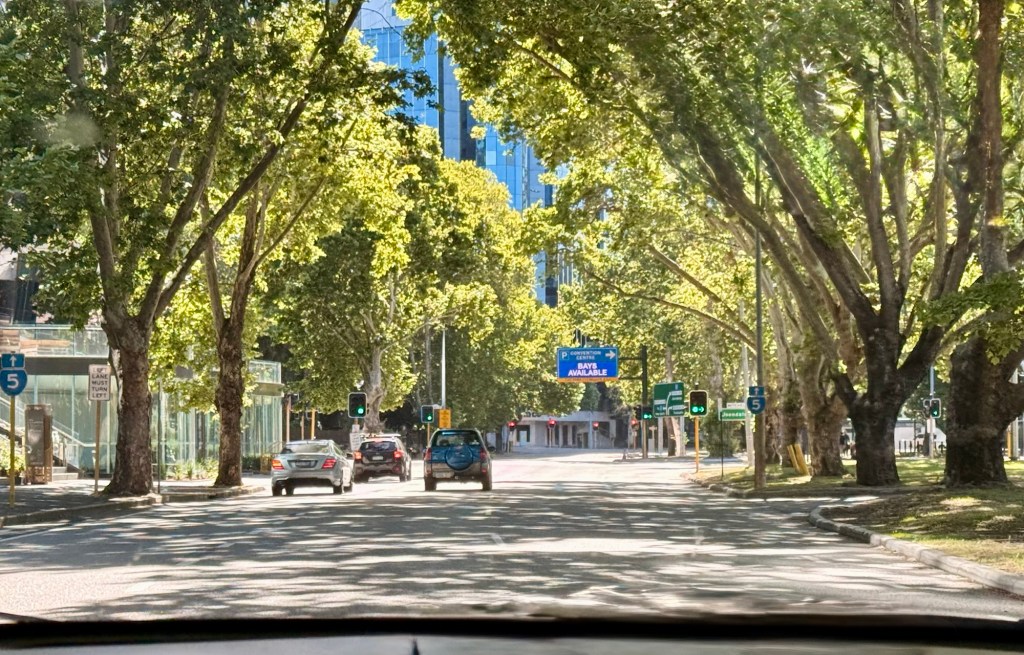
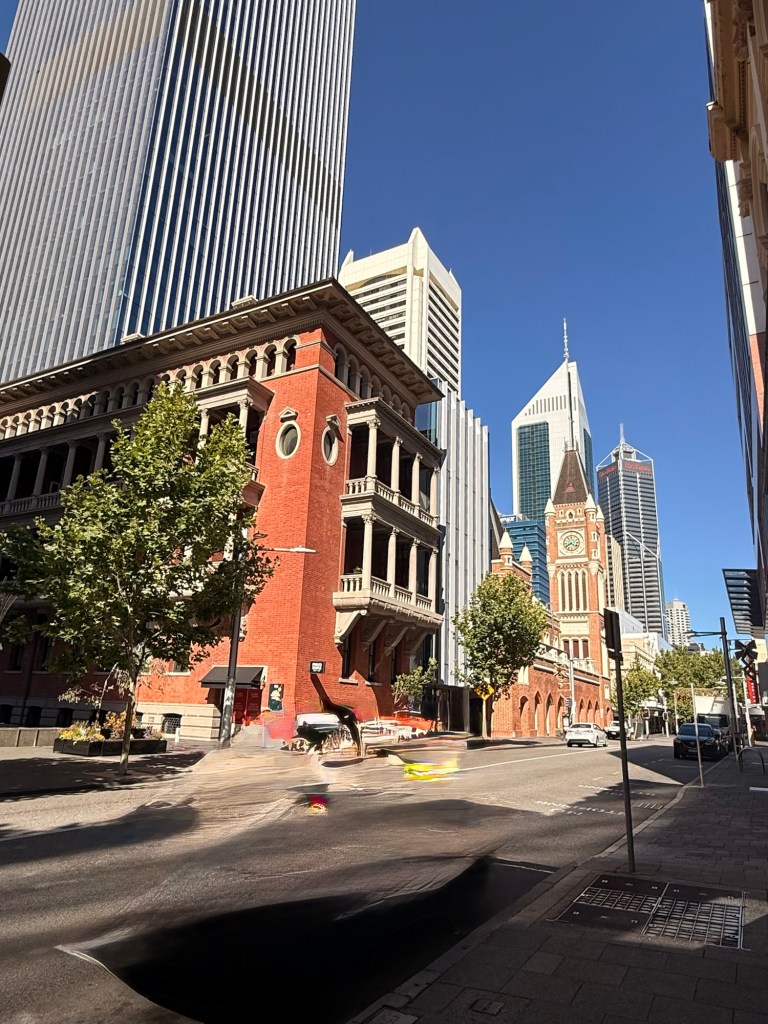
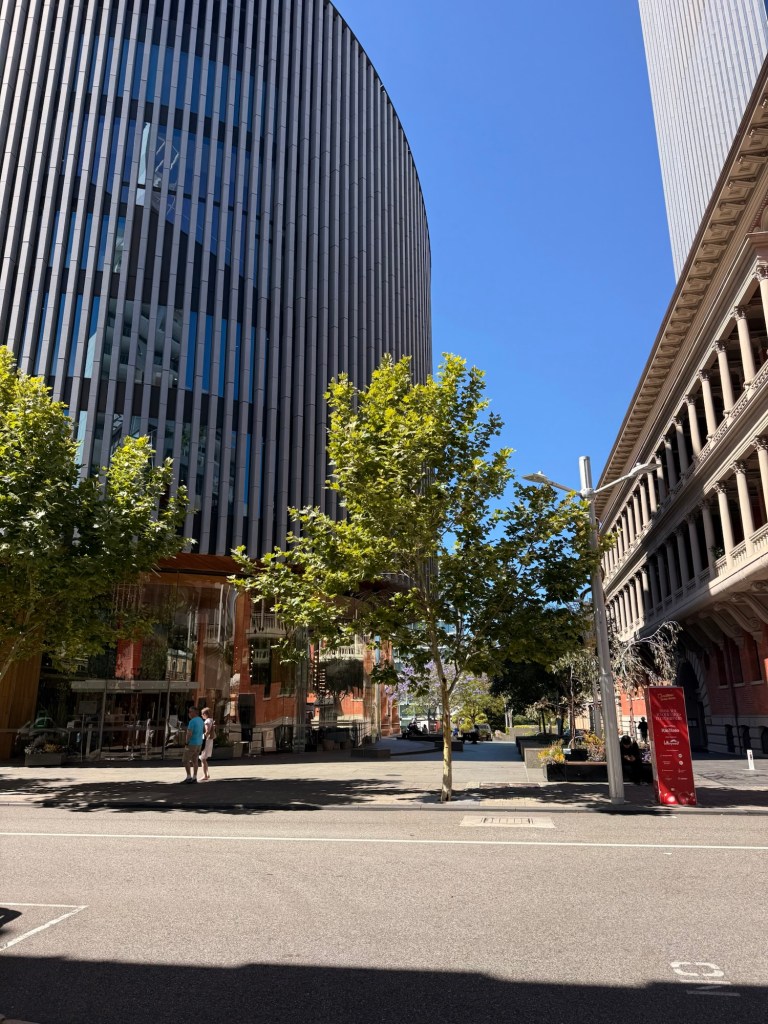

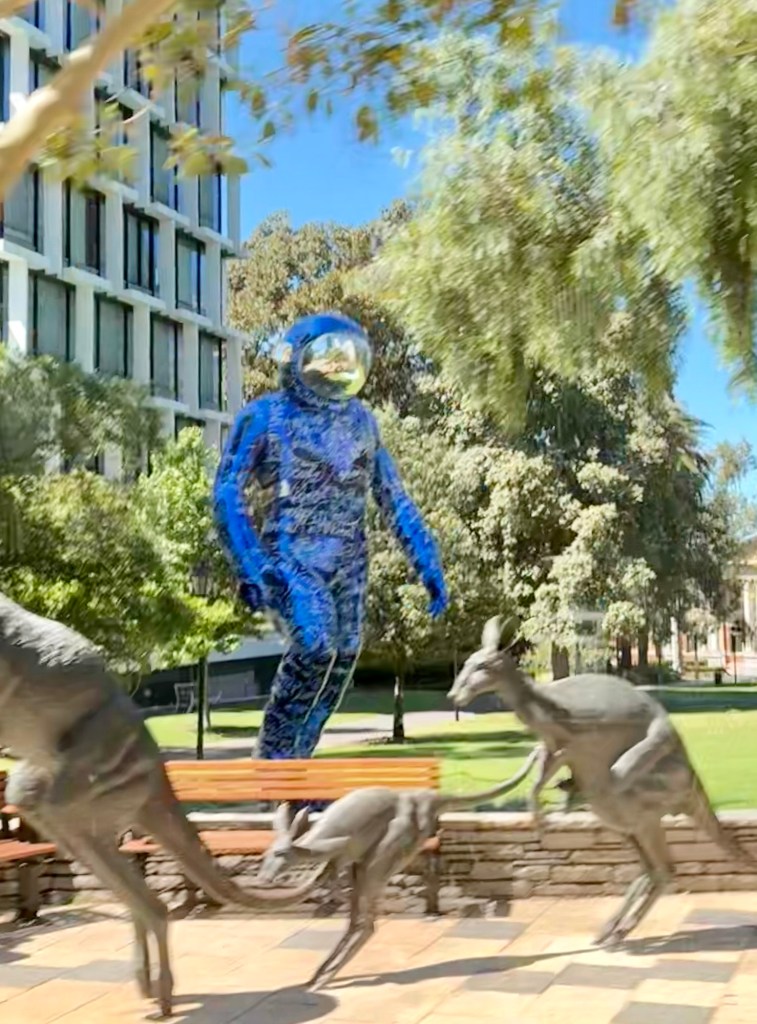

Guide today is Caspar. There are only 8 of us. Perth is the most isolated city in the world.
Western Australia has been inhabited for 65,000 years by aboriginals. They have 14 languages. Place names ending with “up” are aboriginal …. meaning “place of”.
Dutch came in 1600 ‘s… searching for Dutch East Indies ….named the Black Swan River after they found the black swans native only to Australia. They are found in fresh and brackish wetlands along with turtles.
Apparently the locals burn the land to improve the following year’s crops.
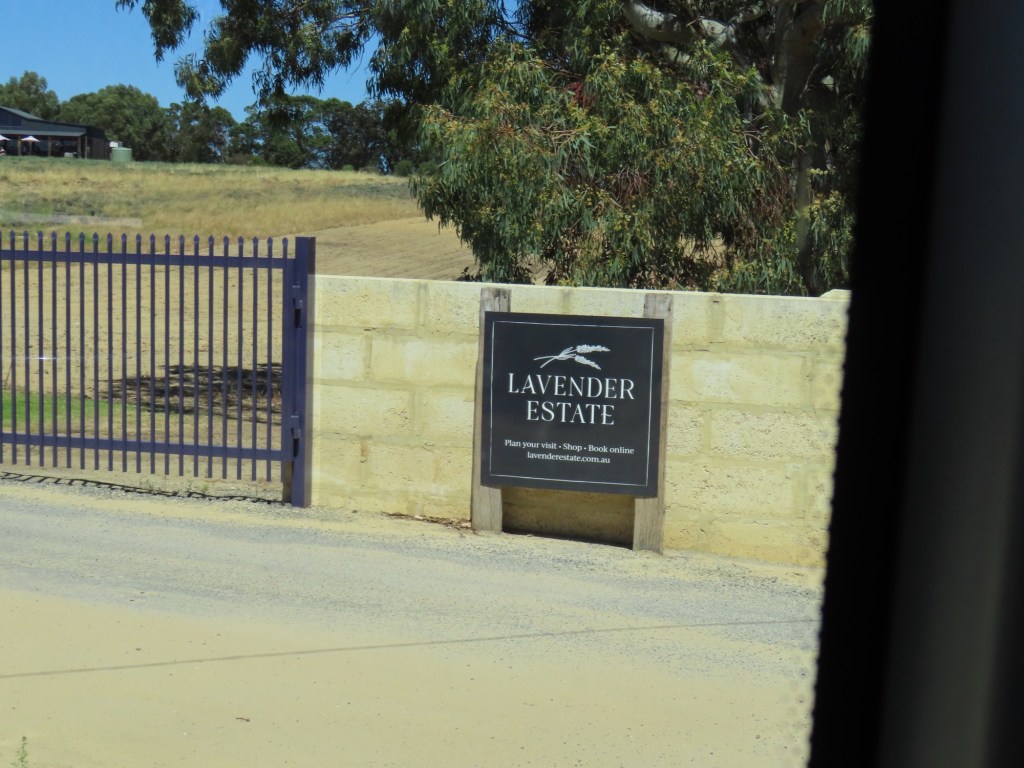
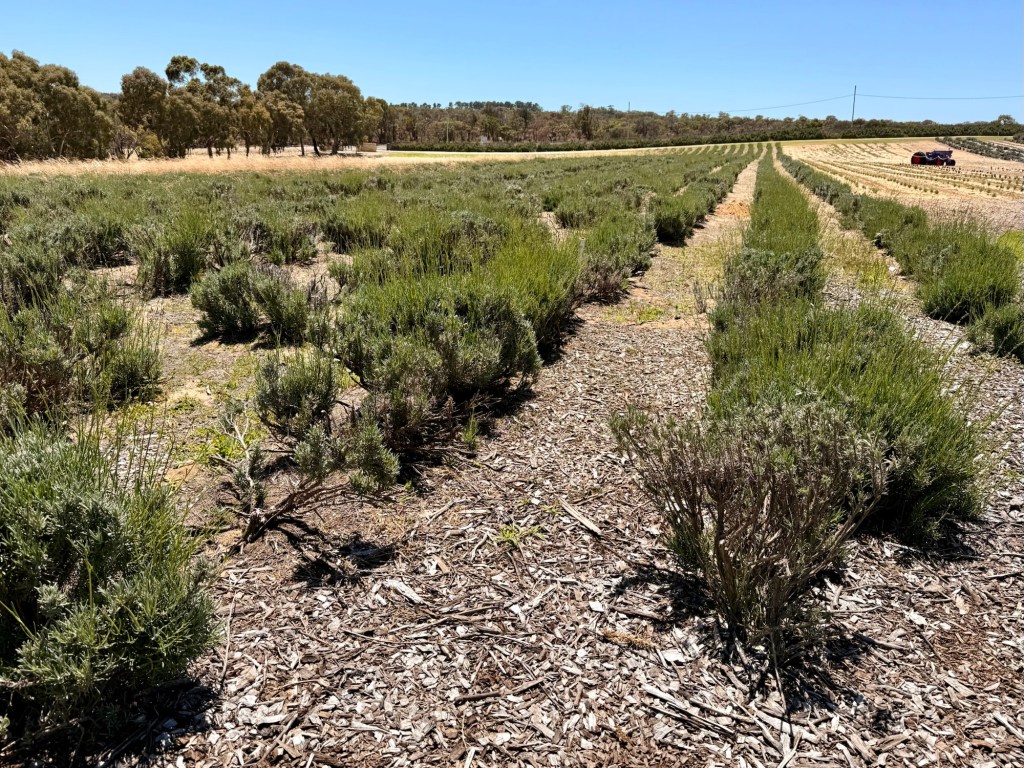
We stopped at Lavender Estate farm for coffee and wonderful scones with clotted cream and strawberry jam…. yum !! The lavender has not really started to grow for the season. Then another 1.5 hour drive to the beach.

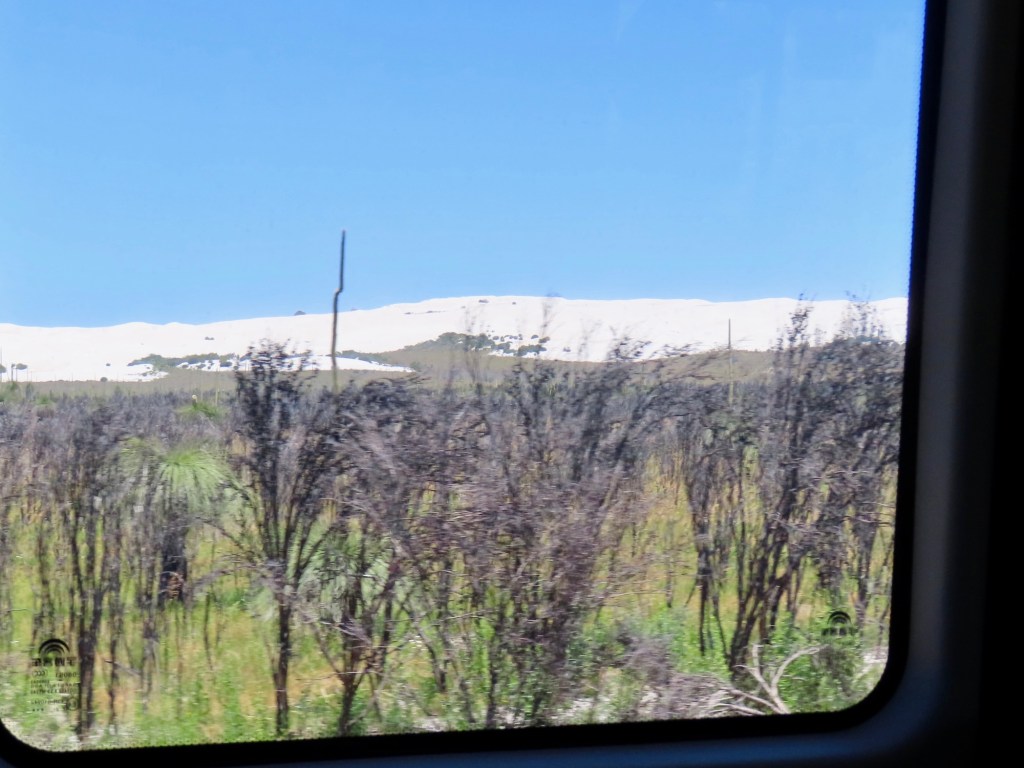
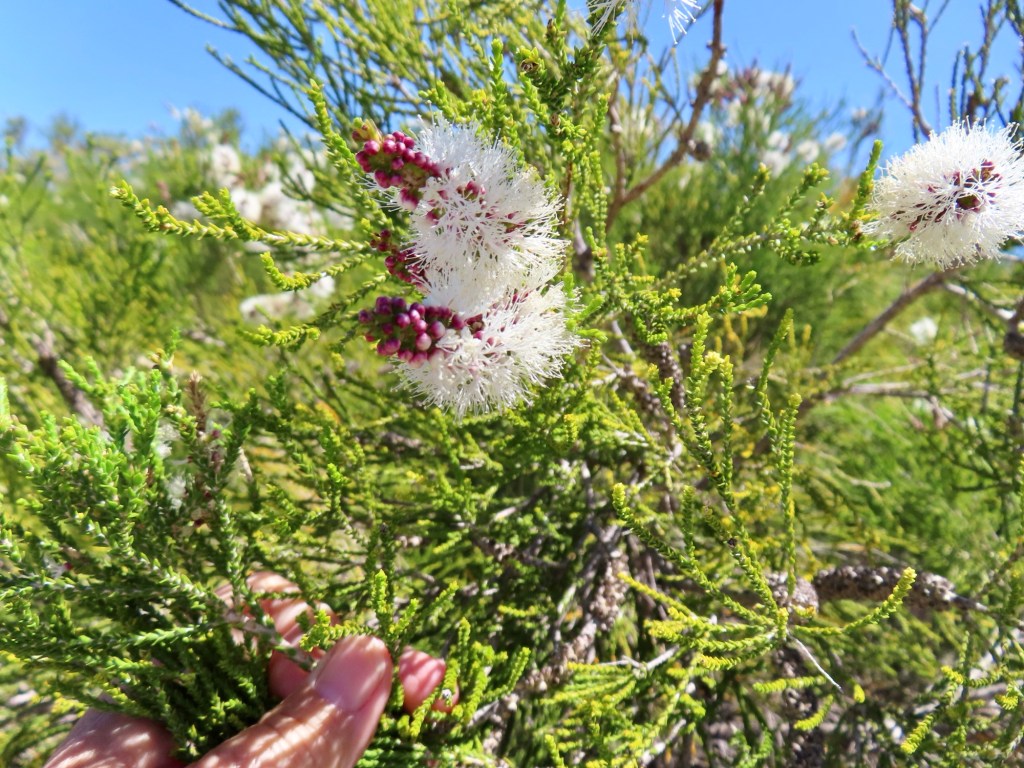
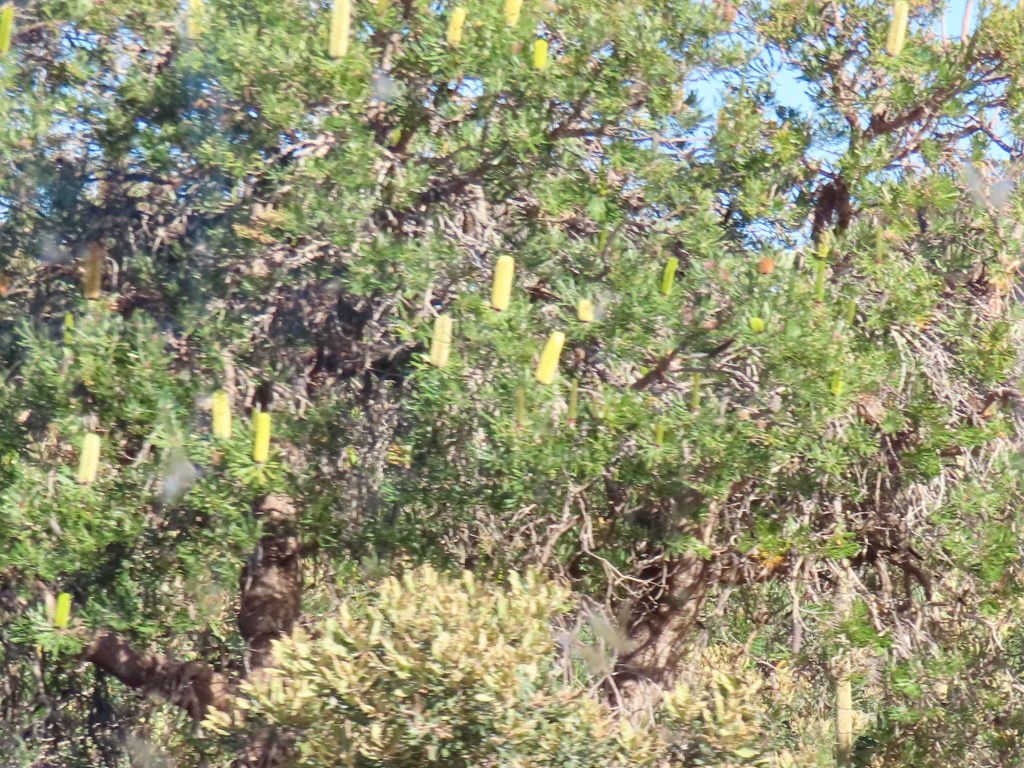
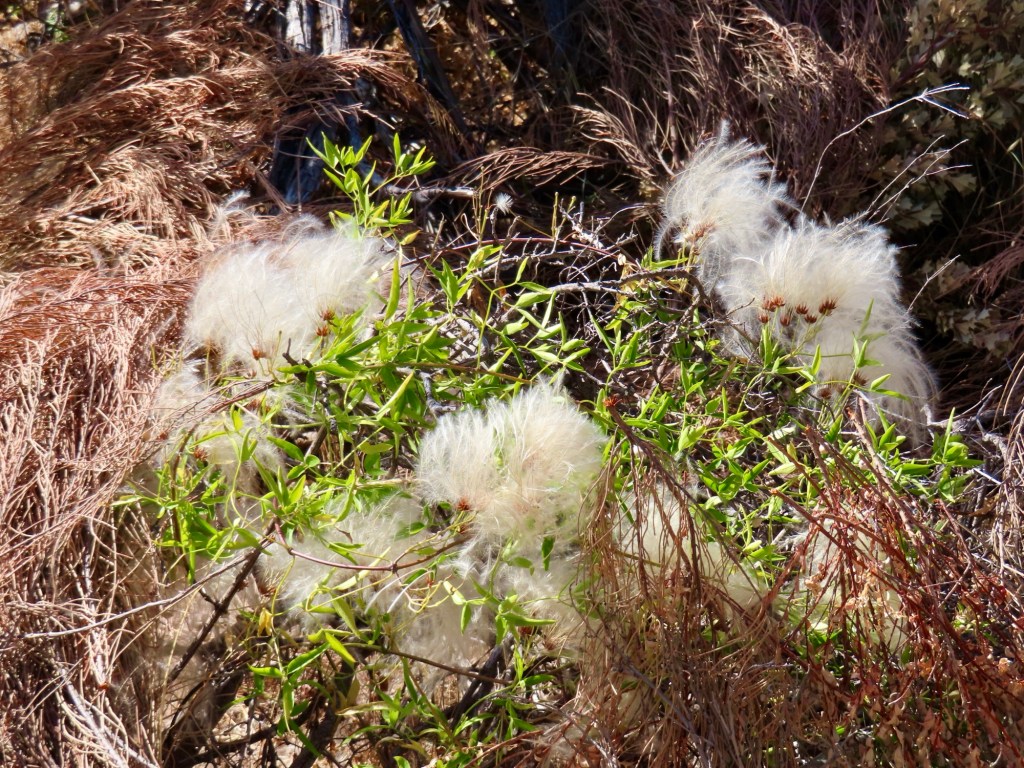
Melaleuca trees also known as bottle brush. Pine trees & carrots grow in dry climate. Cockatoos eat the pine trees. Draecenas growing wild. We passed through area of controlled fire but only the Australian “Xmas” trees survived. Another controlled burn area burned 70,000 hectares. It started after a prolonged drought, from lightning and winds up to 100kms hour that caused it to jump the road … was no longer under control. I believe we were told that for each dead one …5 will grow. We passed by the town of Lancelin, a top secret defence military base. It is on the coastline. The area recently lost 20 metres of coastline with a lookout tower collapsing . The area is protected…. For plants and animals… and watching stars. Owls, no bright lights are allowed to protect animals. Many endemic species not seen anywhere else in the world.
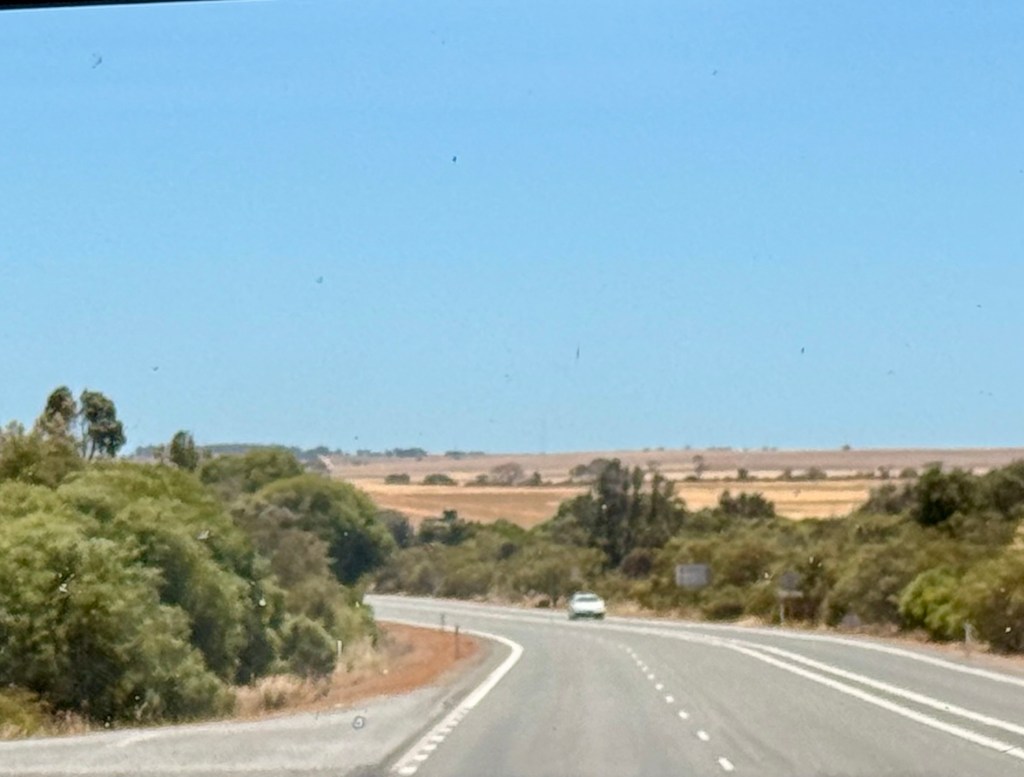
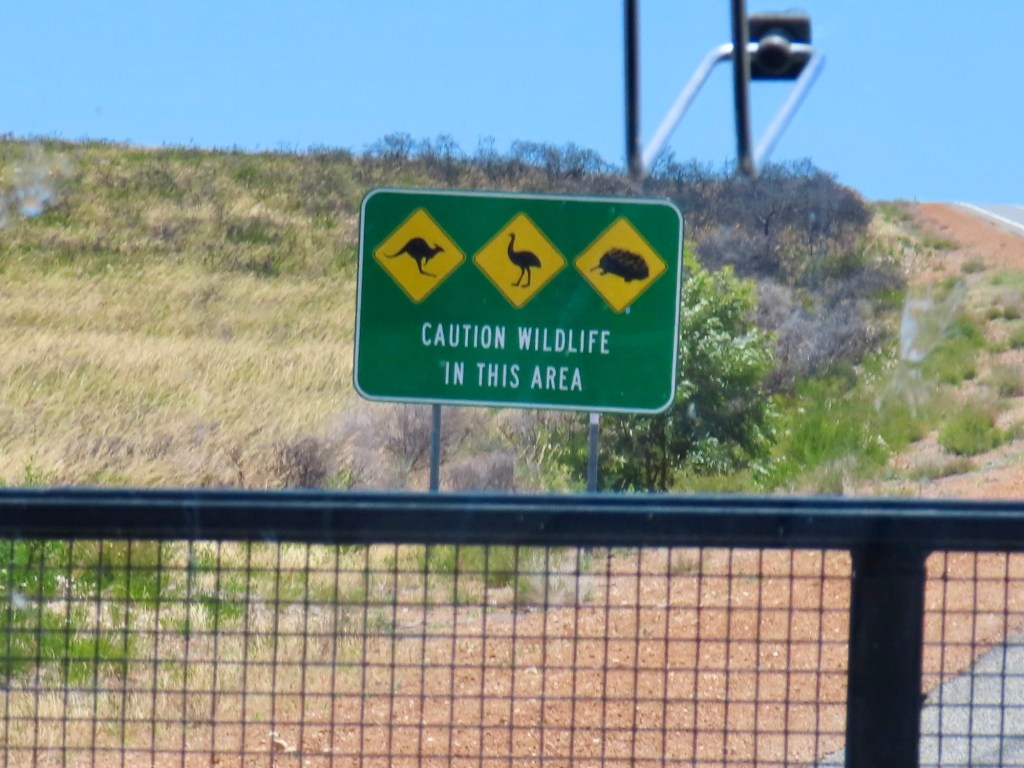
Came across cars stopping on road in the middle of nowhere…. A guy in the middle of the road trying to get someone to stop. Scary …. thought he was high or crazy but then we a car in the bushes. He probably had an accident and was trying to get help. We could not stop. Others did.
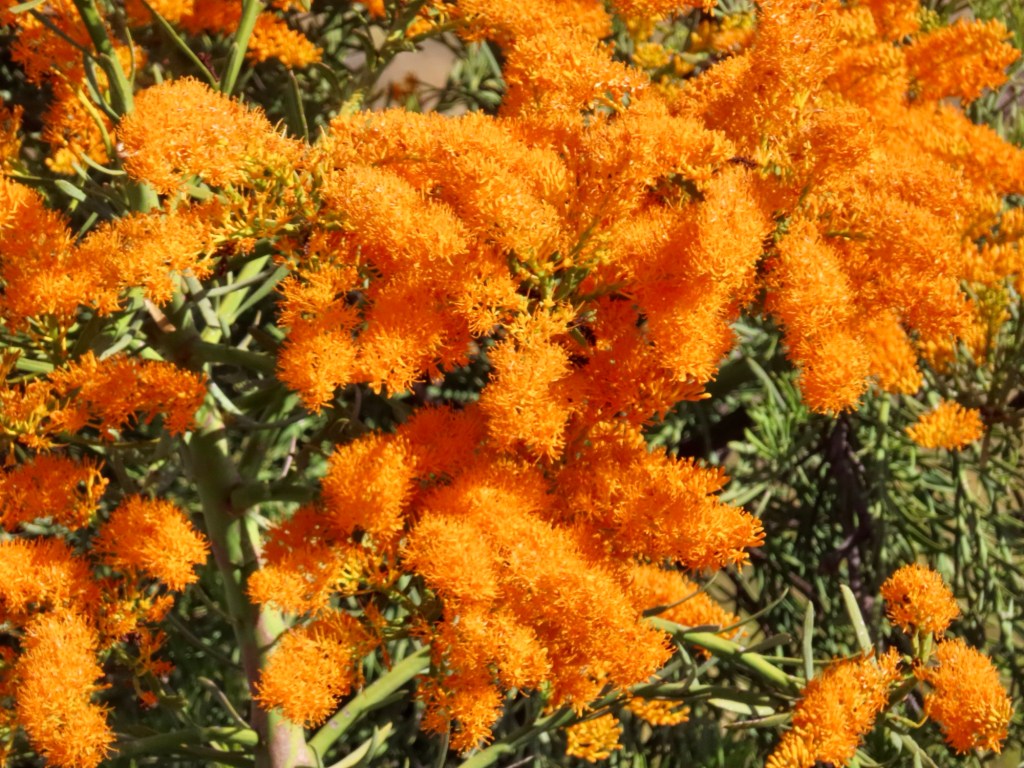
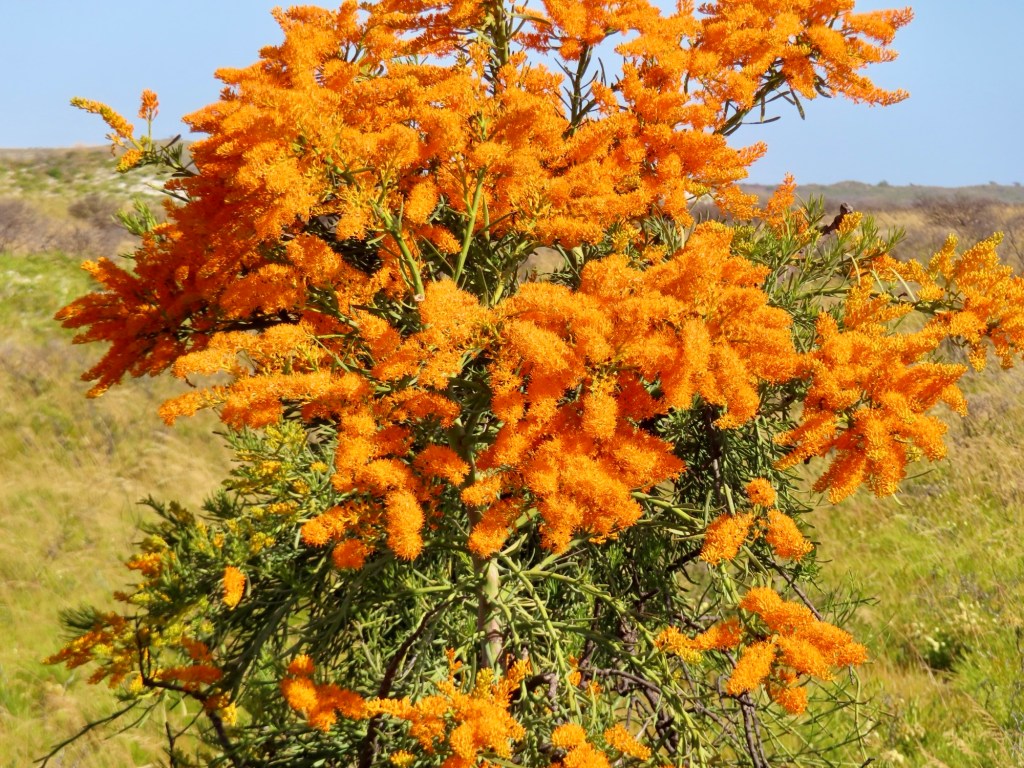
Orange coloured “Christmas” (fouchar) trees…. Are parasitical… over take everything around them. They only grow in Western Australia. Eucalyptus tree are bigger than the orange trees here but not east of here in the desert.
Whales are now protected as in Canada.
20,000years ago water was 130 metres under water
Right side of the road there is no vegetation… blowing sand moves 5-10 metres in north-easterly direction every year.
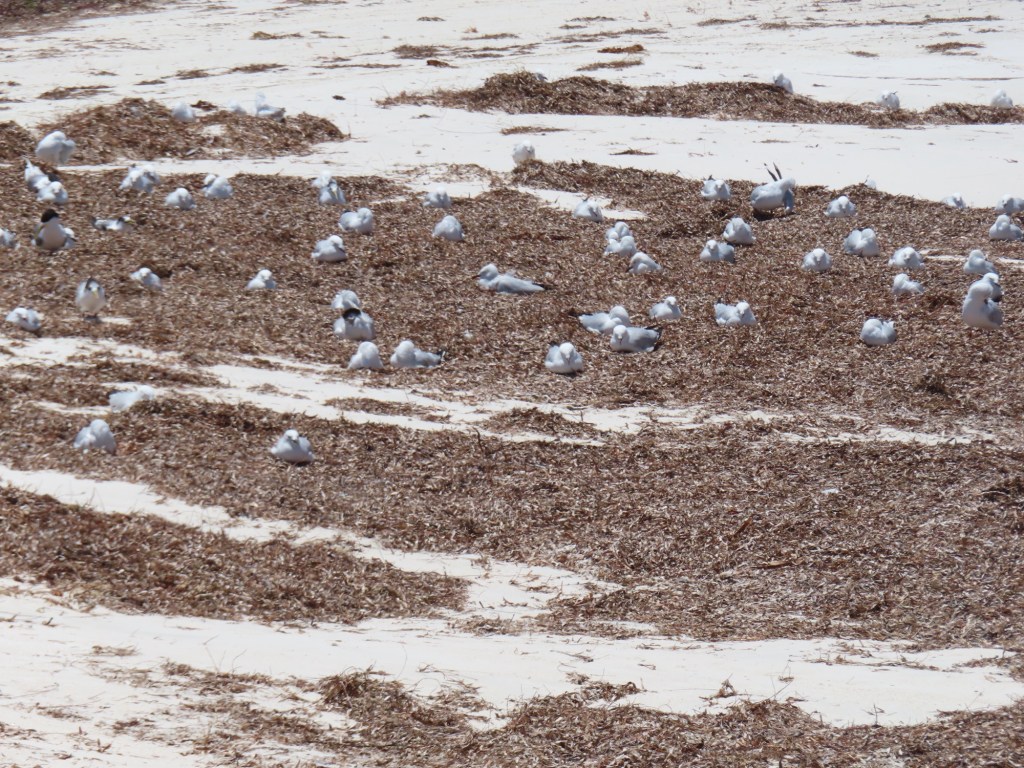
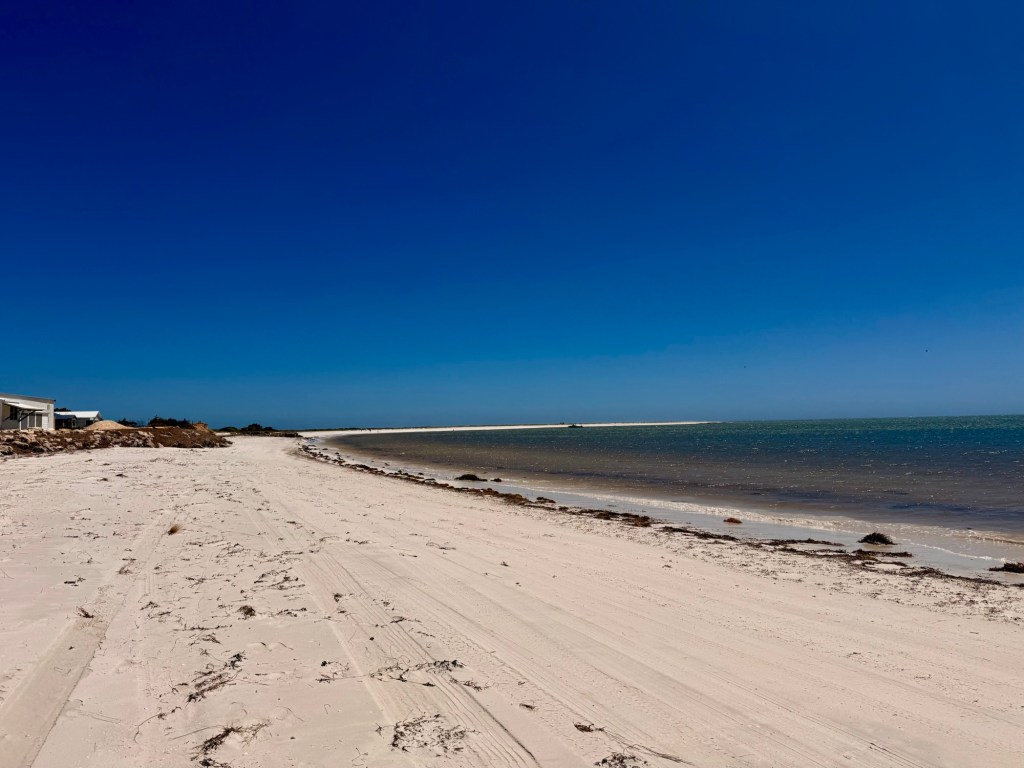
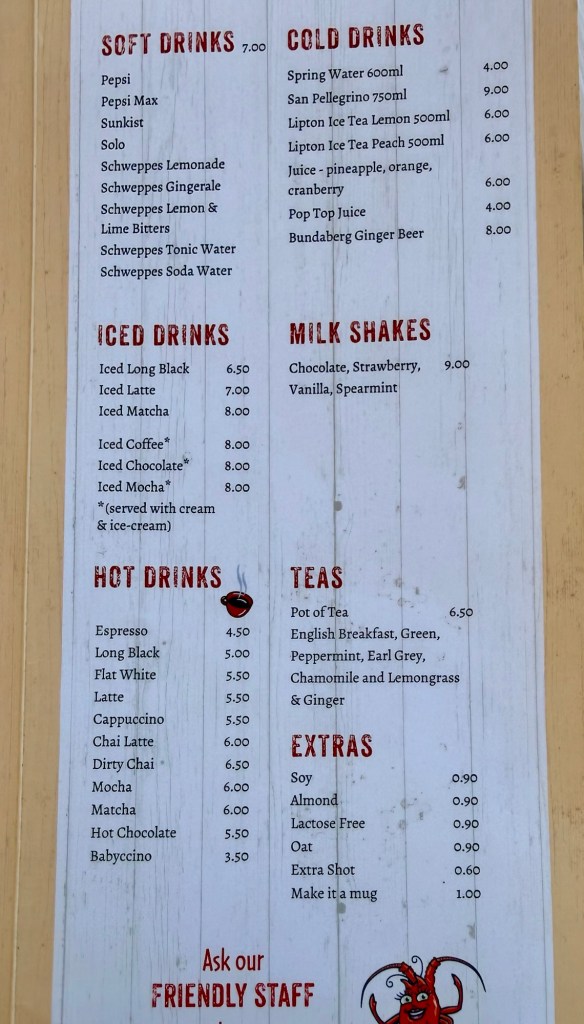
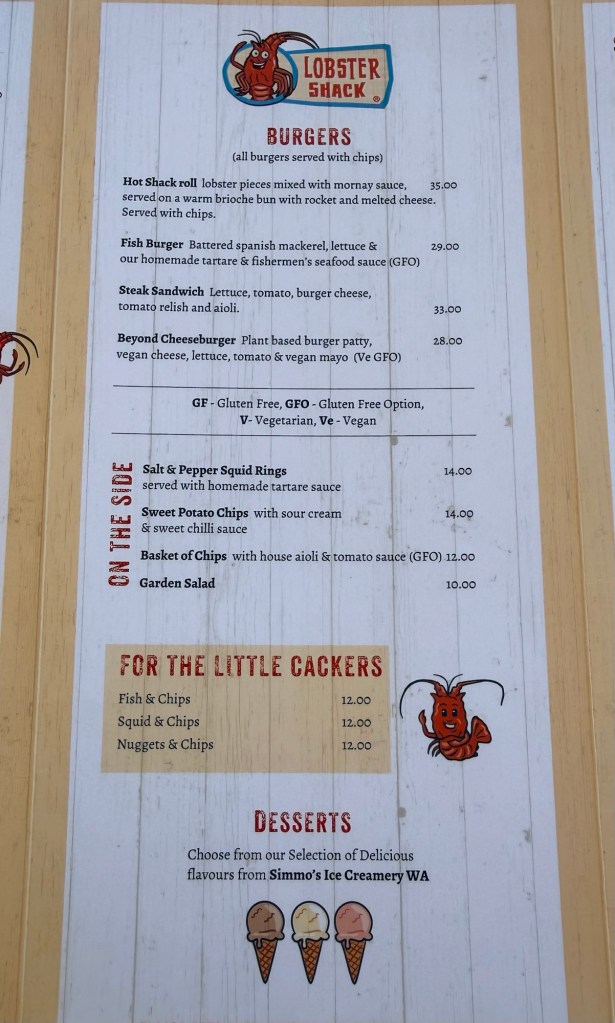
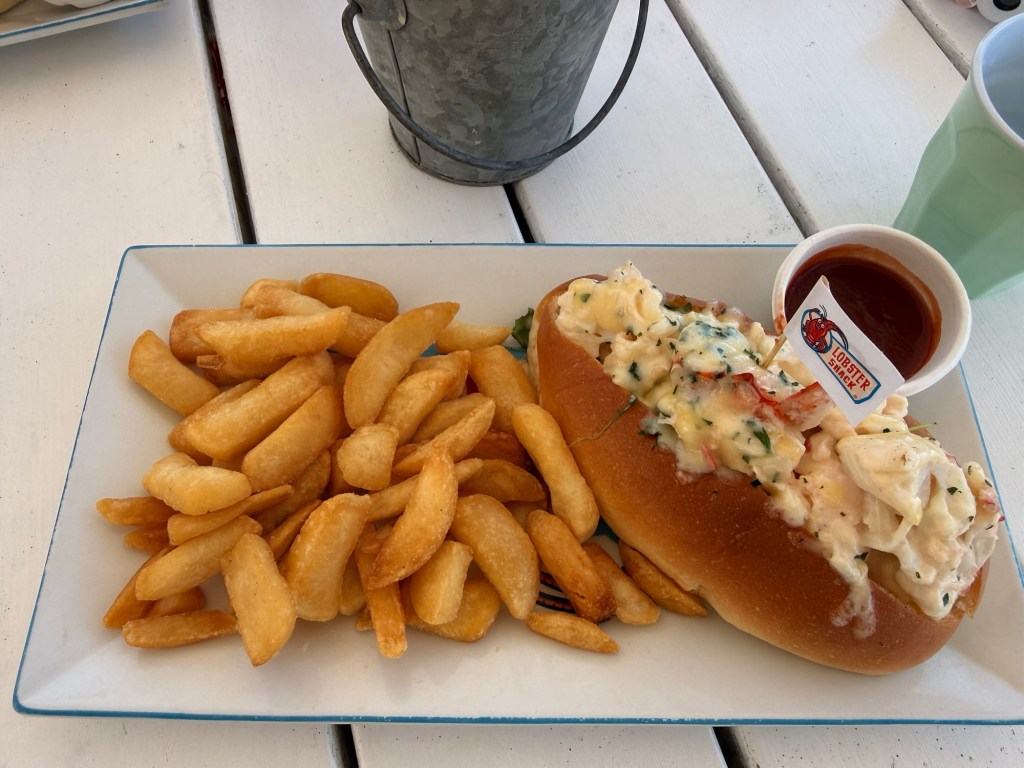
Lobster Shack stop. Lobsters were over fished in early 2000’s. Now they have returned and fishing has resumed but you have to release all females if you catch any. $400,000,000/year are exported now. Cervantes, the town where the Lobster Shack is, is a tribute to the writer. Some of us had lobster roll and chips for 36 AUD at Lobster Shack …. A licence to print money. 57 for 1/2 lobster.

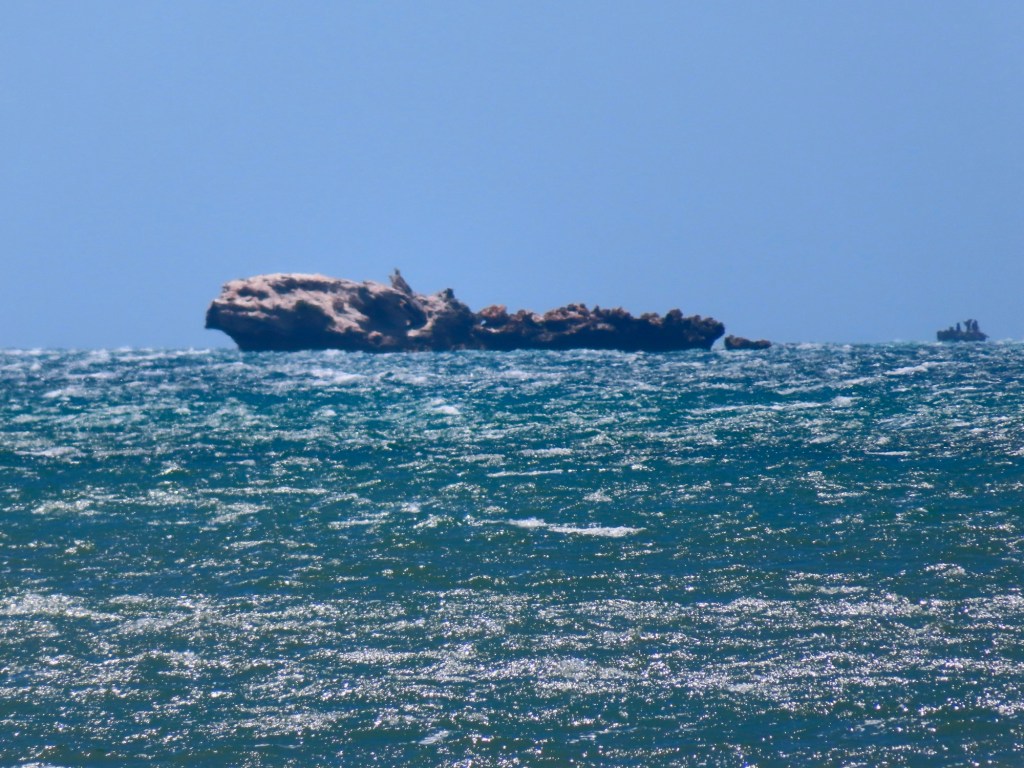

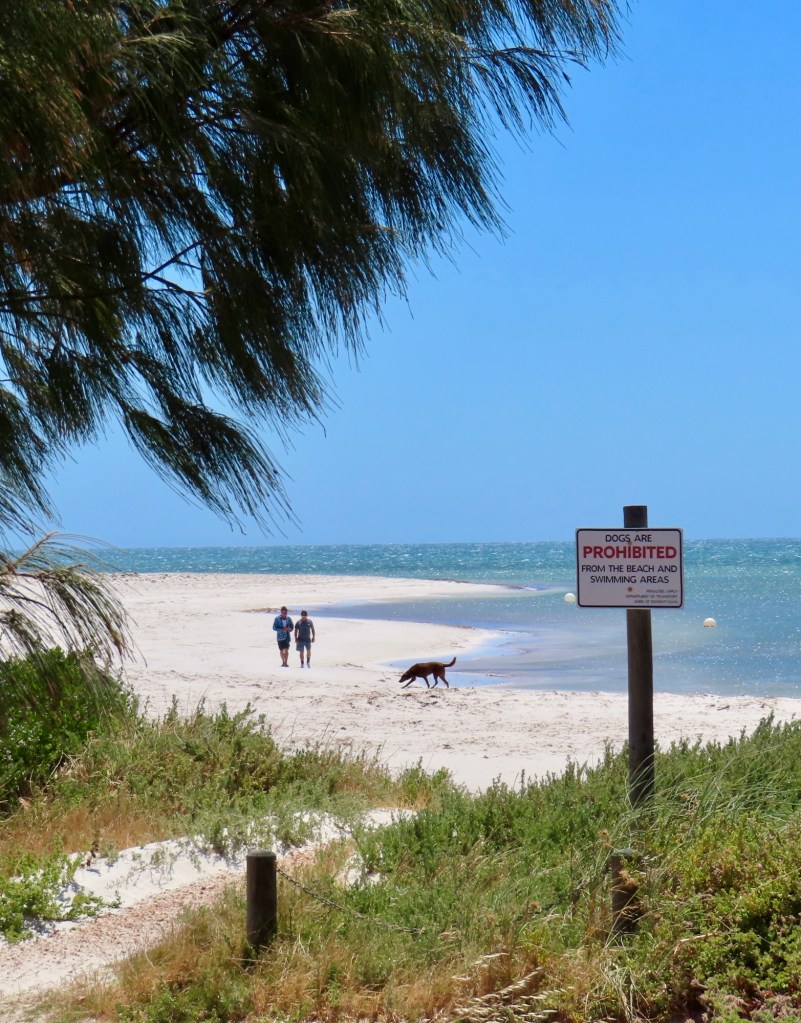
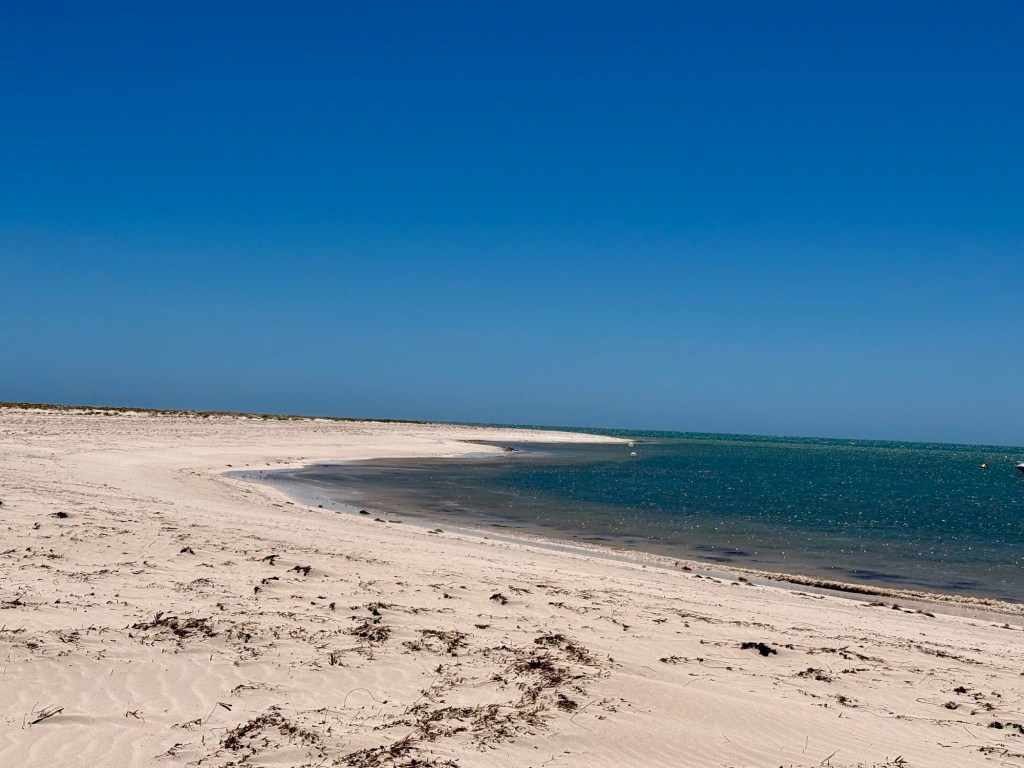

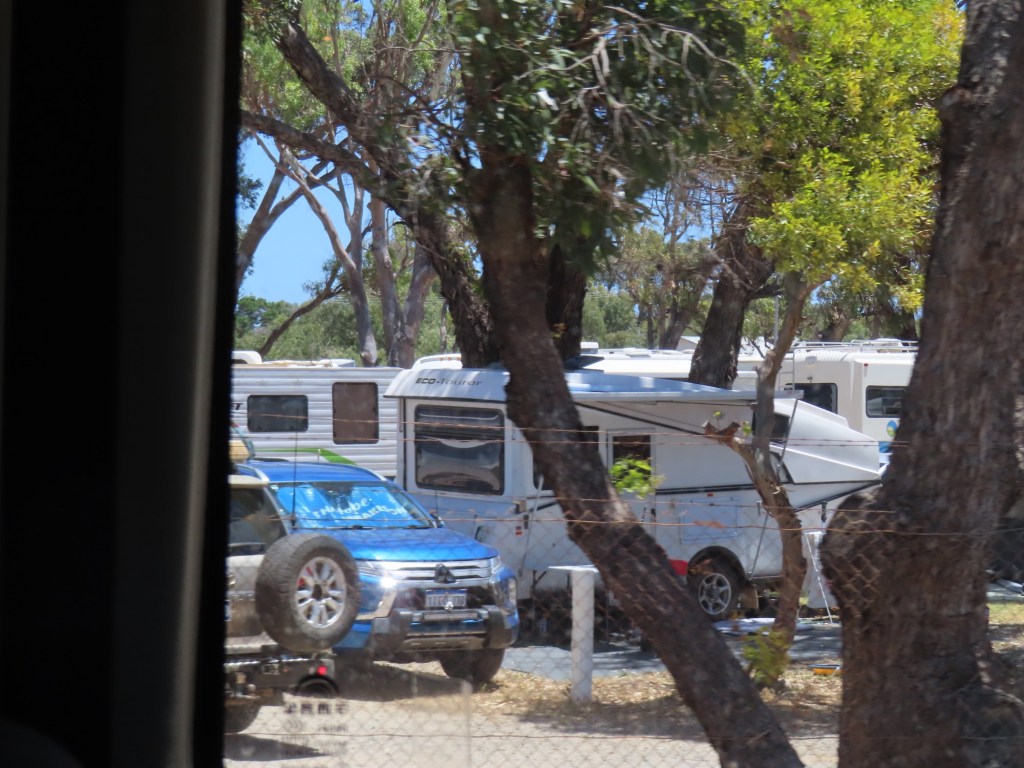
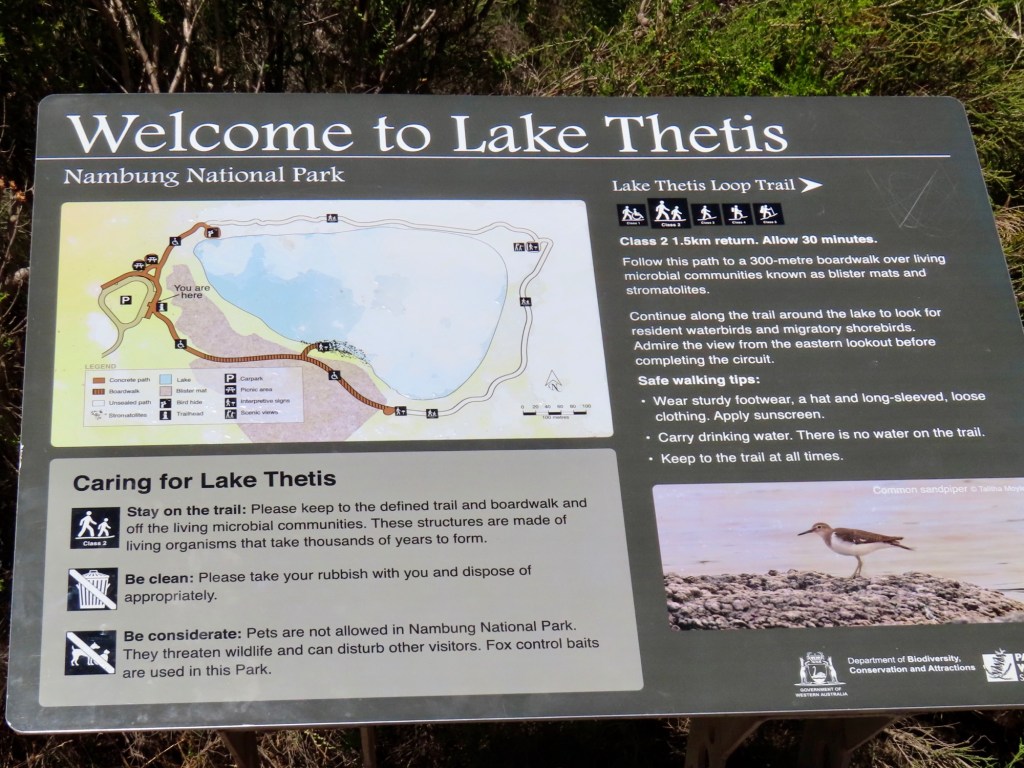
Leaving there was a sign…. Lake Thetis, Namburg park (we have a Thetis Lake at home). Here they have the oldest fossils in world…3 billion years old. There was evidence of kangaroos around and yes we got to see 2, a male and a female.

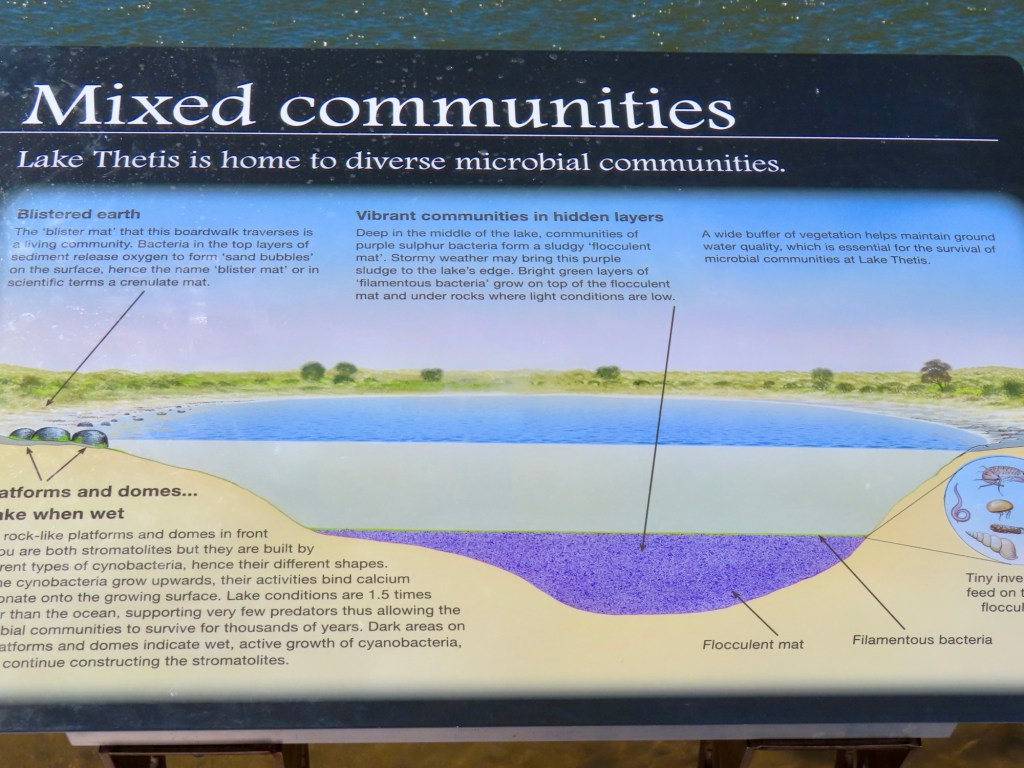

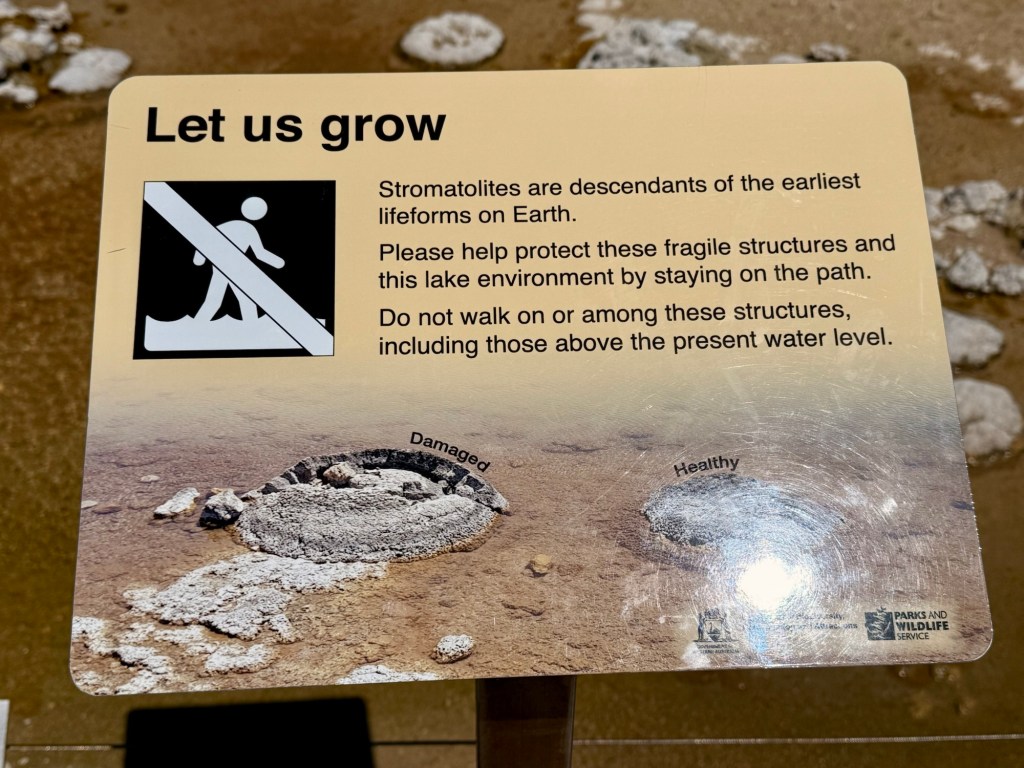

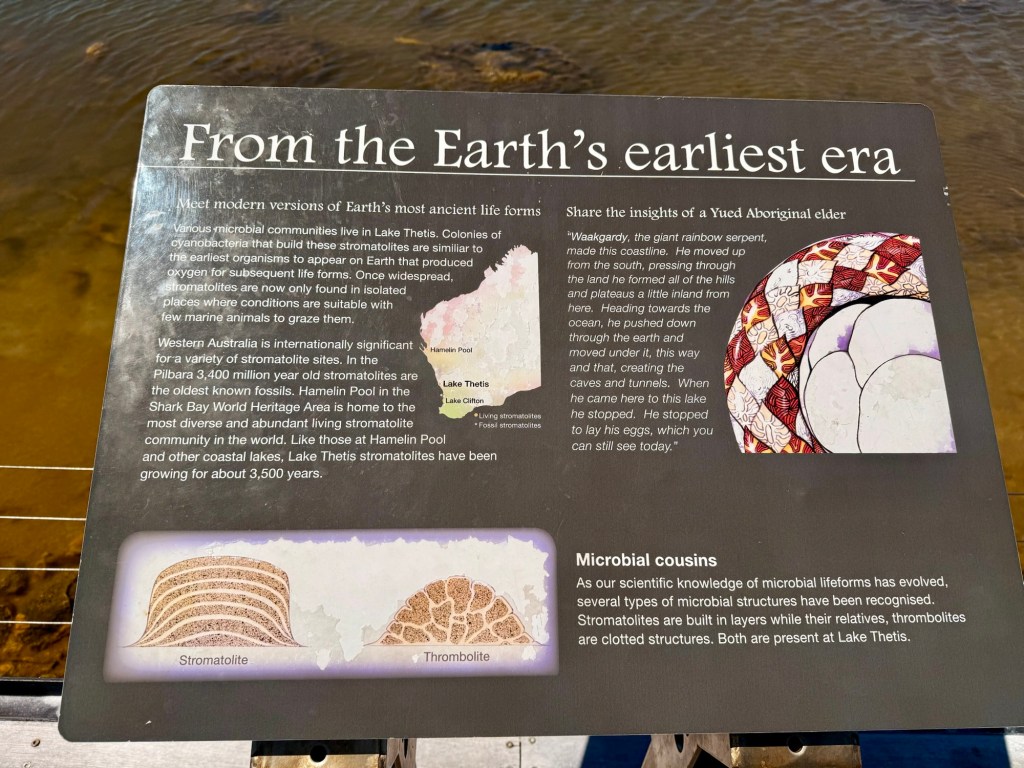
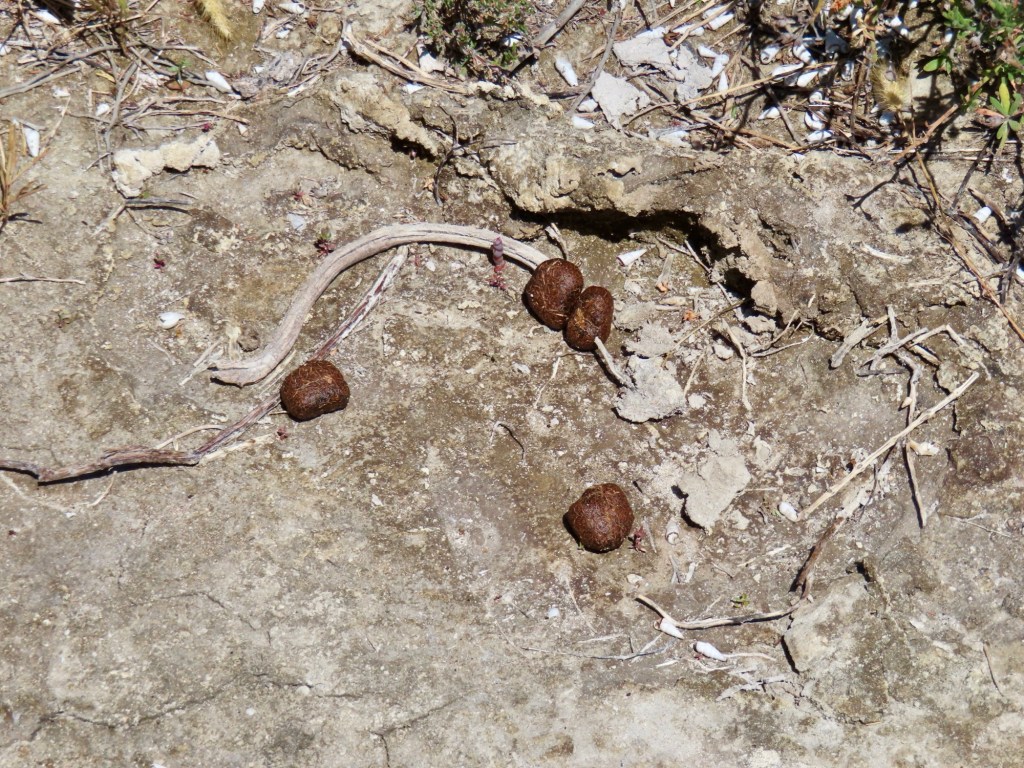

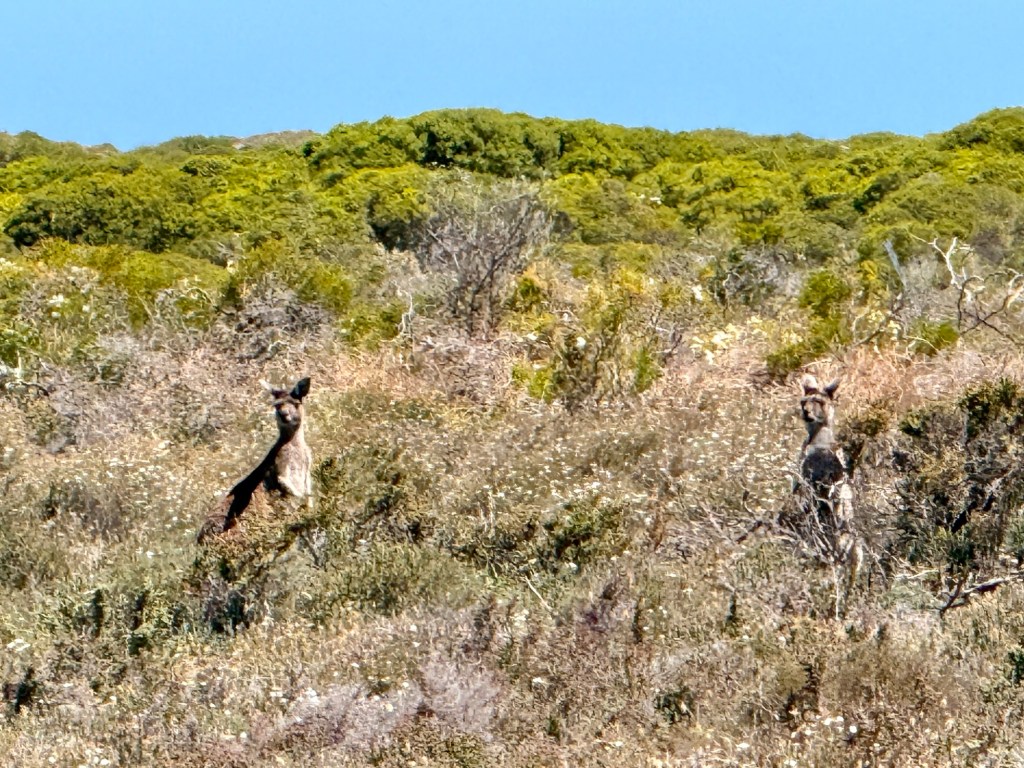
There are 50,000,000 Kangaroos in Australia, 2x human population. Females can look after 3 babies at a time…. One youngster, a Joey in the pouch and one envetro.
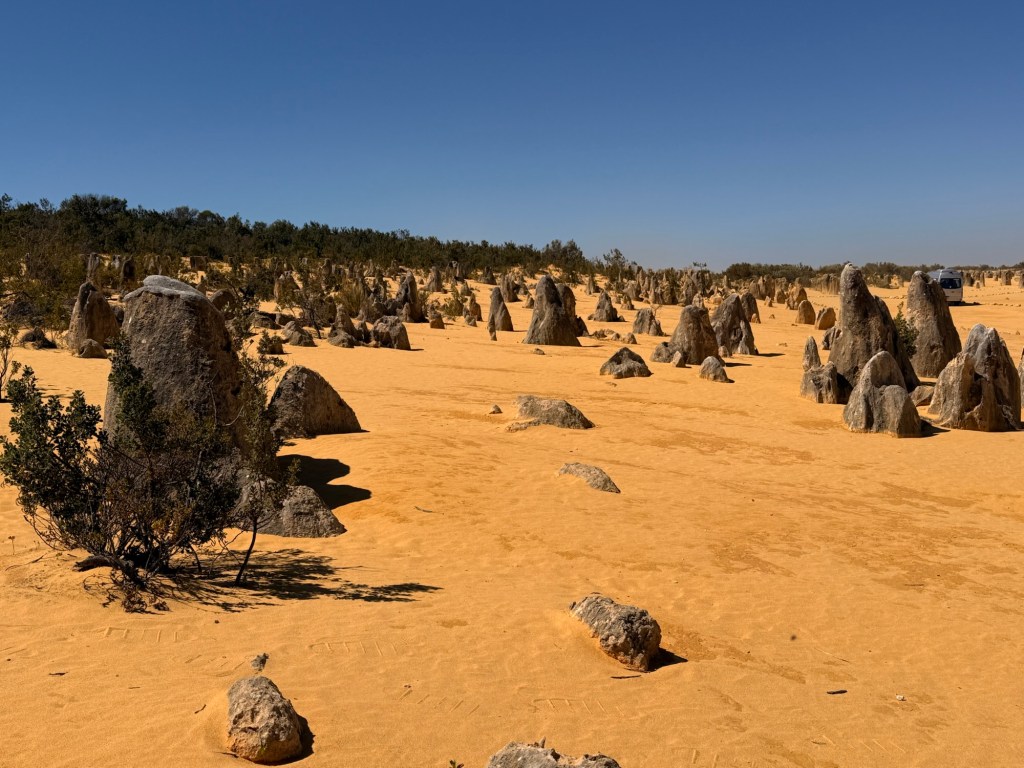
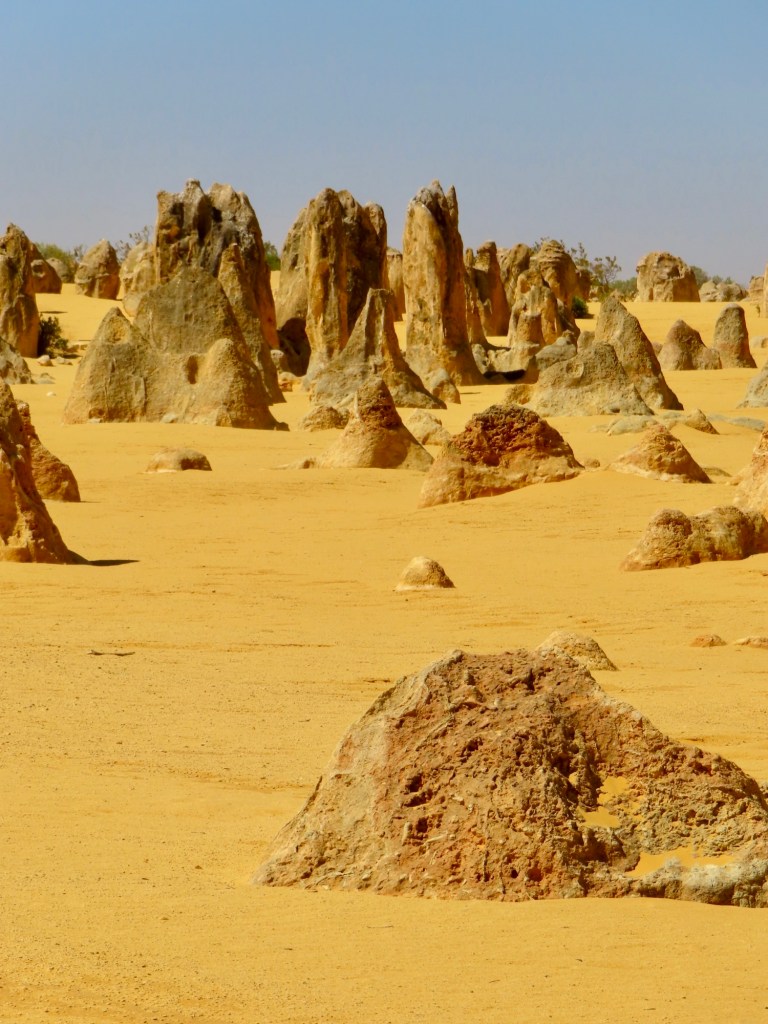
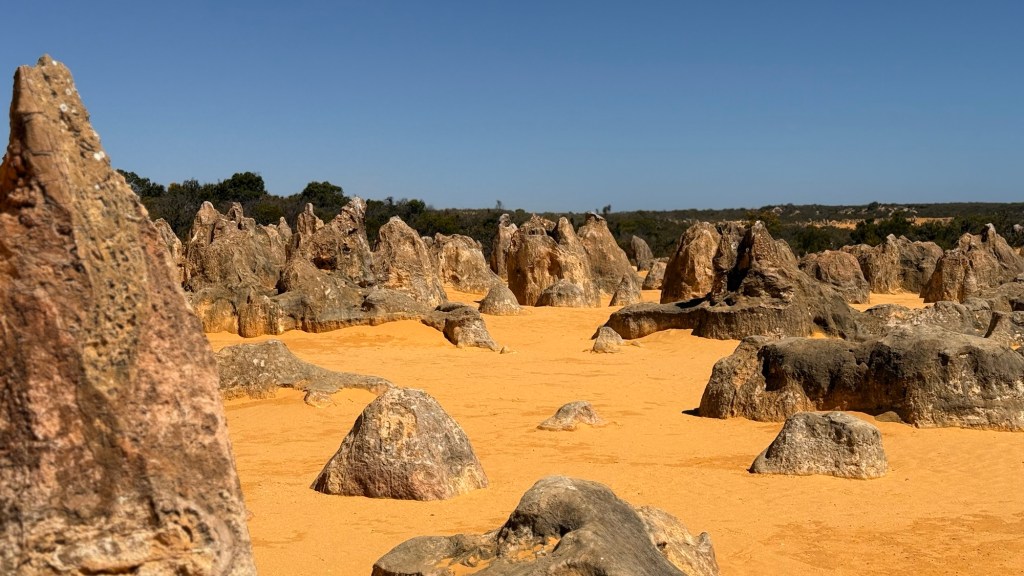
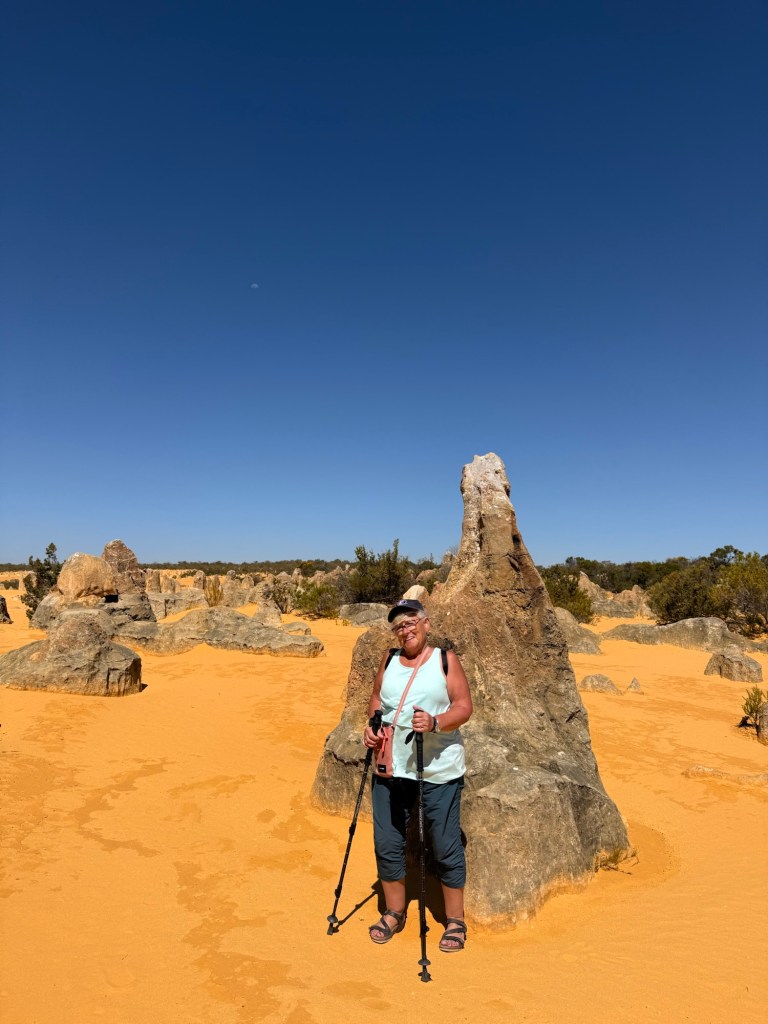
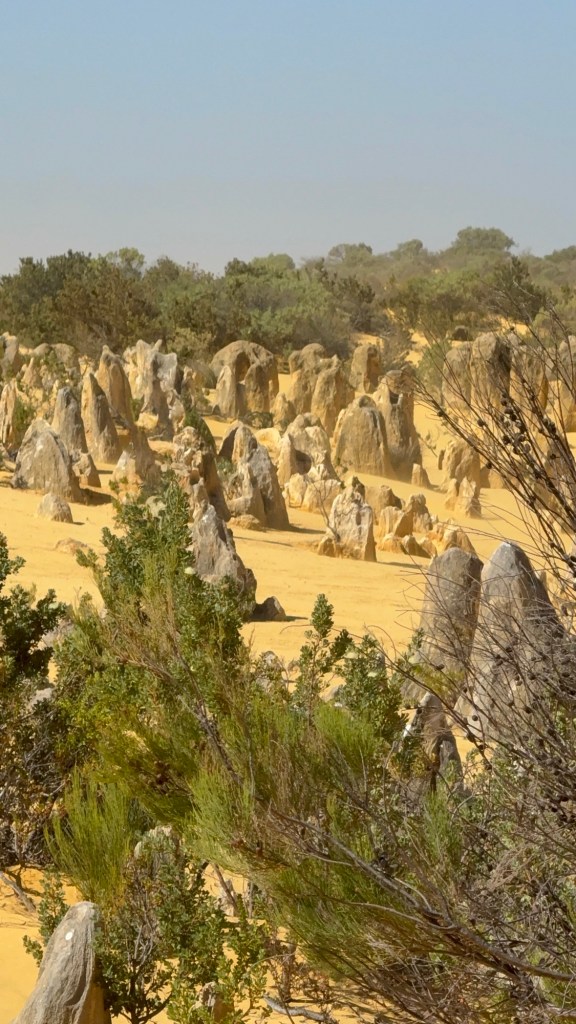
Namburg Pinnacles National park north of Perth, is what we have all come to see. Scientists don’t know exactly what or how these have come to be. One of the best explanations is limestone formations that rose from the desert after the sea receded, leaving behind deposits of seashell fragments. Over the past 100,000 years, rainfall has dissolved and redeposited this calcium carbonate, cementing the sand and eventually leading to the unique pillar shapes. Some thought us that there were trees that grew there and that as the water receded they sucked the calcium and lime and with the sun and sand, fossilized them. Some do look very much like petrified trees.





 gailstraveladventures
I was in Australia earlier this year and I went to Pinnacles for sunset.
It was awesome.
Laine
LikeLiked by 1 person
I knew that you had been to the area but did not know you went to Pinnacles. Lucky you! I wasn’t there late enough for sunset or I would have missed the ship.
LikeLike